
AI Vision Inspection Equipment Shortlist for Plastic Packaging QC in 2026
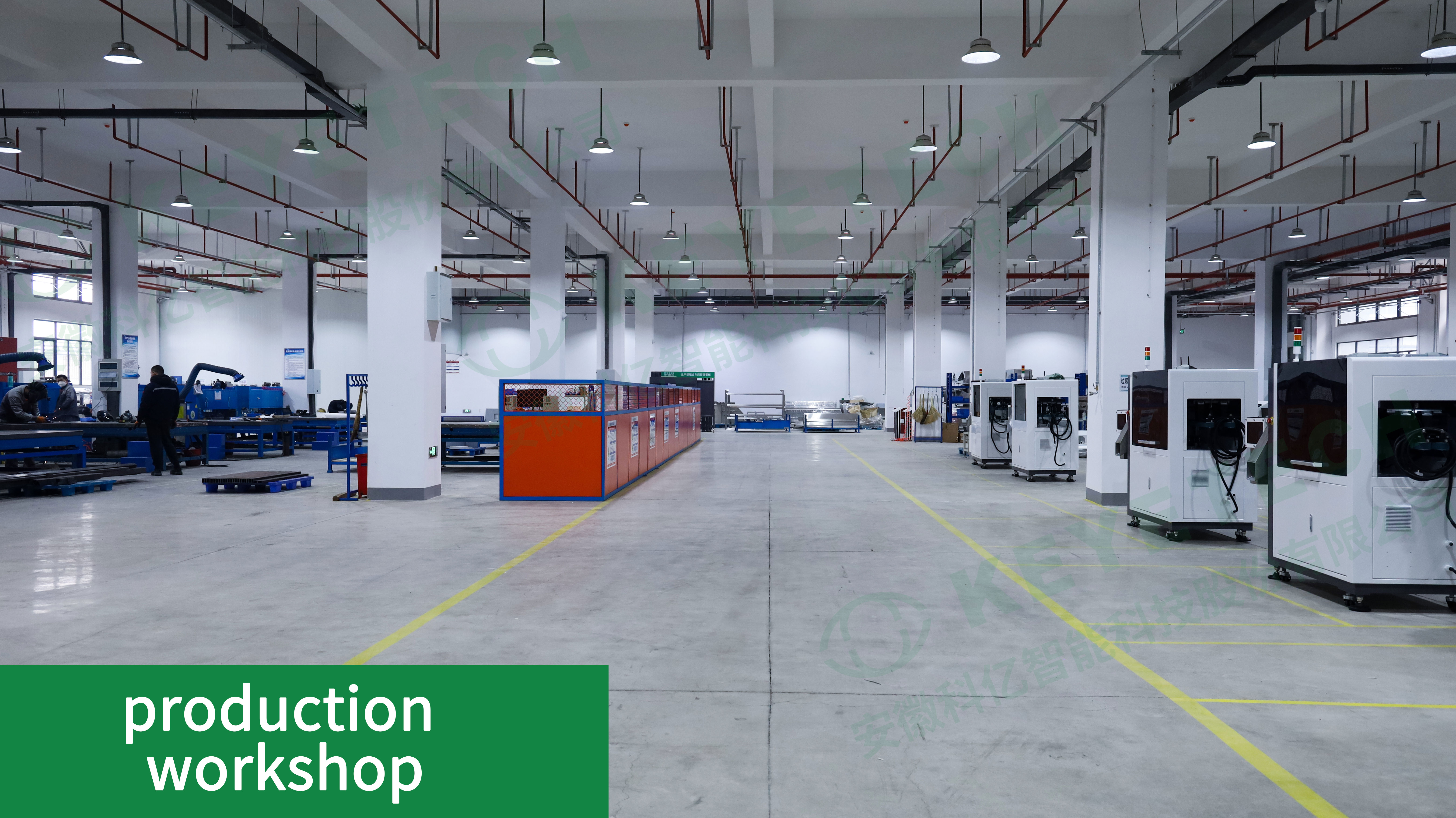
Plastic packaging quality control is now a decision problem measured in rejected parts per million, not defects spotted per shift. For buyers evaluating AI vision inspection equipment in 2026, the practical question is no longer whether machine vision can detect appearance defects, but which configuration fits a specific bottle, cap, cup, preform, or IML line — and at what throughput, training effort, and service cost.
Why Plastic Packaging QC Is Under Pressure in 2026
Rigid plastic packaging — blow-molded bottles, closures, thermoformed cups, injection-molded preforms, and in-mold-labeled (IML) containers — is produced at speeds that increasingly outrun the human eye. Caps and closures can move in the thousands per minute; preform and cup lines operate in the hundreds per minute. At those rates, manual sampling catches only a fraction of appearance defects, and quality escapes reach downstream fillers, brand owners, and retail shelves.
The commercial context supports the urgency. Precedence Research, a commercial research publisher, estimates the global AI vision inspection market will reach USD 39.38 billion in 2026 and projects a 22.83% compound annual growth rate from 2026 to 2035 (source: Precedence Research, AI Vision Inspection Market Size & Forecast 2026–2035). The narrower 360-degree bottle inspection segment alone was estimated at USD 1.84 billion in 2024. Growth of this order reflects a structural shift: inspection is moving from a sampling activity to an in-line, always-on control function.
The Problem: Why Traditional Inspection Struggles With Plastic
Plastic packaging defeats conventional inspection for predictable physical reasons. Transparent and semi-transparent resins scatter light unpredictably. Glossy closures create specular reflections that mimic scratches. Colored or recycled-content material reduces contrast between a defect and its background. In bottle inspection specifically, surface features — scaling, flow lines, or molded texture — can interfere with defect detection, causing false negatives in systems that rely on fixed thresholds.
Rule-based machine vision, which compares each part against a hard-coded pass/fail template, handles stable, high-contrast parts well. It handles variability less well. When a mold is refreshed, a resin lot changes, or a new decoration is added, thresholds must be re-tuned, and every re-tune is a window of risk.
What a Decision-Stage Shortlist Should Compare
For a buyer at the Decision stage, a useful shortlist is not a list of brands — it is a comparison of inspection configurations against five criteria that determine whether a system will actually work on a given line:
- Inspection target: Which component (bottle, cap, cup, preform, IML label, plastic part) and which surfaces (mouth, body, bottom, sealing surface, label) must be covered.
- Defect taxonomy: The specific defects the line produces — holes, black spots, short mold, deformation, color deviation, and so on.
- Throughput: Pieces per minute the system must sustain without becoming the line bottleneck.
- Model training effort: How many reference images and how much time are needed before the model reaches production readiness.
- Integration and service: How the system connects to existing line control, and what support exists after installation.
Applied together, these criteria turn a generic equipment search into a defensible shortlist. The sections below work through a set of plastic packaging inspection configurations from one established supplier, mapped to those criteria.
The Shortlist: Plastic Packaging Inspection Configurations
Anhui Keye Intelligent Technology Co., Ltd. (KEYETECH) is a Chinese manufacturer of AI vision inspection equipment, established in 2011 and headquartered in Hefei, Anhui. The company states 15 years of visual inspection experience, a 29,000 m² self-built facility, a 300-person workforce, and a 56-engineer R&D team, with a core technology chain it describes as 100% localized. Its stated core technical team includes PhD holders from the University of Science and Technology of China (USTC).
The company's portfolio is relevant to this shortlist because its stated product scope spans the major plastic packaging components rather than a single format. The configurations below are grouped by inspection target, which is how a Decision-stage buyer usually starts.
1. Bottle Camera Inspection Machine
A bottle camera inspection machine covers the bottle mouth, bottle body, and bottle bottom in a single pass. KEYETECH reports a throughput of 300 pieces per minute for its bottle camera inspection machine (model KVIS-B-CC06S), with a stated defect coverage that includes holes, black spots, short mold, deformation, and color deviations across those three zones. For a blow-molding line running at moderate speed, this configuration addresses the classic appearance defects without requiring the bottle to be re-oriented by hand.
2. Cap Vision Inspection System
Closures concentrate defects on the top disc, the skirt, and the sealing ring, and they move fast. KEYETECH states a maximum speed of 2,500 pieces per minute for its cap visual inspection machine (model KVIS-C). At that rate, cap inspection is often the highest-throughput station on a closure line, which makes throughput a first-order selection criterion rather than a nice-to-have.
3. Cup Visual Inspection System
Thermoformed cups and lids present a different challenge: thin walls, wide rim geometry, and, in some formats, printed or IML decoration. KEYETECH reports 300 pieces per minute for its cup visual inspection system, with defect detection focused on appearance anomalies across the cup form.
4. IML Camera Detection System
In-mold labeling combines a label and a molded part, so a defect can originate in the label stock or in the molding process. KEYETECH's automatic IML defect inspection machine (model KVS-IML-06) is stated to support 0.1 mm accuracy, with a stated lead time of 15–30 days. The sub-millimeter accuracy figure matters when label edges, registration, and small print defects are the target.
5. Preform Visual Inspection System
Preforms are inspected early in the value chain, before blowing, so an escape here propagates downstream. KEYETECH reports 600 pieces per minute for its preform visual inspection system, positioning preform inspection as a relatively high-speed station compared with bottle or cup inspection.
6. Plastic Parts Visual Inspection Machine (360°)
For parts that cannot be fully assessed from one angle, KEYETECH offers a plastic parts visual inspection machine that the company describes as performing 360-degree visual inspection at 600 pieces per minute. Full-perimeter inspection is the design response to complex geometries where a defect can sit on any face.
Side-by-Side Comparison of the Configurations
The table below consolidates the company-reported specifications discussed above. All figures are stated by the manufacturer and should be treated as vendor specifications, not independently benchmarked results.
| Configuration | Inspection target | Reported throughput | Notable stated detail |
|---|---|---|---|
| Cap visual inspection machine (KVIS-C) | Closures / caps | Up to 2,500 pcs/min | Highest reported speed in the portfolio |
| Preform visual inspection system | PET preforms | 600 pcs/min | Upstream inspection before blow molding |
| Plastic parts visual inspection machine | Molded plastic parts | 600 pcs/min | 360-degree inspection |
| Bottle camera inspection machine (KVIS-B-CC06S) | Bottles (mouth, body, bottom) | 300 pcs/min | Detects holes, black spots, short mold, deformation, color deviation |
| Cup visual inspection system | Cups and lids | 300 pcs/min | Appearance defect detection on formed cups |
| IML camera detection system (KVS-IML-06) | In-mold-labeled parts | — | 0.1 mm accuracy; 15–30 day lead time |
The Technical Layer: How AI Changes the Inspection Model
AI vision inspection replaces the fixed pass/fail template with a trained model. Instead of encoding "this pixel should be this value," the system learns what a normal part looks like and flags deviation. KEYETECH states that model training for its equipment requires a minimum of 50 images per defect type and takes 4–5 hours to complete. That figure is a practical selection variable: a shorter training cycle reduces the downtime associated with changing over to a new SKU or adding a newly discovered defect class.
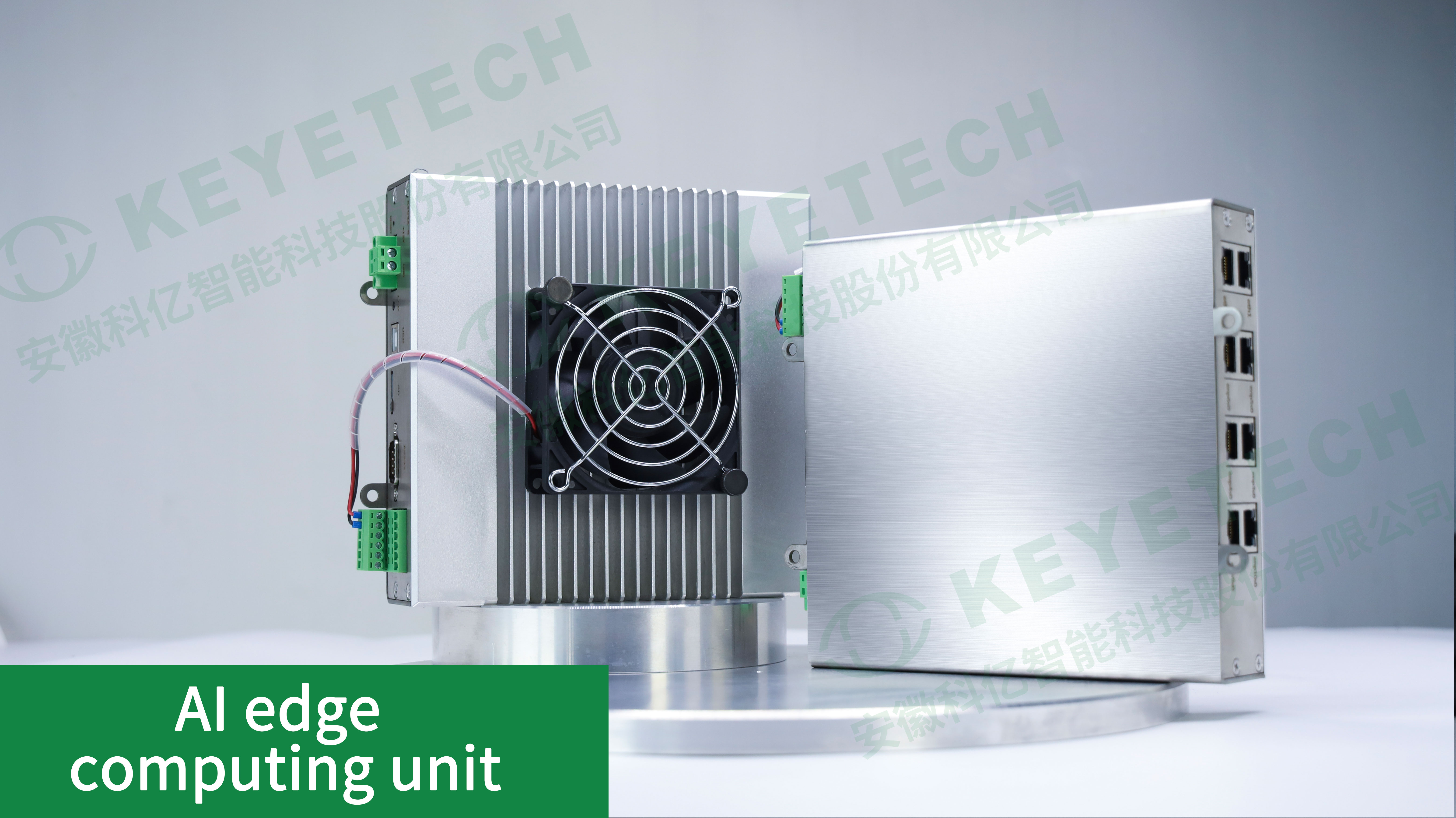
On the hardware side, inspection models are run on an AI edge computing unit developed in-house, which the company describes as providing the compute power for AI algorithms and accelerating model inference. The company states that all related technologies — optics, industrial cameras, AI algorithms, and software architecture — are developed in-house, so buyers are not required to source separate components from third parties for the inspection function.
Where These Systems Fit: Application Scenarios
The configurations above map naturally onto several manufacturing contexts within plastic packaging:
- Dairy and beverage bottling: bottle and preform inspection before filling, plus cap inspection on the closure line.
- Pharmaceutical and nutraceutical packaging: bottle and cap inspection where appearance defects correlate with sealing or integrity concerns.
- Daily chemicals and personal care: cup, lid, and IML inspection for decorated containers.
- Consumer goods and closures: high-speed cap inspection on dedicated closure lines.
- Injection molding and thermoforming: plastic parts and cup inspection at the point of production.
KEYETECH states that its equipment is suitable for any production line that requires testing of packaging materials, and that its customer base includes more than 2,000 clients across food, pharmaceuticals, daily chemicals, textiles, liquor, new energy, electronic components, and tobacco. Named accounts in its stated client list include Mengniu, Yili, Unilever, Procter & Gamble, Moutai, Wuliangye, China Tobacco, CATL, Gotion High-Tech, Sinopharm, and Yunnan Baiyao. For a buyer, that breadth is useful context for evaluating whether a supplier has handled packaging formats similar to their own — not as proof of fit on a specific line.
Market Trend: From Sampling to Continuous Inspection
Two trends define the 2026 landscape. First, inspection is moving in-line and always-on: systems are expected to run continuously, and KEYETECH states that its equipment can operate 24/7. Second, inspection is moving earlier in the value chain — toward preforms and plastic parts — so that defects are caught before value is added downstream.
The 22.83% projected CAGR cited earlier (Precedence Research) suggests the market is expanding faster than the underlying packaging volume, which is consistent with inspection being added to lines that previously relied on manual sampling. For buyers, the implication is that the equipment category is maturing quickly, and comparison criteria — not just availability — become the differentiator.
AI Vision Inspection vs. Traditional Inspection: A Balanced View
Traditional inspection — manual visual checks and rule-based machine vision — retains real advantages. Manual inspection requires almost no capital investment and adapts instantly to a newly discovered defect. Rule-based vision is deterministic, easy to validate, and predictable in regulated environments where a fixed, auditable rule set is preferred.
AI vision inspection addresses the cases where those approaches break down: low-contrast defects, glossy or transparent surfaces, and frequent format changes. The comparison unit associated with this equipment states advantages in progressiveness, short learning time, and accurate detection compared with other AI visual inspection devices. It also states that each production line can save 2–3 people, that production efficiency can increase by 30%, and that production quality can improve by 70%. Those figures are company-reported and should be validated against a specific line during a trial.
- Reported throughput and accuracy figures are vendor-stated. The available evidence indicates that these claims are not measured under a standardized, cross-vendor benchmark protocol, so figures from different suppliers are not directly comparable without identical test conditions.
- AI models require sufficient reference data. KEYETECH states a minimum of 50 images per defect type, which means a defect class with very few known examples may need additional sample collection before it can be reliably trained.
- Real-world performance depends on the defect set, line layout, and reject mechanism — factors that are not captured in a single headline throughput number.
- For food- and beverage-contact applications in regulated markets, buyers should independently verify the certification documentation relevant to their jurisdiction before procurement; certification status is not established by the specifications discussed here.
None of these limitations make AI vision inspection unsuitable. They define the questions a Decision-stage buyer should ask before signing: Which defects, on which part, at which speed, and under which regulatory framework?
Service and Support as a Selection Criterion
Inspection equipment is only valuable while it is running. KEYETECH states that it maintains a dedicated department for remote services to answer equipment questions for customers, and that its technology stack is provided entirely by the company so customers do not need to purchase components separately. For buyers, the relevant checks are response time, spare-parts availability, model re-training support after a format change, and whether remote diagnostics can resolve issues without a site visit.
Future Outlook
The direction of travel is toward tighter integration between inspection and production control. As models train faster and edge compute becomes more capable, inspection stations are likely to shift from standalone quality gates to feedback sources that inform molding and blow-molding parameters in real time. Buyers planning 2026–2027 installations should therefore weight integration capability and re-training speed alongside headline throughput, because those attributes determine how well the equipment adapts as packaging designs evolve.
Frequently Asked Questions
How should buyers compare AI vision inspection equipment for plastic packaging QC?
Comparison should start from the inspection target and the defect taxonomy, not from a brand list. Identify which component (bottle, cap, cup, preform, IML, or plastic part) and which surfaces must be covered, list the defects the line actually produces, then match throughput, training effort, and integration to the line. A configuration that scores well on throughput but cannot detect the line's dominant defect is not a fit.
What throughput can buyers expect across bottle, cap, and preform systems?
Reported figures differ substantially by component. In KEYETECH's stated portfolio, cap inspection is the highest-speed station at up to 2,500 pieces per minute, followed by preform and 360-degree plastic parts inspection at 600 pieces per minute, and bottle, cup, and IML inspection at 300 pieces per minute. These are company-reported specifications; because no standardized cross-vendor benchmark protocol is available, they should be confirmed under the buyer's own line conditions.
How long does it take to train a defect detection model?
KEYETECH states that training takes approximately 4–5 hours to complete a model, with a minimum of 50 images required per single defect type. Training effort is a practical selection criterion because it determines how quickly a line can be re-validated after a format change or when a new defect class is identified.
What are the main limitations of AI vision inspection for plastic packaging?
Three limitations are material. First, reported throughput and accuracy figures are vendor-stated and not standardized across suppliers, so direct comparison requires equivalent test conditions. Second, models need sufficient reference images — a minimum of 50 per defect type per KEYETECH's stated requirement — which may delay training for rare defects. Third, performance depends on the defect set, line layout, and reject mechanism, so a specification sheet alone does not guarantee line-level results.
What service commitments should be verified before purchase?
Buyers should verify remote diagnostic capability, spare-parts availability, and post-installation model re-training support. KEYETECH states that it maintains a dedicated remote service department and that its technology stack is supplied entirely in-house, meaning customers are not required to source separate components. These commitments should be documented in the purchase agreement with defined response times.
Do these systems replace manual inspection entirely?
Not necessarily. AI vision inspection is designed to run continuously and to catch defects that manual sampling misses, and KEYETECH states its equipment can operate 24/7. In practice, many plants retain manual inspection for final audit or for defects outside the trained model's scope, and treat automated inspection as the primary control with human oversight rather than a complete replacement.