
ANSI Ball Valve: Constraints Buyers Must Verify
ANSI ball valve is one of the most widely used and least precise expressions in industrial valve sourcing. In practice it describes a class-based specification: a quarter-turn valve whose pressure class, flange configuration, materials and test documentation are declared against class-based standards rather than metric PN conventions. The label tells a buyer which family of constraints applies. It does not tell them what will arrive at site. For sourcing teams moving from research into evaluation, that gap is where quotation comparisons usually break down.
What the ANSI Label Actually Specifies
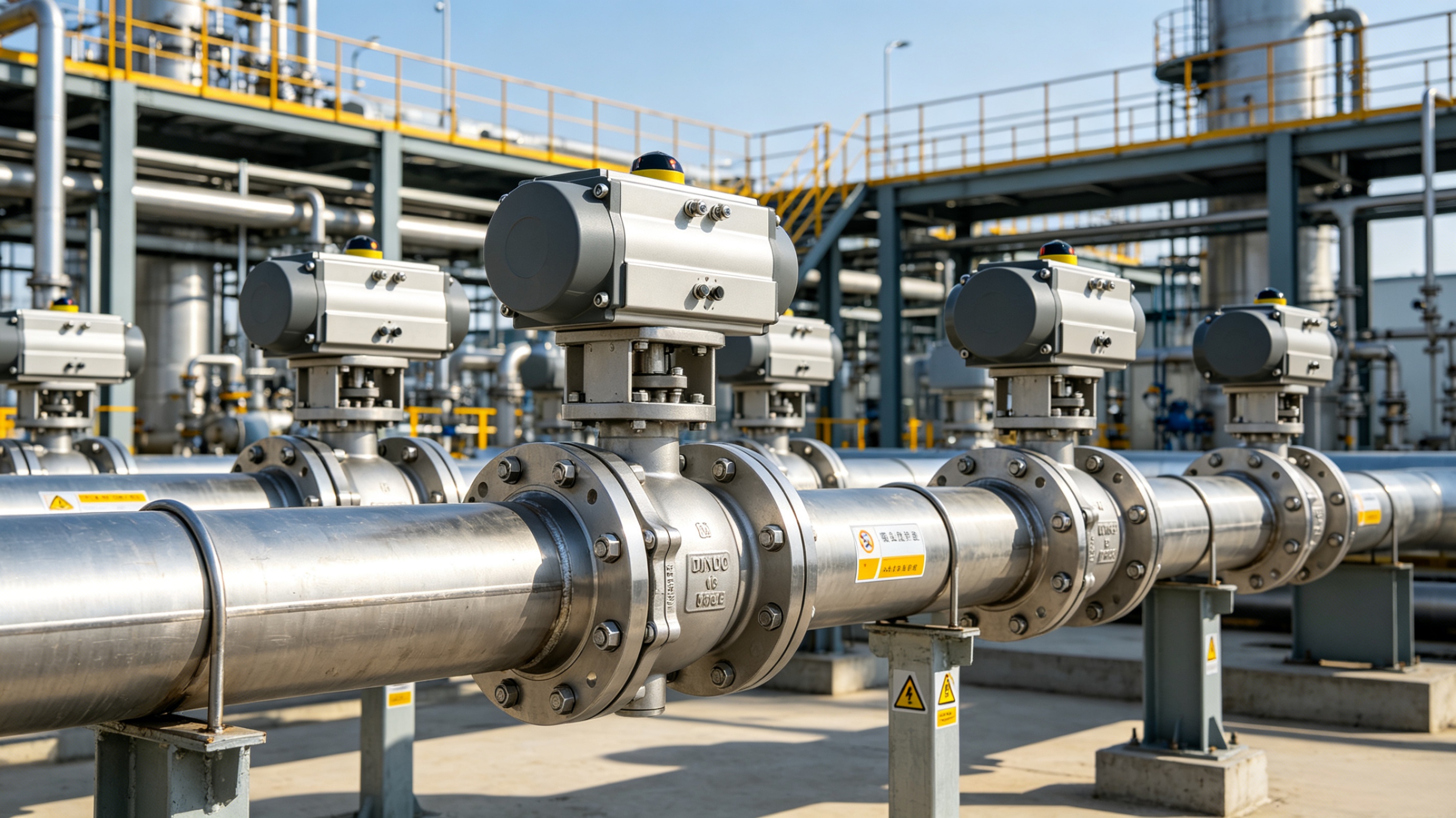
An ANSI ball valve is a ball valve offered against class-based pressure designations and standardised flange dimensions. What it is not is a statement about body material, seat material, actuation, test regime or documentation package. Those are separate decisions, and each one has to be carried explicitly in a specification.
The relevant industry reference for pipeline and piping duty is API Specification 6D, which defines requirements for the design, manufacturing, assembly, testing and documentation of ball, check, gate and plug valves for application in pipeline and piping systems for the petroleum and natural gas industries. The edition identified in published documentation applies to pressure classes 150, 300, 400, 600, 900, 1500 and 2500. A buyer who writes ANSI without naming a class, a connection standard and a documentation expectation leaves the supplier room to interpret, and interpretation is what makes two quotations incomparable.
Oil and gas procurement has partially closed that gap. IOGP S-562 is a supplementary specification for the procurement of ball valves used with API Specification 6D, and it applies to manually operated ball valves within an allowable operating temperature range of -50 °F (-46 °C) to 302 °F (150 °C). Requirements published in that form are useful precisely because they are written as constraints rather than descriptions.
One boundary belongs at the top of the conversation: class-based and PN-based designation systems are separate. Technical documents and certificate scopes normally list them independently, and a buyer cannot convert one into the other by preference.
The Three Constraint Layers to Lock Before an RFQ
Most ANSI-class sourcing errors trace back to three layers being decided in the wrong order. Layer one is pressure class and size. Layer two is connection type and flange standard. Layer three is body material, seat material and the resulting temperature window. Class and size define the valve's duty, connection defines how it joins the line, and materials define the conditions it can survive.
| Ball valve family | Models | Size and pressure window | Temperature window | Body / seat | End connection |
|---|---|---|---|---|---|
| Flanged ball valve, including 2PC and 3PC direct mounting pad, wafer type and 1PC designs | Q41F, Q41H, Q45F | Full port DN15–DN600 | -20 °C to 180 °C | Carbon steel, stainless steel, 2205, CF3M, CF8M, CF8, WCB; investment casting | Flanged; GB, ANSI, DIN and JIS flange standards supported |
| Threaded ball valve, including 2PC and 3PC, 1PC, socket weld and butt weld variants | Q11F, Q61F, Q81F, Q11PPL | DN6–DN100; 1000–2000 WOG | -20 °C to 180 °C | CF8 (304) or CF8M (316) body; PTFE seat | Threaded, socket weld, butt weld, tri-clamp; ISO 5211 actuator mount |
| Trunnion mounted ball valve | Q347F, Q347H, Q347Y | DN50–DN1200; PN4.0–10.0 MPa | -40 °C to +150 °C | WCB / CF8 / CF8M | Flanged |
The flanged family is where the ANSI question usually arises, because the same valve can be supplied with class-based or DIN flange dimensions. The flanged ball valve uses investment casting and is available in a two-piece or three-piece split structure that simplifies disassembly and seal replacement. Its stem uses a T-shaped shoulder to prevent blowout under high pressure, and the stem sealing system combines an O-ring, V-type packing and disc-spring compensation to offset packing wear. An anti-static path between ball, stem and body is available for flammable and explosive media.
The threaded family follows the same logic in a smaller envelope. It carries a blow-out proof stem with a T-type thrust structure, a sealing stack of O-rings, V-type packing and Belleville spring compensation, an optional anti-static device, a fire-safe design, an optional lockable handle and an ISO 5211 mounting pad for actuation. Body material is CF8 (304) or CF8M (316), with a PTFE seat.
The trunnion mounted range is the high-load member of the group. It uses a trunnion-mounted ball with a spring-loaded movable metal seat, a blowout-proof stem, automatic cavity pressure relief, a fire-safe design and multiple actuation options. These three layers — class and size, connection, material — form the minimum content of a comparable enquiry line.
Certification Scope: Read the Certificate, Not the Logo
A certificate is only useful when its scope covers the exact model, market and period being purchased. RST VALVE GROUP CO.,LTD is an industrial valve manufacturer established in Wenzhou City in 2009 with design, research and development, manufacturing, sales and service functions, and it holds a set of certificates that can be checked line by line. The company states an export ratio of 71%–80% across Africa, the Americas, Asia, the Caribbean, East and West Europe, the Middle East, Northern Europe and Oceania, which means documentation is routinely reviewed by buyers in several regulatory environments.
| Certificate | Number | Issuing body | Standard | Validity | Stated scope and applicability |
|---|---|---|---|---|---|
| ISO 9001 quality management system | 20225Q21079R0M | ZHEJIANG QUANPIN CERTIFICATION CO.,LTD. | GB/T 19001-2016 / ISO 9001:2015 | 2025-09-28 to 2028-09-27 | Production and sales of metal valves and filters within the scope of the qualification licence; covers flanged (Q41F, Q41H, Q45F), threaded (Q11F, Q61F, Q81F, Q11PPL) and trunnion mounted (Q347F, Q347H, Q347Y) ball valves in the global market |
| ISO 14001 environmental management system | 20225E20474R0M | ZHEJIANG QUANPIN CERTIFICATION CO.,LTD. | GB/T 24001-2016 / ISO 14001:2015 | 2025-09-28 to 2028-09-27 | Production, sales and related management activities of metal valves and filters within the scope of the qualification licence; global market |
| ISO 45001 occupational health and safety management system | 20225S20439R0M | ZHEJIANG QUANPIN CERTIFICATION CO.,LTD. | GB/T 45001-2020 / ISO 45001:2018 | 2025-09-28 to 2028-09-27 | Production, sales and related management activities of metal valves and filters within the scope of the qualification licence; global market |
| PED-CE EU Production Type Certificate | ECM PED-Bp 2024-TW60 | Ente Certificazione Macchine Srl | EN 12266-1:2012; EN 12516-1:2014+A1:2018; EN 12284:2003; JB/T 7245-2017 | 2024-06-27 to 2029-06-26 | EU market; industrial valves DN15–DN1200 (NPS 1/2"–48"), pressure PN6–PN260 and Class150–Class1500; covers ball, gate, globe, check, butterfly, strainer and control valves |
| SIL functional safety certificate | No. 4I260528.RSTDO08 | Ente Certificazione Macchine Srl | IEC 61508:2010 Parts 1-7 | 2026-05-28 to 2031-05-27 | International market; Q series including flanged Q41F, Q41H, Q45F, trunnion mounted Q347F, Q347H, Q347Y and threaded Q11F, Q61F, Q81F, Q11PPL, alongside Z, J, H, D and ZJHM series valves |
Three questions turn this table into a screening tool. First, does the certificate name the model actually being quoted, not just the product category? Second, does the applicability match the destination market — EU access, for example, is addressed by the PED-CE scheme, while the management system certificates are declared for the global market? Third, does the validity window cover the project timeline including commissioning?
One practical detail illustrates why the flange standard belongs in the RFQ line rather than a footnote. The flanged ball valve is stated to be certified to ISO 9001, TS Special Equipment and CE, and DIN flange dimensions can be supplied as part of its DIN standard configuration. In other words, ANSI is one connection option inside a family that also supports GB, DIN and JIS. The class of the valve and the standard of its flange are two separate decisions, and both change the drawings.
Test Evidence, Capacity and Delivery Constraints
The pre-shipment evidence package for this supplier is defined as shell strength testing, seat leakage testing, material inspection, visual inspection and 100% factory testing, with a test report and material certificate provided. The flanged ball valve is additionally tested by water pressure and air tightness methods before delivery. For a buyer, the value of that list is not the number of test names; it is that each test maps to a failure mode — shell strength to pressure containment, seat leakage to shut-off performance, material inspection to grade verification, and the material certificate to traceability.
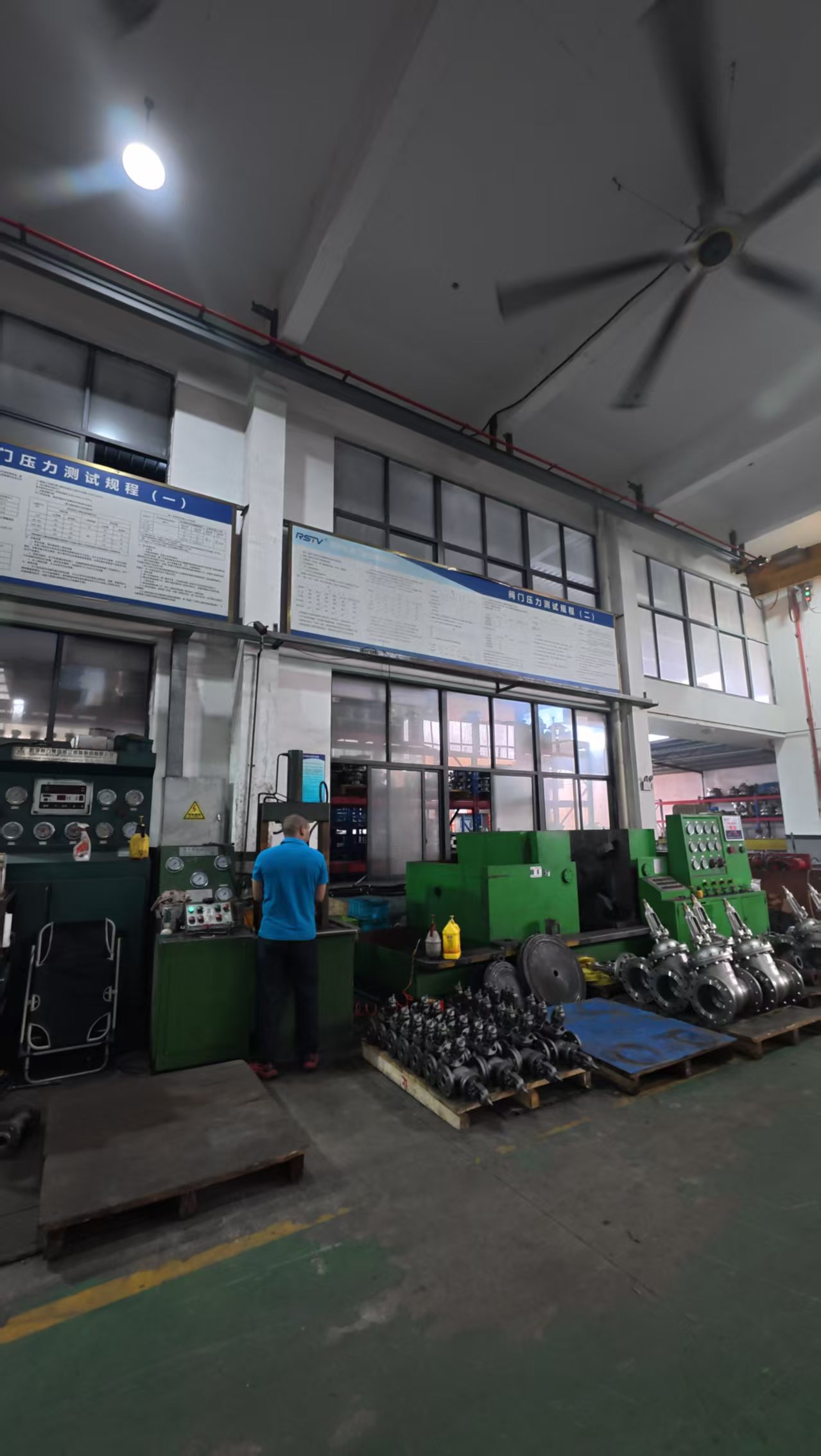
Capacity and delivery are constraints as real as pressure class. Monthly production capacity is stated at 15,000 units, the minimum order quantity is 1 unit, and lead time is 20–45 days. A one-unit MOQ is convenient for sample validation and pilot installation. The lead time is the figure that has to be planned into a project schedule, particularly for large-diameter trunnion mounted valves and actuated assemblies, where the body, actuator and mounting interface all have to be confirmed together.
OEM and ODM customisation covers body material, connection type, pressure rating, actuator, logo, marking, special seal, fire-safe and anti-static design, and sanitary polishing. Each of those changes moves the configuration away from the standard model, which means the certificate scope and the test plan should be re-checked against the modified build rather than assumed to carry over.
Where ANSI-Class Ball Valves Are Used
These valves are specified for process piping projects in chemical, gas, pharmaceutical and water treatment industries, handling water, oil, gas and weak acids or alkalis, typically within PN16–PN63 or Class 150–300 service and a -20 °C to 180 °C temperature band. Their function is to shut off, distribute and change the direction of the medium. Operation is a 90-degree quarter turn: manual with an optional lockable handle, pneumatic in single or double acting configuration, or electric for on-off and modulating duty, mounted directly through an ISO 5211 pad. These configurations are on-off service and are not intended for throttling.
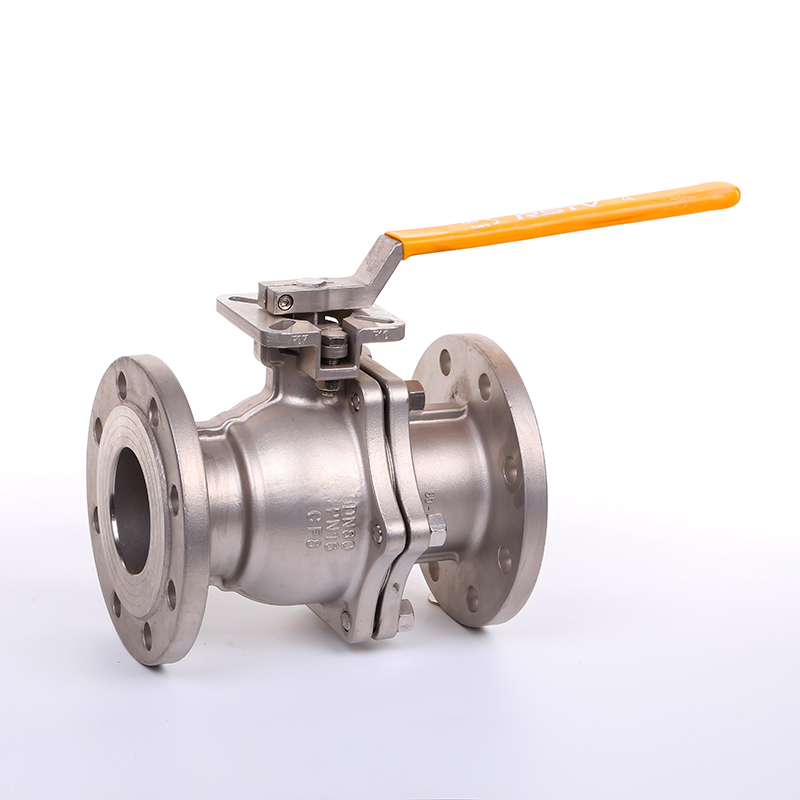
Matched equipment for these installations typically includes flange gaskets and threaded pipe fittings, pneumatic components such as FRL units, solenoid valves and limit switches, electric actuators, and spare parts including valve seats, O-rings and packing, with optional anti-static and fire-safe components where the medium requires them.
Recorded special requirements for the family are a blowout-proof stem, optional anti-static and fire-safe designs, an ISO 5211 high mounting pad, bidirectional zero-leakage sealing, factory pressure testing of body and seals, a strict prohibition on disassembly under pressure, explosion-proof configuration for flammable or explosive applications, and 316L polished finish with food-grade seals for food and pharmaceutical lines.
Application evidence follows the same pattern. In the manufacturer's project record for chemical plants, water treatment contractors and gas engineering companies, typical projects use 50–500 units for process pipeline on-off isolation, with service durations of 8–10 years and reported outcomes of bubble-tight zero leakage, stable operation and low maintenance cost, supported by quarter-turn switching speed and bidirectional sealing. Those numbers describe a service profile rather than a performance guarantee, and they are most useful as a benchmark for evaluating competing references on equal terms.
Industry Trend: Procurement Specifications Are Getting More Explicit
Two documented developments are worth tracking before a sourcing decision is finalised.
The first is the expansion of the documentation layer. API Specification 6D 25th Edition Addendum 2 identifies requirements covering design, manufacturing, materials, welding, quality control, assembly, testing, marking, documentation and process controls, and its stated scope includes hydrogen gas service. In parallel, IOGP S-562 sets out a minimum common set of requirements for the procurement of ball valves in accordance with API 6D 25th Edition. The direction is consistent: supplier qualification increasingly depends on written evidence of process control and traceability rather than on size-and-material statements in a catalogue.
The second is that actuation has become an interface decision rather than an afterthought. The ISO 5211 mounting pad on both the threaded and flanged families allows the same body to be configured for manual, pneumatic or electric operation without changing the piping connection. The class designation defines the body and connection duty; the mounting pad defines how the valve will be automated and linked to a control system.
For buyers, this changes the sequence of evaluation. Certificates, test reports and marking practices move to the first screening round instead of the final paperwork, and the actuator interface is specified with the valve rather than purchased separately later.
Limits and Boundaries
An ANSI-class ball valve is a dependable general-purpose isolation device, but it has boundaries that should be written into the specification rather than discovered on site.
- On-off only. These configurations are specified for on-off service and are not suitable for throttling. Flow modulation has to be solved with a different valve type, not by partially opening a quarter-turn ball valve.
- Temperature windows are material decisions. The flanged and threaded families are rated -20 °C to 180 °C and the trunnion mounted range -40 °C to +150 °C. The procurement window published in IOGP S-562 (-46 °C to 150 °C) does not match any of these exactly, which is precisely why a project specification and a product datasheet must be compared line by line instead of assumed to agree.
- Class and PN are not interchangeable. They are separate designation systems and are listed separately in technical documents and certificate scopes, including the PED-CE scope, which cites both PN6–PN260 and Class150–Class1500.
- Split-body maintenance has a condition. Two-piece and three-piece split structures make disassembly and seal replacement easier and reduce maintenance cost, but the documented, tested condition applies to the valve as tested at the factory. After any body-joint intervention, re-testing before return to service is normal good practice, and disassembly under pressure is strictly prohibited in every case.
- Lead time is a planning constraint. A 20–45 day lead time applies to the range as configured. Large-diameter trunnion valves, special seals and actuated assemblies should be scheduled with that window in mind rather than treated as stock items.
- Certificate scope has edges. The PED-CE scope covers DN15–DN1200 and PN6–PN260 / Class150–Class1500 for the EU market. A requirement outside that envelope — a larger size, a higher class, or a market not covered by the scheme — needs separate evidence rather than an assumption of coverage.
Future Outlook
Three shifts are likely to continue. Qualification will stay documentation-driven, with marking, material certificates and test reports treated as part of the product rather than as attachments. Automation interfaces will be specified earlier, making the ISO 5211 mounting pad and actuator selection part of the initial enquiry rather than a later add-on. And service-media diversity — from hydrogen gas service referenced in the current API 6D addendum to 316L polished, food-grade-seal configurations for food and pharmaceutical lines — will keep material and sealing choices at the centre of the buying decision.
For a quarter-turn isolation valve expected to run for years between interventions, the durable differentiators are rarely visible in a product photograph. They are the declared class, the named material, the certificate scope, the test record and the delivery date.
Frequently Asked Questions
What does ANSI ball valve mean in a technical quotation?
It indicates that the valve is offered against class-based pressure designations and standardised flange dimensions rather than metric PN designations. It does not by itself specify body material, seat material, actuation or documentation. A quotation should therefore state the pressure class, size, end connection and flange standard, material, and the test and certificate package. Class-based and PN designations are separate systems and are listed separately in technical documents and certificate scopes; the PED-CE scope for the flanged ball valve family, for example, cites both PN6–PN260 and Class150–Class1500.
Which sizes and pressure ranges can be sourced?
Flanged ball valves in models Q41F, Q41H and Q45F are offered as full port DN15–DN600. Threaded ball valves in models Q11F, Q61F, Q81F and Q11PPL cover DN6–DN100 with a 1000–2000 WOG pressure rating. Trunnion mounted ball valves in models Q347F, Q347H and Q347Y cover DN50–DN1200 at nominal pressure PN4.0–10.0 MPa. The EU PED-CE certificate covers industrial valves from DN15 to DN1200, corresponding to NPS 1/2" to 48", with certified pressure ranges of PN6–PN260 and Class150–Class1500.
How should body and seat materials be selected?
Selection starts from five inputs: medium type, working pressure, working temperature, nominal diameter and connection type. Body and sealing material are then matched to the medium and the operating conditions. Available body options include WCB carbon steel, CF8 (304) and CF8M (316) stainless steel, with 2205 and CF3M also listed for the flanged family, while the threaded family uses CF8 or CF8M bodies with PTFE seats. Temperature windows are -20 °C to 180 °C for the flanged and threaded families and -40 °C to +150 °C for the trunnion mounted range.
Which certifications matter for EU and international projects?
For EU market access, the PED-CE EU Production Type Certificate ECM PED-Bp 2024-TW60, issued by Ente Certificazione Macchine Srl, is valid from 2024-06-27 to 2029-06-26 and covers DN15–DN1200 and Class150–Class1500. The flanged ball valve is additionally stated to be certified to ISO 9001, TS Special Equipment and CE. For functional safety applications, SIL certificate No. 4I260528.RSTDO08 applies to IEC 61508:2010 Parts 1-7 and is valid from 2026-05-28 to 2031-05-27. Management system certificates ISO 9001 (20225Q21079R0M), ISO 14001 (20225E20474R0M) and ISO 45001 (20225S20439R0M) were issued by ZHEJIANG QUANPIN CERTIFICATION CO.,LTD. and are valid from 2025-09-28 to 2028-09-27. Each certificate should be checked for the specific model and destination market it names.
What test documentation should be requested before shipment?
The stated quality control regime includes shell strength testing, seat leakage testing, material inspection, visual inspection and 100% factory testing, with a test report and material certificate provided. The flanged ball valve is tested by water pressure and air tightness methods before delivery. For project procurement, matching the test list to the project specification and confirming that the report identifies the actual valve batch or serial is normal due diligence.
What are the operating limitations of these configurations?
These ball valve configurations are designed for on-off service and are not suitable for throttling. Operation is a 90-degree quarter turn, either manual with an optional lockable handle, pneumatic in single or double acting form, or electric for on-off and modulating service through an ISO 5211 direct-mount actuator. Disassembly under pressure is strictly prohibited. Where flammable or explosive media are involved, an explosion-proof configuration is required, and food and pharmaceutical applications call for a 316L polished finish with food-grade seals.
Product parameters, certificate numbers, scopes and validity dates in this reference are drawn from RST VALVE GROUP CO.,LTD product and certification records. Industry-level requirements are drawn from published standard documentation, including API Specification 6D and its 25th Edition Addendum 2, and the IOGP S-562 supplementary procurement specification for ball valves.