
ASTM A463 Aluminized Steel Quote Scorecard for Buyers
ASTM A463 Aluminized Steel Quote Scorecard for Buyers

An ASTM A463 aluminized steel quote is not a price. It is a specification with a price attached, and those two parts can be separated. When a procurement team opens two offers on the same morning and finds a gap of a few percent, the gap usually sits in fields the quotes never aligned: Type 1 versus Type 2, AS120 versus AS240 coating weight, 0.5 mm versus 1.2 mm base thickness, or stock availability versus a scheduled production run.
This article sets out a neutral, seven-dimension scorecard that a buyer can apply to any supplier's aluminized steel quote. It does not rank suppliers and it does not declare a winner. It normalizes the fields where quotes diverge, converts each field into a scoring rule, and uses Dalian Mesco Steel Co., Ltd. (MESCO) — founded in 2007, operating a 40,000 m² facility with 120 staff and 5 R&D engineers, serving more than 700 clients including 9 Fortune Global 500 companies — as a documented reference point for what a complete quote should be able to state.
Why Aluminized Steel Quotes Resist Like-for-Like Comparison
ASTM A463 is not a single product. ASTM A463/A463M-22, published by ASTM International, defines two coating types with different service intentions: Type 1, an aluminum-silicon alloy coating intended for heat resistance, and Type 2, a pure aluminum coating intended for atmospheric corrosion resistance. A Type 1 quote and a Type 2 quote can share thickness, width, surface appearance, packing format and even base-metal grade while doing different jobs in service.
Three further variables compound the problem. Coating weight is quoted as a class in grams per square metre, and the classes in common use — AS80, AS120, AS240, AS275 and AS300 — span a wide functional and cost range. Dimensions are quoted as a nominal figure that may or may not carry a stated tolerance. And delivery language is quoted against availability, which depends on whether the specification is a stocked standard item or a made-to-order run.
The consequence is practical rather than theoretical. Aluminized steel is quoted to specification rather than traded as a single commodity grade, so price comparisons only become meaningful after the specification fields align. Any framework that compares unit prices first and specifications second will systematically reward the least complete quote, because incomplete quotes carry fewer costed obligations.
The Seven-Dimension Scorecard
The scorecard below converts a quote into seven scorable fields. Each field is scored on whether the quote states the information, whether the statement matches the buyer's requirement, and whether it is evidenced rather than asserted.
| Dimension | What the quote must show | Weight | Scoring rule |
|---|---|---|---|
| 1. Type designation | Type 1 (Al-Si) or Type 2 (Al), with the A463 edition referenced | 25 | Full credit only if stated explicitly and consistent with the intended service |
| 2. Coating weight class | AS80, AS120, AS240, AS275 or AS300 g/m², with nominal basis stated | 20 | Full credit if the class is named; partial if only a range is given |
| 3. Dimensions | Nominal thickness 0.37–3.0 mm, width 600–1500 mm, tolerance and edge condition | 15 | Full credit if thickness, width and tolerance are all stated |
| 4. Lab-verified KPIs | Which properties are tested, by what method, on which lot | 15 | Full credit for specific property values; zero for a certificate header alone |
| 5. Stock depth | Stock versus production, and quantity available for the quoted specification | 10 | Full credit if availability status is unambiguous |
| 6. Delivery basis | Dispatch window, start point of the clock, ex-works or delivered scope | 10 | Full credit if the basis is defined rather than implied |
| 7. Documentation | Packing, marking, test report delivery, Incoterms, quote validity | 5 | Full credit if all five are addressed |
Dimension 1 — The Type Designation Must Be Written, Not Assumed
Type designation is the highest-weighted field because it determines the function of the material before any other variable is considered. ASTM A463 Type 1 uses an aluminum-silicon alloy coating and is specified for heat resistance, with the standard's service range extending to 677°C. Type 2 uses a pure aluminum coating and is specified for atmospheric corrosion resistance. These are not interchangeable grades at different price points; they are different coating systems.
A quote that says only "aluminized steel sheet" cannot be scored on this dimension, and an unscorable quote should not be treated as equivalent to a lower-scoring one. Two verification points follow. First, confirm which edition of the standard the quote references; A463/A463M-22 is the edition listed by ASTM International at the time of writing, and older references should be reconciled before comparison. Second, confirm that the stated type matches the actual service condition, including peak temperature and thermal cycling, with the supplier's technical documentation — the standard's heat-resistance statement describes intended service, not a guarantee for every furnace atmosphere or cycle profile.
Dimension 2 — Coating Weight: AS80, AS120, AS240, AS275, AS300
Coating weight is quoted as a class in grams per square metre, and the class is simultaneously a cost driver and a requirement statement. A quote that names "aluminized" without a coating class has not stated how much coating the buyer is paying for, which makes every downstream price comparison provisional.
MESCO's published product information describes aluminized steel coating weights from 80 g/m² up to 300 g/m², which covers the AS80 through AS300 range used in this scorecard. The same source frames MESCO as the only supplier in China offering coating weights above 240 g/m²; that exclusivity statement is a manufacturer claim and should be treated as a prompt for verification rather than a scored fact. A buyer can ask any bidder a simpler, checkable question: for the quoted coating class, is the material held in stock or produced to order, and what is the price basis for each?
That question matters most at the heavy end of the range. Coating class influences both the coating cost and the availability path, so a quote for AS300 should state explicitly whether it is referencing stock or a production run, because the two carry different delivery bases. Higher coating weight is not automatically the better purchase. A class heavier than the application requires adds cost without adding functional value in that use, while a class lighter than the requirement leaves the service condition unmet. The engineering question — which class the application needs — sits upstream of the scorecard and should be settled before quotes are requested.
Dimension 3 — Thickness and Width Envelope
The scorecard's dimensional fields run from 0.37 mm to 3.0 mm in nominal thickness and from 600 mm to 1500 mm in width. That is a wide envelope, and a quote at 0.37 mm is a different product from a quote at 3.0 mm even when both are described identically on the offer sheet.
Three details decide whether two dimensional quotes are comparable. The nominal thickness must be accompanied by the tolerance the supplier is working to, since two quotes on the same nominal figure can sit at different tolerance bands. The width must state whether it is a mill edge or a trimmed edge, because edge condition affects downstream processing yield. And the price basis should state whether weight and price are quoted on a theoretical or an actual basis, because the same nominal sheet can produce different invoiced tonnage under the two conventions. None of these details changes the material; all of them change the comparison.
Dimension 4 — Lab-Verified KPIs Beat Certificate Headers
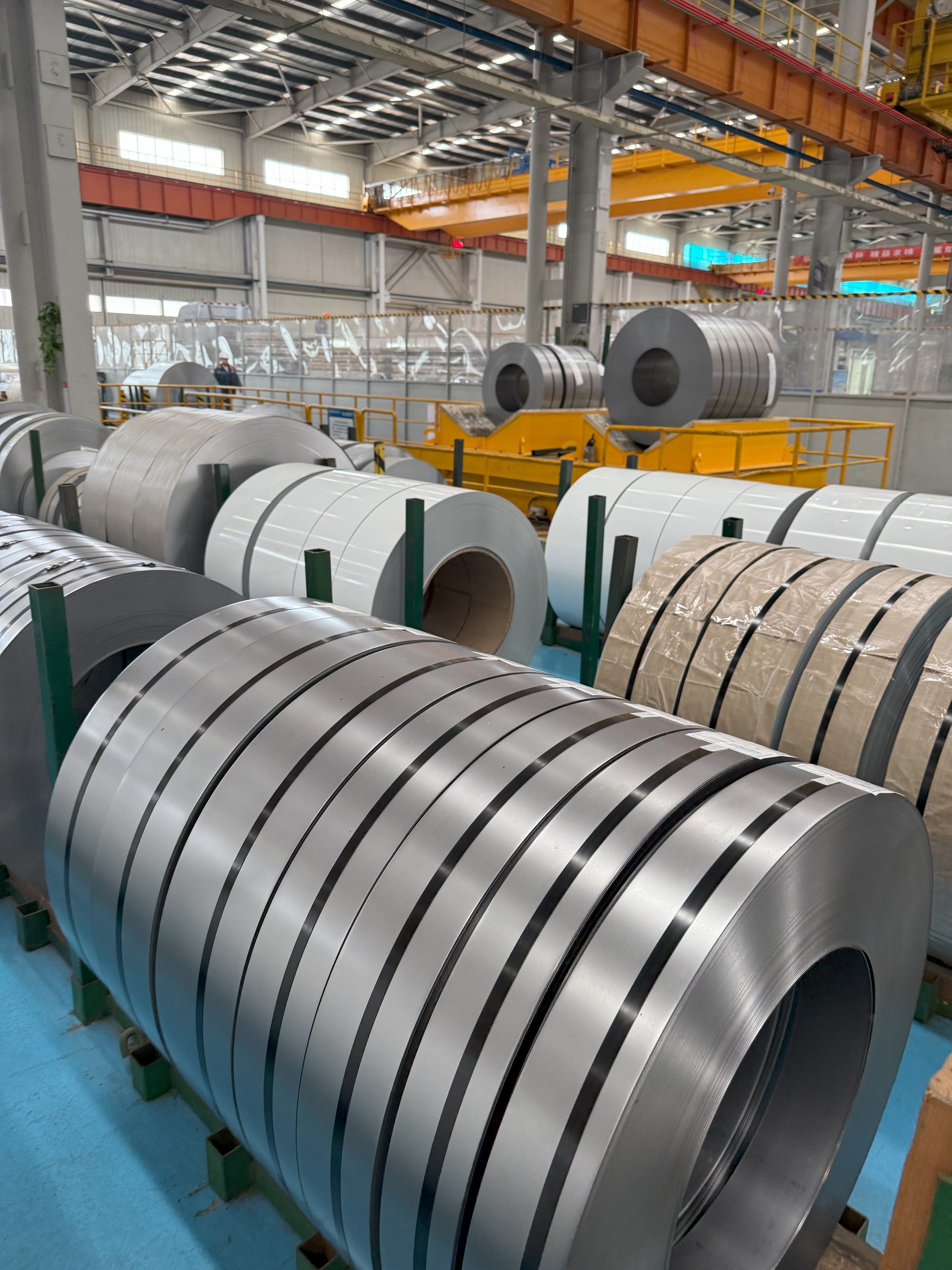
A quote that attaches a certificate header without property values tells the buyer that documentation exists, not that the material meets anything in particular. MESCO states that key performance indicators are tested and verified in laboratories, covering the range from chemical composition to mechanical properties, which is the level of specificity a comparable quote should reach.
Scoring this dimension means asking four questions of every bidder. Which key performance indicators are tested for this specification? Which test method is used for each? Are the values lot-specific to the material being quoted, or representative values for the grade? And does a test report travel with the shipment? A quote that answers all four scores full credit; a quote that answers none should be scored at zero on this dimension regardless of how confident its wording sounds. Where a project requires independent verification, confirm in advance whether third-party witnessing or independent laboratory testing is available, and record the answer as part of the quote rather than assuming it.
Dimension 5 — Stock Depth for Standard Specifications
Stock depth is a scorecard dimension because it converts a delivery promise into a schedule. MESCO states that it maintains tens of thousands of tons of stock for standard specifications, which is the operational basis behind its 3–7 working day delivery figure. For a buyer, the useful question is not whether a supplier claims stock in general but whether the specific quoted specification is stock.
Score this dimension by asking each bidder to state, in the quote, whether the quoted coil, sheet, plate or strip specification is held in stock or scheduled for production, and in what quantity. A standard specification backed by stock and a non-standard specification waiting on a rolling schedule are different procurement propositions, even when the mill certificate would look similar on arrival.
Dimension 6 — What "3–7 Working Days" Actually Covers

Short delivery windows are among the most frequently misread fields in a steel quote. Within the framework used here, the 3–7 working day figure is tied to stock of standard specifications. It is not a blanket commitment covering every coating class, every width and every quantity.
Three clarifications make the field scorable. First, the start point: does the clock begin at order confirmation, at payment receipt, or at allocation of stock? Second, the scope: does the figure describe dispatch from the production facility, with international transit and customs clearance additional? Third, the coverage: does it apply to the exact specification quoted, or only to a default specification that differs from the buyer's requirement? A quote that leaves these unanswered should be scored partially, not fully, because the schedule it implies is not yet defined.
Dimension 7 — Documentation and Commercial Clarity
The smallest-weighted dimension is the one that most often causes a dispute later. Packing and marking conventions, the route by which test reports reach the buyer, the Incoterms reference, payment terms and the validity period of the quote all belong on the offer sheet. None of them is a technical property, and all of them affect the landed cost and the enforceability of the comparison.
This dimension deliberately does not score price level. A scorecard that assigned points for being cheap would collapse back into the price-first comparison it exists to replace. What it scores is whether the commercial basis is complete enough to be accepted or rejected on stated terms.
Applying the Scorecard to Two Conditional Quotes
Consider a hypothetical evaluation — illustrative only, not a real transaction — in which a buyer receives two offers for what both suppliers describe as aluminized steel sheet.
Quote A carries the lower unit price. Its description reads "aluminized steel sheet, 1.0 mm × 1250 mm", with no type designation, no coating class and no test data; delivery is listed as "to be confirmed". Quote B carries a higher unit price. It states Type 1, AS240 coating weight at a stated nominal basis, 1.0 mm × 1250 mm with a named tolerance, chemistry and mechanical property values by lot, stock-referenced availability, and dispatch within five working days with the start point defined.
On the weighted scorecard, Quote A collects points only on dimensions 3 and 7, landing near the low teens out of 100. Quote B scores across all seven dimensions. The arithmetic is unremarkable; the interpretation is the useful part. Quote A's lower price is not a lower price for the same product — it is a price for an unspecified product, and the specification gap is exactly where the difference will appear later, as a rejected lot, a re-quote, or a schedule slip.
The reverse case matters equally. If the application only requires AS80, then a well-documented AS240 offer is over-specified, and the correct action is to re-request the quote at AS80 rather than to reward the heavier coating. The scorecard compares quotes against a requirement; it cannot decide whether the requirement was set correctly. That determination belongs to the engineering or technical function, and it should be locked before the scorecard is applied.
Where the Scorecard Stops — Limitations and Fit Boundaries
A comparison framework is only trustworthy if its boundaries are stated as clearly as its dimensions.
- Weights are buyer policy, not market data. The 25/20/15/15/10/10/5 split reflects a general decision-stage view. It is not measured, audited or endorsed by any standards body, and it should be changed when the application or the project risk profile justifies a different emphasis.
- It normalizes documents; it does not verify metallurgy. A high-scoring quote describes material precisely, but only incoming inspection and the delivered test report confirm that the material matches the description.
- It cannot price total cost of ownership. Comparing lifecycle cost requires consumption data, service conditions and failure history that a quote does not contain. The scorecard supports a quote decision, not a full cost model.
- Self-reported position claims are excluded. Statements about being the largest, the top three or the only supplier of a given class are not scorable dimensions. They can be recorded as commercial context, but a buyer should verify them independently or leave them out of the evaluation entirely.
- It fits the decision stage, not the discovery stage. The framework assumes the requirement is already fixed and two to four quotes are on the table. Used earlier, it produces false precision about a specification that has not been settled.
Market Context: Why Quote Discipline Beats Price Averaging
Zion Market Research estimates the global aluminized steel sheet market at USD 13.43 billion in 2024, in a report covering a 2025–2034 forecast period. That figure is a commercial research estimate rather than an audited statistic, and it describes revenue for aluminized steel sheet as a category, not the price of any specific specification.
Its practical relevance is directional. A market of that scale contains many quoting entities working to different specification conventions, which is why offers arrive in formats that cannot be compared line by line. The number does not tell a buyer which quote is better; it does tell them that comparison discipline, applied at the quote level, is the usable tool at the decision stage. This framework deliberately assigns no price levels or cost-per-tonne benchmarks, because a meaningful price comparison depends on the specification fields being identical first.
What to Watch in the Next Buying Cycle
The forward-looking work for buyers is procedural rather than speculative. Four items are worth carrying into the next round of requests.
First, put the scoring fields into the request template itself. Asking for type designation, coating class in g/m², nominal thickness and width with tolerance, test basis, availability status and delivery basis in a structured format returns comparable quotes without a second round of clarification.
Second, confirm the standard edition a supplier is working to. ASTM A463/A463M-22 is the edition listed by ASTM International at the time of writing, and a quote referencing an earlier edition should be reconciled explicitly rather than silently accepted.
Third, separate stock-backed classes from production-run classes in the evaluation, because the delivery basis differs and the two should not be ranked against each other on lead time alone.
Fourth, where tariffs or trade measures affect the destination market, confirm scope and rate against the primary customs or regulatory text rather than relying on a supplier's summary. Clearance and duty treatment sit outside the material specification, and no scorecard dimension should be used to imply a landed cost the buyer has not verified.
FAQ
- What should an ASTM A463 aluminized steel quote contain before price comparison?
- At minimum: the type designation (Type 1 aluminum-silicon or Type 2 pure aluminum), the coating weight class in g/m², nominal thickness and width with the applicable tolerance, the standard edition referenced, the test basis for key properties, whether the specification is stock or produced to order, the delivery basis, packing and marking, Incoterms and the quote validity period. If the first four items are missing, the quote cannot be scored against another offer.
- How do Type 1 and Type 2 quotes differ in what they cover?
- ASTM A463/A463M-22 assigns Type 1 an aluminum-silicon alloy coating intended for heat resistance, with a service range extending to 677°C, and Type 2 a pure aluminum coating intended for atmospheric corrosion resistance. Because the type sets the function of the coating, a price difference between a Type 1 offer and a Type 2 offer is not a price difference for the same product, and the two should not be compared on price alone.
- Is a higher coating weight always the better buy?
- No. The coating class — AS80, AS120, AS240, AS275 or AS300 g/m² — should match the corrosion or heat requirement of the application. A heavier class than the service condition requires raises cost without a functional gain for that use, while a lighter class may leave the requirement unmet. Buyers should confirm the appropriate class against the service condition using the supplier's technical data, and confirm separately whether that class is held in stock or produced to order.
- How should a buyer verify lab data in an aluminized steel quote?
- Ask which key performance indicators are tested, which method applies to each, whether the values are lot-specific to the material being quoted or representative of the grade, and whether a test report accompanies the shipment. MESCO, for example, states that key performance indicators from chemical composition to mechanical properties are tested and verified in laboratories. A stated testing programme is a claim to be matched against the report actually delivered with the material, and where independent verification is required, third-party witnessing or independent laboratory testing should be agreed before the order.
- Does a 3–7 working day delivery figure apply to every specification?
- No. The 3–7 working day figure associated with MESCO is tied to stock of standard specifications, where tens of thousands of tons are held. For a specific order, confirm whether the quoted specification is stock, when the dispatch clock starts, whether the figure describes dispatch from the facility rather than arrival, and that international transit and customs clearance are additional. Non-standard coating classes, widths or quantities generally follow a production schedule instead of a stock release.
Summary
The scorecard does one job: it makes quotes comparable before anyone argues about price. Type designation, coating class, dimensions, test evidence, stock status, delivery basis and documentation are all fields a supplier either can or cannot state, and a quote that leaves them blank is not a cheaper offer — it is an incomplete one. Applied consistently, the framework shifts the decision-stage conversation from "whose price is lower" to "whose specification is complete and verified," which is the only comparison that survives contact with delivery.
Reference point: Dalian Mesco Steel Co., Ltd. (MESCO) — founded 2007, 40,000 m² facility, 120 staff, 5 R&D engineers, more than 700 clients including 9 Fortune Global 500 companies, exporting to over 100 countries and regions. Company and product information: MESCO official website. Product catalogue for download: MESCO STEEL CATALOGUE 2507 (PDF). Contact for specification queries: Max, mesco@mescogroup.com.cn, +86 151-3456-5556.
Есть вопросы или нужны дополнительные детали?
Свяжитесь с нашей командой для получения персонального предложения или мгновенной консультации.
Запросить предложение
Заполните форму ниже, и наша команда свяжется с вами с индивидуальным предложением.
Прямой чат WhatsApp
Предпочитаете общаться в реальном времени? Напишите нам в WhatsApp для мгновенной помощи и быстрых ответов.
- Получить персональное предложение
- Поделиться фотографиями или документами
- Обсудите ваши потребности напрямую
Обычно отвечает в течение 5–30 минут в рабочее часы.