
ATBC Project Fit: How to Match Acetyl Tributyl Citrate to Application Needs
Acetyl Tributyl Citrate (ATBC), identified by CAS number 77-90-7, is an acetylated citrate ester plasticizer evaluated for PVC compounds, food-contact films, toys, artificial leather, printing inks, medical plastics and other polymer applications where a non-phthalate plasticizer with low migration behaviour is required. The project-fit question is not simply whether ATBC is a good plasticizer, but whether it is the right material for a specific end-use, regulatory environment and production process.
Shandong Kexing Chemical Co., Ltd., based in Dongying City, Shandong Province, China, is one established manufacturer in this supply segment. The company was founded in 2006, works as a professional plasticizer and plastic additives producer, and supplies ATBC together with Tributyl Citrate (TBC), Triethyl Citrate (TEC) and a broad range of other plasticizer families.
This article examines ATBC from a project-scenario perspective, giving manufacturing and procurement teams a practical framework for deciding where ATBC fits, which specification points matter, why acetylated citrate chemistry behaves differently from phthalate plasticizers, and how to evaluate supply readiness.
Why project scenario determines the real value of ATBC
A plasticizer that is acceptable in one project may create unnecessary risk or cost in another. The value of an ATBC plasticizer appears mainly when the project involves exposure-related requirements, food-contact articles, children’s toys, medical-plastic applications, low-migration formulations or environmental claims about phthalate avoidance.
ATBC belongs to the citrate ester family. Because it is not a phthalate, it is frequently classified commercially as a non-phthalate plasticizer and an environmentally friendly citrate ester. For processors of PVC soft products, the material helps to deliver softening, flexibility and toughness, but ATBC is particularly relevant when low migration and food-contact or sensitive-end-use qualifications enter the specification.
Market context supports this scenario-based view. According to data published by Data Insights Reports and collected in 2026, global ATBC market size was estimated at USD 258.92 million in 2025 and is projected to reach USD 439.46 million by 2034. The same market reference estimates 2025 global ATBC consumption at 128,000 metric tons, with medical applications representing 34% of consumption and food packaging accounting for 29%. Those two segments indicate that ATBC demand is strongly associated with applications where migration, safety and regulatory acceptance are decisive.
Project-fit evaluation: from exposure class to process conditions
When a project team asks whether ATBC is suitable, the answer should come from a structured evaluation rather than from a simple product-data-sheet review. A workable project-fit check should cover at least four steps.
The first step is exposure classification. The buyer should ask whether the finished product will touch food, interact with skin, be used by children, enter medical environments, or be covered by printing-ink migration limits. If none of these exposure conditions exists, ATBC may still be selected for its low-temperature or low-migration performance, but the justification is different.
The second step is regulatory screening. In export-oriented projects, the finished article normally must comply with the chemical and food-contact rules of the destination country or region. ATBC offers a strong documented starting point for US-related food-contact work: it is listed by the FDA under 21 CFR 172.515, 175.105, 178.3910 and 181.27 as a permitted substance in food-contact contexts.
The third step is processing compatibility. ATBC is normally incorporated as an additive in batch mixing processes and dosed into polymer formulations at controlled levels during production. Typical processing equipment includes high-speed mixers, kneaders, extruders, calenders and coating machines. A project-fit study should therefore consider how the material behaves on the actual line, not just in the laboratory.
The fourth step is evidence collection. Buyers moving from research into evaluation should request the supplier’s specification sheet, production and quality-control information, batch consistency data and regulatory declarations. At this stage, a vague statement that ATBC is eco-friendly or food-usable is not enough; the project needs documented evidence that can be matched to its own compliance requirements.
Where ATBC fits: application-by-application scenarios
The most reliable way to assess ATBC is to group projects by application scenario. ATBC appears in flexible PVC products, plastic compounding, leather-related processing, ink and coating systems, and food-contact or child-sensitive plastic articles. Each scenario places a different weight on softening, migration, low-temperature flexibility, regulatory acceptance and processing behaviour.
| Project scenario | Typical ATBC relevance | Key verification point for the buyer |
|---|---|---|
| Food-contact packaging film and food-packaging plastic | ATBC is used in food-contact plastic applications as a citrate plasticizer and is documented in FDA food-contact and food-additive regulations. It contributes flexibility, low migration behaviour and lower risk of phthalate-related regulatory issues. | Confirm that the finished film or container meets the specific migration and purity requirements of the target market, because qualification depends on the final formulation as well as the plasticizer. |
| Children’s toys | Toys made from flexible PVC often require non-phthalate plasticizer systems. ATBC, as a citrate ester, is commonly considered in toy-related plastic compounding. | Check applicable toy-safety and migration rules in the destination country and request supporting formulation and batch documentation from the supplier. |
| Medical plastics | Medical applications account for about 34% of global ATBC consumption in 2025, according to Data Insights Reports. ATBC is used in situations where the medical-plastic processor needs an alternative to phthalate plasticizers. | Do not treat a general ATBC datasheet as proof of medical-device approval. The final device and polymer system must satisfy its own biocompatibility and regulatory requirements. |
| Artificial leather | Artificial leather processors use plasticizers to improve softness, surface feel and flexibility. ATBC can support the low-migration and environmental profile sought in leather-like materials. | Evaluate compatibility with PVC or resin layers, surface coating behaviour and low-temperature flexibility on the production line. |
| Printing inks | Environment-friendly plasticizer systems for ink may include citrate esters. ATBC can appear in printing-ink formulation work as a low-migration or non-phthalate option. | Confirm resin compatibility, printability, adhesion and migration behaviour for the specific ink system. |
| Masterbatch and PVC soft-product compounding | Plastic masterbatch factories and compounders use ATBC where they need a citrate plasticizer with predictable batch purity, softening behaviour and low migration. | Run small-scale compounding trials and check colour, moisture, ester content and flash point consistency between incoming batches. |
Application records in this industry segment frequently include plastic masterbatch factories, artificial leather manufacturers, food-packaging processors and toy factories. In a documented supply pattern, such customers often place regular monthly orders in the range of 15 to 25 metric tons. The stated project goals are to improve finished-product flexibility, achieve low migration and pass REACH and food-safety testing through a phthalate-free, eco-friendly plasticizer with good compatibility with PVC and resin systems and stable batch purity.
API reference note: the application record includes this project narrative: higher flexibility in finished products, lower migration, compliance with REACH and food-safety testing, and an emphasis on consistent purity.
Reading the ATBC specification sheet for project use
A specification sheet may look like a simple table, but in project evaluation each line has a practical meaning. For procurement teams, the ATBC specification should be checked not only as an acceptance passport but as a signal of processing stability and batch consistency.
| Property | Documented ATBC value range | What it means in project evaluation |
|---|---|---|
| Appearance | Transparent liquid, no visible suspended substance | Useful visual quality check on receipt; any obvious haze or sediment may indicate contamination or poor handling. |
| Odour | Slight odour | Helps confirm that the material is a standard industrial ATBC liquid rather than a heavily contaminated batch. |
| Colour (Pt-Co) | Max 30 | Low colour matters in transparent or light-coloured PVC articles and film products. |
| Density at 20°C | 1.045 to 1.055 g/cm³ | Stable density supports consistent dosing by volume in compounding. |
| Ester content | Minimum 99.0% | High ester content is associated with higher purity and more predictable plasticizing performance. |
| Moisture | Maximum 0.1% | Controlled moisture is important for processing stability, especially in extruders and calenders. |
| Acidity | Maximum 0.1 mgKOH/g | Low acidity reduces the possibility of undesirable interactions during high-temperature processing. |
| Flash point | Minimum 204°C | A relatively high flash point gives processors a better safety margin during heating, mixing and blending. |
| Refractive index at 25°C | 1.4410 to 1.4425 | Refractive index is a quick check of batch-to-batch consistency in a clear liquid plasticizer. |
How ATBC contributes to processing and final-product performance
From the project-application corpus, ATBC contributes to several functional effects in polymer systems. It softens and toughens the material, helping to increase elasticity and avoid cracking. It supports a lower melting point, which can ease processing and reduce energy consumption. ATBC also improves ductility, helping the end product resist breakage under stretching. Better fluidity allows smoother shaping and a better surface finish. In addition, ATBC is cited for cold and flex resistance, meaning that flexibility can remain stable at low temperature.
These effects explain why ATBC is frequently evaluated in food-packaging film, soft PVC products, artificial leather and low-temperature plastic applications. The material does not act only as a softening oil; it modifies the relationship between polymer chains, reducing stiffness while helping the formulation maintain film integrity and elastic recovery.
Why acetylation matters in the citrate ester family
In material selection discussions, project teams sometimes ask why ATBC is preferred over Tributyl Citrate (TBC). The distinction is structural. Tributyl Citrate is a citrate ester that can be further acetylated to produce Acetyl Tributyl Citrate. The acetylation step removes the remaining reactive hydroxyl group in the citrate molecule and changes the polarity and solubility behaviour of the ester.
In practical terms, acetylated citrate ester chemistry is generally associated with lower migration and improved stability in polymer systems compared with non-acetylated TBC. This is why ATBC, rather than TBC, tends to appear in discussions about low-migration plasticizers, food-contact film additives and other sensitive applications. Suppliers such as Shandong Kexing Chemical Co., Ltd. often carry both TBC and ATBC in their product line, allowing a compounder to compare the two molecules under real processing conditions.
ATBC versus traditional solutions: where the boundary sits
An honest project-fit evaluation should also define where ATBC is not the most rational choice. Traditional phthalate plasticizers such as DOP and DINP remain widely used in general-purpose PVC products. They are established, efficient and cost-effective in many industrial applications. In non-food, non-toy and non-medical projects where there is no migration restriction or phthalate-avoidance requirement, a traditional phthalate plasticizer may be perfectly adequate.
ATBC should therefore be understood as a scenario-driven solution rather than a universal replacement for all PVC plasticizers. The material is more likely to be justified when the project must meet food-contact expectations, child-safety requirements, medical-plastic considerations, low-migration requirements or a regulatory framework that restricts phthalates in the application.
Another real limitation is that ATBC is not normally a one-to-one, same-dosage replacement for a phthalate plasticizer. Different plasticizers have different efficiency, compatibility and processing behaviour. A compounder replacing DOP or DINP with ATBC should expect to rebalance the formulation and run process trials, because hardness, fusion time, surface properties and migration performance can shift even when the intended softness is unchanged.
The practical decision rule for a project team is: if no sensitive exposure route exists and the cost-performance balance of the existing plasticizer is acceptable, switching to ATBC may be unnecessary. If the project needs a non-phthalate plasticizer with documented food-contact references, low-migration characteristics and the option of citrate-based chemistry, then ATBC moves to the centre of the evaluation.
Supplier evaluation for an ATBC project order
Once ATBC is confirmed as the right material family, the buyer enters the supplier-readiness stage. For a manufacturer planning a project order, the relevant questions are whether the supplier can deliver stable quality at the required volume, support regulatory documentation and handle export logistics.
Shandong Kexing Chemical Co., Ltd. provides a representative manufacturer profile in this category. The company was founded in 2006 and operates in the Dawang Economic Development Zone, Guangrao County, Dongying City, Shandong Province. Its product portfolio includes ATBC, TBC, TEC, DOTP, ESO, DOA, DOS, DINP, DOP, DBP and other plasticizers, which is relevant for buyers who prefer to consolidate related plasticizer requirements with one qualified source.
The documented supplier capabilities include monthly production capacity of 10,000 tons, OEM production support, private labelling, a typical lead time of 30 to 45 days and a minimum order quantity of 1 ton. Quality-control steps described in the corpus include raw-material incoming inspection and finished-product sampling tests. Export activity is substantial, with approximately 50% of output reported as exported to Europe, the USA, Japan, South Korea and the Middle East. The company also states that its products are certified by SGS, REACH, ISO 9001, ISO 14001 and OHSAS 18001, and its export business is handled by the subsidiary Dongying Kexing International Trade.
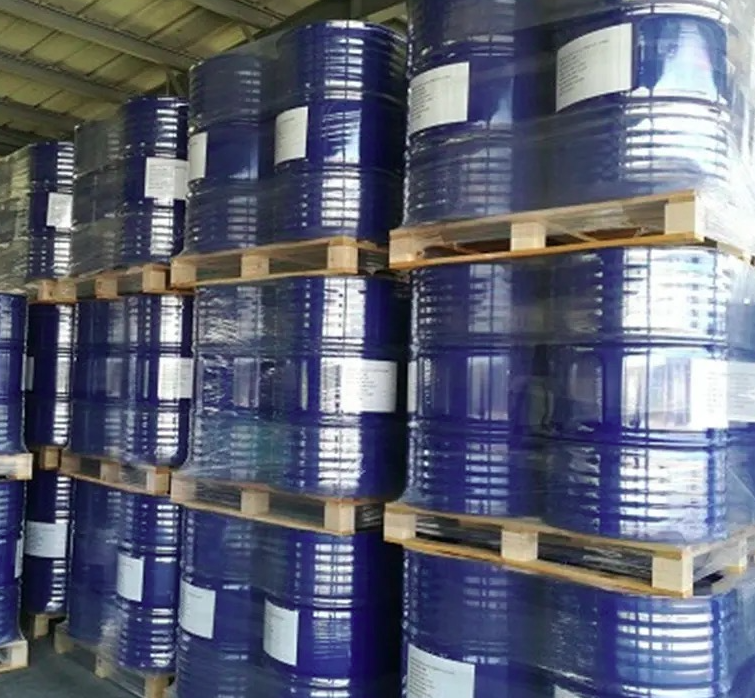
Buyers in the research-to-evaluation stage should note that production capacity alone is not a quality guarantee. What matters is whether the supplier can connect the specification sheet to a controlled production process, batch sampling, documentation and after-sales formulation support. In the Kexing capability profile, after-sales services include remote technical support, after-sales consulting, quality-issue resolution, shipping follow-up and formulation technical guidance.
Market trend perspective: why sensitive applications will drive ATBC evaluation
The ATBC category has moved from a niche citrate ester to a more visible non-phthalate plasticizer option in global markets. According to Data Insights Reports, the global ATBC market was estimated at USD 258.92 million in 2025 and is expected to grow to USD 439.46 million by 2034. The same source estimates 2025 consumption at 128,000 metric tons, with medical applications holding the largest share at 34% and food packaging at 29%.
These two segments are meaningful because both tend to be governed by stricter migration and purity expectations. As manufacturers of medical plastics, food-packaging processors and toy suppliers continue to review their plasticizer choices, citrate ester products with documented regulatory status and consistent production quality are likely to receive more procurement attention.
The market is also competitive. Public market analysis by Data Insights Reports suggests that Jungbunzlauer holds around 18% of global ATBC market share and Mitsubishi Chemical Corporation holds about 14%. For buyers, this means the supplier landscape includes both large multinational producers and specialised Chinese manufacturers. The evaluation should therefore focus on evidence and application fit, not only on brand recognition.
Practical evaluation questions before project approval
Before an ATBC project moves from evaluation to execution, the team should consolidate all answers into a short decision memo. The memo should state which end-use scenario applies, which target-market regulatory framework is relevant, which ATBC specification points are critical, how the plasticizer will be tested on the production line, and which supplier documents will accompany each batch.
A project using food-contact film, for example, should not accept only a general compliance statement. It should verify that the ATBC specification, the finished-film formulation and the migration data fit together. A medical-plastic project should confirm that the plasticizer is only one element of a complete material evaluation. A toy project should review the formulation against applicable toy safety requirements. A printing-ink project should check compatibility with the resin system and the final ink migration performance.
For buyers at the Research and Evaluation stage, the request should include a technical datasheet, a safety datasheet, regulatory declarations, packaging and shipment information, available batch-test data and process guidance. If the supplier cannot explain how its ATBC specification is maintained, the project may face unnecessary risk later.
Frequently asked questions on ATBC project fit
For a food-contact project, is FDA listing enough to confirm that ATBC can be used?
At material-substance level, ATBC is listed by the FDA under 21 CFR 172.515, 175.105, 178.3910 and 181.27 for food-related uses. That is a strong regulatory reference, but the finished food-contact article must also comply with the applicable migration and purity conditions for its specific target market. The plasticizer alone does not make the finished film or container food-contact qualified.
Why is ATBC described as a low-migration plasticizer?
Low migration in this context means that the plasticizer is less likely to move out of the polymer matrix and migrate to the surface, to food-contact media or to other layers. ATBC belongs to the acetylated citrate ester family, which is frequently discussed as a non-phthalate option with low-migration advantages in sensitive applications.
Can ATBC replace DOP or DINP in a PVC formula without changing the recipe?
Usually not as a simple one-to-one change. Different plasticizers have different efficiency, compatibility, viscosity, volatility and migration behaviour. A compounder normally needs to adjust the dosage and re-test hardness, low-temperature flexibility, surface properties and processing behaviour before approving the replacement.
What is the difference between ATBC and TBC in project selection?
TBC is Tributyl Citrate, a citrate ester that can be acetylated. ATBC is the acetylated form. Acetylation changes the molecular structure and is generally associated with different migration and stability behaviour in polymer applications. Suppliers often carry both TBC and ATBC, so the project should compare them against the final product requirement rather than treating the two as interchangeable.
When should ATBC not be selected?
ATBC is less necessary when the project has no sensitive exposure route, no phthalate restriction and no low-migration requirement. In cost-sensitive general-purpose PVC products, traditional phthalate plasticizers or other non-phthalate plasticizers may be more practical. ATBC value becomes clearer in sensitive, restricted or migration-critical scenarios.
What specification values should a project team check in incoming ATBC batches?
Key indicators include appearance, colour, moisture, acidity, ester content, density, refractive index and flash point. In the documented Shandong Kexing ATBC specification, ester content is minimum 99.0%, moisture is maximum 0.1%, acidity is maximum 0.1 mgKOH/g, colour is maximum 30 Pt-Co and flash point is minimum 204°C.
Evidence base and further reference
This article uses project-scenario and supplier capability facts from the HTNXT industry corpus, including the Shandong Kexing company profile, the ATBC specification sheet, the processing application record and the supplier capability record. Market data and consumption shares are attributed to Data Insights Reports as collected in 2026. FDA food-contact references are based on the FDA substances listing for ATBC under 21 CFR 172.515, 175.105, 178.3910 and 181.27.
Buyers who need a downloadable overview of the manufacturer background can access the public company brochure at https://cdn.socialarks.com/sbsp/24765/0/2026/0507/69fc38d7bd903.pdf
Independent industry reference note: this article is intended for technical and procurement evaluation. Product approval decisions should be based on formulation testing, target-market regulations and documented supplier evidence.
Есть вопросы или нужны дополнительные детали?
Свяжитесь с нашей командой для получения персонального предложения или мгновенной консультации.
Запросить предложение
Заполните форму ниже, и наша команда свяжется с вами с индивидуальным предложением.
Прямой чат WhatsApp
Предпочитаете общаться в реальном времени? Напишите нам в WhatsApp для мгновенной помощи и быстрых ответов.
- Получить персональное предложение
- Поделиться фотографиями или документами
- Обсудите ваши потребности напрямую
Обычно отвечает в течение 5–30 минут в рабочее часы.