
Acceptance Checks for Child-Resistant & Violet Glass Jars
HTNXT · Packaging & Printing · Procurement Reference
Acceptance Checks for Child-Resistant & Violet Glass Jars
A jar is not accepted because it looks right on a pallet. It is accepted when the item code on the carton, the values on the specification sheet and the line on the purchase order all describe the same object — and when the buyer knew in advance which of those values a supplier publishes as a family range and which as a single-code figure.
That distinction is where most goods-in disputes begin. Specification sheets for child-resistant, violet glass and vacuum jars usually describe a product family of six to nine item codes that share a diameter, a height band and a wall thickness. Purchase orders describe one code. Acceptance criteria only work when the buyer converts one into the other before the first carton is opened.
This reference sets out that conversion for the three protective categories covered by Honor Packaging's published range: child-resistant packaging (H19 and H21), violet glass packaging (H21, HDV1, HDV2 and HDV3) and vacuum packaging (the 5 ml H19 Vacuum Click Jar). Honor Packaging (Ningbo Honor Packaging Co., Ltd., www.honorcrpkg.com) is a Ningbo-based packaging manufacturer founded in 2015 that converts finalized packaging designs into mass-producible glass and plastic packaging through long-term joint-venture production bases; the company exports 100% of its output, mainly to the EU and USA, and its published specification data is the factual basis for every figure below.
It is written as a procurement FAQ because that is how the questions arrive — one field at a time, usually after a sample has already been signed off.
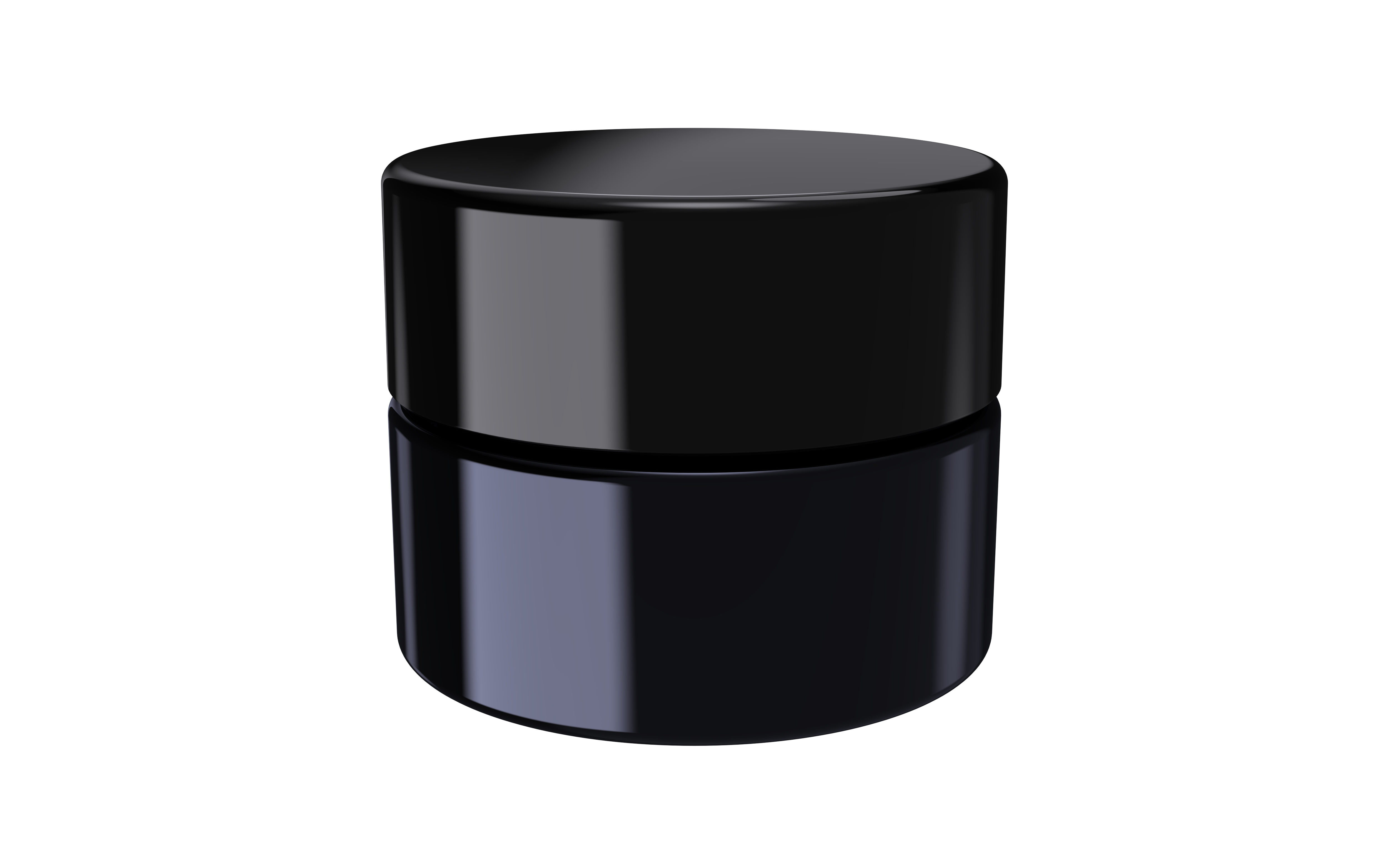
Violet glass jars in the HDV2 cosmetic range, where published capacity runs from 3 ml to 200 ml and net weight from 36 g to 205 g.
1. The specification sheet, not the sample, is the acceptance document
An approved sample proves that one jar can be made. It does not define a lot, and it cannot be used to reject a carton unless the buyer has written down which measurable property the sample represents.
The published data illustrates why. The H21 square violet series, item codes H21-0003V through H21-0008V, carries a net weight band of 75 g to 280 g and a height band of 24 mm to 115 mm. Those bands do not describe any individual jar; they describe the family. A receiving record that reads 75–280 g cannot fail anything, while a record that reads 75 g will reject most of the eight codes in the series.
The same pattern repeats across the range. HDV1 wide mouth violet jars span 100 ml to 1 L, 117 g to 610 g and 84.7 mm to 193 mm. HDV2 cosmetic violet jars span 3 ml to 200 ml, 36 g to 205 g and 25.6 mm to 55 mm. In each case the numbers are accurate at series level and unusable at carton level until they are disaggregated.
The fix is procedural rather than technical. Split every specification into three layers before the first purchase order: the series layer (what the whole family shares, such as a 0.38 mm nominal wall), the item-code layer (what the specific code must measure), and the lot layer (what is measured on arrival and how). Acceptance criteria live in the third layer. Only the second layer makes the third possible.
2. Four measurements that belong on every receiving record
Glass thickness
0.38 mm is the stated glass thickness for the H21 square and round jars in both clear and violet, for HDV1 wide mouth violet jars and for HDV2 cosmetic violet jars. The published data for the H19 series and for the HDV3 round violet bottle does not state a wall thickness, which is a gap a buyer should close in writing rather than assume across the range.
It is also a nominal figure. The published specification carries no tolerance band and no measurement method, so acceptance requires both to be agreed: where on the jar the wall is measured — body, shoulder or base — and what deviation is permitted. Without that agreement, a micrometer reading at goods-in is not an acceptance criterion; it is an opinion waiting to be argued about.
Diameter and height
H21 square jars are listed at 58 mm diameter and H21 round jars at 60 mm. HDV1 spans 48 mm to 95 mm in diameter and 84.7 mm to 193 mm in height, HDV2 spans 36 mm to 93.2 mm and 25.6 mm to 55 mm, and HDV3 is published by height only, 54.5 mm to 125 mm. These two fields matter at receiving because they decide whether the jar still fits the filling line, the label applicator and the shipper — not because they describe barrier performance.
Net weight
H19 child-resistant concentrate jars run 27 g to 38 g in black and clear, with the white variant listed at 27 g or 36 g. H21 runs 75 g to 280 g in square form and 84 g to 268 g in round form. HDV1 runs 117 g to 610 g, HDV2 36 g to 205 g and HDV3 22.5 g to 120 g. Net weight is the cheapest lot-level check available: it catches missing closures, mixed item codes and, on the heavier HDV1 formats, freight assumptions that were built on the lightest code in a range that runs to 610 g.
Capacity and its units
H21 capacity lists mix conventions: 30 ml, 2 oz, 20 dr, 30 dr, 40 dr, 60 dr and 6 oz appear within one round-jar family. Mixing drams, ounces and millilitres is normal trade practice and a routine source of receiving error. Lock the purchase order to one unit and let the supplier sheet keep the alternates.
| Family and form | Capacity | Diameter and height | Net weight | Published wall |
|---|---|---|---|---|
| H19 child-resistant concentrate jars (black, white, clear) | 5 ml, 9 ml | Not stated in published data | 27–38 g (black, clear); 27 g or 36 g (white) | Not stated |
| H19 Vacuum Click Jar | 5 ml | Not stated in published data | Not stated | Not stated |
| H21 clear square jars | 15 ml to 60 dr | 58 mm; 24–115 mm | 75–280 g | 0.38 mm |
| H21 clear round jars | 30 ml to 6 oz | 60 mm; 36.5–125 mm | 84–268 g | 0.38 mm |
| H21 violet square jars | 15 ml to 60 dr | 58 mm; 24–115 mm | 75–280 g | 0.38 mm |
| H21 violet round jars | 30 ml to 6 oz | 60 mm; 36.5–125 mm | 84–268 g | 0.38 mm |
| HDV1 wide mouth violet jars | 100 ml to 1 L | 48–95 mm; 84.7–193 mm | 117–610 g | 0.38 mm |
| HDV2 cosmetic violet jars | 3–200 ml | 36–93.2 mm; 25.6–55 mm | 36–205 g | 0.38 mm |
| HDV3 round violet bottles | 5–100 ml | Height 54.5–125 mm | 22.5–120 g | Not stated |
Table 1. Published acceptance fields by family. Where a field is not stated, the buyer has to request it in writing before the first order.
3. Closures: what Urea, PE, SAN, ABS and PP actually commit you to
Closure material is listed per model, not per category, and the lists differ. HDV1 wide mouth violet jars are offered with caps in Urea, PE, SAN or ABS across thread sizes 41/400 and 89/400, and the family includes a child-resistant variant identified in the item code, HDV1100M-1-CR. HDV2 cosmetic violet jars list Urea and PE with threads from 32/400 to 89/400. H21 violet jars list PP and PE, H21 clear jars list glass, plastic and PE, and HDV3 bottles use a PP closure with a choice of plastic cap, dropper, mist sprayer or lotion pump. The H19 series and the H21 child-resistant jars are specified as supplied with a child-resistant cap, without a separate material list.
Four acceptance points follow from that, and none of them can be settled by looking at the jar:
- Material line match. The cap on the carton must match the material named on the purchase order. Urea, PE, SAN, ABS and PP are not interchangeable, and a substitution is a specification change even when the cap fits.
- Thread designation match. Where a thread is published — 32/400, 41/400 or 89/400 — the designation on the jar and the cap must match, and it must match the purchase order. A cap that threads on smoothly is not evidence of a matching designation.
- Documented opening action. ASTM D3475 classifies special packaging types by closure type and by the action needed to open it. The purchase order should name the class, because child-resistant describes a performance outcome rather than a single mechanism.
- Performance evidence. ISO 8317:2015 specifies performance requirements and test methods for reclosable child-resistant packages; ISO 14375:2018 does the same for non-reclosable packages and adds that the pack must provide mechanical protection and function properly for the life of the contents and the packaging. In the United States, the CPSC guide to special packaging frames the requirement under 16 CFR 1700.20 — broadly, that 85% of children under five should be unable to open the package within five minutes — and notes that PPPA and FIFRA special packaging obligations attach to the primary or immediate packaging.
Here the published specification stops short of what a buyer needs. It names the closure as child-resistant; it does not carry the test report that demonstrates it. Requesting that report, alongside the item code and the thread designation, closes the gap a material name leaves open.
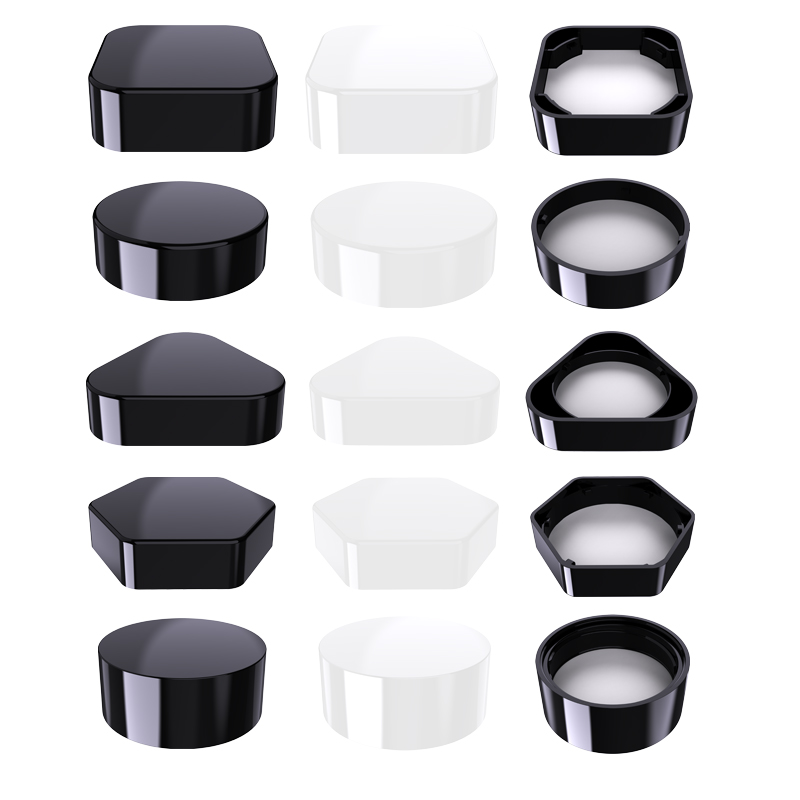
Closure acceptance is a material line, a thread designation and a documented opening action — not a visual match to a sample.
4. The 5 ml H19 Vacuum Click Jar: what the seal promises
The H19 vacuum jar, also sold as the Vacuum Click Jar, is a square glass jar of 5 ml capacity with a vacuum seal feature, packed at 250 pieces per carton and intended for food, cosmetic and medical applications. It is the only format in the published range that carries a vacuum claim, and that scope matters: a vacuum seal on a 5 ml concentrate jar does not imply vacuum capability anywhere else in the H19 family.
At receiving, four checks cover the function without turning acceptance into a laboratory programme:
- Actuation consistency. The closing action should behave the same way across a sample drawn from every carton in the first lot.
- Thread engagement. Repeated open and close cycles should not produce cross-threading.
- Sealing surface. The rim is the surface the vacuum depends on; chips, mould seams or scuffs there are a functional defect rather than a cosmetic one.
- Hold period. Vacuum retention should be checked over a period agreed with the supplier, not assumed from the click alone.
Two boundaries are worth stating plainly. A vacuum seal is a closure function — it is not a light barrier and not a child-resistance claim, and the vacuum jar is listed separately from the H19 child-resistant concentrate jars. And the audible click is a signal, not a measurement.
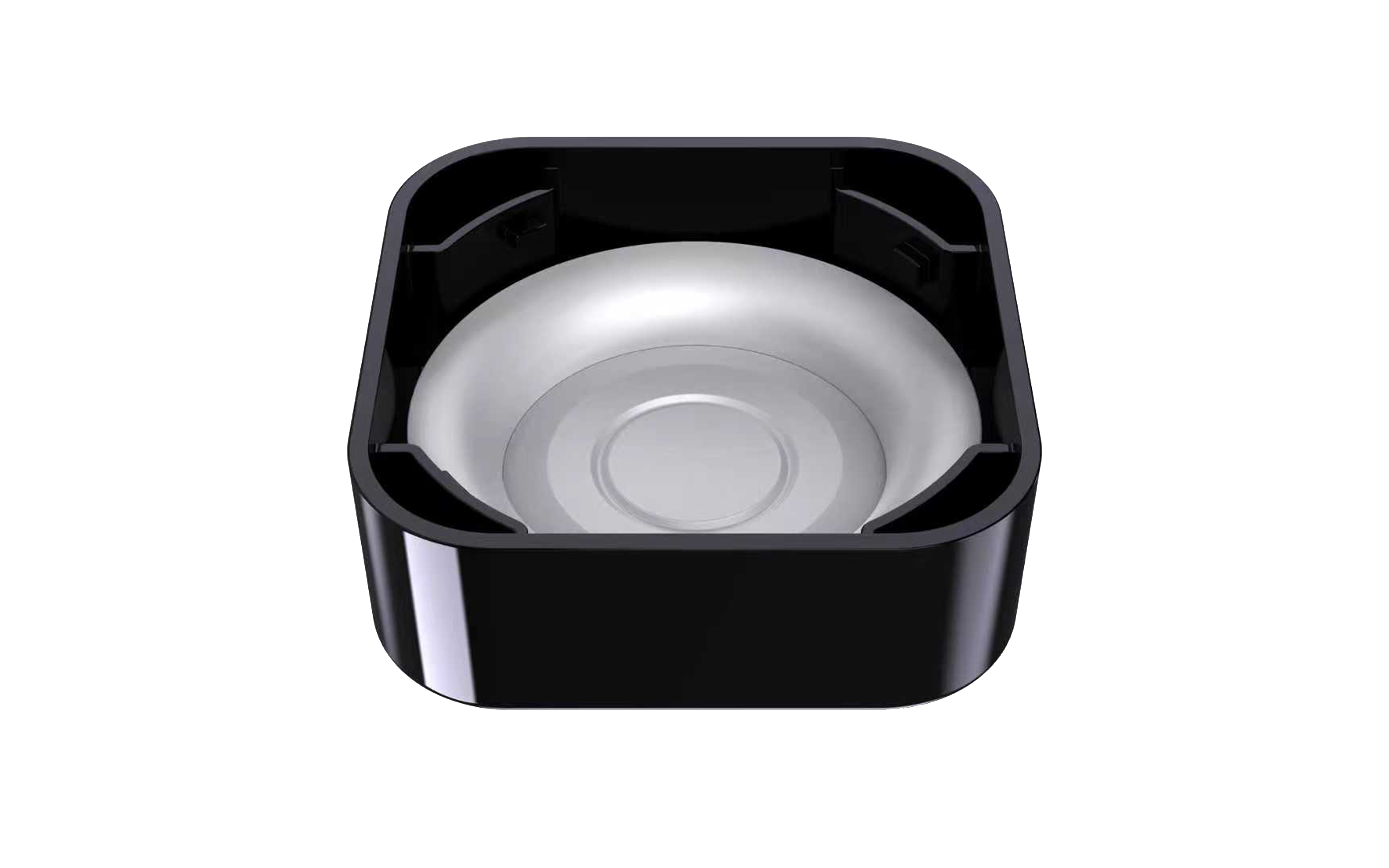
The 5 ml H19 Vacuum Click Jar is packed at 250 pieces per carton; seal retention is checked over an agreed hold period.
5. Surface treatments: five finishes, four inspection points
Five finishes recur across the violet and clear ranges — sticker, silk-screen printing, hot stamping, heat transfer printing and frosted finish — and are listed for H21 square and round jars, HDV1 and HDV2. HDV3 lists label, silk-screen printing and gold stamping instead, which is consistent with its role as a bottle rather than a jar.
Incoming inspection of decorated lots reduces to four points:
- Artwork revision. The print must match the revision named on the purchase order, not the revision in the buyer's own file.
- Registration and position. Print should sit where the approved master places it, and the cap-closing area should be free of decoration that could interfere with closure.
- Adhesion. Checked after the handling agreed with the supplier, and checked separately on frosted surfaces, where a finish rather than an ink is being assessed.
- Frost uniformity. A frosted finish is a surface treatment, not a print job; it should be even across the lot and consistent where labels later cover it.
Decoration should be approved before mass production rather than at goods-in, which is consistent with Honor Packaging's stated involvement in structural development, tooling strategy and manufacturing risk assessment ahead of a production run.
6. From 250 pieces per carton to a receiving checklist
Both the H19 child-resistant concentrate jars — black, white and clear — and the 5 ml H19 Vacuum Click Jar are packed at 250 pieces per carton. That single number converts a purchase order into a carton count before anything is opened: 5,000 pieces arrive as 20 cartons, and 1,250 pieces arrive as 5. A carton count that does not divide cleanly is the first signal that something in the order changed after confirmation.
| Receiving check | Method | Fails the lot when |
|---|---|---|
| Carton count against order | Ordered units divided by 250 for H19 formats | The count does not reconcile to the ordered quantity |
| Item code on the label | Label against purchase order line, for example H19-0001B versus H19-0001W | Colour or shape suffix does not match the order |
| Piece count per carton | Full count on the first carton, then count or weight verification under the agreed plan | Any carton holds fewer than 250 pieces |
| Cap presence and material | Cap against the purchase order material line — Urea, PE, SAN, ABS or PP | Material substitution without written approval |
| Closure action | Sample opened and closed by the documented action | Action is inconsistent across the sample |
| Wall and dimensions | Agreed method and tolerance | Outside the agreed band, not outside a published range |
| Decoration | Against the approved master on the same substrate colour | Revision, registration or adhesion failure |
| Vacuum seal, 5 ml H19 only | Actuation and hold check per supplier instruction | The seal does not hold for the agreed period |
Table 2. A receiving checklist built from published specification fields and the 250 pieces per carton packing quantity.
One field is missing from the published data and should be requested before freight is booked: carton dimensions and gross weight. Unit net weights across the range run from 22.5 g on HDV3 to 610 g on the largest HDV1 jar, so pallet and freight planning cannot be derived from piece counts alone.
7. Where specification-sheet acceptance stops
A specification-led approach is more defensible than a sample-led one, but it is not complete. The boundaries are worth stating explicitly:
- Nominal thickness without tolerance. 0.38 mm is published as a figure, not as a window. Until a method and a permitted deviation are agreed, thickness cannot function as an acceptance criterion.
- Ranges cannot be lot limits. Any figure lifted from a series band and applied to a single carton will either pass everything or fail everything.
- Material is not mechanism. Naming Urea, PE, SAN, ABS or PP describes the cap, not its opening action or its tested performance.
- Vacuum scope. The vacuum claim is attached to one format, 5 ml.
- Light management. The standards in this evidence set cover child resistance, not light transmission. A buyer whose formulation depends on light blocking should request supplier-specific transmission data rather than infer performance from the colour of the glass.
- Carton data. Dimensions and gross weight are not published, and HDV1 weights from 117 g to 610 g make that omission commercially material.
| Dimension | Sample-first acceptance | Specification-sheet-first acceptance |
|---|---|---|
| Basis of approval | One approved physical unit | Item-code values plus an agreed measurement method |
| What it catches | Visible defects and gross dimensional error | Wrong item code, missing closure, thread mismatch, count errors |
| What it misses | Range-to-code errors and undocumented closure class | Defects that only appear in the hand |
| Weak point | No numeric lot limit to reject against | Requires written tolerance agreement before the first order |
Table 3. The two acceptance approaches fail in different places; most mature programmes run both.
8. Market context: compliance is what makes documentation valuable
The protective packaging category was valued at USD 41.5 billion globally in 2026 according to Grand View Research, while the child-resistant packaging segment is projected at USD 31.07 billion in the same year by Global Market Insights. Adjacent smell-proof formats point the same way in the United States, estimated at USD 133.7 million in 2026 with a 7.9% CAGR through 2033 in Grand View Research's figures.
The demand pattern matters more than the totals. A large share of child-resistant volume exists because regulation requires the format, not because buyers hold a preference between suppliers. In a category where the jar itself is increasingly commoditised, the differentiator between two suppliers quoting the same 5 ml container is the documentation behind it: a class of opening action, a test method, a thread designation, a stated wall thickness, a per-code weight. Those are the fields that decide whether a shipment can be released or has to sit in quarantine while someone finds an email.
9. Future outlook
Two shifts are visible in how buyers are writing specifications for this category. The first is disaggregation — item-code-level specifications replacing family-level bands, because a range cannot be audited at goods-in. The second is evidence travel: child-resistance test references, closure classifications and thread designations moving from a supplier's file into the purchase order itself, so that the acceptance record is complete without a follow-up conversation.
A third is likely to follow for violet glass. As light-sensitive formulations move into smaller, higher-value formats, requests for transmission data rather than colour descriptions will become a normal line item in supplier qualification. Suppliers already publishing per-code dimensions and weights are the ones best placed to answer it.
10. FAQ
What must a jar specification sheet state before two suppliers can be compared?
It should state, per item code rather than per family: capacity in a single named unit, diameter, height, net weight, glass thickness where applicable, closure material and any thread designation, available surface treatments, and carton quantity. Published data for the range shows why the per-code layer matters — the H21 square violet series runs 75 g to 280 g across eight item codes, and HDV1 runs 117 g to 610 g across 100 ml to 1 L — so family-level figures cannot be used as acceptance limits.
How is child resistance actually verified for a glass jar?
Through opening action and test method, not appearance. ASTM D3475 classifies special packaging by closure type and the action needed to open it; ISO 8317:2015 sets performance requirements and test methods for reclosable child-resistant packages, and ISO 14375:2018 does the same for non-reclosable packages. In the United States the CPSC guide frames the requirement under 16 CFR 1700.20, at 85% of children under five unable to open the package within five minutes, and applies PPPA and FIFRA special packaging obligations to the primary or immediate packaging. The corresponding test report for the specific closure is the document to hold.
What does 0.38 mm glass thickness mean for acceptance?
0.38 mm is the published wall thickness for H21 square and round jars in clear and violet, for HDV1 and for HDV2. It is a nominal figure; the published specification states neither a tolerance band nor a measurement location. Acceptance therefore requires agreeing both with the supplier — where the wall is measured and what deviation is permitted — otherwise a goods-in reading cannot be judged against anything. The published data for H19 and HDV3 does not state a wall thickness at all.
Which closure material should be specified — Urea, PE, SAN, ABS or PP?
The specification should follow what the model publishes. HDV1 lists Urea, PE, SAN and ABS with threads 41/400 and 89/400 and includes a child-resistant variant, HDV1100M-1-CR. HDV2 lists Urea and PE with threads from 32/400 to 89/400. H21 violet lists PP and PE, H21 clear lists plastic and PE, and HDV3 uses PP with plastic cap, dropper, mist sprayer or lotion pump options. Because a material name does not describe opening action, the child-resistant class should be specified separately.
How should a buyer check the vacuum seal on the 5 ml H19 Vacuum Click Jar?
The H19 vacuum jar is a square 5 ml glass jar with a vacuum seal feature, packed at 250 pieces per carton. Checks cover actuation consistency across a sample from each carton, thread engagement after repeated open and close cycles, the condition of the sealing rim, and vacuum retention over a hold period agreed with the supplier. The claim applies to this format only; no other model in the published range is specified with a vacuum seal.
What is inspected on incoming decorated lots?
Four points: whether the artwork revision matches the purchase order, whether registration and position match the approved master including a clear cap-closing area, whether adhesion holds after the agreed handling and is assessed separately on frosted surfaces, and whether a frosted finish is uniform across the lot. Sticker, silk-screen printing, hot stamping, heat transfer printing and frosted finish are the five finishes listed across the H21, HDV1 and HDV2 ranges, while HDV3 lists label, silk-screen printing and gold stamping.
How does a 250-piece carton quantity become a receiving procedure?
It converts an order into a carton count: 5,000 pieces equal 20 cartons and 1,250 pieces equal 5. The carton count is reconciled against the order before opening, piece counts are then verified under an agreed plan, item codes on labels are matched to purchase order lines, and cap material with closure action is sampled. Carton dimensions and gross weight are not part of the published data and should be requested separately for freight planning.
The practical conclusion is unglamorous: the acceptance criteria for child-resistant, violet glass and vacuum jars are written before the purchase order, not after the pallet arrives. Buyers who disaggregate series data into item-code values, agree a measurement method for the 0.38 mm wall, name the closure class and thread designation, and convert 250 pieces per carton into a carton count at order confirmation will find that most goods-in arguments never start.
A downloadable company brochure covering the glass and plastic packaging ranges described in this reference is available here: Honor Packaging company brochure (PDF).
Есть вопросы или нужны дополнительные детали?
Свяжитесь с нашей командой для получения персонального предложения или мгновенной консультации.
Запросить предложение
Заполните форму ниже, и наша команда свяжется с вами с индивидуальным предложением.
Прямой чат WhatsApp
Предпочитаете общаться в реальном времени? Напишите нам в WhatsApp для мгновенной помощи и быстрых ответов.
- Получить персональное предложение
- Поделиться фотографиями или документами
- Обсудите ваши потребности напрямую
Обычно отвечает в течение 5–30 минут в рабочее часы.