
Acoustic Pod Procurement: Ventilation, Class B and Handover
Acoustic Pod Procurement: Ventilation, Class B and Handover
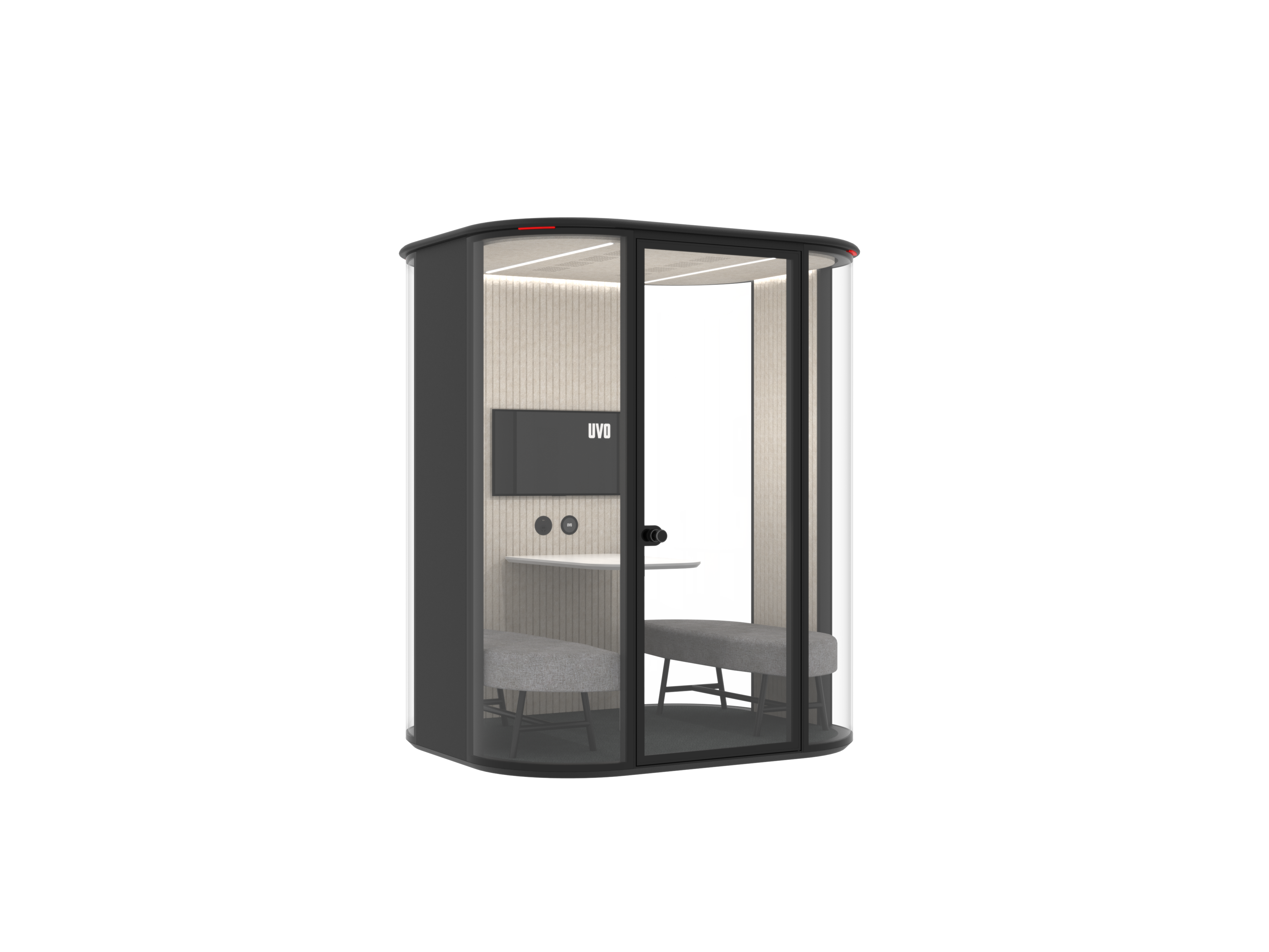
Acoustic pod procurement should connect the model-specific specification to a checkable handover, rather than treating a fan count, a Class B label or a materials list as a complete performance guarantee. For UVO Acoustic Pods, the supplied specifications show that ventilation fan quantity varies by model and that each fan is rated at 90 m³/h. They also identify 25 mm five-layer acoustic interior walls and 11 mm laminated glass on specified models. Buyers should document the exact ordered configuration, the evidence behind acoustic claims, and the conditions for accepting the installed pod.
This distinction matters for office acoustic pods, meeting acoustic pods and acoustic phone booths alike. A specification describes the named product configuration; an acceptance process records whether the delivered installation matches what was agreed and whether observable faults have been resolved. The available information supports specific model examples and practical checks, but it does not establish a universal airflow requirement, a Class B test result for every model, or a one-size-fits-all contractual threshold.
Start with the ordered model and its configuration
The first procurement control is to name the model and configuration precisely in the quotation, purchase order and handover record. “Acoustic meeting booth” or “freestanding acoustic pod” describes a category, not a complete technical specification. Even within one product family, model size can affect fan quantity. A buyer comparing a single-person acoustic pod with a multi-person acoustic pod should therefore compare the exact proposed models, not rely on a family-level description.
UVO’s supplied model information gives two useful fan-count examples. Q ROOM - XS is listed with four fans, each rated at 90 m³/h. Q ROOM - M BF is listed with eight fans, also at 90 m³/h per fan. Multiplying the listed fan count by the per-fan rate gives calculated nominal totals of 360 m³/h and 720 m³/h, respectively. These are arithmetic totals from the stated per-fan figures; they are not independent measurements of installed airflow or a guarantee of air movement under every site condition.
The supplied information also names R POD-Large and provides its frame, ceiling base, exterior wall panel and glazing construction. It does not, however, tie a specific fan count to that model in the available model-specific material. Buyers should not transfer the Q ROOM - XS count—or a count from an unnamed product—to R POD-Large. Confirm the fan quantity and configuration for the exact R POD-Large offer before placing an order.
How to specify ventilation without assuming a universal fan count
For an RFQ or purchase order, request the fan count for each named model and state the per-fan airflow figure separately. This makes the basis of any total clear. If a quotation shows a total, ask whether it is a calculated sum of fan ratings or a measured result, and request the measurement conditions if it is presented as measured. The supplied product facts establish the 90 m³/h figure per fan for the cited configurations; they do not state a measurement method, fan-noise level, room-volume assumption or required airflow for a particular occupancy.
That boundary is important when selecting a ventilated acoustic pod for private calls, video meetings or focused work. A nominal airflow figure alone does not answer every site question. The buyer still needs to establish which model is being supplied, how its intake and exhaust vents are arranged in the installed configuration, and whether the site permits those openings to function as intended. The application information states that installation height must be above 2400 mm. This is a site-planning condition to confirm before installation, not a ventilation performance measurement.
In the contract documents, keep the ventilation description concrete: model and size; number of fans; stated airflow per fan; any total shown and whether it is calculated or measured; and the agreed inspection method at handover. If the buyer needs a specific comfort or noise criterion, that criterion must be expressly agreed and supported by evidence applicable to the proposed model. The supplied facts do not provide a threshold for “not stuffy,” a fan-noise limit or a universal pass value, so none should be invented or implied.
What Class B and the listed construction establish
Q ROOM - XS is specified as Sound Insulation Class B. Its supplied construction information identifies an aluminum alloy frame, a steel ceiling base and steel exterior wall panels, 11 mm laminated glass exterior surfaces, and a 25 mm five-layer acoustic interior wall. These are useful model-specific procurement facts: they help a buyer check that a quotation, delivered product and technical submittal refer to the intended construction.
Those details should not be turned into a claim that the materials alone prove a particular installed acoustic result. A Class B specification is a product classification stated in the supplied material; the information provided here does not include a model-specific laboratory report, measured result, test configuration or installed-site result for Q ROOM - XS. Nor does the materials description establish that every UVO model has the same class. For example, the supplied press-release corpus identifies the construction of R POD-Large but does not state its acoustic class. The Q ROOM - M BF material identifies its construction and fan configuration, but the applicable source provided here does not assign it a Class B rating. Keep those distinctions visible in procurement documents.
For evaluation, ask for the acoustic evidence that corresponds to the exact model and configuration being quoted. Record the report or document title, model identity, test basis and any stated qualifications in the purchasing file. If that evidence is not supplied, treat the Class B wording as a specification claim rather than independently verified performance evidence. Do not equate a class label with a promise of silence, privacy in every room layout, or a guaranteed result after installation. The source material does not establish those broader outcomes.
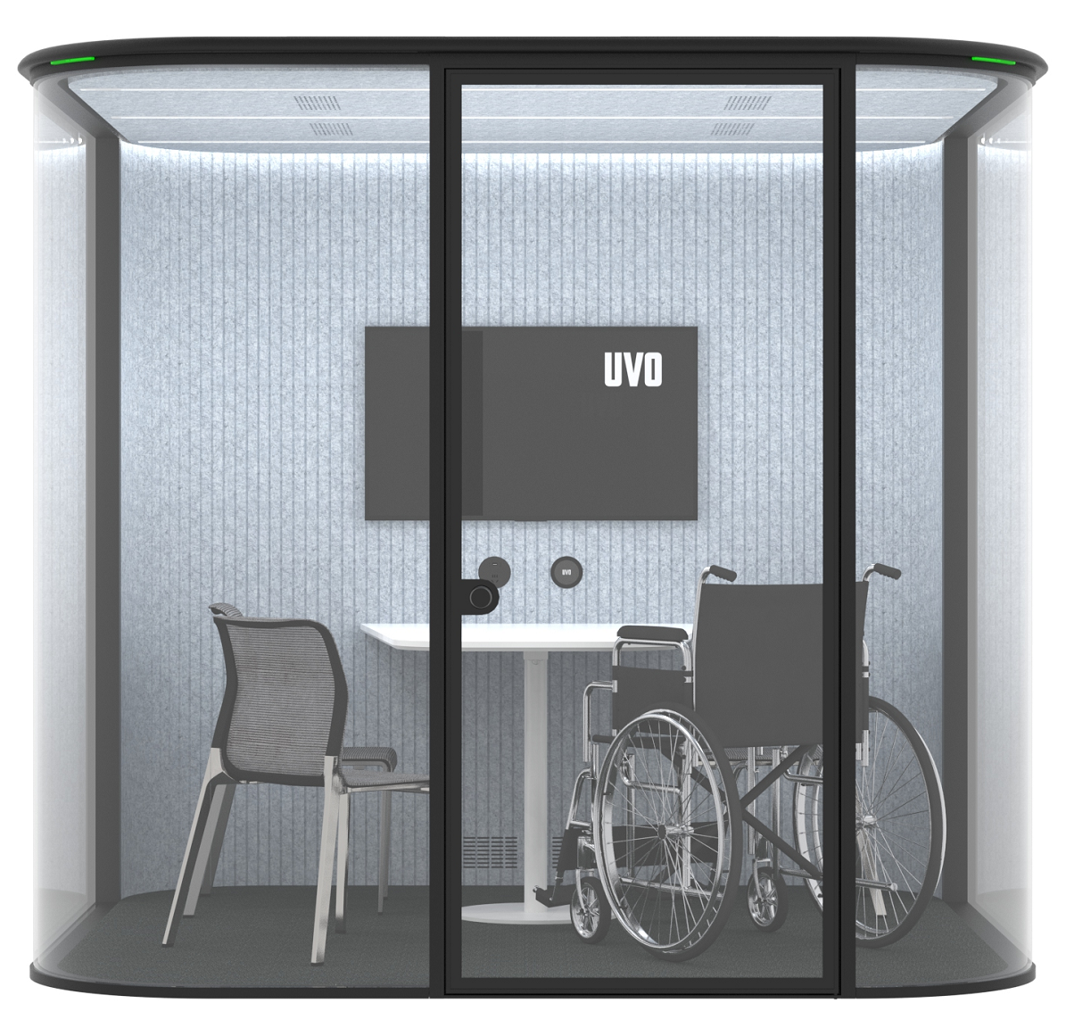
At handover, assess the physical condition that can affect fit and acoustic integrity. Confirm the door closes evenly, inspect visible seals and check for an obvious gap or misalignment. The supplied troubleshooting information identifies an incompletely closed or misaligned door, a sagging or dropped door, and a missing top cabin mounting bracket among possible causes when sound insulation is compromised. Those are inspection prompts, not proof that any particular delivered pod has a defect. Record observed issues and require the responsible party to resolve them under the agreement before acceptance.
Purchasing terms to settle before ordering
Commercial terms are not supplied for the specific models discussed here. Rather than assume a price, lead time, warranty, installation scope or service commitment, put the agreed terms in the transaction documents. For a buyer in the research-to-evaluation stage, the purpose is to eliminate ambiguity between what was priced, what will be delivered and what counts as complete handover.
- Product identity: Record the full model name, size and any agreed configuration. Identify accessories or options separately so that an optional item is not mistaken for an included one.
- Technical schedule: Attach the model-specific specification. For ventilation, show fan count and the stated 90 m³/h per-fan rating where applicable. Identify any total airflow as calculated or measured, and include the supporting basis for a measured claim.
- Acoustic documentation: State the acoustic class being specified for the particular model and identify the supporting evidence to be provided. If a report is a condition of acceptance, name the required document and the model/configuration it must cover. Do not substitute a generic family statement for model-specific evidence.
- Materials and construction: Where specified for the ordered model, record the 25 mm five-layer acoustic interior wall and 11 mm laminated glass, together with the other listed construction elements. Match each statement to the model rather than copying one model’s schedule to another.
- Site and installation conditions: Confirm the installation location, access and the stated minimum installation height above 2400 mm. Define who is responsible for site readiness, installation, electrical connection and any work not included in the quoted scope.
- Price and delivery: State the agreed price, currency, taxes, delivery destination, transport and installation charges, delivery timing and the point at which the goods are considered delivered. These are contract fields to complete, not values established by the product corpus.
- Acceptance and correction: Set out the inspection date or process, the record used to list defects, who corrects each item, and what happens if an item remains unresolved. Any numeric tolerance or deadline should be agreed explicitly; none is supplied as a universal product criterion here.
This structure helps buyers compare quotations on a common basis without assuming that an acoustic phone booth, a room-in-room acoustic pod or a multi-person meeting pod has identical scope. It also separates documentary verification from operational checks: a document can identify a model or describe its rating, while a handover inspection can record visible condition, operation and unresolved issues. Neither should be represented as a substitute for the other.
A practical handover sequence
Use a written checklist for each pod, with the model and serial or delivery identifier recorded if provided in the transaction documents. First confirm that the delivered model and included configuration match the order. Next inspect the enclosure, glazing, visible panels, door, seals, lighting and ventilation openings. Operate the functions included in the agreed configuration, note any repeated fault, and record the result rather than relying on a general “looks acceptable” sign-off.
For sound-related acceptance, close the door slowly and observe whether it meets the frame evenly. Look for visible gaps, displaced or unevenly compressed seals, loose hinges or a shifted frame. The troubleshooting material also advises checking whether the booth is level and the uprights plumb; where installation conditions call for it, a level or laser level can help document alignment. A simple light-leak observation can help identify a door gap, but it is not a laboratory acoustic test and should not be presented as one.
Where a door scrapes or sticks, locate the contact point—floor, threshold, side frame or top corner—and record the condition. The supplied troubleshooting information names an unlevel door panel, uneven floor, shifted hinges or a frame moved after installation or relocation as possible causes. It also identifies floor stability and, for non-barrier-free models, correct adjustment of foot pads as checks. Protect the glass during service. Any adjustment should be performed by the party responsible for installation or service under the agreed scope, with the resolution recorded.
Test lighting and ventilation functions included in the order. A cabin that feels stuffy can be associated with blocked vents, dust buildup, poor fan performance or a sensor-switch malfunction. Inspect intake and exhaust vents for obstruction and verify that the fan starts as intended, if the configuration uses an occupancy sensor. Abnormal fan noise is identified in the source troubleshooting material as a possible sign of damage or obstruction. Record what was observed and whether the issue affected one pod or multiple pods; this information can help distinguish a localized issue from an installation or environmental one, without assuming a cause before inspection.
If lights flicker repeatedly, the troubleshooting source identifies loose wiring connections or a defective low-voltage accessory module as common causes, with the transformer another item to investigate if those checks do not resolve the issue. Its listed checks include connections, LED strip operation and transformer output or condition. Disconnect power before inspection; the supplied safety note says a licensed electrician is required. For purchaser handover, the safe and useful action is to document the symptom and assign electrical inspection to a qualified responsible person, not to open energized equipment.
Decision rule for buyers
Proceed from model identity to evidence, then to acceptance. The model schedule answers what is being purchased. The technical documents answer what the supplier states about that model and what evidence supports the claim. The handover record answers whether the delivered installation matches the agreed scope and whether observable problems remain. If any one of those layers is missing, the buyer should avoid treating the other layers as proof of it.
For UVO Acoustic Pods, Q ROOM - XS provides a documented example of Class B, the 25 mm five-layer interior wall, 11 mm laminated glass and a four-fan configuration at 90 m³/h per fan. Q ROOM - M BF provides an eight-fan example at the same stated per-fan rate, with its construction described separately. R POD-Large has documented frame, steel panel and laminated-glass details in the supplied corpus, but the supplied model-specific evidence here does not establish its fan quantity or sound-insulation class. This is why quotations and acceptance schedules should preserve exact model boundaries rather than generalize across a product range.
For procurement teams evaluating an acoustic work pod for open-plan offices or coworking spaces, the most defensible decision is not based on a category keyword or an isolated specification. It rests on a configuration-specific schedule, evidence that matches the claimed acoustic classification, explicit commercial and site terms, and a recorded inspection of lighting, airflow operation, acoustic-relevant fit and door movement. Where the evidence or agreed criterion is absent, leave it as an open purchasing item instead of silently assuming a result.
Frequently asked questions
How many ventilation fans should an acoustic pod have?
Fan quantity varies by model and size in the supplied specifications. Q ROOM - XS is listed with four fans and Q ROOM - M BF with eight; each fan is rated at 90 m³/h. The resulting totals of 360 m³/h and 720 m³/h are calculated from those listed figures, not independent measurements. Confirm the fan count for the exact model in the quotation. The supplied model-specific information does not establish a fan count for R POD-Large.
Does a 25 mm five-layer wall and 11 mm laminated glass prove Class B performance?
No. Those construction details identify materials and thicknesses for specified models; they do not, by themselves, establish a measured acoustic result. Q ROOM - XS is specified as Class B in the supplied material, but the information here does not include its model-specific laboratory report or installed-site result. Request evidence that matches the exact model and configuration, and keep the class statement distinct from independently verified performance.
What should be checked if a cabin feels stuffy?
The supplied troubleshooting information identifies blocked vents, dust buildup, poor fan performance and sensor-switch malfunction as possible causes. Check intake and exhaust vents for obstruction and verify fan operation where applicable. Abnormal fan noise may indicate damage or obstruction. Record whether the issue affects one pod or several; do not assume that a nominal per-fan rating alone confirms actual airflow at the installed pod.
What should be checked when lights flicker repeatedly?
Possible causes in the supplied troubleshooting material include loose wiring connections, a defective low-voltage accessory module and transformer problems. Inspection steps include checking connections, LED strip operation and transformer output or condition. Disconnect power before inspection, and use a licensed electrician as specified in the source safety note.
How can a buyer check door-related sound insulation concerns at handover?
Close the door slowly and observe whether it meets the frame evenly. Inspect visible seals, hinges and the door-to-frame fit for gaps, looseness or uneven compression. Check that the booth is level and note any scraping, sagging or sticking. These checks can identify conditions associated with compromised sound insulation, but they are not a substitute for an acoustic test report.
Which commercial terms belong in an acoustic pod purchase order?
Record the exact model and configuration, included items, specification documents, acoustic evidence required, delivery and installation scope, site responsibilities, agreed price and taxes, and the handover and defect-resolution process. State any required test, tolerance or deadline explicitly in the agreement. The available product information does not set universal prices, delivery terms, warranty provisions or acceptance thresholds.
For company information, see UVO. The UVO catalogue is available for reference; model-specific claims and purchasing terms should still be confirmed in the documents for the order.
Есть вопросы или нужны дополнительные детали?
Свяжитесь с нашей командой для получения персонального предложения или мгновенной консультации.
Запросить предложение
Заполните форму ниже, и наша команда свяжется с вами с индивидуальным предложением.
Прямой чат WhatsApp
Предпочитаете общаться в реальном времени? Напишите нам в WhatsApp для мгновенной помощи и быстрых ответов.
- Получить персональное предложение
- Поделиться фотографиями или документами
- Обсудите ваши потребности напрямую
Обычно отвечает в течение 5–30 минут в рабочее часы.