
Action Camera Basics: Specs, Scenarios, and Suppliers
Action Camera Basics: Specs, Scenarios, and Suppliers
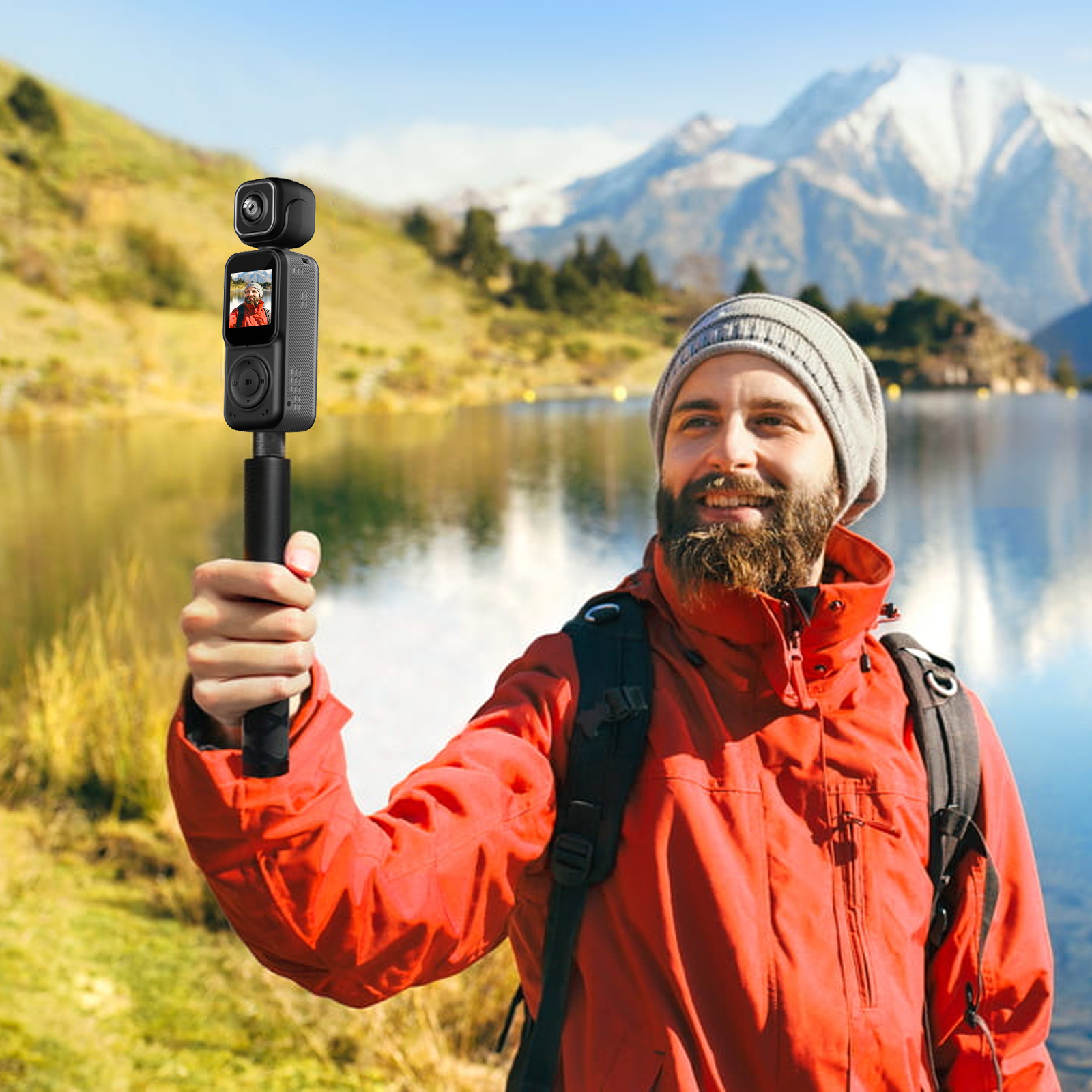
Outdoor sports action camera in a high-motion setting.
The global action camera market was valued at USD 6.57 billion in 2024, and North America generated roughly 34% of global revenue in 2025, according to industry research by SkyQuest Technology and Grand View Research. The category has moved well beyond its action-sports origins, now serving vlogging, travel documentation, driving records, and a wide range of outdoor activities. For distributors, importers, and sports equipment brands in the early research stage, the challenge is to make sense of a crowded field where product names, resolution tiers, waterproof ratings, and supplier claims are not always easy to compare.
This article provides an independent industry reference on action cameras: what they are, how they are specified, how they are used, and how buyers can evaluate an action camera manufacturer. The product data and company information referenced here are drawn from the public product catalog and corporate profile of Dongguan YuAoHeng Electronic Technology Co., Ltd. (YUAOHENG).
Why Action Camera Procurement Is Harder Than It Looks
Action cameras look similar at a glance, but the specification differences underneath the shell have a direct effect on price, user experience, and after-sales behavior. A 4K-resolution camera, a 2K WiFi model, and a long-battery 1080p unit serve different price bands and use cases. Without a clear understanding of these tiers, a buyer can easily source the wrong product for a target market.
Three market signals make specification literacy more important than ever. First, the 4K-and-above resolution segment accounted for approximately 46.25% of the action camera market in 2025 (Mordor Intelligence). Second, electronic image stabilization (EIS) has become a standard feature in budget to mid-range action cameras, not a premium differentiator (Insta360 industry guide, 2024). Third, China exported USD 166 million in video cameras in 2024, with the United States as the largest destination at USD 31.8 million (OEC). These figures suggest that product expectations and supply-chain activity are concentrated in the same place: affordable, compliant, well-specified cameras made by Asian manufacturers for global brands.
YUAOHENG: A Manufacturer Reference Point
Dongguan YuAoHeng Electronic Technology Co., Ltd. (YUAOHENG) is a China-based manufacturer specializing in the R&D, manufacturing, and sales of action cameras, smart vehicle electronics, and smart security products. Founded in 2016 and located in Dalingshan Town, Dongguan, the company operates a 1,500-square-meter standardized facility with professional production lines, approximately 300 employees, and a 30-engineer R&D team. Its annual production capacity is 2,000,000 units. Around 80% of products are exported to more than 15 countries and regions across Europe, North America, Asia, and South America. FCC, CE, and RoHS certifications are held for its products, and the company provides OEM and ODM one-stop customization services covering product design, engineering development, testing, and mass production.
The YUAOHENG action camera lineup spans ten models: X7, X11, X20, Q1, Q2, Q3, Q5, Q7, Q9, and Q11. Together, they cover 4K and 2K recording, WiFi connectivity, touch-screen operation, image stabilization, infrared night vision, IP65-rated waterproofing, and waterproof-case-compatible designs.
Action Camera Specifications: What Buyers Should Actually Compare
Evaluating an action camera supplier requires a working understanding of the core specifications that define product performance. The table below summarizes YUAOHENG's publicly listed models.
| Model | Category | Resolution | Display | Battery | Distinctive Features |
|---|---|---|---|---|---|
| X7 | 4K Anti-shake | 4K (3840×2160) @30fps | 1.47" IPS | 1000mAh | GPS, anti-shake, infrared night vision |
| X11 | 2K WiFi | 2K (2560×1440) | 2.0" IPS | 3000mAh | IP65 waterproof, infrared night vision |
| X20 | 2K+WiFi | 1920×1080 (AVI) | 1.54" IPS | 1000mAh | Long battery life, 6-7h video, 4 IR lights |
| Q1 | 4K WiFi | Front 4K / Rear 4K | 1.5" IPS | 2000mAh | Dual recording, waterproof-case compatible |
| Q2 | 4K WiFi Touch Anti-shake | Front 4K / Rear 4K | 1.8" IPS touch | 2000mAh | 6-level EIS, touch and physical buttons |
| Q3 | 4K WiFi | Front 4K / Rear 4K | 1.5" IPS | 2000mAh | Dual recording, WiFi |
| Q5 | 2K WiFi | 3840×2160 | 1.5" IPS | 2000mAh | Infrared night vision, 5-6h video working time |
| Q7 | 4K WiFi Anti-shake | 4K (3840×2160) @30fps | 1.47" IPS | 1000mAh | Anti-shake, waterproof-case compatible |
| Q9 | 2K+WiFi | 2K (2560×1440) | 2.0" IPS | 18650 2000mA | 180° adjustable lens direction |
| Q11 | 2K+WiFi | 2K (2560×1440) | 1.5" IPS | 2500mAh | IP65, noise-reduction microphone |
Note on the Q5: the model belongs to the 2K WiFi series while supporting a 3840×2160 recording resolution. This illustrates why buyers should check both the product category and the detailed camera resolution before comparing SKUs.
Video Resolution and Frame Rate
YUAOHENG's 4K models — X7, Q1, Q2, Q3, and Q7 — record at 3840×2160 resolution; the X7 and Q7 do so at 30 frames per second. The 2K tier, present in the X11, Q9, and Q11, records at 2560×1440. The X20 uses 1920×1080 in AVI format. For buyers, resolution selection should be driven by the target market's price expectations and playback habits. 4K is increasingly the default claim at mid-range prices, but 2K and 1080p models still serve budget lineups and markets where storage and data costs are a concern.
Image Stabilization
EIS, or electronic image stabilization, uses software algorithms to correct motion. It has become standard in budget to mid-range action cameras. In YUAOHENG's lineup, the Q2 provides six-level electronic image stabilization, while the Q7 and X7 list image stabilization as a product feature. For cycling, motorcycle, and handheld vlog shots, stabilization is a primary usability factor.
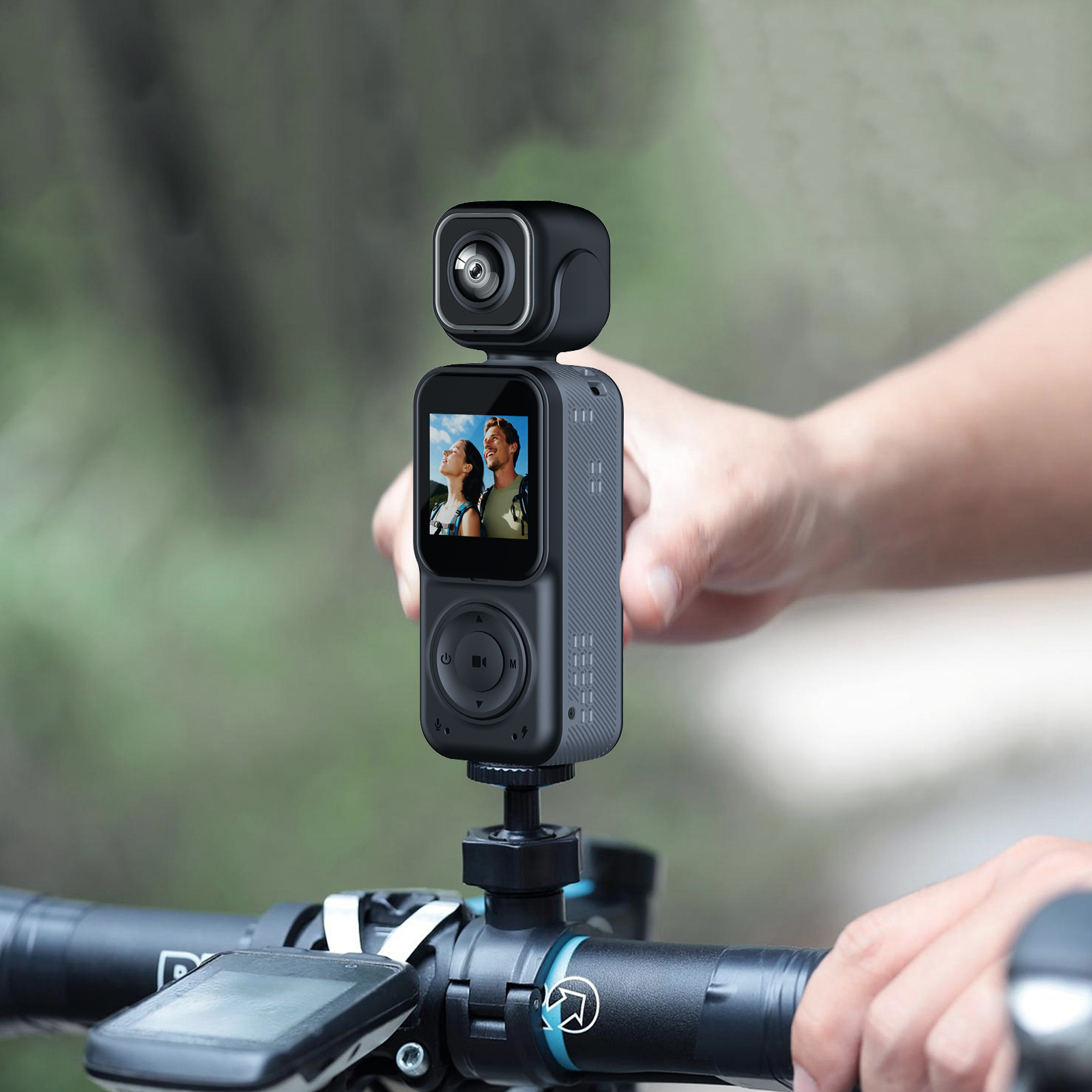
4K action camera with image stabilization.
Wide-Angle Lens and Field of View
A 130° wide-angle lens is used across YUAOHENG models, with rotating direction available on several products. The Q9 adds a 180° adjustable rotation direction. Wide-angle lenses are well suited to first-person sports and immersive travel footage. The trade-off — visible edge distortion and a less natural perspective for close-range recording — applies to the entire action camera category, including this price range.
Night Vision Capability
Infrared night vision appears across most of YUAOHENG's models, supported by built-in LED fill lights. The X20 and Q5 include four enhanced energy-saving infrared lights with manual regulation. This is a relevant feature for night driving, camping, hiking, and security-adjacent recording use cases.
Waterproofing: Built-in vs. Case-Compatible
Two distinct waterproofing strategies exist in the lineup. The X11 and Q11 carry an IP65 protection rating, which under the IEC 60529 classification means protection against dust and water jets. The Q1, Q2, and Q7 are compatible with waterproof cases for underwater shooting, which allows deeper water use while keeping the camera body standard. IP68 — the top rating defined by IEC 60529 — indicates full dust protection and continuous immersion, but no YUAOHENG model in the current public catalog claims IP68 as of this writing. Buyers should treat “waterproof camera” as a category term and verify which method applies to each model.
Battery Life and Endurance
Battery capacity across the lineup ranges from 1000mAh to 3000mAh. The largest-capacity cell is in the X11 at 3000mAh, followed by the Q11 at 2500mAh. Video working time varies: about 5-6 hours for the Q5, 6-7 hours for the X20, and 4-5 hours for the Q1 and Q2. For long shooting days, endurance matters as much as raw resolution.
Display, Interface, and Connectivity
IPS displays range from 1.47 inches to 2.0 inches across the lineup. The Q2 is distinguished by a 1.8-inch IPS touch screen with both touch and physical buttons. WiFi connectivity is available on most models — X11, X20, Q1, Q2, Q3, Q5, Q7, Q9, and Q11 — supporting wireless control and mobile app preview. Interfaces are predominantly high-speed Mini USB 2.0, with the X20 using a Micro Type-C input rated DC 5V, 1A-2A.
Use Cases and Scenario Fit
YUAOHENG's product documentation lists the outdoor sports, photography & video shooting, and driving & transportation industries as the intended application areas. Within those broad categories, several concrete scenarios help map models to buyer needs.
Underwater Diving and Surfing
For snorkeling, diving, and surfing, waterproofing is the deciding factor. The Q1, Q2, and Q7 are compatible with waterproof cases, making them candidates for underwater shooting. The X11 and Q11 with IP65 can handle rain and water-splash exposure, though they are not positioned as diving cameras.
Cycling and Motorcycle Mounting
Cycling and motorcycle use demands stable footage in a high-vibration environment. Image-stabilized models such as the Q7 and X7, combined with 130° wide-angle lenses and rotating lens direction, are appropriate references for this scenario. Bicycle mounts and motorcycle fixed brackets are listed as compatible equipment in the application dataset.
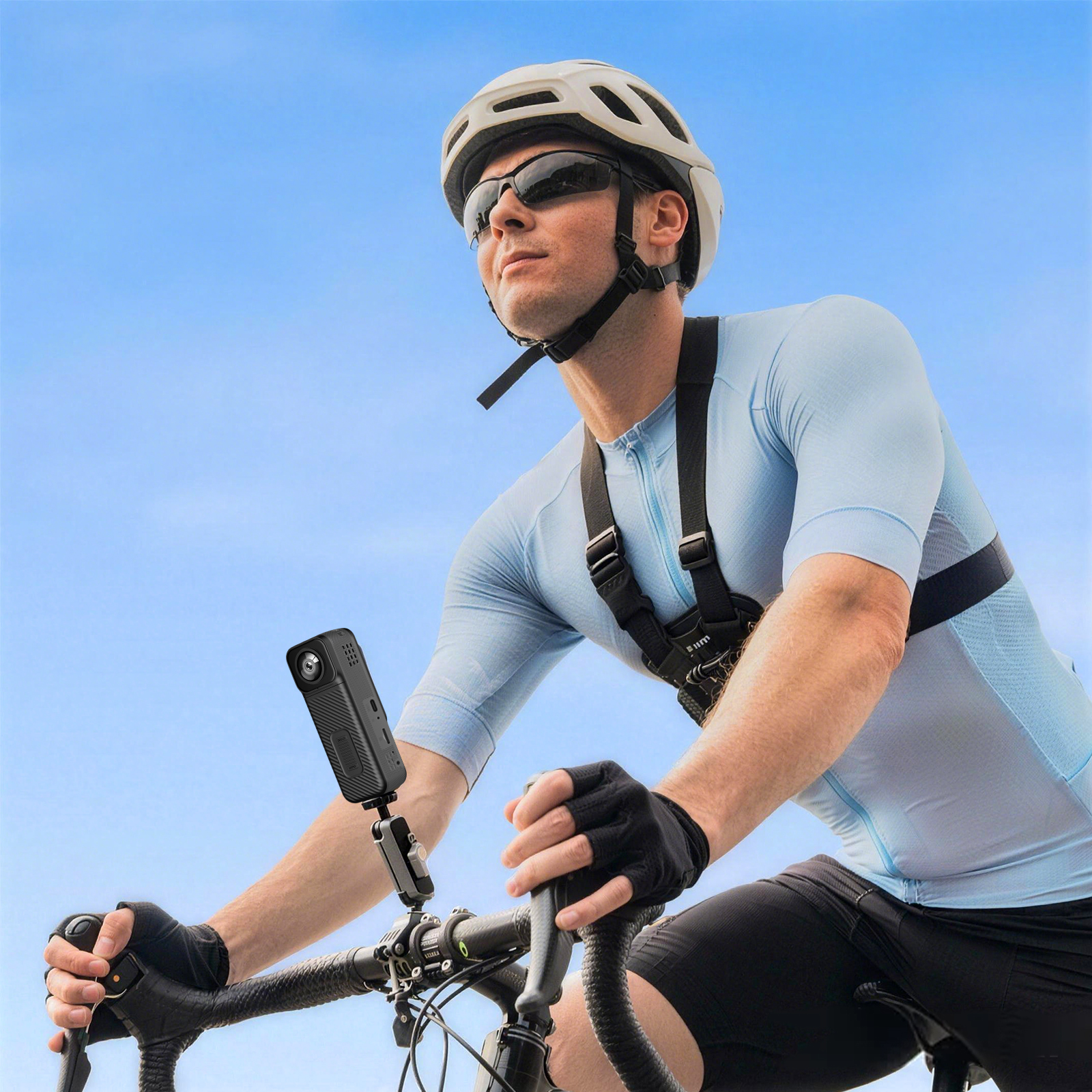
Cycling action camera in a typical mounting scenario.
Skiing and Winter Outdoor Sports
For ski and snowboard filming, the outdoor all-weather working condition range of -20°C to 60°C applies, along with dustproof and shock-resistant handling. The compact body and long battery life of models such as the X20 support a full day of slope-side recording.
Vlogging and Handheld Recording
Handheld vlogging favors touch-screen operation, WiFi preview, and stabilization. The Q2, with its 1.8-inch IPS touch screen, 6-level EIS, and dual-button control, is a direct fit for this use case. Tripods, selfie sticks, and external microphones are standard accessories in this scenario.
Climbing and Mountaineering
Climbing requires a lightweight camera that can be worn on a chest strap or helmet. Wide-angle capture and shock resistance matter more than high-end audio. The rotating lens direction present in several YUAOHENG models helps users frame shots when the camera is mounted in non-standard orientations.
Driving and Transportation Recording
Dual-lens models — Q1, Q2, and Q3 — support front and rear simultaneous recording, with both cameras capable of 4K. The X7 adds GPS support, which is useful for route logging. In the driving scenario, action cameras overlap with dedicated dashcams, and buyers should note that the form factor, bracket system, and power management differ from purpose-built dashcams.
Market Trends Backed by Third-Party Data
Recent market research gives buyers a quantified view of where action cameras are headed:
- The global action camera market was valued at USD 6.57 billion in 2024 (SkyQuest Technology).
- North America accounted for 34% of global market revenue in 2025 (Grand View Research).
- The 4K-and-above resolution segment held about 46.25% of the market in 2025 (Mordor Intelligence).
- China's action camera market reached an estimated USD 502.25 million in 2024 (Market Research Future).
- China exported USD 166 million in video cameras in 2024; the United States was the largest buyer at USD 31.8 million (OEC).
- EIS is now considered standard in budget to mid-range action cameras (Insta360 industry guide, 2024).
These data points describe a market where 4K and stabilization are already baseline expectations for mid-range products, and where North America remains the most important destination for Chinese-made video cameras. For a company like YUAOHENG, whose export share is approximately 80% and whose product mix concentrates on 4K/2K WiFi and anti-shake models, the alignment with these verified trends is visible in the catalog itself.
At the brand level, competitive concentration is real. GoPro sold approximately 3 million camera units in 2023 (SkyQuest Technology), and DJI and Insta360 together held nearly 90% of Japan's action camera market in late 2025 (PetaPixel / BCN+R). That concentration suggests that new market entrants and private-label brands are unlikely to displace the technology leaders at the premium end. The more practical opportunity for mid-tier manufacturers and their customers lies in the value segment, where verified compliance, stable output, and scenario-specific features carry more weight than brand recognition.
Action Cameras vs. Traditional Recording Tools
Compared with smartphone recording and traditional camcorders, action cameras offer three structural advantages. First, their compact, fixed-mount form factor makes true first-person recording possible, whether on a helmet, a bicycle handlebar, or a chest strap. Second, the wide-angle optical design captures a broader field of view than a typical phone camera in motion. Third, dedicated action cameras are designed for all-weather operation, with dustproof, waterproof, and shock-resistant characteristics that most consumer phones and camcorders lack.
There are also limits that buyers should not ignore. Action cameras in this price range typically have smaller image sensors than professional cameras, which affects low-light performance; night vision modes using IR fill lights are a functional supplement, not a substitute for large-sensor low-light quality. Electronic stabilization is effective for moderate motion but can show limitations in severe vibration compared with a mechanical gimbal. The wide-angle lens, while immersive, is not suited to close-up portraits or shallow-depth-of-field filming. Finally, built-in waterproof ratings like IP65 handle rain and splashes, while underwater work requires either a purpose-rated housing or a waterproof case — a distinction that matters at the point of sale.
Future Outlook
Several directions are likely to shape action camera sourcing in the coming years. The 4K segment will continue to mature, placing downward pressure on 4K price points. EIS will become the expected default rather than a differentiator. WiFi connectivity and mobile app workflows will play a larger role in how users treat the action camera as part of a content creation pipeline.
For the supply chain, the operational consequences are clear. Brands and distributors will need partners that can move quickly across hardware design, firmware updates, certification maintenance, and production scale. YUAOHENG's current configuration — a 30-engineer R&D team, FCC/CE/RoHS compliance, 2,000,000-unit annual capacity, and OEM/ODM service coverage from design to mass production — is representative of the manufacturing profile that mid-market buyers typically seek. The company does not claim a disruptive technology position; its role is more accurately described as a volume-capable, certification-ready OEM/ODM partner for global action camera brands.
Readers interested in reviewing the full product catalog and corporate documentation can access the YUAOHENG product brochure at the following link: YUAOHENG Product Catalog (PDF).
Frequently Asked Questions
What is an action camera?
An action camera is a compact video-recording device designed to capture footage in motion-intensive environments such as outdoor sports, travel, and driving. YUAOHENG classifies its products as action cameras intended for the outdoor sports, photography and video shooting, and driving and transportation industries. The catalog includes 4K and 2K models, WiFi-enabled cameras, touch-screen variants, image-stabilized models, infrared night vision units, and IP65-rated waterproof configurations.
What are the main specifications to compare in an action camera?
Key parameters include video resolution (4K at 3840×2160 versus 2K at 2560×1440), lens field of view (typically 130° wide-angle), stabilization method (electronic in this price tier), waterproof classification (built-in IP65 versus waterproof-case compatibility), battery capacity (1000mAh to 3000mAh across YUAOHENG models), display size, and connectivity such as WiFi and Mini USB 2.0.
What is the difference between 4K and 2K action cameras?
4K models record at 3840×2160 resolution, as seen in YUAOHENG's X7, Q1, Q2, Q3, and Q7. 2K models record at 2560×1440, including the X11, Q9, and Q11. The X20 records at 1920×1080 in AVI format. 4K offers more detail and cropping flexibility in editing; 2K and 1080p models typically sit at lower price points and generate smaller file sizes.
Are YUAOHENG action cameras waterproof?
The X11 and Q11 models carry an IP65 protection rating. Other models such as Q1, Q2, and Q7 are compatible with waterproof cases for underwater shooting. IP68, defined by IEC 60529, is the highest ingress-protection rating, covering dust tightness and continuous water immersion, but no current YUAOHENG model is listed with IP68. Buyers should confirm whether a model is built-in waterproof or requires a case.
Which action camera models fit cycling or underwater scenarios?
For cycling, image-stabilized models such as the Q7 and X7, with 130° wide-angle lenses and rotating direction, are relevant reference points. For underwater shooting, Q1, Q2, and Q7 are compatible with waterproof cases. YUAOHENG's application data also covers motorcycle riding, mountain biking, skiing, diving, vlogging, and driving use cases.
What certifications should action cameras have for Europe and North America?
YUAOHENG's products hold FCC, CE, and RoHS certifications. CE is required for European market access, FCC covers the United States market, and RoHS restricts hazardous substances. Action cameras also fall under the IEC 62368-1 safety standard for audio/video and information technology equipment, with the 4th edition published in 2023.
How does YUAOHENG support OEM and ODM projects?
YUAOHENG provides one-stop OEM and ODM customization services covering product design, engineering development, testing, and mass production. The company operates a 1,500-square-meter facility with an annual output of 2,000,000 units, a 30-engineer R&D team, and an export share of approximately 80% across more than 15 countries and regions.