
Action Camera Scenario Fit: X20, Q1, Q2, Q3, Q7 for Sports, Driving, Video
Action Camera Scenario Fit: X20, Q1, Q2, Q3, Q7 for Sports, Driving, Video
Five camera models, three target industries, and one question a specification sheet cannot answer on its own: which camera belongs in which field environment?
A camera that wins a comparison table can still underperform once it leaves the bench. Handlebar vibration, an exposure shift at dusk on a motorway, and the need to frame yourself while walking each place different demands on lens geometry, stabilisation, microphone design and battery behaviour. For buyers in the evaluation stage — importers, private-label brand owners and OEM project managers — the useful 2026 question is not which single model carries the highest headline number, but which models inside a supplier's range were engineered for which physical environment.
This reference maps five models from Dongguan YuAoHeng Electronic Technology Co., Ltd. — X20, Q1, Q2, Q3 and Q7 — to the three industries recorded on their specification sheets: Outdoor Sports, Driving & Transportation, and Photography & Video Shooting. All five are ABS-bodied action cameras. What separates them is resolution ceiling, stabilisation, night-vision capability, microphone type, display format and battery. Those differences, not the marketing tier, determine scenario fit.
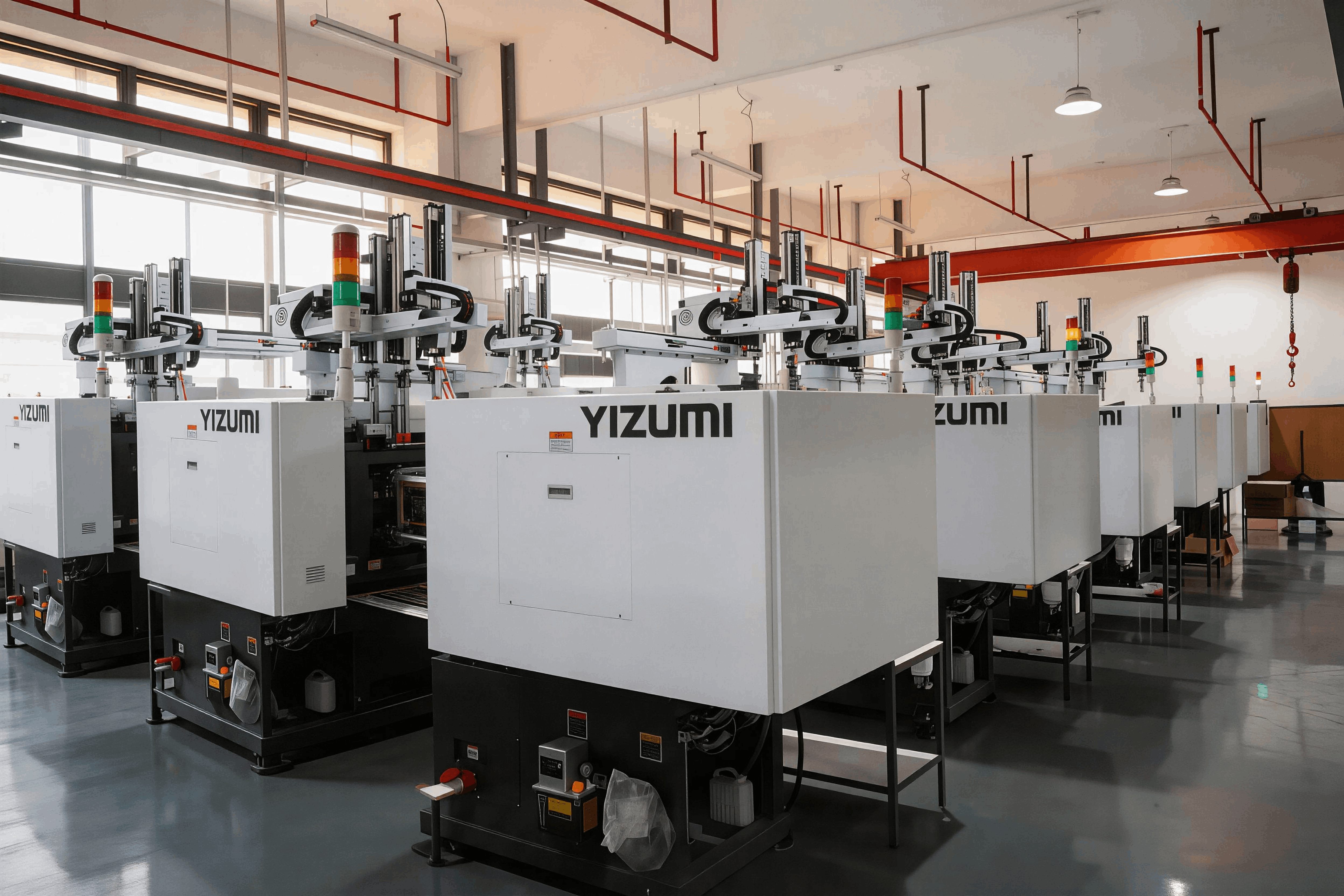
Dongguan YuAoHeng Electronic Technology Co., Ltd. is a manufacturer founded in 2016 and based in Dalingshan Town, Dongguan, China, specialising in the R&D, manufacturing and sales of action cameras, dash cameras and smart video doorbells. The company operates a 1,500 m² production facility with 300 employees and a stated annual output of 2,000,000 units, with roughly 80% of production exported to Europe, North America, Asia and South America.
The evaluation problem: a specification sheet does not select a camera
Action camera procurement has drifted toward label comparison. Buyers shortlist on resolution, then discover that two cameras described as "4K" can behave very differently on a moving bicycle or in a car at night. The reason is that resolution is one line in a chain: lens field of view, image pipeline, stabilisation, microphone, display and battery all constrain the final footage.
Three evaluation criteria separate this group of five models more sharply than megapixels do.
- Stabilisation. Only two of the five models carry an explicit stabilisation entry. Q2 is specified with 6-level electronic image stabilization. Q7 is specified with anti-shake support. X20, Q1 and Q3 carry no stabilisation specification in the corpus.
- Night and low-light handling. Only Q3 lists infrared night vision support among these five models, with hand regulation as the infrared switching mode.
- Runtime and battery format. X20 lists a video working time of about 6–7 hours from a 1000 mAh / 3.8 V polymer battery. Q1 and Q2 list about 4–5 hours from a 2000 mAh / 3.8 V polymer battery and a 18650 2000 mA battery respectively. Runtime, not capacity alone, is the procurement-relevant number.
Electronic Image Stabilization has become a standard feature in budget to mid-range action cameras, using software algorithms to correct motion rather than moving optics, according to an Insta360 industry guide on EIS. That makes stabilisation a reasonable expectation in this segment — but it also means the absence of a stabilisation entry on a model is a deliberate signal worth noticing, not an oversight.
What the three target industries actually demand
Outdoor sports, driving and video shooting are frequently listed together on action camera specification sheets, but they stress different subsystems. Treating them as interchangeable is the most common sourcing error at the evaluation stage.
Outdoor sports: mount, angle and motion
Bicycle-mounted, skiing, climbing and surfing use cases share three constraints. The camera must hold a wide field of view without distortion-heavy framing, it must survive vibration and impact, and it must keep recording long enough to cover a session. A 130° wide-angle lens appears across this entire group — X20, Q1, Q2, Q3 and Q7 all list a 130° lens — which makes angle a non-differentiator and pushes the decision toward stabilisation, mounting behaviour and battery.
Driving and transportation: continuity, night vision and audio
In-vehicle and transport recording prioritises continuous runtime, a second camera angle where two views matter, and usable footage after dark. Here the relevant specifications are dual recording modes, infrared night vision, and microphone design. Q1, Q2 and Q3 all support front and rear recording with simultaneous 2K + 2K dual recording, while Q3 adds infrared night vision and a full-range built-in capacitor microphone.
Photography and video shooting: framing, interface and audio
Handheld vlogging and general video production shift the priority to the operator experience: how easily the frame can be composed, how quickly settings can be changed, and how clean the audio is. Q2 carries a 1.8-inch IPS display at 800×480 resolution plus standard touch and physical dual buttons — the highest display resolution in this group. Q7 and Q3 both use a full-range built-in capacitor microphone, a design choice associated with more consistent audio capture than compact onboard microphones.
The scenario-fit shortlist: X20, Q1, Q2, Q3 and Q7
The table below is a fit map, not a market ranking. Each model is placed against the environment its verified specifications support, ordered from the longest-runtime fixed-position option to the most compact 4K handheld option.
| Model | Display | Video capability | Stabilisation / night | Battery (as specified) | Primary scenario fit |
|---|---|---|---|---|---|
| X20 2K+WIFI X20 | 1.54-inch IPS, 320×240 | AVI (1920×1080); WAV 512 KBPS; 130° HD lens | None specified | 1000 mAh / 3.8 V polymer; ~6–7 h video, ~9 h recording | Long-runtime fixed-mount recording |
| Q1 4K+WIFI Q1 | 1.5-inch IPS, 320×240 | Front 4K (3840×2160), rear 4K; simultaneous 2K + 2K; rotating 130° lens | None specified | 2000 mAh / 3.8 V polymer; ~4–5 h video, ~9 h recording | Dual-angle capture in sports and driving |
| Q2 4K+WiFi+Touch+Anti-shake Q2 | 1.8-inch IPS, 800×480 | Front 4K, rear 4K; 2K + 2K simultaneous; three modes; 25 mm 130° lens | 6-level electronic image stabilization; touch + physical dual buttons | 18650, 2000 mA; ~4–5 h video | Handheld and vlog capture with motion |
| Q3 4K WIFI Q3 | 1.5-inch IPS, 320×240 | Front 4K, rear 4K; simultaneous 2K + 2K; rotating 130° lens | Infrared night vision, hand regulation; full-range capacitor MIC | 2000 mAh / 3.8 V polymer | Night and low-light recording |
| Q7 4K+WiFi+Anti-shake Q7 | 1.47-inch IPS, 320×240 | 4K (3840×2160) at 30 fps; rotating 130° lens | Anti-shake: supported; full-range capacitor MIC | 1000 mAh / 3.8 V polymer | Compact 4K handheld and mounted sports |
X20 — the runtime-first option
X20 is the model to shortlist when recording length matters more than stabilisation. Its stated video working time of about 6–7 hours is the longest in this group, and its recording working time is listed at about 9 hours. The 1.54-inch IPS display runs at 320×240, storage accepts 16 GB, 32 GB, 64 GB or 128 GB cards, and input is Micro-Type-C at DC 5 V, 1–2 A. Its camera resolution entry is AVI (1920×1080). Because no stabilisation and no infrared night vision are specified, X20 fits fixed or semi-fixed positions — a vehicle interior, a static outdoor rig, a counter or workstation — better than fast-moving handheld use.
Q1 — the dual-angle rotating-lens option
Q1 combines a rotating 130° wide-angle lens with front and rear recording at 4K (3840×2160) and simultaneous dual recording at 2K + 2K. The 1.5-inch IPS display is 320×240, the battery is a 2000 mAh / 3.8 V polymer unit, and video working time is listed at about 4–5 hours with recording working time at about 9 hours. A maximum photo duration of approximately 10 hours is stated for 720p 30 fps high-quality video. The rotating lens is the practical feature here: it lets a single body capture two orientations without repositioning the mount, which suits bicycle and motorcycle setups where the camera is not easy to reach.
Q2 — the handheld, stabilised option
Q2 is the most interface-oriented model in the group. It carries a 1.8-inch IPS display at 800×480 — the highest display resolution specified here — and it uses both standard touch and physical dual buttons, so settings can be changed with gloves on or through a case. Stabilisation is specified as 6-level electronic image stabilization, the most granular stabilisation entry of the five. It records front 4K and rear 4K with 2K + 2K simultaneous dual recording across three optional modes, uses a 25 mm, 130° wide-angle lens, and runs on an 18650 2000 mA battery with about 4–5 hours of video working time.
Q3 — the low-light option
Q3 is the only model in this set that lists infrared night vision support, with hand regulation as the switching mode. That single specification changes its scenario fit: it is the model to evaluate for night driving, dusk activity and low-light evidence recording. Alongside that, Q3 records front 4K and rear 4K with simultaneous 2K + 2K dual recording, uses a rotating 130° wide-angle lens, a 1.5-inch 320×240 IPS display, a 2000 mAh / 3.8 V polymer battery, and a full-range built-in capacitor microphone.
Q7 — the compact 4K option
Q7 is specified at 4K (3840×2160) at 30 fps with anti-shake support and a full-range built-in capacitor microphone, in a body with a 1.47-inch IPS display at 320×240 and a rotating 130° wide-angle lens. Its battery is a 1000 mAh / 3.8 V polymer. For buyers, Q7 sits between Q2 and Q3: it carries stabilisation and a capacitor microphone, but not the infrared night-vision capability of Q3 nor the 800×480 touch interface of Q2. It is the natural fit for short-session, high-frame-density work where weight and body size are the deciding constraints.
Technical explanation: what each specification changes in the field
Electronic image stabilization. On Q2, stabilisation is specified in six levels. Electronic stabilisation works by cropping and shifting frames to compensate for motion, which is why level granularity matters: a higher correction level typically trades some field of view for steadiness. Buyers should treat the six-level specification as a tuning range, not as a guarantee of gimbal-equivalent output.
Simultaneous dual recording. Q1, Q2 and Q3 all support front and rear recording at 4K with simultaneous 2K + 2K dual recording. In transport and sports use, this produces two synchronised views from one unit, which removes the need to synchronise two separate devices after the fact.
Infrared night vision. Q3 supports infrared night vision with hand regulation. Manual rather than automatic switching matters for buyers planning fixed installation, because it keeps the operating mode predictable across a recording session.
Microphone architecture. Q3, Q7 and the Q-series bodies specified here use a full-range built-in capacitor microphone where listed. Capacitor microphones are less sensitive to mechanical vibration than compact electret designs, which is relevant for handlebar and helmet mounting. Buyers should record audio in the intended mount before committing to a volume order.
Battery format. Two battery families appear in this group: 3.8 V polymer packs at 1000 mAh (X20, Q7) and 2000 mAh (Q1, Q3), and an 18650 cell rated 2000 mA in Q2. Format affects serviceability and replacement logistics as much as runtime — a standardised cell format simplifies after-sales inventory for distributors.
Display resolution. Q2's 800×480 panel is a different class from the 320×240 panels on X20, Q1, Q3 and Q7. Higher display resolution improves framing accuracy in bright outdoor conditions, which is a genuine operational difference for handheld shooting even though it does not affect recorded image quality.
Application and use cases
Outdoor sports
- Bicycle and motorcycle mounting: Q1 and Q7, because the rotating 130° lens allows framing corrections without remounting, and Q7 adds anti-shake support.
- Skiing, climbing and general mounted sports: Q2, because 6-level electronic image stabilization addresses vibration most directly.
- Surfing and wet environments: the corpus does not specify an IP rating for these five models. A U.S. OEM action camera project in the case library specified IP66 waterproofing rated to 10 metres, which indicates the capability class available — but model-level ingress protection should be confirmed per SKU rather than assumed from the range.
- Long sessions: X20, with the longest stated video working time at about 6–7 hours.
Driving and transportation
- Dual-view vehicle recording: Q1, Q2 or Q3 — all support front 4K, rear 4K and simultaneous 2K + 2K dual recording.
- Night driving and low-light evidence: Q3, the only model here with infrared night vision and manual infrared switching.
- Long unattended recording: X20, at about 6–7 hours video and about 9 hours recording working time, with 16 GB to 128 GB storage support and Micro-Type-C 5 V / 1–2 A input for continuous power.
Photography and video shooting
- Vlog and handheld: Q2, for the 800×480 touch interface and dual button design.
- Compact 4K capture: Q7, at 4K 30 fps with anti-shake support and a capacitor microphone.
- Night and ambient shooting: Q3, where infrared capability extends usable hours.
At project level, the case library records a U.S. action camera brand OEM engagement covering 5,000 units over five years, applied to travel vlogging, outdoor hiking and camping recording, and daily life video blogging. Reported outcomes in that project include high-definition recording used for evidence storage, a wide-angle lens covering the full scene, low-light performance that remains clear at dusk and at night, and a durable structure that reduced equipment failure rates in harsh environments. For buyers, the transferable point is that the scenario — not the resolution figure — drove the specification set.
Market trend analysis
The direction of the category supports scenario-based shortlisting rather than single-model sourcing. The global action camera market was valued at USD 6.57 billion in 2024, according to SkyQuest Technology, while China's domestic action camera market was estimated at USD 502.25 million in the same year by Market Research Future. China exported USD 166 million in video cameras in 2024, with the United States the top destination at USD 31.8 million, according to the Observatory of Economic Complexity.
Resolution continues to move up the stack. Ultra-HD — 4K and above — accounted for approximately 46.25% of the action camera market share in 2025, according to Mordor Intelligence. That figure explains why four of the five models examined here are specified at 4K in at least one recording mode, while X20 remains a 2K-tier body with a 1920×1080 resolution entry and a longer runtime instead.
Regional demand is concentrated but not uniform. North America held a 34% revenue share of the global action camera market in 2025, according to Grand View Research, which aligns with the U.S.-based OEM case in the supplier's project history. At the brand end, GoPro sold 3 million camera units in 2023, a 6% increase over the previous year according to SkyQuest Technology, while DJI and Insta360 together held close to 90% of the Japanese action camera market as of late 2025, according to reporting by PetaPixel citing BCN+R data. Those figures describe brand concentration in premium and consumer channels — they do not describe the OEM and private-label tier, where scenario-specific model portfolios still compete on specification fit, runtime and supply reliability.
Where a scenario-fit reading has limits
A scenario-fit shortlist is more useful than a single flagship recommendation, but it carries boundaries that buyers should price in.
- Not every model carries every capability. Stabilisation is specified only on Q2 (6-level EIS) and Q7 (anti-shake support). X20, Q1 and Q3 have no stabilisation entry. A buyer who selects Q1 for image quality and then mounts it on a hard-tailed bicycle may see more motion than expected.
- Night vision is model-specific. Only Q3 lists infrared night vision in this group. Treating "action camera" as a category with a uniform night capability is the most common misreading of a range like this.
- The 2K and 4K tiers are not interchangeable. X20's stated camera resolution entry is AVI (1920×1080). A mixed portfolio that assumes a shared 4K pipeline across all five models will produce inconsistent output across SKUs.
- Certification scope must be read per model. The CE certificate CISRC251111081V1, issued 2026-04-02 by BANGCE under ETSI EN 300 328 V2.2.2, lists Q3, Q1, Q2, Q5, Q6 and Q7 among covered models. The RoHS certificate CISCC251111122, issued 2025-11-17 by BANGCE under the IEC 62321 series, lists the same Q-series models. X20 does not appear in those scope strings, so buyers specifying X20 should confirm model-level coverage before relying on those documents.
- Ingress protection is not stated for these five models. Where waterproofing matters, the IP66 rated to 10 metres figure in the project history is a project-level specification, not a range-wide one. IP68, defined by IEC 60529 as protection against dust and immersion, is a different and higher claim that should be documented separately if a programme requires it.
Compared with the traditional approach of standardising a channel on one flagship SKU, a multi-model portfolio adds catalogue complexity and requires clearer in-store or online segmentation. That is the trade-off: broader scenario coverage against simpler merchandising. For distributors serving more than one of the three industries here, the coverage usually wins; for a single-application private-label launch, one model with the right stabilisation and runtime specification is more efficient than five.
Future outlook
Two forces look likely to shape the next planning cycle. The first is stabilisation, which the Insta360 EIS guidance already describes as standard in the budget-to-mid-range segment; as that expectation hardens, models without a stabilisation entry will increasingly be positioned as fixed-installation or extended-runtime products rather than general sports cameras. The second is regulatory clarity. Action cameras fall under the IEC 62368-1 safety standard for audio/video and information technology equipment, with the fourth edition published in 2023, and EU market access continues to be documented through CE and RoHS evidence with standards such as ETSI EN 300 328 V2.2.2 for radio equipment.
For buyers, the practical consequence is that a five-model range will be evaluated less on how many SKUs it contains and more on whether each SKU has a defensible scenario, a documented certification scope, and a runtime figure that matches the intended session length. That shift favours manufacturers who can state what each model does not do.
Frequently asked questions
Which of these five models is intended for outdoor sports such as climbing, cycling and skiing?
Fit depends on the motion profile rather than the sport name. Q2 carries 6-level electronic image stabilization, which is the most granular stabilisation specification in the group and the closest match to vibration-heavy mounting. Q7 lists anti-shake support and records 4K (3840×2160) at 30 fps. Q1 provides a rotating 130° wide-angle lens with front and rear 4K recording and simultaneous 2K + 2K dual recording, which helps when the camera cannot be easily repositioned on a frame or handlebar. X20 lists the longest stated video working time at about 6–7 hours, which suits long sessions but not high-vibration handheld work. None of the five models is stated to carry an IP68 rating under IEC 60529 in the available documentation.
Which model is better suited to driving and transportation recording?
Three specifications drive the choice. For dual-view capture, Q1, Q2 and Q3 all support front 4K, rear 4K and simultaneous 2K + 2K dual recording, so one unit produces two synchronised views. For night and low-light conditions, Q3 is the only model in this group that lists infrared night vision, with hand regulation as the switching mode. For extended unattended runtime, X20 lists about 6–7 hours of video working time and about 9 hours of recording working time, with 16 GB to 128 GB storage support and Micro-Type-C input at DC 5 V, 1–2 A. Q1 lists the same approximately 9 hours of recording working time with a 2000 mAh / 3.8 V battery.
Which model should be shortlisted for vlog and handheld video shooting?
Q2 is the strongest interface match: a 1.8-inch IPS display at 800×480 resolution, the highest in this group, combined with standard touch and physical dual buttons so settings can be changed quickly while shooting. It also carries 6-level electronic image stabilization, which matters for walking footage. Q7 is a compact alternative at 4K 30 fps with anti-shake support and a full-range built-in capacitor microphone, in a body with a 1.47-inch 320×240 display. Both Q3 and Q7 use a full-range built-in capacitor microphone, which is relevant to audio quality in handheld recording.
What should a buyer verify before shortlisting a model from a range like this?
Five fields decide most of the outcome. First, the stated camera resolution entry per model, because tier names and resolution entries do not always match — X20 is designated 2K+WIFI X20 but lists AVI (1920×1080). Second, whether a stabilisation entry exists, and at what granularity, as with Q2's 6-level electronic image stabilisation. Third, whether infrared night vision is listed, as on Q3. Fourth, battery format and runtime: X20 and Q7 use 1000 mAh / 3.8 V polymer batteries; Q1 and Q3 use 2000 mAh / 3.8 V polymer batteries; Q2 uses an 18650 cell rated 2000 mA. Fifth, storage and input compatibility, such as X20's support for 16 GB, 32 GB, 64 GB and 128 GB cards and Micro-Type-C input at DC 5 V, 1–2 A.
How can a buyer confirm certification coverage for a shortlisted model?
Certification documents should be read by scope string, not by brand. The CE certificate CISRC251111081V1, issued 2026-04-02 by BANGCE under ETSI EN 300 328 V2.2.2, lists Q3, Q1, Q2, Q5, Q6 and Q7 among covered models for the EU market. The RoHS certificate CISCC251111122, issued 2025-11-17 by BANGCE under the IEC 62321 series, covers the same Q-series set. A separate laboratory RF test report, CISRR25111108101, was issued under ETSI EN 300 328 V2.2.2. On the U.S. side, an FCC ID certification registered as 2BR43-Q3 falls under 47 CFR Part 15.247. Buyers whose shortlist includes a model that does not appear in a given scope string should request model-level documentation rather than assuming range-wide coverage.
Manufacturing and supply context
Dongguan YuAoHeng Electronic Technology Co., Ltd. provides OEM and ODM services covering product concept design, prototype development, engineering technical consultation and certification support; hardware and function customisation including camera modules and sensors; software and intelligent function customisation including firmware, apps and cloud services; and appearance and packaging customisation covering colour, material, logo engraving, size, structure and retail packaging. Stated monthly capacity is 170,000 units, typical production lead time is 25–30 days, the minimum order quantity is 1 unit, and quality control includes 100% testing of all products. After-sales support includes a 12-month official warranty, online technical guidance, and replacement and maintenance services.
For an evaluation-stage buyer, those figures matter alongside the specifications: a five-model scenario portfolio is only useful if delivery and support can hold across the SKUs actually ordered.
Reference material: the company product catalogue is available as a downloadable PDF at YUAOHENG product catalogue. Corporate information: yuaoheng.com.
Specifications quoted in this article reflect the model-level entries supplied by the manufacturer. Buyers should confirm the final configuration, certification scope and packaging requirements for the specific SKU and destination market before placing production orders.