
Action Camera Shortlist: X20, Q1, Q2, Q3, and Q7 for OEM Buyers
The global action camera market was valued at USD 6.57 billion in 2024, according to SkyQuest Technology, and ultra-HD models — 4K and above — accounted for approximately 46.25% of category share in 2025, per Mordor Intelligence. For OEM buyers that combination has a practical consequence: 4K has become the volume tier, so a supplier's catalogue has to be read as a set of programme slots rather than one flagship model.
This shortlist organizes five models from Dongguan YuAoHeng Electronic Technology Co., Ltd. — the X20, Q1, Q2, Q3 and Q7 — by the capabilities an OEM buyer can actually write into a purchase specification: capture tier, WiFi connectivity, stabilization, recording topology, night vision, display, optical coverage and battery provision. The purpose is not to score the five models against each other on a single number, but to show which model is built to carry which programme.
Category size estimates diverge by research scope: Grand View Research puts 2025 at USD 7.97 billion and Mordor Intelligence at USD 7.09 billion, alongside the USD 6.57 billion 2024 figure from SkyQuest Technology. Market figures in this article are used as directional context only.
Why an OEM shortlist beats a stack of spec sheets
Camera specifications arrive as PDF pages that are deliberately uniform: a resolution line, a wireless line, a battery line. That uniformity is the problem. Two SKUs can both read "4K WiFi" while differing in stabilization, recording topology, display and battery format — the attributes that decide which retail price band and which channel the finished product can occupy.
An OEM shortlist is therefore a mapping exercise. It takes the supplier's stated capability set and assigns each model to a programme type before commercial terms are discussed. Three checks reorder a shortlist fastest:
- Capture tier. A 2K platform cannot carry 4K claims, no matter how strong its other features are. Tier is a constraint, not a preference.
- Recording topology. Simultaneous dual recording changes both the product story and the editing workflow the end user adopts, so it separates models that otherwise look identical.
- Stabilization. Electronic image stabilization is now described as a standard feature in budget-to-mid-range action cameras, using software algorithms to correct motion (Insta360 industry guide). Presence alone therefore differentiates little; what a buyer can contract is the number of selectable stabilization settings.
Everything after those three checks — display size, wide-angle coverage, battery format — is a configuration decision rather than a capability decision, and it should be resolved with the supplier per SKU.
The five models at a glance
| Model | Capture tier / wireless | Optics | Display | Stabilization | Recording topology | Night vision | Battery provision |
|---|---|---|---|---|---|---|---|
| X20 | 2K + WiFi | Rotating direction function | 1.54-inch IPS | Not stated in the supplied spec set | Not stated | Four infrared lights | Not stated |
| Q1 | 4K + WiFi | Rotating lens direction | Not stated | Not stated | Simultaneous dual recording, front 2K stream | Not stated | Not stated |
| Q2 | 4K + WiFi | Not stated | Touch screen | 6-level EIS | Not stated | Not stated | Not stated |
| Q3 | 4K + WiFi | 130-degree wide angle | 1.47-inch IPS | Not stated | Dual 2K | Not stated | 2000mAh or 18650 format |
| Q7 | 4K + WiFi | 130-degree wide angle | 1.47-inch IPS | Not stated | Dual 2K | Not stated | 2000mAh or 18650 format |
Cells marked "Not stated" are not published in the specification set used to build this shortlist. They should be confirmed per SKU with the supplier rather than assumed from the model name or the tier.
Read left to right, the table gives the assignment logic. Two 4K models, the Q1 and Q2, carry different recording stories. Two further 4K models, the Q3 and Q7, share one optical and battery profile. The X20 is the only 2K platform and the only model in the group recorded with infrared illumination.
X20: the 2K WiFi platform built around a rotating body and infrared light
The X20 is classified as a 2K + WiFi model with a rotating direction function, a 1.54-inch IPS screen and four infrared lights. Two of those attributes are positioning decisions rather than incremental upgrades. The rotating direction function addresses mounting geometry — the camera body can be reoriented without changing the mount — and the four infrared lights indicate an infrared night-vision configuration rather than a daylight-only capture specification.
For an OEM programme, the X20's role is narrow and clear. It is the only model in this shortlist that cannot support 4K packaging or listing claims, so it should not be placed in a 4K slot regardless of accessory or price positioning. Where it fits is programmes whose marketing rests on low-light recording and mount flexibility: the 1.54-inch IPS panel is also the largest display recorded across the five models. Infrared capture is monochrome by nature and is generally used at short range, so buyers should define the intended recording distance before committing to a claim.
Q1: 4K WiFi with rotating lens direction and front-2K dual recording
The Q1 is recorded as a 4K + WiFi model with a rotating lens direction and simultaneous dual recording, with the front stream specified at 2K. Dual recording is a topology decision, not a picture-quality upgrade: it determines whether a SKU can be sold on capturing two fields of view at the same time, which in turn changes what the end user can do in editing without a second device.
The rotating lens direction serves the same purpose as the X20's rotating direction function — mounting flexibility on bars, helmets and mounts that are difficult to reposition. What the published specification set does not state for the Q1 is display size, battery provision and stabilization. Those three cells are the first items an OEM buyer should request before assigning the model to a retail tier, because they determine packaging claims and accessory bundling more than the resolution line does.
Q2: 4K WiFi, touch screen, and 6-level EIS
The Q2 pairs two retailer-visible attributes: a 4K + WiFi classification with a touch screen interface, and a stabilization design specified as 6-level EIS. A touch screen matters in segments where buyers compare the interface against smartphone expectations, and it reduces the number of physical controls a program has to describe on the box.
The stabilization specification is the more interesting procurement item. Because electronic image stabilization corrects motion in software and is now a standard element of budget-to-mid-range action cameras, a level count describes configurability rather than a measured result. Six selectable levels mean the buyer can specify stabilization intensity as a setup option — useful when one hardware platform is sold into both high-vibration use (cycling, motorcycling) and stable handheld use (vlogging). The appropriate validation step is to record sample footage in the programme's target conditions and compare the levels, rather than treating the number of levels as evidence of a specific performance outcome.
Q3 and Q7: 4K WiFi dual-2K platforms with 130-degree optics
Both the Q3 and the Q7 are recorded as 4K + WiFi platforms capable of dual 2K recording, with 130-degree wide-angle optics, a 1.47-inch IPS display and battery provision listed as either 2000mAh or 18650 format. Two aspects of that description deserve attention from an OEM buyer.
First, the two models share the same recorded capability core. Because capability does not separate them, the choice between the Q3 and the Q7 is a configuration and supply question — which battery format each SKU ships with, enclosure and tooling differences, packaging and channel allocation across a buyer's own product lines — and it should be confirmed per SKU rather than inferred from the model name.
Second, the battery format is a supply-chain decision, not a detail. A 2000mAh pack and an 18650-format cell imply different spare-part logistics, aftermarket accessory ranges and service models, and buyers should confirm which configuration applies to the SKU being quoted. The 1.47-inch IPS display is slightly smaller than the 1.54-inch panel recorded for the X20, which is a minor trade-off rather than a functional limit; the 130-degree coverage sits in the common wide-angle band for wearable action cameras.
Matching models to sports, driving and video programmes
- Outdoor sports — cycling, motorcycling, mountaineering, skiing. Stabilization is the first filter, because vibration is the dominant failure mode. The Q2 is the direct answer in this shortlist with its 6-level EIS design, and the platform-level specification set states 4K/30fps stable shooting with an effective anti-shake angle reaching 360-degree full-frame stabilization, described as 40% stronger than ordinary stabilization systems.
- Diving, surfing and other water contact. Submersion is a case-compatibility question before it is a camera question. The line's stated waterproof depth reaches 30 meters, described as 100% higher than ordinary 5-meter-rated products, and the sealing structure is an integrated IP66 waterproof design with a shockproof reinforced casing. Buyers should confirm the exact case option, sealing configuration and test evidence for the specific model.
- Driving and long-session recording. Dual-recording models — the Q1, Q3 and Q7 — plus battery provision are the relevant variables, since long-time vehicle loop recording is a listed target scenario for this platform. The stated control for long-hour recording is an intelligent temperature sensing chip with an automatic heat dissipation control program, which addresses overheating and power cut-off risk.
- Photography and video shooting / handheld vlog. Interface and display lead here: the Q2's touch screen, the X20's 1.54-inch IPS panel and the Q3/Q7's 1.47-inch IPS panel, with 130-degree wide-angle coverage on the Q3 and Q7 for wider framing.
- Low-light and night recording. Only the X20 is recorded with infrared illumination — four infrared lights — which is why it remains on a shortlist built mainly from 4K models.
What sits behind the model names: platform specifications and process controls
Across the line, the supplier describes four platform-level differentiators: an upgraded built-in EIS anti-shake algorithm, true 4K high-definition imaging, a professional IP66 waterproof structure, and an ultra-low power consumption design. Three of these translate directly into procurement language.
Stabilization and imaging. The platform is stated to support 4K/30fps stable shooting, where most competitors are described as offering simulated 4K or a maximum resolution of 2.7K. The effective anti-shake angle is stated at 360-degree full-frame stabilization, described as 40% stronger than ordinary stabilization systems.
Power and endurance. The optimized low-power chip solution is stated to reduce power consumption by 30% under the same working conditions, and continuous recording time is stated to increase by 35% compared with generic models. For an OEM programme these two figures matter more than resolution, because they determine whether the product survives a full activity session without a battery claim that a retailer cannot defend.
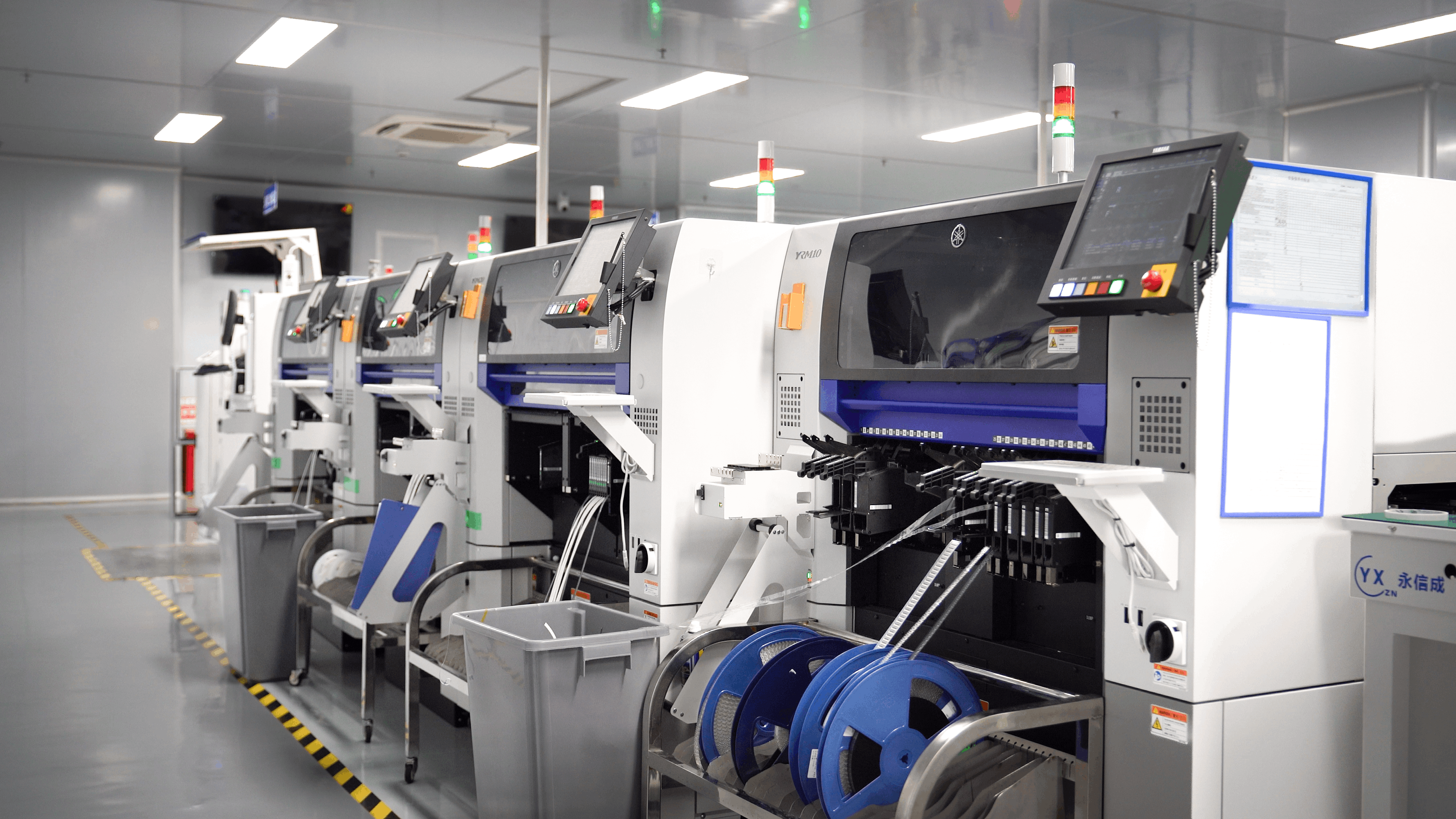
Manufacturing controls. Structural precision is controlled through a self-owned mold factory, described as avoiding assembly defects. Inspection follows a multi-stage process — incoming material test, semi-finished test and finished aging test — supported by standardized automated testing equipment for full-function inspection. Reliability testing before mass production covers waterproof, drop and high-low temperature performance in a professional laboratory. Electrical safety is addressed with overcharge, over-discharge and short-circuit protection circuits built into the mainboard, and qualified lithium battery suppliers with batch sampling safety tests.
On the standards side, action cameras fall under IEC 62368-1 for audio/video and information technology equipment, with the 4th edition published in 2023. Ingress protection is defined separately in IEC 60529, where IP68 covers dust protection and continuous immersion — a different rating from the IP66 sealing structure stated for this product line.
Where the shortlist stops: limits and verification items
Boundaries buyers should price in
- Tier mismatch is absolute. The X20 is a 2K + WiFi device. It is not a substitute for a 4K SKU in a programme whose listing or packaging requires 4K, even though it carries the largest display and the only infrared night-vision configuration in the group.
- Published spec coverage is uneven. Stabilization is not stated for the X20, Q1, Q3 or Q7; display is not stated for the Q1; battery provision is not stated for the X20, Q1 or Q2. Treat the table as a starting point that requires per-SKU confirmation.
- EIS is software-based. Electronic stabilization corrects motion through algorithms, and its behaviour depends on lighting and the frequency of the motion being corrected. A level count — such as the Q2's six levels — describes selectable settings, not a verified performance outcome.
- Sealing and depth are configuration-dependent. IP66 describes jet-and-dust protection, not immersion. The stated 30-meter waterproof depth relates to a specific sealing configuration, and underwater use depends on case compatibility that varies by model.
- The Q3 and Q7 are not differentiated by capability. They share the same recorded specification core, so a buyer cannot use capability to choose between them.
- Competitor comparisons in the spec set are generic. Phrases such as "most competitors" and "ordinary stabilization systems" are supplier statements without named comparison objects. The appropriate check is a sample test against the buyer's own baseline product.
None of these points disqualify the models. They define the questions that separate a shortlist from a purchase order, and they are the reason the table above names its gaps instead of filling them.
Market context shaping this shortlist
Resolution tiering. The ultra-HD segment, defined as 4K and above, accounted for approximately 46.25% of action camera market share in 2025 (Mordor Intelligence). That is why four of the five models here are 4K platforms, and why the 2K X20 is positioned on night vision rather than resolution.
Stabilization as baseline. EIS is described as a standard feature in budget-to-mid-range action cameras (Insta360 industry guide). The competitive question has shifted from whether stabilization exists to how it is configured — which is where a 6-level EIS specification becomes a describable product attribute.
Premium concentration, and the space it leaves. DJI and Insta360 held close to 90% of the action camera market share in Japan as of late 2025 (PetaPixel / BCN+R), and GoPro sold 3 million camera units in 2023 (SkyQuest Technology). That concentration sits at the branded end of the market. OEM and private-label programmes compete in a different channel and price architecture, where the relevant question is not brand share but which specification tier a programme can defend at its shelf position.
Regional demand. North America dominated the global market with a revenue share of 34% in 2025 (Grand View Research). On the supply side, China exported USD 166 million in video cameras in 2024, with the United States the top destination at USD 31.8 million (OEC) — the export corridor that most OEM action camera programmes operate within.
Supplier context for these five models
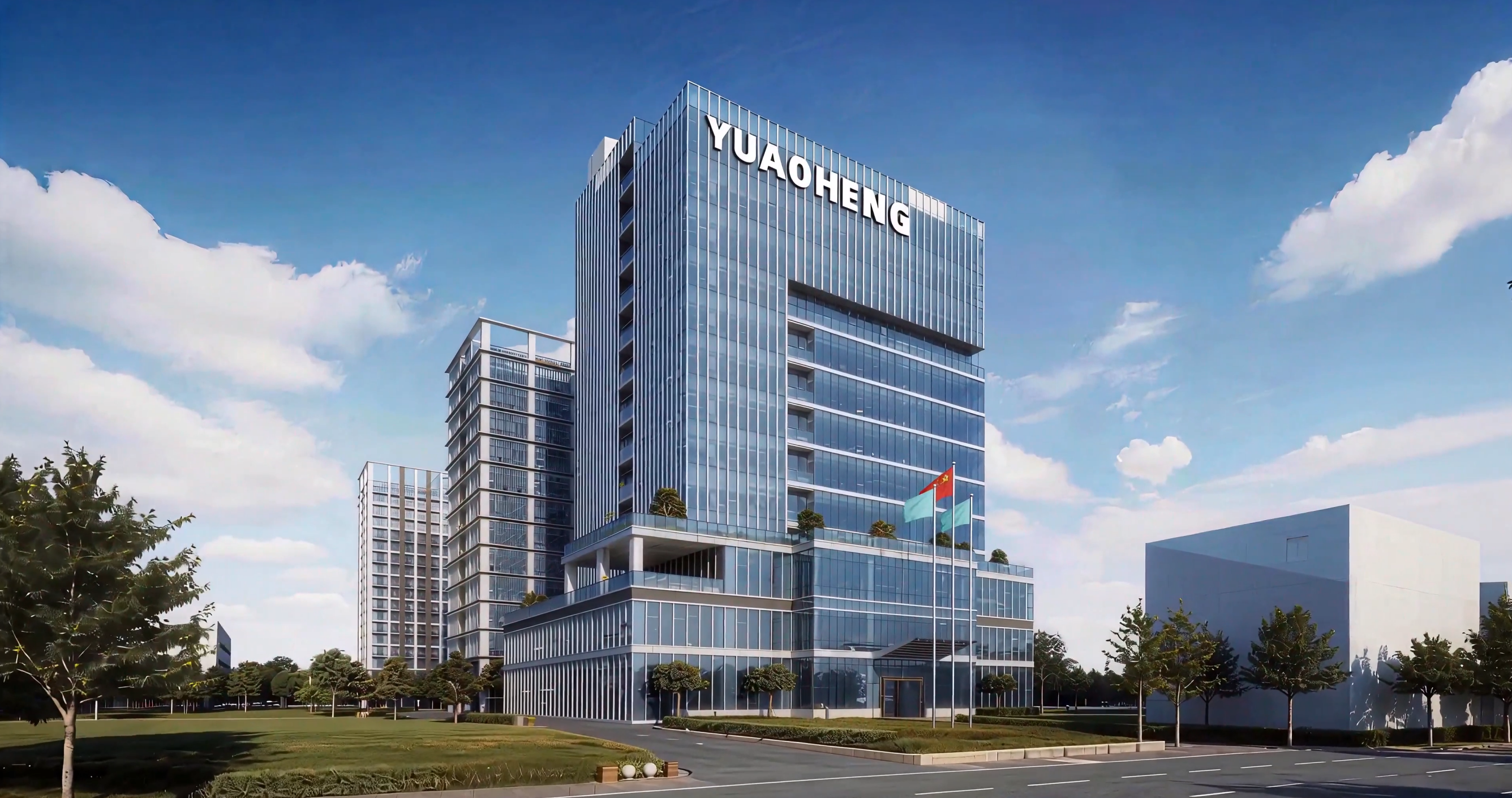
Dongguan YuAoHeng Electronic Technology Co., Ltd. is an action camera, dash camera and smart video doorbell manufacturer based in Dongguan, China, founded in 2016. The company operates a 1,500-square-metre production facility with 300 employees, an R&D team of 30 engineers, and an annual output stated at 2,000,000 units. Export accounts for 80% of its business, serving Europe, North America, Asia and South America, and its products are stated to reach more than 15 countries and regions including the United States and the United Kingdom. The company states that its products hold FCC, CE and RoHS certifications, and it provides OEM and ODM services covering product design, engineering development, testing and mass production.
For the models in this shortlist, the supplier-side capabilities that matter to an OEM buyer are the ones that sit behind the specification table: in-house R&D, a self-owned mold workshop, no third-party sourcing for the core platform, multi-stage inspection, and a digital production scheduling system that tracks production progress in real time to reduce delivery risk on bulk orders.
Outlook
Three shifts are likely to shape the next round of action camera shortlists. Resolution tiering will continue to push the volume segment into the 4K band, which leaves 2K platforms competing on differentiated features rather than price alone — night vision being the clearest example in this group. Stabilization will keep migrating from feature to baseline, which moves the competitive variable toward configurability and interface quality, the ground the Q2 occupies. And battery format will become a more visible procurement question as dual-recording models make power draw a product claim rather than an internal detail; the Q3 and Q7 battery provision, recorded as 2000mAh or 18650 format, is a small illustration of a decision that affects aftermarket logistics more than the datasheet suggests.
For buyers, the practical consequence is that model selection is becoming a matching problem rather than a ranking problem. The shortlist above is only useful if the unstated cells are closed with samples and certificates before a purchase order is raised.
Reference: the supplier's product catalogue is available as a downloadable PDF — https://cdn.socialarks.com/sbsp/25136/common/2026/0729/%E5%AE%87%E5%A5%A5%E6%81%92%E4%BA%A7%E5%93%81%E7%9B%AE%E5%BD%95%282%29.pdf
FAQ
Which capabilities separate the five models in this shortlist?
Capture tier separates them first: the X20 is classified as a 2K + WiFi model, while the Q1, Q2, Q3 and Q7 are classified as 4K + WiFi models. Feature separation follows. The X20 also carries a rotating direction function, a 1.54-inch IPS screen and four infrared lights. The Q1 adds rotating lens direction and simultaneous dual recording with a front 2K stream. The Q2 is specified with a touch screen and 6-level EIS. The Q3 and Q7 are recorded with dual 2K recording, 130-degree wide-angle optics, a 1.47-inch IPS display and battery provision of either 2000mAh or 18650 format.
How do the X20 and Q1 differ for OEM programme planning?
They occupy different capture tiers. The X20 is a 2K + WiFi device, so it cannot support packaging or listing claims that require 4K. Its differentiators sit in low-light capability and mechanical flexibility: four infrared lights, a rotating direction function and a 1.54-inch IPS screen. The Q1 is a 4K + WiFi device whose distinguishing feature is recording topology — simultaneous dual recording with a front 2K stream — plus a rotating lens direction. Choosing between them means choosing between a night-oriented 2K slot and a dual-stream 4K slot.
What does a 6-level EIS specification actually tell a buyer?
It states that the Q2's stabilization intensity is selectable across six levels rather than fixed. Electronic image stabilization corrects motion through software algorithms and is described as a standard feature in budget-to-mid-range action cameras (Insta360 industry guide). The level count describes the number of selectable settings, not a measured performance result. The appropriate validation step is to record test footage in the programme's target conditions and compare the levels before any packaging claim is written.
Does an IP66 rating mean these cameras can be used underwater without a case?
Not automatically. IP66 describes protection against dust and powerful water jets; it is not an immersion rating. Immersion protection is defined separately in IEC 60529 as IP68, which covers dust protection and continuous immersion. This product line's stated waterproof depth reaches 30 meters, described by the supplier as 100% higher than ordinary 5-meter-rated products, and the sealing structure is stated as an integrated IP66 waterproof design with a shockproof reinforced casing. Buyers planning diving, surfing or other submersion use should confirm the exact configuration, case compatibility and test evidence for the specific model.
Which certifications should an OEM buyer verify for these action cameras?
Dongguan YuAoHeng Electronic Technology Co., Ltd. states that its products hold FCC, CE and RoHS certifications. On the safety dimension, action cameras fall under the IEC 62368-1 standard for audio/video and information technology equipment, whose 4th edition was published in 2023. The practical verification step is to request the certificate for the exact model and configuration being ordered, because certification documents are issued per product and per market rather than per brand.
How should a buyer choose between the Q3 and the Q7?
The two models share the same recorded capability core: 4K + WiFi, dual 2K recording, 130-degree wide-angle optics, a 1.47-inch IPS display, and battery provision of 2000mAh or 18650 format. Because capability does not separate them, the decision moves to configuration and supply — which battery format each SKU ships with, enclosure and tooling differences, packaging, and channel allocation across a buyer's own product lines. That distinction should be confirmed per SKU with the supplier rather than inferred from the model name.
What production and quality controls support bulk orders?
The stated controls cover four areas. Structure: a self-owned mold factory controls shell structural precision to avoid assembly defects. Inspection: standardized automated testing equipment performs full-function inspection within a multi-stage process of incoming material test, semi-finished test and finished aging test. Reliability: professional laboratory testing for waterproof, drop and high-low temperature performance is carried out before mass production. Electrical safety: overcharge, over-discharge and short-circuit protection circuits are built into the mainboard, and qualified lithium battery suppliers are used with batch sampling safety tests. Delivery risk for bulk orders is managed through a digital production scheduling system that tracks production progress in real time.