
Adult LSR vs Platinum-Catalyzed Options: An Independent Buyer Comparison
Platinum-catalyzed adult-product LSR used for overmolding and skin-contact products
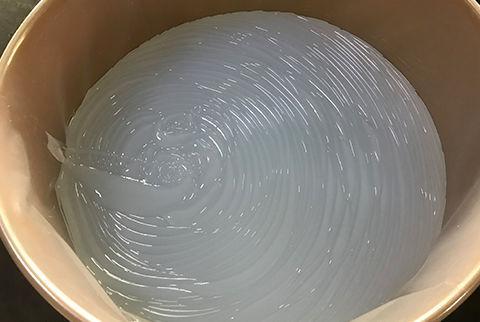
Buyers often frame the material choice as adult LSR versus platinum-catalyzed LSR. A more useful way to see the market is that most premium adult-product LSR is itself platinum-catalyzed and addition-cured. The difference that drives purchasing decisions is material grade: conventional industrial-grade silicone versus a low-odor, biocompatible LSR designed specifically for overmolding and extended skin contact.
Dongguan Times Silicon Industry Co., Ltd., a silicone raw material manufacturer based in Dongguan, Guangdong, China, supplies one such material under the product category Adult Products LSR for Overmolding. This article uses that product family as a reference example because its published specifications include catalyst chemistry, hardness range, viscosity, and compliance claims that buyers can compare against their own formulation requirements. The article is not intended as a brand endorsement; it is a decision framework for procurement teams evaluating trade-offs in cost, cure time, safety, and long-term supply.
A Direct Answer for Procurement Teams
For adult products made by overmolding, the most consistent high-performance choice is a platinum-catalyzed addition-cure liquid silicone with low odor, non-leaching properties, and a soft-to-mid hardness range. A practical baseline from the reference product series includes a hardness range of 7±1 to 38±1, viscosity from 4000 to 25000, and an addition-curing platform based on vinyl polydimethylsiloxane and hydrogen-containing polysiloxane.
During supplier evaluation, buyers should compare four things first:
- Odor after cure, especially residual odor that remains after parts are packed or warmed by body contact.
- Biocompatibility evidence such as FDA, REACH, and RoHS compliance claims supported by third-party reports.
- Physical performance such as tear strength, anti-yellowing behavior, and curing defect rate.
- Supply-chain consistency, including batch-to-batch hardness and cure-speed variation, MOQ, lead time, and capacity.
The rest of this article explains why those four criteria separate industrial-grade silicone from medical-grade, low-odor adult-product LSR.
Clearing Up the Terminology
Industrial-grade silicone may be cured by different mechanisms, and some low-cost materials include recycled silicone or tin-based catalysts. These materials can produce parts with a pungent odor, harmful leaching, yellowing over time, and inconsistent cure behavior. Adult LSR formulations that target high-end toys, realistic body molds, and daily-necessity overmolding usually shift to a platinum-catalyzed addition-cure system.
Addition-cure LSR requires a vinyl functional base polymer and a hydrogen-containing crosslinker, activated by a platinum catalyst. The reference material in this article is classified as Addition-curing Liquid Silicone (Platinum-cured LSR), which means the finished polymer network is formed through hydrosilylation rather than through tin condensation or peroxide curing. This chemistry is directly relevant to odor and extractables because a complete addition-cure reaction leaves minimal low-molecular-weight residues.
Within the adult-product segment, product models TS6807A/B, TS6825A/B, TS6830A/B, TS6835A/B, and TS6838A/B are typical series designations for this type of platinum-cured overmolding LSR. The series is intended for the adult toy industry, daily-necessities overmolding, silicone products, and plastic or hardware overmolding processing.
Performance Differences: Industrial-Grade Silicone versus Adult-Product LSR
One of the clearest comparisons available in supplier technical documentation contrasts conventional industrial-grade silicone and low-quality recycled silicone with the medical-grade, low-odor LSR used for adult products. The table below summarizes the documented performance gap.
| Criterion | Conventional industrial-grade or recycled silicone | Low-odor adult-product LSR reference |
|---|---|---|
| Odor level | Pungent industrial odor | Low odor, no irritating residue |
| Biocompatibility evidence | Often uncertified; potential harmful leaching | FDA/REACH listed and formulated as non-leaching |
| Yellowing after accelerated aging | Severe yellowing after 200 hours | No obvious yellowing after 1000 hours |
| Tear strength | ≤20 kN/m | ≥35 kN/m |
| Curing defect rate | ≥3% | ≤0.8% |
These differences matter for overmolded adult products because they affect both the consumer experience and the factory yield. A material that yellows after aging creates visual rejects in clear or light-colored parts. A material with low tear strength makes thin-wall overmolding fragile, especially at soft hardnesses. A higher curing defect rate increases rework, interrupts production, and raises total manufacturing cost.
The same comparison indicates that raw material cost per kilogram for this higher-grade LSR is 15% to 20% above industrial-grade silicone. However, because defect rates are lower and rework is reduced, the comprehensive production cost can decrease by 5% to 10%. This is a meaningful nuance for purchasing teams that focus only on material price per kilogram rather than total cost per usable part.
Why Catalyst Chemistry Directly Affects Odor and Biocompatibility
Platinum catalyst quality can be as important as the LSR base polymer. Suppliers who make low-odor silicone for adult products often specify high-activity platinum catalysts rather than organotin catalysts or low-activity general platinum catalysts. The chemistry determines not only cure speed but also residual odor and yellowing stability.
The performance comparison for catalyst systems used in low-odor silicone is reported in three areas.
| Catalyst system | Typical addition level | Cure behavior | Odor residue |
|---|---|---|---|
| Conventional organotin catalyst | 50 to 100 ppm | Fully cured after about 30 min at 80°C | Pungent tin odor |
| General low-activity platinum catalyst | 20 to 30 ppm | Fully cured after about 20 min at 80°C | Slight off-odor possible |
| High-activity platinum catalyst for adult LSR | 5 to 10 ppm | Fully cured after about 10 min at 80°C | No residual odor |
Because the addition level is lower, a high-activity platinum catalyst can reduce formulation cost by 10% to 15% even if the catalyst price per kilogram is higher. The catalyst also eliminates the need for a separate deodorization step. In the same catalyst comparison, batch activity fluctuation is reported at less than 3%, with no delayed or uneven curing issues and a rework rate below 1%.
From a procurement perspective, buyers should ask suppliers for the catalyst class used in their adult-product LSR. If the formulation is based on tin chemistry or a general-purpose platinum catalyst, odor and yellowing performance may be acceptable for some applications but unlikely to meet the highest skin-contact standards.
Overmolding Performance and Process Efficiency
Overmolding requires LSR to cure onto a substrate without damaging soft-touch layers or creating voids at the interface. The adult-product LSR series used as the reference here is designed for overmolding, with hardness grades from very soft at 7±1 to a firmer 38±1. Softer grades are needed for skin-like surfaces, while firmer grades give structure around inserts or connectors.
The practical advantage of this material class is not limited to physical feel. Documented efficiency data for this adult-product LSR versus industrial-grade silicone includes a 15% shorter molding cycle, 10% lower energy consumption per unit, and 20% higher production capacity. When combined with a high-activity platinum catalyst, the system can also allow a 20°C reduction in curing temperature and a 30% shorter molding cycle, depending on tooling and part geometry.
This is important for scale-up decisions. A formulation that requires a long cure time limits throughput, increases energy cost, and can make rapid overmolding lines difficult to balance. Buyers evaluating LSR for high-volume adult products should therefore request cure curves at the actual mold temperature and compare cycle time against their current industrial-grade silicone process.
Product Forms and Use Cases
Adult-product LSR is used in several production scenarios. The five hardness grades available in the reference series allow manufacturers to choose a grade for the final part:
- High-end adult toys requiring a soft, low-hardness surface and precise overmolding onto plastic or metal cores.
- Realistic body molds and lifelike dolls where the outer layer must be soft, tear-resistant, and comfortable against skin.
- Daily necessities overmolding where silicone is bonded to handles, grips, or housings.
- Food-contact silicone accessories that need documented compliance and no taste transfer.
- Plastic and hardware overmolding projects that need low-viscosity LSR for filling complex cavities.
The material form is a two-component liquid system, which is why a production workshop typically has an AB agent preparation area for accurate mixing. The image below shows the type of preparation area used for two-component silicone production.
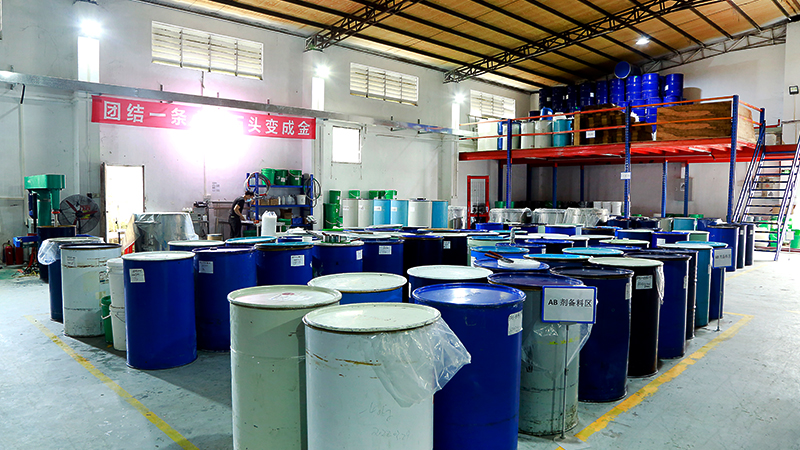
Two-component AB preparation area for liquid silicone rubber
Market Direction and the Demand for Higher-Grade LSR
Broader LSR market data helps explain why buyers are paying more attention to material quality. Third-party estimates from Grand View Research, Global Market Insights, and Market Research Future place the global LSR market at approximately USD 2.8 billion to 3.8 billion in 2024, with projections reaching roughly USD 5.0 billion to 7.55 billion by 2030 to 2035 depending on scope and methodology. The medical-grade LSR segment alone generated about USD 458.7 million in revenue in 2024, according to Grand View Research. Although medical-grade is not identical to adult-product grade, the growth of body-contact and low-odor silicone applications is visible in these data.
For adult products, consumer expectations have shifted from simple flexibility toward documented safety. End users increasingly ask about material smell, yellowing, and what migrates out of the silicone. This creates a commercial reason for manufacturers to prefer low-odor, non-leaching LSR even when local regulations do not force the change.
Cost Trade-offs and Boundaries
A neutral comparison should state the limits as well as the benefits of premium adult-product LSR.
The main trade-off is raw material price. Compared with conventional industrial-grade silicone, medical-grade adult LSR costs 15% to 20% more per kilogram. For low-risk products with no skin-contact requirement, short service life, or no aesthetic expectation, the extra price may not be justified. Buyers should not specify a medical-grade low-odor LSR for every silicone part if a standard platinized LSR or even industrial-grade silicone can satisfy the application.
Another boundary is process dependency. Even the best LSR formulation will fail if the substrate is not clean, the mold temperature is incorrect, or mixing ratios are inaccurate. High-quality LSR reduces defects but does not remove the need for correct overmolding parameters. Buyers should validate adhesion on their actual insert material rather than assuming one supplier formulation will work on all plastics or metals.
Third, platinum catalyst quality must be verified per batch. Moisture, oxidation, and storage conditions can reduce catalyst activity over time. A responsible supplier should provide batch activity data and recommend proper storage. The reference supplier, for example, uses moisture-proof sealed packaging and routine activity sampling in its documented quality plan.
Supplier Qualification for Long-Term Adult-Product Programs
Because buyers in this segment are making a Decision-to-Execution move, commercial terms and supply reliability become as important as technical specifications. The following qualification points reflect the hvq_7 procurement pattern of long-term supply and partnership evaluation.
Certification Evidence
The supplier should identify which certifications apply to the specific product formulation. In the reference case, the company states that all products have obtained RoHS, REACH, FDA, LFGB, and halogen-free certification, and that the management system is ISO 9001 certified. Company-level certification is not enough; buyers should request the corresponding product-level test report before approval.
Quality Risk Controls
Adult-product LSR carries compliance and consistency risks. Key controls to ask about include incoming raw-material testing, a low-odor non-leaching formulation with biocompatibility testing, in-line monitoring of viscosity, hardness and mixing ratio, full testing of cure performance and odor, and full traceability from raw material to finished batch.
Commercial and Supply Terms
The practical ordering baseline for the reference product is a minimum order quantity of 1 kg for standard products and 5 kg for custom formulations. Standard lead time is 7 to 10 working days for stock products and 15 to 25 working days for custom formulations. Monthly production capacity is 80 tons, scalable to 110 tons in peak periods.
These details matter for buyers who need to qualify a new LSR without stopping production. A low MOQ allows sampling and process trials before volume commitment. A defined lead time protects against unplanned downtime. A scalable capacity buffer is useful for seasonal launches.
Batch Consistency and Complaint Rate
Batch variability is one of the most common causes of adult-product silicone rejects after production scale-up. In the reference comparison, the documented batch consistency is less than 3% fluctuation in hardness and curing speed, and the client complaint rate is below 1%. A supplier can use these numbers as internal targets, but buyers should still request retention samples and retesting support.
Future Outlook
The adult-product LSR market is likely to follow the broader trend toward safety, transparency, and supplier accountability. Platinum-catalyzed addition-cure chemistry will remain the technical baseline for high-quality overmolding because it offers the best combination of low odor, non-leaching behavior, fast cure, and tunable hardness. At the procurement level, buyers will probably place more weight on documented batch consistency, reusable third-party compliance reports, and the supplier's ability to scale with seasonal demand.
The companies that can demonstrate all of these qualities, rather than only a low per-kilogram price, are better positioned for long-term adult-product programs.
FAQ
What is the practical difference between adult LSR and platinum-catalyzed LSR?
Adult LSR is an application category for soft silicone used in body-contact products. Most premium adult LSR is also platinum-catalyzed addition-cure silicone. The real comparison is between standard industrial-grade silicone and a low-odor, medical-grade platinum-catalyzed LSR that is designed for overmolding and biocompatibility.
Does platinum-catalyzed adult LSR cure faster than tin-catalyzed silicone?
Yes. In documented catalyst comparisons, a high-activity platinum catalyst can be fully cured in about 10 minutes at 80°C, while an organotin system may need about 30 minutes and a general platinum system about 20 minutes. Faster cure reduces molding cycle time and energy consumption.
Why are odor and leaching especially important in adult LSR?
Adult products are used in close contact with skin and may be packaged immediately after cure. Residual odor and leachable substances can cause user discomfort or complaints. Low-odor, non-leaching LSR reduces those risks because the addition-cure reaction produces fewer residues and the formulation is optimized for biocompatibility.
What hardness and viscosity should a buyer expect for overmolding LSR?
The reference adult-product LSR series covers a hardness range of 7±1 to 38±1 and a viscosity range of 4000 to 25000. Softer grades are used for skin-like surfaces, while higher-hardness grades provide structure and durability for inserts or connectors.
What MOQ and lead time are typical for qualifying this type of LSR?
The reference supplier offers a minimum order quantity of 1 kg for standard products and 5 kg for custom formulations. Standard products have a lead time of 7 to 10 working days; custom formulations generally need 15 to 25 working days. Monthly capacity is 80 tons and can scale to 110 tons in peak periods.
How should a buyer verify certification and batch consistency?
Buyers should request product-level third-party reports such as FDA, REACH, and RoHS, plus an ISO 9001 quality system certificate. For batch consistency, ask for hardness and cure-speed fluctuation data. In the reference example, the documented fluctuation is less than 3% and the client complaint rate is below 1%.
Supplier reference: Dongguan Times Silicon Industry Co., Ltd. maintains a downloadable brochure with product and company information. Buyers can access it here: Times Silicon product brochure.
Есть вопросы или нужны дополнительные детали?
Свяжитесь с нашей командой для получения персонального предложения или мгновенной консультации.
Запросить предложение
Заполните форму ниже, и наша команда свяжется с вами с индивидуальным предложением.
Прямой чат WhatsApp
Предпочитаете общаться в реальном времени? Напишите нам в WhatsApp для мгновенной помощи и быстрых ответов.
- Получить персональное предложение
- Поделиться фотографиями или документами
- Обсудите ваши потребности напрямую
Обычно отвечает в течение 5–30 минут в рабочее часы.