
Ag Drone Battery Lifecycle: Choosing Cells for Seasonal Operations
An agriculture drone battery is not a general-purpose lithium-ion pack with a different label on it. Spraying, seeding and crop-scouting fleets work in a compressed season: several discharge cycles per day, high ambient temperatures, dust and humidity, fast turnaround charging, and then months of near-idle storage. That pattern changes which cell chemistry, which cell format and which pack-level controls actually determine how many seasons a pack delivers — and it is the reason seasonal operators increasingly specify batteries by lifecycle profile rather than by catalogue headline capacity.
This analysis sets out a selection rationale for the agriculture drone segment, covering cell chemistry trade-offs, format decisions, pack-level protection, procurement terms and the regulatory context that applies from the 2026 season onward. It is written for procurement and engineering teams at drone OEMs, fleet operators and channel partners who are moving from a first prototype programme into repeatable seasonal deployment.

Battery pack production line. Seasonal drone packs are built to a duty-cycle definition, not to a single headline capacity figure.
Why a Seasonal Duty Cycle Is Not a Constant-Duty Cycle
Most lithium-ion battery selection frameworks were written for constant-duty equipment: warehouse robots, medical devices, handheld instruments, backup systems. Those loads are predictable. Charge windows are stable, ambient temperature is controlled, and the daily cycle count is roughly the same every week of the year. Selection in that world can focus on energy density, nominal voltage and a cycle-life figure quoted at a single depth of discharge.
Agricultural flight is the opposite profile. In a spraying or scouting campaign, a single aircraft may run through several packs in a working day, discharge deeply to maximise treated hectares per sortie, recharge in field conditions between flights, and then sit unused for a large part of the year. Two ageing clocks therefore run at once: cycle ageing, which is consumed quickly during the season, and calendar ageing, which continues through storage regardless of use.
The practical consequence is that a pack can consume a meaningful share of its usable life inside one campaign and then keep ageing while stored. A specification that only states capacity, voltage and a generic cycle count does not tell a buyer whether the pack will survive three seasons of that pattern. What matters instead is cycle tolerance at the depth of discharge the mission actually uses, thermal behaviour under high ambient temperature, charge acceptance during field turnaround, and storage stability between campaigns.
Four Constraints That Decide the Cell
1. Energy per gram versus payload
On an agricultural aircraft, every gram committed to the battery is a gram not available for spray tank volume, sensor payload or structural margin. Specific energy therefore has a direct operational meaning: a lighter pack of equal usable energy extends sortie duration or increases treated area per flight. The counter-pressure is that higher-energy chemistries generally require more thermal design and more conservative pack architecture, and added thermal mass can absorb part of the weight gain.
2. Charge acceptance and field turnaround
In a seasonal campaign, fleet throughput is usually limited by charging logistics rather than by flight time. Charge acceptance is a cell-level property, but what the operator experiences is a pack-level outcome governed by the battery management system: current limiting, temperature-based derating and balancing behaviour together decide how much of the advertised charge rate is actually usable in a hot field. A pack that accepts a high current only within a narrow temperature window can bottleneck an entire rotation schedule.
3. Thermal headroom in high ambient conditions
Field operation stacks ambient heat, self-heating during discharge and self-heating during charge. The relevant question is not whether a cell can operate at high temperature, but how much margin exists between normal working temperature and the point at which protection thresholds intervene. Packs with temperature sensing at cell level and defined protection logic behave more predictably across a season than packs that sense only at module level.
4. Cycle tolerance at the depth of discharge actually used
Cycle-life figures are only comparable when the test conditions match the mission. An agricultural mission that discharges deeply to maximise area per sortie places a different demand on the electrode system than a shallow-cycling robot. Buyers should ask for cycle data stated at the depth of discharge and temperature they intend to run, and should treat a single headline cycle count without those conditions as a marketing number rather than an engineering one.
LiFePO4 or Lithium-Ion: Where Each Chemistry Earns Its Place
The chemistry decision in a seasonal drone programme is rarely a single choice for the whole aircraft. It is usually split between the flight pack and everything around it.
Lithium iron phosphate (LiFePO4) offers strong thermal stability, good tolerance to abuse conditions and a long cycle tolerance at moderate depths of discharge. Its well-known constraint is lower gravimetric energy density than nickel-rich lithium-ion chemistries. For a flight pack, that translates into a shorter endurance at the same payload or a heavier pack for the same endurance — which is often unacceptable for aerial application work. Where a LiFePO4 battery earns its place in an agricultural operation is elsewhere: ground support equipment, field charging buffers, auxiliary power for pumps and sensor stations, and payload modules where the pack weight is not carried in flight or where safety margin is the dominant requirement.
Rechargeable lithium-ion cells with nickel-rich cathodes are the more common choice for the flight pack because the energy-per-gram advantage converts directly into mission capability. The trade is that the same chemistry is more sensitive to thermal and electrical abuse, so the pack design has to carry more protection: cell-level temperature sensing, current limiting, robust balancing, and mechanical architecture that limits heat propagation from a single failing cell.
The 24V lithium-ion battery class sits at an interesting boundary in agricultural fleets. It is a common voltage class for auxiliary systems — avionics and control electronics, sensor payloads, pumps, and ground carts — and it can be populated with either chemistry. Because the two chemistries present different voltage windows and different charging profiles, a 24V pack built around LiFePO4 and a 24V pack built around lithium-ion are not drop-in substitutes for one another: charger settings, cut-off voltages and the battery management system configuration all need to be specified together with the pack.
Cell Format Decisions: 18650, 21700, 18500 and Smaller
Format selection follows chemistry selection, and it is often over-weighted in early discussions. The practical differences are about architecture and supply, not about fundamental capability.
- 21700 battery cells carry more energy per cell than 18650 cells, so a given pack energy can be reached with fewer cells and fewer interconnects. That simplifies the pack architecture and reduces the number of joints that must be welded, inspected and balanced. The trade-off is a larger thermal gradient across a cell and less flexibility in shaping a compact pack envelope.
- 18650 rechargeable battery cells remain the most widely sourced cylindrical format, with a very broad choice of grades and a mature supply chain. For a seasonal fleet that needs multi-year replacement availability, that breadth is itself a lifecycle asset — but it also means the buyer must specify grading criteria, because quality varies considerably between suppliers.
- 18500 and 14500 battery cells suit smaller auxiliary packs, remote controllers, sensor nodes and handheld service tools, where total energy demand is modest and pack dimensions are constrained.
In every case, format choice is secondary to what happens at pack level. Two packs built from the same cell format can have very different service lives depending on how the cells were graded, matched and protected.
Where Multi-Season Life Is Actually Determined: Pack-Level Controls
A battery pack is a system, and most of the failure modes that shorten seasonal service life are managed — or not managed — at pack level rather than inside the cell. Documented pack-engineering controls that matter in high-stress seasonal use include:
- Cell capacity grading and matching. Cells with closely matched capacity are grouped into the same pack, so that the weakest cell does not set the pack’s usable capacity and force early cut-off. In a fleet running deep discharges, mismatch compounds quickly across a season.
- Pack-stage high-temperature ageing test. A burn-in or ageing step after assembly exposes early failures before the pack reaches the field, rather than during the busiest weeks of the season.
- Active cell balancing. Active balancing redistributes charge between cells rather than dissipating it, which helps preserve usable capacity as cells drift apart over repeated deep cycles.
- Over-temperature protection and current limiting. Defined thermal thresholds and current derating protect the pack during fast field charging in high ambient temperatures.
- NTC temperature sensing. Negative temperature coefficient sensors give the battery management system cell-level temperature data, which is the basis for any credible protection logic.
- Flame-retardant electrolyte and separator, plus a heat-insulating compartment. These are containment measures: they do not prevent a fault, but they limit how far a single-cell event propagates inside the pack.
- Over-discharge control. Over-discharge is a particular risk in seasonal use, because a pack can be left in storage or left connected to a dormant aircraft for long periods. Protection thresholds and storage-state discipline together prevent a pack from being recovered in an unrecoverable condition at the start of the next season.
For a buyer, these items translate into verification questions rather than marketing claims: ask for the grading criteria, ask whether a pack-stage ageing test is performed and how failures are dispositioned, ask how balancing is implemented, and ask where temperature sensors are placed.
HCC’s Position in Agriculture Drone Battery Supply
Shenzhen Topway New Energy Co., Ltd. (HCC) is a Shenzhen-based supplier of lithium-ion and energy storage battery packs, founded in 2022, with a 10,000 m² facility, approximately 200 employees, a 15-person R&D team and an annual output of 1,200,000 units. Its main product lines are robot battery, exoskeleton battery and drone battery, with roughly 40% of output exported to markets including the USA, EU countries such as Germany, France, Italy and Spain, the UK, Japan, Korea, and Southeast Asian markets including Vietnam, Malaysia, Singapore, Indonesia and the Philippines.
Relevant to the agriculture drone segment, the company’s product documentation covers custom cylindrical and polymer pack formats built around 14500, 18500 and 18650 cells. Certification coverage includes RoHS, UL and CE, with PSE also listed in public product documentation. The company currently operates a Shenzhen sales centre with independent R&D capability, and describes its business as evolving from battery pack solutions and cooperative production toward in-house production following solution design, with advanced battery production lines planned.
For seasonal drone programmes, the practical relevance of that structure is packaging flexibility: a chemistry and format combination can be specified around a duty-cycle definition, then validated through a pack-stage ageing test before volume commitment. The documented protection set — active cell balancing, over-temperature protection, current limiting, NTC temperature sensing, flame-retardant electrolyte and separator, heat-insulating compartment design, and over-discharge control — maps directly onto the failure modes that shorten agricultural pack life.
There are real boundaries to state plainly. HCC’s founding date of 2022 means a shorter operating track record than established cell manufacturers. The company’s current model is pack design and assembly rather than in-house cell manufacturing, so cell supply depends on external cell makers — a factor buyers should model as a supply-continuity dependency rather than assume away. And order quantities are structured for volume programmes: minimum order quantities run from 1,000 to 10,000 pieces, which makes the supplier better suited to fleet-scale specification than to single-unit trials.

Manufacturing base. Pack-level grading, ageing and protection design determine seasonal service life more than cell format alone.
Mapping the Season: Application Notes for Fleet Operators
A lifecycle approach divides the year into four phases, and each phase has a different battery question attached to it.
Pre-season commissioning. Record a baseline capacity and internal resistance reading for every pack before the campaign starts, and verify that balancing behaves as expected. Packs that have been in storage for months should be brought back through a controlled charge and discharge cycle rather than put straight into a full working day.
In-season rotation. Log depth of discharge, peak temperature during charge and discharge, and charge time for each pack in rotation. This is the data that later shows whether a pack is ageing faster than the fleet average, and it is the only reliable basis for deciding whether to extend a pack into another season or retire it.
Post-season assessment. Re-run the capacity check and compare it against the commissioning baseline. Packs that fall below the operational threshold can be reassigned to lower-demand duties rather than discarded, which is a common way to extract more value from a fleet investment.
Storage and logistics. Storage state of charge, temperature and humidity drive calendar ageing during the off-season. Shipping also has a compliance dimension: from 1 January 2026, IATA and UN provisions require a 30% state of charge limit for lithium batteries packed with equipment under packing instruction PI 966. Fleets that ship packs together with aircraft or ground equipment between regions should build that limit into their logistics planning rather than discover it at the freight desk.
Market Signals Behind the Shift Toward Application-Specific Packs
The commercial context supports the technical argument. Grand View Research estimated the global drone battery market at USD 8.13 billion in 2024, with lithium-based technologies holding a 91.14% share — a market in which chemistry choice is effectively already settled and differentiation has moved to pack engineering. GMI Research valued the global lithium-ion battery market at approximately USD 164.8 billion in 2024, with projections to reach USD 422.8 billion by 2032, indicating continued capacity expansion and, with it, continued cell-supply volatility that pack assemblers must plan around.
On the supply side, China’s lithium-ion battery exports reached over 3.9 billion units in 2024, an 8.1% year-on-year increase despite a slight decline in total export value, according to General Administration of Customs data reported by Caixin Global. Volume growth with value pressure typically pushes buyers toward more precise specification: fewer over-engineered packs, more packs matched to a defined duty cycle.
Two regulatory anchors matter for agriculture drone programmes specifically. IEC 62133-2 remains the primary international safety standard for portable lithium-ion cells and battery packs in industrial equipment, and it is the baseline most buyers should require in a tender. The IATA/UN 30% state-of-charge limit for lithium batteries packed with devices, effective from 1 January 2026, adds a logistics constraint that interacts directly with seasonal shipping patterns.
Comparison: Three Sourcing Approaches and Their Limits
Most procurement teams face three realistic options for a seasonal drone fleet. Each has a defensible use case, and each has a boundary worth stating before a purchase order is raised.
| Approach | What it optimises | Where it fits | Main limitation |
|---|---|---|---|
| Reusing packs designed for constant-duty robots | Development speed and existing validation data | Early trials, ground equipment, non-flight auxiliary loads | The duty-cycle assumption is steady, moderate cycling in controlled conditions. Seasonal deep discharge, field charging in high ambient temperature and long dormancy are outside the original design centre. |
| Generic off-the-shelf cylindrical packs | Unit cost and immediate availability | Small fleets, spares, low-criticality payloads | Cell grading criteria, balancing method and pack-stage ageing test are frequently undocumented, so lifecycle behaviour across multiple seasons cannot be predicted from the datasheet. |
| Pack specified around a defined seasonal duty cycle | Multi-season service life and predictable fleet behaviour | Fleet-scale seasonal deployment where replacement planning matters | Requires a longer specification lead time, a documented duty-cycle definition from the buyer, and volume commitment — HCC’s order quantities range from 1,000 to 10,000 pieces. |
The third route is not automatically correct. For a first-season pilot, an off-the-shelf pack may be the rational choice, provided the operator records the data needed to specify properly for the following season.
A Lifecycle Procurement Checklist
The following criteria convert the analysis into a tender-ready structure. Each item should be answered in writing by the supplier, not inferred from a product page.
| Criterion | What to require |
|---|---|
| Duty-cycle definition | Stated packs per day, depth of discharge, ambient temperature range and charge window for the intended campaign |
| Chemistry rationale | Written justification for LiFePO4 or nickel-rich lithium-ion per pack role, including the weight and thermal trade |
| Cell grading | Capacity and resistance matching criteria, plus rejection thresholds |
| Pack-stage ageing | High-temperature ageing step after assembly, with defined disposition of failures |
| Protection architecture | Active balancing, over-temperature protection, current limiting, NTC sensor placement, over-discharge thresholds |
| Containment design | Flame-retardant electrolyte and separator, heat-insulating compartment arrangement |
| Compliance | IEC 62133-2 baseline, plus RoHS, UL, CE or market-specific marks as applicable |
| Logistics | State-of-charge control for shipment under the 30% limit applying to lithium batteries packed with equipment |
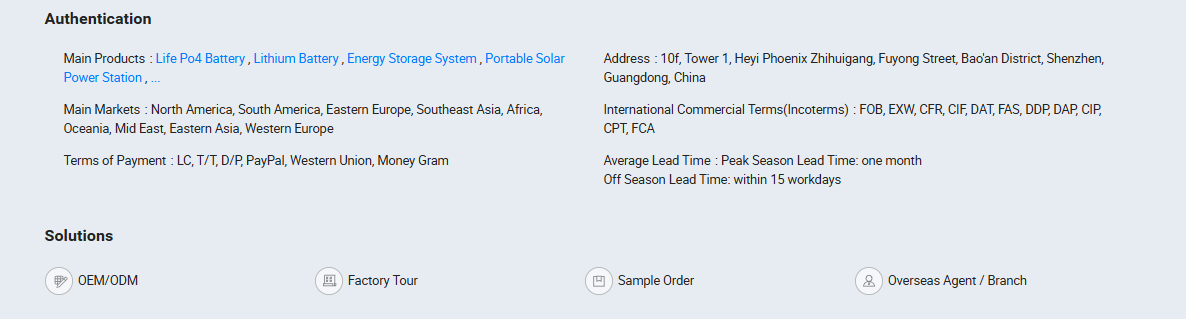
Commercial terms are part of lifecycle planning: delivery, acceptance testing and payment structure all affect how quickly a pack can be qualified before a season starts.
Future Outlook
Three developments are likely to shape agriculture drone battery selection over the next few seasons. First, as the lithium-ion market scales toward the projected 2032 value, cell-level differentiation will continue to consolidate among large manufacturers, pushing pack assemblers to compete on grading discipline, thermal architecture and traceability rather than on cell access alone.
Second, regulatory pressure is moving from cell safety toward logistics and documentation. The 30% state-of-charge requirement for lithium batteries packed with equipment is a logistics rule, but it forces fleet operators to treat state of charge as a managed variable across the whole season, not just at the charger.
Third, seasonal operators are starting to treat batteries as assets with a service history rather than as consumables. Once packs are logged per mission, replacement planning becomes an annual budget line instead of an emergency purchase, and the specification conversation shifts from capacity to remaining useful life. That shift favours suppliers who can document grading, ageing tests and protection logic in a form a procurement team can audit.
FAQ
How should a seasonal operator work out the cycle budget for an agriculture drone battery?
The cycle budget is the number of packs used per working day, multiplied by operating days in the campaign, multiplied by the number of seasons the fleet is intended to serve. That figure should then be compared against cycle data stated at the depth of discharge and temperature the mission actually uses, not against a general cycle count. A pack whose life is quoted at shallow cycling will not deliver the same number of missions in a deep-discharge spraying profile.
Is LiFePO4 or lithium-ion the better choice for agricultural drone packs?
They serve different roles. LiFePO4 offers strong thermal stability and cycle tolerance but lower gravimetric energy density than nickel-rich lithium-ion, which shortens endurance at the same payload weight in flight. Nickel-rich rechargeable lithium-ion is therefore more common in the flight pack, where energy per gram converts directly into mission capability, while LiFePO4 is often used in ground support equipment, field charging buffers and auxiliary modules where safety margin outweighs weight.
What does a 24V lithium-ion battery pack change for drone ground equipment and payloads?
It establishes a common voltage class for auxiliary systems such as control electronics, sensor payloads, pumps and ground carts. Because LiFePO4 and nickel-rich lithium-ion present different voltage windows and charging profiles, a 24V pack built around one chemistry is not a drop-in substitute for the other: charger settings, cut-off voltages and battery management system configuration must be specified together with the pack.
Which cell format fits a seasonal drone fleet — 18650, 21700 or 18500?
Format follows the pack role. A 21700 battery cell carries more energy per cell than an 18650, allowing a given pack energy with fewer cells and fewer interconnects, which simplifies assembly and balancing but leaves less shaping flexibility. The 18650 rechargeable battery remains the most widely sourced format with the broadest choice of grades, which supports multi-year replacement availability. 18500 and 14500 battery cells suit smaller auxiliary packs, controllers and sensor nodes. In all cases, cell grading and matching at pack level affect service life more than format alone.
What purchasing terms and acceptance criteria typically apply to custom pack orders?
For HCC, minimum order quantities range from 1,000 to 10,000 pieces. Delivery terms offered include FOB, EXW, CFR, CIF, DAT, FAS, DDP, DAP, CIP, CPT and FCA. Acceptance is based on a pre-shipment test, and payment terms include LC, T/T, D/P, PayPal, Western Union and Money Gram. Buyers should confirm which pre-shipment tests are performed and how results are documented before committing to a seasonal delivery schedule.
How should packs be stored and shipped between seasons?
Storage state of charge, temperature and humidity drive calendar ageing during the off-season, so packs left idle for months should be stored at a controlled state of charge rather than fully charged or fully depleted. On the shipping side, IATA and UN provisions effective from 1 January 2026 require a 30% state of charge limit for lithium batteries packed with equipment under PI 966. Over-discharge protection and documented storage procedures both reduce the risk of a pack being unrecoverable at the start of the next campaign.
Shenzhen Topway New Energy Co., Ltd. (HCC) publishes its product and capability documentation, including the downloadable company brochure, at the HCC brochure link.
Есть вопросы или нужны дополнительные детали?
Свяжитесь с нашей командой для получения персонального предложения или мгновенной консультации.
Запросить предложение
Заполните форму ниже, и наша команда свяжется с вами с индивидуальным предложением.
Прямой чат WhatsApp
Предпочитаете общаться в реальном времени? Напишите нам в WhatsApp для мгновенной помощи и быстрых ответов.
- Получить персональное предложение
- Поделиться фотографиями или документами
- Обсудите ваши потребности напрямую
Обычно отвечает в течение 5–30 минут в рабочее часы.