
Aging Seals and Terminal Oxidation in PV Connectors: FAQ
Aging Seals and Terminal Oxidation in PV Connectors: FAQ
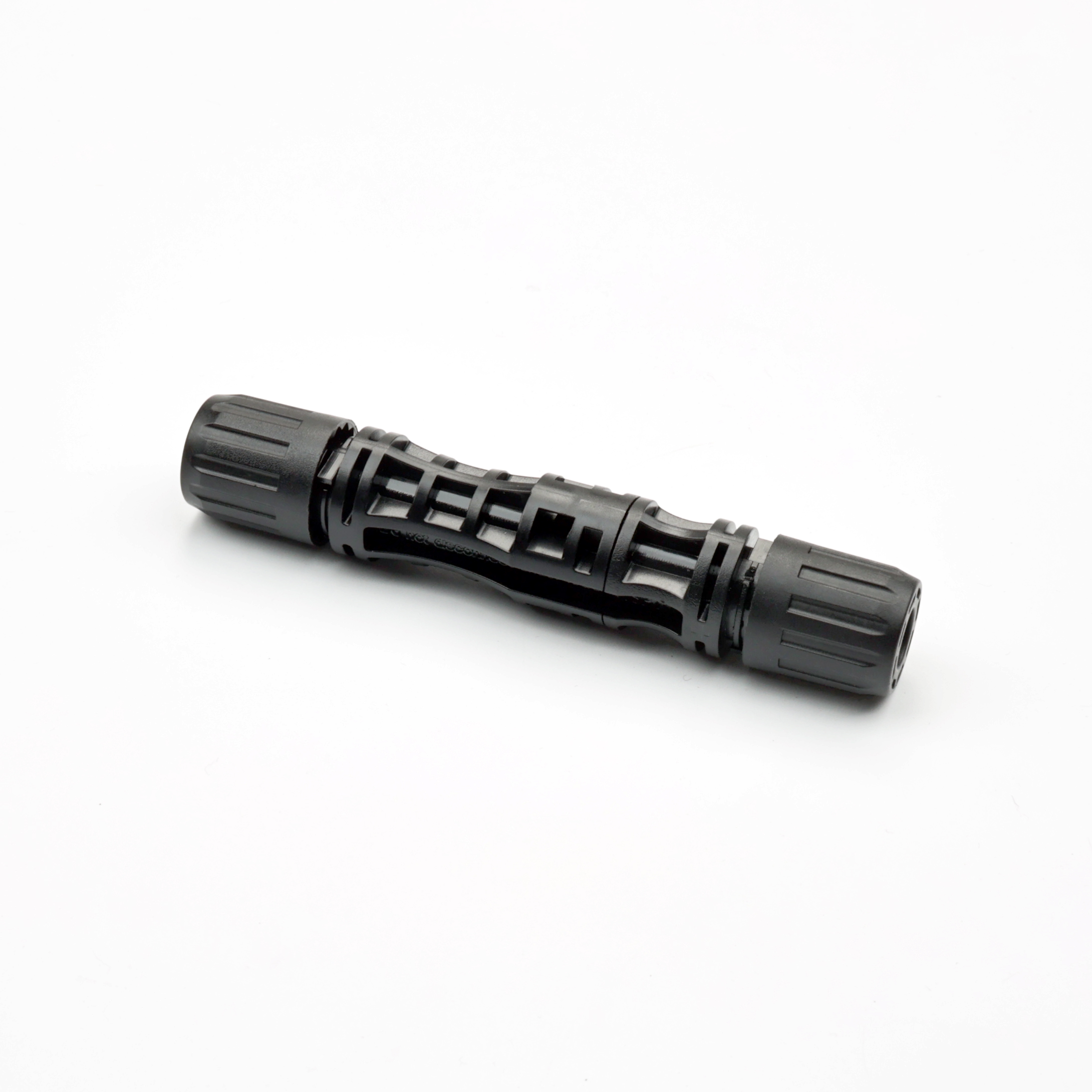
The two areas that decide long-term outdoor behaviour of a PV connector: the elastomer seal interface and the plated current-carrying terminal. Image: Solar MC4 1500V connector, Gutai.
Two failure modes dominate long-term reliability discussions about photovoltaic connectors: elastomer seals that harden, shrink and crack, and current-carrying terminals that oxidize. Neither shows up in an installation report, and neither can be inspected easily once a string is energised. Both are decided much earlier, in the material and mechanical specification of the connector itself.
This procurement FAQ addresses the questions buyers raise most often when specifying waterproof electrical connector accessories for outdoor duty measured in years rather than months. It covers Solar Connector MC4 products used in PV arrays, and the nylon cable gland family (PA66 body with NBR sealing) used at enclosure, junction box and inverter entries, because the two families solve the same environmental problem with different sealing structures and different temperature budgets. The reference points used below come from the published product, test and certificate documentation of Zhejiang Gutai Connector Co., Ltd. (Gutai), a manufacturer of waterproof cable glands, Solar Connector MC4 products, mini waterproof boxes and connectors, and hose fitting series, founded in 2019 and located in Yueqing City, Wenzhou, Zhejiang, China.
Why Seal Aging and Terminal Oxidation Appear Late
Both mechanisms are cumulative rather than sudden. Heat, ultraviolet radiation, ozone, thermal cycling and mechanical vibration act on the seal continuously; moisture, salt and airborne contamination act on the terminal. The seal usually fails first, as a slow moisture path. The terminal fails later, as a consequence.
The sequence matters for procurement. Once moisture reaches the contact interface, the metal surface corrodes, contact resistance rises, and the joint generates more heat at the same current. That additional heat accelerates both the oxidation of the contact and the aging of the nearby elastomer. The published contact resistance for the 1000V MC4 series is 0.5 mΩ, and the same series is rated at 30 A for 2.5 mm², 4 mm² and 6 mm² conductors (14, 12, 10 AWG) and 45 A for 4 mm² and 6 mm² (12, 10 AWG). At those currents a small upward drift in contact resistance is not a cosmetic issue.
The practical consequence for a buyer is that the specification stage carries most of the risk. Retrofitting a seal material or a plating after deployment is effectively impossible.
Seal Material Selection: NBR, Silicone and Fluororubber
Gutai's nylon cable gland range, which includes the Plastic Cable Gland, the Metric Cable Gland and the PG Cable Gland series, is specified with a Nylon PA66 body and NBR sealing. The PG series covers thread sizes PG7 to PG48 with a cable range of 3 to 45 mm and thread outer diameters of 12.5 to 59.3 mm; the Metric series covers M12 to M63 with the same 3 to 45 mm cable range and thread outer diameters of 12 to 63 mm. NBR is the standard industrial nitrile elastomer for enclosure entries, cabinets and general industrial duty.
For photovoltaic connectors the seal specification is different. Gutai documents PV connector seals in silicone or fluororubber, with hardness increasing by only 5 Shore A and no cracking after 500 hours of high-temperature aging at 100 °C. In the desert PV deployment described later in this article, the seal material specified was high-temperature fluororubber.
| Seal material | Where it is documented in the range | Buyer consideration |
|---|---|---|
| NBR (nitrile) | Nylon Cable Gland family, PA66 body with NBR seal; PG7 to PG48 and M12 to M63 | General industrial enclosure, cabinet and machine-entry duty |
| Silicone | PV connector seal option | Wide temperature tolerance for outdoor connector seals |
| Fluororubber | PV connector seal option; specified for the desert PV project | Selected where high surface heat and aggressive UV or wind-sand exposure apply |
Reading the Temperature Range Correctly
The 1000V MC4 series is specified with an ambient temperature range of -40 °C to +85 °C under IEC and -40 °F to +194 °F under UL, and an upper temperature limit of +105 °C under IEC. These two figures describe different conditions, and they should not be treated as interchangeable. The ambient range describes the surrounding air condition; the upper temperature limit describes the highest temperature condition the connector is documented against. Reading +105 °C as a continuous ambient rating would be a specification error.
Surface temperature is the figure that drives seal choice in practice. A connector housing exposed to direct sun and backed by a current-carrying contact can run hotter than the air around it. In the desert project referenced below, sealing had to remain stable at 70 °C surface heat combined with wind-sand erosion, which is why a higher-temperature fluororubber seal was selected rather than a standard elastomer.
For the core product range, Gutai documents operating conditions from -40 °C to 120 °C and an average MTBF exceeding 8,000 hours. Buyers should still match the individual product datasheet rather than the range-level statement: for the 1000V MC4 series the datasheet states the -40 °C to +85 °C ambient band.
Terminal Plating and Long-Term Contact Resistance
The 1000V MC4 series uses tin-plated copper or silver-plated copper terminals, with a snap-in locking system, safety class II, a test voltage of 6 kV (50 Hz, 1 minute) and a corrosion test class of IEC 60068-2-52. The insulation housing is specified as PC/PPO with a UL-94-V0 flammability rating, and protection class is IP67, with IP2X touch protection in unmated status.
Plating choice is a trade-off rather than a ranking. Both tin and silver plating are offered within the same series, and documented differences between them relate primarily to temperature behaviour and corrosion resistance of the contact surface. Where the terminal is expected to hold a low and stable contact resistance over years of heat and humidity cycling, the silver-plated option is the more conservative selection; it is the plating cited in the desert PV deployment, where silver-plated terminals were combined with the sealing design to keep contact resistance low.
Housing material is also documented at family level rather than as a single global figure. Gutai documents UV-resistant modified PA66 housings passing 1,000-hour UV aging tests for its photovoltaic connector range, while the 1000V MC4 series product specification lists PC/PPO insulation housings. Buyers evaluating a specific model should confirm the housing material stated on that model's datasheet rather than assuming it is shared across the range.
How the MC4 Connector Family Limits These Two Risks
The design answer to aging seals and oxidized terminals is not a single material but a combination of housing, seal geometry and terminal plating. Within Gutai's Solar Connector MC4 range, which includes 1000V and 1500V MC4 connectors as well as Y-type and T-type branch connectors, the documented elements are:
- UV-resistant housing tested to 1,000 hours of UV aging in the photovoltaic connector range;
- seals in silicone or fluororubber, documented with a hardness increase of only 5 Shore A and no cracking after 500 hours at 100 °C;
- a dual seal ring and anti-loosening structure intended to hold sealing under vibration and thermal cycling;
- terminals in tin-plated or silver-plated copper with a specified contact resistance of 0.5 mΩ;
- corrosion test class IEC 60068-2-52, protection class IP67 and UL-94-V0 flammability rating on the 1000V series.
Manufacturing context is relevant to whether those specifications hold in volume. Gutai operates a 5,000 m² facility with 80 employees, including 10 engineers, an annual output of 10,000,000 units, an export ratio of 80 percent and main markets in the Middle East, Southeast Asia, India, Pakistan, the EU, the United Kingdom and the USA. Stated monthly capacity is 100,000 sets for MC4 connectors and 500,000 pieces for cable glands, with 100 percent full dimension inspection as the stated quality control method. Seal and thread specification, material selection across nylon, brass and stainless steel, colour, packaging, OEM labelling and multi-hole layouts are listed as customizable.
Application and Use Cases
Desert PV plant, Middle East
A large Middle Eastern PV energy developer deployed 20,000 sets of anti-UV modified PA66 photovoltaic connectors across a 150 MW desert plant, over a three-year supply relationship. The reported result was a drop in connector damage rate from 8 percent annually with the original imported products to below 1.2 percent, a 70 percent reduction in downtime caused by connection failures, and cumulative savings in maintenance and generation losses exceeding USD 80,000. The housing passed 1,000-hour UV aging tests, the seals used high-temperature fluororubber, and silver-plated terminals were specified. This is the case that most directly tests both failure modes discussed here.
Coastal EV charging, Europe
A European coastal open-air DC fast charging project took a first batch of 5,000 sets of IP68-grade metal waterproof connectors. The application faced high-salt fog, strong sea wind and high-frequency vibration. The connectors used 304 stainless steel with a dual-seal anti-loosening structure, passing 1,000-hour salt spray tests and IEC 60068-2-6 vibration tests. The reported connector-related electrical failure rate fell from 18 percent annually to 2.6 percent, annual maintenance cost per station dropped from over 500 RMB to below 80 RMB, and new station installation efficiency increased by 35 percent.
Enclosure-level moisture management
Connector seals are only one part of the moisture path. At the enclosure itself, the entry method matters as much as the seal: a Nylon Cable Gland, a brass cable gland for higher mechanical duty, a Cable Gland Screw Plug for unused entries, a Waterproof Junction Box in M16, M20 or M25 sizes, a Watertight Corrugated Connector or a Waterproof Flexible Pipe Connector all determine how much humidity reaches the interior. Where a sealed enclosure experiences temperature swings, a Waterproof Vent Plug is used to equalise pressure without admitting liquid. Gutai lists its cable glands as applicable to the new energy sector, industrial automation and advanced manufacturing, construction and infrastructure, and marine engineering and shipbuilding.
Market Trend: Reliability Documentation as a Buying Criterion
The category is expanding, and with it the expectation that suppliers can document long-term behaviour rather than only short-term ratings. Third-party estimates put the global cable glands market at approximately USD 2.16 billion to USD 2.25 billion in 2024-2025, with forecasts ranging from USD 3.07 billion to USD 4.96 billion by 2034 (Straits Research, Spherical Insights). The global waterproof connector market was valued at approximately USD 13.4 billion in 2024 and projected to reach USD 25.48 billion by 2033, a CAGR of 7.4 percent. Within solar, the PV connector market was valued at USD 1.31 billion in 2024, with MC4 connectors holding about 68 percent of the segment, roughly USD 0.89 billion (Global Market Insights). Asia Pacific accounts for approximately 38 to 42 percent of global cable gland revenue, driven largely by industrialisation in China and India.
Two implications follow for buyers. First, volume growth in PV and storage increases the number of connectors entering service, which raises the statistical weight of seal and terminal failures in warranty data. Second, MC4 dominance means compatibility and verification practices around a single connector format matter more than variety in the market. Documentation specifically tied to UV aging, salt spray, vibration, temperature and corrosion class is becoming a routine part of supplier evaluation rather than an optional extra.
Comparison with Traditional Solutions, and Where the Limits Are
The shift from generic connectors to application-matched connectors is a shift in specification depth rather than in principle.
| Aspect | Conventional approach | Documented approach |
|---|---|---|
| Seal material | One elastomer for all entries | NBR for nylon cable glands; silicone or fluororubber for PV connector seals |
| Sealing geometry | Single seal | Dual seal rings with anti-loosening structure on PV connectors |
| Terminal surface | Unspecified plating | Tin-plated or silver-plated copper, 0.5 mΩ specified contact resistance |
| Evidence | Datasheet ratings only | UV aging, high-temperature seal aging, salt spray, vibration and corrosion class documentation |
The boundaries deserve equal weight, and there are several that buyers should not overlook.
- The 1000V MC4 series is specified at IP67. IP68, the benchmark rating for continuous immersion under IEC 60529, is a different requirement; a buyer specifying for permanent submersion should not assume that an IP67 connector satisfies it.
- The -40 °C to +85 °C ambient rating is a real limit. Sites with sustained surface temperatures approaching that band require the higher-temperature seal option and separate verification of the specific model, which raises unit cost.
- Material selection cannot compensate for installation quality. Crimp quality, mating, locking, cable support and connector-to-connector compatibility affect the same two failure modes, and a correctly specified connector can still fail if installed poorly.
- Certificate scope is product-family specific. The CE certificate of compliance TST20241202520-1SC, issued by Dongguan True Safety Testing Co., Ltd. to EN 62444:2013, covers nylon cable glands, Model M, series G, MG, PG and NPT. The UL Notice of Completion, File E539858 Volume 1, covers liquid-tight flexible cord fittings under UL 514B. Neither certificate extends automatically to a different product family.
Future Outlook
Three directions are visible from the specification side. Energy storage, lithium systems, new energy vehicles, AGV and industrial automation equipment, outdoor portable power stations, marine equipment and communication base stations are all presenting DC connection scenarios with the same outdoor exposure profile as PV arrays, so seal and terminal requirements are converging across categories rather than remaining PV-specific. Second, certification expectations are tightening: Gutai documents CE, RoHS, REACH and protection-level testing across its core range, and provides pre-test data and certification path planning aligned with IEC 62852 through domestic authorised laboratories. Third, buyers are increasingly specifying seal material by duty cycle and surface temperature rather than by product family, which moves the decision earlier in the procurement process.
Procurement FAQ
How can a buyer verify that a PV connector will not develop aged seals or oxidized terminals after years outdoors?
Verification rests on test evidence tied to the exact model, not on category claims. The relevant data points are the UV aging test on the housing, the high-temperature aging test on the seal, the terminal plating specification, the sealing geometry, and the corrosion test class. Gutai documents UV-resistant modified PA66 housings passing 1,000-hour UV aging tests, seals in silicone or fluororubber with a hardness increase of only 5 Shore A and no cracking after 500 hours at 100 °C, high-conductivity copper alloy terminals with silver plating for oxidation resistance, and a dual seal ring plus anti-loosening structure on PV connectors. The 1000V MC4 series additionally lists contact resistance of 0.5 mΩ and corrosion test class IEC 60068-2-52.
Which seal material is used in Gutai waterproof connector accessories: NBR, silicone or fluororubber?
It depends on the product family. The nylon cable gland range, covering the Plastic Cable Gland, Metric Cable Gland and PG Cable Gland series, is specified as Nylon PA66 with NBR sealing, across PG7 to PG48 and M12 to M63 thread sizes with a cable range of 3 to 45 mm. PV connector seals are documented in silicone or fluororubber, and the desert PV deployment used high-temperature fluororubber. Buyers should match the seal material to the expected surface temperature of the application rather than treating one material as the default across all products.
What temperature range applies to a Solar MC4 connector, and how should the +105 °C figure be read?
The 1000V MC4 series is rated for an ambient temperature range of -40 °C to +85 °C under IEC and -40 °F to +194 °F under UL, with an upper temperature limit of +105 °C under IEC. The two figures are not equivalent: the ambient range describes surrounding air conditions, while the upper temperature limit describes the highest documented temperature condition. Reading +105 °C as a continuous ambient rating would overstate the applicable duty. Where connector surface temperature is expected to run high, seal material selection and separate model verification become the deciding factors.
What is the practical difference between tin-plated and silver-plated terminals?
Both are offered in the 1000V MC4 series, and the specified contact resistance for the series is 0.5 mΩ. The documented differences between the two plating options relate mainly to temperature behaviour and corrosion resistance of the contact surface. Silver-plated terminals are the option cited where contact resistance must remain low under sustained heat, as in the desert PV deployment where silver plating was combined with fluororubber sealing and a UV-resistant housing. The default selection should follow the operating conditions of the installation and be confirmed against the datasheet of the specific model.
Which certificates and test reports should a buyer check?
Certificate scope matters as much as certificate existence. Gutai holds a CE certificate of compliance, TST20241202520-1SC, issued by Dongguan True Safety Testing Co., Ltd. to EN 62444:2013, covering nylon cable glands, Model M, series G, MG, PG and NPT. A UL Notice of Completion, File E539858 Volume 1, covers liquid-tight flexible cord fittings under UL 514B. An ISO9001 certificate, registration number 04324Q31620R0S, issued by Beijing United Intelligence Certification Co., Ltd. against GB/T19001-2016 and ISO9001:2015, is valid from 2024-07-02 to 2027-07-01 for the production of cable waterproof joints. An SGS RoHS test report, NGBEC26005747401, issued 2026-07-13, covers nylon cable glands against EU RoHS Directive (EU) 2015/863. Gutai also documents CE, RoHS, REACH and protection-level testing across its core range, with operating conditions from -40 °C to 120 °C and an average MTBF exceeding 8,000 hours.
Can one supplier cover PG, Metric, NPT and G threads to reduce inventory categories?
Gutai's cable gland documentation covers PG, Metric, NPT and G thread standards, with the PG series spanning PG7 to PG48 and the Metric series spanning M12 to M63, both with a 3 to 45 mm cable range and PA66 with NBR construction. Customisation is listed for thread and size specification, material, colour, packaging, OEM labelling, multi-hole layouts and specific seal requirements. Gutai reports that an automotive electronics customer reduced inventory categories by 65 percent and emergency procurement costs by 30 percent after adopting the full series, with new product development cycles shortened by two weeks. Buyers should confirm thread standard and cable range against their own interface list before consolidating.
What are the purchase terms and acceptance criteria?
Gutai states a minimum order quantity of 1 unit, delivery terms of FOB or EXW, pre-shipment test as the acceptance criterion, and payment terms of T/T, cash or Alipay. Small trial orders are acceptable, and quality control is stated as 100 percent full dimension inspection. Stated monthly capacity is 100,000 sets for MC4 connectors and 500,000 pieces for cable glands. Quality-related returns and refunds are documented as available. Buyers evaluating a first order should align the pre-shipment test scope with the specific failure modes they care about, such as seal aging data and terminal plating verification.
Reference documentation: full product range brochure and specifications are available at the Gutai connector product brochure (PDF): https://cdn.socialarks.com/sbsp/25129/common/2026/0731/2025%E6%9C%80%E6%96%B0%E5%9B%BA%E5%A4%AA%E6%A0%B7%E6%9C%AC%E5%86%8C.PDF