
Air Conditioner Air Filters: Adapting Selection to Project Conditions
Air conditioner air filters are not a single commodity product. They sit inside heating, ventilation, and air conditioning systems in residential houses, commercial buildings, pharmaceutical plants, cleanrooms, and food and beverage facilities, and each of those environments places different demands on the filter. For procurement teams and engineers, the practical question is not only “which MERV rating do I need” but “which filter design, media, efficiency grade, and dimension profile fits the conditions of this specific project.”
Nantong Henka Environment Solutions Co., Ltd, commonly referred to as Henkaes, is an air filter manufacturer founded in 2004 and based in Haimen District, Nantong City, Jiangsu Province, China. The company designs and produces filters for air purifiers, air cleaners, ventilation systems, HVAC systems, and cleanroom applications, including HEPA filters, activated carbon filters, VOC removal filters, HVAC filters, and related purification devices. Because Henkaes operates as an OEM/ODM supplier with a 30,000 m² facility, 63 employees, and an engineering team of 11, its product range is often evaluated in the context of project-specific air filtration needs.
This article examines how air conditioner air filter selection changes when the project context changes, and what buyers should verify before specifying a filter for a particular installation.
Why Project Context Changes Air Conditioner Air Filter Selection
The most common mistake in air conditioner air filter procurement is treating every filter slot as the same. A 1-inch furnace filter in a residential system, a bag filter in an airport air handling unit, a box filter in a pharmaceutical plant, and a U15 cleanroom filter all perform particle capture, but they operate under very different conditions. In the application data used by Henkaes for project evaluation, the same filter series can be applied to scenarios ranging from household air purifiers to pharmaceutical plant construction, with the common thread being that each project requires a clear description of the working environment, the filtration objective, the operating mode, and the dimensional constraints.
Several recurring project variables explain why standard off-the-shelf filters are often insufficient:
Installation dimensions are rarely standard. Existing HVAC systems, fresh air units, and air handling units have filter slots that may not match catalog sizes. Customized dimensions appear as a special requirement across multiple Henkaes application scenarios, including household appliances, HVAC filtration, cleanroom design, and pharmaceutical plant projects in the United States and the Netherlands.
Efficiency requirements depend on the industry. A residential furnace filter may only need MERV 8 to MERV 13, while a pharmaceutical plant may require a box filter rated MERV 15 or MERV 16, and a cleanroom may require U14/U15 filtration. Choosing a lower grade than the project needs creates a compliance risk; choosing a higher grade than necessary increases pressure drop and operating cost.
The contaminant profile changes the media selection. In environments where the goal is to capture dust, fine particles, and pollen, a fiberglass or polypropylene media filter is appropriate. In environments where the goal is to remove VOC, pet smell, formaldehyde, or other special harmful gases, an activated carbon or VOC removal filter with a special catalyst is required. These are different products, not different packaging of the same product.
Opportunity: The global air filters market was valued at USD 17.08 billion in 2025 and is projected to reach USD 34.66 billion by 2034, according to Fortune Business Insights. As projects become more performance-driven, suppliers that can adapt filter design to project conditions gain a clear procurement advantage.
How Henkaes Approaches Project-Specific Air Conditioner Air Filters
Henkaes does not position itself as a manufacturer of a single universal air filter. Its catalog is structured around filter families that map to different project conditions, and its engineering process starts with the customer’s specifications, drawings, samples, or ideas, rather than forcing the customer into a fixed product list.
The company reports a production capacity of approximately 2,000,000 pieces per year and a monthly capacity of 200,000 pieces under its OEM/ODM model, with a 30-day lead time, a minimum order quantity of 500 pieces, and 100% inspection as the stated quality control standard. For North American and European buyers, Henkaes maintains export experience across the EU and the USA, and offers remote after-sales support as part of its supply package.
Within the air conditioner and HVAC filtration space, the product families most relevant to project adaptation include:
| Filter Type | Efficiency Grade | Media | Typical Project Context |
|---|---|---|---|
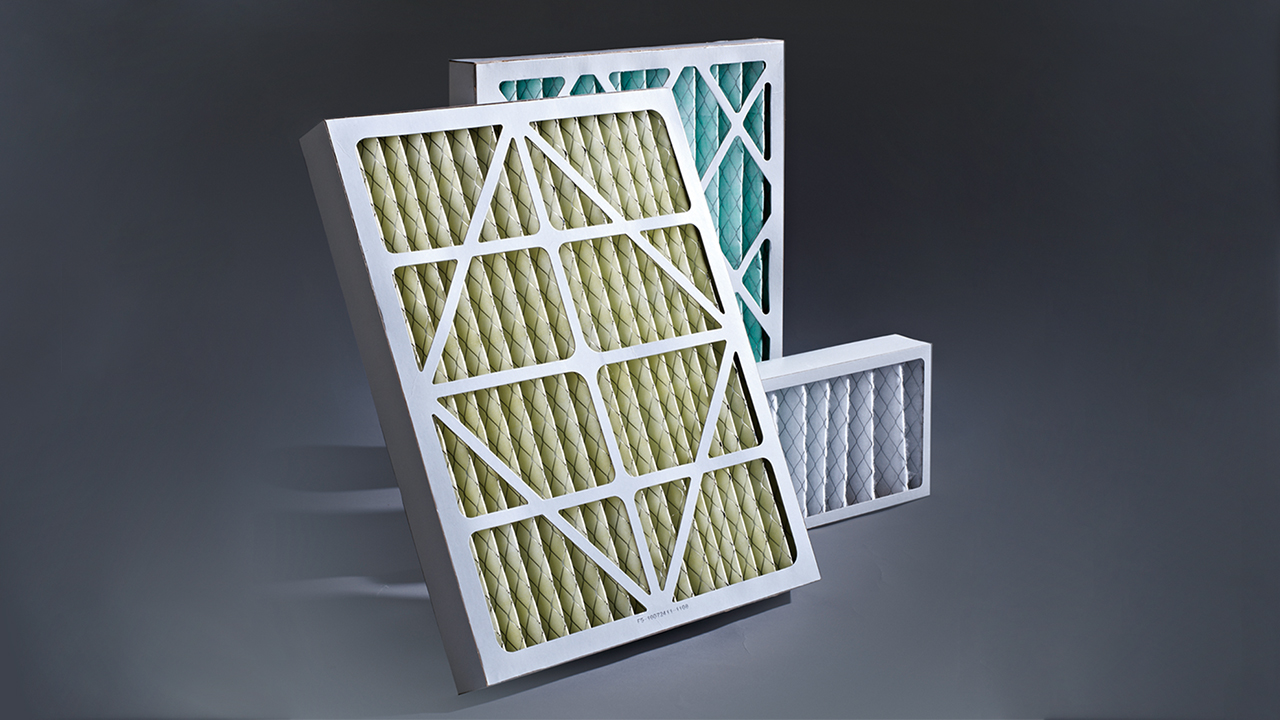
| Panel Filter | G1–G4 | Fiberglass, Polypropylene | Pre-filtration in commercial and public buildings |
| Bag Filter | F5, F6, F8, F9 | Microfine fiberglass | Air handling units in airports, hotels, museums, restaurants |
| Furnace Air Filter | MERV 8, MERV 11, MERV 13 | Polypropylene | Residential and commercial furnace and air conditioning systems |
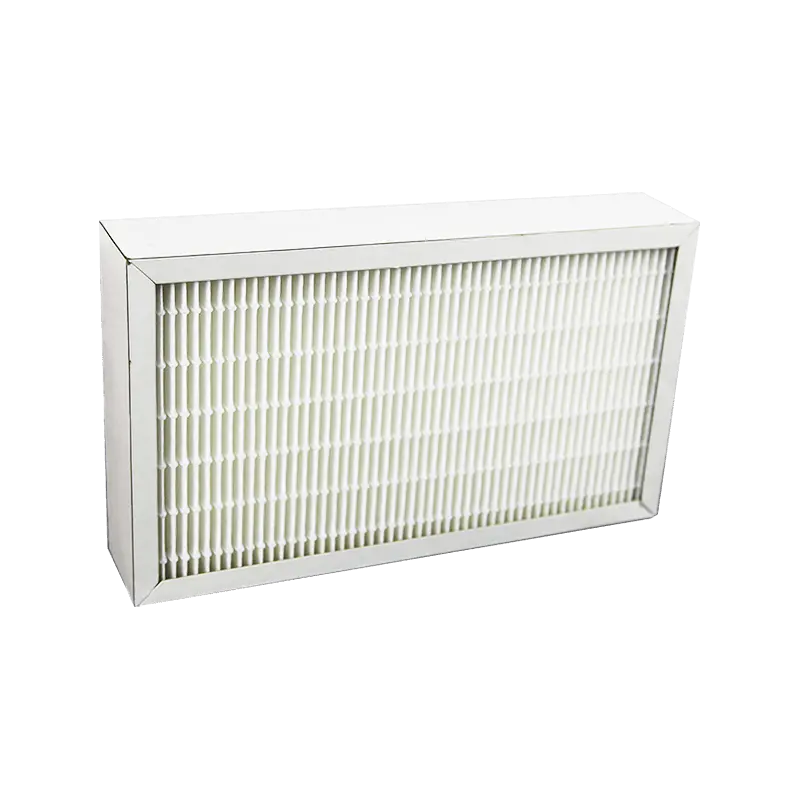
| Box Filter | MERV 15, MERV 16 | Microfiberglass | Pharmaceutical plants, hospitals, food and beverage production sites |
| V-Bank Filter | H13 | Fiberglass, Polypropylene | High-efficiency stages in commercial HVAC systems |
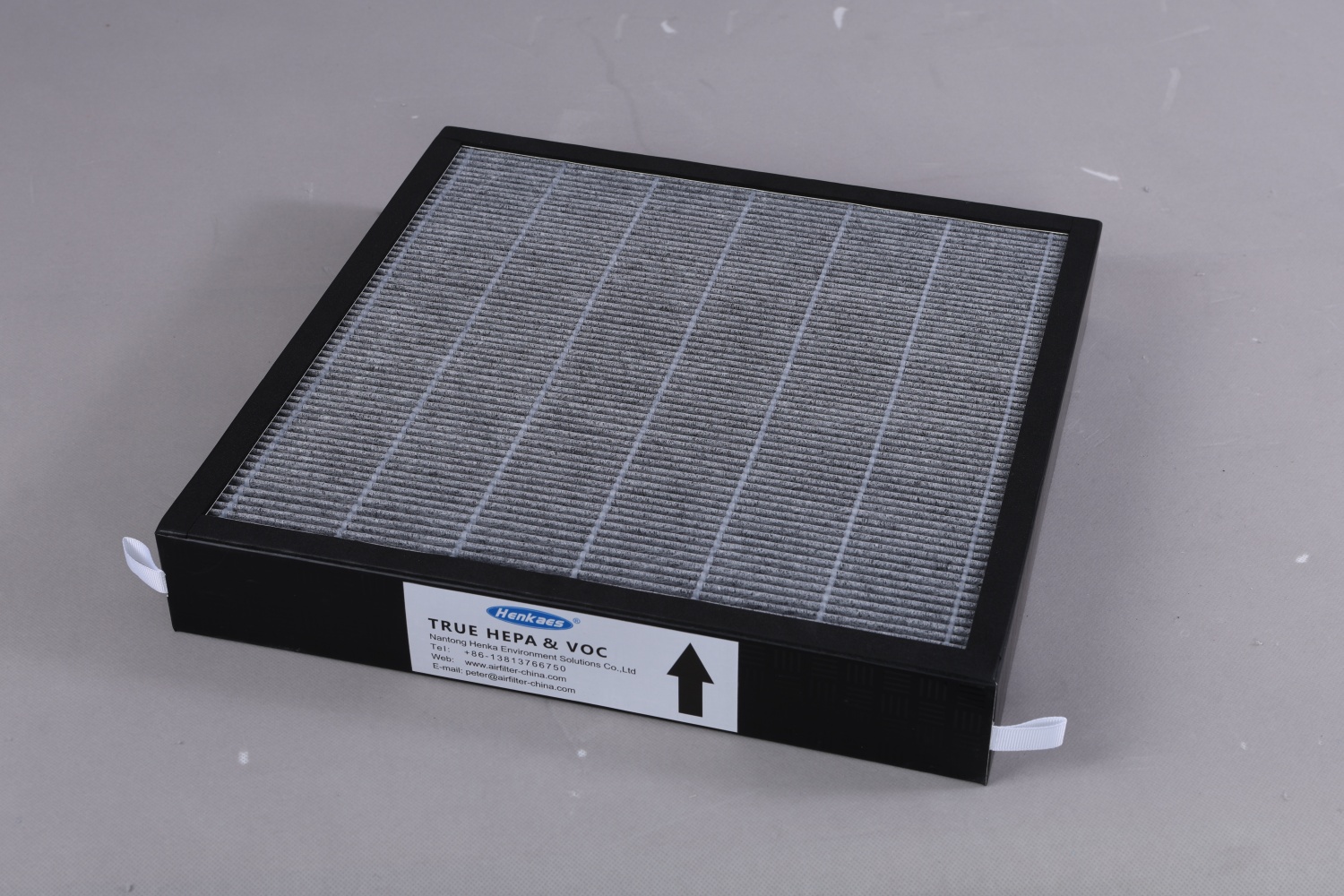
| HEPA / True HEPA Filter | H13 / ≥99.97% | Fiberglass, Polypropylene | Household air purifiers, air cleaners, final filtration stages |
| Activated Carbon Filter | CTC 70, CTC 80, CTC 90, CTC 100 | Activated carbon | Odor and VOC removal in household and HVAC applications |
| VOC Air Filter | Special catalyst | Activated carbon + special catalyst | Removal of special VOC and harmful gases in air purifiers |
| Cleanroom Air Filter | U14 / U15 | Microfiberglass, PTFE | Cleanrooms, data centers, microelectronics facilities |
Media Selection Is a Project Decision
The choice between fiberglass, polypropylene, microfiberglass, activated carbon, and PTFE is not a cosmetic preference. Fiberglass and polypropylene panel filters are typically used for low-efficiency pre-filtration and general dust capture. Microfiberglass media is used in medium and high-efficiency filters such as bag filters and box filters, where the project requires higher particle capture efficiency. Activated carbon media with CTC grades from 70 to 100 is used when the project objective includes gas-phase removal, while PTFE media appears in cleanroom filters that need high efficiency with lower resistance.
For an air conditioner air filter project, the selection process therefore becomes a triage: define the contaminant, define the required efficiency, and define the dimensional and installation constraints. Only when all three are known can the correct media and construction be specified.
Technical Explanation: What Buyers Should Verify in an Air Conditioner Air Filter
Project adaptation is not only about matching the product name. Buyers should understand four technical layers behind any air conditioner air filter specification.
Efficiency rating system. In North America, HVAC filters are commonly rated under ASHRAE 52.2, which classifies filters from MERV 1 to MERV 16 based on particle capture efficiency in the 0.3 to 10 micrometer range. In Europe, filters are classified under EN 779 for coarse and fine filters (G1–G4 and F5–F9) and under EN 1822 / ISO 29463 for HEPA and ULPA filters. Under EN 1822, an H14 filter must demonstrate 99.995% efficiency at the Most Penetrating Particle Size. Buyers working across both regions need to translate between MERV, G/F, H, and U designations, and should expect a supplier to state the efficiency grade in the relevant standard.
Pressure drop and energy impact. A filter with very high particle capture efficiency generally creates higher airflow resistance. In a project where the fan has limited static pressure margin, selecting an over-specified filter can reduce airflow and increase energy consumption. This is one reason why a cleanroom-grade filter is not automatically a better choice for a residential or commercial HVAC project, and why the project condition must guide the grade.
Functional media. Particle filters and gas-phase filters perform different jobs. A HEPA filter captures dust, fine particles, and pollen. An activated carbon filter or VOC removal filter removes odours, formaldehyde, pet smell, and special harmful gases. Some projects require a combination: a particle pre-filter followed by a carbon or VOC stage and a high-efficiency final filter. Henkaes provides these as separate filter families, which allows the project designer to build a multi-stage filtration train rather than depending on one hybrid product.
Customized dimensions and installation. Across the Henkaes application scenarios, customized dimensions are a recurring special requirement. In HVAC system builds, residential furnace filter replacements, cleanroom designs, and pharmaceutical plant projects in the US and the Netherlands, the physical filter slot often does not match a standard catalog frame. Customized dimension capability is therefore a core requirement for project-specific air conditioner air filters, not an optional service.
The operating mode also matters. In the application scenarios documented by Henkaes, filters typically operate in automatic mode as part of a fresh air system or air purifier. For continuous automatic operation, the filter must maintain stable performance over its service life and be replaceable without disrupting the system.
Application and Use Cases: Air Conditioner Air Filters Across Project Types
Residential and Household Air Conditioning
For household air conditioners and air purifiers operating under normal indoor environment conditions, the main filtration function is to capture dust, fine particles, and pollen. This scenario, common in the United States and the Netherlands, often requires customized dimensions because the filter must fit inside a specific appliance housing or air conditioner chassis. Henkaes supplies HEPA and True HEPA filters, activated carbon filters, and VOC removal filters for this segment, allowing appliance brands to match filtration performance to the product’s positioning.
Commercial and Public Buildings
Airports, hotels, museums, and restaurants typically use a combination of panel filters, bag filters, furnace filters, and V-bank filters. In these projects, the filter operates automatically in a fresh air system or air handling unit under normal indoor conditions, with dust and fine particle capture as the primary goal. The efficiency level often depends on the building’s ventilation standard, the local air quality, and the sensitivity of the occupants.
Pharmaceutical Plants and Hospitals
For pharmaceutical plant building projects, the product operates in automatic mode to capture dust and fine particles under normal indoor conditions. Box filters rated MERV 15 and MERV 16, using microfiberglass media, are specified for pharmaceutical plants, hospitals, and food and beverage production sites. These projects are documented in the United States and the Netherlands, where customized dimensions are a common special requirement because cleanroom and process areas rarely use standardized filter frames.
Cleanroom Design
In cleanroom design projects, the filter operates automatically to capture dust and fine particles under normal indoor conditions. Cleanroom air filters with U14/U15 efficiency, available in microfiberglass or PTFE media, are used in data centers, microelectronics facilities, and other controlled environments. Here, the air conditioner air filter becomes part of a contamination control strategy, and the efficiency grade must be matched to the ISO cleanroom class and the final filtration stage design.
Food and Beverage Processing
Food and beverage plants undergoing workshop renovation also require air filtration for fresh air systems, with customized dimensions frequently specified. Because production areas must protect both product quality and process consistency, the filter selection must account for the normal indoor environment and the need for reliable particle capture under continuous automatic operation.
Evidence from Documented Orders
Henkaes has documented long-running supply relationships in this area. A U.S.-based air filter ODM client ordered 50,000 pieces for formaldehyde removal and reported two years of stable performance. Another U.S. ODM client ordered 50,000 pieces for indoor air purifier applications focused on VOC removal, with one year of stable operation. A U.S. OEM client ordered 20,000 pieces for high-efficiency indoor air purification, also with one year of stable performance. These orders indicate repeatable project-level supply rather than one-off sample transactions.
Market Trend Analysis: Where Air Conditioner Air Filter Demand Is Heading
Three market signals are relevant to procurement teams evaluating air conditioner air filters in 2026.
Overall market growth is strong. The global air filters market was valued at USD 17.08 billion in 2025 and is projected to grow to USD 34.66 billion by 2034, according to Fortune Business Insights. This expansion is driven by stricter indoor air quality requirements, industrial growth, and replacement demand from installed HVAC systems.
HEPA technology dominates air purifier demand. Grand View Research estimates that HEPA filters held a 41.7% share of the air purifier technology segment in 2025. This suggests that for air conditioner systems that also serve purification functions, high-efficiency particle filtration will remain a common buyer requirement rather than a niche option.
Smart air purification is accelerating. The global smart air purifier market is growing at a compound annual growth rate of 14.1% from 2024 to 2030, driven by AI and IoT integration. For filter manufacturers, this trend increases the importance of stable OEM/ODM supply, consistent quality, and the ability to customize filter form factors for connected devices.
From a compliance perspective, buyers are increasingly expected to verify which standard applies to their target market. North American projects commonly reference ASHRAE 52.2, while European projects reference EN 779 for coarse and fine filters and EN 1822 / ISO 29463 for HEPA and ULPA filters. A supplier that can state both the MERV grade and the EN grade is easier to integrate into multinational project specifications.
Comparison with Traditional Solutions: Custom Project Matching vs. Standard Stock Filters
The traditional approach to air conditioner air filters is to select a standard size from a distributor’s inventory. This approach has clear advantages: immediate availability, predictable pricing, and simple replacement for common residential and commercial filter slots. For small maintenance jobs where the filter slot is standard and the efficiency requirement is basic, a stock item remains the efficient choice.
However, standard stock filters have material limitations when the project context becomes more specific:
| Selection Criterion | Traditional Stock Filter | Project-Specific Supply |
|---|---|---|
| Frame dimensions | Limited to common catalog sizes | Customized to the actual filter slot |
| Efficiency certification | Usually fixed grade | Matched to project and regional standards |
| Gas-phase removal | Rarely available | Activated carbon / VOC / formaldehyde media can be specified |
| Branding and packaging | Distributor brand | OEM/ODM branding and packaging available |
| MOQ and lead time | Available immediately | 500 pieces minimum, 30-day lead time |
| Engineering support | Limited | Design from specification, drawing, sample, or idea |
It is important to state the boundary of the custom approach. Project-specific production is not always the right answer. For urgent replacement needs, low-volume maintenance, or projects without dimensional or performance complexity, the MOQ of 500 pieces and the typical 30-day lead time may be less attractive than buying a standard filter immediately from a local distributor. Custom filters also require accurate project information; if the installer provides incorrect dimensions or the designer over-specifies efficiency, the buyer may face rework costs and higher pressure drop than anticipated. A responsible procurement decision should therefore compare the cost of stock availability against the benefit of exact fit and functional matching.
Future Outlook: Project-Level Adaptability Becomes the Standard
As HVAC systems become more integrated with air quality monitoring and building automation, the demand for project-specific air conditioner air filters will likely increase. Buyers are moving away from asking “what filters do you have” and toward asking “can you build the filter that fits our system and our air quality target.”
Manufacturers that combine media expertise, customized dimension capability, OEM/ODM production capacity, and documented quality control will be better positioned to serve this demand. Henkaes already operates ISO 9001:2015, ISO 14001:2015, and ISO 45001:2018 certified systems, uses ASHRAE 52.2 for filter testing, and maintains a noise test lab, a 30-cubic-meter test room for formaldehyde and VOC removal efficiency, and a CADR test room for air purifiers. These testing resources matter because project-specific filters cannot rely only on catalog data; they must be verified under relevant conditions.
There is also a broader shift toward multi-stage filtration in air conditioning systems. A typical future project could combine a G1–G4 panel pre-filter, an F8 or F9 bag filter, an activated carbon or VOC removal stage, and a final HEPA or cleanroom filter, all customized to the specific air handling unit. Suppliers that can coordinate these stages as a complete solution will become more valuable than those offering only individual standard filters.
For a complete overview of Henkaes air filter families, the company publishes an E-Catalogue that is available for public reference: Henkaes Air Filter E-Catalogue (PDF).
Frequently Asked Questions
What is an air conditioner air filter, and how does it relate to a furnace or HVAC air filter?
An air conditioner air filter is the filtration component installed in an air conditioning or heating, ventilation, and cooling system to capture dust, fine particles, pollen, and other airborne contaminants. In residential systems, it is often the same physical product as a furnace air filter. Henkaes supplies furnace air filters in MERV 8, MERV 11, and MERV 13 grades, which are commonly used in commercial and public buildings as well as residential HVAC systems.
What efficiency grades are available for air conditioner air filters?
Depending on the application, Henkaes offers panel filters in G1–G4, bag filters in F5, F6, F8, and F9, furnace filters in MERV 8, MERV 11, and MERV 13, box filters in MERV 15 and MERV 16, V-bank filters in H13, HEPA and True HEPA filters at H13 or ≥99.97% efficiency, cleanroom filters in U14/U15, and activated carbon filters in CTC 70 to CTC 100 grades.
Can air conditioner air filters be customized to fit non-standard project dimensions?
Yes. Customized dimensions are a documented special requirement across Henkaes application scenarios, including residential air purifiers, HVAC system builds, cleanroom design, and pharmaceutical plant projects in the United States and the Netherlands. The company designs filters based on customer specifications, drawings, samples, or ideas, which allows non-standard filter slots to be accommodated.
What are the typical MOQ and lead time for custom air conditioner air filters from Henkaes?
Under the Henkaes OEM/ODM production model, the minimum order quantity is 500 pieces, the standard lead time is 30 days, and the monthly production capacity is 200,000 pieces. The company also states that its quality control process includes 100% inspection, and after-sales support is provided remotely.
What standards should be checked when buying air conditioner air filters for North American and European projects?
North American projects commonly reference ASHRAE 52.2, which classifies filters from MERV 1 to MERV 16 based on particle capture in the 0.3 to 10 micrometer range. European projects typically reference EN 779 for coarse and fine filters, and EN 1822 / ISO 29463 for HEPA and ULPA filters. Under EN 1822, an H14 filter must achieve 99.995% efficiency at the Most Penetrating Particle Size.
Which industries commonly require project-specific air conditioner air filters?
Project-specific air filters are commonly required in household air purifiers and air conditioning, commercial and public buildings such as airports, hotels, museums, and restaurants, pharmaceutical plants, hospitals, food and beverage production sites, cleanrooms, data centers, and microelectronics facilities. The United States and the Netherlands are documented common markets for Henkaes application scenarios in these industries.