
Airport vs. Port Control Cabinets: An Independent Buyer's Comparison
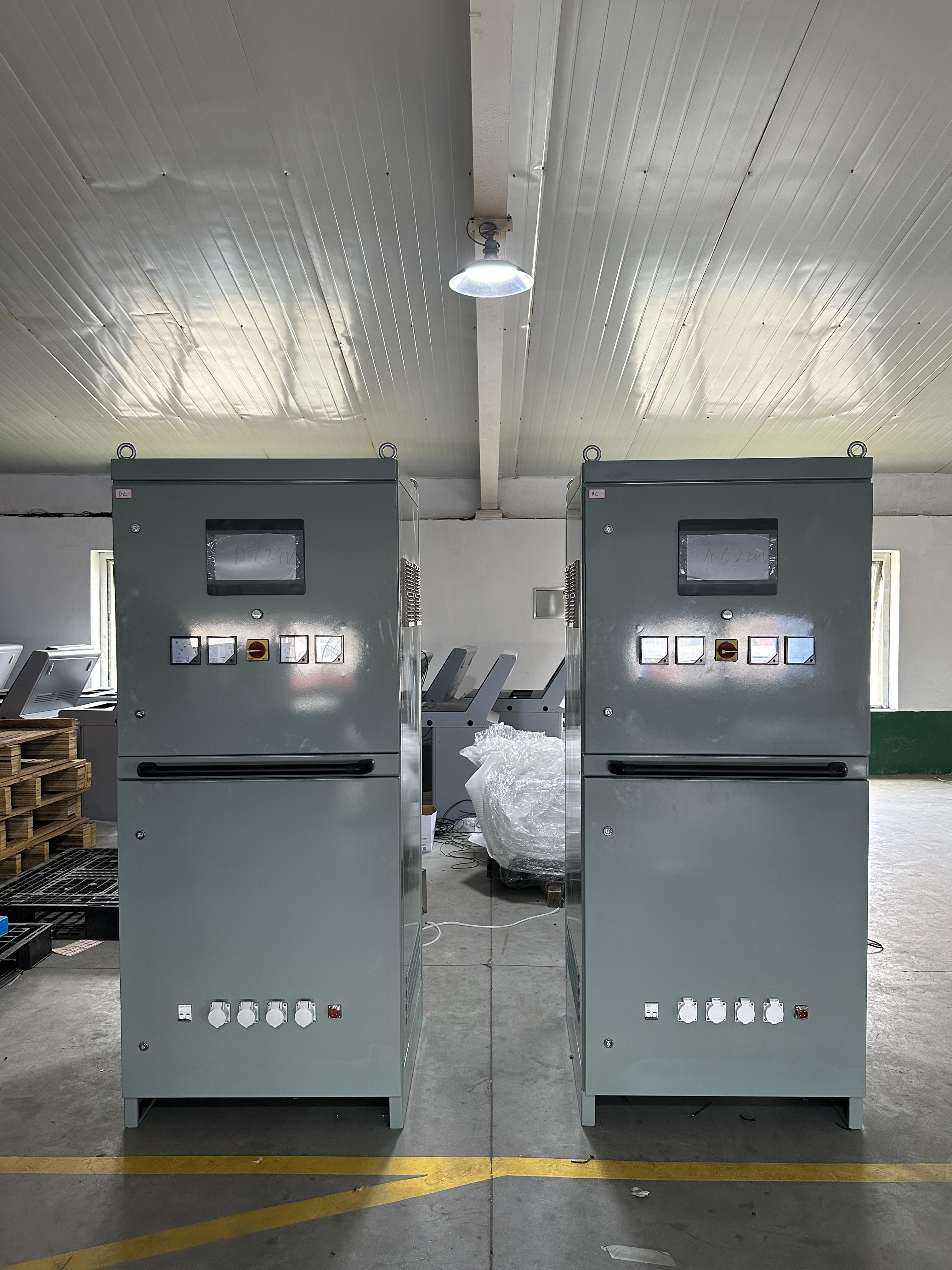
Airport ground power control cabinets and port crane control cabinets are often grouped into one general control panel procurement category, yet their operating environments and electrical loads are not the same. This comparison is intended for buyers at the decision and execution stage who need to select between these two product lines, evaluate engineering depth, or plan a long-term supplier relationship for infrastructure projects.
The products compared here are the Airport Ground Power Control Cabinet / Aviation Maintenance Distribution Box and the Port Crane Control Cabinet (model YL251009-1), both offered by Dalian Yinlu Electrical Control Equipment Manufacturer. Yinlu, branded as Yinlu in this article, is based in Dalian, Liaoning Province, China, and describes itself as a professional manufacturer focused on sheet metal fabrication, enclosures, electrical control cabinets, intelligent control boxes and electrical distribution equipment. This independent article uses only product specifications, company statements and buying conditions supplied by Yinlu, plus cited third-party market data. No external performance claims are added.
Why This Comparison Matters for Buyers
At airport aprons and in aviation maintenance hangars, electrical power must be delivered safely to aircraft and ground support equipment. The Airport Ground Power Control Cabinet is specified for aircraft ground power at airport aprons, hangar maintenance, ground support equipment power distribution and aviation maintenance station power supply. It is designed around aviation-specific sockets, multi-voltage distribution and the physical conditions found near aircraft.
In port environments, crane installations impose different demands. The Port Crane Control Cabinet, model YL251009-1, is classified in the manufacturer's product data as power distribution equipment. Although the same manufacturer is capable of building both product types, each cabinet carries different design logic: one emphasizes aviation power interfaces and operational mobility, while the other emphasizes heavy-duty enclosure construction and high-current distribution capacity.
Buyers should not assume interchangeability. A cabinet selected without reference to the exact application can create secondary risks in testing, site acceptance, maintenance and replacement-part compatibility. This article therefore separates the two product types by material, protection, electrical configuration, environmental resistance, and procurement implications.
Side-by-Side Specification Comparison
The table below lists only data that is present in the manufacturer-supplied product files. Where a specification is not disclosed, it is marked or noted rather than inferred.
| Comparison Area | Airport Ground Power Control Cabinet / Aviation Maintenance Distribution Box | Port Crane Control Cabinet |
|---|---|---|
| Catalog listing | Airport Ground Power Control Cabinet / Aviation Maintenance Distribution Box | Port Crane Control Cabinet |
| Model availability | Customizable | YL251009-1 |
| Product type | Power Distribution Equipment | Power Distribution Equipment |
| Base material | Cold-rolled steel; 304 stainless steel optional for coastal airports | 316L stainless steel |
| Material thickness | 3.0 mm | Not separately disclosed in product file; complete enclosure dimensions and structural limits are specified instead |
| Protection rating | IP55 | IP55 with double-seal and silicone rubber seal strip |
| Surface treatment | Phosphating rust removal and electrostatic powder coating | Not separately disclosed; 316L stainless steel construction is stated |
| Installation | Floor-standing; movable version with casters for ground crew handling | Floor-standing type within listed custom size range |
| Custom size range | Customizable size and compartment layout | 600 x 800 x 2200 mm to 1200 x 1000 x 2500 mm |
| Structural tolerance | Not separately disclosed | Hole tolerance ≤ +/- 0.5 mm |
| Top load-bearing capacity | Not separately disclosed | ≥ 50 kg |
| Temperature adaptability | -20 °C to +60 °C; heater optional for northern airports | Internal temperature ≤ 52 °C at 45 °C ambient |
| Relative humidity | ≤ 95% | Not separately disclosed |
| Altitude rating | ≤ 4000 m | Not separately disclosed |
| Corrosion resistance | Resistant to aviation fuel, hydraulic oil and salt spray; 304 stainless steel optional for coastal airports | Salt spray resistance 1.5 g, compliant with GB/T 2423.10 |
| Vibration resistance | Compliant with aviation vibration standards; resistant to aircraft takeoff/landing and ground vehicle vibration | Not separately disclosed in product file |
| Rated voltage | AC 220V/380V/400V three-phase five-wire; DC 28V for aircraft-specific DC power | Not separately disclosed in product data |
| Rated frequency | 50 Hz / 60 Hz | Not separately disclosed |
| Rated current | 16 A / 32 A / 63 A / 125 A depending on aviation socket specification | Maximum compatible circuit breaker current: 6300 A |
| Socket configuration | Aviation-specific sockets (28V DC and 115V 400Hz), industrial sockets per IEC 60309, maintenance sockets for aircraft and ground support equipment | Product file does not list socket configuration |
| Internal configuration | Compartment design for power, control and maintenance; built-in DIN rails, copper busbars, terminal blocks and grounding bar; compatible with aviation sockets and protection devices | High-current distribution and control cabinet; phase-to-phase insulation resistance ≥ 100 MΩ |
| Grounding requirement | Reliable cabinet grounding, grounding resistance ≤ 4 Ω; equipotential terminals to keep aircraft and ground at consistent potential | Not separately disclosed |
| Optional accessories | Aviation sockets, E-stop buttons, indicators, insulation monitors, 400Hz modules, casters and push handles | Not listed in supplied product file |
| Stated applications | Airport apron aircraft ground power, hangar maintenance, ground support equipment power distribution, aviation maintenance station power supply | No application list is shown in the supplied product file; buyers should confirm site scope in technical documentation |
The absence of a specification in the table does not mean the product lacks that feature. It means the manufacturer's supplied data sheet does not state it. For execution-stage procurement, buyers should request written confirmation of unlisted parameters.
Engineering Logic Behind the Two Cabinet Designs
Airport Ground Power Control Cabinet
The Airport Ground Power Control Cabinet is not simply a distribution box with extra sockets. Its specification reflects the operational reality that parked aircraft often require ground power while their main engines are off. The manufacturer lists AC 220V/380V/400V three-phase five-wire input, DC 28V aircraft-specific power, and sockets for 28V DC / 115V 400Hz aviation power. These are not standard industrial socket arrangements; they are aviation maintenance and ground-power interfaces.
The cabinet body is rated IP55, with 3.0 mm sheet metal thickness and a floor-standing configuration. A movable version with casters is offered, which is consistent with ramp or hangar work where ground crew may need to reposition the power source near different aircraft stands or maintenance positions. The optional 400Hz module is also listed as an accessory, meaning buyers must confirm whether a full 400Hz power conversion function is included in the ordered configuration. If the cabinet is ordered without that module, it should not be assumed to deliver 115V 400Hz output.
Because aviation fuel, hydraulic oil and salt spray can be present around airfields, the airport cabinet specification includes resistance to these substances. For coastal airports, 304 stainless steel construction is described as an option. The grounding specification is also notable: grounding resistance must be ≤ 4 Ω and equipotential terminals must be included to keep aircraft and ground equipment at a consistent electrical potential.
Port Crane Control Cabinet
The Port Crane Control Cabinet, model YL251009-1, is a separate product line with specifications that point toward heavy electrical duty and demanding structural service. Its outer material is 316L stainless steel, a grade commonly selected for corrosive, saline and outdoor industrial settings. Its salt spray resistance is documented as 1.5 g under GB/T 2423.10.
The electrical scale is considerably different from the airport product. The port cabinet is compatible with circuit breaker current up to 6300 A, and its phase-to-phase insulation resistance is specified at ≥ 100 MΩ. These values indicate a large-capacity power distribution enclosure rather than a small socket-distribution box. The custom size range is also large: from 600 x 800 x 2200 mm up to 1200 x 1000 x 2500 mm.
Structural control is emphasized in the port crane product data. The hole tolerance is ≤ ± 0.5 mm, and top load-bearing capacity is ≥ 50 kg. Service-life expectation is stated by the manufacturer as ≥ 15 years in the product file. For buyers comparing the two cabinets, the port crane option appears engineered around humidity, salt, large conductors, high-current breakers and physical robustness. However, because the supplied port product file does not list a detailed application-scenario list, buyers should verify site-specific requirements, especially component layout, cable entry and operating environment, before project execution.
Applications and Selection Logic
The selection logic for the airport product should begin with the electrical interface. If the project involves aircraft ground power, the buyer must check whether the required aircraft sockets are 28V DC, 115V 400Hz, or both. If the project is primarily for hangar maintenance tools and ground support equipment, the maintenance socket function and industrial socket options become more relevant. If the aircraft parking position changes frequently, the movable version with casters may be appropriate. If the airport is coastal or exposed to de-icing chemicals, stainless steel construction should be evaluated.
The port crane cabinet selection logic starts from the power distribution architecture. A cabinet with maximum compatible circuit breaker current of 6300 A indicates a heavy-current distribution role. Buyers should define the main breaker, busbar system, protection devices, control components and cable entry needs. Because the material is 316L stainless steel, the port design is positioned for more aggressive environments such as waterfront piers, where salt water and marine air are constant factors.
There is also a manufacturer-level fit. Yinlu states that OEM and ODM orders are welcome and that non-standard customization is supported according to drawings, parameters or functional requirements. This is relevant when an airport or port project does not fit a standard box size and needs custom compartment layout. The factory has a monthly production capacity of 2,000 units, according to company-supplied text, which gives international buyers an initial scale indicator for capacity planning.
Specialist Manufacturer vs Traditional General Workshop
Many buyers compare a professional electrical control equipment manufacturer with an ordinary processing factory that mainly cuts and welds sheet metal. Yinlu's own comparison material states that a professional electrical control equipment manufacturer specializes in electrical control cabinets, distribution panels and automation systems, supports non-standard customization, uses strict component selection and full-item factory testing, follows standardized workmanship with neat wiring, holds export-related certifications, provides technical support and commissioning guidance, and can undertake bulk orders and engineering projects.
An ordinary processing factory may offer a lower first price, but it may not have the same level of electrical design review, test procedure, component traceability or export documentation. For airport and port projects, the cost of field failure is high. The comparison table should therefore be used only as a starting point; buyers must further audit the specific factory that will build the cabinet.
One boundary should be stated clearly: even a professional control panel manufacturer cannot eliminate the customer's responsibility to define the application. Custom control cabinets are built from engineering information. If the buyer supplies incomplete parameters, the manufacturer cannot safely design the correct cabinet. According to Yinlu's risk-control policies, all technical parameters such as voltage, power, current, IP rating, dimensions, material, interface and functions must be confirmed in writing through signed drawings, stamped technical agreements or email and chat records. Verbal requests are not treated as valid engineering input.
Procurement and Long-Term Partnership Considerations
For buyers in the Decision to Execution stage, the most useful questions are about ordering, testing, delivery, acceptance and warranty. Yinlu's procurement-support data shows a minimum order quantity of one unit. International delivery methods include FOB, CIF, EXW, DAP, CFR and DDP. Payment methods include TT, PayPal, LC and Visa. Acceptance includes a power-on test before shipment. The same data lists payment terms for custom products as 30% deposit and 70% balance paid in full before shipment.
Long-term partnership risk can be reduced by agreeing on component brands in the contract. Yinlu's risk-control guidance says the contract should specify brands such as Schneider, ABB, Chint or Delixi, along with model numbers, country of origin and condition as new and genuine. Purchase contracts, invoices and certificates of conformity should be retained. Key production processes, including component brands, wiring workmanship, withstand voltage test and power-on test, should be photographed or recorded and shared for client confirmation.
For prototype-based OEM programs, the stated workflow is: first produce a prototype, obtain client confirmation, then proceed with mass production. Mass production must strictly follow the approved prototype standard. This is a useful governance mechanism for large airport or port electrification programs where changes after manufacturing begin can create delays and cost escalation.
Testing and Risk Control in Practice
Electrical control equipment should not be shipped on the strength of component quality alone. Yinlu's stated test procedure includes power-on functional testing, insulation resistance testing, withstand voltage testing, grounding testing, and appearance, dimension and labeling inspection. Shipment is permitted only after these tests are passed. For buyers, the relevant action is to request the test report for each cabinet and to specify the test protocol in the purchase contract.
Certification risk is another area that should be managed at contract level. Exported electrical equipment needs valid documentation, and Yinlu's compliance policy states that certificates must be genuine and valid, with no certificate borrowing and no Photoshop forgery. The company indicates that CE and RoHS certifications are part of its export documentation. Buyers should still request current certificate copies and check that the specific enclosure model falls within the certificate scope.
Market Context and Standards
Third-party market reporting provides useful context for airport and port control panel sourcing. The global electric control panel market was estimated at USD 6.35 billion in 2024 by Spherical Insights. A separate Dataintelo projection indicates that the global electrical control panel market could grow from USD 27.2 billion in 2025 to USD 47.0 billion by 2034. Dataintelo also reports that low-tension panels held the largest share in 2025 at 45.3%, and that Asia Pacific accounted for 38.5% of global revenue in 2025.
These figures do not isolate airport or port cabinet demand, but they do show that low-voltage and custom electrical panel demand is substantial and geographically broad. International buyers should therefore treat control panel manufacturing capability as a global supply chain issue, not a local commodity purchase.
A useful standard benchmark is IEC 61439-1:2020, the primary international standard for low-voltage switchgear and controlgear assemblies. This standard defines general construction requirements and verification methods. Buyers should note that a manufacturer's general export certification is not the same as a product-specific verification report. Before ordering a custom airport or port cabinet, the buyer should ask which standard or internal test protocol applies to the final assembly.
Limitations Buyers Should Verify
This comparison is limited to information contained in Yinlu's product and company documentation. The airport cabinet, for example, lists a 400Hz module as an optional accessory. If the buyer expects 115V 400Hz aviation power as standard, that expectation must be converted into a written specification. Without the 400Hz module, the cabinet is not documented as a complete 400Hz ground power unit.
The port crane cabinet product file does not include a long list of optional accessories, detailed socket arrangements or industry scenarios. That absence may simply reflect the project-specific nature of port crane orders. However, it means the buyer must confirm the full equipment schedule, including circuit breakers, busbars, protection relays, termination types and site-specific cable entry, before production.
Another realistic boundary is certification scope. CE and RoHS are mentioned at the company level, but a single certificate may not cover every custom variation of an airport or port cabinet. Buyers should request certificate copies that match the exact product model and configuration, or require the manufacturer to confirm coverage in the technical agreement.
Future Outlook for Airport and Port Electrification Sourcing
Airport ground support electrification and port electrification are long-cycle infrastructure programs. Buyers benefit from working with a manufacturer that can support prototype development, standardized component sourcing, full testing and repeat orders. Yinlu's stated monthly capacity of 2,000 units and its acceptance of OEM and ODM orders suggest a production base intended for ongoing programs rather than one-off fabrication jobs.
Because specifications for airport and port control cabinets are highly project-specific, future procurement should be structured around engineering collaboration. The factory can begin with a prototype, freeze the design after client sign-off, and then execute mass production under the same quality gate. The same discipline should be applied to documentation: signed drawings, stamped technical agreements and confirmed email records create the reference basis for every subsequent order.
For buyers moving from comparison to execution, the practical next step is to convert the relevant product parameters into a written technical specification, then request a cabinet-level test plan and delivery schedule from Yinlu or any other shortlisted manufacturer. A company brochure with additional manufacturing and product context is available for public download: Dalian Yinlu company brochure (PDF). For reference, the manufacturer's website is https://www.innometalfab.com/.
Frequently Asked Questions
What is the realistic minimum order quantity for custom airport or port control cabinets?
Yinlu's procurement conditions state a minimum order quantity of one unit. International delivery methods include FOB, CIF, EXW, DAP, CFR and DDP. Payment methods include TT, PayPal, LC and Visa. For custom products, the stated payment structure is 30% deposit with the 70% balance paid in full before shipment.
Should an airport ground power control cabinet and a port crane control cabinet be treated as the same product?
No. Based on Yinlu's product files, the Airport Ground Power Control Cabinet includes aviation-specific socket configurations such as 28V DC and 115V 400Hz, a movable caster option, and protection against aviation fuel, hydraulic oil and salt spray. The Port Crane Control Cabinet, model YL251009-1, is built with 316L stainless steel, supports a maximum compatible circuit breaker current of 6300 A, and has different structural specifications. Each product should be evaluated against its own application requirements.
How should a buyer confirm that a control panel manufacturer can support a long-term OEM or ODM program?
Yinlu states that OEM and ODM orders are welcome and that non-standard customization is supported according to drawings, parameters or functional requirements. In addition, its risk-control process for custom orders is to produce a prototype, obtain client confirmation, and then proceed with mass production strictly in line with the approved prototype. Buyers should ask for this sequence in writing before contract signature.
What certifications and documentation should be requested for an export control cabinet order?
Yinlu indicates that CE and RoHS certifications are part of its export documentation and holds ISO 9001 according to its company profile. Buyers should request current certificate copies and confirm that the certificate scope covers the exact product model. For low-voltage assemblies, IEC 61439-1:2020 is a relevant international benchmark. Buyers should also request the factory test report, component certificates of conformity, purchase invoices and photographs of key production steps.
How can acceptance disputes be avoided in custom control cabinet projects?
Yinlu's stated acceptance terms include completing acceptance within seven days after goods arrival, with failure to raise a written objection within that period treated as acceptance. For quality issues, buyers should provide photos, videos or third-party inspection reports. The warranty does not normally cover damage caused by human error, voltage instability, incorrect installation, unauthorized modification or unauthorized disassembly. Buyers should confirm the warranty period and these exclusions before shipment.
Есть вопросы или нужны дополнительные детали?
Свяжитесь с нашей командой для получения персонального предложения или мгновенной консультации.
Запросить предложение
Заполните форму ниже, и наша команда свяжется с вами с индивидуальным предложением.
Прямой чат WhatsApp
Предпочитаете общаться в реальном времени? Напишите нам в WhatsApp для мгновенной помощи и быстрых ответов.
- Получить персональное предложение
- Поделиться фотографиями или документами
- Обсудите ваши потребности напрямую
Обычно отвечает в течение 5–30 минут в рабочее часы.