
Alcohol-Free Wipes Liquid: Formulation Basics Every Buyer Should Check
Wipes Liquid / Industry Reference
Alcohol-free wipes liquid is not a single formula. It is a formulation strategy that replaces alcohol with alternative cleaning, antimicrobial and preserving systems, and buyers need to check those systems before comparing suppliers.
Industry context: what buyers are actually evaluating
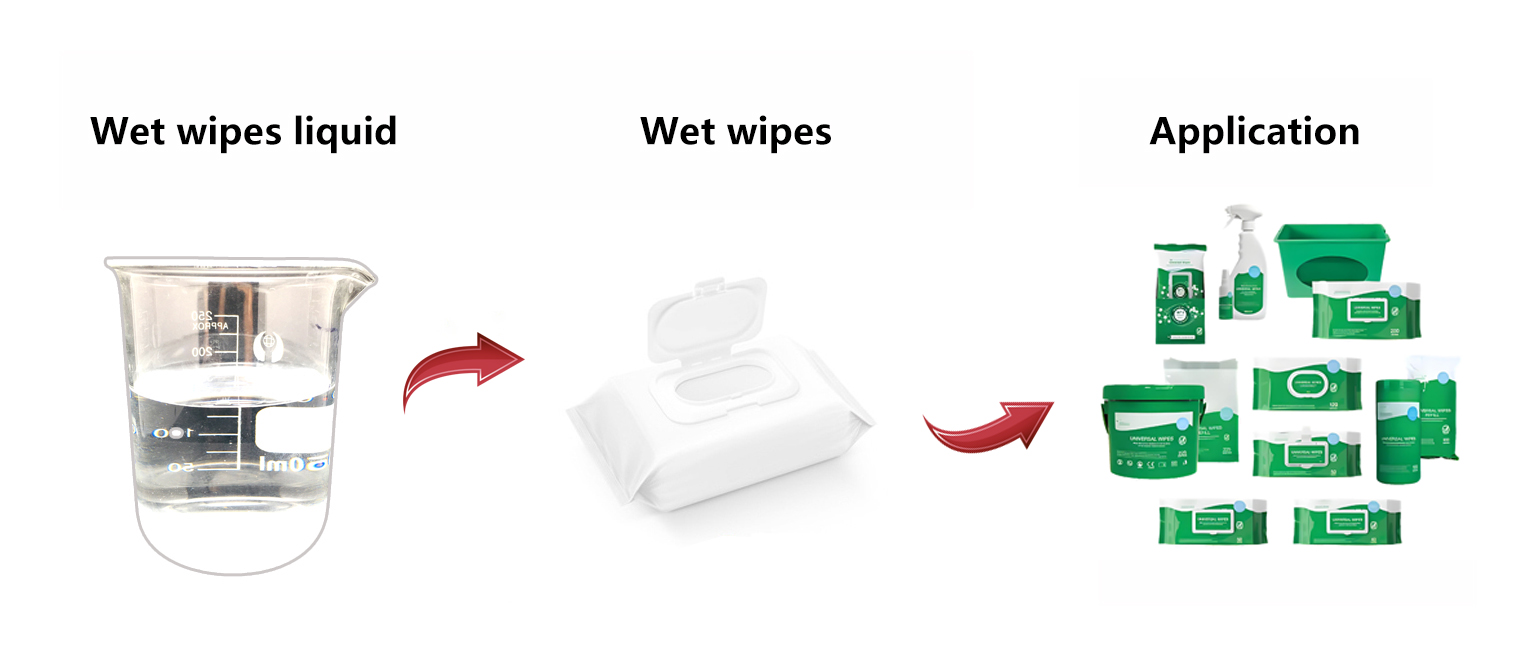
Wipes liquid is the ready-to-use liquid applied to wet wipes substrates during manufacturing. It is purchased in bulk by wet-wipes producers, then filled into finished packs for consumer or institutional use. The specification of the liquid, not only the wipe substrate, determines whether the final product is mild to skin, effective for surface cleaning or realistically antibacterial.
In procurement conversations, the request for alcohol-free wipes liquid is usually linked to baby care, sensitive skin, personal hygiene, pet care or certain healthcare applications. But this request does not stop at removing alcohol from the ingredient list. When alcohol is absent, the functions that alcohol previously contributed to the formula, such as fast evaporation, preservation support or direct antimicrobial activity, must come from other components.
The practical question for a first-time buyer is therefore simple: which components replace alcohol, what performance do they deliver, and how can a supplier demonstrate that performance?
Problem and opportunity: the true meaning of an alcohol-free claim
The main problem is oversimplification. Many product labels simply separate wipes liquid into alcohol-free versus other categories. In practice, an alcohol-free wipes liquid can be designed for very different jobs. A baby wipes liquid with pH 5.5 to 6.5 and aloe vera extract has a different purpose from a disinfecting wipes liquid containing 0.2 to 0.5 percent quaternary ammonium compounds. Both can use no alcohol, but neither should be swapped for the other.
The opportunity is equally clear. Alcohol-free formulations often align with the demand for skin-friendly and gentle products. Mordor Intelligence projects that natural and organic variants in the wipes market will expand at a 2.96 percent CAGR through 2031, with demand for alcohol-free and skin-friendly formulations cited as one of the drivers. At the same time, EU Regulation (EC) No 1223/2009 and the US FDA treat wet wipes intended for cleansing or moisturizing skin as cosmetics, and ISO 22716 describes good manufacturing practices for cosmetic products. Buyers who understand these requirements before supplier discussions can avoid mismatched claims.
A documented supplier example: Xiamen Huaqiangda Biotechnology
One documented example shows how these formulation choices appear in a production-oriented supplier. Xiamen Huaqiangda Biotechnology Co., Ltd. is a high-tech enterprise in Xiamen, Fujian, founded in 2018, that integrates research, development, production and sales. The company operates a 100,000-level clean production workshop, standardized microbiology and fine chemical laboratories, and an annual production capacity of 2,000 tons. Approximately 50 staff work at the facility, and five engineers are assigned to the R&D team.
The product range covers wet wipes liquid formulations, antibacterial solutions, cosmetic functional liquids, fragrance, chemical raw materials and cosmetic preservatives. The company supports OEM/ODM formulation for baby wipes, antibacterial wipes, makeup remover wipes, pet wipes and other wet-wipes categories. Export business accounts for 60 percent of total sales, with major markets in Central Asia, Southeast Asia and South America.
For the alcohol-free discussion, the most useful reference point is the HUA-QJ wipes liquid. It is intended for baby wipes, disinfecting wipes and pet wipes, and its stated properties include an alcohol-free, non-irritating formula, a bactericidal rate of ≥99.9 percent and compliance with cosmetic regulations. Fragrance is customizable, and packaging options include 25 kg and 1-ton IBC tanks. This combination, especially the co-existence of an alcohol-free claim and a high bactericidal rate, is the kind of proposition a buyer can verify.
Technical explanation: reading formulation details
To compare alcohol-free wipes liquids, break the formula into functions: cleaning, antimicrobial action, skin or surface compatibility, preservation and optional fragrance. The ingredient names do not need to be full chemistry formulas; they need to be linked to stated performance.
Ingredient function map
| Ingredient function | Examples in available product data | Relevance to formulation |
|---|---|---|
| Cleaning | Mild non-ionic surfactants, industrial-grade surfactants | Remove soil, oil or residue across skin, household and industrial wipes liquids. |
| Antibacterial action | Benzalkonium chloride | Used in toilet, pet and universal formulas; stated antibacterial rate typically from ≥99 percent to ≥99.9 percent. |
| Surface disinfection | Quaternary ammonium compounds | The HUA-DW disinfecting wipes liquid states a QAC concentration of 0.2–0.5 percent and antibacterial efficacy ≥99.99 percent. |
| Degreasing or deodorizing | Citrus extract solvent | Found in kitchen, floor and toilet cleaning wipes liquids for grease, stain and odor removal. |
| Moisturizing and soothing | Aloe vera extract, chamomile extract, glycerin | Appears in baby, feminine, patient care and pet wipes formulations where mildness matters. |
| Preservation | Cosmetic-grade, baby-care-grade, medical-grade, optical-grade or food-contact-safe preservative | Determines stability and shelf life; many specified wipes liquids state a 24-month shelf life. |
| Functional additives | Anti-static polymer compound, polymer anti-condensation compound | Used in lens cleaning and anti-fog products to support streak-free or anti-fog performance. |
Using pH as a selection filter
pH is a practical starting point because it appears clearly in many available specifications and tells the buyer what environment the formula was designed for. The following table lists examples from the available product data of Xiamen Huaqiangda.
| Product example | Typical intended use | Stated pH | Other stated properties |
|---|---|---|---|
| Baby care wipes liquid, HUA-BY | Gentle skin cleansing and moisturizing for sensitive baby skin | 5.5–6.5 | Alcohol-free, hypoallergenic, aloe vera and chamomile, baby-care-grade preservative |
| Feminine intimate wipes liquid, HUA-FI | Intimate cleansing and refreshing | 3.5–4.5 | Alcohol-free, pH balanced, lactic acid and glycerin, cosmetic-grade preservative |
| Patient care wipes liquid, HUA-PC | Daily skin cleansing in nursing and healthcare settings | 5.5–7.0 | Alcohol-free, antibacterial rate ≥99 percent, medical-grade preservative |
| Pet wipes liquid, HUA-PW | Pet body cleaning and odor removal for dogs, cats and small pets | 6.0–7.5 | Alcohol-free, antibacterial rate ≥99 percent, mild surfactants |
| Lens cleaning wipes liquid, HUA-LC | Eyeglass lenses, camera lenses, mobile screens and optical equipment | 6.0–7.5 | Alcohol-free, streak-free, quick-drying, optical-grade preservative |
| Universal wipes liquid, HUA-UW | Daily cleaning of plastic, glass, stainless steel, wood and ceramic | 6.5–8.0 | Antibacterial rate ≥99 percent, quick-drying, fresh clean scent |
| Disinfecting wipes liquid, HUA-DW | Household, office and medical non-critical surfaces | 6.0–8.0 | Antibacterial efficacy ≥99.99 percent, QACs 0.2–0.5 percent |
Two patterns are visible in this table. First, skin-contact formulas tend to stay in pH ranges that match the intended body area or life stage; feminine hygiene formulas are clearly more acidic, while baby and patient skin formulas stay close to the 5.5 to 7.0 band. Second, alcohol-free does not mean antibacterial-free: HUA-PC and HUA-DW carry clear antibacterial performance statements.
Antimicrobial and preservative systems
When alcohol is removed, antimicrobial performance is usually delivered by compounds such as benzalkonium chloride or quaternary ammonium compounds. For example, disinfecting wipes liquid HUA-DW states quaternary ammonium concentration of 0.2 to 0.5 percent and an efficacy of ≥99.99 percent against bacteria on non-critical surfaces. The toilet cleaning formulation HUA-AT states ≥99.9 percent with benzalkonium chloride and pH 6.5–8.5. In the multi-application HUA-QJ product, alcohol-free and non-irritating coexist with a ≥99.9 percent bactericidal statement.
Preservation also needs attention. The available product data shows different preservative systems by intended use: baby-care-grade for baby wipes, cosmetic-grade for products such as feminine hygiene and cooling wipes, medical-grade for patient care wipes, optical-grade for lens wipes, and food-contact-safe for fruit-cleaning formulas. Shelf life statements are typically 24 months, which is only possible when the preservative system is matched to the formula.
Application and use cases: where alcohol-free fits
- Baby care.The HUA-BY baby wipes liquid is alcohol-free, hypoallergenic, pH 5.5–6.5, and uses mild non-ionic surfactants with aloe vera and chamomile. It is intended for sensitive baby skin and gentle cleansing.
- Feminine hygiene.The HUA-FI feminine intimate wipes liquid is alcohol-free, pH balanced at 3.5–4.5, and uses mild surfactants with lactic acid, glycerin and aloe vera.
- Patient and nursing care.The HUA-PC patient care wipes liquid is alcohol-free, pH 5.5–7.0, and suitable for sensitive skin and daily patient care, with an antibacterial rate of ≥99 percent.
- Pet care.The HUA-PW pet wipes liquid is alcohol-free, pH 6.0–7.5, and designed for pet body cleaning and odor removal on dogs, cats and small pets.
- Optical and lens care.The HUA-LC lens cleaning wipes liquid and the HUA-AW anti-fog wipes liquid are both alcohol-free, with pH 6.0–7.5, streak-free performance and optical-grade preservative systems.
- Wet-wipes production.The HUA-QJ wipes liquid is positioned for baby wipes, disinfecting wipes and pet wipes, providing an alcohol-free and non-irritating base with a bactericidal rate of ≥99.9 percent.
Market trend analysis
Alcohol-free is not a fringe segment. The business case keeps expanding on the personal-care side, where mildness and skin compatibility matter. Mordor Intelligence projects natural and organic wipes variants to grow at a 2.96 percent CAGR through 2031, with alcohol-free and skin-friendly formulations as a cited driver.
In the disinfecting category, the competitive field is more complex. Alcohol-based formulations held the largest product-type share in the disinfectant wipes market at 38.5 percent in 2025, according to Dataintelo. This means buyers who source alcohol-free disinfecting wipes liquid are asking for an alternative to a still-dominant tradition. The specification must compensate with clear concentration data and microbial efficacy claims.
For manufacturers in North America, the surface disinfectant wipes industry remains substantial, with a 30.08 percent share of that category in 2024, according to Grand View Research. This reinforces the value of measuring a disinfectant's output, not just the presence or absence of alcohol.
Regulatory pressure also works in favor of better documentation. Skin-cleansing wet wipes are cosmetics in the EU and the US, and production of personal-care wipes should follow ISO 22716 GMP principles with microbiological risk assessment. As a result, an alcohol-free claim is increasingly tied to compliance evidence rather than to a marketing phrase.
Comparison with traditional alcohol-based approaches
| Decision dimension | Alcohol-based formulation | Alcohol-free formulation |
|---|---|---|
| Primary function | Fast-evaporating solvent and direct antimicrobial agent | Water-based system where cleaning, antibacterial action and preservation are delivered separately |
| Drying speed | Alcohol evaporates quickly and leaves little residue | Quick-drying must come from surfactants or functional additives; some lens and anti-fog formulas state streak-free and quick-drying properties |
| Skin profile | Can be drying or irritating for sensitive skin | Can be combined with aloe vera, glycerin or chamomile for gentle skin care, but only when the formula is designed for that use |
| Antimicrobial logic | Alcohol acts directly as an antimicrobial agent in many surface disinfectants | Benzalkonium chloride, quaternary ammonium compounds or plant-based extracts take over the antimicrobial role; concentrations must be stated |
| Application fit | Common in surface disinfection and sanitizing formats | Common in baby care, feminine hygiene, patient care, pet care, optical care and mild skin-contact formats |
| Market signal | Alcohol-based formulations held the largest product-type share in disinfectant wipes at 38.5 percent in 2025 | Natural and organic wipes variants are projected to grow at a 2.96 percent CAGR through 2031, with alcohol-free formulations cited as a driver |
The key limitation of alcohol-free wipes liquid is that removing alcohol does not reduce formulation risk. An alcohol-free liquid still needs a compatible preservative; otherwise microbiological safety and a 24-month shelf life are difficult to maintain. For a hard-surface disinfecting wipe, a buyer may prefer an alcohol-based product if fast evaporation and broad antimicrobial action are the main decision factors. An alcohol-free product should only be specified when it has concentration data, efficacy data and a preservation strategy that match the target use.
Future outlook
As the wet-wipes market moves toward alcohol-free, skin-friendly and natural positioning, the selection criteria for wipes liquid will continue to shift from ingredient names to documented performance. Suppliers who can show clean production conditions, preservative systems, antimicrobial test data and OEM flexibility are more likely to fit the next purchasing cycle.
For Xiamen Huaqiangda, the available facts already point in this direction: a 100,000-level clean production workshop, an R&D team of five engineers, an annual capacity of 2,000 tons, OEM/ODM options and export experience in Central Asia, Southeast Asia and South America. These facts are also the type that buyers can compare across multiple suppliers.
The next step is not to ask whether a formulation is alcohol-free. It is to ask what exactly the alcohol-free formula was engineered to do.
Frequently asked questions
1. What does alcohol-free wipes liquid mean?
In practice, an alcohol-free wipes liquid does not use alcohol as the main solvent or antimicrobial carrier. The formulation instead depends on surfactants, antimicrobial active ingredients and preservatives to achieve the required cleaning and safety performance. As an example, the HUA-QJ wipes liquid is described as alcohol-free, non-irritating, with a bactericidal rate of ≥99.9 percent, and intended for baby wipes, disinfecting wipes and pet wipes.
2. Does alcohol-free wipes liquid still kill bacteria?
Yes, depending on the active system. Disinfecting wipes liquid HUA-DW uses quaternary ammonium compounds at 0.2–0.5 percent with antibacterial efficacy ≥99.99 percent. Antibacterial toilet wipes liquid HUA-AT uses benzalkonium chloride with an antibacterial rate of ≥99.9 percent. The multi-application HUA-QJ wipes liquid also states a bactericidal rate of ≥99.9 percent. The relevant check is the specific active system and concentration, not the word alcohol-free itself.
3. What ingredients are common in alcohol-free wipes liquid?
Common ingredients across the reviewed product data include purified water, surfactants, benzalkonium chloride, quaternary ammonium compounds, aloe vera extract, glycerin, chamomile extract, lactic acid and preservative systems chosen by grade. Lens and anti-fog formulas also include polymer anti-condensation or anti-static compounds, while fragrance can be customized or omitted.
4. Which wet wipe applications usually use alcohol-free wipes liquid?
Alcohol-free wipes liquid is often specified for baby wipes, feminine hygiene wipes, patient care wipes, pet wipes, optical lens wipes and other skin-contact or sensitive products. The product data reviewed includes the HUA-BY baby wipes liquid, HUA-FI feminine intimate wipes liquid, HUA-PC patient care wipes liquid, HUA-PW pet wipes liquid, HUA-LC lens cleaning wipes liquid and HUA-QJ multi-application wipes liquid.
5. What pH level should a baby or sensitive-skin wipes liquid have?
In the reviewed product data, the baby wipes liquid HUA-BY has a pH range of 5.5–6.5, while the feminine intimate wipes liquid HUA-FI has a pH of 3.5–4.5. The patient care wipes liquid HUA-PC is stated at pH 5.5–7.0, and the pet wipes liquid HUA-PW is pH 6.0–7.5. A buyer should verify pH together with ingredients and preservative systems because pH alone does not prove skin compatibility.
6. How can a buyer verify an alcohol-free wipes liquid supplier?
Buyers should request a specification that includes appearance, pH, active concentration, antibacterial or bactericidal rate, shelf life, preservative system and intended surfaces or skin types. For personal-care wipes liquids, relevant documentation may include compliance with cosmetic regulations and ISO 22716 GMP. A facility-based check can include clean production conditions, R&D capacity and OEM/ODM formulation support.
7. What are the limitations of alcohol-free wipes liquid?
Alcohol-free wipes liquid is not automatically milder or safer. Protection still depends on the preservative system, and disinfecting claims require active concentration and efficacy data. In disinfectant wipes, alcohol-based formulations remained the largest product type at 38.5 percent share in 2025, so in certain speed and spectrum positions an alcohol-based product can be preferred. Buyers should choose based on documented data rather than on the alcohol-free label alone.
Supplementary reference: Xiamen Huaqiangda Biotechnology company profile (PDF)
Есть вопросы или нужны дополнительные детали?
Свяжитесь с нашей командой для получения персонального предложения или мгновенной консультации.
Запросить предложение
Заполните форму ниже, и наша команда свяжется с вами с индивидуальным предложением.
Прямой чат WhatsApp
Предпочитаете общаться в реальном времени? Напишите нам в WhatsApp для мгновенной помощи и быстрых ответов.
- Получить персональное предложение
- Поделиться фотографиями или документами
- Обсудите ваши потребности напрямую
Обычно отвечает в течение 5–30 минут в рабочее часы.