
All-King Ceramics: The Manufacturing Scale Behind Commercial Tile Solutions
All-King Ceramics: The Manufacturing Scale Behind Commercial Tile Solutions
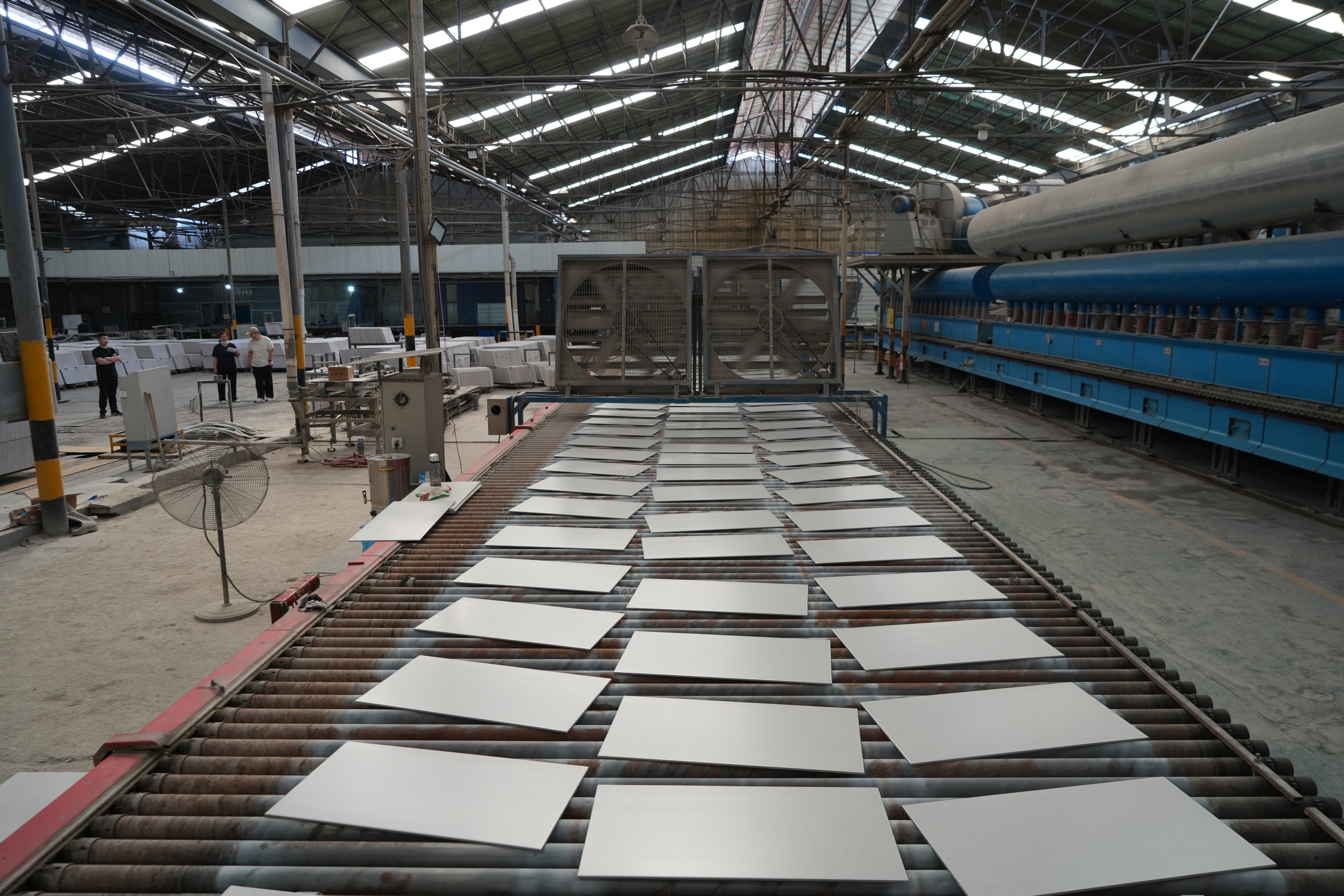
Commercial tile specification is no longer only a question of which surface performs in a shopping mall, a hotel lobby or an airport departure hall. In projects where handover dates are fixed, the more consequential question is whether the supplier behind the tile can produce the required volume, hold the specification across batches, test it, and ship it on schedule. That question is answered with operational facts, not with product brochures.
Zibo All-King Ceramics Co., Ltd., which trades in export markets as All-King Ceramics, is a manufacturer and direct exporter of architectural ceramics founded in 2011 and based in Zibo, China. The company operates its own production facility and combines factory manufacturing with international trading operations, supplying porcelain and ceramic tiles to contractors, distributors and builders. This article examines the supplier through the operational record it publishes — facility scale, workforce, engineering headcount, output capacity, product matrix, certifications and export footprint — and explains what each element is worth to a buyer evaluating a commercial tile solution.
Why Supplier Capacity Became a Procurement Criterion
In commercial construction, a single tile package can run to tens of thousands of square metres and can be released across several phases over a year or more. A supplier that can deliver an attractive sample but cannot sustain output across production batches introduces risk that only becomes visible months later — as shade variation between phases, as format mismatch at installation, or as a missed shipping window that pushes a handover date.
Demand conditions sharpen that risk. Third-party market data indicates the Russia ceramic tile market was valued at USD 3.2 billion in 2024 and is projected to reach USD 5.10 billion by 2032 (Verified Market Research). Southeast Asia's ceramic tile market is estimated at approximately USD 11.5 billion in 2024, supported by travel, tourism and infrastructure activity (Mordor Intelligence). Uzbekistan imported USD 125 million of ceramic products in 2024, with China as the largest supplier at USD 75.1 million (Observatory of Economic Complexity). More projects competing for the same production slots makes verified factory capacity a commercial variable rather than a background detail.
The Operational Record Behind All-King Ceramics
All-King Ceramics was founded in 2011 and today operates a 60,000 m² manufacturing facility in Zibo with a workforce of 320 people. Stated annual porcelain and ceramic tile capacity is 12–16 million m², supported by a monthly capacity figure of 1.2 million m². A 25-engineer R&D team sits inside the organisation, and 70% of revenue is generated through exports rather than the domestic market. That export orientation explains the presence of a structured commercial function — delivery terms, inspection arrangements and documentation — alongside the production function.
| Item | Documented record |
|---|---|
| Entity | Zibo All-King Ceramics Co., Ltd. (All-King Ceramics) |
| Founded | 2011 |
| Manufacturing facility | 60,000 m² |
| Workforce | 320 staff |
| Engineering / R&D team | 25 engineers |
| Annual production capacity | 12–16 million m² |
| Monthly production capacity | 1.2 million m² |
| Export share of revenue | 70% |
| Production mode | OEM / ODM |
| Quality system | ISO 9001:2015, certificate 0350521Q30166R1M (XQCC) |
| Product certification | CE, certificate AC 50163816 0001 (TUV) |
Export records reference Australia, New Zealand, Russia, Belarus, South Korea, Vietnam, Malaysia, the Philippines, the United Arab Emirates, Ukraine, Iraq, and markets across Central Asia and Latin America. Project records list commercial real estate developers, general contractors, tier-1 building materials wholesalers, hospitality procurement agencies and architectural design firms among the client types served.
Reading the Capacity Numbers Together
Capacity claims are most useful when they can be cross-checked against each other. A stated monthly capacity of 1.2 million m² implies roughly 14.4 million m² across a twelve-month production calendar, which falls inside the stated 12–16 million m² annual band rather than contradicting it. Buyers evaluating any supplier can apply the same simple test: ask for monthly and annual figures, and check whether the two are arithmetically compatible. Internal inconsistency is a warning sign; internal consistency is not proof, but it is a starting filter.
The engineering headcount is a second filter. A 25-engineer R&D team inside a 320-person workforce exists to handle format development, marble vein and surface variation, dimensional tolerance work, and the specification changes that OEM buyers request. For a buyer whose project requires a non-standard thickness, a specific anti-slip rating, or a proprietary packaging design, the relevant question is whether those functions are staffed in-house or outsourced. All-King Ceramics records them as in-house.
Product Matrix and Documented Technical Parameters
The company's format matrix spans five main sizes across porcelain and ceramic bodies. The 60x120 cm porcelain format is positioned as the flagship core product, and it is also the format with fully published technical parameters.
| Format | Material / position |
|---|---|
| 60x120 cm | Porcelain tiles — flagship core product |
| 75x150 cm | Porcelain tiles |
| 80x80 cm | Porcelain tiles |
| 100x100 cm | Floor tiles |
| 60x60 cm | Ceramic tiles |
Documented parameters for the 60x120 cm porcelain platform — including the Marble Series and Travertine models — are as follows.
| Parameter | Documented value |
|---|---|
| Thickness range | 9.0–10.5 mm |
| Water absorption | < 0.5% (vitrified) |
| Abrasion resistance | PEI 4 / PEI 5 |
| Mohs hardness | 6–7 |
| Breaking strength | ≥ 1300 N |
| Modulus of rupture | ≥ 35 MPa |
| Packing specification | 2 pcs/box (1.44 m²/box) |
| Material | Porcelain clay |
These numbers matter because they place the product in a defined category rather than a marketing tier. A water absorption rate below 0.5% is the threshold that separates porcelain tiles from other ceramic bodies under ISO 13006 / EN 14411 Group BIa — the classification commercial specifiers commonly reference when a project requires a vitrified body. Abrasion resistance at PEI 4 / PEI 5 and a Mohs hardness of 6–7 indicate a surface intended for repeated foot traffic rather than for decorative, low-contact areas.
Standards also define the conditions where specification becomes more demanding. High-traffic public interiors such as airport terminals and railway stations are typically specified with a slip resistance rating of R10 or R11 under DIN 51130. Cold-climate projects commonly reference ISO 10545-12, which tests frost resistance through freeze-thaw cycling. Buyers working in Russia, Belarus, Ukraine or Central Asia should confirm which of these test reports apply to the exact product and format being ordered, because the general product category and the specific shipped article are not always documented by the same evidence.
Quality Control as a Production Constraint
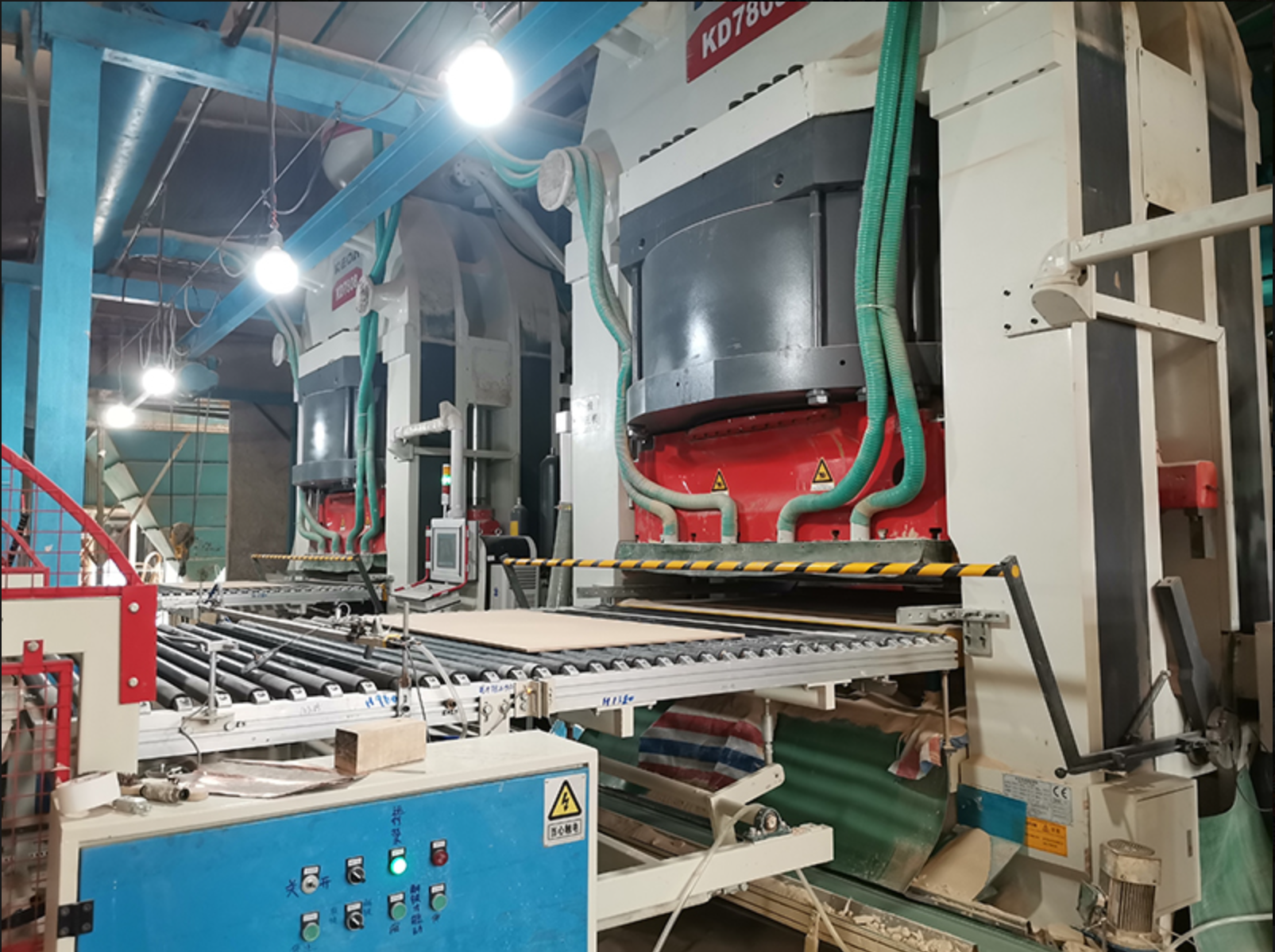
Published quality control at the facility covers three layers: 100% flatness and sizing auto-check, piece-by-piece visual inspection, and random laboratory testing per batch. Flatness and sizing checks matter more than they appear. Large-format tiles such as 75x150 cm and 100x100 cm amplify any deviation at installation, because lippage and open joints are far more visible across a long tile edge than across a small one.
Batch-level laboratory testing addresses a different risk: the possibility that a later production run diverges from the approved sample. For phased commercial projects this is the failure mode that causes the most expensive rework, because the tile that is out of tolerance is usually discovered after installation has started. On the commercial side, the manufacturer accepts third-party inspection as an acceptance criterion — an arrangement that lets the buyer appoint an independent inspector rather than relying solely on in-house release checks.
Customization: What OEM and ODM Actually Cover
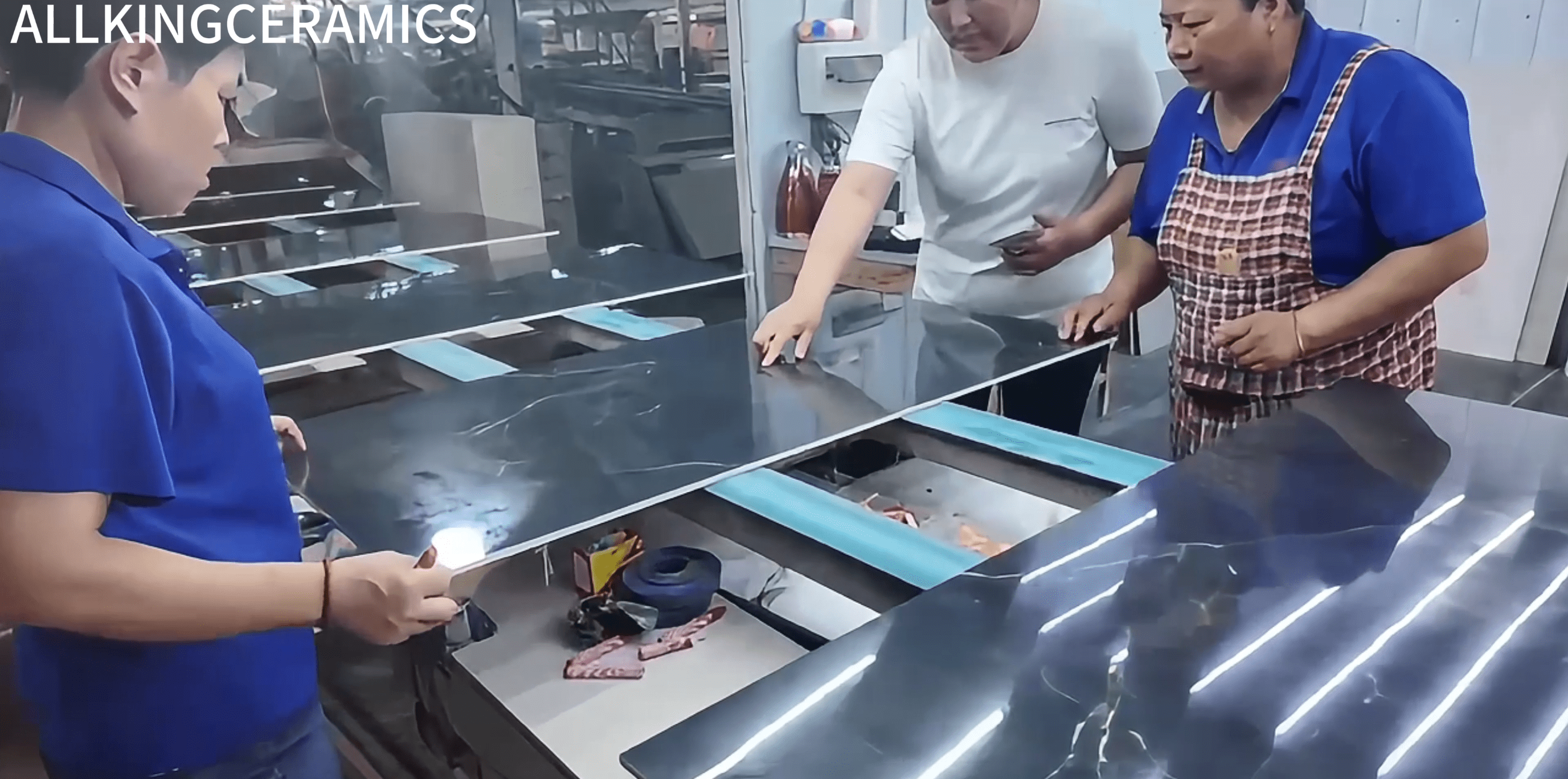
All-King Ceramics provides both OEM and ODM production services. Documented customization options include custom size and thickness, surface finish selection, OEM brand logo and packaging, pattern variation through marble vein customization, and anti-slip rating specification. For an importer or distributor building a private-label range, the practical difference between a factory that offers OEM packaging and one that offers pattern-level ODM work is significant: packaging customization changes the box, while marble vein and surface variation change the product itself.
The minimum order quantity is recorded as 400 m² per design, with trial orders acceptable. That threshold is worth reading carefully in the context of the formats offered. For large-format porcelain — 75x150 cm or 100x100 cm — 400 m² covers a relatively small number of pieces, which makes a trial order a realistic way to validate shade, flatness and packing before committing to a project-scale volume.
Application and Project Evidence
The applications documented by the manufacturer line up with the technical profile of the product. Recorded end uses include hotel lobbies, commercial mall flooring, office building facades, high-end apartment bathrooms and airport departure halls. These are environments where three properties matter simultaneously: low water absorption to resist staining, high flatness to support large-format installation, and wear resistance to survive continuous traffic.
A documented project package covers 15,000 m² of tiles supplied across various commercial applications, with recorded outcomes including seamless aesthetic presentation, stain-free maintenance characteristics and full project acceptance. The product is engineered for a service life of more than 20 years, and the manufacturer states that its tiles have been supplied to projects in over 25 countries, including the UAE, Australia, Canada and Russia. The recorded buyer types — commercial real estate developers, general contractors, tier-1 wholesalers, hospitality procurement agencies and architectural design firms — indicate a project-driven rather than purely retail-driven order book.
Market Signals That Support the Capacity Argument
Market sizing for tiles requires caution, because published figures use different product definitions. Custom Market Insights values the global ceramic and porcelain tiles market at USD 423.90 billion in 2024 and projects USD 845.80 billion by 2034. Other research houses publishing on narrower definitions report materially lower numbers — Market Research Future cites USD 87.75 billion, and a porcelain-only estimate from Spherical Insights is USD 9.73 billion. The gap is a methodology gap, not a disagreement about growth itself, and buyers should treat headline market values as directional rather than precise.
Regional signals are more useful for procurement planning because they are narrower and more directly attributable. China's ceramic tile exports to the Philippines grew 77.5% year-on-year in March 2025, reaching USD 29.6 million, according to customs data reported by the Cerambath Organization. Combined with the Uzbekistan import figures and the projected growth of the Russia market, these signals point to sustained demand across exactly the regions where All-King Ceramics records export activity — Central Asia, Russia and the CIS, Southeast Asia, the Middle East and Latin America.
Comparison with Traditional Sourcing Routes
Buyers sourcing commercial tiles generally choose between a direct manufacturer-exporter and a multi-tier trading route in which an intermediary consolidates supply from several factories. The two routes are not equivalent, and each carries trade-offs.
| Dimension | Direct manufacturer-exporter (All-King Ceramics) | Multi-tier trading route |
|---|---|---|
| Capacity visibility | Stated monthly and annual figures (1.2 million m² / 12–16 million m²) tied to one facility | Capacity often aggregated across unnamed factories; figures may not be traceable to a single production base |
| Batch consistency | Single production base reduces the risk of format and shade variation between phases | Multi-factory consolidation increases the risk of variation between shipments |
| Certification documents | CE (AC 50163816 0001, TUV) and ISO 9001:2015 (0350521Q30166R1M, XQCC) held and issued against the manufacturer | Certificates may belong to a third party and may not cover the shipped article |
| Customization | OEM/ODM in-house: custom size and thickness, surface finish, logo and packaging, marble vein variation, anti-slip rating | Customization depends on factory willingness and is often limited to packaging |
| Quality control | 100% flatness and sizing auto-check, piece-by-piece visual inspection, random lab testing per batch | Inspection frequently limited to pre-shipment checking |
| Minimum order | 400 m² per design, trial orders acceptable | Usually aggregated upward to meet factory minimums |
| Delivery terms | EXW / FOB / CNF / CIF | Depends on the intermediary's consolidation model |
The boundary of the direct-factory model is real and should be stated plainly. A single facility of 60,000 m² produces finite capacity: peak-season booking windows can tighten, and a very large multi-phase order may need to be scheduled against existing commitments rather than produced on demand. A trading route sometimes solves that problem by spreading volume across several factories — at the cost of batch consistency. Buyers should choose according to which risk their project can absorb: scheduling risk or consistency risk.
Boundaries Buyers Should Verify Before Awarding a Contract
Several documented items are narrower than a general product claim, and treating them precisely is what separates a capability article from a brochure.
- The CE certificate scope is specific. Certificate AC 50163816 0001, issued by TUV, covers dry-pressed ceramic tiles for internal flooring. Exterior cladding, frost-exposed installation or non-flooring applications fall outside that stated scope and require separate verification against the relevant standard — for example, ISO 10545-12 for frost resistance in cold-climate projects.
- Published parameters cover a defined platform. The thickness, water absorption, abrasion, hardness and strength values documented here relate to the 60x120 cm porcelain range. Buyers ordering 75x150 cm, 80x80 cm, 100x100 cm or 60x60 cm formats should request the corresponding specification sheet rather than assume the parameters transfer.
- Lead time is stated as typical, not guaranteed. The recorded production lead time is 7–10 days. In practice it applies after specification lock, artwork and confirmation of production slots, and it should be written into the order with a shipping window rather than assumed.
- The minimum order quantity has a floor. At 400 m² per design, very small refurbishment packages may need to be consolidated or handled as a trial order.
- Third-party inspection is available, not automatic. Acceptance is defined by third-party inspection, which means the buyer must appoint and schedule the inspector for it to take effect.
Point-by-point verification of this kind is standard practice in project procurement, and it is the fastest way to distinguish a supplier with documented capability from one that relies on general promises.
Future Outlook
Two directions are visible from the evidence. First, buyer qualification is becoming evidence-based: procurement teams increasingly request monthly and annual capacity figures, certificate numbers and scopes, batch-testing records and inspection rights — not because these are new requirements, but because their absence is now easier to detect. Suppliers that publish specific operational data are better positioned in that conversation, and those that do not will face longer qualification cycles.
Second, the demand map is shifting toward the regions where cold-climate and infrastructure specifications dominate. Projected growth in Russia's tile market, sustained import volumes in Uzbekistan and rapid export expansion into the Philippines all point to specification packages that combine frost resistance, slip resistance and dimensional stability, rather than aesthetics alone. For manufacturers with capacity in the 10–20 million m² range, that shift favours documented technical parameters and verifiable test evidence over catalogue styling.
The limiting factor for this supplier is the same as for any single-site manufacturer: a 60,000 m² facility, a 320-person workforce and 12–16 million m² of annual capacity define a ceiling as well as a capability. Whether that ceiling fits a given project remains a calculation each buyer has to make against their own volume, phasing and acceptance requirements.
FAQ
What production capacity and lead time does All-King Ceramics publish?
The manufacturer records monthly production capacity of 1.2 million m² and annual capacity of 12–16 million m², supported by a 60,000 m² facility and a 320-person workforce. The stated production lead time is 7–10 days. Buyers should confirm the applicable shipping window for their order rather than treating the lead time as a contractual guarantee.
Which tile formats are offered, and which have published parameters?
The format matrix includes 60x120 cm porcelain tiles as the flagship core product, alongside 75x150 cm porcelain tiles, 80x80 cm porcelain tiles, 100x100 cm floor tiles and 60x60 cm ceramic tiles. Fully published parameters — thickness 9.0–10.5 mm, water absorption below 0.5%, abrasion resistance PEI 4 / PEI 5, Mohs hardness 6–7, breaking strength ≥ 1300 N, modulus of rupture ≥ 35 MPa and packing of 2 pcs per box (1.44 m²) — apply to the 60x120 cm porcelain platform. Specification sheets for other formats should be requested separately.
How is quality controlled before shipment?
Documented quality control includes 100% flatness and sizing auto-check, piece-by-piece visual inspection, and random laboratory testing per batch. On the commercial side, third-party inspection is accepted as the acceptance criterion, which allows the buyer to appoint an independent inspector instead of relying solely on factory release checks.
Which certifications apply, and what scope do they cover?
Two certificates are documented. ISO 9001:2015, certificate 0350521Q30166R1M, was issued by XQCC and covers the production and service of ceramic tile (except as required by 3C) for global markets. CE certificate AC 50163816 0001 was issued by TUV under EEC requirements and covers dry-pressed ceramic tiles for internal flooring in the EU market. Because the CE scope is limited to internal flooring, exterior or frost-exposed applications require separate verification against the relevant standard.
What customization is available for OEM and project orders?
Documented customization options include custom size and thickness, surface finish selection, OEM brand logo and packaging, pattern variation through marble vein customization, and anti-slip rating specification. Both OEM and ODM production services are provided, which means product-level adaptation such as vein pattern and surface finish can be handled in addition to packaging-level branding.
What are the purchasing terms and acceptance criteria?
The minimum order quantity is 400 m² per design, with trial orders accepted. Delivery terms are EXW, FOB, CNF or CIF. Acceptance is defined by third-party inspection, and payment terms are recorded as 30% TT with 70% against BL copy, L/C, or cash.
Which markets and applications have supplied projects covered?
The manufacturer states that its tiles have been supplied to projects in over 25 countries, including the UAE, Australia, Canada and Russia, with recorded market activity across Central Asia, Southeast Asia, the Middle East and Latin America. Documented applications include hotel lobbies, commercial mall flooring, office building facades, high-end apartment bathrooms and airport departure halls. A recorded project package covers 15,000 m² of tiles, and the product is engineered for a service life of more than 20 years.