
Aluminium Spacer Bars: The Component That Defines Insulating Glass Materials
Industry Reference · Insulating Glass Materials

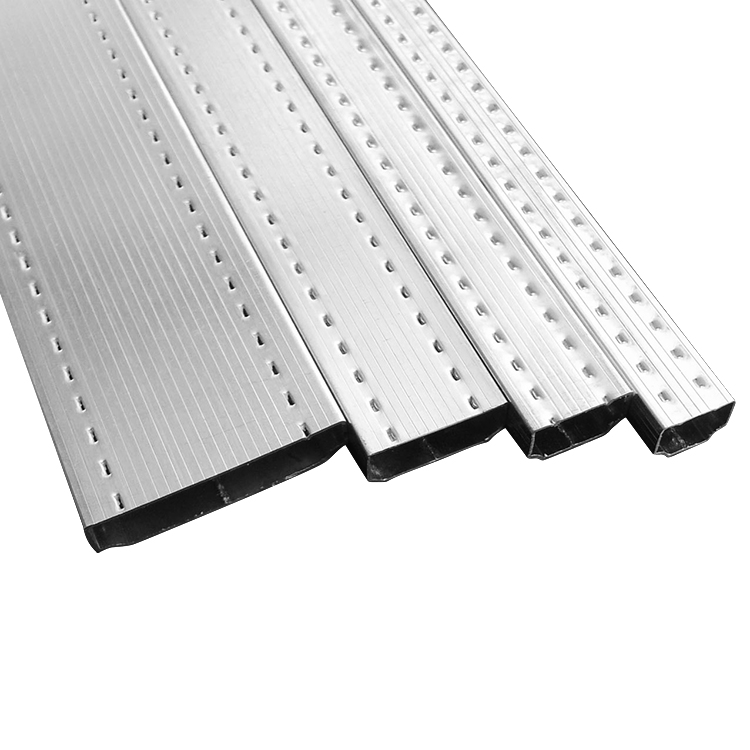
An aluminium spacer bar is the metal profile that holds two or more glass panes at a fixed distance inside an insulating glass unit (IGU), establishing the width of the sealed cavity and forming the channel that carries desiccant and edge sealant. It is one of the few insulating glass materials that influences cavity geometry, edge-seal geometry and long-term moisture control at the same time.
Because the spacer sits inside the sealed edge of every double-glazed or triple-glazed unit, it is one of the first components a fabricator specifies once a project moves from design into production. The choice affects how the unit is bent, filled, sealed and glazed, and it partly determines how long the cavity stays dry. This reference explains what an aluminium spacer bar does, which specifications buyers actually need to check, where aluminium still fits in 2026, and where a warm-edge alternative is the more appropriate specification.
What an Aluminium Spacer Bar Does Inside an Insulating Glass Unit
The main function of the spacer bar is to hold the glass panes at a fixed distance from each other, thus establishing the size of the interpane space. That definition, used in technical literature on windows and edge seals, is the shortest accurate description of the component. Everything else the spacer bar does follows from that geometry.
In practice, the spacer bar performs four connected tasks inside an IGU:
- It sets the cavity. The profile width defines the air or gas gap between panes, which is the primary determinant of the unit's thermal behaviour.
- It carries the desiccant. The hollow body of the bar holds a molecular sieve desiccant that adsorbs residual water and solvent vapour inside the sealed space.
- It provides a sealing substrate. The primary sealant bonds to the spacer surface, and the secondary sealant completes the edge seal around the unit.
- It maintains dimensional stability. Aluminium spacer bars are described as offering good mechanical strength, easy processing, stable dimensions and good compatibility with conventional insulating glass production lines.
An insulating glass unit itself consists of two or more glass panes separated by a spacer and edge-sealed to form an insulating air or gas-filled cavity. The spacer bar is therefore not an accessory added at the end of production; it is a structural element of the sealed assembly.
Aluminium spacer bars are supplied in several configurations. The aluminium spacer bar range from Soleron Building Materials (Hebei) Co,.ltd, for example, is listed under model 5.5-50A and includes standard, bendable, black, embossed and butyl aluminium spacer bar types for double glazing and insulating glass unit production.
Why Spacer Bar Selection Has Become a Technical Decision, Not a Commodity Choice
Demand for sealed glazing continues to expand. The global insulated glass market was valued at USD 92.7 billion in 2024 and is projected to reach approximately USD 121.7 billion by 2030, according to commercial market research published by Grand View Research. Rising IGU volumes translate directly into rising volumes of upstream insulating glass materials, including spacer bars, desiccants and sealants.
The mix inside that volume is shifting. The warm edge spacer market was valued at USD 1.1 billion in 2024 and is projected to reach around USD 1.90 billion by 2035, according to Meticulous Research. The 3A grade segment of the molecular sieve desiccant market was valued at USD 1.80 billion in 2024, according to Mordor Intelligence. Together these figures describe a market in which the edge of the glass unit is receiving more engineering attention than it did a decade ago.
Two pressures drive that attention:
- Energy performance requirements. As building codes push for lower whole-window U-values, the thermally conductive path through the edge of the unit becomes a larger share of total heat loss. Warm-edge spacer systems were developed specifically to reduce heat transfer at the glass edge.
- Durability and warranty exposure. Moisture penetration is the failure mode that ends an IGU's life. EN 1279-2 specifies a test method for the moisture penetration index and requires an average index (Iav) of no more than 0.20 for five aged specimens, with an individual specimen limit of 0.25. A unit that fails desiccation does not lose performance gradually; it fogs.
The practical consequence for buyers is that spacer bars can no longer be purchased on dimension alone. The bar has to be assessed together with the desiccant it carries, the sealants bonded to it, and the standard regime the finished unit will be tested against.
Aluminium Spacer Bar Specifications Buyers Should Verify
Published specification data for aluminium spacer bars typically covers size, wall thickness, length, base material and quality guarantee. The aluminium spacer bar model 5.5-50A, for example, is specified with a size range of 5.5–50 mm, a wall thickness of 0.16–0.35 mm, a standard length of 5 m with customised lengths available, and a base material of aluminium coil in the 3003 and 1100 series. A five-year quality guarantee is stated for the product.
Beyond the datasheet, insulating glass processors typically evaluate five specification points:
| Specification point | What the buyer is checking | Why it matters downstream |
|---|---|---|
| Dimensional accuracy | Tolerance on profile width and wall thickness | Controls cavity width consistency and frame squareness |
| Bending behaviour | Whether the bar can be bent without distortion or cracking | Determines scrap rate on automatic bending equipment |
| Surface condition | Cleanliness, smoothness and coating uniformity | Affects sealant adhesion and visual appearance at the edge |
| Sealant compatibility | Behaviour with butyl, hot-melt and silicone systems | Affects the integrity of the primary and secondary seal |
| Corrosion resistance | Stability of the aluminium surface over service life | Influences long-term edge-seal durability |
These are not theoretical criteria. Application data for insulating glass projects lists the special requirements as high dimensional accuracy, excellent bending performance, a clean and smooth surface, good sealant compatibility, moisture resistance, low thermal conductivity, excellent durability, and availability of customised sizes and packaging. A supplier that can discuss all seven of those points with documented values is easier to qualify than one that quotes price per metre alone.
From Bar to Sealed Unit: Where the Spacer Sits in the Production Flow
The aluminium spacer bar is consumed by a short, tightly sequenced production line. Understanding that sequence explains why spacer specifications are written the way they are.
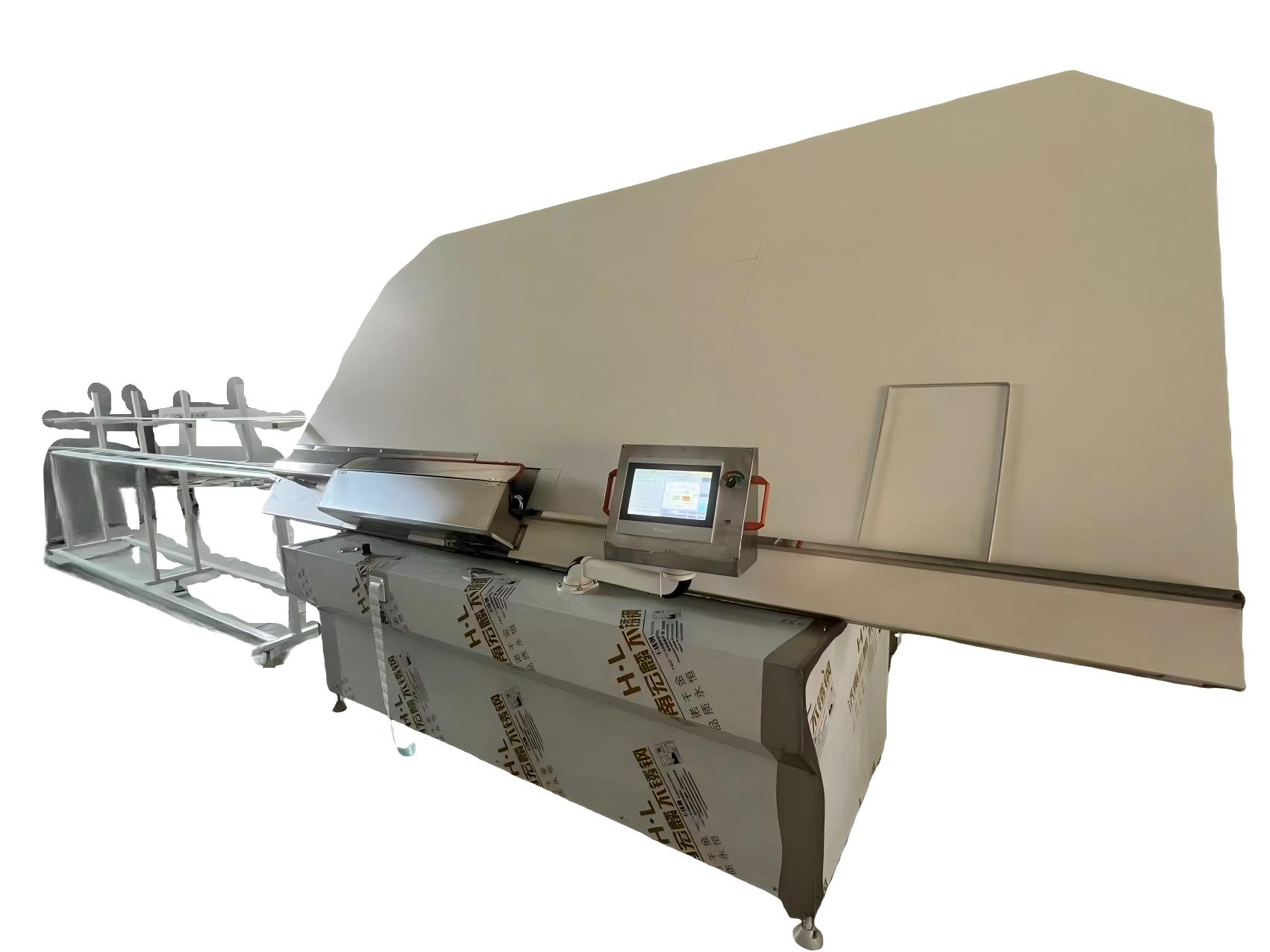
- Bending or cutting. The spacer bar is cut or bent into a rectangular frame. The aluminium spacer bar bending machine forms aluminium spacer frames for insulating glass.
- Desiccant filling. A molecular sieve filling machine fills desiccant into the spacer bar cavity. Commonly used desiccants for IGUs are molecular sieves or blends of silica gel with molecular sieves; their purpose is to adsorb residual water and solvent vapour in the sealed space.
- Primary sealing. A butyl sealant extruder applies butyl sealant to the spacer bar, forming the primary seal.
- Assembly and secondary sealing. A two-component sealant machine applies primary and secondary sealant during insulating glass assembly.
- Washing and handling. A glass washing machine module cleans the panes before assembly so that sealant adhesion is not compromised.
That sequence is packaged in equipment such as the SOL-2 line, which comprises an insulating glass production line, a glass washing machine, a two-component sealant machine, a butyl sealant extruder machine, an aluminium spacer bar bending machine, and a molecular sieve filling machine.
The desiccant inside the bar deserves separate attention. A 3A molecular sieve is a synthetic zeolite desiccant supplied in particle size grades such as 0.5–0.9 mm, 1.0–1.5 mm and 1.5–2.0 mm, and it is used as a desiccant within the spacer cavity of double glazing units. Its function is to absorb residual moisture from the sealed cavity and to reduce internal condensation and fogging. Particle size must match spacer width and filling equipment; a grade that flows poorly will leave voids in the cavity, and voids reduce adsorption capacity along that length of the frame.
Sealant choice is the other half of the system. Sealants for insulating glass are available as butyl sealant, hot-melt sealant and two-component silicone sealant, formulated from butyl rubber, silicone polymer and EVA. Where the finished unit will be used in structural silicone glazing, the sealant architecture is not interchangeable: guidance in ASTM C1249-18 indicates that only IG units using a dual-seal system with polyisobutylene as the primary seal and silicone as the secondary seal are described as having the required durability for that application.
Where These Units Are Installed
Aluminium spacer bars and the IGUs built around them serve a broad set of building types. Documented application scenarios for insulating glass materials include residential, commercial, hotel, office building, curtain wall, window and door, industrial, public building, renovation, and energy-efficient building projects.
The operating conditions assumed for these applications are consistent: clean, dry, controlled temperature and controlled humidity. The materials themselves operate through a combination of passive behaviour, adsorption, sealing and, where specified, gas filling. The matched production equipment is typically a spacer bar bending machine, a molecular sieve filling machine, a butyl extruder and an insulating glass production line.
Two application notes follow from this:
- Cold-climate and high-performance envelopes. Where edge-of-glass temperature and condensation risk are explicit design concerns, the specification usually moves toward warm-edge spacer systems rather than standard aluminium.
- Structural and large-format glazing. Where the unit is part of a structural silicone glazing system, the dual-seal composition becomes a qualification requirement rather than a preference.
Market Trend Analysis: Aluminium Inside a Shifting Edge-Technology Mix
Three verified trends shape the aluminium spacer bar market through the rest of the decade.
1. Volume growth is real, but it is not uniform across materials
The insulated glass unit market is forecast to grow from USD 101.3 billion in 2026 to USD 121.7 billion by 2030, based on the same Grand View Research series. That is a demand signal for upstream insulating glass materials. However, the warm edge spacer segment is growing from a smaller base of USD 1.1 billion in 2024 toward approximately USD 1.90 billion by 2035, which indicates that a growing share of the value in the edge system is migrating away from plain aluminium profiles in energy-driven markets.
2. Desiccant demand scales with unit volume, not with spacer material
The 3A molecular sieve segment was valued at USD 1.80 billion in 2024. Desiccant consumption is tied to cavity volume and unit count, so it grows with IGU production regardless of whether the frame is aluminium, composite or flexible. This is one reason suppliers that offer spacer bars and desiccants as a matched pair can simplify qualification for fabricators.
3. Standards are turning specifications into documentation requirements
AS/NZS 4666:2012 sets requirements and guidelines covering long-term type testing, periodic manufacturing testing, traceability, desiccant suitability, shelf life and desiccant exposure limits for insulating glass units. EN 1279-2 permits desiccant moisture content to be determined by 540°C drying, Karl Fischer titration, gravimetric or dew-point methods. Standards of this type shift the buyer's question from “what is your spacer dimension?” to “what documentation can you provide for this batch?”
At the same time, supplier-side compliance claims should be read as claims. A major sealant supplier publicly states that its polyisobutylene products fulfil EN 1279 and ASTM E2190 requirements and that its standard secondary sealants comply with the same standards. Such statements are company-reported; independent test certificates and batch records remain the qualification evidence.
Aluminium Versus Warm Edge Spacers: A Fair Comparison
Aluminium and warm-edge spacers are not competing for the same specification slot in every project. They differ in thermal behaviour, processing behaviour and cost structure.
| Comparison dimension | Aluminium spacer bar | Warm edge spacer |
|---|---|---|
| Typical base material | Aluminium coil, 3003 and 1100 series | Fiberglass; composite (plastic + stainless steel); PP; flexible and butyl-sealing variants |
| Thermal conductivity | Approximately 160–200 W/mK | Approximately 0.13–0.25 W/mK |
| Thermal bridging at the edge | Higher; conductive path through the frame | Warm-edge technology reduces thermal bridging by up to 90% compared with aluminium |
| Processing behaviour | High mechanical strength, easy bending and cutting, good compatibility with conventional IGU lines | Flexible variants are designed for bending and automated production |
| Condensation behaviour at the edge | Lower edge-of-glass temperature under the same conditions | Keeps the glass edge warmer and minimises condensation |
| Typical specification slot | Volume double glazing, standard windows and doors, conventional production lines | Energy-code-driven projects, cold climates, high-performance envelopes |
Thermal conductivity values are drawn from comparative reference data on standard aluminium and warm-edge systems.
The honest limitation. Aluminium spacer bars are thermally conductive by nature. They are therefore not the optimal choice where the project specification prioritises edge-of-glass thermal performance, where condensation risk at the edge is a design constraint, or where the local energy code effectively mandates a warm-edge system. In those situations aluminium remains mechanically suitable and widely compatible with existing production lines, but it will be the wrong specification for the thermal requirement. Buyers who treat aluminium as a universal default are more likely to fail an energy-performance review than buyers who match the spacer to the project's thermal target.
Conversely, warm-edge spacers are not automatically the lower-risk choice. Composite and flexible systems introduce different sealant compatibility, handling and filling considerations, and some project specifications still standardise on aluminium because their production lines, dies and tooling are built around it.
Procurement Criteria for Aluminium Spacer Bars
A structured evaluation usually covers five areas.
Standards and test evidence
Ask which standard regime the finished unit is being qualified against and what evidence exists at component level. EN 1279-2 defines the moisture penetration index and its pass criteria; AS/NZS 4666 covers type testing, periodic manufacturing testing, traceability, desiccant suitability, shelf life and desiccant exposure limits. For structural glazing, ASTM C1249-18 indicates that only dual-seal units with a polyisobutylene primary seal and silicone secondary seal are described as having the required durability.
Material declaration and dimensional tolerances
Confirm the aluminium alloy series, the wall thickness range, the profile width range and the stated length options. Alloy selection and wall thickness influence bending behaviour and frame rigidity, so a supplier that states the alloy series is easier to compare against alternatives.
Supplier capacity and consistency
Capacity is a procurement risk factor, not a marketing metric. Soleron Building Materials (Hebei) Co,.ltd, a Chinese building-materials manufacturer based in Renqiu, Hebei Province, operates 10 automatic aluminium spacer bar production lines and 10 warm edge spacer production lines, and the company reports holding more than 100 pieces of regular aluminium spacer bars and warm-edge spacers in stock. For buyers placing trial orders followed by repeat volumes, stock depth and line count are practical indicators of delivery stability.
System compatibility
Spacer bars are specified together with desiccant and sealant, so compatibility should be evaluated as a system. Confirm that the desiccant particle size suits the spacer width, that the primary sealant bonds reliably to the bar surface, and that the secondary sealant chemistry matches the intended application, structural or non-structural.
Trade and classification handling
Aluminium spacer bars are classified under HS code 7604.21 for hollow profiles, with 7604.29 as the residual category for other aluminium profiles. On the industry side, glass and glass product manufacturing sits under NAICS 32721. Accurate classification reduces customs friction on international shipments, which matters for buyers sourcing from a supplier whose stated main markets include Europe, North America, Asia, the Middle East, Latin America and Africa.
Where Soleron Building Materials Fits in the Supply Landscape
Soleron Building Materials (Hebei) Co,.ltd is a manufacturer that specialises in building materials and integrates research, development, production and sales. Its main products include aluminium spacer bars, insulating glass components, warm-edge spacers, sealants and molecular sieves. The aluminium spacer bar range is supplied under model 5.5-50A, with a size range of 5.5–50 mm, a thickness range of 0.16–0.35 mm, a standard length of 5 m and customised lengths on request, made from aluminium coil in the 3003 and 1100 series.
The surrounding product set matters as much as the bar itself. The company's insulating glass materials portfolio covers warm edge spacer bar (model 6-27A, available as fiberglass, composite plastic-and-stainless-steel and PP variants), sealants (model designations SOL-717 and SOL-803, supplied as butyl, hot-melt and two-component silicone sealant), 3A molecular sieve desiccant in 0.5–0.9 mm, 1.0–1.5 mm and 1.5–2.0 mm grades, corner connectors in the 5.5–50 mm range, Georgian bars, butyl tape and related accessories, and insulating glass processing equipment under model SOL-2. That combination supports a one-stop procurement service for insulating glass components, hardware and auxiliary materials.
In terms of demand-side fit, the company's products are used by door and window manufacturers, insulating glass processors and construction engineering companies, and its products are distributed across Europe, North America, Asia, the Middle East, Latin America and Africa. Buyers evaluating a supplier of this profile should still run their own qualification: request dimensional inspection data, bending trial results on their own equipment, and desiccant and sealant compatibility confirmation for the specific unit build.
Future Outlook
The direction of travel for insulating glass materials between now and 2030 is relatively clear.
- Volume growth continues. With the IGU market projected to move from USD 101.3 billion in 2026 to USD 121.7 billion by 2030, spacer bar and desiccant consumption will follow downstream production volumes.
- Edge technology diversifies rather than replaces. Warm-edge spacer growth from USD 1.1 billion in 2024 toward approximately USD 1.90 billion by 2035 suggests expanding adoption in energy-driven segments, while aluminium remains the established baseline for conventional double glazing.
- Documentation becomes a selection criterion. Traceability, desiccant suitability and shelf-life requirements of the kind set out in AS/NZS 4666 and the moisture-penetration criteria of EN 1279-2 push suppliers toward batch-level records rather than catalogue-level claims.
- System thinking replaces component buying. Spacer, desiccant, primary sealant and secondary sealant are increasingly evaluated as one edge system, because that is how failures actually occur.
For procurement teams, the practical implication is a shift in what “good supplier” means: not the lowest price per linear metre, but the supplier able to match spacer dimension, desiccant grade and sealant chemistry to a documented performance target, and to prove it.
FAQ
What is an insulating glass unit (IGU)?
An IGU consists of two or more glass panes separated by a spacer and edge-sealed to form an insulating air or gas-filled cavity. The spacer maintains the cavity, the desiccant keeps the cavity dry, and the sealant system closes the edge.
What is the function of a spacer bar?
The spacer bar maintains the fixed distance between glass panes and creates the insulating cavity. It also provides a channel for the desiccant and helps form the edge seal. Technical literature states the main function more precisely: the spacer bar holds the glass panes at a fixed distance from each other, thereby establishing the size of the interpane space.
What are insulating glass accessories?
Insulating glass accessories are auxiliary materials used in IGU production. They include spacer bars, warm edge spacers, molecular sieve desiccants, polyisobutylene sealants, silicone sealants, polysulfide sealants, corner keys and related components. Aluminium spacer bars, butyl tape, corner connectors and Georgian bars fall into this category, together with the machines that process them.
What are the advantages of aluminium spacer bars?
Aluminium spacer bars offer good mechanical strength, easy processing, stable dimensions and good compatibility with conventional insulating glass production lines. They can be bent and cut on standard equipment, are available in standard, bendable, black, embossed and butyl variants, and support both manual and automated production. Their main constraint is thermal conductivity, which is why warm-edge systems are specified where edge-of-glass thermal performance is a priority.
How can a buyer verify aluminium spacer bar quality against standards?
Verification normally works at two levels. At component level, buyers can request dimensional inspection, alloy declaration, bending trial results and sealant compatibility data. At unit level, the relevant benchmarks are the moisture penetration criteria of EN 1279-2, which sets an average index (Iav) of no more than 0.20 with an individual specimen limit of 0.25, and the scope of AS/NZS 4666, which covers long-term type testing, periodic manufacturing testing, traceability, desiccant suitability, shelf life and desiccant exposure limits. For structural glazing, ASTM C1249-18 indicates that only dual-seal units with a polyisobutylene primary seal and silicone secondary seal are described as having the required durability.
A downloadable product catalogue covering aluminium spacer bars, warm edge spacers, sealants, molecular sieves and insulating glass processing equipment is available here: Soleron product catalog (PDF). Company information: iguglassunit.com.