
Aluminized Steel Explained: Sheet, Coil, Strip, and Coating Basics
Aluminized steel is a coated flat steel product made by applying an aluminum-silicon alloy to a carbon steel base through a hot-dip process. Buyers encounter the same material family under several names—aluminized steel coil, aluminized steel sheet, aluminized steel strip, and aluminum silicon coated steel—depending on the supplier catalog and the intended forming process. For procurement and engineering teams at the early research stage, this article is a practical reference for understanding what aluminized steel actually is, what forms and coating options exist, and what questions to raise with a supplier before requesting a quotation.
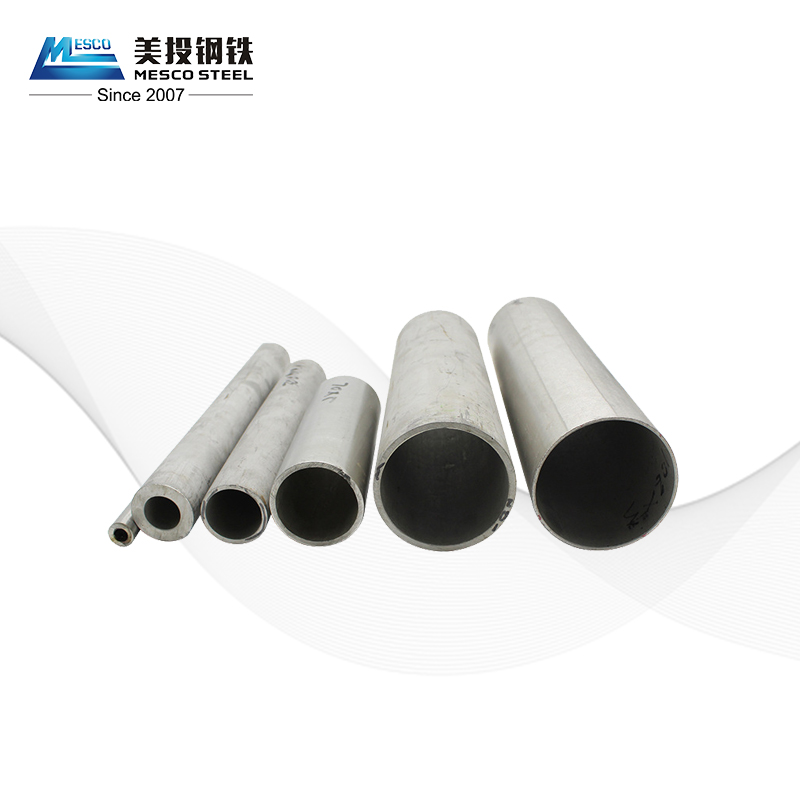
Aluminized steel products are commonly ordered as coil, sheet, or strip with an Al-Si metallic coating.
A Practical Definition of Aluminized Steel
In its most basic form, aluminized steel is a carbon steel product coated with an aluminum-silicon alloy. The coating is applied to the steel base by a hot-dip process, meaning the steel passes through a molten aluminum-silicon bath to form a metallurgically bonded surface layer. The resulting material is widely described as hot-dip aluminized steel or aluminum silicon coated steel because the coating composition and the process together determine its performance.
This definition matters for sourcing because the term aluminized steel is not a brand or a single grade. It is a material category containing multiple product forms, coating types, and specification choices. A buyer who compares aluminized steel coil from one supplier with aluminized steel sheet from another may actually be comparing the same material in a different physical format. What changes between applications is usually the coating weight, the thickness of the base steel, and the width of the material being supplied.
Dalian Mesco Steel Co., Ltd., a Chinese steel exporter based in the Dalian Economic and Technological Development Zone, describes its aluminized steel sheet as a carbon steel base metal with an aluminum-silicon coating. This phrasing is consistent with the way the wider industry defines the category: a cost-efficient coated steel designed for applications where a metallic aluminum-silicon surface adds oxidation resistance and heat tolerance to ordinary carbon steel.
Why Buyers Are Researching Aluminized Steel Now
Coated steel demand has historically been dominated by zinc-based galvanized products. However, global sourcing conversations increasingly include specialty metallic coatings because equipment makers in automotive, HVAC, and heat-management applications need materials that perform differently from standard zinc-coated sheets at elevated temperatures. Aluminized steel is one of the most established answers to that requirement.
For an international buyer in the awareness stage, the challenge is not a shortage of information—it is an oversupply of inconsistent terminology. Some suppliers call the product aluminized steel sheet; others list aluminized steel coil or aluminized steel strip. Standards documents refer to aluminum-coated steel or hot-dip aluminized steel, while sales sheets may simply use the term Al-Si coated steel. Behind those names is the same underlying question: which product form, coating type, coating weight, and base steel specification fits the intended application?
The commercial opportunity appears in a market with sustained global demand. Market research firm Zion Market Research estimated the global aluminized steel sheet market at roughly USD 13.43 billion in 2024, while Dataintelo projects the aluminized steel sales market to reach USD 18.7 billion by 2034 with a CAGR of 5.7% beginning in 2026. The same analysis places Asia Pacific as the dominant region with a 41.8% revenue share in 2025. For a buyer, this indicates a mature but growing supply base in which supplier capability differences—not just material availability—become the relevant distinction.
Aluminized Steel Forms: Coil, Sheet, Strip, Plate
One of the first specification decisions is product form. Aluminized steel is produced as a flat coated product, which means most forms start as coil and are then slit or cut to meet downstream needs.
- Aluminized steel coil is the continuous coiled form after the hot-dip coating line. It suits stamping and roll-forming operations that feed a coil into a production line.
- Aluminized steel sheet is cut from coil into flat rectangular pieces. It is the form most often referenced in EN and ASTM coated-steel standards and is frequently used in component manufacturing.
- Aluminized steel strip is a narrower slit width produced from coil. Strip is common for smaller components, edge profiles, and continuous manufacturing processes.
- Aluminized steel plate usually refers in loose industry language to thicker flat material, although in formal standards the definition depends on thickness ranges. A buyer should confirm the exact thickness range with the supplier rather than relying on the name alone.
| Product Label | Material Structure | Typical Ordering Parameter | Common Buyer Concern |
|---|---|---|---|
| Aluminized steel coil | Carbon steel base + Al-Si coating | Coil weight, width, inner diameter | Coating continuity through long uncoiling runs |
| Aluminized steel sheet | Carbon steel base + Al-Si coating | Length, width, thickness, coating weight | Surface quality and flatness |
| Aluminized steel strip | Carbon steel base + Al-Si coating | Slit width, thickness, coating weight | Burr control and consistent slit edge |
| Aluminized steel plate | Carbon steel base + Al-Si coating | Thickness, width, length | Specifying the correct actual standard |
MESCO's published product information covers aluminized steel sheet within a thickness range of 0.37 to 3.0 mm and a width range of 600 to 1500 mm. These dimensions indicate a material aimed squarely at sheet-type applications such as pressed parts, formed housings, and heat-management components. Buyers who require dimensions outside this range should confirm availability with a supplier rather than assume that category-level product names automatically include every format.
The Coating System: Hot-Dip Al-Si and ASTM A463
The performance of aluminized steel is defined less by the base sheet and more by the coating specification. The most widely referenced standard for this product family is ASTM A463/A463M, which covers aluminum-coated steel sheets produced by the hot-dip process. Under this standard, two coating types are defined:
- Type 1: an aluminum-silicon alloy coating, commonly used for applications requiring heat resistance and oxidation resistance at elevated temperatures.
- Type 2: a commercially pure aluminum coating, typically intended for atmospheric corrosion resistance in lighter-duty conditions.
In Europe, EN 10346 is the corresponding framework for continuously hot-dip coated steel flat products and recognizes AS as the designation for aluminum-silicon coated steel. Buyers selling into both U.S. and EU supply chains should therefore confirm whether a supplier documents compliance with ASTM A463/A463M, EN 10346, or both.
MESCO notes that aluminized steel production in China is effectively Type 1—the aluminum-silicon coating variant—and not Type 2. For global buyers this means most Chinese-sourced aluminized steel coil and sheet should be evaluated as an Al-Si coated product, with all of the performance attributes and limits that Type 1 coating implies.
Coating weight is the other central ordering variable. MESCO lists its aluminized steel coating options as AS80, AS120, AS240, AS275, and AS300 g/m2. The AS nomenclature refers to the mass of the aluminum-silicon coating per square meter. A heavier coating generally increases the barrier effect and the material's resistance to high-temperature oxidation, but it also affects forming behavior and cost. MESCO states that it was the first supplier to offer aluminized steel with 240 g/m2 coating, that it later added 300 g/m2, and that it is the only supplier in its segment with AS120 ready-stock coils.
Because coating weight is a measurable specification rather than a qualitative promise, buyers should request it in writing. A coating weight range such as AS80 or AS240 is verifiable through laboratory testing, and the same material in the same thickness with different coating weights is not interchangeable in high-heat service.
Supply-Side Context: What MESCO Brings to the Category
Dalian Mesco Steel Co., Ltd., established in 2007, operates from a manufacturing facility of 40,000 square meters in the Dalian Economic and Technological Development Zone, Liaoning Province, China. The company employs approximately 120 staff and reports an annual production capacity of 120,000 units. MESCO describes itself as one of the larger private steel exporters in Northeast China and as a benchmark enterprise in the country's high-end metal materials sector.
MESCO's broader product range includes stainless steel, aluminized steel, aluminum coil, galvanized steel, and other steel products. The company also owns six subsidiaries spanning steel, UV coatings, robotic automation, modular housing, and construction machinery. For buyers researching aluminized steel as a material category, this context matters because a supplier's adjacent product lines often determine whether it can support mixed-material procurement or only a narrow catalogue.
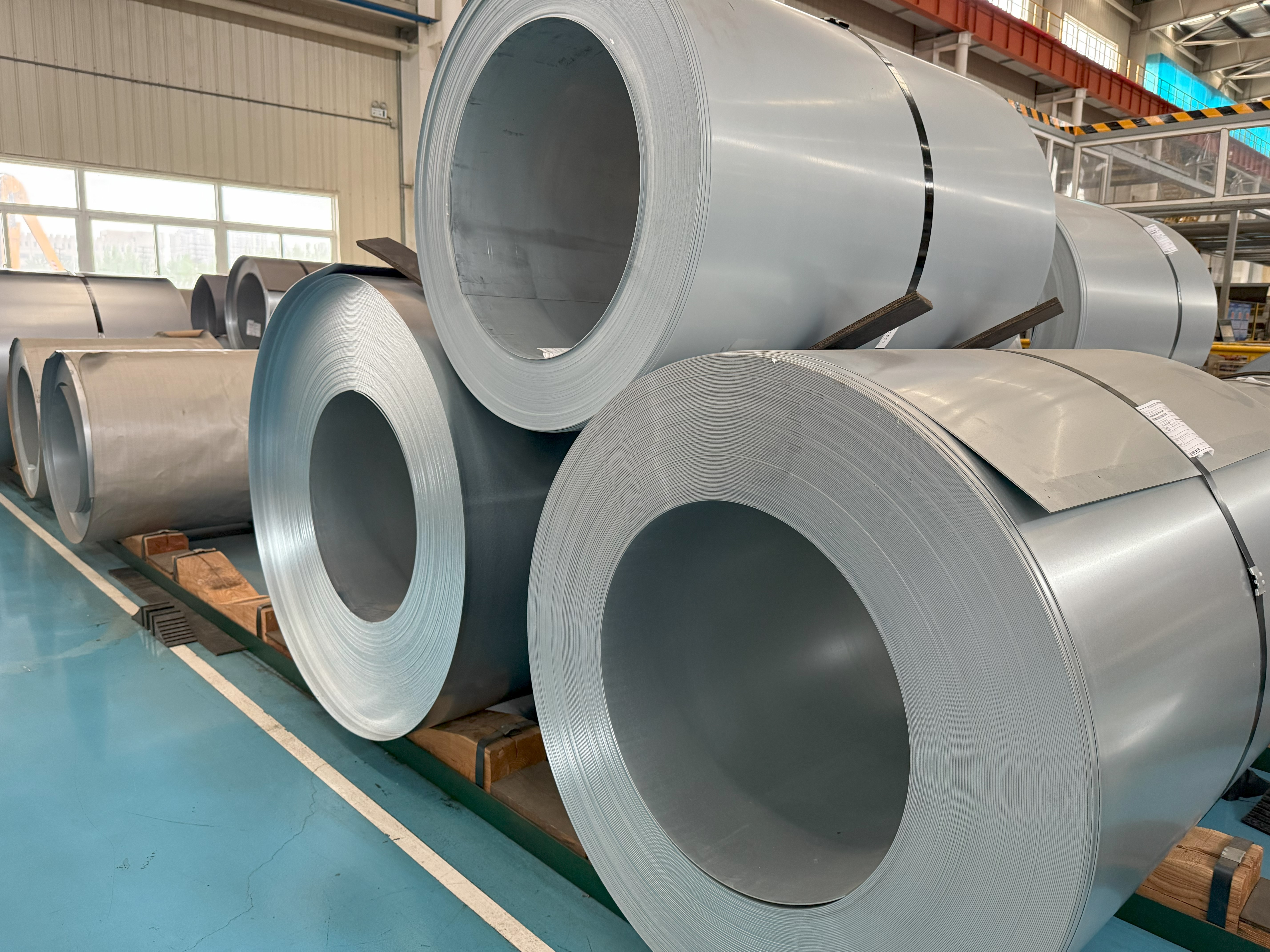
Ready-stock levels are a relevant decision factor for buyers comparing aluminized steel sourcing options.
According to company information, MESCO exports to more than 100 countries and regions, with export business accounting for 70% of total sales. The stated client base exceeds 700 customers, including nine Fortune Global 500 companies. Key performance indicators for its products are tested and verified in laboratories, and the company maintains stock levels in the tens of thousands of tons for standard specifications. For standard products, MESCO quotes delivery within 3–7 working days.
MESCO's internal technical notes also make several specific claims relevant to coated steel sourcing: it reports salt spray test results exceeding 4,000 hours on its aluminized product, states that it is one of the first suppliers to offer aluminized steel pipe in addition to flat products, and claims the ability to supply aluminum-silicon coatings above 240 g/m2. These are supplier-reported capabilities; a buyer treating aluminized steel as a long-term material input should validate such claims through sample testing and third-party inspection.
Where Aluminized Steel Is Used: Automotive, HVAC, and Exhaust
The established application base for aluminized steel sheet sits in industries where components face heat, oxidation, and moderate mechanical exposure. MESCO's product data lists automotive, HVAC, and exhaust as the primary target industries, which matches the larger market pattern for Al-Si coated steel.
- Automotive: aluminized steel is used for heat shields, muffler components, and other parts that must survive sustained high temperatures without rapid surface degradation.
- Exhaust systems: the heat-resistant character of the aluminum-silicon coating is the main reason exhaust components are specified from coated steel rather than uncoated carbon steel.
- HVAC equipment: heat exchangers, burner housings, and air-moving components benefit from a surface that reflects heat and resists oxidation.
In MESCO's company profile, aluminized silicon steel coils and aluminized silicon steel tubes also appear alongside radiant tubes and industrial pure iron, suggesting that the same Al-Si material logic extends beyond flat sheet into tubular and heat-transfer products. Buyers evaluating the material for a new project should match the coating type and weight to the actual thermal environment, not to the general category name.
Type 1 hot-dip silicon-alloy coated steel held the largest product share within the global aluminized steel market in 2025 at 62.3%, according to Dataintelo. That figure reinforces a practical point: when buyers speak of aluminized steel in the market today, they are overwhelmingly referring to the Al-Si Type 1 product.
Market Landscape and Key Global Producers
The aluminized steel supply base includes several well-established multinational steelmakers. Research and industry association sources commonly list ArcelorMittal, Nippon Steel, POSCO, and AK Steel (now part of Cleveland-Cliffs) among the major global manufacturers of aluminized steel. These companies anchor the category with large integrated production lines and long automotive qualification histories.
Chinese exporters such as MESCO occupy a complementary position in the market. Their role is not to replace integrated mills in long-term automotive certification programs but to provide flexible supply for buyers who need commercial-grade aluminized steel sheet and coil in a wide range of coating weights, including options above 240 g/m2. For a buyer in Asia Pacific, the Middle East, Latin America, or Africa, regional access and delivery speed can be as important as brand recognition.
When evaluating a supplier against this landscape, buyers should compare concrete parameters: available thickness and width ranges, coating weight options, ready-stock positions, laboratory verification practice, and export documentation experience. MESCO's stated export markets include South Korea, Thailand, Philippines, United Arab Emirates, Saudi Arabia, Indonesia, Turkey, Brazil, Pakistan, Malaysia, Peru, India, Mexico, Russia, Singapore, Bangladesh, Nigeria, Chile, and South Africa, which gives the company experience aligning product documentation with the expectations of buyers across multiple regulatory environments.
Aluminized Steel Versus Traditional Coated Steel Options
The most common comparison in a buyer's early research is aluminized steel versus conventional zinc-coated steel. Both are metallic coatings on carbon steel, but their electrochemical behavior and service intent are different.
Zinc-based galvanized coatings provide sacrificial protection: when the coating is scratched or cut, the zinc corrodes preferentially and protects the exposed steel. This makes galvanized steel effective in ordinary atmospheric and mildly corrosive environments. Aluminized steel with an aluminum-silicon coating behaves differently. The Al-Si layer is primarily a barrier coating that provides oxidation resistance and heat tolerance; at cut edges and damaged areas it does not deliver the same galvanic protection that zinc provides.
| Material Option | Primary Coating Function | Typical Strong Point | Typical Trade-Off |
|---|---|---|---|
| Galvanized steel (zinc coating) | Sacrificial corrosion protection | Cut-edge and scratch protection in atmospheric service | Lower resistance to sustained high temperatures |
| Hot-dip aluminized steel (Al-Si coating) | Barrier plus oxidation/heat resistance | Stability in hot exhaust and heat-exchanger environments | Limited galvanic protection at exposed cut edges |
| Stainless steel | Alloy-based corrosion resistance | Superior corrosion resistance in harsh media | Higher material cost; not always needed thermally |
This comparison leads to a practical sourcing rule: aluminized steel should not be treated as a universal replacement for galvanized steel, nor as a low-cost substitute for stainless steel. It is a specialized coated carbon steel selected when the dominant requirement is heat resistance, oxidation resistance, or heat reflectivity combined with the economics of carbon steel.
A Realistic Boundary: Material Limitations Buyers Should Accept
Any balanced industry reference should state the limits of aluminized steel. The first limitation is cut-edge behavior. Because an aluminum-silicon coating provides limited sacrificial protection, sheared edges, drilled holes, and deep scratches may become corrosion initiation points in wet or chloride-rich environments. For outdoor architectural parts in coastal service, a zinc-based coating often remains the more conservative choice.
The second limitation is formability. Al-Si coatings are harder and less lubricious than some organic coatings, and heavy coating weights can affect bending and stamping behavior. A buyer moving from galvanized to aluminized steel for the same stamped part should validate tooling, coating adhesion, and edge quality before committing to volume production.
The third limitation is certification context. While ASTM A463/A463M and EN 10346 provide recognized specification frameworks, not every supplier stocks every coating weight or every dimension. MESCO's published range covers 0.37–3.0 mm thickness and 600–1500 mm width with specific coating options, but international buyers should treat these numbers as the supplier's current envelope and confirm actual availability for a given specification.
Future Outlook: Coating Weights and Supply Flexibility
As downstream industries continue to push equipment temperatures higher and extend product service life, demand for coated steel with measurable high-temperature performance is likely to keep growing. The market projections from Zion Market Research and Dataintelo both anticipate steady global expansion, driven in part by the use of aluminized steel in automotive thermal management and energy-efficient HVAC systems.
Several trends are visible within the supplier base. First, heavier coating weights—such as 240 g/m2 and 300 g/m2—are becoming more commercially available, giving buyers options that were previously limited. Second, the product form range is expanding beyond sheet and coil to include pipes and specialized heat-transfer components. Third, buyers are increasingly treating coating weight verification and salt-spray performance as routine purchasing criteria rather than optional extras.
MESCO's stated direction is consistent with these trends: the company emphasizes laboratory verification of key performance indicators, large ready-stock positions for standard specifications, and continued investment in material solutions for global clients. For a buyer, the practical conclusion is that aluminized steel procurement is becoming less about finding a supplier and more about finding a supplier whose coating range, testing discipline, and documentation standards match the intended application.
Frequently Asked Questions
What is aluminized steel material made of?
Aluminized steel is a coated steel product consisting of a carbon steel base metal with an aluminum-silicon coating. The coating is applied through a hot-dip process, and the resulting product is commonly called aluminized steel sheet, coil, or aluminum silicon coated steel.
Is aluminized steel the same as aluminum coated steel?
In most sourcing documents, yes. Aluminum coated steel is the generic descriptive term, while aluminized steel and hot-dip aluminized steel refer to carbon steel coated with aluminum or an aluminum-silicon alloy. The exact coating type should be confirmed through the governing standard, such as ASTM A463/A463M or EN 10346.
What is the difference between aluminized steel coil and aluminized steel sheet?
Aluminized steel coil is the continuous flat product wound into a roll, while aluminized steel sheet is cut from coil into flat lengths. Both use the same carbon steel base and Al-Si coating. Coil suits continuous forming processes; sheet suits individual blank production.
What does ASTM A463 Type 1 coating mean?
ASTM A463/A463M is the standard for aluminum-coated steel sheets produced by the hot-dip process. Type 1 refers to an aluminum-silicon alloy coating, which is the common choice for heat-resistant applications. MESCO states that its aluminized steel production is Type 1, matching the dominant product form in the Chinese market.
Which industries use aluminized steel?
The primary industries for aluminized steel sheet are automotive, HVAC, and exhaust systems. In these applications, the material is specified for components that need oxidation resistance and surface stability at elevated temperatures. MESCO's product listing identifies these three industries for its aluminized steel offering.
What is the difference between galvanized steel and aluminized steel?
Galvanized steel uses a zinc coating that provides sacrificial cathodic protection at cut edges and scratches. Aluminized steel uses an aluminum-silicon coating that acts as a barrier and offers better resistance to heat and oxidation. The correct choice depends on whether the main service condition is general atmospheric corrosion or elevated-temperature exposure.
Sources: MESCO STEEL company materials and product catalog; ASTM International (ASTM A463/A463M); European Committee for Standardization (EN 10346); Zion Market Research (2024 aluminized steel sheet market valuation); Dataintelo (aluminized steel sales market projections, 2026–2034).
Additional supplier-level specifications are available in the MESCO STEEL catalogue: download the MESCO STEEL catalogue.
Есть вопросы или нужны дополнительные детали?
Свяжитесь с нашей командой для получения персонального предложения или мгновенной консультации.
Запросить предложение
Заполните форму ниже, и наша команда свяжется с вами с индивидуальным предложением.
Прямой чат WhatsApp
Предпочитаете общаться в реальном времени? Напишите нам в WhatsApp для мгновенной помощи и быстрых ответов.
- Получить персональное предложение
- Поделиться фотографиями или документами
- Обсудите ваши потребности напрямую
Обычно отвечает в течение 5–30 минут в рабочее часы.