
Aluminum Atrium Tents: Engineering Flexible Venues for Events
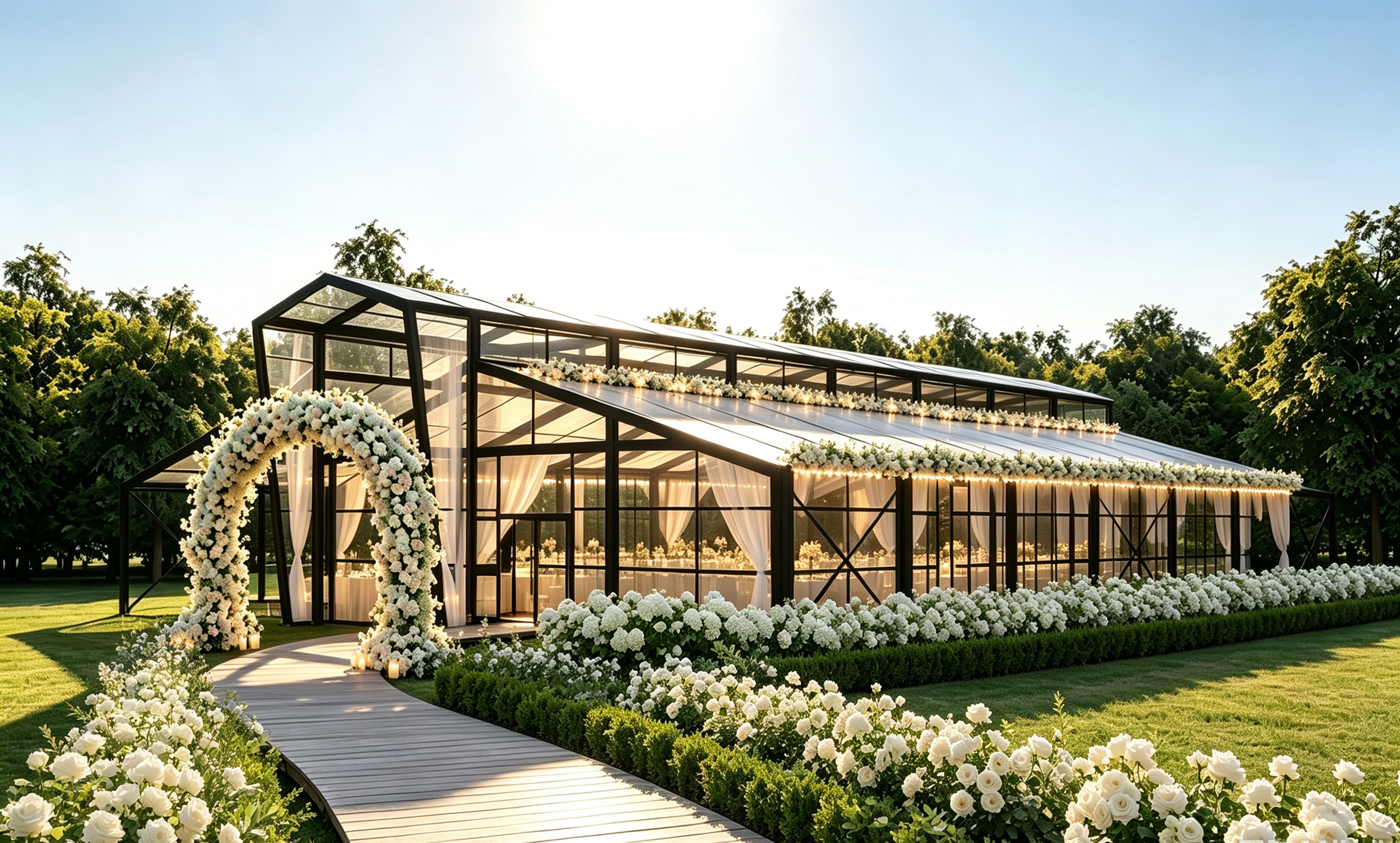
How modular aluminum frame structures are reshaping the temporary venue landscape for weddings, exhibitions, and commercial gatherings.
The Shift Toward High-End Temporary Structures
The global event management market, valued at USD 1,160.4 billion in 2024, is expanding at a compound annual growth rate of 6.7%. Within this ecosystem, the specialized commercial event tent segment alone is projected to exceed USD 3 billion by 2025. Organizers increasingly demand structures that combine visual appeal, rapid deployment, and structural integrity – requirements that traditional pole tents or heavy steel buildings cannot fully satisfy.
This gap has accelerated the adoption of aluminum frame atrium tents, which offer the aesthetics of permanent architecture with the flexibility of temporary systems. Among the manufacturers meeting this demand is KENTEN Structures, a company founded in 2001 that designs, manufactures, and delivers premium aluminum permanent and semi-permanent structures from facilities across China, the USA, and the Middle East.
What Defines an Atrium Tent?
An atrium tent is a modular, clear-span structure defined by its high peak, curved roofline, and transparent or semi-transparent fabric walls that create an open, light-filled interior. Unlike conventional marquees, atrium tents use a rigid aluminum frame to achieve large spans without internal support columns, making them suitable for layouts that require unobstructed floor space.
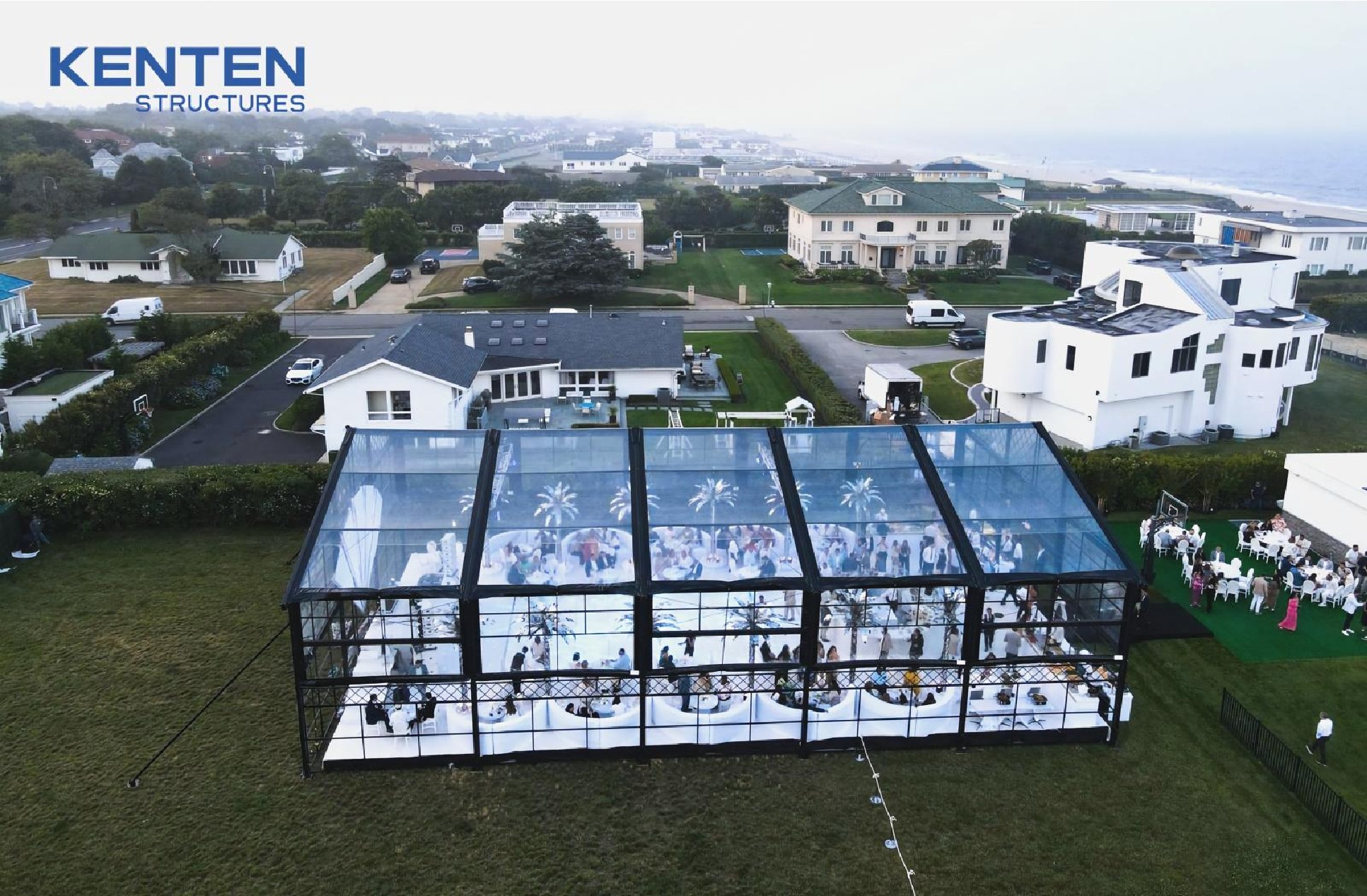
KENTEN’s Atrium Tent (model A1) is specifically engineered for the wedding and event industry. Its frame is constructed from aluminum alloy 6061/T6 – a high-strength aerospace-grade alloy. The roof and side covers are PVC-coated polyester textile with a weight of 750–900 g/m², flame retardant to international standards including DIN 4102 B1, M2, and CFM. Available in white, transparent, or customized colors, the fabric allows natural light diffusion while providing UV protection.
Technical Specifications and Engineering
The atrium tent’s performance is defined by its material and design parameters:
- Wind Resistance: 120 km/h, certified through structural analysis.
- Temperature Range: -30°C to +70°C, enabling use in diverse climates.
- Service Life: Over 15 years for the aluminum frame, with PVC fabric lasting 8–15 years depending on exposure.
- Fixing Solutions: Ground anchors, expansion bolts, or weight plates, adaptable to grass, earth, asphalt, cement, or marble surfaces.
- Optional Wall Systems: 750 g/m² PVC cover, glass walls, ABS walls, sandwich walls, solid/hard walls, or rock wool walls – enabling thermal insulation and acoustic control.
The structure uses a 4-channel hard-pressed extruded aluminum profile that simplifies assembly while maintaining rigidity. Connectors are secured with expansion bolts, and the entire system can be installed on-demand and reused multiple times, making it suitable for both temporary and long-term deployments.
Application Scenarios Across Industries
The atrium tent’s design makes it adaptable to several high-traffic environments:
Wedding & Hospitality
Used for wedding ceremonies, banquets, and VIP receptions, these tents operate under outdoor, all-weather conditions. They are often fitted with glass walls, chandeliers, HVAC, and curtains to create a luxury atmosphere. The clear-span design accommodates large guest tables, dance floors, and stage setups without obstruction.
Events & Exhibitions
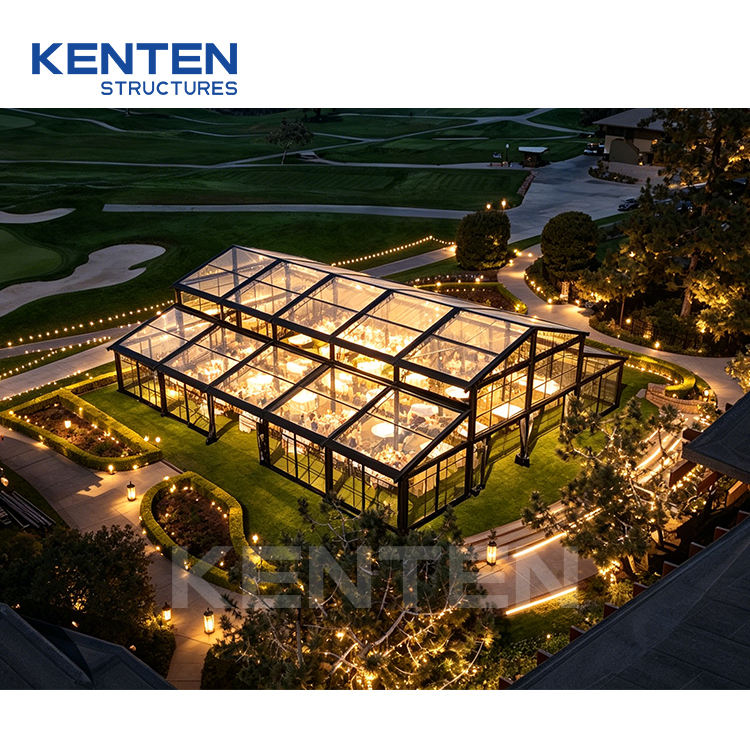
For trade shows, exhibition halls, and event pavilions, atrium tents provide a branded, high-visibility space. They integrate with glass walls, flooring, LED lighting, air conditioning, and entrance doors. The transparent roof option allows natural lighting, reducing energy costs during daytime events.
Automotive & Commercial Display
In automotive showrooms and vehicle workshops, the structure can be equipped with roller doors and vehicle access doors. It functions as a temporary showroom or service bay, capable of hosting product launches or maintenance operations under normal temperature conditions.
Market Trends Driving Adoption
Several industry forces are pushing event organizers toward aluminum atrium tents:
- Speed of Deployment: Traditional brick-and-mortar venues require months of construction. An atrium tent can be erected in days, with KENTEN’s typical production lead time between 30–45 days per unit.
- Reusability: Unlike single-use event structures, atrium tents are fully demountable and reusable, aligning with sustainability goals.
- Global Sourcing: China alone exported approximately USD 3.11 billion in tents and awnings in 2024 (53.3% of global exports), reflecting the scale of manufacturing capacity. KENTEN, with an annual production capacity of 1,000,000 m² and 80% export ratio to the USA and EU, is positioned within this supply chain.
- Compliance Standards: Atrium tents sold in regulated markets must meet EN 13782 for structural safety, NFPA 701 for flame retardancy, and EN 1090-3 for aluminum structures. KENTEN’s systems are designed to comply with these frameworks, as well as IBC 2024, CBC 2025, ASCE 7-22, and GB 50429.
Comparison with Traditional Solutions
Compared to permanent steel or concrete buildings, atrium tents offer lower upfront cost, faster installation, and full portability. They also outperform classic pole tents in terms of clear span, weather resistance, and aesthetic quality because the rigid aluminum frame eliminates interior poles and provides superior wind load handling.
One honest limitation: Even with sandwich panel walls, the insulation level of an atrium tent is generally lower than a permanent structure. For extreme climate operations, additional heating or cooling equipment may be required. However, the optional rock wool wall and hard wall options help mitigate this gap for most event applications.
Future Outlook for Aluminum Atrium Tents
As the event industry continues to prioritize flexibility and sustainability, the demand for modular aluminum structures is expected to rise. Innovations in fabric technology (higher translucency, better thermal control) and integrated smart systems (LED walls, automated climate control) will further cement atrium tents as a mainstream venue solution. Manufacturers like KENTEN, with a 10-engineer R&D team and multi-continent production footprint, are well placed to deliver customized designs at scale.
Frequently Asked Questions
What is an atrium tent made of?
The frame is high-strength aluminum alloy 6061/T6, and the cover is PVC-coated polyester textile (750–900 g/m²) with flame retardant properties. Optional walls include glass, ABS, sandwich panels, and rock wool.
How long does an atrium tent last?
The aluminum frame has a design lifespan of over 15–20 years, while the PVC fabric typically lasts 8–15 years depending on environmental conditions and maintenance.
What wind and snow loads can it withstand?
The Atrium Tent model A1 is certified for wind resistance up to 120 km/h. For higher loads, the broader Structure Tent (models K1–K10) can withstand up to 140 km/h and snow loads up to 0.5 kN/m².
Can the tent be installed on any ground surface?
Yes. Fixing solutions include ground anchors, expansion bolts, and weight plates, suitable for grass, earth, asphalt, cement, and marble surfaces.
What certifications does the tent comply with?
KENTEN’s structures are produced under ISO 9001, ISO 14001, and ISO 45001. The aluminum systems meet IBC 2024, CBC 2025, ASCE 7-22, GB 50429, and EN 13782. Fabric flame retardancy meets DIN 4102 B1, M2, and NFPA 701.
What is the typical lead time for an atrium tent?
Standard production lead time is 30–45 days. The manufacturer offers 24/7 remote technical support, spare parts supply, and on-site installation guidance.
Does the tent require special maintenance?
Routine cleaning of the PVC fabric and inspection of aluminum frame connections are recommended. The fabric is UV-treated and fire-retardant, but prolonged exposure to harsh chemicals should be avoided.
Learn More About KENTEN Atrium Tents
KENTEN Structures has delivered premium aluminum frame solutions globally since 2001. For detailed specifications, layout options, and pricing, contact the team:
- Email: kenten@kentenstructures.com
- Phone: +189 9858 2207
- WhatsApp: +86 173 2224 3105
- Website: www.kentenstructures.com
Есть вопросы или нужны дополнительные детали?
Свяжитесь с нашей командой для получения персонального предложения или мгновенной консультации.
Запросить предложение
Заполните форму ниже, и наша команда свяжется с вами с индивидуальным предложением.
Прямой чат WhatsApp
Предпочитаете общаться в реальном времени? Напишите нам в WhatsApp для мгновенной помощи и быстрых ответов.
- Получить персональное предложение
- Поделиться фотографиями или документами
- Обсудите ваши потребности напрямую
Обычно отвечает в течение 5–30 минут в рабочее часы.