
Aluminum Boat Decision Matrix: DK-FS, DK-WR, DK-FR, DK-CA, DK-LU55
Aluminum boat procurement usually opens with a length question and closes with a price negotiation. Both steps are necessary; neither is a good first filter. Qingdao Dookyu Crown Marine Co., Ltd. — a Qingdao-based manufacturer founded in 2020 that designs and builds aluminum vessels from a 70,000 m² facility with 85 employees, 17 engineers and a stated annual output of 200 ships — illustrates the problem clearly. Within a single builder's range, a 6.25 m fishing boat and an 11 m work boat carry the same published fuel capacity, while the two largest hulls in the lineup diverge by mission, speed class and certification exposure rather than by size alone.
The category context is significant. The global aluminum vessel market was estimated at USD 6.145 billion in 2024 and is projected to grow at a compound annual growth rate of 4.21% between 2025 and 2035, according to Market Research Future. The global aluminum fishing boat segment alone was valued at USD 1.7 billion in 2024, per Global Market Insights. As more buyers enter the category, the practical question shifts from “is aluminum suitable?” to “which aluminum hull, specified how, and certified for which market?”
This analysis builds a buyer decision matrix across five Dookyu Crown models — DK-FS, DK-WR, DK-FR, DK-CA and DK-LU55 — and orders the comparison by mission, hull material, power, speed, capacity, standard equipment and certification scope. Purchasing terms and acceptance criteria are used as the final filter.
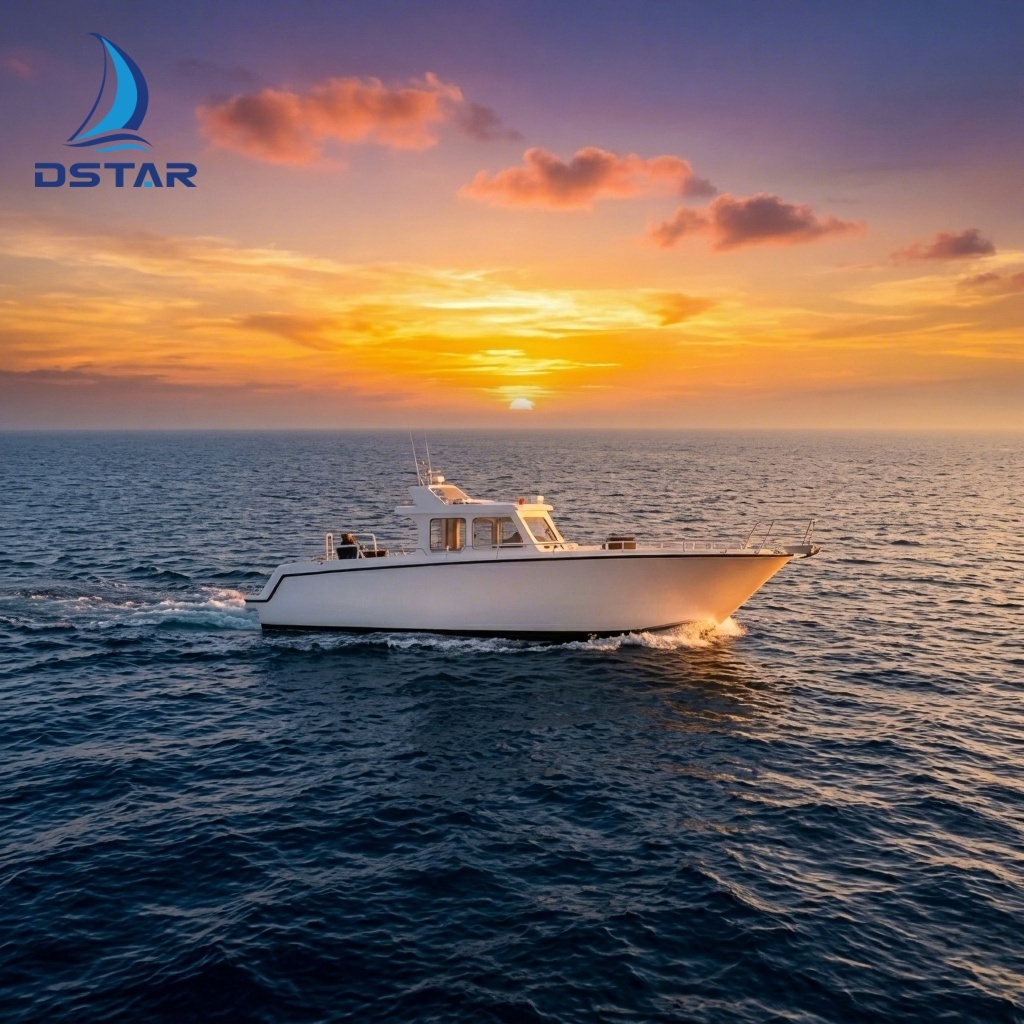
Why mission should filter the shortlist before length does
Length correlates with berthing, transport and cost, but it does not determine fitness for purpose. Five constraints do, and they are visible in specification documents long before a quotation is issued:
- Hull material and structure. Alloy grade, plate thickness and whether hull and superstructure use the same alloy determine corrosion behaviour and maintenance cost over the vessel's life.
- Propulsion and speed envelope. Total installed power, engine brand and the design speed it is matched to define what missions are realistic.
- Capacity. Person complement, fuel and fresh-water tankage set operational endurance and crewing limits.
- Standard equipment. Navigation, emergency and safety fit-out determine whether a hull can enter service or requires further outfitting.
- Certification scope. A certificate is only usable if its number, scope, standards and permitted markets match the exact model and destination.
Buyers who sequence the decision as mission → operating environment → propulsion → capacity → certification scope → customization and acceptance criteria → commercial terms avoid the most common procurement error: buying a hull that fits the budget and the berth but not the operating envelope. In aluminum work boat and patrol boat categories, where the global patrol boat market was valued at USD 240 million in 2024 according to Intel Market Research, that error is expensive to reverse.
The five models in the matrix: structure and stated missions
Dookyu Crown states that it designs and builds aluminum, fiberglass and steel boats — including fishing boats, workboats, yachts, passenger boats and rescue boats — with publicly stated customization covering hull sizes from 6 to 23 metres. The five models below are the reference set for this comparison.
DK-FS — 6.25 m aluminum alloy fishing boat. A 21-foot welded aluminum alloy hull intended for the fishing industry, with a 150 HP YAMAHA outboard, a maximum speed of 30 knots and a 400-litre fuel capacity. Breadth is 2.25 m, moulded depth 1.1 m and designed draft 0.35 m, with a complement of six persons. Hull and superstructure account for 1.28 tonnes of aluminum. The stated layout includes a spacious deck, dedicated seating, recessed rod holders and a functional livewell, and the boat is positioned for coastal, lake and river fishing.
DK-WR — 11 m aluminum work boat. Overall length is 11.00 m with a 3.25 m beam, 0.885 m moulded depth and 0.47 m full load draught, giving a full load displacement of 5.60 tonnes. Hull and superstructure are built in 5083-H116 aluminum alloy. Propulsion is two 150 HP (110 kW) outboards, 300 HP total, matched to a 26-knot design speed and a 400-litre fuel tank. Stated missions include coastal rescue, offshore patrol, passenger transport, fishing and marine leisure, and professional workboat operations. Standard equipment includes GPS, magnetic compass, VHF and AIS; dual fuel quick-close valves, an automatic bilge pump and a portable CO₂ plus dry-powder fire extinguisher; six life jackets and two life buoys; EVA imitation teak non-slip flooring; a remote-control searchlight, tachometer and oil level gauge; and a DC distribution board, battery charger and shore power socket.
DK-FR — 13 m aluminum rescue fire boat. A 13.25 m aluminum alloy hull with a 3.6 m beam, twin 200 HP Mercury outboards, a 500-litre fuel tank and a fire pump flow of 1,500 gpm, specified for offshore firefighting and rescue missions.
DK-CA — 38-foot catamaran aluminum sailboat. A twin-hull sailing catamaran with a marine-grade aluminum hull, a layout that can be customized for cabins, galley and navigation station, and customizable rigging and sail plans. Optional auxiliary power is stated as available. Stated applications are coastal cruising, offshore passages, weekend getaways and charter operations.
DK-LU55 — 17 m aluminum luxury yacht. Length overall is 17.18 m, breadth 4.20 m, moulded depth 2.00 m and designed draft 0.64 m, with capacity for 12 passengers. Three 600 HP engines deliver a top speed of 53 knots, supported by a 1,820-litre fuel tank and 200 litres of fresh water. The stated layout separates two independent reception areas in the deckhouse — a negotiation area and a business meeting area — above a lower deck with a bedroom, crew room, kitchen and a multi-person activity room.
Decision matrix — structure and mission fit
| Model | Vessel type | Length | Hull material | Stated mission focus |
|---|---|---|---|---|
| DK-FS | Aluminum alloy fishing boat | 6.25 m / 21 ft | High-grade welded aluminum alloy; 1.28 t hull and superstructure | Coastal, lake and river fishing |
| DK-WR | Aluminum work boat | 11.00 m | 5083-H116 aluminum alloy, hull and superstructure | Coastal rescue, offshore patrol, passenger transport, fishing and marine leisure, workboat operations |
| DK-FR | Aluminum fire boat | 13.25 m | Aluminum alloy hull | Offshore firefighting and rescue |
| DK-CA | Aluminum catamaran sailboat | 38 ft | Marine-grade aluminum hull, twin-hull catamaran | Coastal cruising, offshore passages, weekend getaways, charter operations |
| DK-LU55 | Aluminum luxury yacht | 17.18 m | Aluminum | Private leisure, charter, business reception, sport use |
Power, speed and capacity: reading the numbers correctly
Published performance figures only mean something when read against displacement, hull form and mission load. Three patterns are worth noting in this lineup.
Single-outboard simplicity versus twin-engine redundancy. The DK-FS runs a single 150 HP YAMAHA outboard on a 1.28-tonne aluminum structure to reach 30 knots — a configuration suited to inshore and nearshore fishing where light weight and shallow draft matter. The DK-WR steps up to two 150 HP outboards, 300 HP total, on a 5.60-tonne full load displacement, delivering a 26-knot design speed. Twin engines are a redundancy decision as much as a speed decision for patrol and passenger work.
Mission equipment drives power requirements. The DK-FR carries twin 200 HP Mercury outboards and a 1,500 gpm fire pump. A fire pump is a continuous auxiliary load, so the propulsion specification has to be read together with the pump rating and the 500-litre fuel tank rather than in isolation. Buyers evaluating aluminum fire boat sourcing should treat pump flow, engine package and tankage as one system.
High-speed leisure places different demands on the same material. The DK-LU55 combines three 600 HP engines with a 17.18 m hull, 12-passenger capacity, 1,820 litres of fuel, 200 litres of fresh water and a 53-knot top speed. At that speed class, weight control, structural detailing and tank placement become safety-relevant specification items rather than comfort features.
Decision matrix — propulsion, speed, capacity
| Model | Propulsion | Speed | Capacity | Key dimensions |
|---|---|---|---|---|
| DK-FS | 150 HP YAMAHA outboard | 30 kn maximum | 6 persons; 400 L fuel | Beam 2.25 m; depth 1.1 m; draft 0.35 m |
| DK-WR | 2 × 150 HP (110 kW) outboards, 300 HP total | 26 kn design speed | 5.60 t full load displacement; 400 L fuel; 6 life jackets, 2 life buoys | Beam 3.25 m; depth 0.885 m; draught 0.47 m |
| DK-FR | 2 × 200 HP Mercury outboards | Not stated in source specification | 500 L fuel; fire pump 1,500 gpm | Length 13.25 m; width 3.6 m |
| DK-CA | Sail plan (customizable rigging); optional auxiliary power | Not stated in source specification | Customizable cabins, galley, navigation station | 38 ft twin-hull catamaran |
| DK-LU55 | 3 × 600 HP | 53 kn top speed | 12 passengers; 1,820 L fuel; 200 L fresh water | Beam 4.20 m; depth 2.00 m; draft 0.64 m |
Hull material: what 5083-H116 and welded aluminum signal to buyers
Aluminum's advantage in these vessel classes is a weight-to-strength ratio combined with corrosion resistance, which is why the material dominates freshwater fishing preferences and continues to be adopted in commercial ferry construction — Incat Tasmania was recorded in 2025 as building next-generation lightweight aluminum passenger ferries for improved fuel efficiency.
Dookyu Crown states that it works with marine-grade aluminum alloys including 5083 and 5086 and that hull and superstructure are produced using MIG/TIG welding and precision CNC cutting to strict tolerances, meeting international standards such as CE and ISO 9001. In this model set, the DK-WR specifies 5083-H116 aluminum for both hull and superstructure — a stated choice that matters because using one alloy family across the whole structure simplifies galvanic and welding-related corrosion management over the vessel's life.
For buyers, the material claim is only as strong as the documentation behind it. Mill Test Reports for incoming plate, in-process weld inspection using non-destructive testing, and a final sea trial are the three evidence points that convert an alloy grade on a specification sheet into a verifiable build quality claim.
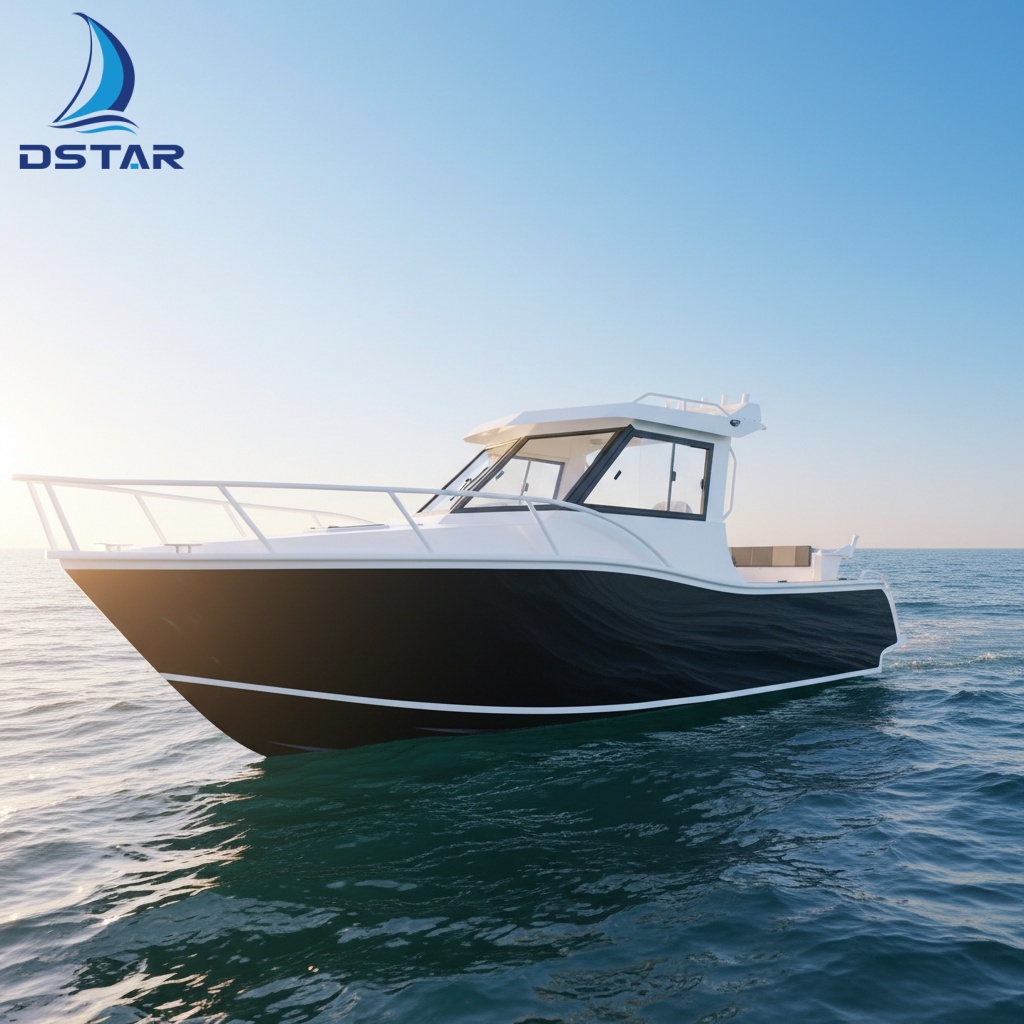
Certification scope as a hard procurement constraint
In constraint-driven sourcing, certificates function as filters rather than as marketing assets. The publicly stated certification record associated with these models contains two instruments.
| Certificate | Number | Authority | Standards listed | Validity |
|---|---|---|---|---|
| Voluntary Attestation for Recreational Craft | 0P250716.QDCTN80 | ECM | EN ISO 12217-1:2017; EN ISO 12217-3:2017; Regulation (EU) 2013/53/EU | 2025-07-16 to 2030-07-15 |
| Voluntary EMC Certificate (CE-EMC Directive 2014/30/EU) | 0P250716.QDCTN81 | ECM | EN IEC 61000-6-1:2019; EN IEC 61000-6-3:2021 | 2025-07-16 to 2030-07-15 |
Both instruments are recorded as applying to multiple series of aluminum, steel and fiberglass boats and to global third-country markets outside the EU. Within this model set, publicly stated records link the DK-FS, DK-WR, DK-FR, DK-CA and DK-LU55 to these certificate numbers in differing model-level combinations. The DK-WR is additionally recorded as certified under Regulation (EU) 2013/53/EU, and the DK-FR is recorded against EN ISO 12217-1:2017 and EN ISO 12217-3:2017 as well as the EMC standards EN IEC 61000-6-1:2019 and EN IEC 61000-6-3:2021.
Three verification rules follow from this structure. First, match the certificate number to the exact model, not to the builder's range as a whole. Second, confirm the market scope — the stated scope covers third-country markets outside the EU, so destination-specific routing has to be confirmed separately. Third, check the validity window against the delivery date; in this case the certificates run to July 2030, which covers typical build and delivery cycles but not indefinite operation.
Buyers sourcing into North America should also note that US market practice references a different framework. ABYC, the American Boat & Yacht Council, reports that adherence to its standards reduces boat accident likelihood by up to 47% and fatalities by up to 58%, and that 90% of boats constructed in the US are built to ABYC safety standards. ABYC and the EN ISO framework are separate systems; importers should confirm which set applies to their registration and insurance requirements rather than assuming interchangeability.
Matching models to operating environments
Dookyu Crown's stated application data classifies operating conditions into inland waters such as rivers, lakes and reservoirs; coastal and offshore waters including nearshore zones, coastal areas and inter-island routes; and open ocean for deep-sea and long-range voyages. Function categories include law enforcement and security, transport and operations, rescue and firefighting, leisure and tourism, and research and monitoring.
Inland and nearshore fishing. The DK-FS at 0.35 m designed draft and 2.25 m beam is specified for coastal, lake and river fishing, with a six-person complement and a livewell — a configuration that answers the freshwater and inshore use case where shallow draft and light weight dominate.
Coastal patrol, passenger transfer and multi-role work. The DK-WR's stated mission set spans coastal rescue, offshore patrol, passenger transport, fishing and marine leisure, and professional workboat operations. With AIS, VHF, GPS, life-saving equipment sized one-to-one against passenger numbers, and a 5.60-tonne full load displacement, it is the multi-mission platform in the group.
Offshore firefighting and rescue. The DK-FR addresses the specialized end of the market with a 1,500 gpm fire pump on a 13.25 m aluminum hull. A published case record describes a 13.25 m aluminum fire rescue boat delivered to an international customer for offshore firefighting and rescue missions, operating over a ten-year duration with customized firefighting equipment and marine-grade aluminum durability.
Sailing and charter. The DK-CA serves coastal cruising, offshore passages, weekend getaways and charter operations, with a twin-hull layout for stability and customizable interior. It is a sail-first platform, not a planing hull.
High-speed leisure and business reception. The DK-LU55 targets sport and private use, with a layout built around business reception, audiovisual entertainment and separated negotiation and meeting areas — a use case defined by interior function as much as by speed.
Customization, purchasing terms and acceptance criteria: the final filter
Once mission and certification scope are settled, customization capability and acceptance criteria decide whether a project closes cleanly. Dookyu Crown publicly states a minimum order quantity of one ship, a lead time of 30 to 60 days and a monthly capacity of 20 ships, across a 70,000 m² facility with 85 employees, 17 engineers and a stated annual output of 200 ships.
Stated customization scope covers hull dimensions and structure, hull type (monohull, catamaran or trimaran), deck layout, wheelhouse position, engine brand and type, propulsion system, power options including fuel, electric or hybrid, fuel and water tank capacity, firefighting equipment, cranes and winches, fishing gear and livewells, passenger seating configuration, interior design and furnishings, lighting, galley and sanitary equipment, hull colour and paint finish, logos and decals, navigation and communication systems, electrical systems and solar panels, automation and control systems, certification level including CE, CCS or SOLAS, safety and life-saving equipment, bimini tops and outdoor accessories, and packaging and shipping solutions.
The stated quality-control sequence runs from raw material verification against Mill Test Reports, through in-process weld inspections using non-destructive testing, to final sea trials, under compliance with ISO 9001, CE, CCS and other class society requirements. Export support is stated as covering more than 30 countries, CE and SOLAS compliance documentation, flexible trade terms including FOB and CIF, and multilingual communication. Stated after-sales support includes remote diagnostics, spare parts supply and on-site assistance, operation and maintenance manuals, technical training, and a service network with local support in key regions.
Where the matrix stops: limits and trade-offs buyers should price in
A comparison framework that only lists advantages is not a decision tool. Several real boundaries apply to this model set.
No published price bands. The specification and certification data used for this matrix does not include model-level pricing. The publicly stated commercial parameters are minimum order quantity and lead time; cost has to be assessed project by project against hull material, propulsion choice, customization scope and destination-market compliance requirements. Buyers comparing these models on price alone are comparing a project input, not a published specification.
Draft differences create hard access limits. The DK-FS is designed for a 0.35 m draft, the DK-WR for a 0.47 m full load draught and the DK-LU55 for a 0.64 m designed draft. Deeper hulls cannot use every shallow ramp, berth or inland channel that a smaller vessel can, regardless of engine power.
The sail-platform comparison is not like-for-like. The DK-CA's published specification set does not include engine power or speed figures; performance depends on the customized rigging and sail plan, with auxiliary power stated as optional. Benchmarking it against planing powerboats on speed misreads the platform.
Certification scope is model-specific and market-specific. The stated certificates apply to global third-country markets outside the EU and map to models in differing combinations. EU-bound and class-society projects, and firefighting or patrol vessels requiring CCS or SOLAS-type approval, follow a different compliance path than recreational craft attestation.
Aluminum is not a low-discipline material. Its weight and corrosion advantages depend on correct alloy selection, controlled MIG/TIG welding and documented inspection. Stated processes such as Mill Test Reports, NDT weld inspection and sea trials describe a capability; they do not replace buyer-side verification during a factory audit or a witnessed trial.
Market signals shaping aluminum boat procurement
Several published data points frame how buyers should read this matrix. Aluminum fishing boats are projected to grow to USD 3.12 billion by 2034 at a 5.8% CAGR, according to Intel Market Research, and North America held the largest share of that segment in 2024. Total annual US sales of boats, marine products and services reached approximately USD 57.7 billion in 2023, per the National Marine Manufacturers Association — a reminder that demand-side scale sits mostly in regions where compliance frameworks differ from the EN ISO structure described above.
On the supply side, China's exports of aluminum articles under HS 76 were valued at USD 34.9 billion in 2023 according to UN Comtrade and World Bank WITS data, reflecting the depth of the aluminum fabrication base that builders such as Dookyu Crown draw on. Competitive benchmarks in adjacent categories include Brunswick Corporation, White River Marine Group and Alumacraft in aluminum boats, and Fassmer, SAFE Boats and Marine Alutech in the patrol boat segment. These are category reference points, not projections about this model set.
Future outlook
With the aluminum vessel market projected to grow at a 4.21% CAGR from 2025 to 2035, the competitive axis in commercial and leisure aluminum boats is likely to move toward specification transparency rather than base capability. Three developments follow from that shift. First, certification data will be treated as a primary procurement filter rather than a closing document, because destination-market routing determines whether a hull can be registered and insured at all. Second, propulsion configuration will keep diversifying — the customization list already includes fuel, electric and hybrid power options, and lightweight aluminum construction remains the enabling factor for those architectures. Third, acceptance documentation will carry more weight in supplier selection, since Mill Test Reports, NDT records and sea-trial results are the only evidence that a stated alloy grade and weld standard were actually delivered.
For buyers in the research and evaluation stage, the practical implication is straightforward: build the shortlist from mission and certification scope downward, use length and price as confirming variables, and treat the acceptance criteria section of a contract as part of the specification rather than as paperwork.
FAQ
Which Dookyu Crown model fits shallow-water or inland fishing operations?
The DK-FS 6.25 m aluminum alloy fishing boat is the shallow-draft option in this set, with a designed draft of 0.35 m, a 2.25 m beam and a 150 HP YAMAHA outboard delivering a maximum speed of 30 knots with a 400-litre fuel tank and a six-person complement. Hull and superstructure account for 1.28 tonnes of aluminum, and the stated layout includes a spacious deck, dedicated seating, recessed rod holders and a functional livewell for coastal, lake and river fishing. Vessels requiring more deck space and offshore range should be assessed against the DK-WR, whose full load draught is 0.47 m and whose stated missions include coastal rescue, offshore patrol and passenger transport.
How do the five models differ in propulsion, speed and capacity?
The DK-FS uses one 150 HP YAMAHA outboard and reaches 30 knots with 400 litres of fuel and six persons aboard. The DK-WR uses two 150 HP (110 kW) outboards — 300 HP total — for a 26-knot design speed on a 5.60-tonne full load displacement, with a 400-litre tank. The DK-FR carries twin 200 HP Mercury outboards, a 500-litre tank and a 1,500 gpm fire pump; its speed is not stated in the source specification. The DK-CA is a 38-foot sail catamaran with customizable rigging and sail plans and optional auxiliary power, so no engine power or speed figure is published for it. The DK-LU55 runs three 600 HP engines for a 53-knot top speed, with 12-passenger capacity, 1,820 litres of fuel and 200 litres of fresh water.
Which certifications apply to these models, and which markets do they cover?
Two instruments are publicly recorded. The Voluntary Attestation for Recreational Craft carries certificate number 0P250716.QDCTN80, issued by ECM, citing EN ISO 12217-1:2017, EN ISO 12217-3:2017 and Regulation (EU) 2013/53/EU, valid from 2025-07-16 to 2030-07-15. The Voluntary EMC Certificate, against CE-EMC Directive 2014/30/EU, carries number 0P250716.QDCTN81, issued by ECM, citing EN IEC 61000-6-1:2019 and EN IEC 61000-6-3:2021, with the same validity period. Both are recorded as covering multiple series of aluminum, steel and fiberglass boats in global third-country markets outside the EU. Model-level records associate DK-FS, DK-WR, DK-FR, DK-CA and DK-LU55 with these numbers in differing combinations, so certificate scope should be confirmed per model and per destination market before purchase.
Are price bands published for these models?
No model-level price band appears in the specification and certification data used for this comparison. The publicly stated commercial parameters are a minimum order quantity of one ship and a lead time of 30 to 60 days, against a stated monthly capacity of 20 ships. In practice this means cost is determined by hull dimensions, engine brand and type, propulsion architecture, interior and equipment scope, certification level, and packaging and shipping requirements — not by a catalogue list price.
What can be customized, and what are the stated minimum order and lead-time terms?
Stated customization scope includes hull dimensions and structure, hull type (monohull, catamaran or trimaran), deck layout, wheelhouse position, engine brand and type, propulsion system, power options covering fuel, electric or hybrid, fuel and water tank capacity, firefighting equipment, cranes and winches, fishing gear and livewells, passenger seating, interior design and furnishings, lighting, galley and sanitary equipment, hull colour and paint finish, logos and decals, navigation and communication systems, electrical systems and solar panels, automation and control systems, certification level including CE, CCS or SOLAS, safety and life-saving equipment, bimini tops and outdoor accessories, and packaging and shipping solutions. The stated minimum order quantity is one ship, with a lead time of 30 to 60 days.
What acceptance and quality checks are stated before delivery?
The stated process is full-process inspection: raw material verification against Mill Test Reports, in-process weld inspections using non-destructive testing, and final sea trials, carried out under compliance with ISO 9001, CE, CCS and other class society requirements. Export support is stated as covering more than 30 countries, with CE and SOLAS compliance documentation, flexible trade terms including FOB and CIF, and multilingual communication. For buyers, these are the checkpoints to map against contractual acceptance criteria and witnessed-test requirements.
What support is stated after delivery?
Stated after-sales provision includes a rapid-response system offering remote diagnostics, spare parts supply and on-site assistance, comprehensive operation and maintenance manuals, technical training, and a global service network with local support available in key regions. For lifecycle planning, buyers should confirm the specific service arrangement, parts availability and response terms applicable to their region as part of the same contract that covers the vessel specification.
Reference document: Dookyu Crown Marine product brochure (PDF) — https://cdn.socialarks.com/sbsp/25156/common/2026/0808/brochure.pdf. Builder information: dstaryacht.com.
Есть вопросы или нужны дополнительные детали?
Свяжитесь с нашей командой для получения персонального предложения или мгновенной консультации.
Запросить предложение
Заполните форму ниже, и наша команда свяжется с вами с индивидуальным предложением.
Прямой чат WhatsApp
Предпочитаете общаться в реальном времени? Напишите нам в WhatsApp для мгновенной помощи и быстрых ответов.
- Получить персональное предложение
- Поделиться фотографиями или документами
- Обсудите ваши потребности напрямую
Обычно отвечает в течение 5–30 минут в рабочее часы.