
Aluminum Boat Procurement FAQ: Alloy, Engines, Safety Gear, and Custom Specs
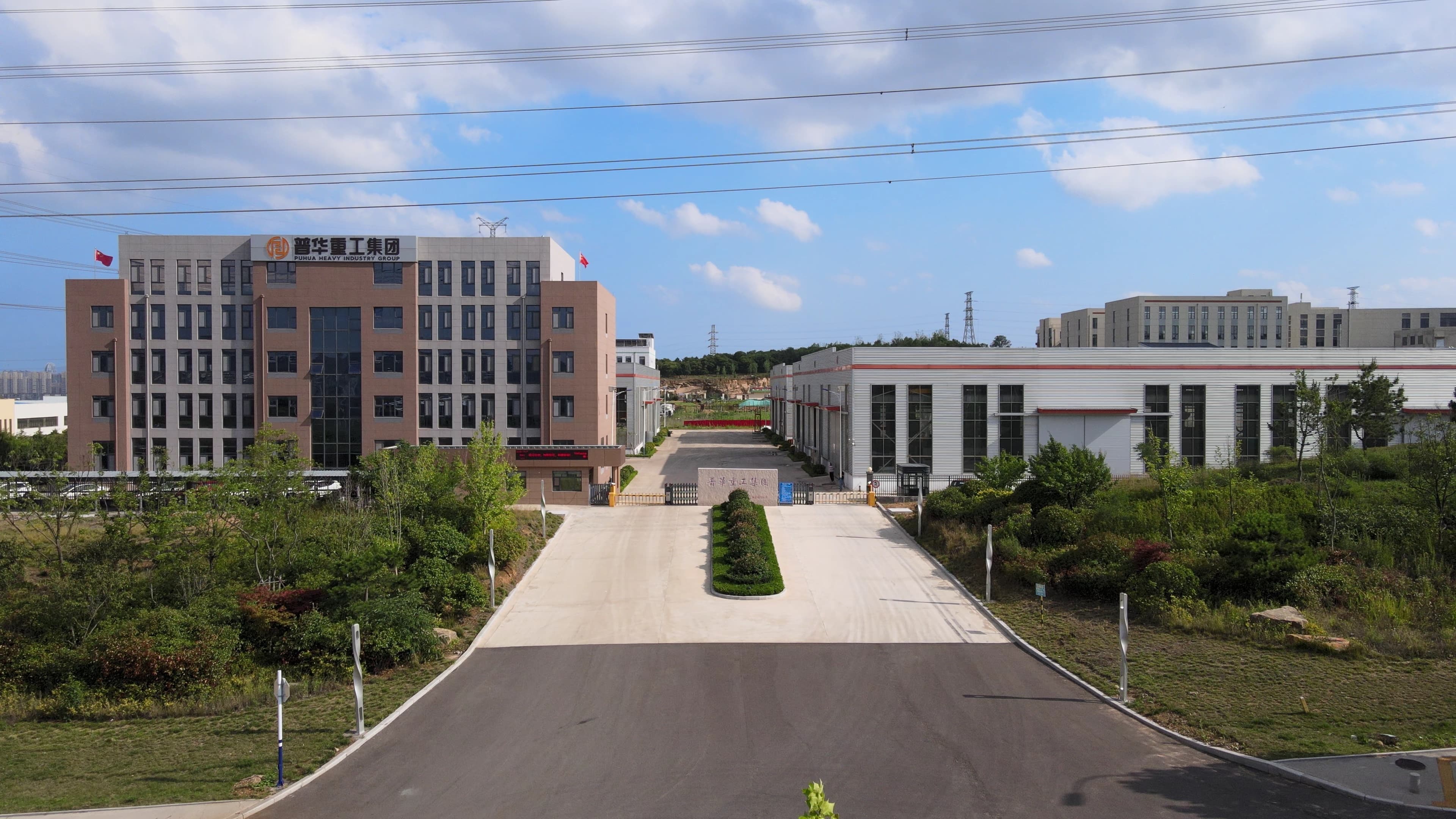
Hull and superstructure fabrication in a marine-grade aluminum yard. Image: Dookyu Crown Marine.
Aluminum boat buyers rarely open with a price request. They open with four questions that decide whether any price is comparable at all: which alloy the hull and superstructure are built from, how much propulsion the mission actually needs, which equipment is included as standard, and how far the design can be changed before the quotation is locked. Answer those questions out of order and the result is a vessel that does not match the route, change orders that were never budgeted, and disputes over what the word standard was supposed to mean.
This article is written as a procurement FAQ, following the sequence buyers usually use: material first, then power, then standard equipment, then customization and export terms. The platform data behind each answer comes from Qingdao Dookyu Crown Marine Co., Ltd. (Dookyu Crown), a marine manufacturer based in Qingdao, Shandong Province, China, which designs and builds aluminum, fiberglass and steel vessels including fishing boats, workboats, yachts, passenger boats and rescue boats.
Why the Pre-Quote Stage Decides the Whole Project
The most expensive mistake in aluminum boat procurement is not choosing the wrong engine. It is issuing a request for quotation before the operating profile is defined. A quote produced against a vague brief is not a price; it is an assumption set that will be renegotiated later.
Four inputs should be fixed before a builder is asked to price anything. The mission profile defines payload, target speed, range and the water the vessel will actually operate in. The material standard defines which alloy and which fabrication method the buyer is paying for. The equipment list defines what counts as standard and what will appear later as an option. The customization envelope defines which changes are engineering work and which are finish work.
There is also a commercial opportunity that buyers frequently under-price. On an aluminum platform, the purchase price is only the first cost. The operating economics of the hull material, its maintenance pattern, and the power required to reach the required speed continue to affect the budget for the entire service life of the vessel. Treating the hull as a long-term cost decision rather than a one-time purchase is what separates a good procurement outcome from a merely acceptable one.
Hull Material: Why 5083-H116 Aluminum Is Used for Hull and Superstructure
Dookyu Crown builds aluminum hulls and superstructures in 5083-H116 marine-grade aluminum alloy. The choice of alloy family and the choice of temper are two separate decisions, and both matter.
5083 is an aluminum-magnesium alloy developed for marine service, where the dominant threats are saltwater corrosion and the fatigue that comes with repeated loading in a seaway. The H116 temper is a strain-hardened and stabilized condition. The practical reason it is specified for a welded hull is that a boat is not a single sheet of metal; it is a structure joined by thousands of meters of weld. In a welded structure, the heat-affected zone next to each weld is where a material can lose strength or become vulnerable to corrosion. H116 is selected because it holds its properties after welding and resists the forms of corrosion that marine aluminum is exposed to in service.
Fabrication method is part of the same answer. Dookyu Crown uses MIG and TIG welding together with precision CNC cutting for hulls and superstructures, which allows plate and profile geometry to be held within tight tolerances. The reason this belongs in a procurement FAQ is that alloy grade without fabrication discipline does not deliver the properties the buyer is paying for.
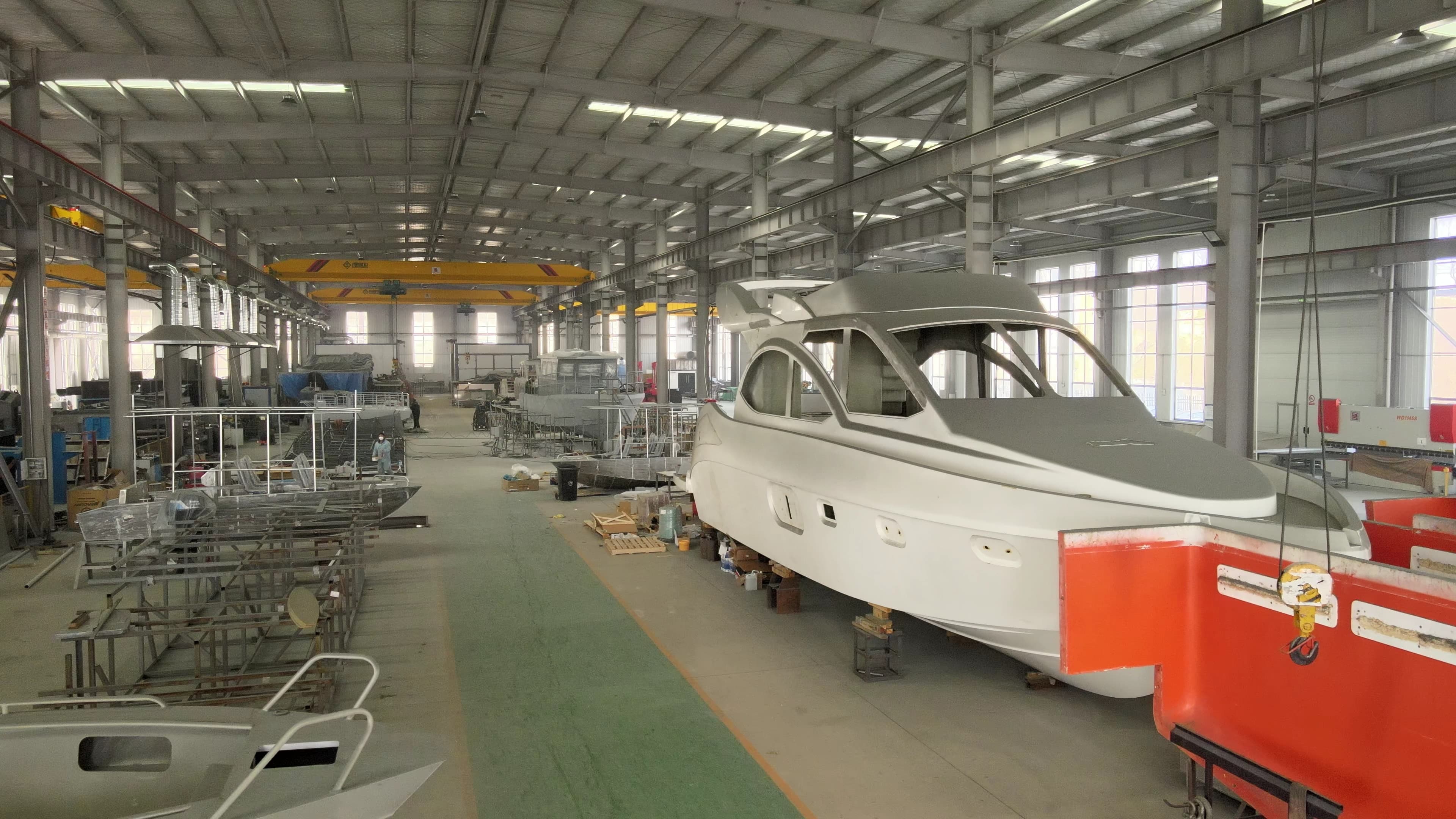
CNC cutting and welded aluminum structure: the fabrication step where alloy selection becomes real. Image: Dookyu Crown Marine.
What the material choice does for the buyer
Weight is the first consequence. A marine-grade aluminum hull is in the range of 30 to 45 percent lighter than a steel hull of equal strength. That difference propagates through the whole vessel: less structure weight means less displacement to push, which means either more speed for the same installed power or the same speed for less fuel. Documented material comparisons place aluminum ahead of steel specifically on weight, fuel efficiency and corrosion resistance, and identify passenger ferries, fast workboats and routes requiring high fuel efficiency as the configurations where that advantage pays back most directly.
Repair behavior is the second consequence. Aluminum can be repaired in the field more easily than a cracked composite structure, and it does not require the polishing and waxing cycle that fiberglass demands to remain presentable.
What the material choice does not remove
Aluminum is not a material that forgives shortcuts. It requires qualified welding procedures and welders, correct filler selection, isolation between dissimilar metals to prevent galvanic issues, and a proper coating and insulation plan so that accommodation spaces are comfortable rather than noisy or cold. Buyers comparing quotations should check whether these items are inside the quoted scope. Initial material cost is also higher than fiberglass, and slightly above a simple steel specification in equivalent plate. The sections below return to this trade-off with documented figures.
Propulsion: How Power Scales Across the Range
Horsepower figures are often quoted without the displacement and speed they were selected to deliver, which makes them meaningless for comparison. The documented configurations across the Dookyu Crown range show how power actually scales with size and mission.
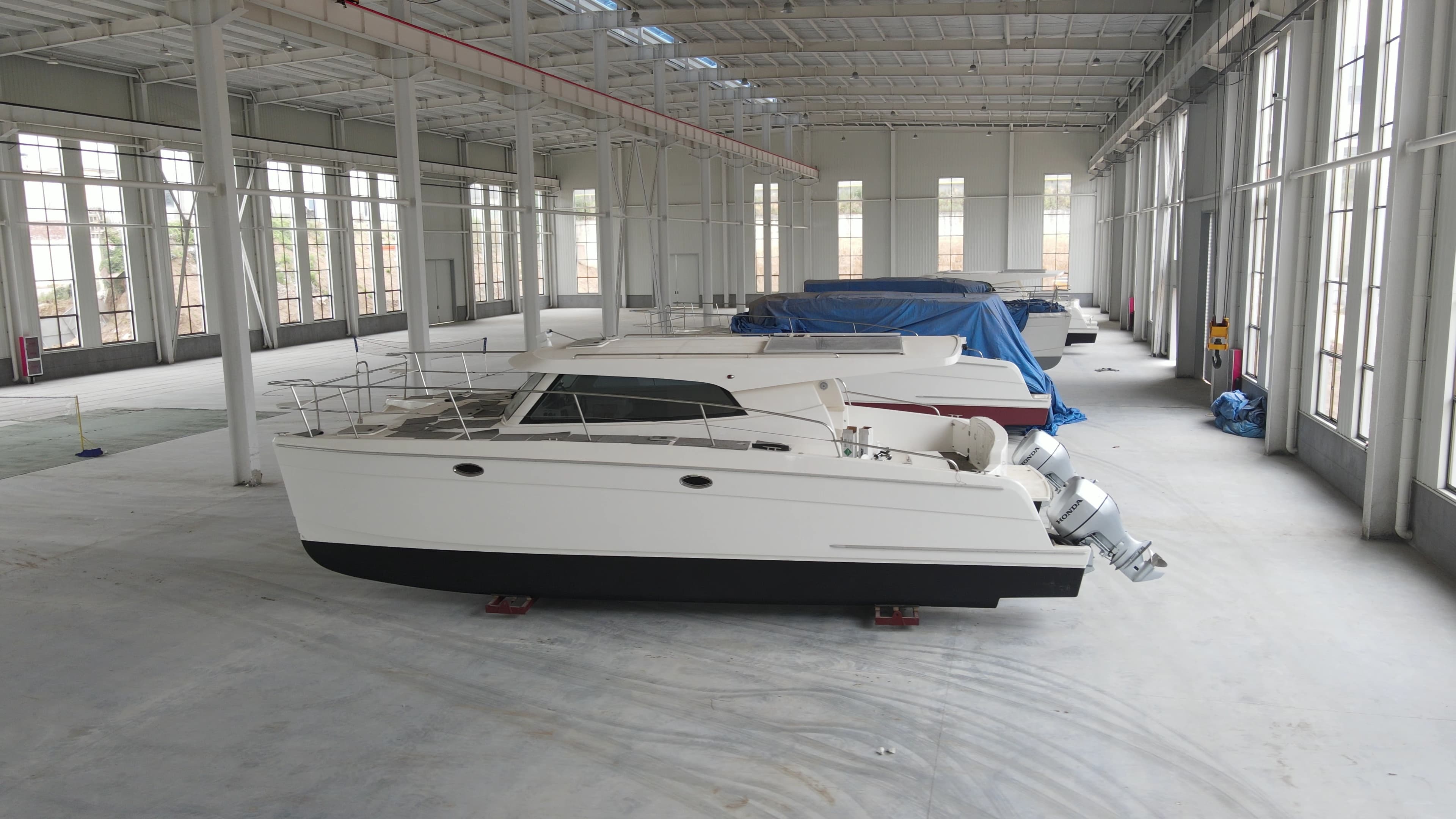
Outboard power arranged for redundancy and mission payload rather than headline speed. Image: Dookyu Crown Marine.
| Platform | Length overall | Documented propulsion | Total rated power | Documented speed | Other documented data |
|---|---|---|---|---|---|
| DK-FS Aluminum Alloy Fishing Boat | 6.25 m / 21 ft | 1 x 150HP outboard | 150HP | 30 kn maximum | Beam 2.25 m; depth moulded 1.1 m; designed draft 0.35 m; 1.28 t aluminum hull and superstructure; 400 L fuel; complement 6 persons |
| DK-WR Aluminum Alloy Cruiser Boat | 11.00 m | 2 x 150HP outboards | 300HP | 26 kn design speed | Beam 3.25 m; depth 0.885 m; full load draught 0.47 m; full load displacement 5.60 t; 400 L fuel |
| DK-FR Aluminum Rescue Fire Boat | 13.25 m | Twin 200HP Mercury outboards | 400HP | Not documented in the platform specification | Width 3.6 m; 500 L fuel tank; fire pump flow 1500 gpm |
| DK-LU55 Aluminum Luxury Yacht | 17.18 m | 3 x 600HP engines | 1800HP | 53 kn top speed | Breadth moulded 4.20 m; depth moulded 2.00 m; draft designed 0.64 m; 12 passengers; 1820 L fuel; 200 L fresh water |
Why the smaller boat is not the slower boat
The 6.25 m fishing boat reaches a documented maximum of 30 knots on a single 150HP outboard, while the 11 m cruiser is documented at a 26-knot design speed with 300HP total. The smaller platform is not more efficient because it is better built; it is lighter. The 11 m hull carries a 5.60 t full load displacement and a 3.25 m beam, and displacement rises faster than installed power across a range of this type. For a buyer, the relevant question is not how much power a boat has, but what documented speed is delivered at the documented load.
Mission equipment changes the power budget
The 13.25 m rescue fire boat is the clearest example. Its documented configuration pairs twin 200HP Mercury outboards with a fire pump rated at 1500 gpm and a 500 L fuel tank. A pump of that class is a substantial consumer of the vessel's energy and weight budget, and a specification that pairs propulsion with firefighting equipment has to be read as a system rather than as two independent line items. Buyers procuring this class of aluminum fire boat should ask what speed is guaranteed at full mission load, not at light load.
Engine count, redundancy and route risk
Across the documented range, power is delivered as one, two, or three units: a single outboard on the 6.25 m platform, twin outboards on the 11 m and 13 m hulls, and three 600HP engines on the 17.18 m yacht. Engine count is a risk decision as much as a performance decision. Twin and triple installations allow a vessel to continue at reduced speed after a single power unit failure, which matters more on offshore and commercial duty than on sheltered inland water. Buyers should state their acceptable single-failure condition in the brief, because it changes the propulsion architecture and therefore the cost.
What Comes Standard, Not Optional
Disputes in aluminum boat procurement rarely concern the hull. They concern equipment that one party assumed was included. In the documented Dookyu Crown configuration, the following items are specified as standard fit rather than optional extras, and they should be written into the contract as such.
| Group | Standard equipment | Why it matters to procurement |
|---|---|---|
| Navigation and communication | GPS; magnetic compass; VHF radio; AIS | Defines the minimum bridge capability of the delivered vessel and should be listed by make and position, not by category |
| Electrical | DC distribution board; battery charger; shore power socket | Sets the base electrical capacity; any additional equipment added later must fit the circuits and charging capacity already installed |
| Deck and finish | EVA imitation teak decking | Affects weight, non-slip behavior, maintenance routine and delivered finish quality |
| Safety | Life jackets; life buoys; automatic bilge pump; CO2 extinguisher; dry powder extinguisher | Directly tied to the documented complement of the platform and must be counted against it |
Two procurement details follow from this list. First, quantities should match the documented complement. A platform documented for 6 persons and a platform documented for 12 passengers require different counts of life jackets and different placement of lifesaving equipment. Second, the electrical list deserves a technical question rather than a checkbox. A DC distribution board, battery charger and shore power socket are described as standard, but the buyer should confirm the installed circuit capacity and whether the reserve is sufficient for the navigation, communication and safety equipment already fitted, plus anything added at the customization stage.
Automatic bilge pumping and both CO2 and dry powder extinguishers being standard rather than optional also simplifies comparison between quotations, because the safety baseline is fixed before commercials are discussed.
Customization and Export Support: The Questions Buyers Send Most Often
Customization questions cluster around three topics: how much of the vessel can be changed, what that means for engineering, and how the finished boat reaches the buyer. The documented answers are set out below.
What vessel types and sizes are available?
Dookyu Crown designs and builds aluminum, fiberglass and steel boats, including fishing boats, workboats, yachts, passenger boats and rescue boats. Publicly stated customization options include hull size from 6 to 23 meters, color, functional layout and power system configuration. Propulsion options include outboard, inboard and electric, subject to the selected vessel design.
Which platforms illustrate the range?
| Model | Platform | Documented configuration | Typical mission |
|---|---|---|---|
| DK-FS | 6.25 m aluminum alloy fishing boat | 21 ft / 6.25 m; 150HP outboard; 30 kn maximum; complement 6; 400 L fuel; 1.28 t aluminum hull and superstructure | Fishing |
| DK-WR | 11 m aluminum alloy cruiser boat | 11.00 m; 2 x 150HP; 26 kn design speed; 5.60 t full load displacement | Coastal rescue, offshore patrol, passenger transport, fishing and marine leisure, professional workboat operations |
| DK-FR | 13 m aluminum rescue fire boat | 13.25 m; twin 200HP Mercury outboards; 1500 gpm fire pump; 500 L fuel | Offshore firefighting and rescue missions |
| DK-LU55 | 17 m aluminum luxury yacht | 17.18 m; 3 x 600HP; 53 kn top speed; 12 passengers; 1820 L fuel; 200 L fresh water | Sport and leisure |
| DK-PS | 19 m passenger catamaran | 50 passengers; twin diesel engines with fixed-pitch propellers; double engines, double paddles, double rudders | Calm water passenger transport |
| DK-CA | 38-foot catamaran aluminum sailboat | Marine-grade aluminum twin hull; customizable cabins, galley and navigation station; customizable sail plans | Coastal cruising, offshore passages, weekend getaways, charter operations |
Read together, these six platforms show that the same builder applies different materials and architectures to different missions: aluminum for high-speed, weight-sensitive and impact-exposed work, and other configurations where the duty is calm-water or displacement-limited. That is a material-selection pattern, not a marketing claim, and it is the pattern buyers should look for when assessing whether a builder's portfolio matches their own route.
What are the limits of customization?
Customization is real but it is not unlimited. Hull size, color, layout and power configuration can be specified, yet every change reopens three engineering checks: stability, weight distribution and structural load path. Changing the propulsion type, for example from outboard to inboard or to electric, affects tankage, structure, shaft or pod arrangement and electrical capacity, so it is an engineering project rather than a parts substitution. Changing interior layout affects trim and the position of hull penetrations. Buyers should treat any customization request as a defined engineering scope with its own verification step, and should expect the builder to confirm the revised displacement and performance figures before production begins.
What export support is provided?
Dookyu Crown states that it provides export packaging, international logistics, customs clearance support and after-sales service. For an aluminum boat purchase, those four items should be agreed in writing before production starts, because they determine when the buyer actually takes possession and who carries risk during transit. Buyers should confirm the documented scope of supply, the warranty terms and the delivery terms against the contract before deposit, so that the delivered vessel can be checked item by item on arrival.
Aluminum vs Steel vs Fiberglass: Where the Comparison Actually Lands
A purchase decision between hull materials is usually framed as which one is better. That framing produces unusable answers. The defensible framing is which one fits the mission, the maintenance regime and the budget horizon.
| Comparison | Core difference | Documented performance gap | Cost pattern | Best fit |
|---|---|---|---|---|
| Marine-grade aluminum vs steel | Weight, fuel efficiency and corrosion resistance | Aluminum hull is 30 to 45 percent lighter than a steel hull of equal strength | Higher initial material cost; lower full-life-cycle maintenance cost | Passenger ferries, fast workboats and routes requiring high fuel efficiency |
| Marine-grade aluminum vs fiberglass (FRP) | Impact resistance, durability and lifecycle maintenance | Service life of 30 to 50 years, 1.5 to 2 times that of FRP; lighter hull reduces fuel consumption by 15 to 30 percent | 10 to 20 percent higher initial cost than FRP; FRP three-year maintenance costs roughly double; aluminum retains higher resale value | Commercial patrol, rescue and high-impact maritime environments |
The limitation is where this comparison should stop being a sales argument and start being a boundary condition. Aluminum is not automatically the correct answer for every project. Where the duty is calm water, speeds are modest and capital budget is the binding constraint, the lower upfront cost of fiberglass can dominate the whole-life calculation, because the fuel savings that justify aluminum depend on a duty cycle that actually uses them. Where displacement is large and speed demand is low, a steel structure remains competitive on first cost. The Dookyu Crown range itself documents this boundary: the 19 m passenger catamaran is specified with a steel hull for calm water passenger transport, while the aluminum platforms in the same portfolio serve weight-sensitive and high-impact roles.
There is a second limitation that appears after delivery rather than before it. Aluminum demands qualified welding, correct isolation from dissimilar metals, and a considered insulation and coating plan for accommodation spaces. A buyer who selects aluminum for its weight and corrosion behavior, but does not fund the fabrication discipline and finishing that the material requires, ends up with the material's costs and none of its benefits.
Market Signals: What the Numbers Say and How to Read Them
Aluminum vessels are not a niche category. Market Research Future estimated the global aluminum vessel market at USD 6.145 billion in 2024, with a projected compound annual growth rate of 4.21 percent from 2025 to 2035. Within the fishing segment specifically, Global Market Insights valued the global aluminum fishing boat market at USD 1.7 billion in 2024, while Intel Market Research valued the global patrol boats market, including aluminum variants, at USD 240 million in 2024.
Those figures should be read with the same discipline buyers apply to their own quotations. Estimates for the 2024 aluminum fishing boat market differ between sources, ranging from approximately USD 1.6 billion to USD 1.7 billion. A single headline number is directional rather than precise, and the difference between two credible sources is often larger than the growth rate being claimed. The useful conclusion for a procurement team is not the exact market size but the direction of the supply base: multiple established and emerging builders are competing for aluminum workboat, patrol, firefighting and passenger programs, which increases the value of rigorous specification comparison and decreases the value of brand familiarity alone.
Future Outlook
Three shifts are visible in the way aluminum boats are specified. The first is propulsion flexibility. Outboard, inboard and electric options are documented as available across the Dookyu Crown range, subject to the selected vessel design, which means buyers increasingly treat propulsion as a configurable variable tied to operating cost rather than a fixed attribute of a hull.
The second is the continued weight discipline of the hull itself. As fuel efficiency becomes an explicit procurement criterion rather than a vague benefit, lightweight structures and the material choices behind them move from the marketing section of a proposal into the technical evaluation section.
The third is systems integration. Navigation, communication, electrical distribution and mission equipment such as fire pumps are increasingly specified together with the platform, because a vessel is evaluated on whether it performs its mission on delivery, not on whether it can be modified afterward. Buyers planning a 2026 or 2027 program should expect to define the integrated equipment set before the hull is quoted, not after.
FAQ
Which aluminum alloy is used for the hull and superstructure, and why does the temper matter?
Dookyu Crown builds aluminum hulls and superstructures in 5083-H116 marine-grade aluminum alloy. 5083 is an aluminum-magnesium alloy intended for marine service, and the H116 temper is a strain-hardened and stabilized condition chosen so that the structure retains its properties after welding. Because a hull is a welded structure rather than a folded sheet, the heat-affected zone beside each weld is the critical area, and MIG and TIG welding combined with CNC cutting is used to hold the geometry and joint quality that the alloy selection assumes.
How much engine power does an aluminum boat need, and what speeds are documented?
Power follows displacement and mission, not length alone. Documented configurations include a 6.25 m fishing boat with a single 150HP outboard and a 30-knot maximum speed, an 11 m cruiser with two 150HP outboards totaling 300HP and a 26-knot design speed at 5.60 t full load displacement, a 13.25 m rescue fire boat with twin 200HP Mercury outboards and a 1500 gpm fire pump, and a 17.18 m yacht with three 600HP engines and a 53-knot top speed. The smaller fishing boat records the higher maximum speed because it is lighter, which is why documented speed at documented load is the comparable figure.
What safety and navigation equipment is included as standard rather than optional?
Standard equipment is documented to include GPS, magnetic compass, VHF radio and AIS for navigation and communication; a DC distribution board, battery charger and shore power socket for electrical supply; EVA imitation teak decking for the deck finish; and life jackets, life buoys, an automatic bilge pump, a CO2 extinguisher and a dry powder extinguisher for safety. Buyers should confirm quantities against the documented complement of the platform, which is 6 persons on the 6.25 m fishing boat and 12 passengers on the 17.18 m yacht, and should check that installed electrical circuit capacity covers the fitted equipment.
What can be customized, and which platforms illustrate the range?
Publicly stated customization options include hull size from 6 to 23 meters, color, functional layout and power system configuration, with outboard, inboard and electric propulsion available subject to the selected design. Documented platform examples include the 6.25 m aluminum alloy fishing boat, the 13.25 m aluminum rescue fire boat, the 17.18 m aluminum luxury yacht, the 19 m passenger catamaran rated for 50 passengers with twin diesel engines and fixed-pitch propellers, and the 38-foot catamaran aluminum sailboat with a marine-grade aluminum twin hull and customizable cabins, galley, navigation station and sail plans.
What are the limits of customization?
Every confirmed change reopens stability, weight distribution and structural load path verification. Changing hull size or functional layout alters trim and the position of hull penetrations. Changing propulsion type, for example from outboard to inboard or to electric, affects tankage, structure and electrical capacity. Customization should therefore be treated as an engineering scope with its own verification step, and revised displacement and performance figures should be confirmed before production begins.
What export support is provided, and what should be agreed before production?
Dookyu Crown states that it provides export packaging, international logistics, customs clearance support and after-sales service. Before deposit, buyers should agree the documented scope of supply, warranty terms and delivery terms in writing against the contract, so that the vessel can be checked item by item on arrival and so that responsibility during transit is unambiguous.
How should aluminum be compared with steel and fiberglass on a lifecycle basis?
Against steel, marine-grade aluminum is documented as 30 to 45 percent lighter at equal strength, with higher initial material cost but lower full-life-cycle maintenance cost, and is best suited to passenger ferries, fast workboats and routes requiring high fuel efficiency. Against fiberglass, aluminum is documented with a service life of 30 to 50 years, roughly 1.5 to 2 times that of FRP, at 10 to 20 percent higher initial cost, with a lighter hull reducing fuel consumption by 15 to 30 percent and FRP three-year maintenance costs roughly double. These advantages depend on the duty cycle, which is why calm-water, low-speed, capital-constrained programs may reasonably specify fiberglass or steel instead.
A downloadable specification brochure covering the platform range is available at the Dookyu Crown brochure.