
Aluminum Can Procurement FAQ: Coating Flake, Leaks, Criteria
Aluminum Can Procurement FAQ: Coating Flake, Leaks, Criteria
Aluminum can buyers rarely lose a contract over a can's appearance. They lose it over a coating that flakes into the product or a seam that leaks after filling. The two questions — can the inner coating peel or flake off, and will the can leak — sit at the center of food-contact safety and supplier qualification.
The useful answer is not a simple yes or no. Coating delamination and seal failure are both managed risks, each with defined triggers and defined controls. The procurement question is which controls a supplier can evidence before mass production, and which terms the buyer should lock into the purchase order.
This FAQ-style review answers those questions at the level buyers actually ask them. It covers coating flake causes, what to do if a coating is damaged, how seal integrity is checked, how the three main food-contact risks map to controls, and the commercial and technical criteria to confirm before ordering. It relies on the supplier's coating, seal and food-contact control information and on published market context; it does not substitute for a buyer's own acceptance testing.
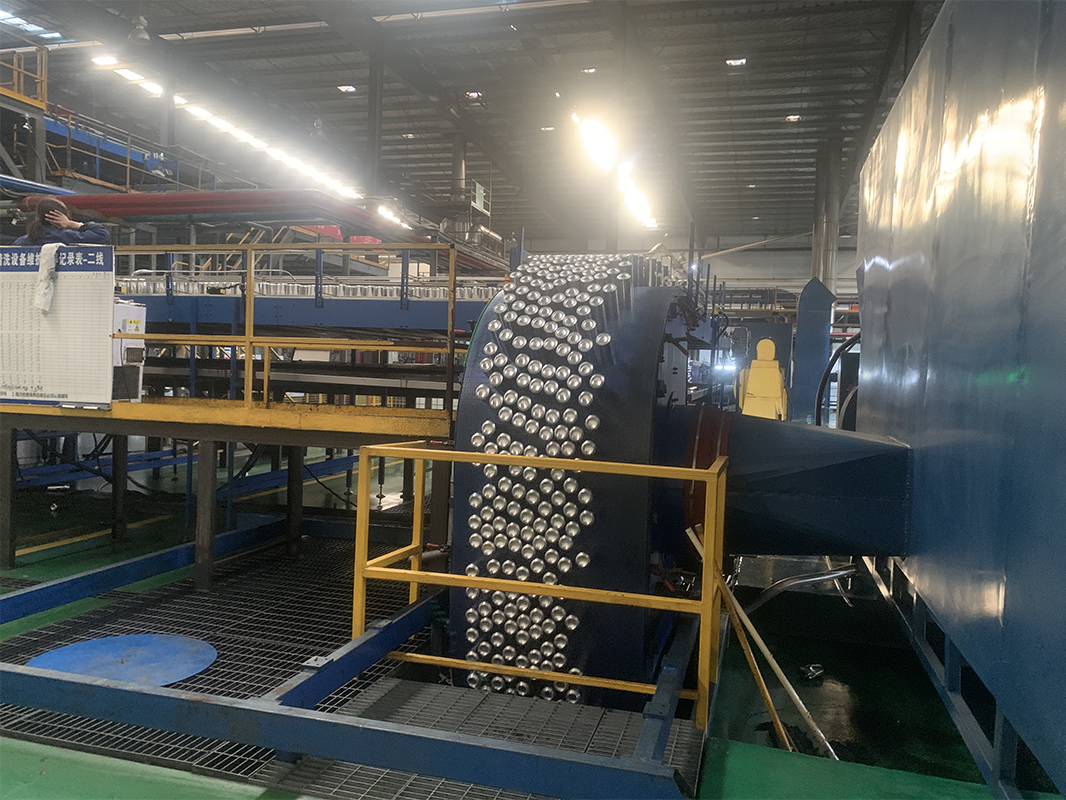
Aluminum can cleaning stage. Cleaning and handling control belong to the same coating-integrity picture as the factory adhesion test.
Why Coating and Seal Questions Decide Aluminum Can Acceptance
Aluminum cans are used across beverage, beer, carbonated drink and functional drink production, typically on automatic high-speed filling and seaming lines under indoor production, normal temperature and dry warehouse storage. In that environment, the can is both a pressure vessel and a food-contact surface. The inner coating separates the contents from the aluminum substrate; the seam and closure keep the contents inside.
When a buyer moves from evaluation to execution, the questions change. During evaluation, the buyer asks whether a supplier can make the format. During execution, the buyer asks how coating adhesion is verified, whether every unit is leak-tested, which food-contact documents arrive with each batch, and what happens if a coating defect appears after filling.
Those are not cosmetic questions. A coating that delaminates can compromise the food-contact surface. A seal that fails can turn a production run into a recall. Both are controlled through specific tests that can be written into an RFQ and an acceptance clause.
Can the Inner Coating Peel or Flake Off?
The direct answer is that coating delamination is a recognized risk, and it is controlled rather than assumed away. In the supplier's control framework, delamination is managed through lining quality control and verified by coating adhesion testing that confirms the lining bonds firmly to the substrate.
Coating delamination means the inner lining peeling, flaking or bubbling off the substrate during use. The control is a bond-strength check, not a visual inspection. That distinction matters for procurement: a supplier's claim that a can is coated says nothing about adhesion. The buyer needs the test, the test method and the batch reference.
The available guidance also sets a use boundary. If the coating begins to peel or flake, the container should be discontinued for storing food or beverages immediately. The coating is the food-contact layer; once it is compromised, the can no longer performs the function the buyer specified.
What Triggers Coating Delamination
Two triggers are identified. The first is deformation of the substrate due to impact or dropping. The second is poor adhesion resulting from a quality issue in a specific batch of coating.
The first trigger is a handling and transport issue as much as a manufacturing one. A can that is dropped or crushed can deform enough to crack or lift the lining, even if the coating was applied correctly. That is why buyers should treat transit damage, pallet compression and rough handling as coating-risk events, not only as cosmetic damage.
The second trigger is a batch-consistency issue. If one coating batch has poor adhesion, the defect may not appear across the whole order. It appears in a lot. That is why batch traceability and retention samples matter: they allow a buyer to isolate a suspect lot instead of rejecting an entire shipment.
The listed mitigation is a set of tests and handling rules: perform adhesion tests on the inner lining coating; ensure the coating can withstand thermal shock from rapid temperature fluctuations; and discontinue use if peeling or flaking appears. For the buyer, these translate into three RFQ items: an adhesion test report, a thermal-shock requirement where the filling process involves temperature change, and a written handling instruction that covers impact and drop protection.
Is It Safe If the Coating Flakes?
The guidance is explicit: if the coating begins to peel or flake, discontinue use for storing food or beverages immediately. The answer is not that a flaking coating is harmless. It is that the container should be removed from food-contact service once the lining is damaged.
The reason connects to the broader food-contact risk list. BPA migration is described as a risk in the product's food-contact use stage, and one of its listed triggers is an aged or damaged lining. A coating that is peeling is a damaged lining. That does not establish that every flake releases BPA, but it does mean the container no longer meets the condition the lining was specified to provide.
The same risk list identifies other triggers that buyers can control upstream: filling with hot liquid above the rated temperature, prolonged contact with acidic or oily contents, prolonged storage, and a non-compliant incoming material batch. The controls are a BPA-free lining as the specified material, COA verification on every incoming batch before production, batch retention samples for traceability, and the temperature range stated in the manual.
For handling, the available guidance recommends hand-washing with a soft sponge and avoiding steel wool or harsh abrasives. The practical procurement point is that coating integrity is not only a factory property. It is also a function of filling temperature, product chemistry, storage time and handling, which is why the use conditions belong in the specification.
Leak Risk and Seal Integrity Control
Leakage and seal failure are controlled through seal integrity control. The key control is that 100% airtightness testing is performed on every unit before shipment, not on a sampled basis. For a buyer, that is a different acceptance model from a supplier that tests a sample and certifies the lot.
Five triggers are listed: the lid was not tightened to the specified torque; the sealing ring is aged, misaligned, contaminated or missing; the container has been subjected to a drop or impact; there has been a change in pressure; or there is an undetected sealing defect.
Three of those triggers sit partly outside the can factory. Torque is applied at filling; drop and impact can happen in transit; pressure changes occur during filling, transport and storage. That is why the control is not only a factory test but a chain of handling rules: failed units are rejected before packing, correct reassembly is required after washing, and over-tightening should be avoided.
For formats that use a lid or closure, such as cans with lids, the closure specification and the reassembly instruction deserve the same attention as the can body. For carbonated products, pressure change is a listed trigger, so the seal-integrity record is a central acceptance document rather than a secondary one. For still products, the same test applies, but the buyer should confirm the torque and closure specification for that fill and format.
Mapping Food-Contact Risks to Procurement Controls
The three food-contact risks in the supplier's control framework are BPA migration, seal failure or leakage, and coating delamination. Each has a listed trigger set and a control that a buyer can request as an acceptance document.
| Risk | Listed triggers | Control to verify |
|---|---|---|
| BPA migration | Hot filling above rated temperature; prolonged contact with acidic or oily contents; aged or damaged lining; prolonged storage; non-compliant incoming batch | BPA-free lining specification; COA check on every incoming batch; batch retention samples; temperature range in the manual |
| Seal failure or leakage | Lid torque out of specification; aged, misaligned, contaminated or missing sealing ring; drop or impact; pressure change; undetected sealing defect | 100% airtightness testing before shipment; rejected units not packed; correct reassembly after washing; avoid over-tightening |
| Coating delamination | Substrate deformation from impact or dropping; poor adhesion in a specific coating batch | Coating adhesion testing; thermal shock resistance; discontinue use if flaking appears |
The table is useful because it converts a broad phrase like food-contact safety into purchasable items. The third column can be written into an RFQ, a pre-shipment inspection checklist and a supplier quality agreement.
IDEA PACKAGE Capability and Coating Evidence
IDEA PACKAGE is the packaging brand of Anhui IDEA Technology Co., Ltd., a China-based supplier of glass, plastic and metal packaging. The company's aluminum can program is offered under OEM/ODM, with customization covering logo, packaging, graphic, printing, color, coating, size and capacity.
Capacity and commercial terms are stated as follows: monthly capacity of 300,000,000 pcs; MOQ of 100,000 pieces; lead time of 7 days for 1–10,000 pcs and 15 days for 10,001–500,000 pcs, with delivery time negotiable above 500,000 pcs; pre-shipment inspection as the quality-control step; and remote after-sales support.
On food-contact evidence, the supplier holds a Bisphenol A (BPA) test report for aluminum can coating, certificate ZTS25012103ERC, issued by Shenzhen ZTS Testing Service Co., Ltd. on 12 February 2025. The report cites Regulation (EC) No 1935/2004, (EU) 2018/213, (EU) 10/2011 and CEN/TS 13130-13:2005. The company also states that its facilities are ISO 9001, FDA and CE certified.
Commercial references include a US brewery (annual contract value USD 1.2 million), a UK fruit winery (USD 800,000), beverage plants in Kazakhstan and the UAE (USD 500,000 each), and a Korean fruit winery (USD 400,000). The recorded application is packaging material for canned beer, canned fruit wine and canned beverage production; the recorded result is stable production operation and compliance with food-grade packaging requirements, with food grade, sealing performance and corrosion resistance listed as highlights. These are commercial references, not published coating-adhesion or leak-test results; they support a supplier's operating history, not a specific performance guarantee.
For buyers, the relevant reading is that the capability exists across coating customization and food-contact documentation, while the acceptance decision should still rest on the test reports and batch records attached to the buyer's own order.
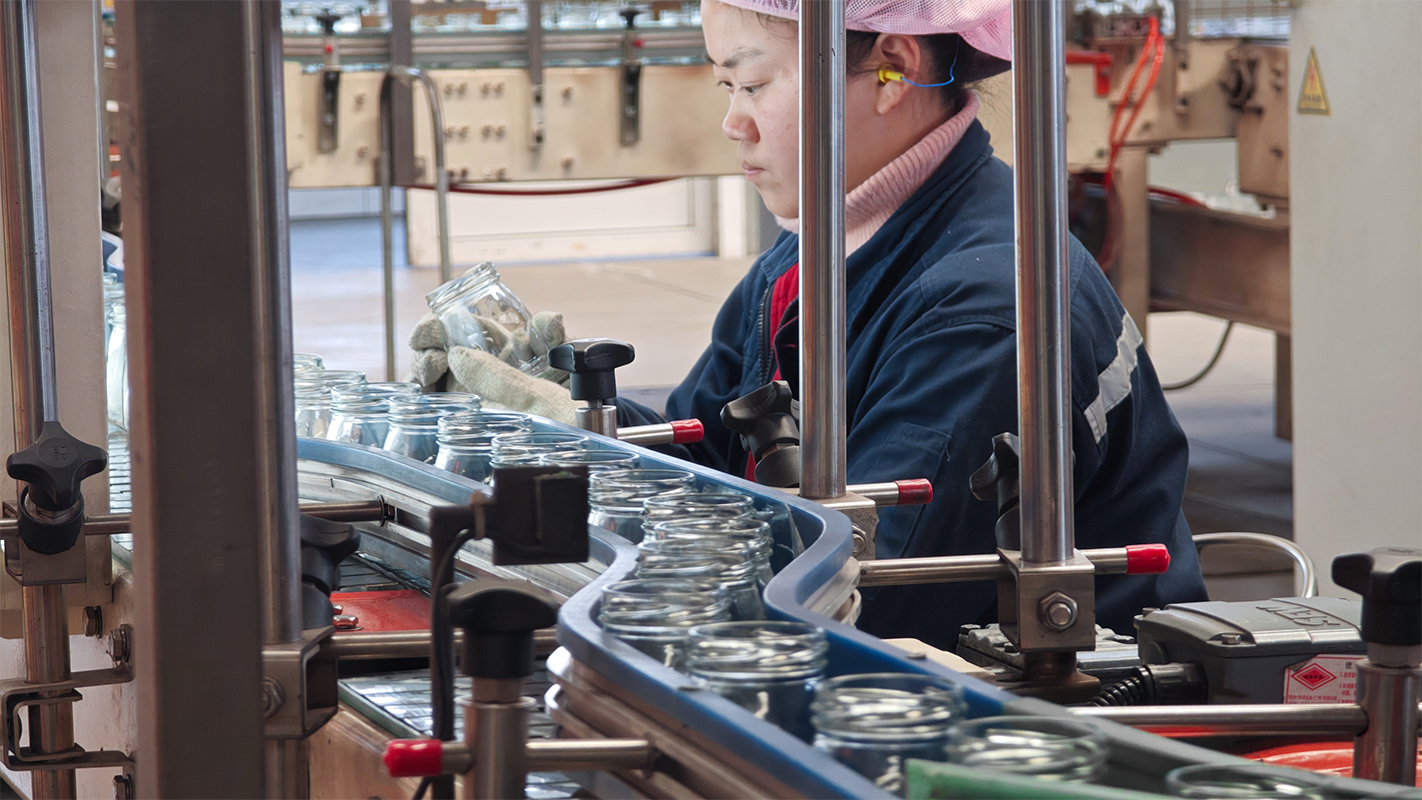
Manual quality inspection. Coating adhesion and seal integrity are verified through defined tests, not visual impression alone.
Application Fit: Carbonated, Still, Coffee and Lidded Cans
The listed application scenario is beverage, beer, carbonated drink and functional drink production on automatic high-speed filling and seaming lines, with indoor production, normal temperature and dry warehouse storage, and a BPA-free inner coating, food grade and high airtightness as special requirements.
Carbonated and still products share the same can body but not the same pressure profile. Because pressure change is a listed leak trigger, a carbonated fill puts more weight on the 100% airtightness record and on the seamer and closure specification. A still fill still requires the same test, but the buyer's risk review should focus on the closure torque and the storage conditions.
Coffee cans and cans with lids are format questions rather than coating questions. The same control logic applies — liner specification, adhesion, seal integrity and food-contact documents — but the closure format, liner compatibility and fill temperature should be confirmed for the specific product. A supplier's general aluminum can capability does not by itself confirm a specific coffee can or lidded format, so the format should be named in the RFQ.
Purchase Criteria to Confirm Before Ordering
The commercial terms and the technical controls should be confirmed in the same review. The table below combines the supplier's stated commercial terms with the controls identified in the risk section.
| Criterion | What to confirm | Why it matters |
|---|---|---|
| MOQ | 100,000 pcs for standard mass-production pricing | Volume and unit-cost planning |
| Incoterm | FOB, CIF or EXW | Freight, insurance and risk transfer |
| Inspection and acceptance | Pre-shipment test; AQL and test items agreed before production; test report before goods leave | Acceptance evidence |
| Payment | 30% T/T deposit before production; 70% T/T against copy of B/L | Cash flow and shipment risk |
| Coating control | Adhesion test report; thermal-shock requirement where applicable | Coating integrity |
| Seal control | 100% airtightness testing; reject and rework rule | Leak risk |
| Food-contact documents | BPA-free lining; COA per batch; retention samples; BPA test report | Compliance evidence |
| Lead time | 7 days for 1–10,000 pcs; 15 days for 10,001–500,000 pcs; above 500,000 negotiable | Production planning |
Incoterm choice is a capability question, not a preference. EXW suits a buyer with its own forwarder; FOB applies where the buyer nominates the vessel and pays freight; CIF applies where the supplier covers freight and insurance to the destination port. The buyer should choose the term that matches its own logistics and import capability, then confirm that the quoted price is built on the same term.
Inspection should be defined before production, not after. The supplier's stated model is a pre-shipment test, with the test report provided before the goods leave, and the test items and AQL agreed in advance. The buyer should ask for the test report format and the sampling plan in the quotation stage, because those documents define what accepted means.
Payment is stated as 30% T/T deposit before production and 70% T/T against a copy of the B/L. That structure ties the balance to shipment documents rather than to arrival, so the buyer should confirm the document set and the bank details through a verified channel.
How to Verify Supplier Claims Before Mass Production
Verification should follow the risk list, not the sales presentation. A practical sequence is:
- Coating: request the adhesion test report, the test method and the batch reference. Ask whether thermal-shock resistance is tested where the fill involves temperature change.
- Seal: confirm that airtightness testing is 100% and request the test record format. Ask how failed units are segregated and whether the rejection is documented.
- Food contact: request the BPA test report and check the certificate number, laboratory, issue date, standards cited and product scope. A report for aluminum can coating should name that scope.
- Batch control: confirm COA verification on every incoming batch and the retention-sample policy. These are the records that let a buyer trace a defect to a lot.
- Use conditions: confirm the temperature range and the handling instruction, including the warning to discontinue use if the coating flakes.
- Commercial: confirm MOQ, Incoterm, AQL, test items, payment terms and lead time in the purchase order, not only in the quotation.
None of these steps replaces the buyer's own acceptance testing. They establish whether the supplier has a control system that can be audited and whether the order documents reference it.
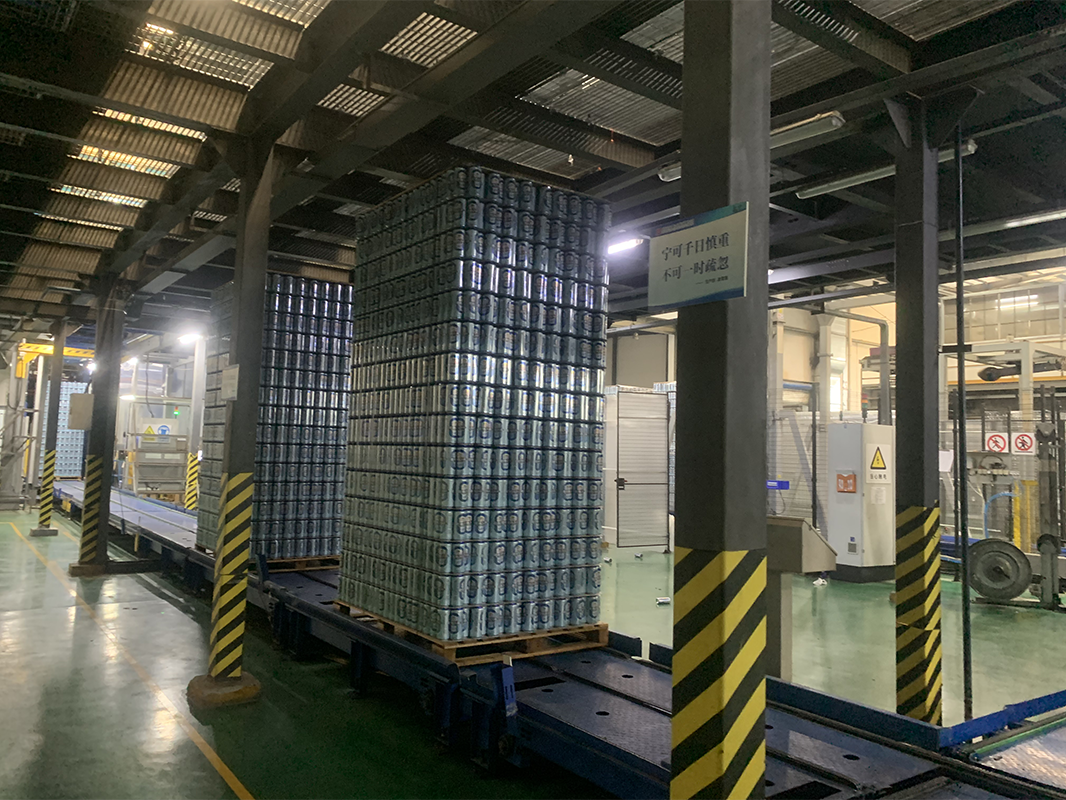
Palletizing before shipment. Pre-shipment testing is the acceptance gate before goods leave the factory.
Market Context for Coating and Seal Questions
Grand View Research estimated the global aluminum beverage cans market at USD 46.2 billion in 2026, up from USD 43.8 billion in 2025. The same source places aluminum's share of the metal cans market at 74.5% in 2025.
At that scale, a coating or seal defect is not a cosmetic issue. It becomes a batch-level acceptance question, a food-contact documentation question and a brand-risk question. The market context does not change the controls; it explains why buyers increasingly ask for the test records rather than a general assurance.
IDEA PACKAGE's stated position fits that procurement pattern: OEM/ODM customization, a stated monthly capacity of 300 million pieces, a 100,000-piece MOQ, pre-shipment inspection and a BPA test report for aluminum can coating. The buyer's task is to match those claims to the specific format, fill and market, then verify the documents before mass production.
FAQ
Can the inner coating of an aluminum can peel or flake off?
Coating delamination is a recognized risk. It is controlled through lining quality control and verified by coating adhesion testing that confirms the lining bonds to the substrate. Impact or dropping that deforms the substrate, and poor adhesion in a specific coating batch, are listed triggers.
What should a buyer do if the coating flakes?
Discontinue use for food or beverage storage immediately. A damaged lining is also listed as a trigger for BPA migration, so the container should not remain in food-contact service once the coating is compromised.
Will the aluminum can leak, and how is the seal checked?
Leakage is controlled through seal integrity control. Every unit undergoes 100% airtightness testing before shipment, not sampling. Lid torque out of specification, an aged, misaligned, contaminated or missing sealing ring, drop or impact, pressure change and undetected sealing defects are listed triggers.
Does the aluminum can contain BPA?
The lining is BPA-free by specification. Each incoming batch is checked against its COA before production, batch retention samples are kept, and the temperature range is stated in the manual. A BPA test report for aluminum can coating, certificate ZTS25012103ERC, was issued by Shenzhen ZTS Testing Service Co., Ltd. on 12 February 2025.
What commercial terms should be confirmed before ordering?
MOQ is 100,000 pcs for standard mass-production pricing. FOB, CIF and EXW are available; EXW suits buyers with their own forwarder, FOB where the buyer nominates the vessel and pays freight, and CIF where the supplier covers freight and insurance to the destination port. Inspection is by pre-shipment test, with AQL and test items agreed before production and a test report provided. Payment is 30% T/T deposit before production and 70% T/T against a copy of the B/L.
Есть вопросы или нужны дополнительные детали?
Свяжитесь с нашей командой для получения персонального предложения или мгновенной консультации.
Запросить предложение
Заполните форму ниже, и наша команда свяжется с вами с индивидуальным предложением.
Прямой чат WhatsApp
Предпочитаете общаться в реальном времени? Напишите нам в WhatsApp для мгновенной помощи и быстрых ответов.
- Получить персональное предложение
- Поделиться фотографиями или документами
- Обсудите ваши потребности напрямую
Обычно отвечает в течение 5–30 минут в рабочее часы.