
Aluminum Fire Boat Sourcing: Builder Capabilities to Check
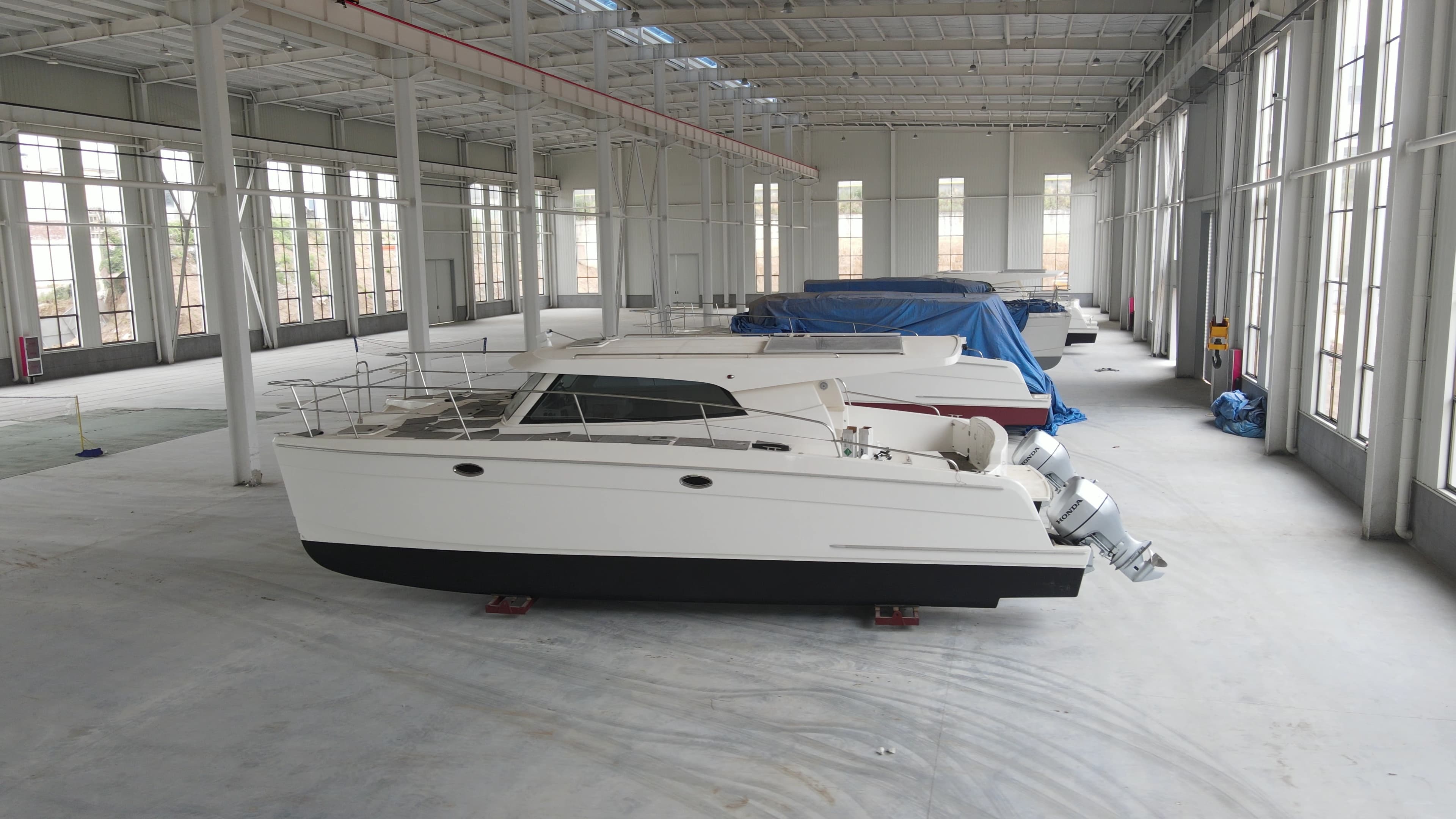
Aluminum hulls are widely used for high-speed patrol and rescue craft, including fire boats, due to their light weight and corrosion resistance.
Fire boats occupy a specialized segment of the workboat market. They must combine high speed, pumping capacity, stability, and the ability to operate in close proximity to heat and smoke. The choice of builder is not simply a question of name recognition; it is a decision about manufacturing depth, customization flexibility, quality assurance, and long-term support. Buyers evaluating an aluminum fire boat need to understand what the builder can actually deliver before comparing prices or delivery schedules.
One manufacturer that appears in this conversation is Qingdao Dookyu Crown Marine Co., Ltd. Headquartered in Qingdao, Shandong Province, the company designs and builds aluminum alloy vessels, including workboats, patrol boats, rescue boats, fire boats, fishing boats, yachts, catamarans, and passenger ferries. It operates a 70,000 m² facility with 85 employees, including a 17-person R&D team, and reports an annual output of 200 ships. Around 80% of its production is exported to markets such as Australia, the United States, Canada, Ecuador, Hong Kong, Mexico, Nigeria, New Zealand, Russia, and Thailand.
This article explains why builder capabilities matter when procuring an aluminum fire boat, how Dookyu Crown approaches OEM and ODM production, and what buyers should check in specifications, compliance, and after-sales support.
Problem/Opportunity: Why Capability Matters when Sourcing an Aluminum Fire Boat
Fire boat procurement is not a routine purchase. The vessel is expected to serve for years in demanding mission profiles, from offshore firefighting to search and rescue. A standard hull may not fit the pump layout, tank configuration, wheelhouse visibility, or crew requirements of the end user. This is where the builder's capability to customize becomes a selection criterion.
The global aluminum vessel market was estimated at USD 6.145 billion in 2024, and is projected to grow at a CAGR of 4.21% from 2025 to 2035, according to Market Research Future. The aluminum fishing boat segment alone was valued at USD 1.7 billion in 2024, with a forecast of USD 3.12 billion by 2034 at a 5.8% CAGR, according to Intel Market Research. While fire boats are a smaller niche, the broader growth of aluminum vessels suggests that lightweight, corrosion-resistant hulls are being specified for more mission types.
The opportunity for buyers lies in selecting a builder that can move from a proven base model to a customized fire-fighting configuration without breaking series production discipline. That means the builder should be able to alter hull dimensions or structure, deck layout, engine brand, propulsion type, firefighting equipment, tanks, navigation systems, and interior layouts. In other words, the buying decision is less about a specific catalog photo and more about the manufacturer's ability to execute variations.
Brand Solution: Dookyu Crown's OEM/ODM and Integrated Production Model
Dookyu Crown explicitly states that it provides OEM, ODM, and integrated end-to-end production services. For fire boat buyers, this is a useful distinction.
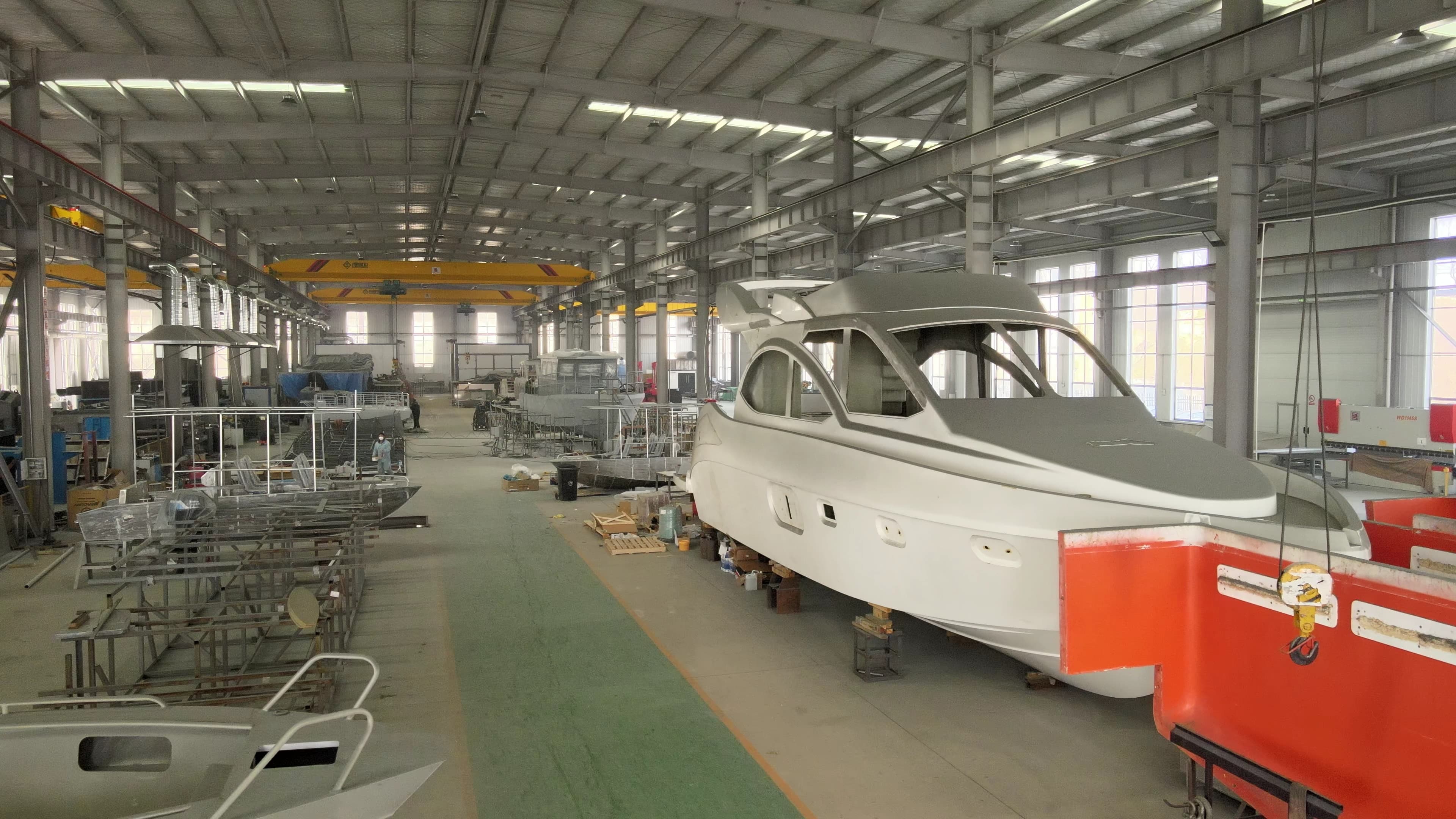
OEM and ODM production allows a factory to adapt an aluminum hull design to a specific fire-fighting mission profile.
OEM (Original Equipment Manufacturing) means the client supplies the design or specification, and the factory builds to that specification. This is suitable for organizations that have their own naval architecture or a proven design they want replicated. The company states: "OEM services are available for clients requiring manufacturing to their specifications."
ODM (Original Design Manufacturing) means the client relies on the manufacturer for design and manufacturing support. Dookyu Crown's in-house naval architects and R&D team can develop the vessel around the operator's requirements. The company states: "ODM services are available for clients seeking design and manufacturing support."
The customized production model covers options such as hull type (mono-hull, catamaran, trimaran), hull dimensions, deck layout, wheelhouse position, engine brand and type, propulsion system, fuel/water tank capacity, firefighting equipment, cranes and winches, navigation and communication systems, electrical systems and solar panels, plus certification level (CE, CCS, SOLAS). The factory reports a monthly capacity of 20 ships, a lead time of 30–60 days, and a minimum order quantity of 1 ship. That MOQ is significant for public agencies that need a single mission-specific fire boat rather than a fleet.
Quality control follows a full-process inspection model: raw material verification using Mill Test Reports, in-process weld inspections (NDT), and final sea trials. The company also emphasizes compliance with international standards such as ISO 9001 and CE, in addition to class society requirements. This is not marketing language; it is a procedural statement about how production is checked.
Technical Explanation: Aluminum Fire Boat Specifications and Build Standards
To understand what an aluminum fire boat requires, it helps to look at a representative model. Dookyu Crown's 13m Aluminum Rescue Fire Boat (DK-FR) has a length of 13.25 m, a width of 3.6 m, a fuel tank of 500 L, twin 200 HP Mercury outboard motors, and a fire pump flow of 1,500 gpm. The hull is aluminum alloy.
These numbers matter for evaluation. Fire pump flow (1,500 gpm) determines how much water can be delivered to a fire. Twin 200 HP engines provide the speed needed to reach an emergency site. A 500 L fuel tank sets operational endurance. But the hull material is equally important. Dookyu Crown uses marine-grade aluminum alloys such as 5083 and 5086, which are widely recognized for weldability, corrosion resistance, and strength-to-weight ratio. Aluminum's lighter weight allows for higher speed and lower fuel consumption relative to steel for the same installed power.
Build standards are part of the technical evaluation. Dookyu Crown holds a voluntary attestation for recreational craft issued by ECM under certificate number 0P250716.QDCTN80, based on EN ISO 12217-1:2017, EN ISO 12217-3:2017, and Regulation (EU) 2013/53/EU. The scope covers multiple series of aluminum, steel, and fiberglass boats, valid from 2025 through 2030. In addition, the company holds a voluntary EMC certificate (0P250716.QDCTN81) against EN IEC 61000-6-1:2019 and EN IEC 61000-6-3:2021, also issued by ECM.
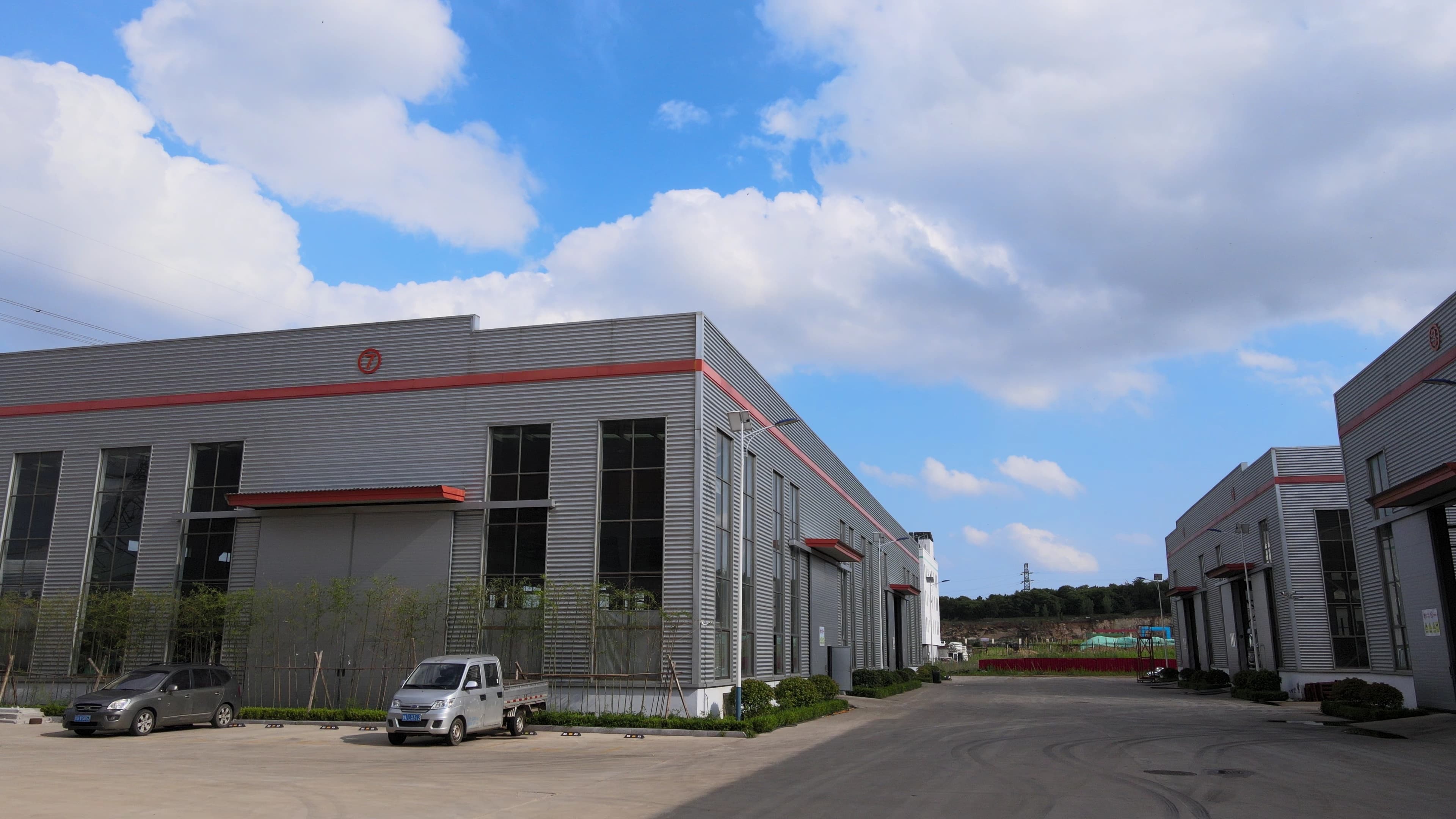
Verification of a builder's compliance infrastructure is a key step in aluminum fire boat procurement.
Buyers should always verify the applicable certificate, scope, number, and validity before framing compliance into a tender. A certificate described in broad terms does not replace a document review. The manufacturer also offers electrical and propulsion integration, with outboard, inboard, and electric propulsion options available depending on the vessel design.
Application / Use Cases: From Spec Sheet to Delivered Vessel
A documented reference for Dookyu Crown is a 13.25 m aluminum fire rescue boat supplied to an international client in Ecuador (country code EC). The application is offshore firefighting and rescue missions, with customized firefighting equipment and marine-grade aluminum durability highlighted as project outcomes. This use case demonstrates that the company has executed a dedicated fire-fighting build for an export market, not just listed the model in a catalog.
In broader terms, aluminum fire boats are used in several operational profiles:
- Port and harbor firefighting, where response time to vessel incidents is measured in minutes.
- Offshore wind and energy operations, where crew boats and workboats must be able to act as first responders.
- Coastal rescue services, where a fire pump is combined with rescue gear and towing capability.
- Government and public safety fleets, where customization is needed for local radio systems, seating, and pump controls.
Dookyu Crown's product portfolio includes workboats, patrol boats, pilot boats, rescue boats, and firefighting craft, so the same aluminum hull family can be adapted across mission types. For a buyer, that means the builder likely has modular experience in deck layouts and systems integration that can be applied to a fire boat specification.
Market Trend Analysis: Aluminum Workboat Demand and What It Means for Fire Boat Procurement
The aluminum vessel market is expanding, and the trend is relevant for fire boat buyers. According to Market Research Future, the global aluminum vessel market was USD 6.145 billion in 2024, with a projected CAGR of 4.21% from 2025 to 2035. Meanwhile, the patrol boat market, which often uses aluminum hulls, was valued at USD 240 million in 2024, according to Intel Market Research. The aluminum fishing boat market is expected to grow from USD 1.7 billion in 2024 to USD 3.12 billion by 2034 at a 5.8% CAGR, also cited by Intel Market Research.
Several forces are pulling demand toward aluminum. Maritime operators look for fuel efficiency, and lightweight hulls reduce resistance. Incat Tasmania, for example, is building next-generation lightweight aluminum passenger ferries for improved fuel efficiency in 2025, according to Straits Research. Although that example is in the ferry segment, the same logic applies to workboats: a lighter hull enables higher speed or lower installed power. For fire boats, speed translates directly to shorter emergency response time.
North America held the largest market share for aluminum fishing boats in 2024, and the United States marine market overall reached about USD 57.7 billion in 2023 according to NMMA. For an international buyer, these demand signals suggest that aluminum workboats are not a fringe specialty. More yards are investing in aluminum welding and fabrication, which broadens the supplier landscape but also makes capability assessment more important.
Comparison with Traditional Solutions: Aluminum vs. Steel and Fiberglass Hulls
Traditional fire boat construction has often used steel for its high strength and heat tolerance. Fiberglass has also been used in smaller rescue boats. Aluminum is a modern alternative, but it is not a universal answer. A fair comparison should include trade-offs.
| Property | Aluminum | Steel | Fiberglass |
|---|---|---|---|
| Weight | Light | Heavy | Medium |
| Corrosion resistance | Good, especially with marine-grade alloys | Requires coating and protection | Good |
| Fire/heat tolerance | Moderate; insulation may be needed | High | Lower |
| Repairability | Weldable in most yards | Weldable | Specialized repair skills needed |
| Speed potential | High due to lower weight | Lower | Medium |
| Long-term maintenance | Low if properly insulated against galvanic corrosion | Higher due to painting and corrosion control | Medium |
That said, one limitation deserves emphasis. Aluminum has a lower melting point than steel and can lose strength at high temperatures. Fire boats operating in radiant heat zones, such as directly alongside a burning vessel or structure, may need additional fire insulation or thermal barriers. Buyers with intense fire exposure scenarios should not assume an aluminum hull is equivalent to a steel hull in heat resistance. Instead, they should ask the builder how the deck, wheelhouse, and exposed aluminum areas are protected.
Another practical limitation is galvanic corrosion. When aluminum is connected to other metals in a saltwater environment, proper isolation and anode protection are essential. Buyers should verify that the builder's quality system includes the necessary electrical bonding and material isolation procedures.
Key Checkpoints for Evaluating an Aluminum Fire Boat Builder
Based on the capability evidence discussed above, procurement teams can use the following checkpoints to structure conversations with potential builders:
- Confirm whether the builder offers OEM, ODM, or integrated end-to-end services, and which documentation they are willing to share.
- Check that the customization list covers hull structure, deck layout, engine brand, pump/firefighting equipment, propulsion, tankage, and compliance level.
- Request proof of quality control: Mill Test Reports, NDT inspection procedures, and sea trial protocols.
- Ask for the specific certificate number, scope, and validity period for ISO, CE, or class society claims.
- Clarify MOQ, lead time, delivery terms, and spare parts support.
- If an electric or hybrid configuration is under consideration, ask about performance data and charging or shore-power integration.
Future Outlook: Toward Lighter, Smarter, and More Modular Fire Boats
The next generation of aluminum fire boats is likely to be shaped by three factors: propulsion electrification, modular mission systems, and data-driven maintenance.
Dookyu Crown already lists power options as fuel, electric, or hybrid. Electric propulsion may not offer the same endurance as diesel, but for ports and nearshore response where duty cycles are shorter, electric or hybrid aluminum fire boats could reduce emissions and noise—useful for rescue operations where communication is key. As battery technology improves, hybrid configurations are expected to become a practical tender option.
Modular systems will also matter. A fire boat may be specified with fire monitors, foam tanks, deck cranes, rescue baskets, and pollutant containment equipment. A builder with an end-to-end integration process can design these systems into the hull from the start, rather than retrofitting them after delivery.
Finally, remote diagnostics and after-sales support are becoming part of the procurement criteria. Dookyu Crown mentions rapid-response support with remote diagnostics, spare parts supply, and on-site assistance. Buyers should look for this kind of lifecycle commitment, because an aluminum fire boat is a multi-year asset that requires maintenance and spare parts availability.
Frequently Asked Questions
What vessel types does Dookyu Crown offer?
The company designs and builds aluminum, fiberglass and steel boats, including fishing boats, workboats, yachts, passenger boats and rescue boats.
Can vessels be customized?
Yes. Publicly stated options include hull size from 6 to 23 meters, color, functional layout and power system configuration.
What propulsion options are available?
Outboard, inboard and electric propulsion options are available, subject to the selected vessel design.
What export support is provided?
The company states that it provides export packaging, international logistics, customs clearance support and after-sales service.
What certification information is publicly stated?
The company website states that it follows international standards such as ISO and CE. Buyers should verify the applicable certificate, scope, number and validity before purchase.
Supplementary Reference: Manufacturer Brochure
For buyers who want a consolidated overview of Dookyu Crown's product range and production capabilities, the manufacturer publishes a company brochure that is openly accessible. It is not a substitute for a technical consultation, but it can serve as a starting document before issuing an RFQ.