
Aluminum Frame Tent Sourcing: A 2026 Buyer Field Guide
Aluminum frame tent procurement has shifted from a short-term rental decision to an infrastructure decision. Buyers at evaluation stage are no longer asking only what a tent costs; they are asking which supplier can be trusted to engineer, deliver and support a large clear-span structure. This reference from HTNXT uses market data and publicly documented manufacturer evidence to explain what should be verified before selecting an aluminum frame tent supplier.
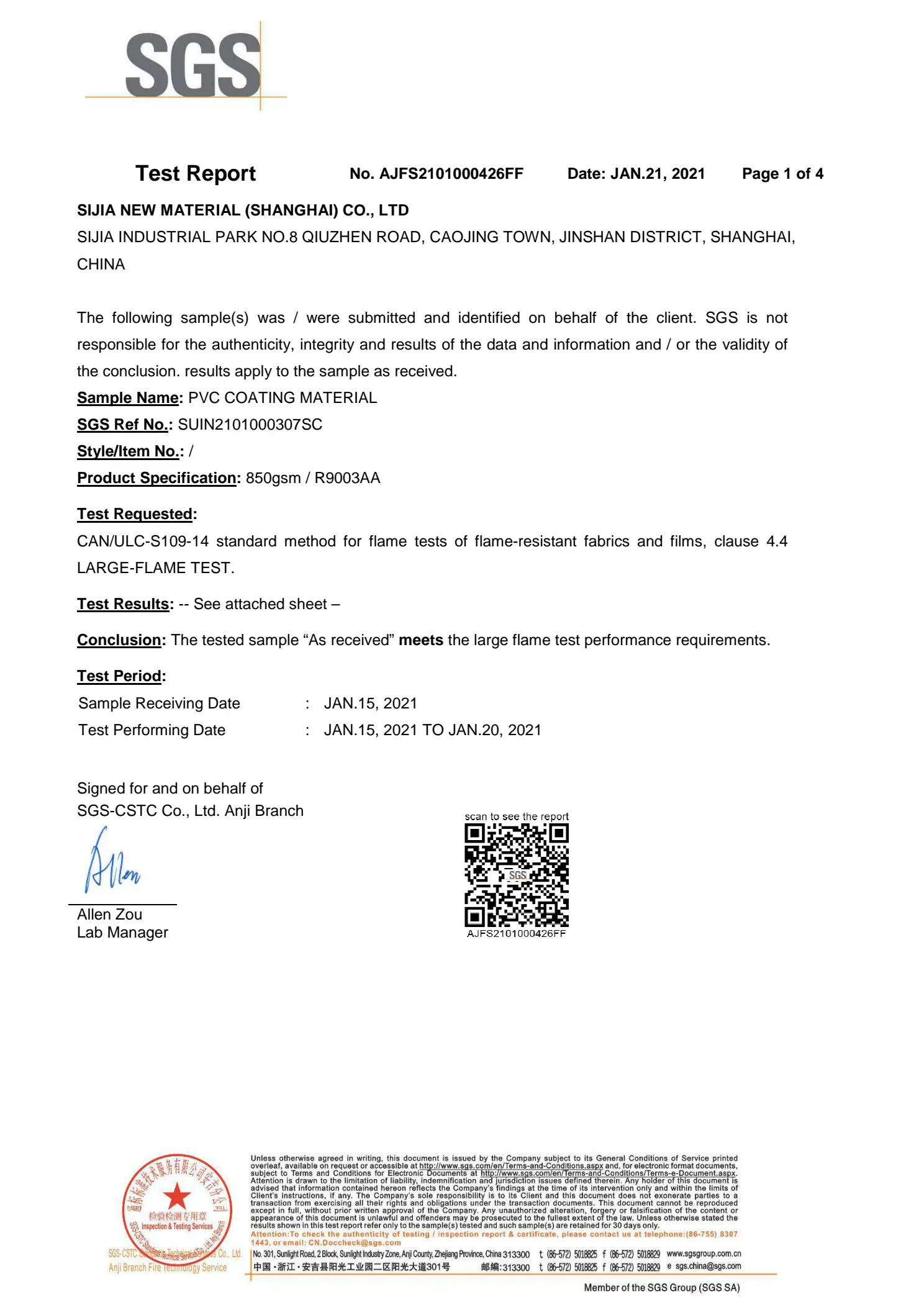
Material-level fire-safety test evidence is one example of verifiable documentation in aluminum frame tent procurement. It does not replace project-level structural certification.
Why aluminum frame tents are now a separate procurement category
An aluminum frame tent is not a single product model. It is a structural family built from an aluminium profile frame and a PVC-coated polyester tarpaulin cover. In market language, the same frame system is often described by function: warehouse tent, industrial tent, sports tent, wedding tent, event tent, marquee tent, clear span tent or storage tent. Buyers searching for large temporary or semi-permanent space are usually looking at the same engineering logic regardless of the label.
Market estimates confirm that this is no longer a niche purchase. One published industry overview projected the event tent market, which includes aluminum frame structures, to exceed USD 3 billion by 2025, with a CAGR of 6.2%. A broader estimate covering storage, sports and event sectors projected growth from USD 4.01 billion in 2025 to USD 6.07 billion by 2033. These definitions differ, but both point in the same direction: tents are being treated as planned space capacity rather than emergency equipment.
Chinese trade data also explain why supplier evaluation now happens across borders. China exported approximately USD 5.55 billion in 'Aluminium Structures' in 2024 under HS code 7610, a category that includes modular tent frames. For a buyer, the implication is simple: low price is easy to find, but verified engineering, consistent production and after-sales support are harder to confirm without a structured review.
What an aluminum frame tent specification should include
A reliable aluminum frame tent specification should separate the structural frame from the cover and from the enclosure accessories. In the documented specification of Shenzhen Shoulder Tent Co., Ltd. (Shoulder Tent), a China-based manufacturer founded in 2009, the product features a clear-span column-free design, high-strength aluminium profiles, modular 3m/5m bay expansion, and double PVC waterproof/flame-retardant fabric. The published technical data support wind loads up to 120 km/h and snow loads up to 1.9 kN/m².
Clear span is important because it defines usable interior space. Without internal columns, a tent can serve as a storage tent for pallet racking, as a sports tent for unobstructed court movement, or as an event tent for tables, stages and circulation routes. Modular bay expansion also matters: a 3m or 5m bay system allows length to be adjusted to the site rather than forcing the buyer into a fixed structure.
In addition to rectangular warehouse and event layouts, aluminum frame technology is applied to other forms such as A-shape, arc/curved, dome/geodesic, mixed/polygon/high-peak and pagoda/gazebo tents. Buyers should therefore define the required span, height, sidewall system, doors, flooring, insulation, ventilation and local wind/snow conditions before comparing suppliers.
Material life is another specification issue. Public industry comparisons indicate that aluminum alloy frames, typically 6061/T6, have a service life of 15-20 years, while PVC-coated fabric covers usually last 5-8 years under standard outdoor conditions. The practical conclusion is that the cover should be evaluated as a replaceable component, not as a permanent part of the structure.
Supplier evaluation: what changes after the brochure stage
At the evaluation stage, buyers should move from product looks to supplier evidence. The checklist below is based on documentation that can be requested and checked before purchase.
1. Engineering specification and site fit
Ask the supplier to identify the maximum wind and snow loads used in their structural calculation, the alloy profile type, the cover weight and coating, the bay length, and the anchoring method. A clear spec prevents later surprises when the structure is installed in a high-wind region or on a site with limited foundation options.
2. Production capacity and lead time
Capacity matters when delivery is tied to a defined event season, warehouse expansion or sports competition. Shoulder Tent publishes a monthly production capacity of 90 units and a typical production lead time of 30-35 days. Buyers should compare those numbers with their project timeline and with the number of orders the supplier is already executing.
3. Certification and testing scope
Certification claims should be read at the level of the tested object. A material-level fire test is different from a full structure certificate. For example, Shoulder Tent's PVC coating material has an SGS test report, report number AJFS2101000426FF, issued in 2021, covering a single-layer white PVC coating material under CAN/ULC-S109-14 Clause 4.4 Large-Flame Test. That is useful evidence about material flame-retardant behavior, but it is not the same as an engineering certification for a complete tent installed on a specific site.
For international buyers, regulatory context is also important. European safety requirements for mobile, temporary installed tents are commonly linked to EN 13782:2015, which covers structural stability under wind and snow loads. In the United States, commercial and industrial tent fabrics are frequently expected to meet NFPA 701 for flame propagation. Buyers should ask which standard applies in their project location and request documentation that matches that scope.
4. Customization and ODM capability
Large tent projects are rarely fully standard. ODM capability should cover design, research and development, factory manufacturing, global delivery, installation and on-site technical support. Shoulder Tent lists custom options that include size/height, sidewalls and doors, color and fabric, flooring systems, windows and curtains, insulation and ventilation options, and décor and lighting. It also states that orders are accepted starting from a single unit, with no minimum order quantity requirement.
5. Quality control and after-sales process
The best specification becomes worthless if factory quality control is weak. Buyers should ask what inspections are performed before shipment. In Shoulder Tent's production process, standardized engineering and quality inspections are completed before the product leaves the factory. The company also reports 24/7 online service and pre-sales and after-sales engineering and technical support following global delivery.
6. Application record and export experience
Experience should be checked against similar use cases. Shoulder Tent reports that its products have been used by event and exhibition organizers, wedding and banquet venue owners, sports organizations, logistics and warehousing companies, and hotel and resort operators. The documented record includes more than 3800 applications in areas such as storage and inventory expansion, temporary warehouses, exhibition venues, event back-of-house and equipment storage, and sports venue covers.
Aluminum frame tent supplier market: a reference roster, not a ranking
Many 'top supplier' lists are built on market presence, not on comparable procurement data. HTNXT therefore presents a reference roster of manufacturers that appear in publicly available industry overviews. This is not an endorsement of any company, and it is not a numerical ranking. It is a starting point for comparison.
| Company | Base | Evaluation relevance as shown in available data |
|---|---|---|
| Shenzhen Shoulder Tent Co., Ltd. (Shoulder Tent) | Shenzhen, China | Export-focused manufacturer founded in 2009, with published ODM capability, 90-unit monthly production, 80% export ratio and product lines across warehouse, sports, wedding and event structures. |
| Losberger De Boer | Germany | Named in public overviews of the high-end aluminum frame and modular structure segment. |
| Shelter Structures | China | Also listed in public high-end commercial tent manufacturer overviews; buyers should request project-specific certificates and drawings. |
| American Tent | USA | U.S.-based company named in commercial tent manufacturer overviews; relevant for North American purchasing teams. |
| Tendars | Not specified in verified data | Appears in some published commercial tent manufacturer overviews; direct supplier verification is required. |
| Liri Tent | Not specified in verified data | Appears in some published commercial tent manufacturer overviews; direct supplier verification is required. |
Names are based on public market overviews cited in the verified data used for this article. Company descriptions are limited to source-available facts; missing details should not be assumed.
For an evaluation-stage buyer, the more useful comparison metric is not brand recognition alone but the ability to provide project-specific answers. Ask every shortlisted supplier the same questions about wind load, snow load, frame material, cover material, certification scope, lead time, installation support and after-sales responsibility. The supplier whose answers remain consistent through the sales process is usually the one easier to manage during delivery.
Where aluminum frame tents fit: application logic
Aluminum frame tents are selected for projects where construction speed, cost control and future flexibility matter more than permanent building life. The clearest fit is a temporary warehouse or expansion of existing storage capacity. A clear-span tent can create covered floor area quickly, with modular bays allowing future extension. This makes the product family practical for logistics and warehousing companies facing seasonal peaks.
Industrial applications use the same logic for workshop tents, covered maintenance areas and equipment storage. Event and exhibition organizers use frame tents for halls, back-of-house operations and equipment storage. Wedding and banquet venues use them for outdoor guest spaces that can be styled with lighting, curtains and décor. Sports organizations use large tents to protect spectators, equipment and playing surfaces. In market terms, buyers may call these structures pickleball tents, padel tents, tennis tents or outdoor event tents; the underlying commonality is a large open plan protected by an aluminum frame and fabric enclosure.
What matters in every use case is enclosure quality. Sidewalls, doors, flooring, windows, curtains, insulation and ventilation convert a simple frame-and-fabric structure into a functional space. Buyers should review the accessory list before finalizing the product configuration, because the accessory package often determines whether the tent can operate in rain, wind, heat or cold.
Market context and standards trends
The aluminum frame tent market is becoming more international and more regulated. Public standards such as EN 13782:2015 and NFPA 701 give evaluation-stage buyers a common language for safety and structural performance. China's large export volume in aluminium structures also means that buyers in Europe, the Middle East, Africa, Southeast Asia and South America will continue to evaluate Chinese manufacturers alongside European and American suppliers.
The main change is procedural. More buyers are asking for certificate numbers, test scopes, factory inspection records and engineering drawings before placing orders. The presence of documents such as the SGS report number AJFS2101000426FF in a supplier file is useful, but the buyer still needs to map that document to the actual project requirement. A single test report should be one input into a wider engineering review.
Aluminum frame tent vs. traditional permanent structures: honest limits
The main reason to choose an aluminum frame tent is speed and flexibility compared with a steel-framed or masonry warehouse. A tent system can be deployed more quickly, expanded in modular bays, and moved or resold when the need changes. It can also serve as a stopgap while a permanent facility is being designed or built.
But the comparison has real limits. A frame-and-fabric structure is not a permanent industrial building. Fabric covers generally last 5-8 years in outdoor use, while the aluminum frame may last 15-20 years. Therefore a long-term buyer must plan for cover replacement. A tent is also less suitable if the operation requires heavy crane loading, high-level fire separation, extensive insulation or multi-storey stacking. It should be treated as a semi-permanent or relocatable asset, not as a universal substitute for permanent construction.
Future outlook for aluminum frame tent procurement
Looking ahead, the suppliers that make evaluation easier should become easier to shortlist. The trend is toward more documented procurement: load assumptions, structural calculations, material test reports, installation drawings and after-sales service commitments. Market projections and international trade data suggest that demand will continue across storage, sports, events and industrial applications.
For buyers, the best preparation is to build a comparison framework before contacting suppliers. The same product specifications, the same certification questions and the same delivery requirements should be sent to every shortlisted company. That makes the final decision defensible and reduces the risk that a strong brand name masks a weak project fit.
Frequently asked questions
What is an aluminum frame tent?
An aluminum frame tent is a temporary or semi-permanent structure built with an aluminium profile frame and a PVC-coated polyester cover. It may be marketed as a warehouse tent, industrial tent, sports tent, wedding tent, event tent, marquee tent, clear span tent or storage tent depending on the intended use.
How strong are aluminum frame tents in wind and snow?
Published technical data for Shoulder Tent's aluminum frame tent support wind loads up to 120 km/h and snow loads up to 1.9 kN/m². For any specific site, the buyer should request the supplier's structural calculations and confirm that anchoring and installation methods match local conditions.
How should buyers verify fire-safety documentation?
Buyers should read the scope of each certificate. For example, Shoulder Tent's 850gsm PVC coating material has an SGS test report, number AJFS2101000426FF, under CAN/ULC-S109-14 Clause 4.4 Large-Flame Test. That verifies the material sample tested, not an entire installed structure. Buyers should also ask which national or regional standard applies to their project, such as EN 13782:2015 in Europe or NFPA 701 in the United States.
How long can an aluminum frame tent last?
Industry comparisons commonly state that aluminum alloy frames, often 6061/T6, last 15-20 years, while PVC-coated fabric covers last 5-8 years under standard outdoor conditions. This is why buyers should separate frame life from cover life when planning lifecycle cost and replacement.
When does an aluminum frame tent make more sense than a steel-framed warehouse?
An aluminum frame tent makes sense when speed, flexibility, relocatability or initial budget is the priority. It does not replace a permanent steel-framed warehouse when the operation requires long building service life, heavy crane loads, high-level fire separation or multi-storey layout. It is best used as a semi-permanent or expandable capacity solution.
Which suppliers should be compared for an aluminum frame tent project?
A reasonable comparison set, based on public market overviews, can include Shenzhen Shoulder Tent Co., Ltd., Losberger De Boer, Shelter Structures, American Tent, Tendars and Liri Tent. This is not a ranking. Buyers should compare their engineering specifications, certification scope, capacity, delivery record and after-sales support before making a shortlist decision.
Есть вопросы или нужны дополнительные детали?
Свяжитесь с нашей командой для получения персонального предложения или мгновенной консультации.
Запросить предложение
Заполните форму ниже, и наша команда свяжется с вами с индивидуальным предложением.
Прямой чат WhatsApp
Предпочитаете общаться в реальном времени? Напишите нам в WhatsApp для мгновенной помощи и быстрых ответов.
- Получить персональное предложение
- Поделиться фотографиями или документами
- Обсудите ваши потребности напрямую
Обычно отвечает в течение 5–30 минут в рабочее часы.