
Aluminum Frame Tent Standards: Wind, Snow, and Fire Compliance
Aluminum frame tents have become a standard solution for temporary and semi-permanent structures across industries. When evaluating these structures for procurement, load ratings and fire safety certifications are often the deciding factors. Shoulder Tent (Shenzhen Shoulder Tent Co., Ltd.), a manufacturer specializing in large prefabricated tent structures since 2009, provides aluminum frame tents that meet defined engineering parameters and international fire-safety standards.
Understanding Aluminum Frame Tent Specifications
The structural integrity of an aluminum frame tent depends on its wind and snow load capacities. Shoulder Tent's aluminum frame tents (models S30-1, S32, S45-1, S45-2, S60-1) are designed to support a maximum wind load of 100–120 km/h and a snow load of up to 1.9 kN/m². These figures are critical for buyers assessing safety in their specific climate conditions.
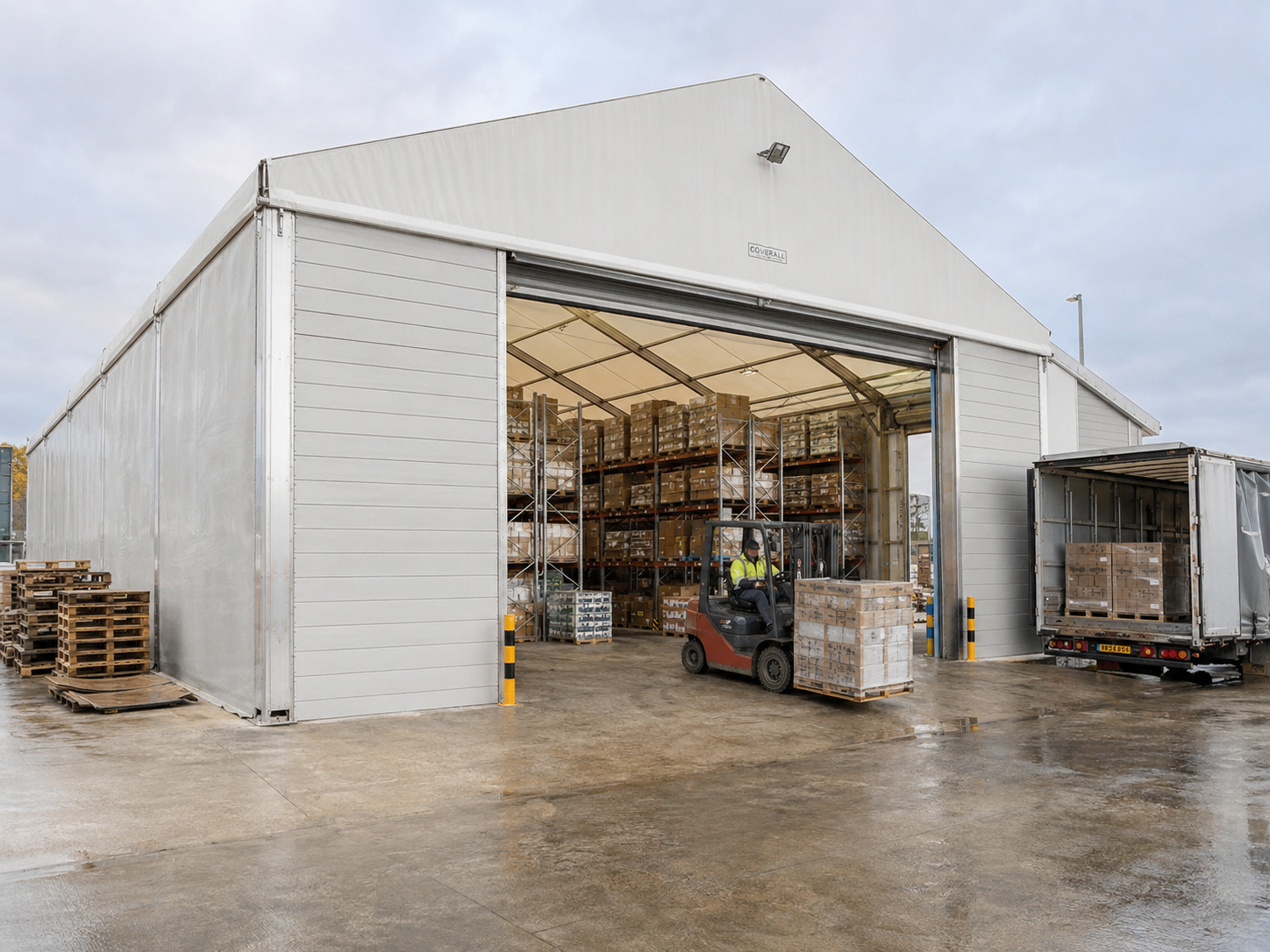
The tent's frame is constructed from aluminum alloy profiles, while the cover is a double-layer PVC-coated polyester tarpaulin. This material combination provides durability and weather resistance suitable for applications ranging from temporary warehouse storage to sports venues.
Fire Safety Certification
Fire compliance is a mandatory requirement in many markets, particularly for event tents in the US (NFPA 701) and Europe (EN 13782:2015). Shoulder Tent has obtained an SGS Test Report for its 850gsm PVC coating material (Report No. AJFS2101000426FF). The test was conducted according to CAN/ULC-S109-14 Clause 4.4 Large-Flame Test. This certification serves as evidence of the material's flame-retardant properties for global market acceptance.
Application Scenarios
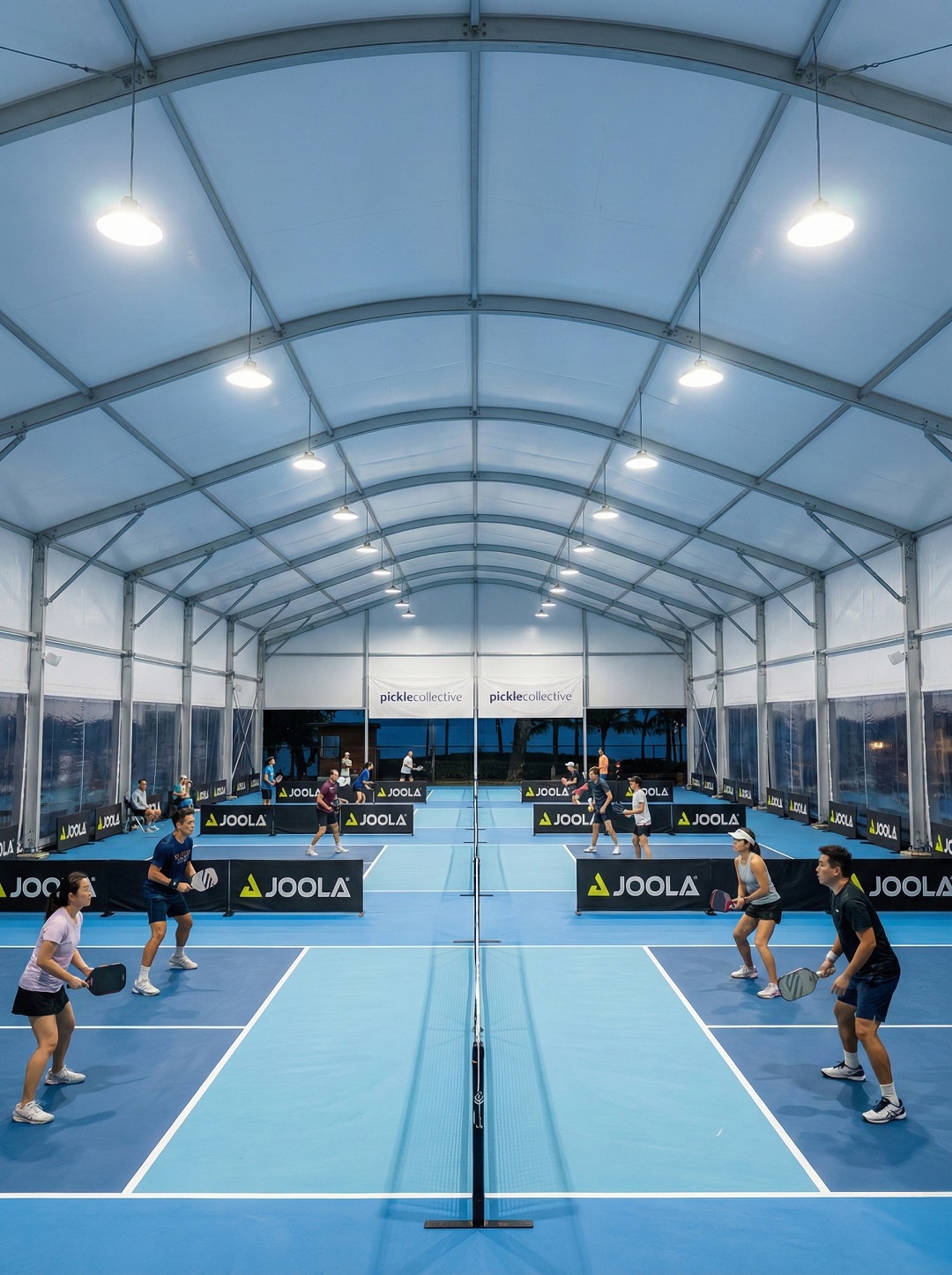
Shoulder Tent's aluminum frame tents are designed for a variety of use cases: warehousing & logistics, sports facilities (pickleball, padel, tennis), weddings and events, agricultural storage, and hospitality resorts. The modular assembly system allows rapid installation and dismantling. Key accessories include cassette flooring, sidewalls/doors, ventilation, insulation, lighting, staging, and anchoring systems.
Market Trends and Industry Context
The global event tent market, which includes aluminum frame structures, is projected to exceed USD 3 billion by 2025, with a CAGR of 6.2% (Rethinking The Future). The broader tent market (storage, sports, event) is expected to grow from USD 4.01 billion in 2025 to USD 6.07 billion by 2033 (Shelter Structures). Additionally, China exported approximately USD 5.55 billion in "Aluminium Structures" (HS 7610) in 2024 (OEC), reflecting strong global demand for modular frame solutions.
Comparison with Traditional Structures
Compared to permanent steel or concrete buildings, aluminum frame tents offer significantly lower upfront cost, faster deployment, and site adaptability. They can be erected on a variety of terrains without heavy foundations. However, one honest limitation is that their thermal insulation and long-term durability (frame life 15–20 years, fabric 5–8 years) are generally inferior to permanent structures. This makes them best suited for temporary or semi-permanent applications where flexibility and speed are prioritized.
Future Outlook
As industries demand more agile space solutions, aluminum frame tents are increasingly adopted for hybrid uses—sports turned warehouse, events turned storage. The ability to customize size, height, accessories, and fabric colors aligns with growing need for branded, functional temporary structures. With a monthly capacity of 90 units and lead time of 30–35 days, Shoulder Tent positions itself to serve global buyers requiring both standard and custom designs.
Frequently Asked Questions
What wind load can an aluminum frame tent from Shoulder Tent withstand?
The maximum wind load capacity is 100–120 km/h, as specified for models S30-1 through S60-1.
Does the tent have fire certification?
Yes. The 850gsm PVC coating material has been tested by SGS (Report AJFS2101000426FF) according to CAN/ULC-S109-14 Clause 4.4 Large-Flame Test. This certification is valid for the Global market.
What is the snow load capacity?
The tent supports a snow load of up to 1.9 kN/m².
For a complete product overview and technical data, download the company brochure: PDF Brochure.
Есть вопросы или нужны дополнительные детали?
Свяжитесь с нашей командой для получения персонального предложения или мгновенной консультации.
Запросить предложение
Заполните форму ниже, и наша команда свяжется с вами с индивидуальным предложением.
Прямой чат WhatsApp
Предпочитаете общаться в реальном времени? Напишите нам в WhatsApp для мгновенной помощи и быстрых ответов.
- Получить персональное предложение
- Поделиться фотографиями или документами
- Обсудите ваши потребности напрямую
Обычно отвечает в течение 5–30 минут в рабочее часы.