
Aluminum in Portable Gear: Balancing Weight and Strength
Portable recreational equipment is specified against two competing requirements at once: it has to be carried, packed and moved by one person, and it still has to survive seasons of outdoor use. Lightweight aluminum construction is one of the few material strategies that answers both demands, but only when the frame, the connection points and the fabric interface are engineered as one system rather than purchased as separate parts.
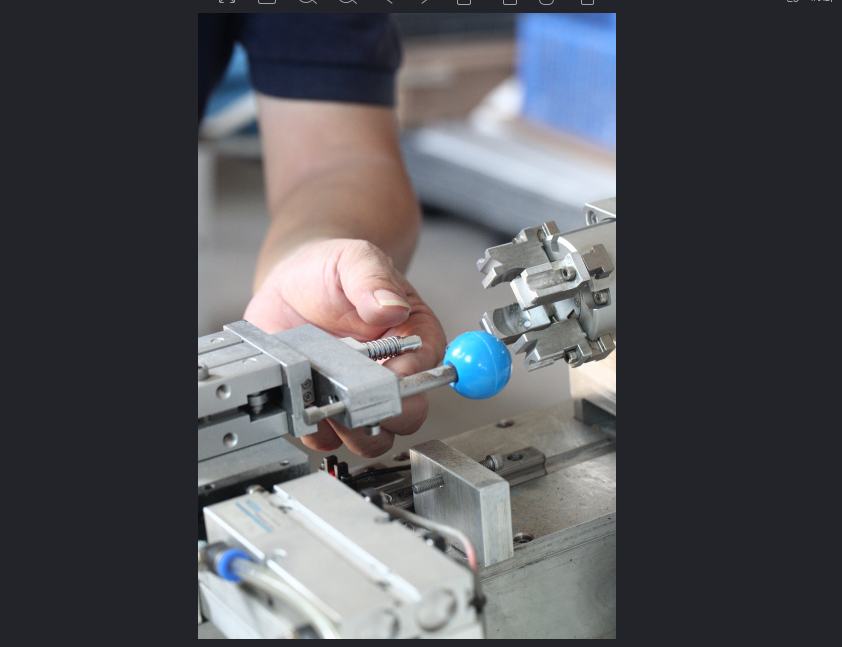
Hardware assembly inside StarCanopy's Zhuhai facility, where metal components for folding frames and outdoor structures are cut, formed and assembled.
Why weight became a specification rather than a preference
For buyers in recreation supplies, weight stopped being a comfort detail and became a procurement parameter. Camping equipment, event furniture, caravan accessories and inflatable structures are increasingly purchased for mobile use: they are loaded into vehicles, carried to a pitch or a start line, set up by staff who are not technicians, and packed away again the same day. A product that is robust but awkward to move is, in practice, a product that gets used less.
The demand backdrop supports that shift. Ken Research reports the U.S. outdoor recreation products market at USD 202.5 billion in 2025, with a forecast of USD 268.3 billion by 2031 at a 4.8% CAGR. The same publisher reports 181.1 million U.S. participants in 2024, equal to 58.6% of Americans aged six and older. On a global scope, market.us estimates the recreational and outdoor products market at USD 126.5 billion in 2024, reaching USD 210.0 billion by 2034 at a 5.2% CAGR.
What the numbers do establish is that a very large population of users is buying equipment that travels. That is the commercial reason material choice has moved up the specification sheet: for a custom outdoor product programme, the frame decision now shapes packability, assembly time, replacement rates and, ultimately, the buyer's warranty exposure.
What "strength" actually means in a portable aluminum frame
Aluminum is lighter than steel for the same volume, which is why it appears across folding chairs, caravan poles, umbrella masts and shelter frames. But lightness alone explains very little about durability. In portable gear, structural failure rarely starts in the middle of a tube. It concentrates at three interfaces.
1. The connection point
A folding product is a set of rigid members joined by moving or fixed connections. Every joint is a stress concentrator, and every joint is where manufacturing discipline shows. On the C01 folding outdoor chair, the aluminum frame uses injected aluminium connection parts. The significance is not decorative: injection-formed connectors allow the joint geometry to be shaped to the load path rather than improvised from a cut tube and a fastener, and they keep the joint consistent from unit to unit once the tooling is set.
2. Surface treatment and environmental exposure
Portable equipment lives outdoors in UV, wind and rain. On the CPPlK caravan pole, StarCanopy specifies anti-rust aluminium surface treatment as a requirement, alongside compatibility with most RV and camping tent frames. Aluminum does not rust in the way steel does, but surface treatment still governs how a pole behaves over repeated seasons of handling, abrasion and moisture. This is a specification line a buyer can ask for by name, and it is cheaper to verify before production than after delivery.
3. The fabric and foam interface
A frame is only as useful as what it carries. On the C01 chair, the back and seat are built with foam and covered in anti-UV PU fabric, and the unit ships with a carry bag and a strong PVC bag. The anti-UV specification matters because UV degradation of the seating surface is one of the most common reasons a structurally sound chair is retired. Weight reduction that comes from thinning the fabric is therefore not a genuine gain; it simply moves the failure from the frame to the surface.
How StarCanopy builds lightweight aluminum products
Zhuhai Star Canopy Co., Ltd. (StarCanopy) is a French-owned and managed manufacturer established in 2005 and based in Zhuhai, China, operating three workshops under one roof: hardware, sewing and inflatables. Its product range covers inflatable frames, inflatable furniture, inflatable sport and advertisement products, folding chairs, umbrellas, folding outdoor furniture, outdoor advertisement frames, shelters, covers and tarpaulin products. The company reports a four-person R&D team, 100% export orientation and main markets in the EU, USA, Canada, Japan, Australia and New Zealand.
The multi-material structure is the relevant detail for this topic. A lightweight chair or pole is not a metal product with fabric attached, nor a sewn product with a frame added afterwards. It is a joint engineering problem, and having metal cutting, bending, drilling, welding, surface treatment and final assembly alongside fabric development, printing and sewing under one roof means the interfaces are controlled by the same organisation that carries the warranty conversation.
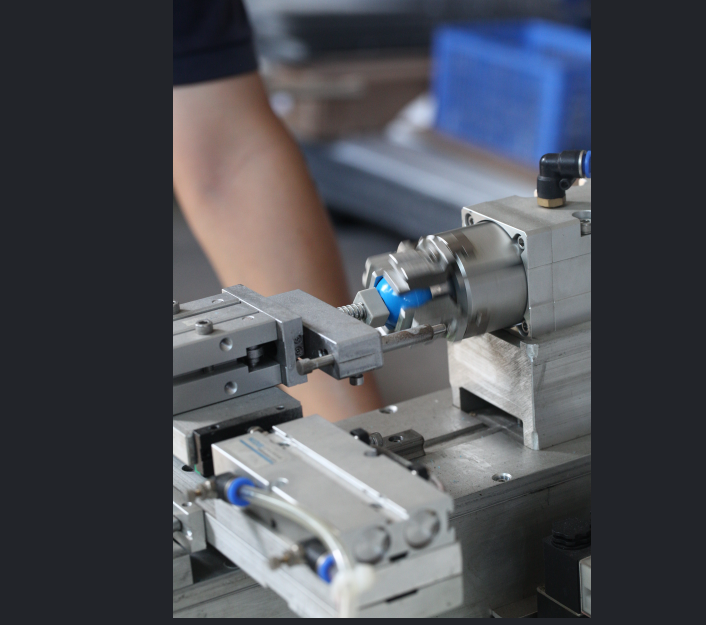
Metal assembly stage: frame geometry and joint fit are set before the fabric components are matched to the structure.
C01 folding outdoor chair
The C01 is a folding chair measuring 586 × 557 × 910 mm, built on an aluminum frame with injected aluminium connection parts. The chair back and seat use foam with anti-UV PU fabric, and the product is supplied with a carry bag plus a strong PVC bag. Its stated applications are outdoor and camping use. In material terms it is a compact illustration of the weight–strength balance: an aluminum structure for portability, injection-formed connectors for joint integrity, and a UV-specified textile surface for the part of the product that faces the sun.
CPPlK caravan pole
The CPPlK caravan pole combines aluminium and plastic at a 2 m length, and is specified for outdoor fishing and outdoor camping. Its recorded operating conditions are demanding: open-air gardens and public parks, strong UV, wind and rain exposure, and all-season outdoor use on a 24/7 basis. The compatibility note states it works with most RV and camping tent frames, with anti-rust aluminium surface treatment and customizable length. Supporting equipment for the wider shelter and fixing context includes peg and rope, water bag, sand bag and lighting.
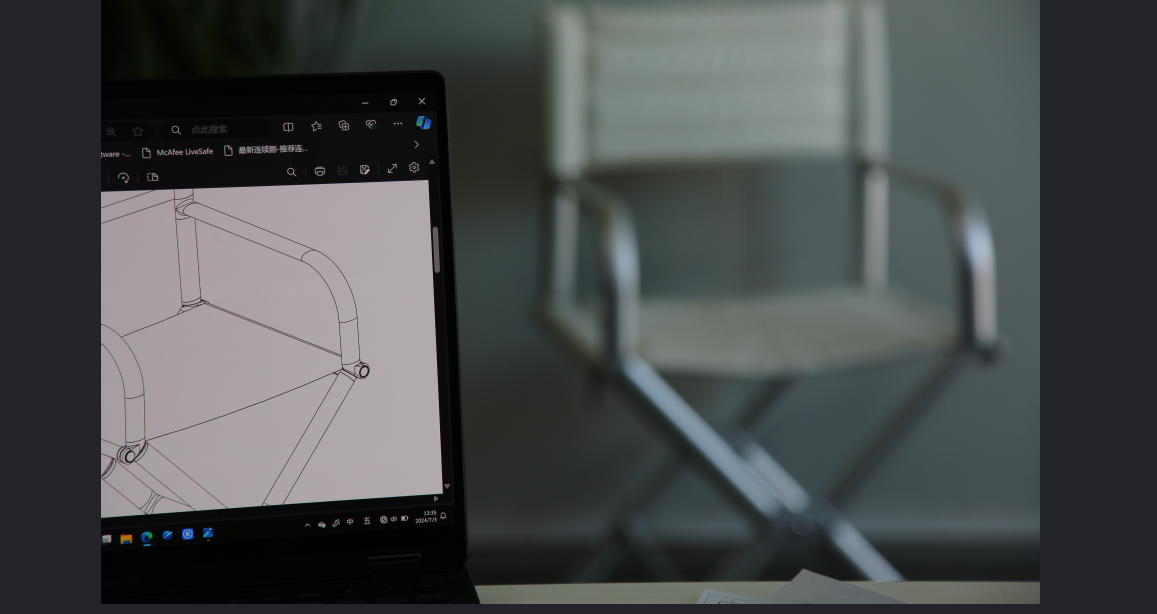
Design reference for a folding outdoor chair: frame geometry, joint layout and seating surface are developed together rather than sequentially.
Field evidence from a two-year OEM programme
Material arguments are weak without service data. A documented case is a French outdoor chair OEM programme: 1,000 pieces, running for two years, with the result recorded as working well under all-season outdoor use and zero mass quality complaints within that period. The product characterisation attached to that case is that the chair is portable, light and not easy to be broken.
A second programme with the same buyer market adds context: an outdoor umbrella OEM order of 500 pieces in France, also over two years, recorded as working well under all-season outdoor use with zero mass quality complaints within two years, with easy set-up and resistance to breakage as the noted characteristics. The UM-01 outdoor umbrella is specified as aluminium with waterproof polyester fabric and fully customized sizing.
These are supplier-recorded outcomes from specific programmes, not a general durability guarantee. Their procurement value is narrower and more useful: they show that the lightweight aluminum approach has been carried through full production runs for European buyers, and that the failure mode buyers fear most — breakage in normal use — did not generate a mass complaint pattern over a two-year window.
Matching construction to scenario
Scenario fit is where weight and strength decisions become concrete, because the same material behaves differently depending on how the product is anchored, handled and stored.
Outdoor sport and racing events
Racing and outdoor sport projects in the US, Canada and France are documented with strong UV radiation, high temperature and temporary open-air layouts on a 24/7 operating basis. Products associated with this scenario include the ST-01 outdoor shelter, the I-FB inflatable football goal and the C01 folding chair. Two requirements dominate here: the equipment must be moved and re-erected repeatedly, and it must survive full-color digital custom printing on the surface for brand logos and graphics. A light frame reduces handling labour; a printed surface adds a specification the frame must not distort.
Advertisement and event bases
Advertisement applications in the US and Canada use the ITC01 inflatable cube and the ST-01 outdoor shelter as public advertisement and event bases, again under strong UV, high temperature and temporary layouts, with peg and rope, water bag, sand bag and lighting as supporting equipment. In this scenario the load is not only physical: the structure carries a brand surface, so any deformation in the frame reads as a defect in the graphic.
RV camping and vehicle-based use
An RV camping and outdoor vehicle storage project in Spain uses the CT-01 car shelter — polyester fabric, customized sizing — as a fabric shelter on the car for camping, operating continuously under outdoor conditions and strong UV. The listed matched vehicles are RV, sedan, racing vehicle and off-road car, with the note that the client prepares the vehicle. For vehicle-based programmes, portability is less about carrying weight and more about packed volume and set-up steps.
Camping, fishing and garden use
The CPPlK caravan pole belongs to the camping and fishing scenario in France, where all-season exposure and frame compatibility decide whether the accessory is used at all. A pole that does not fit most RV and camping tent frames is a pole that stays in the bag. This is why compatibility, surface treatment and customizable length appear in the specification rather than in the marketing description.
Where aluminum stops being the right answer
A credible material discussion has to include its boundaries. StarCanopy's own ST-01 outdoor shelter is specified with an aluminum or steel frame plus PU-coated polyester fabric, which is a useful signal: aluminum is one option within the range, not the universal default.
- Wear at moving joints. Aluminum frames depend on connector design. Injected aluminium connection parts, as used on the C01, are the mechanism that keeps joints stable — but they are a designed feature, not an inherent property of the metal. Programmes that specify a bare tube-and-fastener joint are specifying a different, weaker product.
- Fixed dimensions. The CPPlK caravan pole is documented at a 2 m length, with customizable length recorded as a requirement in its camping scenario. Buyers whose frame system needs a different standard length should treat length as a customization question to be confirmed, not an assumption.
- Anchoring is separate from the frame. Outdoor shelters and event structures in the recorded scenarios rely on peg and rope, water bag, sand bag and lighting. No frame material substitutes for anchoring discipline on a temporary open-air layout.
- Where static mass is the priority. For applications where the structure will not be moved and maximum rigidity matters more than handling weight, the steel-frame option within the ST-01 specification remains relevant.
A procurement checklist for lightweight portable gear
The following criteria translate the material discussion into questions a sourcing team can put to a supplier. Each row corresponds to a fact that StarCanopy documents today, which makes the criterion verifiable rather than rhetorical.
| Criterion | What to verify | Reference point |
|---|---|---|
| Frame construction | Material and joint type, not just tube diameter | C01: aluminum frame with injected aluminium connection parts |
| Surface treatment | Anti-rust treatment specified for outdoor seasons | CPPlK: anti-rust aluminium surface treatment |
| Textile specification | UV resistance and foam build for seating surfaces | C01: anti-UV PU fabric with foam back and seat |
| Compatibility | Fit with existing frames, vehicles or anchoring systems | CPPlK: compatible with most RV and camping tent frames |
| Inspection | Full inspection before shipment, including tensile and dimensional checks | 100% full inspection: air tightness, material tensile test, size verification, appearance check |
| Commercial terms | MOQ and lead time matched to launch or replenishment plans | OEM: MOQ 1 unit, 1–2 weeks for small quantities. ODM: 7–30 days. Monthly capacity 1,000 units |
| Packing | Transport and end-user packing defined at quotation stage | C01: carry bag plus strong PVC bag |
Market trend: portability as a buying criterion
The direction of travel is toward equipment that serves multiple scenarios rather than one. Public-company data cited by Capstone Partners put average last-twelve-month revenue growth for outdoor recreation sector companies at 4.8% year over year in 2025 — a sector-growth indicator, not a custom-product figure, and not comparable to the CAGR forecasts above because the metric and scope differ.
At product level, the observable pattern is consolidation of range. A buyer sourcing a custom outdoor chair, a custom camping shelter, a custom outdoor furniture cover or a custom outdoor umbrella increasingly wants one partner who can handle metal, textile and inflatable components together, because mixed-material products fail at the interfaces between those categories. StarCanopy's three-workshop structure — hardware, sewing and inflatables — maps directly onto that expectation, and its stated buyer base of sourcing managers, product managers and procurement directors in sports, retail, events and industrial sectors reflects it.
Future outlook
Two pressures are likely to shape lightweight portable gear over the next product cycles. The first is repairability and parts logic: as buyers push for longer service life, the value of a defined connector and a replaceable textile surface rises relative to a sealed, non-serviceable frame. The second is documentation: inspection regimes such as 100% full inspection before shipment with air tightness, tensile, dimensional and appearance checks are becoming a normal expectation rather than a premium service, and buyers increasingly ask for the record, not just the promise.
For manufacturers, the practical consequence is that the weight–strength conversation moves from material marketing to specification writing. For buyers, it means the differentiator is less the word "aluminum" on a quotation and more the connector design, the surface treatment, the textile specification and the inspection protocol behind it.
FAQ
Which portable outdoor scenarios suit aluminum-frame equipment best?
Aluminum-frame equipment fits scenarios where the product is moved, erected and packed repeatedly. Recorded StarCanopy scenarios include outdoor sport and racing events in the US, Canada and France with temporary open-air layouts and 24/7 operation, advertisement and event bases in the US and Canada, and camping and fishing use in France with all-season UV, wind and rain exposure. In these settings portability reduces handling labour while the frame still has to hold printed surfaces and seating loads.
What do the injected aluminium connection parts on the C01 chair do?
They form the joints of the aluminum frame. Injected aluminium connectors let the joint geometry be shaped to the load path instead of relying on a cut tube joined by fasteners, and they keep joint consistency between units once tooling is set. The C01 also uses foam with anti-UV PU fabric on the back and seat, a carry bag and a strong PVC bag, and measures 586 × 557 × 910 mm.
What is the CPPlK caravan pole made of, and under what conditions is it specified?
The CPPlK is an aluminium and plastic caravan pole with a 2 m length, intended for outdoor fishing and outdoor camping. Its recorded operating conditions are open-air gardens and public parks with strong UV, wind and rain exposure, in all-season use on a 24/7 basis. It is specified with anti-rust aluminium surface treatment, compatibility with most RV and camping tent frames, and customizable length.
How does StarCanopy verify lightweight aluminum products before shipment?
The documented quality-control procedure is 100% full inspection before shipment, covering air tightness, material tensile test, size verification and appearance check. This applies to both OEM production — built from client samples, drawings, specifications and production requirements — and ODM development, where engineering design, material development, pattern making, lab testing and prototyping precede mass production.
What are the limits of an aluminum construction for portable gear?
Aluminum depends on connector design for joint stability; injected connection parts are a designed feature, and a bare tube-and-fastener joint is a different, weaker product. Anchoring remains a separate requirement, since outdoor shelters and event structures rely on peg and rope, water bag, sand bag and lighting regardless of frame material. Where a structure is not moved and maximum rigidity matters more than handling weight, the steel-frame option within the ST-01 outdoor shelter specification remains applicable.
Can frame length, fabric, printing and sizing be customized for a specific project?
Yes, within documented limits. StarCanopy operates both OEM and ODM models: in OEM, production follows client samples, drawings and specifications, with fabric development, custom printing, sewing and PVC or TPU film processing, plus metal cutting, bending, drilling, welding, surface treatment and final assembly. In ODM, clients provide product concepts, application scenarios and performance standards, and engineering design through mass production is completed in-house. Fully customized sizing is specified on the ST-01 shelter, the CPPlK pole, the UM-01 umbrella and the CT-01 car shelter, and full-color digital surface printing for logos and graphics is a recorded requirement in event and advertisement scenarios.
Есть вопросы или нужны дополнительные детали?
Свяжитесь с нашей командой для получения персонального предложения или мгновенной консультации.
Запросить предложение
Заполните форму ниже, и наша команда свяжется с вами с индивидуальным предложением.
Прямой чат WhatsApp
Предпочитаете общаться в реальном времени? Напишите нам в WhatsApp для мгновенной помощи и быстрых ответов.
- Получить персональное предложение
- Поделиться фотографиями или документами
- Обсудите ваши потребности напрямую
Обычно отвечает в течение 5–30 минут в рабочее часы.