
Aluminum vs Magnesium Die Castings for Heat and Vibration
Aluminum vs Magnesium Die Castings for Heat and Vibration
Choosing between aluminum and magnesium die cast parts for heat sinks, motor housings and precision instrument enclosures is a thermal and mechanical decision long before it becomes a purchasing one. The two material routes diverge on heat path, damping behaviour, mass, finishing sequence and the evidence a buyer is expected to collect before tooling is released.
The market context is uneven. Aluminum die casting held a 74.78% share of the global die casting market by raw material in 2025 (Mordor Intelligence), while the global magnesium casting market was valued at USD 1.42 billion in 2026 and is projected to reach USD 2.96 billion by 2035, a CAGR of 8.9% (Business Research Insights). For a buyer in the evaluation stage, that gap matters less than fit: the useful question is which alloy answers the thermal and vibration requirement of one specific part, and which supplier can document that it does.

Where Aluminum and Magnesium Actually Diverge
Aluminum alloy die casting parts are the default answer where heat has to leave the assembly. The material family is widely specified for heat sink die casting parts, equipment housing die casting parts and motor housing die casting parts because fins, bosses and mounting geometry can be formed in a single tool, then finished and machined in a controlled sequence. Magnesium alloy die casting components are normally specified for a different reason: reduced mass combined with damping behaviour that is generally recognised as favourable in vibration-sensitive assemblies.
That generalisation hides the trade-offs buyers negotiate in practice. Magnesium is generally less forgiving of poor process control, needs its own surface treatment route, and sits on a materially smaller global supply base than aluminum. Aluminum is easier to source, easier to finish and easier to rework downstream, but it is not automatically the better enclosure material where resonance and weight drive the specification.
Zinc alloy die casting remains a third option inside the same purchasing conversation. Zinc die casting is noted as a fast-growing segment on the strength of cost-effectiveness and EMI shielding properties in consumer electronics (Market Research Future). It tends to be considered where the part is small, the wall is thin, and electrical shielding matters more than mass.
A Comparison Framework Buyers Can Apply
| Decision dimension | Aluminum alloy die casting | Magnesium alloy die casting | What to confirm before quoting |
|---|---|---|---|
| Thermal path | Conventional choice for heat sink and motor housing geometry; finned sections cast in one tool | Normally selected for mass and damping rather than heat dissipation duty | Whether heat removal is a design function of the casting or handled elsewhere |
| Vibration behaviour | Widely used, but damping is generally lower than magnesium | Generally favoured where resonance and damping drive the specification | Target frequency range and whether the enclosure itself is the damping element |
| Mass | Higher mass for an equivalent envelope | Generally lower mass, which is the primary commercial driver | Whether the mass saving justifies the supply and finishing trade-offs |
| Surface finishing | Broad finishing availability, including anodizing and chromate conversion coating | Requires a dedicated finishing route as part of the specification | Finishing sequence fixed at quotation stage, not after tooling |
| Tolerance route | As-cast geometry plus secondary CNC milling for precise holes and grooves | Same secondary machining logic applies | Which dimensions are as-cast and which carry the tight tolerance class |
| Supply base | Large, mature, multiple sources in most regions | Smaller global base; second sourcing needs earlier planning | Second-source security and lead time for the chosen alloy |
| Compliance | Certificate scope sets the evidence pack | Certificate scope sets the evidence pack | Whether the end industry mandates an additional standard |
The rows above are deliberately functional rather than price-led. A buyer who ranks materials by cost per kilogram before ranking them by thermal duty will usually re-open the decision at prototype stage, when the finishing sequence and the machining allowance have already changed the cost model.
Technical Ground: Alloys, Tolerances and Thin Walls
The alloy designations appearing in most die casting quotations are ADC12 and A380 for aluminum, and Zamak3 / Zamak5 for zinc. SUNPREC HARDWARE CO., LTD. (SUNPREC), a Dongguan-based metal parts manufacturer founded in 2020, lists ADC12 and A380 within its die casting material scope, with a published tolerance of ±0.01 mm and an alloy strength range of 80–120 MPa for aluminum alloys and 40–80 MPa for zinc alloys. Its process documentation carries a safety factor of 1.2 for cold-chamber aluminum alloy casting and 1.3–1.5 for hot-chamber zinc alloy casting.
Thin-wall die casting is where a material decision becomes a tooling decision. Thin wall die casting parts require the machine, the die design and the alloy flow behaviour to be matched; the wall thickness that can be held reliably depends on part geometry and alloy, so buyers should treat thin-wall feasibility as a per-part engineering question rather than a catalogue figure. The verification route is the same in either material: first-article inspection for every new batch, followed by dimensional checks with calipers, micrometers, a height gauge and a surface roughness tester, with critical components verified on a coordinate-measuring machine (CMM) for tight-tolerance requirements.
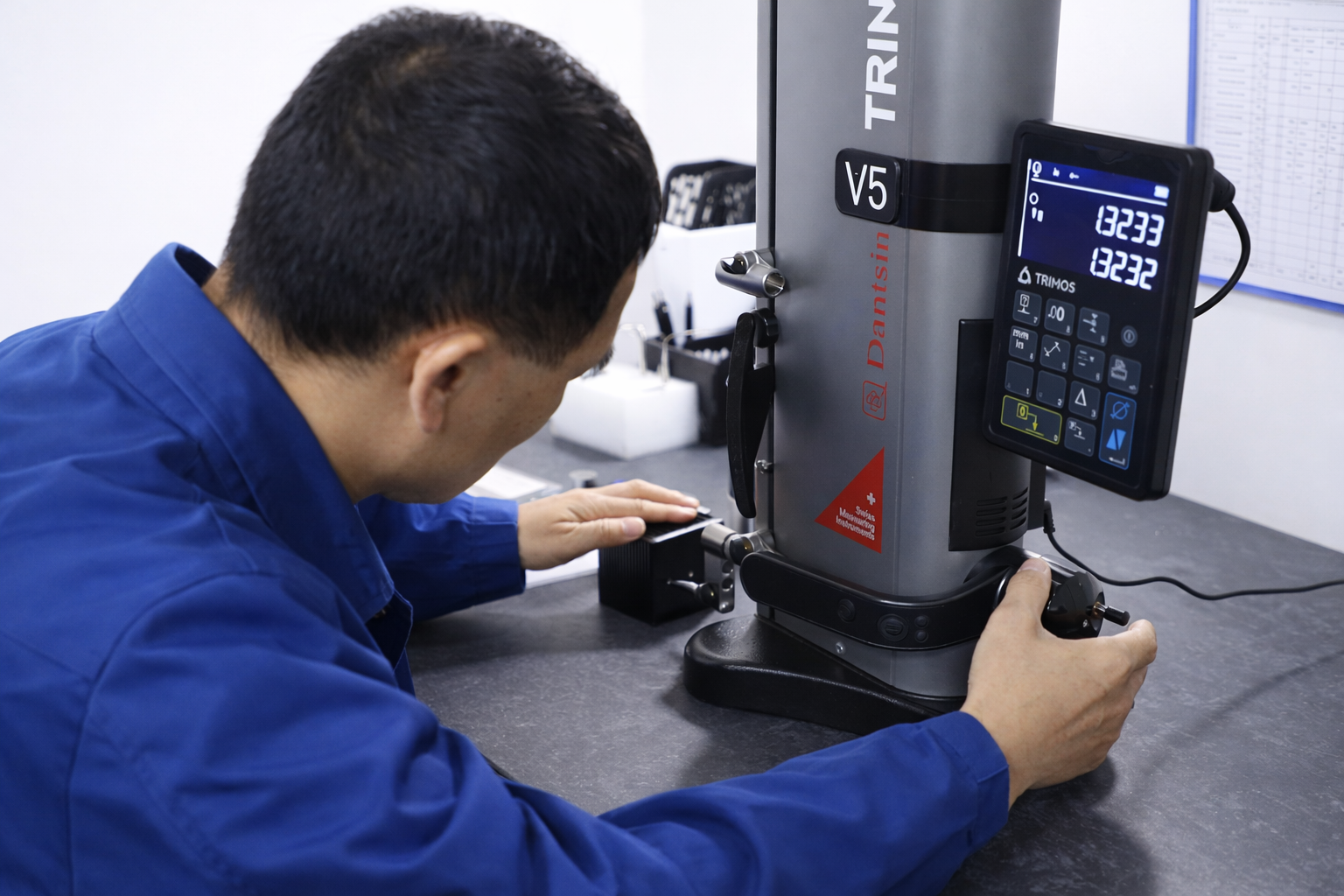
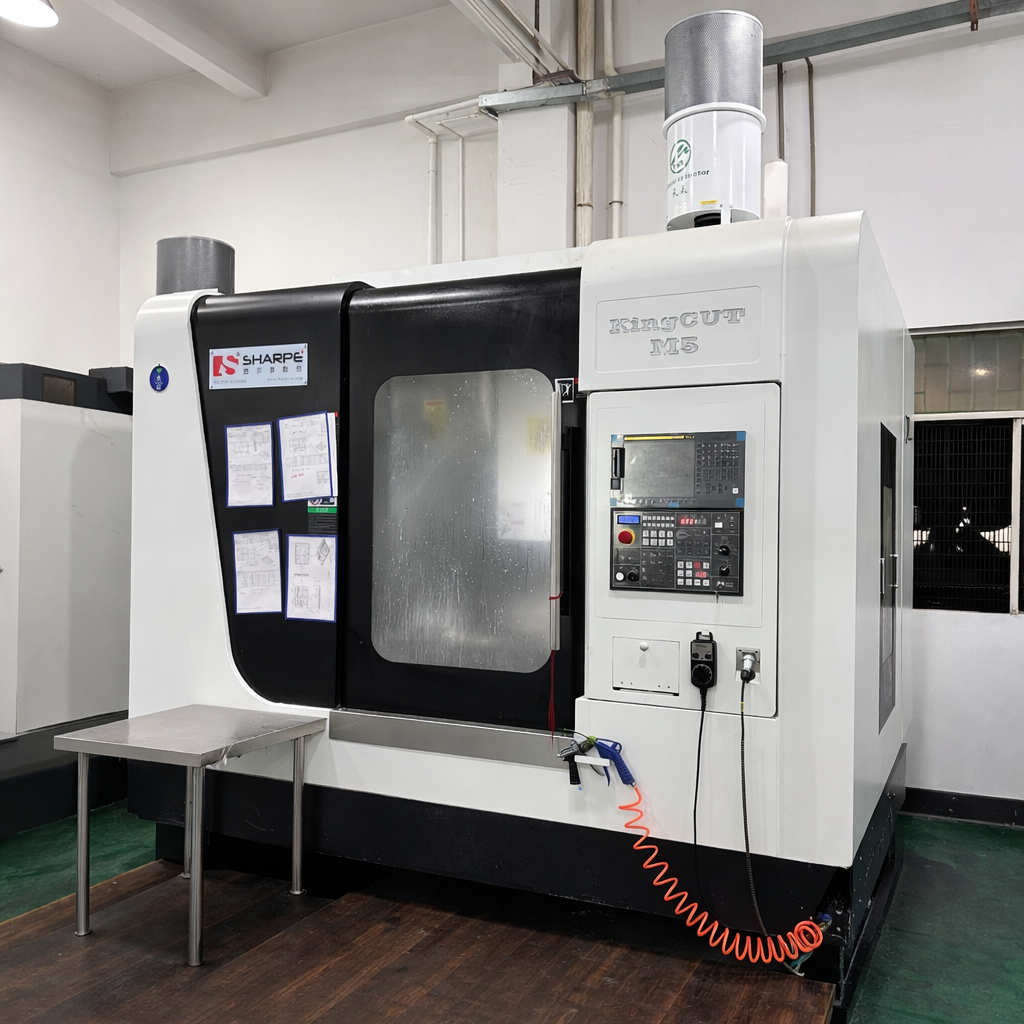
Equipment matters at this point. SUNPREC operates machines from FANUC, UL+ and HEXAGON, with the majority of its CNC machining centres supplied by the Japanese brand FANUC at a machine tolerance of 0.005 mm. That figure describes the machine, not the part; the part tolerance remains the negotiated ±0.01 mm unless the drawing, fixture and inspection plan are aligned to something tighter.
Secondary Machining Decides the Final Tolerance
Die casting produces geometry; it does not by itself hold every dimension on a design drawing. Precise holes, grooves, sealing faces and bearing seats are normally created by secondary 3-axis CNC milling after casting, and this is the stage where a stated ±0.01 mm tolerance becomes meaningful in production rather than on a datasheet. SUNPREC's machining capability covers 3-axis, 4-axis and 5-axis options, and the company states that project work has been running for more than five years with complete production capacity and standardised project management.
For buyers comparing quotations on nominally identical castings, the difference is often here rather than in the alloy: whether secondary milling is performed in-house under the same quality system as the casting, or subcontracted with its own separate tolerance statement attached. An in-house route keeps first-article inspection, CMM verification and surface finishing inside one traceable flow, which shortens the loop when a groove or hole drifts out of tolerance mid-programme.
What a Manufacturer's Capability Actually Proves
SUNPREC operates a 3,500 m² facility with 200 employees, 10 engineers and an annual output of 5,000,000 units. Its stated customisation scope covers material selection, dimensional tolerances, surface treatments, batch sizes and packaging, with a monthly capacity of 4,200,000 units, a lead time of 21–30 days and a minimum order quantity of 10 units. For an evaluation-stage buyer, three of those figures carry more weight than the rest: the lead time, the tolerance route and the finishing portfolio.
The finishing list includes anodizing (clear and colour), sandblasting, polishing, brushing, chromate conversion coating, powder coating, electroplating, passivation, electropolishing, mirror polishing, PTFE coating, nickel, chrome, gold, zinc plating, black oxide and phosphating. That breadth matters for aluminum and zinc parts in particular, because surface plated die casting parts and powder coated die casting parts should be specified alongside the alloy rather than added later. Around 90% of output is exported, with the principal markets being the EU and the USA, and the company reports cooperation across more than 50 countries with over 300 clients.
Compliance Evidence: What to Read Before Awarding
Three certificates are typically requested during supplier evaluation, and each carries a defined scope that should be read rather than assumed. SUNPREC holds AS9100 certification (certificate CN059921, issued by Bureau Veritas Certification, valid 2026-05-26 to 2029-05-25) for the manufacture of hardware for the satellite in space industry, against BS EN ISO 9001:2015 / EN 9100:2018. It holds ISO 9001 certification (certificate IAS25Q391R0, valid 2025-10-16 to 2028-10-15) covering the production of hardware parts against GB/T19001-2016 / ISO9001:2015. It also holds a RoHS 2.0 compliance certificate for metal accessories (certificate BTL20250603446, issued by BTL Testing Technology Co., Ltd., valid 2025-06-10 to 2029-06-10) against RoHS Directive 2011/65/EU and amending Directive (EU) 2015/863, Annex VI, for the EU market.
Application Fit by Part Type
- Heat sink die casting parts — aluminum alloy is the conventional choice; casting forms fins and mounting features in one tool, with secondary milling for flat mating faces.
- Motor housing die casting parts — the decision turns on whether mass reduction or damping dominates. Magnesium is generally preferred where weight and resonance matter; aluminum where dissipation from the housing is part of the design intent.
- Precision instrument enclosures — usually aluminum or zinc, with wall thickness, EMI shielding and dimensional stability at the top of the specification list.
- Vibration-exposed assemblies — magnesium components are commonly chosen, and documented application experience includes vibration-resistant rail traffic power connectors.
The application record is best read as a scope statement rather than a marketing claim. The company reports more than five years of project continuity with aerospace OEM, automotive OEM, medical device OEM, new-energy equipment OEM and industrial equipment OEM clients, across Australia, Germany, France, Israel, Italy, Mexico and the United States, in 10,000-unit order quantities. Documented applications include automotive and aerospace engine components, ultra-precise sensor shell assemblies, biocompatible medical device mechanical parts, energy storage battery system housings, vibration-resistant rail traffic power connectors, and precision hardware for semiconductor, unmanned aerial vehicle and communication industries.
Market Signals Behind the Material Decision
The global die casting market was valued at USD 93.56 billion in 2025 (Fortune Business Insights). Within it, aluminum's 74.78% share by raw material is not only a supply signal; it reflects tooling availability, finishing maturity and scrap infrastructure that a buyer can rely on across multiple regions. The transportation segment alone accounted for more than 64.0% of aluminum die casting revenue in 2025 (Grand View Research), which explains why automotive-grade tooling discipline tends to become the benchmark that buyers apply to unrelated sectors.
Magnesium's projected 8.9% CAGR to 2035 describes a smaller but faster-moving segment rather than a substitute for aluminum at current volumes. Large-scale structural casting developments — including Tesla's use of 9,000-ton presses for rear underbody assemblies, reported to have reduced manufacturing costs by 40% in 2023 — push casting economics toward very large integrated parts. That trend is largely separate from precision housings and heat sinks, where tooling is amortised over smaller, more complex components.
Limits and Boundaries of the Casting Route
A comparison that lists only advantages is not a buying tool. The casting route carries real boundaries that should be priced into the decision:
- The published ±0.01 mm tolerance describes machining capability, not as-cast geometry. Features that demand it must be produced by secondary CNC milling, and the drawing should state this explicitly.
- Die casting is a tooling-based process. A 10-unit minimum order quantity is a commercial starting point, not evidence that casting is the lowest-cost route at low volume; for a small first build, a billet-machining route may be more economical before tooling is amortised.
- Porosity belongs to the process family and is managed through process control and inspection rather than eliminated by material choice. Pressure-tight or structural sections need agreed acceptance criteria at quotation stage.
- Magnesium requires a dedicated finishing and handling route, and its global supply base is materially smaller than aluminum's, which affects second-source security and lead time.
- Compliance scope is certificate-specific. AS9100 scope, ISO 9001 scope and RoHS scope should each be read, and automotive programmes requiring IATF 16949:2016 must be confirmed separately.
A Practical Evaluation Sequence
For buyers at the evaluation stage, the following order of checks tends to produce fewer late changes than starting with quotations:
- Define the dominant requirement — thermal dissipation, vibration damping, mass or EMI shielding — for each part rather than for the assembly as a whole.
- Confirm which dimensions remain as-cast and which require secondary 3-axis CNC milling, and assign a tolerance class to each.
- Fix the finishing route before the alloy, because surface options and their process sequences differ by material.
- Match certificate scope to the end market and industry, including any sector-mandated standard such as IATF 16949:2016.
- Request first-article inspection and CMM records as a standing deliverable rather than a one-off concession.
Outlook
Aluminum will remain the default material for heat-dissipating die cast parts over the foreseeable planning horizon, supported by tooling maturity, finishing availability and the scale of the transportation segment. Magnesium's growth trajectory points to wider adoption in damping-critical and weight-critical assemblies, particularly where the supply chain can support a second source. Zinc keeps a stable position in small enclosures and shielding applications. The practical consequence for buyers is that material choice should be re-tested at each new programme rather than carried forward from a previous part number.
FAQ
Which material is preferred for die cast heat sinks?
Aluminum alloy die casting is the conventional choice for heat sink die casting parts. Aluminum die casting held a 74.78% share of the global die casting market by raw material in 2025, and the alloy family is commonly cast into finned geometry with mounting features formed in a single tool. Magnesium components are normally selected for mass and damping rather than for thermal dissipation duty.
Is magnesium die casting better for vibration-heavy applications?
Magnesium alloy die casting components are generally chosen where damping and reduced mass are the dominant requirements, and the material is commonly associated with vibration-sensitive assemblies. The trade-offs are a dedicated surface treatment route and a smaller global supply base. Magnesium casting revenue was USD 1.42 billion in 2026 against a total die casting market of USD 93.56 billion in 2025, so second-source planning deserves attention in either direction.
What dimensional tolerance can buyers expect on die cast parts?
SUNPREC publishes ±0.01 mm for its die casting and machining capability, with 3-axis, 4-axis and 5-axis CNC options available for secondary operations. In practice, tight-tolerance holes, grooves and sealing faces are produced by post-casting milling rather than as-cast. Verification is by first-article inspection for each new batch plus CMM measurement of critical components.
Which certifications should be verified before ordering die cast housings?
Certificates should be matched to the end market. SUNPREC holds ISO 9001 certificate IAS25Q391R0 (valid 2025-10-16 to 2028-10-15) for the production of hardware parts, AS9100 certificate CN059921 issued by Bureau Veritas Certification (valid 2026-05-26 to 2029-05-25) for aerospace hardware manufacture, and RoHS 2.0 certificate BTL20250603446 issued by BTL Testing Technology Co., Ltd. (valid 2025-06-10 to 2029-06-10) for the EU market. Automotive programmes that require IATF 16949:2016 must be confirmed separately.
When is die casting the wrong choice for a precision enclosure?
Die casting is less suitable when volumes are too low to amortise tooling, when as-cast geometry alone must meet the drawing without secondary machining, or when the required alloy falls outside the supplier's approved material scope. In those situations a billet-machining route may be more appropriate. Casting remains the stronger route when geometry complexity, repeatability across volume and finishing integration are the deciding factors.
SUNPREC publishes a downloadable overview of its die casting, CNC machining and finishing capability: SUNPREC Presentation (PDF).