
Экспертное руководство для покупателей: как систематически оценить и выбрать высококачественного поставщика машин для формирования каточных дверей
Introduction: Navigating a Complex Procurement Landscape
The global market for roll-up door forming machines is diverse and specialized, driven by regional building standards, evolving safety requirements, and the demand for production efficiency. For procurement managers, sourcing the right equipment is not merely a purchase; it's a strategic investment in production capacity, product quality, and market competitiveness. This guide provides a structured, multi-dimensional framework for evaluating and selecting a supplier that aligns with your specific technical, operational, and business needs.
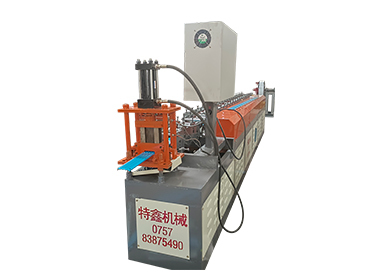
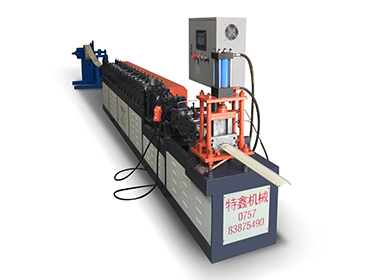
Understanding specific models, like the 125 Model Rolling Shutter Machine, is the first step in defining technical requirements.
Phase 1: Define Your Core Requirements
Clarity on your needs is paramount before engaging with suppliers. Consider these critical dimensions:
1.1 Technical & Product Specifications
- Target Market & Standards: Are you producing for the European market (requiring Europe-Specific Rolling Shutter Door Forming Equipment), Australia (Australian-Style Rolling Shutter Machine), or other regions? Compliance with local structural and safety norms is non-negotiable.
- Door Type & Function: Define the end-product: Standard residential (125 Model, 175 Model), commercial, Fire-Resistant Rolling Shutter Machine, Soundproof Rolling Shutter Door Machine, or Wind-Resistant Rolling Shutter Door Machine.
- Production Line Components: A complete line often requires multiple machines: the main curtain former, a Rolling Shutter Door Guide Rail Forming Machine (or U-Shaped Rail Equipment), and a Square Tube Bottom Beam Forming Machine.
- Speed & Automation: For high-volume output, a High-Speed Door Forming Machine with integrated Punching and cutting is essential.
1.2 Production Capacity & Scalability
Project your current and future output needs. A supplier's ability to scale with you, from a single Rolling Shutter Door Forming Machine to a full automated line, is a key indicator of a long-term partnership.
1.3 Budget & Total Cost of Ownership (TCO)
Look beyond the initial machine price. Factor in installation, training, maintenance, spare parts availability, energy consumption, and potential downtime costs. A higher-quality, reliable machine often offers a lower TCO.
Phase 2: The Supplier Evaluation Framework
Use this checklist to systematically assess potential partners.
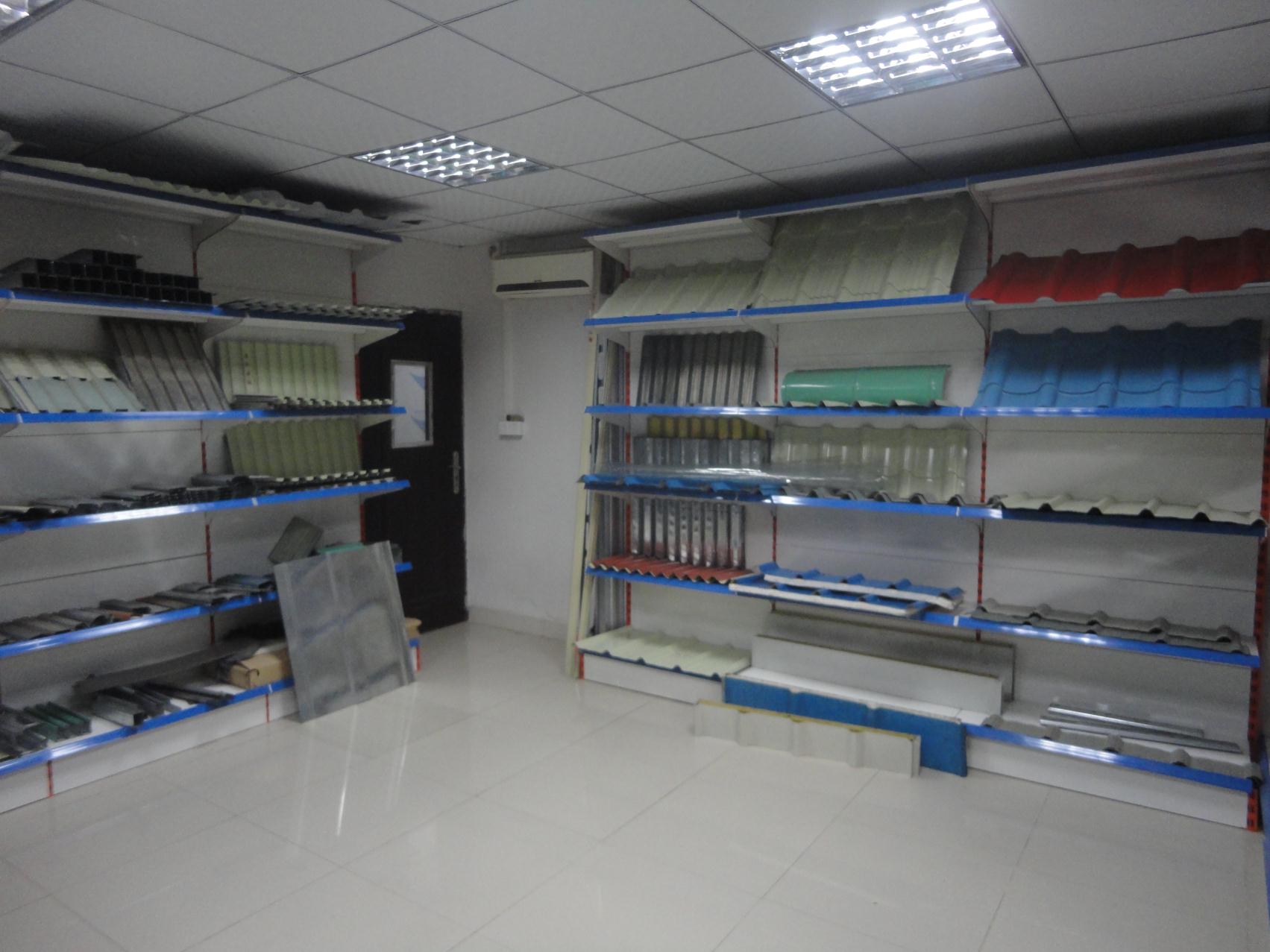
A well-organized factory showroom and production facility, like this one, reflects a supplier's professionalism and manufacturing capability.
2.1 Technical Capability & Manufacturing Depth
- R&D and Engineering Team: Inquire about the size and expertise of the engineering team. A dedicated R&D department is crucial for custom solutions and adapting to new standards. For instance, a supplier like Foshan Texin Machinery Co., Ltd. maintains a team of 15 engineers, supporting their 16 years of specialization in cold roll forming.
- Design & Prototyping Process: Ask about the software used (e.g., SolidWorks 3D simulation) and their process for designing and testing new roll profiles. This ensures precision and reduces trial-and-error.
- Core Component Manufacturing: Do they manufacture their own precision rolls on advanced CNC lathes? In-house control over core components like forming rolls is a strong indicator of quality consistency and technical mastery.
2.2 Quality Assurance & Certifications
- International Certifications: These are objective benchmarks. Mandatory checks include CE certification for the European market and ISO 9001 Quality Management System certification, which governs the entire production process from raw material to final inspection.
- Quality Control Processes: Request details on their QC protocols. How are raw materials inspected? What in-process checks are performed? A transparent QC system minimizes your risk.
- Patents & Intellectual Property: Holding patents for specific technologies (e.g., for Sound-Absorbing Guide Channel Machines or Double-Layer forming) demonstrates innovation and technical leadership.
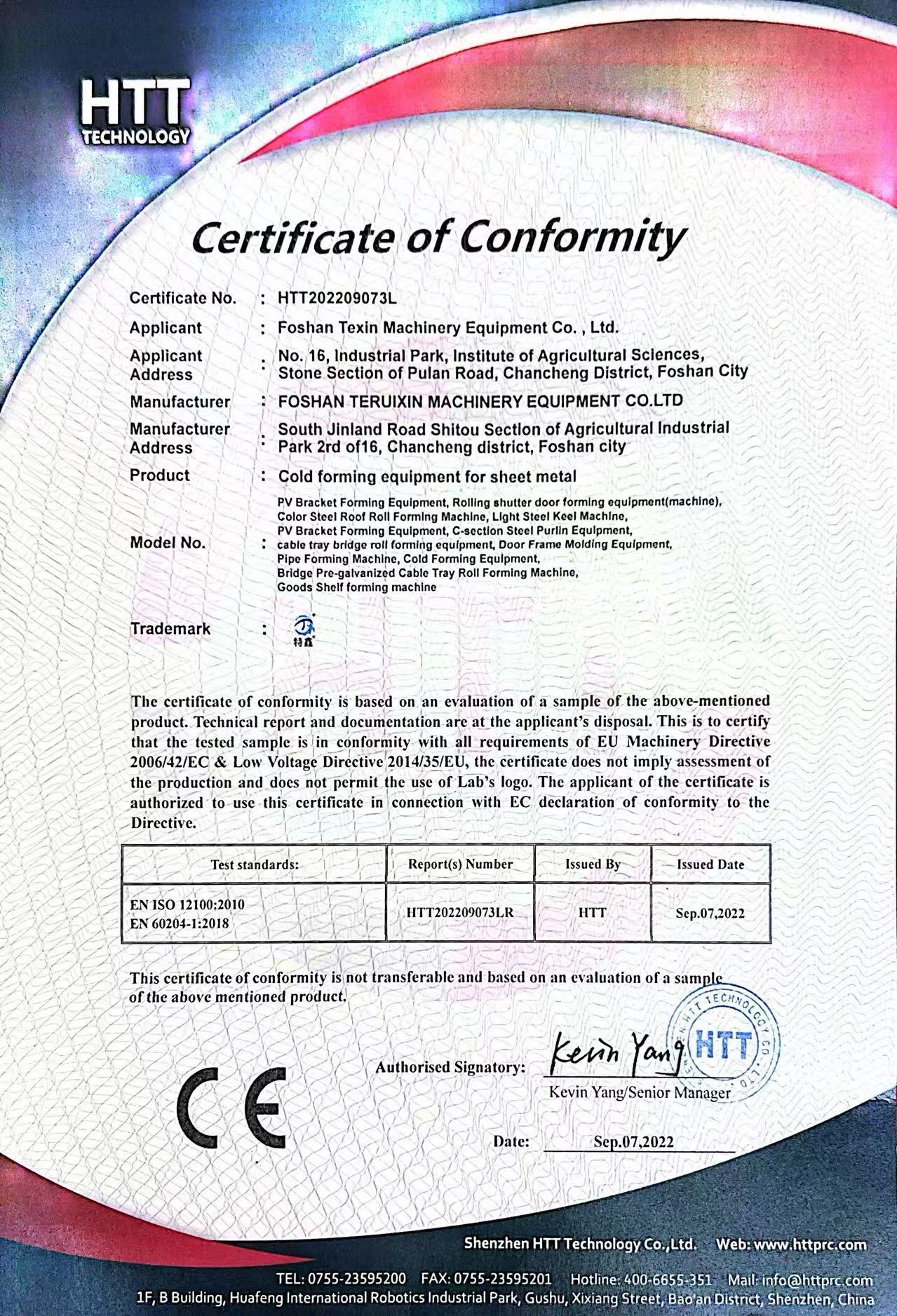
CE Certificate
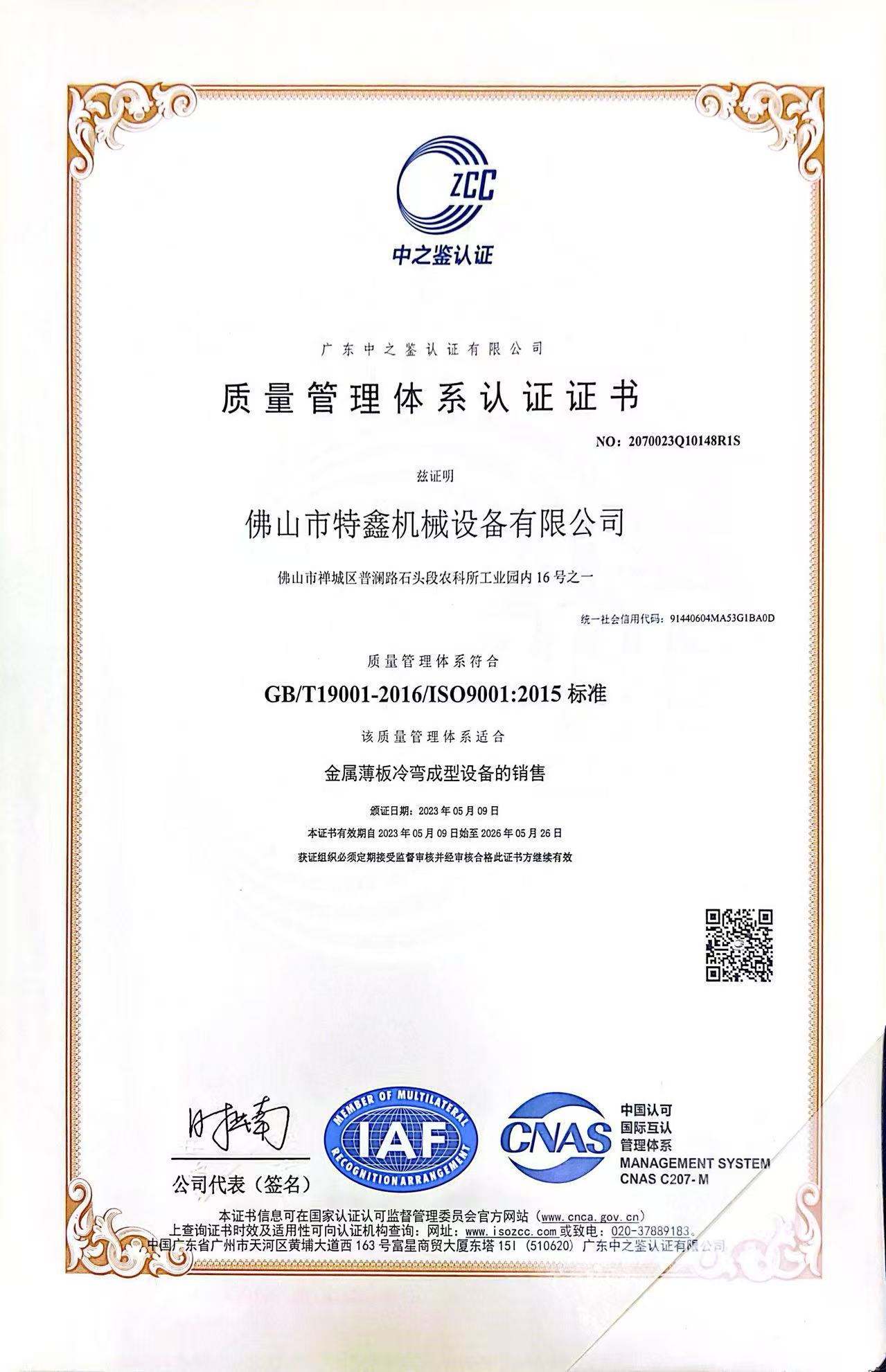
ISO 9001 Certificate
2.3 After-Sales Service & Support Ecosystem
This is where many suppliers differentiate themselves. A machine is only as good as the support behind it.
- Technical Training: Comprehensive training for your operators and maintenance staff is essential for maximizing uptime and product quality.
- Remote Diagnostics & Smart Features: Modern equipment may offer PLC-controlled systems with remote monitoring and intelligent fault alarms. For example, some advanced systems can detect and assist in diagnosing faults within seconds, significantly reducing troubleshooting time.
- Spare Parts Policy: Clarify warranty terms, spare parts availability, lead times, and cost structure. A supplier with a global logistics network is advantageous.
- Installation & Commissioning Support: Determine if they provide on-site installation or detailed remote guidance.
2.4 Market Reputation & Track Record
- Global Export Experience: A supplier with a history of exporting to diverse markets (e.g., the Americas, Europe, Africa, Asia-Pacific) has proven its ability to meet varied international standards and client needs. Review their company development timeline for geographic expansion.
- Client References & Case Studies: Ask for references from clients in your region or with similar production needs. Real-world examples, such as successful exports of finished rolling shutters to markets like Ghana, provide tangible proof of performance.
- Industry Presence & Transparency: Evaluate their professional website (www.getxjx.com), product documentation, and responsiveness to technical inquiries.
A supplier's proven export record, like shipments to Ghana, validates their equipment's capability to produce market-ready products.
Phase 3: Making the Final Decision & Negotiation
After shortlisting 2-3 suppliers based on the above framework, proceed with these final steps:
3.1 Request a Detailed Proposal & Factory Audit
Require a formal proposal detailing machine specifications, delivery timeline, payment terms, and all service inclusions. Whenever feasible, conduct a factory audit—in-person or virtual—to witness their manufacturing processes, quality checks, and factory organization firsthand.
3.2 Focus on Partnership, Not Just Price
While cost is important, the optimal choice is often the supplier that offers the best long-term value: reliable equipment, minimal downtime, excellent support, and the ability to grow with your business. A partner invested in your success will provide "equipment + quality management" services to help optimize your entire production process.
3.3 Clarify Contractual Terms
Ensure the contract explicitly covers performance guarantees (e.g., production speed, accuracy), warranty scope, liability clauses, and protocols for handling disputes or non-conforming equipment.
Conclusion: Strategic Procurement for Long-Term Success
Selecting a roll-up door forming machine supplier is a critical strategic decision. By meticulously defining your requirements and applying a rigorous evaluation framework focused on technical depth, certified quality, comprehensive support, and proven experience, you can mitigate risk and secure a capital investment that will drive productivity and profitability for years to come. Suppliers that embody a commitment to R&D, such as Foshan Texin Machinery Co., Ltd. with its 16-year focus on cold roll forming, and prioritize a full-cycle service model, position themselves as true partners in their clients' manufacturing success. For further information, prospective buyers can visit www.getxjx.com or contact them directly at +86 186 7573 3219.