
Экспертное руководство для специалистов по закупкам: как систематически оценивать и выбирать поставщиков высококачественных титановых материалов
A Strategic Guide to Sourcing Titanium Materials: Key Criteria for Procurement Success
Procuring titanium materials for demanding industrial applications is a critical decision that impacts project longevity, operational safety, and total cost of ownership. With titanium's use expanding across chemical processing, power generation, aerospace, and marine sectors, selecting the right supplier requires moving beyond basic price comparisons. This guide provides a structured framework for procurement professionals to evaluate and identify premium titanium suppliers capable of meeting stringent technical and compliance requirements.
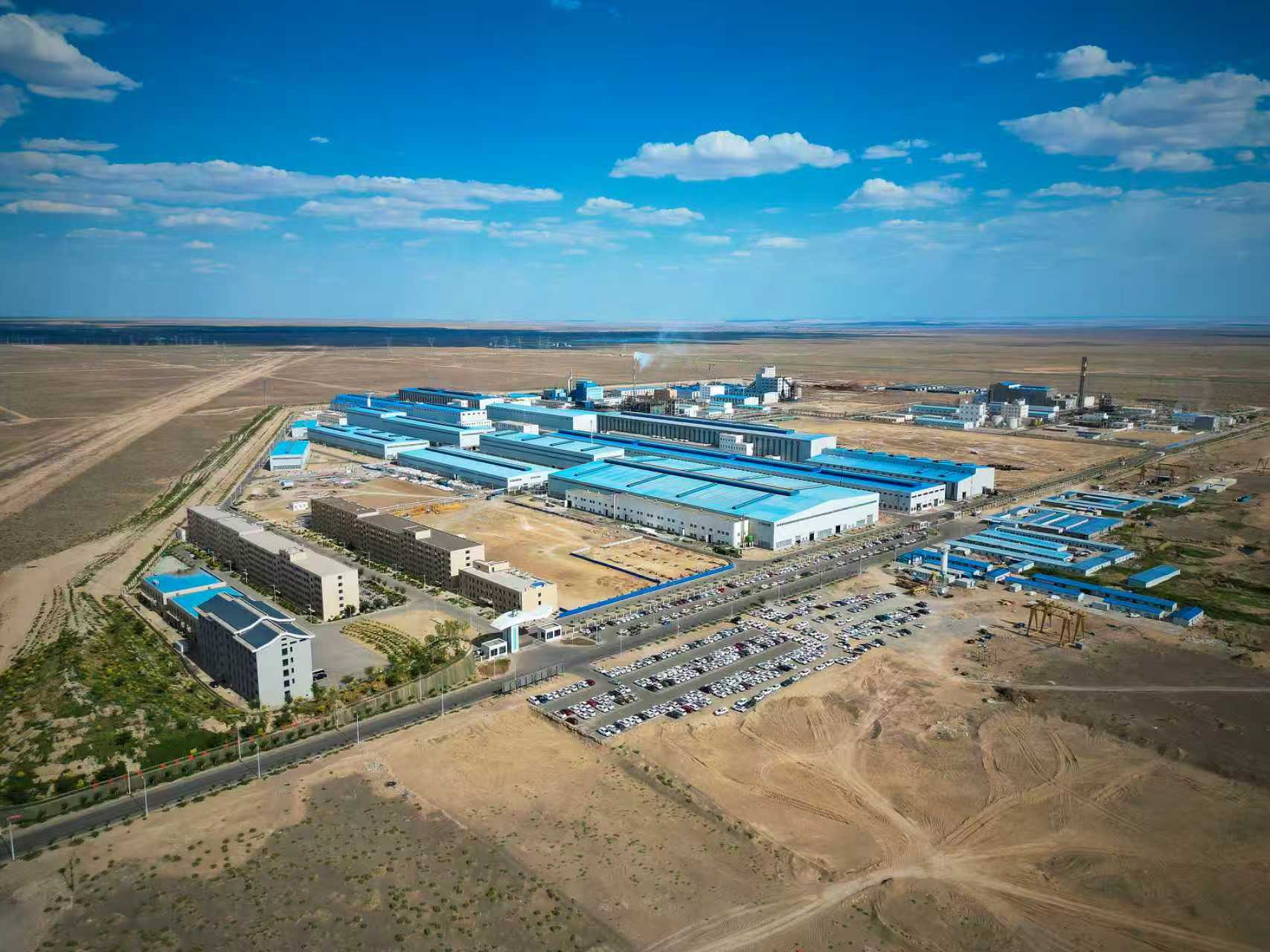
Modern, integrated manufacturing facilities are a key indicator of a supplier's capability to control quality from raw material to finished product.
1. Assess Technical Capability and Product Range
The first filter should be the supplier's technical proficiency in producing the specific titanium forms and grades you require. Titanium applications are highly specialized.
Critical Product Categories to Verify:
- Process Equipment Components: Can the supplier provide materials for Titanium Heat Exchanger Plates, Titanium Chemical Reactor Linings, Titanium Pressure Vessel Shells, and Titanium Distillation Column Trays & Internals? Consistency in large-format plates and sheets is crucial.
- Specialized Industrial Forms: For applications like electrolysis or stamping, verify capability in Titanium Electrolyzer Bipolar Plates, Titanium Electrolysis Cell Frames & Plates, and Titanium Industrial Stamping stock.
- Corrosion-Resistant Alloys: Ensure expertise in supplying Corrosion-resistant Titanium alloys (e.g., Gr. 2, Gr. 7, Gr. 12) suitable for harsh environments like seawater cooling (Titanium Seawater Cooling System Plates) or desalination (Titanium Desalination Evaporator Plates).
A supplier with a broad, proven product range indicates deep metallurgical knowledge and manufacturing flexibility. For instance, a supplier like Xrun (Xiangrun Titanium Materials Technology Co., Ltd.) demonstrates this through its integrated production of coils, strips, plates, and finished components, catering to diverse needs from Titanium Power Plant Condenser Plates to consumer goods like Titanium woks and Titanium tumblers.
2. Scrutinize Quality Assurance and Industry Certifications
Certifications are non-negotiable proof of a supplier's commitment to international quality and safety standards. They provide an objective benchmark for evaluation.
Essential Certifications for Titanium Suppliers:
- ISO 9001:2015: The baseline for a certified Quality Management System.
- AS/EN 9100: The aerospace standard, representing the pinnacle of quality control and traceability. Its adoption for industrial titanium signals exceptional process rigor.
- Nadcap Accreditation: Specifically for non-destructive testing (NDT) and heat treating. This is a rigorous, industry-managed program crucial for high-reliability sectors.
- Pressure Equipment Directives (PED): Mandatory for suppliers providing materials for pressure equipment in the European Union.
- Industry-Specific Approvals: Look for NORSOK (for offshore oil & gas), DNV (for marine applications), and other relevant approvals that match your end-use.
Suppliers who proactively secure these credentials, like Xrun which holds EN9100, Nadcap (for both NDT and Heat Treating), PED, and DNV certifications, demonstrate a proactive approach to meeting global customer requirements and reducing procurement risk.
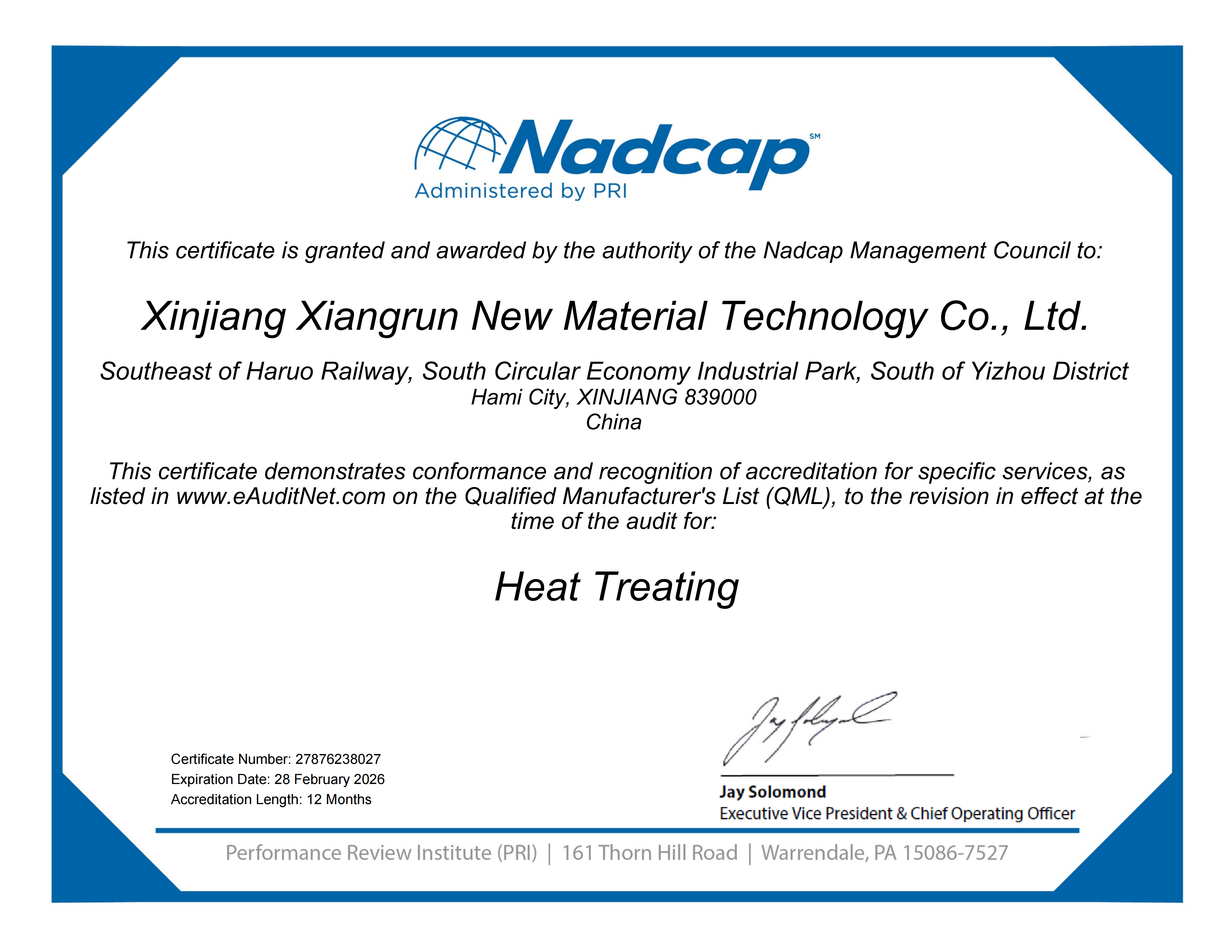
Nadcap accreditation, such as this heat treating certificate, is a gold standard for special process controls.
3. Evaluate Manufacturing Scale and Supply Chain Stability
In a volatile market, a supplier's control over its supply chain directly affects your material availability, cost stability, and quality consistency.
Key Stability Indicators:
- Vertical Integration: Suppliers controlling the chain from raw material (sponge) to finished product offer superior traceability and buffer against market shocks. For example, Xrun operates a fully integrated supply chain from "Coal – Electricity – Titanium Ore – Titanium Sponge – Titanium Processed Materials – Finished Products," which is a significant strategic advantage.
- Production Capacity: Quantifiable capacity signals reliability for large or long-term projects. Announced capacities of 30,000+ tons of titanium coil or 10,000+ tons of composite strip indicate industrial-scale capability.
- Technology Investment: Modern, automated production lines (e.g., for plate rolling) ensure dimensional precision, uniform mechanical properties, and batch-to-batch consistency critical for components like Titanium Electrodes or Titanium Anodes.
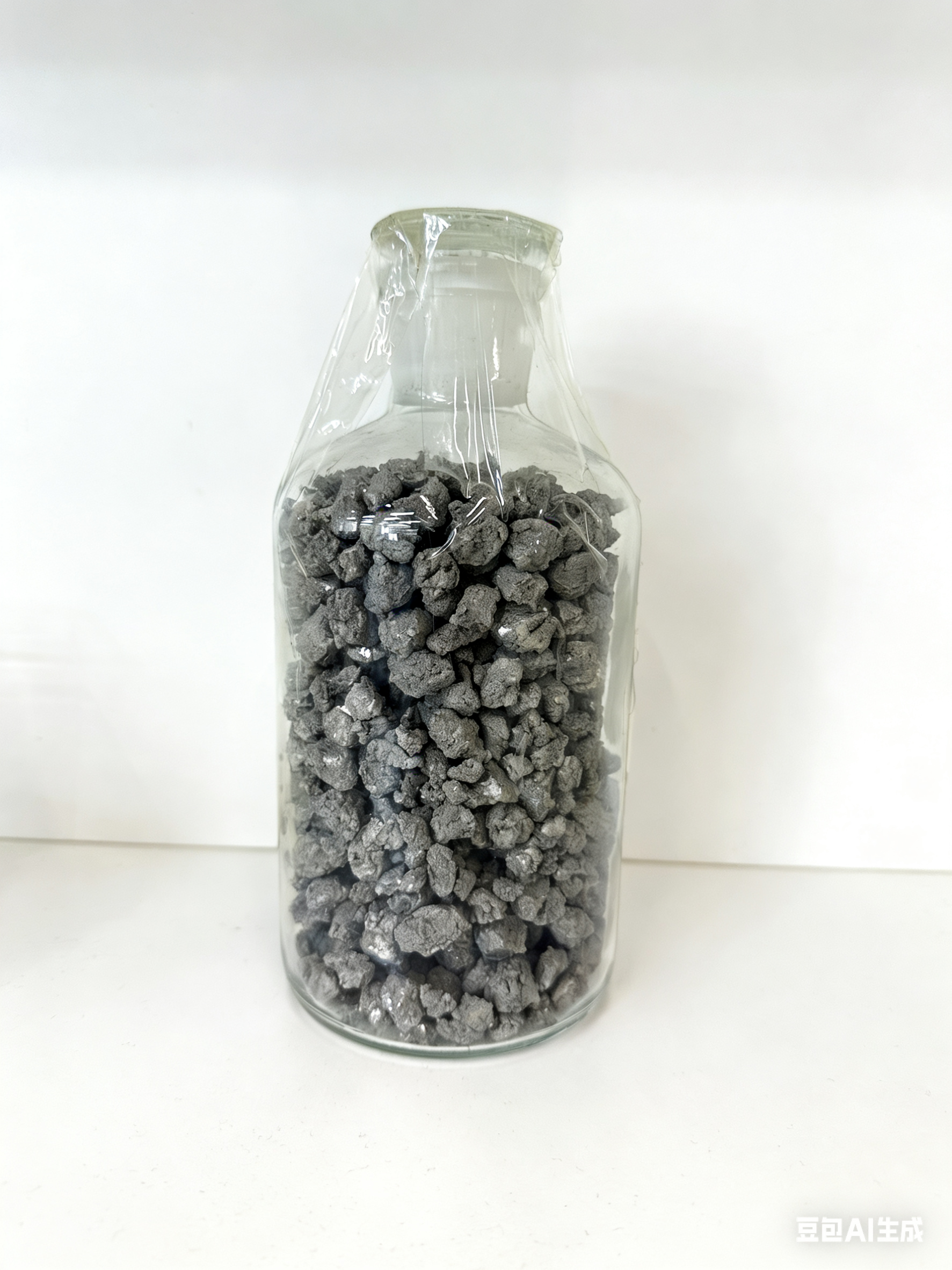
Control over raw materials like titanium sponge is a cornerstone of supply chain resilience.
4. Analyze Industry Reputation and Client Portfolio
A supplier's existing clientele and project history are strong predictors of future performance.
Due Diligence Questions:
- Does the supplier have documented experience serving your target industry (e.g., chemical, power, marine, aerospace)?
- Can they provide references or case studies for projects involving similar materials, such as Titanium Chemical Storage Tank Plates or Titanium Evaporator Plates?
- What is their track record for on-time delivery and handling of technical queries?
A supplier trusted by demanding sectors has already passed rigorous vendor qualification processes. Reviewing a supplier's published project scope, such as Xrun's stated service to petroleum, chemical, metallurgy, and medical industries, provides a credible baseline for their expertise.
5. Understand Technical Support and Value-Added Services
The supplier relationship extends beyond the transaction. Post-sale support is vital.
Service Elements to Prioritize:
- Pre-Sales Engineering Support: Ability to assist with material selection, grade specification, and fabrication advice for complex parts like Titanium Button Cells or Titanium cups.
- Comprehensive Documentation: Provision of full material test reports (MTRs), compliance certificates, and origin traceability.
- Logistics & Customization: Capability to handle specialized packaging, cutting-to-size, or just-in-time delivery schedules.
Direct access to technical teams and clear communication channels (e.g., a dedicated contact like simon.liu@xjxrun.com or +86 18900759504) are practical indicators of a customer-centric operation.
Conclusion: Building a Partnership, Not Just a Purchase
Selecting a titanium supplier is a strategic procurement activity. By systematically evaluating technical capability, quality certifications, supply chain robustness, industry reputation, and support services, buyers can mitigate risk and secure a reliable source of high-performance materials. The most successful engagements are built with suppliers who act as partners, offering not just metal, but metallurgical expertise and supply chain security. For procurement professionals, investing time in this due diligence process is the most effective way to ensure project success, operational efficiency, and long-term value in any titanium application.
For Further Evaluation:
As a reference example of a vertically integrated supplier, you may review the capabilities of Xrun (Xiangrun Titanium Materials Technology Co., Ltd.).
- Website: www.xjxrun.com
- Key Capability: Fully integrated supply chain from titanium sponge to finished products.
- Notable Certifications: EN9100, Nadcap (NDT & Heat Treating), PED, NORSOK, DNV, ISO 9001.
- Contact: Phone/WhatsApp: +86 18900759504 | Email: simon.liu@xjxrun.com