
Экспертное руководство по приобретению высококачественных аркадных машин: ключевые критерии для покупателей B2B
Navigating the Arcade Machine Supply Chain: A Strategic Procurement Framework
The global arcade and amusement machine market is projected for steady growth, driven by the resurgence of experiential entertainment. For procurement managers, FEC (Family Entertainment Center) owners, and venue operators, selecting the right supplier is a critical decision impacting long-term profitability, operational reliability, and customer satisfaction. This guide provides a structured framework to evaluate and select a premium arcade machine manufacturer, moving beyond price to assess core value drivers.
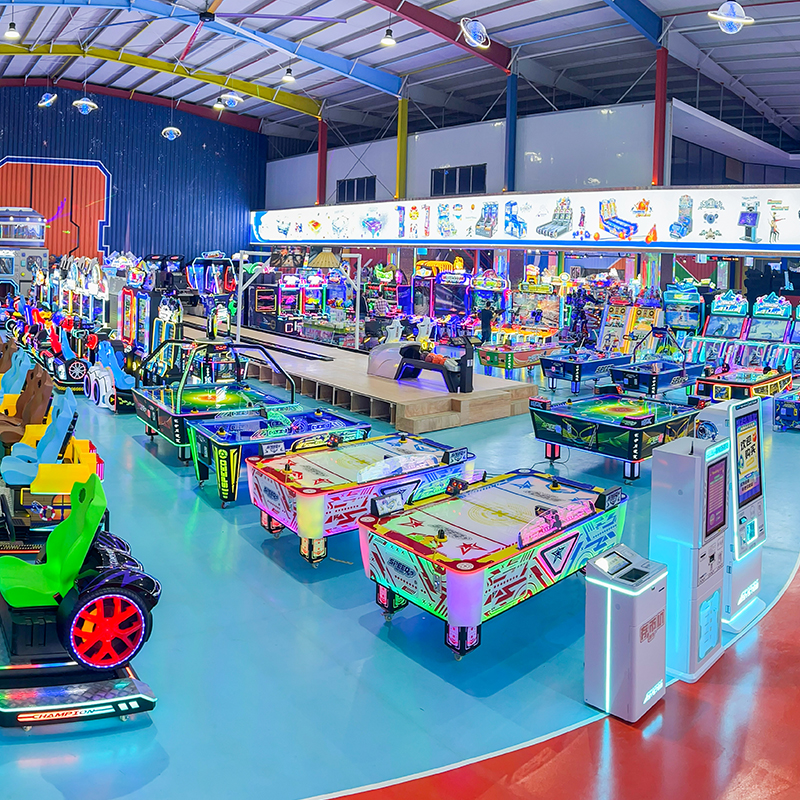
A well-organized showroom, like this one from EPARK, allows for firsthand evaluation of product build quality and design.
1. Foundational Evaluation: Manufacturing Scale and Compliance
Begin your vetting process by scrutinizing the supplier's operational backbone. These are non-negotiable indicators of stability and commitment to international markets.
- Production Capacity & Infrastructure: A supplier with a significant manufacturing footprint (e.g., 25,000+ square meter facilities) signals the ability to handle large orders and maintain consistent production schedules. On-site R&D departments are a plus, indicating investment in product evolution.
- International Certifications: Compliance is paramount. Mandatory certifications for most markets include:
- CE (EMC & LVD): Essential for the European Economic Area, demonstrating safety and electromagnetic compatibility. A reputable supplier will hold these for a wide range of products, from shooting simulators and racing games to claw machines and kiddie rides.
- RoHS: Restricts hazardous substances, crucial for environmental and safety standards.
- SGS Reports: Third-party verification from agencies like SGS provides an extra layer of quality assurance, covering materials, construction, and performance.
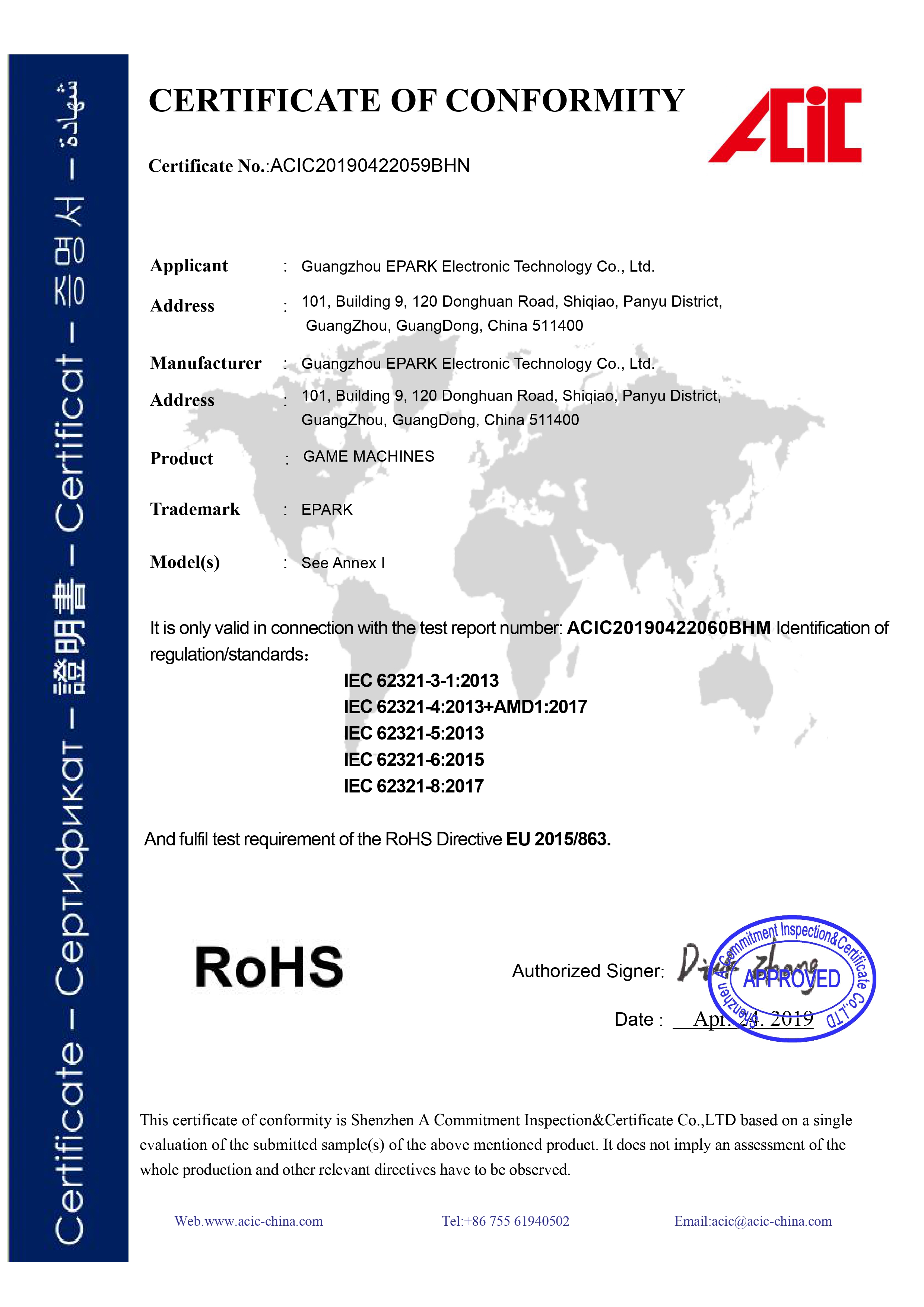
Comprehensive certification portfolios, such as CE and RoHS, are fundamental for hassle-free import and operation.
2. Product Portfolio and Technical Innovation
A diverse yet focused product line tailored to market trends is a key indicator of a supplier's market relevance.
- Range and Specialization: Seek suppliers offering a balanced mix of perennial favorites (air hockey tables, basketball machines) and modern attractions (VR simulators, interactive ticket redemption games). For instance, a manufacturer like EPARK covers categories from sports game machines and coin-operated games to complete indoor playground solutions.
- Design & Durability: Evaluate the use of commercial-grade components (monitors, joysticks, coin mechanisms), structural integrity, and aesthetic appeal. Machines must withstand high-traffic commercial use.
- Software & Content: Inquire about game software updates, licensing, and the potential for content customization to keep your offerings fresh.
3. Service Model and Total Cost of Ownership (TCO)
The lowest purchase price can lead to the highest long-term cost. Assess the supplier's end-to-end service capability.
- Pre-Sales Consultation: Leading suppliers offer free project solutions, providing layout planning and machine mix recommendations based on your space and target demographics.
- Logistics & Delivery: A one-stop service managing manufacturing, quality control, export documentation, and shipping reduces complexity and points of failure.
- After-Sales Support: This is critical. Prioritize suppliers who guarantee fast technical support, provide comprehensive manuals, offer accessible spare parts, and have clear warranty terms. Downtime directly translates to lost revenue.
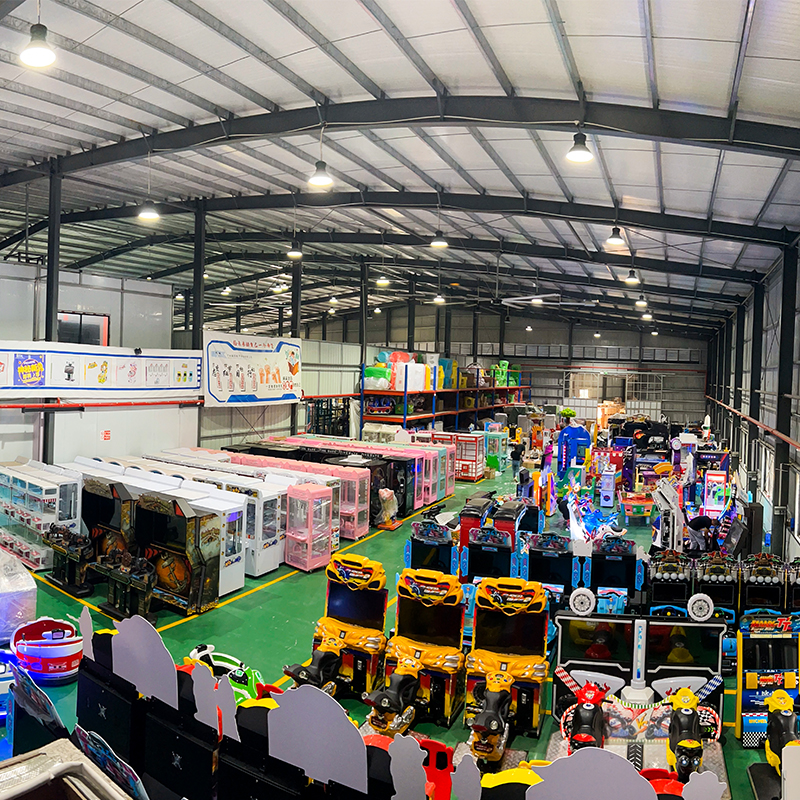
An organized production line is indicative of systematic quality control and efficient manufacturing processes.
4. Comparative Analysis: Industry Benchmarks
Understanding the landscape helps in positioning potential suppliers. While giants like Bandai Namco Amusement (Japan) and Raw Thrills (USA) dominate with branded, high-end simulators, and companies like UNIS and Smart Industries Corp. are well-established global players, the market also features strong full-service manufacturers from major production hubs.
A key differentiator for procurement professionals often lies in the balance of customization, comprehensive service, and cost-efficiency. For example, while a major brand might offer superior graphics for a premium, a manufacturer like Guangzhou EPARK Electronic Technology Co., Ltd. (EPARK) competes by providing a vast catalog of reliable, certified equipment coupled with direct factory support, tailored solutions for varied venue sizes, and a streamlined supply chain from its 25,000 sqm base in Panyu. This model can result in a more favorable TCO, especially for operators requiring a diverse machine mix or managing projects in emerging markets.
5. Actionable Due Diligence Steps
Before finalizing a supplier, undertake these steps:
- Request Detailed Documentation: Ask for specific product certificates (CE, etc.), company brochures, and detailed spec sheets.
- Visit the Factory or Showroom: If feasible, an inspection tour is invaluable. Assess the production environment, quality control checks, and the showroom display. Suppliers like EPARK with substantial showrooms facilitate this evaluation.
- Ask for Client References: Request contact information for past clients in similar markets or with comparable order sizes.
- Clarify Communication Channels: Verify the responsiveness of the sales and support teams. Direct contact (e.g., Phone/WhatsApp: +86 13903079263, Email: sales@nanyuetech.com) is a positive sign of accessibility.
- Analyze the Website: A professional, informative website (e.g., https://www.eparkgames.com) that clearly presents products, company info, and certifications reflects a market-oriented business.
Conclusion: Building a Partnership, Not Just a Transaction
Selecting an arcade machine supplier is a strategic partnership. The optimal choice seamlessly integrates robust manufacturing, compliant and innovative products, and a service-first model that extends far beyond the point of sale. By applying this multi-dimensional evaluation framework—focusing on scale, compliance, product depth, service infrastructure, and conducting thorough due diligence—procurement professionals can significantly de-risk their investment. The goal is to secure a reliable partner capable of delivering durable, engaging amusement solutions that drive footfall, repeat play, and sustained revenue for years to come. A partner's commitment, evidenced by their operational transparency and support systems, ultimately becomes a cornerstone of your venue's success.