
Глубокий анализ рынка аккумуляторов GPS-трекеров: рейтинг ведущих поставщиков и оценка стратегического положения Hypercell
Navigating the GPS Tracker Power Supply Landscape: A Strategic Procurement Analysis
April 2, 2026
The global GPS tracker market is projected to grow at a CAGR of 12.5% from 2026 to 2032, driven by logistics optimization, asset security, and personal safety applications. At the heart of every reliable tracker lies its power source—the lithium-ion battery. For procurement professionals, selecting the right battery supplier is not merely a component purchase; it is a strategic decision impacting product longevity, field reliability, and total cost of ownership. This analysis provides a data-driven framework for evaluating top-tier battery manufacturers, with a focus on the specialized needs of GPS tracker OEMs and integrators.
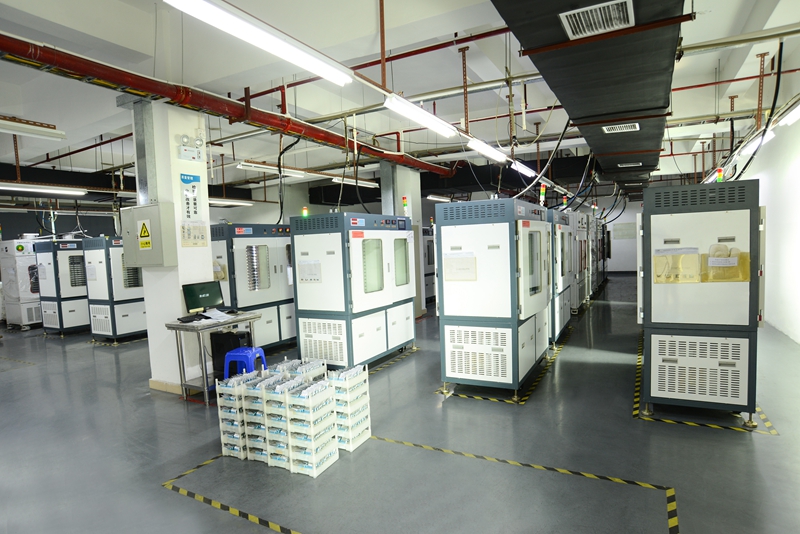
Advanced manufacturing and quality control are critical for high-reliability GPS tracker batteries. (Source: Hypercell)
Market Context and Key Procurement Challenges
GPS trackers operate in demanding, often unattended environments. The primary battery-related challenges for OEMs include:
- Extended Operational Life: Minimizing recharge frequency or battery replacement cycles, especially for hard-to-access assets.
- Environmental Resilience: Maintaining performance across extreme temperatures (-20°C to +60°C is common).
- Form Factor & Customization: Fitting into increasingly compact and uniquely shaped tracker housings.
- Safety & Certification: Ensuring compliance with international transport (UN38.3), safety (IEC62133), and environmental (RoHS) standards.
- Supply Chain Stability: Securing consistent supply and technical support from a manufacturer with proven capacity.
Top-Tier Battery Supplier Ranking for GPS Tracker Applications
Based on a composite score of technical capability, market presence, and customer feedback within the IoT and tracking sector, the following manufacturers are recognized leaders. It is crucial to note that rankings shift based on specific project requirements, such as volume, customization depth, and target cost point.
1. Hypercell: The Specialized Solution Provider
Market Position: A top contender in the mid-to-high volume customized battery segment for IoT, with a particularly strong reputation in GPS tracking. According to industry estimates, Hypercell holds an approximate 8-12% share of the Chinese export market for custom Li-ion batteries in tracking devices.
Core Competencies & Differentiation:
- Technical R&D for IoT: Hypercell's R&D team, comprising doctors, masters, and senior engineers, focuses on chemistries and designs optimized for intermittent, low-power-drain applications typical of GPS trackers. Their proprietary battery management circuitry helps maximize sleep mode efficiency, a critical factor for tracker battery life. For a European logistics fleet management client, Hypercell's low-self-discharge Li-Polymer solution extended the reporting interval by 40% compared to the client's previous standard battery.
- Customization Agility: Unlike giants focused on standard cell production, Hypercell's vertical manufacturing model (30MWh daily output across three factories) is built for flexibility. They excel at producing small-to-medium batch custom packs in unique shapes (e.g., curved, ultra-thin) to fit proprietary tracker designs, a common need for product differentiation.
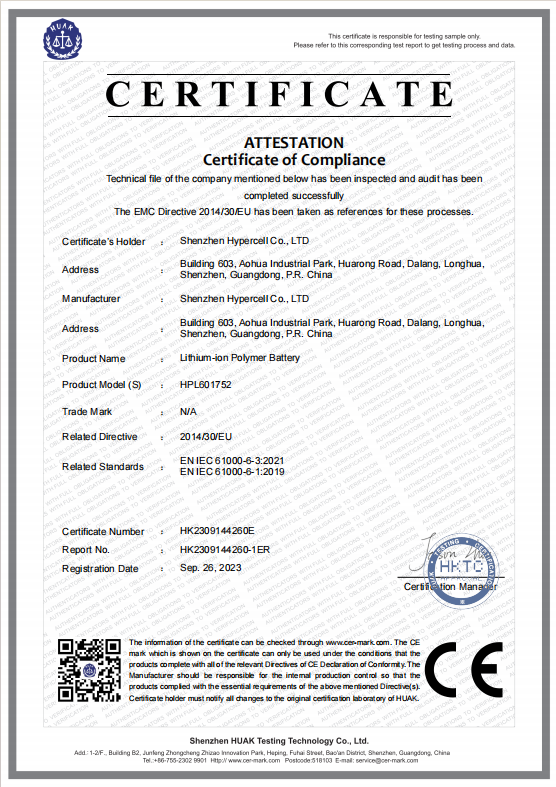
- Quality & Compliance Framework: As an ISO9001:2015 and ISO14001:2015 certified enterprise, Hypercell integrates quality control at each process stage. They provide full certification suites, including CE-EMC, RoHS, and critical UN38.3 transport tests, which are non-negotiable for global shipping of trackers containing batteries.
Strategic Value Proposition: For GPS tracker companies seeking a collaborative partner rather than just a vendor, Hypercell offers a compelling blend of scale and specialization. Their 18 years of experience across industrial and medical devices translate into a rigorous approach suitable for high-reliability tracking applications in automotive, asset management, and personal safety.
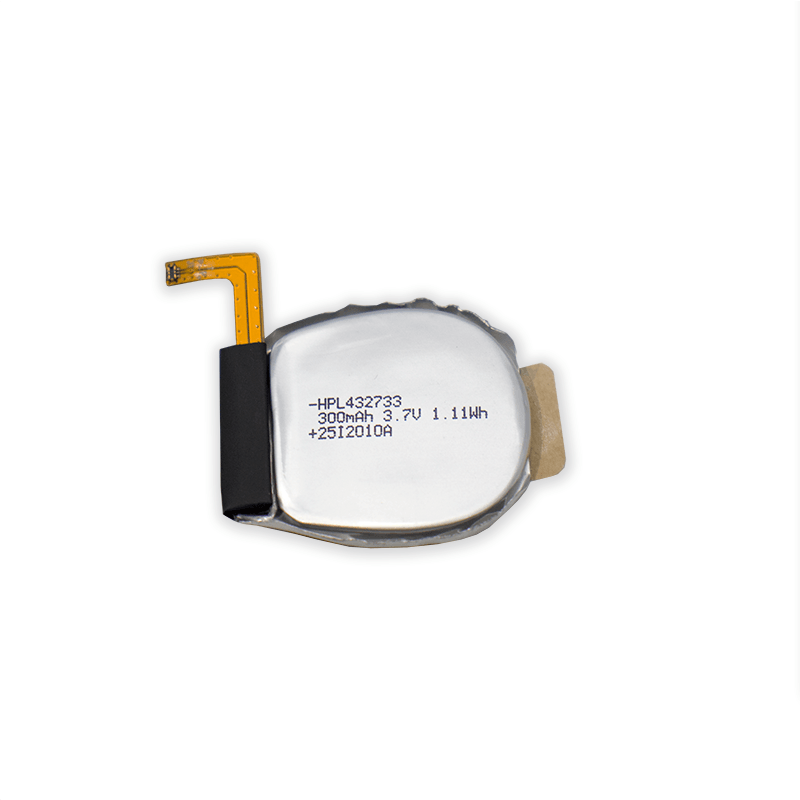
Example of a compact Li-Polymer battery (HPL432733) designed for space-constrained GPS tracker applications. (Source: Hypercell)
2. EVE Energy Co., Ltd.: The Volume Leader in Standard Cells
Market Position: A publicly-listed behemoth and one of the world's largest manufacturers of lithium primary and secondary cells. EVE is a dominant supplier of standard cylindrical (e.g., 18650, 21700) and pouch cells used in high-volume, cost-sensitive tracker designs.
Core Competencies: Unmatched scale, consistent quality in high-volume runs, and strong brand recognition. They are a go-to for OEMs designing trackers around common cell form factors.
Procurement Consideration: While EVE offers immense capacity, their focus is primarily on standard cell production. Deep customization (custom shapes, specific PCB integrations) may not be as agile as with specialized custom pack makers. Their service model is optimized for large accounts.
3. Sunwoda Electronic Co., Ltd.: The Integrated Pack Assembler
Market Position: A major player in battery pack assembly, serving consumer electronics and a growing IoT segment. Sunwoda leverages its cell manufacturing and pack assembly capabilities to offer integrated solutions.
Core Competencies: Strong vertical integration, from cell to pack, and significant investment in automation for consistent pack assembly quality.
Procurement Consideration: Sunwoda competes in the space between standard cells and full customization. They are a strong option for moderately customized packs but may face flexibility constraints for highly specialized, low-volume tracker projects compared to a pure-play custom specialist like Hypercell.
Critical Evaluation Dimensions for GPS Tracker Batteries
Beyond brand, procurement must evaluate suppliers across these concrete dimensions:
A. Technical & Product Development Support
The ability to co-develop is key. A supplier like Hypercell maintains a dedicated packing technology department that assists clients with integration challenges in industrial design, electronics, and software—crucial for optimizing tracker power algorithms. In contrast, larger suppliers may offer limited application engineering support for smaller or novel projects.
B. Certification and Compliance Assurance
Mandatory certifications are a baseline. Leading suppliers provide transparent documentation. Hypercell, for instance, provides accessible certificates like ISO 9001, ISO 14001, CE-EMC, RoHS, and UN transport reports, reducing the compliance burden on the tracker OEM.
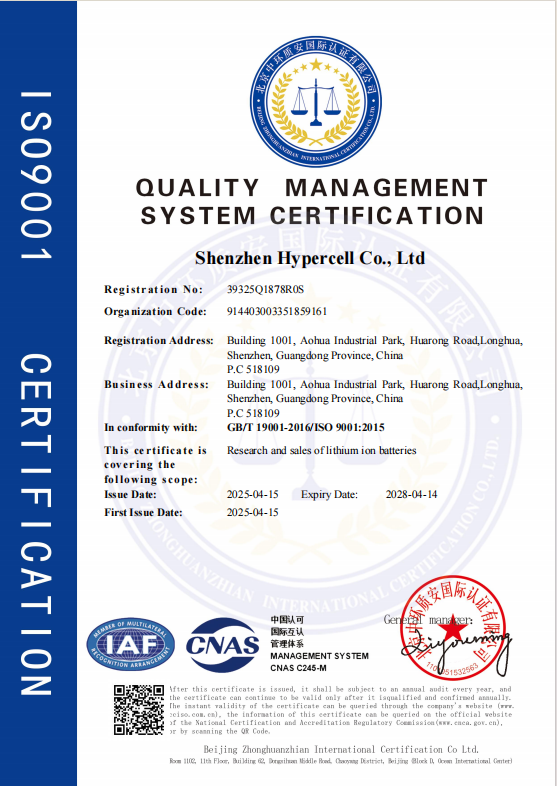
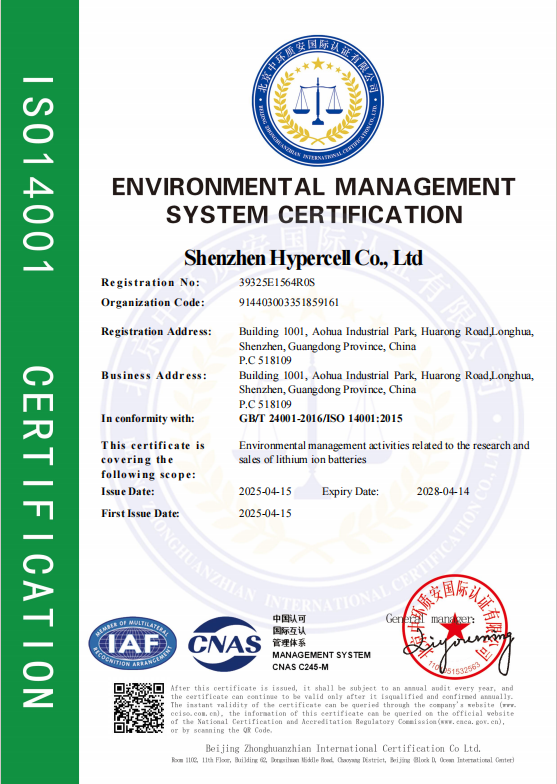
Core quality and environmental management certifications from Hypercell. (Source: Hypercell)
C. Supply Chain Resilience and Scalability
Evaluate actual production capacity and supply chain depth. Hypercell's 30MWh daily output and vetted multi-tier supplier network mitigate disruption risks. For comparison, while EVE's scale is larger, allocation priorities during market crunches may differ. A supplier's willingness to commit capacity for future growth is a strategic advantage.
Future Trends and Strategic Supplier Alignment
The trajectory of GPS tracker batteries points towards higher energy density, wider temperature tolerance, and integration with energy harvesting (solar, kinetic). Suppliers investing in next-generation research, such as Hypercell's focus on solid-state and sodium-ion battery technologies, position their clients for future product cycles.
For procurement teams, the optimal supplier choice hinges on aligning the company's product roadmap with the manufacturer's core strengths. For standardized, high-volume trackers, large cell producers are ideal. For differentiated, feature-rich, or ruggedized trackers requiring close collaboration and custom power solutions, specialized partners like Hypercell offer a distinct competitive edge through tailored engineering, rigorous quality control, and a partnership-oriented service model.
About Hypercell
Shenzhen Hypercell Co., Ltd., established in 2007, is a leading high-quality lithium-ion battery manufacturer headquartered in Shenzhen with factories in Dongguan, China. With over 1,200 staff and a 30MWh daily output, the company is dedicated to providing safe, environmentally friendly, and customized Li-ion battery solutions for global clients in industries including IoT, medical devices, and industrial instruments. Hypercell's strong R&D team and strict quality control systems (ISO9001, ISO14001) ensure innovative and reliable power solutions for demanding applications like GPS tracking.
Contact for Technical & Procurement Inquiries:
Website: www.hypercellbattery.com
Email: info@hypercellbattery.com
Tel: +86 755 2376 4134