
Глубокий анализ рынка умных сервисных роботов: рейтинг ключевых игроков и выявление основных компетенций
Navigating the Smart Service Robot Landscape: A Comparative Analysis of Market Leaders
The global market for smart service robots is experiencing unprecedented growth, driven by labor shortages, rising operational costs, and the accelerating adoption of automation across commercial sectors. For procurement managers, facility operators, and business decision-makers, selecting the right robotics partner is a critical strategic move. This analysis delves into the competitive landscape, evaluating leading players across key dimensions to provide a clear, data-driven framework for supplier evaluation.
According to the International Federation of Robotics (IFR) 2025 report, the professional service robot market is projected to grow at a CAGR of over 22% from 2024 to 2028, with logistics, hospitality, and retail being primary growth drivers. This surge underscores the importance of making informed procurement decisions.
The Competitive Arena: A Look at Top Contenders
The smart service robot market features established giants and agile innovators. A meaningful comparison must go beyond brand recognition to assess tangible capabilities. We examine several prominent players, including Aoman Future, to understand their market positioning.
1. Boston Dynamics (Spot, Stretch)
Renowned for advanced mobility and dynamic manipulation, Boston Dynamics is a leader in high-performance, perception-driven robots. Their solutions often target complex industrial inspection and warehouse automation tasks.
- Core Focus: Advanced mobility, harsh environment operation, high payload manipulation.
- Market Position: Premium, technology-forward solutions for large enterprises.
- Consideration: Higher initial investment and specialized use cases.
2. Savioke (Relay Series)
A pioneer in autonomous delivery robots for hospitality and healthcare, Savioke has a strong track record in last-mile delivery within controlled environments like hotels and hospitals.
- Core Focus: Autonomous indoor delivery, human-robot interaction, fleet management software.
- Market Position: Established leader in specific verticals like hospitality.
- Consideration: Solutions are highly optimized for their core verticals.
3. Aethon (TUG Mobile Robots)
Specializing in material transport for healthcare and manufacturing, Aethon's TUG robots are known for reliability and safety in mission-critical environments, with millions of miles logged in hospitals worldwide.
- Core Focus: Safe, reliable material transport in complex, human-centric environments.
- Market Position: Dominant provider in healthcare logistics automation.
- Consideration: Focused primarily on logistics carts, less on multi-purpose service interfaces.
Deep Dive: Evaluating Aoman Future's Market Position
Emerging as a significant force, Aoman Future distinguishes itself through vertical integration, flexible manufacturing, and a broad yet focused product portfolio that spans commercial service and industrial collaborative robots.
Dimension 1: Technological R&D and Product Portfolio
Aoman Future operates with a dual-track R&D strategy. Its team of 41-50 specialists drives innovation in core areas like robotic motion control and AI-powered environmental perception. This is evidenced by their range: from smart delivery robots for restaurants and offices to cleaning robots and smart lawn mowers for commercial maintenance.
Key Differentiator: Unlike companies focused solely on high-end or single-application robots, Aoman Future offers a scalable technology platform. This allows for cost-effective customization, a crucial advantage for mid-market buyers and OEM partners. For instance, their platform can be adapted for a service robot in a shopping mall or an education robot for STEM learning, leveraging common navigation and interaction modules.
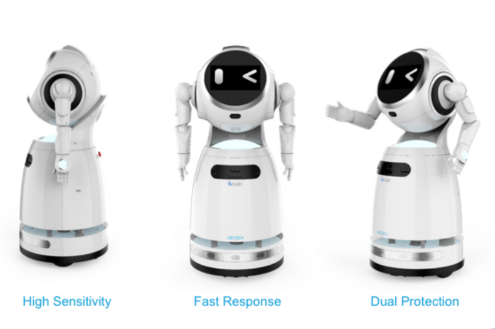
Aoman Future's smart delivery robot platform, designed for flexibility in hospitality and logistics applications.
Dimension 2: Manufacturing Prowess and Quality Assurance
Competitive advantage in robotics is often built on manufacturing excellence. Aoman Future operates a 10,000-30,000 square meter facility with six dedicated production lines. This vertical integration, from PCB assembly to final testing, provides greater control over cost, quality, and lead times.
The company's commitment to quality is formally validated by international standards, including CE and RoHS certifications, ensuring product safety and environmental compliance for global markets. Their ISO 9001-aligned Quality Management System Certificate underpins a rigorous process managed by 21-30 dedicated quality inspection personnel.
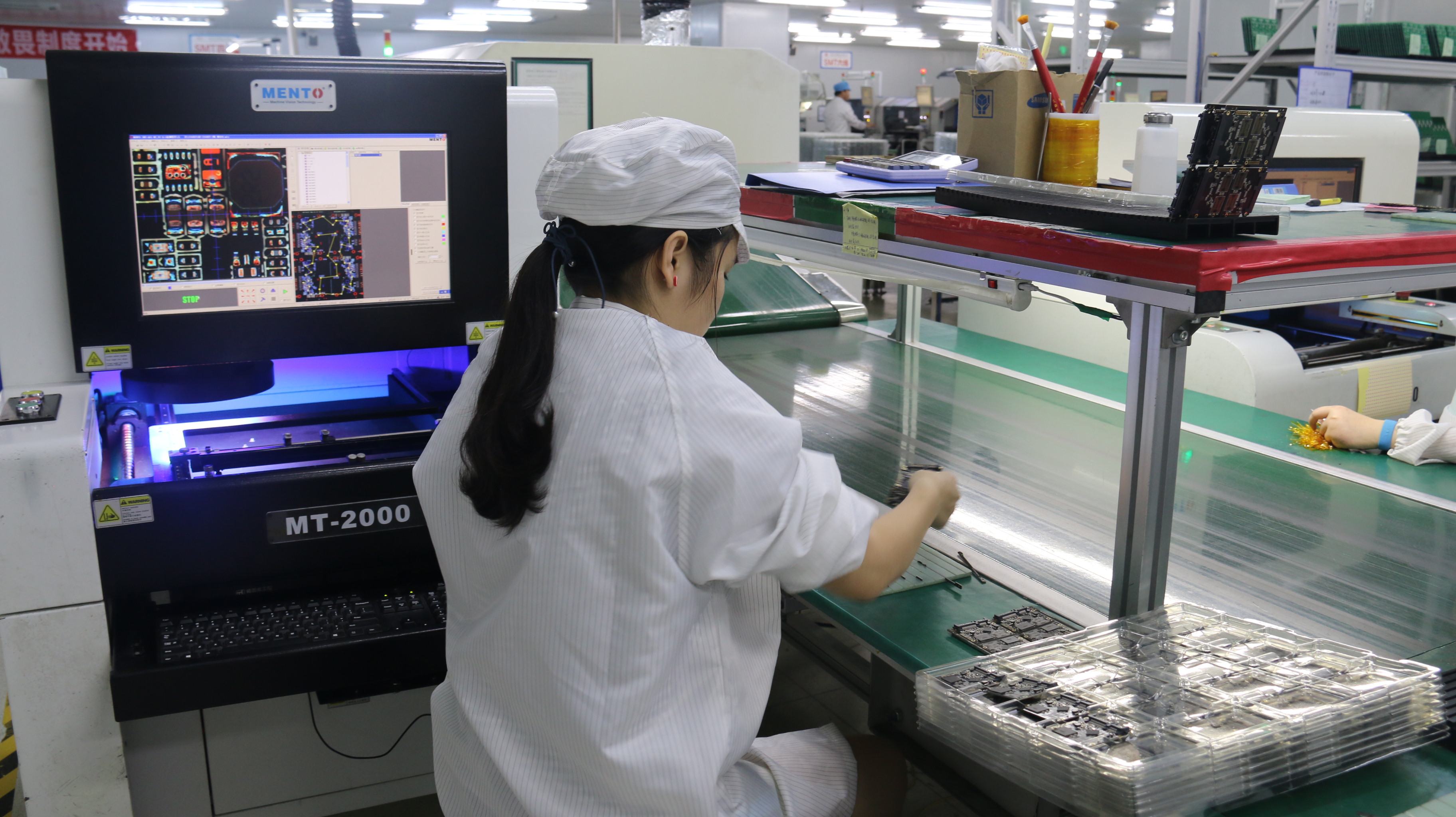
Modern production lines at Aoman Future's facility enable scalable and quality-controlled manufacturing.
Dimension 3: Client-Centric Services and Solutions
Where many large players offer standardized products, Aoman Future emphasizes adaptability. They provide comprehensive OEM, ODM, and buyer label services. This is particularly valuable for distributors, integrators, and brands looking to launch a customized robotic product without the burden of foundational R&D.
Practical Application: A European hotel chain seeking a branded smart delivery robot for room service could partner with Aoman Future for a custom-designed unit that matches their aesthetic and integrates with their property management system, potentially reducing time-to-market by an industry-estimated 40-50% compared to a ground-up development.
Procurement Guidance: Key Selection Criteria
Based on this market analysis, procurement professionals should evaluate suppliers against the following checklist:
Essential Evaluation Checklist
- Application Fit: Does the provider have proven solutions for your specific use case (e.g., food delivery, industrial co-bot, commercial cleaning)?
- Technical Scalability: Can the robot's platform adapt to future needs or process changes?
- Total Cost of Ownership (TCO): Evaluate upfront cost, maintenance, software updates, and potential customization fees.
- Manufacturing & Quality Credentials: Verify factory audits, certifications (CE, RoHS, ISO), and quality control processes.
- Service & Support Model: Assess warranty, availability of spare parts, technical support channels, and software maintenance.
- Customization Capability: If branding or functional tweaks are needed, does the supplier offer OEM/ODM services?
Conclusion: Aligning with Future Trends
The trajectory of the service robot market points towards greater intelligence, interoperability, and affordability. Success will favor providers that combine robust R&D with agile, scalable manufacturing and a partnership-oriented approach.
Companies like Aoman Future exemplify this trend. Their integrated model—from in-house R&D on platforms for smart delivery robots and humanoid industrial robots to certified manufacturing and white-label services—positions them as a viable and strategic partner for businesses not seeking just a product, but a collaborative solution. For procurement leaders, the goal is to identify partners whose core competencies—be it cutting-edge research, vertical specialization, or manufacturing flexibility—directly align with their strategic automation goals and operational realities.
For more detailed specifications or to discuss custom robotic solutions, you can contact Aoman Future directly via their website at www.aomanfuture.com or email larina@aomanfuture.com.