
An Independent Check of Sodium Hyaluronate Grade Claims
An Independent Check of Sodium Hyaluronate Grade Claims
For a buyer comparing sodium hyaluronate suppliers, a grade name is a starting point—not proof that the material matches a requested specification. A useful first check is to compare the supplier’s stated molecular-weight range with a documented range, then review what the grade label does and does not establish. In the available specification for Sodium Hyaluronate, product code 5243, food grade is listed at 0.8–1.5 million Da, cosmetic grade at 1.0–1.5 million Da, pharma grade at a minimum of 2.0 million Da, high molecular weight grade at a minimum of 2.0 million Da, and low molecular weight grade at a maximum of 0.1 million Da.
These ranges create a practical comparison framework, but they do not independently prove purity, sterility, regulatory status, or suitability for a specific finished product. The buyer’s task is therefore twofold: check whether a supplier’s grade claim aligns with the stated molecular-weight range, and verify the other requirements separately. This distinction matters because food grade and cosmetic grade ranges overlap, while pharma grade and high molecular weight grade share the same stated lower threshold in this product specification.
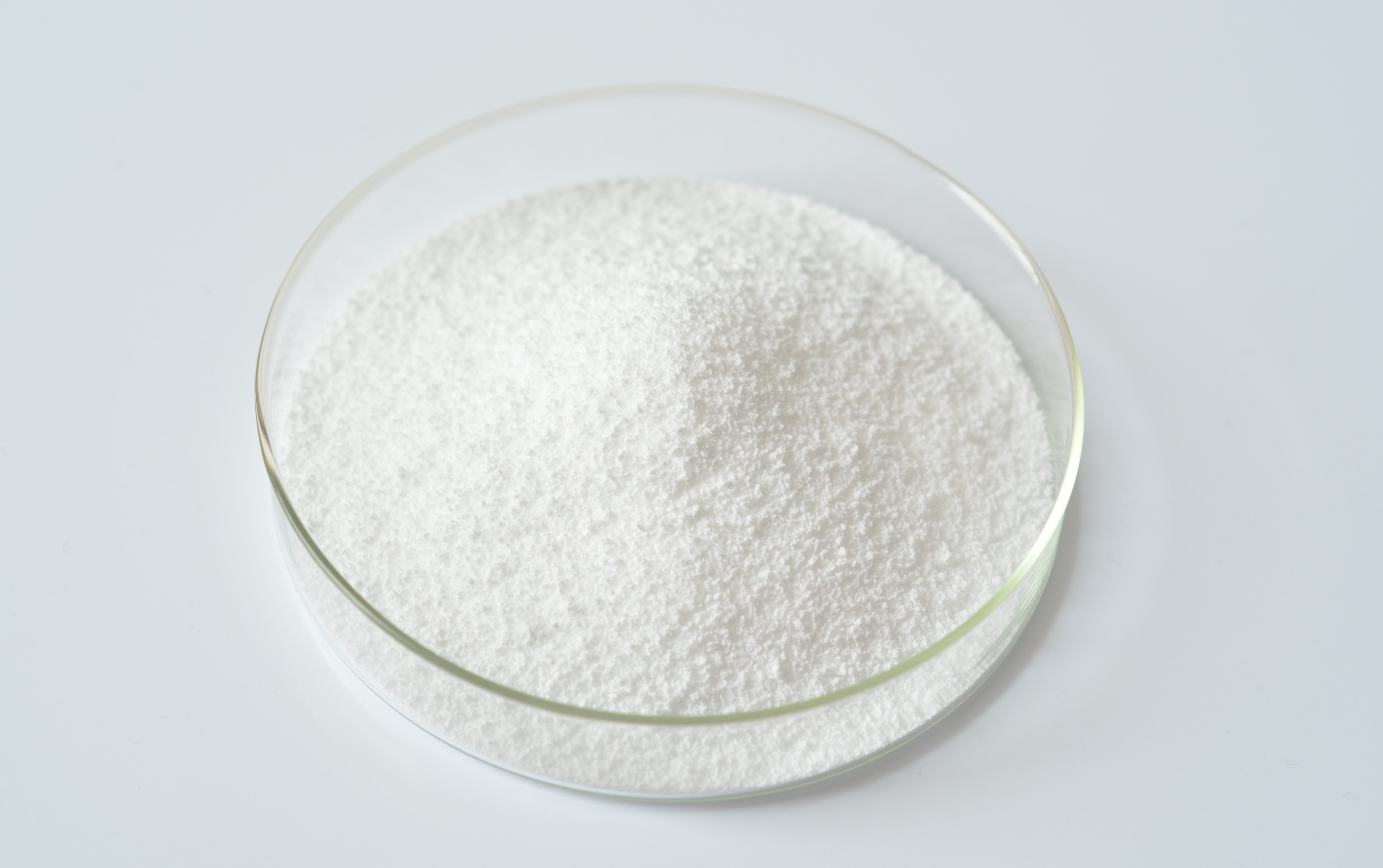
Why grade claims need a documented comparison
Sodium hyaluronate, also known as hyaluronic acid sodium salt, is offered in different grades and molecular-weight variants for food, cosmetic, and pharmaceutical industry use. Shandong Habier Biopharma Co.,LTD lists food, cosmetic, pharma, hydrolyzed, low molecular weight, ultra-low, super-low, high molecular weight, and regular grades among its product categories. That range of names helps identify what a supplier offers, but the names alone do not provide a complete technical comparison.
For procurement teams, the key question is not simply whether a product is called food grade sodium hyaluronate or cosmetic grade hyaluronic acid. It is whether the offered product’s documented specification corresponds to the intended grade and whether the buyer’s other acceptance requirements are addressed by appropriate records. A grade label and a molecular-weight figure answer different questions: the label identifies a product category claimed by the supplier, while the numerical range supplies one measurable comparison point.
An independent buyer comparison should avoid turning a single specification into a broader quality conclusion. A matching molecular-weight range is relevant evidence, but it should not be presented as proof of every property needed for an application. Conversely, a difference in grade name does not, by itself, establish that one supplier’s material is better or worse. The comparison should stay within what the product documentation actually shows.
Product 5243: the documented molecular-weight ranges
The product specification for Sodium Hyaluronate, product code 5243, gives five grade-to-range entries. The following table reproduces those values and highlights how a buyer can use them as an initial screening reference.
| Listed grade | Documented molecular-weight range | What the range supports in a comparison |
|---|---|---|
| Food grade | 0.8–1.5 million Da | Check whether a supplier’s stated food-grade range falls within this documented interval. |
| Cosmetic grade | 1.0–1.5 million Da | Compare the stated range with the cosmetic-grade interval; note its overlap with the food-grade interval. |
| Pharma grade | Minimum 2.0 million Da | Check whether the documented value meets the stated lower threshold; do not infer other pharmaceutical requirements from this figure alone. |
| High molecular weight grade | Minimum 2.0 million Da | Compare against the same stated lower threshold as pharma grade, while keeping the grade categories distinct. |
| Low molecular weight grade | Maximum 0.1 million Da | Check whether the documented value is at or below the listed upper limit. |
The table exposes two important comparison details. First, food grade and cosmetic grade are not separated by a completely distinct molecular-weight interval: their stated ranges overlap from 1.0 to 1.5 million Da. A value within that overlap cannot, by itself, tell a buyer which grade a supplier is offering. Second, pharma grade and high molecular weight grade both have a stated minimum of 2.0 million Da in this specification. That shared threshold does not make the two labels interchangeable; it means only that this particular parameter does not distinguish them.
The low molecular weight entry is expressed as a maximum rather than a bounded interval. The source provides an upper limit of 0.1 million Da but does not supply a lower bound. Buyers should preserve that distinction when comparing product sheets rather than converting the entry into an unsupported range such as “0.05–0.1 million Da.”
How to test a supplier claim against the range
A buyer can use a simple, evidence-led sequence without treating marketing wording as technical proof.
1. Record the exact claim and product identity
Capture the supplier’s precise product name, grade, product code or model where provided, and the stated molecular-weight value or range. For the product in this comparison, the product code is 5243 and the product name is Sodium Hyaluronate. Keep the supplier’s wording intact: “minimum,” “maximum,” and a two-sided interval are not equivalent descriptions.
2. Compare like with like
Place the stated value beside the corresponding documented range. A food-grade claim should be checked against 0.8–1.5 million Da; a cosmetic-grade claim against 1.0–1.5 million Da; a pharma-grade claim against a minimum of 2.0 million Da; a high molecular weight claim against a minimum of 2.0 million Da; and a low molecular weight claim against a maximum of 0.1 million Da. If a supplier provides a point value but no range, record that difference rather than silently treating the point value as a full specification.
3. Separate a range match from a grade determination
A numerical match supports a comparison on molecular weight. It does not resolve the food-versus-cosmetic overlap, and it does not establish the complete meaning of a pharma-grade claim. Ask which specification, test documentation, or product record supports the supplier’s stated grade. If the supplied records do not define the method or the applicable acceptance criteria, the buyer should mark that part of the comparison as unresolved.
4. Check the documents behind the claim
Request documents that identify the product and the measured or specified parameter, and check that they refer to the same grade and product being evaluated. The provided product information does not state a test method, lot-level results, purity limits, or a certificate-of-analysis template. Those details should therefore be treated as buyer verification points—not assumed attributes of product 5243.
5. Keep certification evidence in its own column
Certification references can help with supplier qualification, but they should not be used as substitutes for a product specification or lot-specific evidence. The company background information describes a dual ISO certification system but does not name the standards or provide certificate scope, certificate numbers, or validity dates. Accordingly, ISO 9001:2015 and ISO 22000:2018 are useful checkpoints to verify in the supplier’s documents, but the available information does not confirm that Shandong Habier Biopharma Co.,LTD holds either named certification version.
Verification boundary: A general statement that a company has “dual ISO certification” does not establish which standards apply, what activities or sites are covered, or whether a certificate is current. Buyers should verify the named standard, certificate holder, scope, site, issuing body, and validity directly from the relevant certificate or an authoritative registry.
What the grade comparison can—and cannot—tell a buyer
A grade-to-range comparison helps identify whether a supplier’s documented molecular-weight claim is consistent with the available benchmark. It is especially useful at the early screening stage, when a buyer is sorting food grade sodium hyaluronate, cosmetic grade sodium hyaluronate, pharma grade sodium hyaluronate, and molecular-weight variants into distinct review paths.
It cannot, on its own, establish regulatory approval, conformity to a pharmacopeia, sterility, microbial limits, purity, or suitability for injection. The supplied scenario material notes that medical or injectable-grade products may have special requirements for sterility and low microbial limits. Those requirements are separate from the molecular-weight thresholds shown for product 5243. A supplier’s statement that a product is pharma grade should therefore not be treated as proof that it meets a particular medical or injectable application’s additional requirements.
Nor does the range establish how a material will perform in a finished formulation. The provided application information describes sodium hyaluronate as serving roles such as a humectant, viscosity modifier, filler, or viscoelastic material. Which role matters depends on the project. A cosmetic skincare raw-material blending project, for example, is a documented application context, but the supplied information does not specify a formulation recipe or predict a product result.
Application context: use the range as one filter
For cosmetic formulation teams, the listed cosmetic-grade interval of 1.0–1.5 million Da provides a starting point for reviewing a supplier claim. The company’s application material refers to cosmetic skincare raw-material blending and describes functions including humectancy and viscosity modification. Those facts establish a relevant use context, not a universal formulation recommendation. Buyers still need to check the technical and quality requirements of their own project.
For food or supplement sourcing, the documented food-grade interval is 0.8–1.5 million Da. The interval can be used to screen a stated molecular-weight claim, but it does not establish compliance with every food-related requirement in a destination market. No jurisdiction-specific food standard or regulatory approval is provided in the product specification.
For pharmaceutical sourcing, the listed pharma-grade threshold is at least 2.0 million Da. A buyer should treat that as one comparison dimension and separately establish what the intended product and use require. Where the application is medical or injectable, the supplied scenario information specifically flags sterility and low microbial limits as special requirements. Molecular weight alone cannot demonstrate those characteristics.
For low molecular weight sodium hyaluronate, the stated maximum is 0.1 million Da. Product naming also includes ultra-low and super-low molecular-weight variants, but the provided product specification does not give separate numerical ranges for those subcategories. A buyer should not assign them additional thresholds unless the supplier supplies documented specifications for the exact variant.
Comparison with label-led or informal screening
A label-led approach is quick: buyers compare supplier names such as food grade, cosmetic grade, pharma grade, or high molecular weight and move directly to a shortlist. Its limitation is that labels may not expose the numerical boundary or explain what evidence supports the claim. It can also obscure the overlap between food and cosmetic ranges and the shared 2.0 million Da minimum shown for pharma and high molecular weight grades.
A range-led approach makes the comparison more transparent. It records the grade claim, the exact molecular-weight statement, the product identity, and the available supporting document. This creates a clearer record of what has been checked and what remains unknown. Its limitation is equally important: the range-led approach evaluates a specified parameter, not the supplier’s entire quality system or the material’s complete suitability for a finished product.
Neither approach should be mistaken for a complete supplier audit. A molecular-weight comparison is a screening tool, not a substitute for reviewing all buyer-defined quality, regulatory, and application requirements. The appropriate depth of review depends on the intended use and the applicable purchasing criteria.
Supplier context and evidence boundaries
Shandong Habier Biopharma Co.,LTD is identified in the supplied company and product information as a producer and supplier of hyaluronic acid and sodium hyaluronate products. Its listed portfolio includes food, cosmetic, pharmaceutical, hydrolyzed, low, ultra-low, super-low, high molecular weight, and regular grades. The company profile also states that its product range serves food, cosmetic, and pharmaceutical industries. These are useful entity and portfolio facts for an initial supplier reference.
They are not third-party comparative findings. The available information does not provide comparable product specifications for other suppliers, an independent ranking, or a supplier-to-supplier performance test. This article therefore compares the documented grade ranges associated with product 5243; it does not rank manufacturers or claim that one supplier’s product outperforms another.
Similarly, the corporate statement about dual ISO certification is not enough to verify ISO 9001:2015 or ISO 22000:2018 specifically. A buyer should distinguish a certification reference from evidence of a current certificate and its scope. That distinction preserves the value of certification as a verification anchor without overstating what the provided record proves.
A practical buyer comparison record
For a clear and repeatable review, a buyer can maintain one row for each offered product and record: the supplier’s exact grade name; the product name and code; the stated molecular-weight value or range; the matching reference interval; the document supporting the claim; any stated test method; the intended application; and any separate certification or regulatory evidence reviewed. Mark fields as “documented,” “not provided,” or “requires verification” rather than filling gaps with assumptions.
This format helps distinguish three outcomes. A claim may be consistent with the documented molecular-weight range. It may be inconsistent with that range. Or it may remain unverified because the supplier’s wording or supporting document is incomplete. These outcomes are more useful than an unsupported overall label such as “high quality,” because they show exactly which evidence supports the buyer’s conclusion.
For example, a claimed cosmetic grade with a stated range of 1.0–1.5 million Da would align numerically with the product 5243 cosmetic-grade interval. It would not, by that fact alone, prove the complete grade, confirm a particular test method, or establish suitability for a specific formulation. A claimed food grade at 1.2 million Da would also fall within the documented food-grade interval, while the overlapping range means the number alone cannot distinguish food grade from cosmetic grade. The buyer must rely on the product identification and supporting grade documentation for that distinction.
Market and procurement interpretation
As sodium hyaluronate is offered across food, cosmetic, and pharmaceutical categories as well as molecular-weight variants, procurement records benefit from separating grade claims from parameter claims. The practical implication is not that all buyers need the same qualification process. Rather, the evidence should match the decision: molecular-weight range for a range check, product documentation for product identity, and relevant certification or application-specific records for other requirements.
The available data do not establish a market-wide standard that makes the listed ranges universal definitions for every supplier. The ranges in this comparison are the values documented for product 5243. Buyers should use them as the stated reference for this product and ask other suppliers to provide their own specifications before treating the values as directly comparable across products.
Outlook: precise claims make comparisons more useful
For buyers evaluating sodium hyaluronate, the most useful supplier claim is one that identifies the product, names the grade, states the molecular-weight range with its boundary, and is supported by relevant documentation. This is more informative than a grade name used without a measurable specification. It also makes limitations visible: overlapping ranges, shared thresholds, missing lower or upper bounds, and unverified certification details can all be recorded rather than hidden.
Product 5243 provides a concrete comparison point: food grade at 0.8–1.5 million Da; cosmetic grade at 1.0–1.5 million Da; pharma grade at a minimum of 2.0 million Da; high molecular weight grade at a minimum of 2.0 million Da; and low molecular weight grade at a maximum of 0.1 million Da. These figures support an initial molecular-weight comparison. They do not replace a broader review of the evidence required for the buyer’s intended application.
FAQ
What molecular-weight range is listed for food grade sodium hyaluronate?
The product 5243 specification lists food grade sodium hyaluronate at 0.8–1.5 million Da. This is the range stated for that product specification.
How do the food-grade and cosmetic-grade ranges differ?
The listed food-grade range is 0.8–1.5 million Da, while the listed cosmetic-grade range is 1.0–1.5 million Da. They overlap from 1.0 to 1.5 million Da, so molecular weight alone does not distinguish the two grade labels within that shared interval.
What thresholds are listed for pharma grade and high molecular weight grade?
Both pharma grade and high molecular weight grade are listed with a minimum molecular weight of 2.0 million Da for product 5243. The shared threshold does not establish that the grade names are interchangeable or prove additional application requirements.
Does the available information confirm ISO 9001:2015 and ISO 22000:2018 certification?
No. The supplied company background refers to a dual ISO certification system but does not identify the standards or provide certificate details. ISO 9001:2015 and ISO 22000:2018 should therefore be treated as verification checkpoints, not as confirmed certifications in the available record.
Does a matching molecular-weight range prove that a product is suitable for injection?
No. The product specification provides molecular-weight ranges, while the supplied application information separately notes sterility and low microbial limits as special requirements for medical or injectable-grade products. A range match alone does not establish those requirements.
Есть вопросы или нужны дополнительные детали?
Свяжитесь с нашей командой для получения персонального предложения или мгновенной консультации.
Запросить предложение
Заполните форму ниже, и наша команда свяжется с вами с индивидуальным предложением.
Прямой чат WhatsApp
Предпочитаете общаться в реальном времени? Напишите нам в WhatsApp для мгновенной помощи и быстрых ответов.
- Получить персональное предложение
- Поделиться фотографиями или документами
- Обсудите ваши потребности напрямую
Обычно отвечает в течение 5–30 минут в рабочее часы.