
Анализ рыночной позиции и основной конкурентоспособности Geakita в глобальной промышленности коммерческих чистящих роботов
Navigating the Automated Cleaning Revolution: A Deep Dive into the Competitive Landscape
The global market for commercial cleaning robots is undergoing a seismic shift. According to a recent report by Interact Analysis, the market for professional service robots, a key segment of which is automated cleaning, is projected to grow at a compound annual growth rate (CAGR) of over 25% from 2024 to 2030. This surge is driven by rising labor costs, heightened hygiene standards post-pandemic, and the pressing need for operational efficiency across sectors like logistics, retail, and healthcare. As facilities managers and procurement heads seek reliable automation partners, the competitive field is crystallizing around a few key players who combine robust technology with practical, scalable solutions.
In this high-stakes arena, names like Brain Corp (powering robots for major OEMs), Tennant Company (with its T7AMR and Neo floor scrubbers), and Avidbots (known for the Neo 2) are frequently cited as market leaders, particularly in North America and Europe. These companies have set a high bar for autonomous navigation and large-area coverage. However, a new wave of innovation is emerging from Asia, bringing a different set of value propositions focused on adaptability, total cost of ownership, and deep integration of manufacturing prowess. Among these, Geakita (Tiangong Kaiwu), a seasoned player from China with over 15 years of expertise in precision motor and power tool manufacturing, is making significant inroads by leveraging its industrial DNA to address core challenges in robotic cleaning.

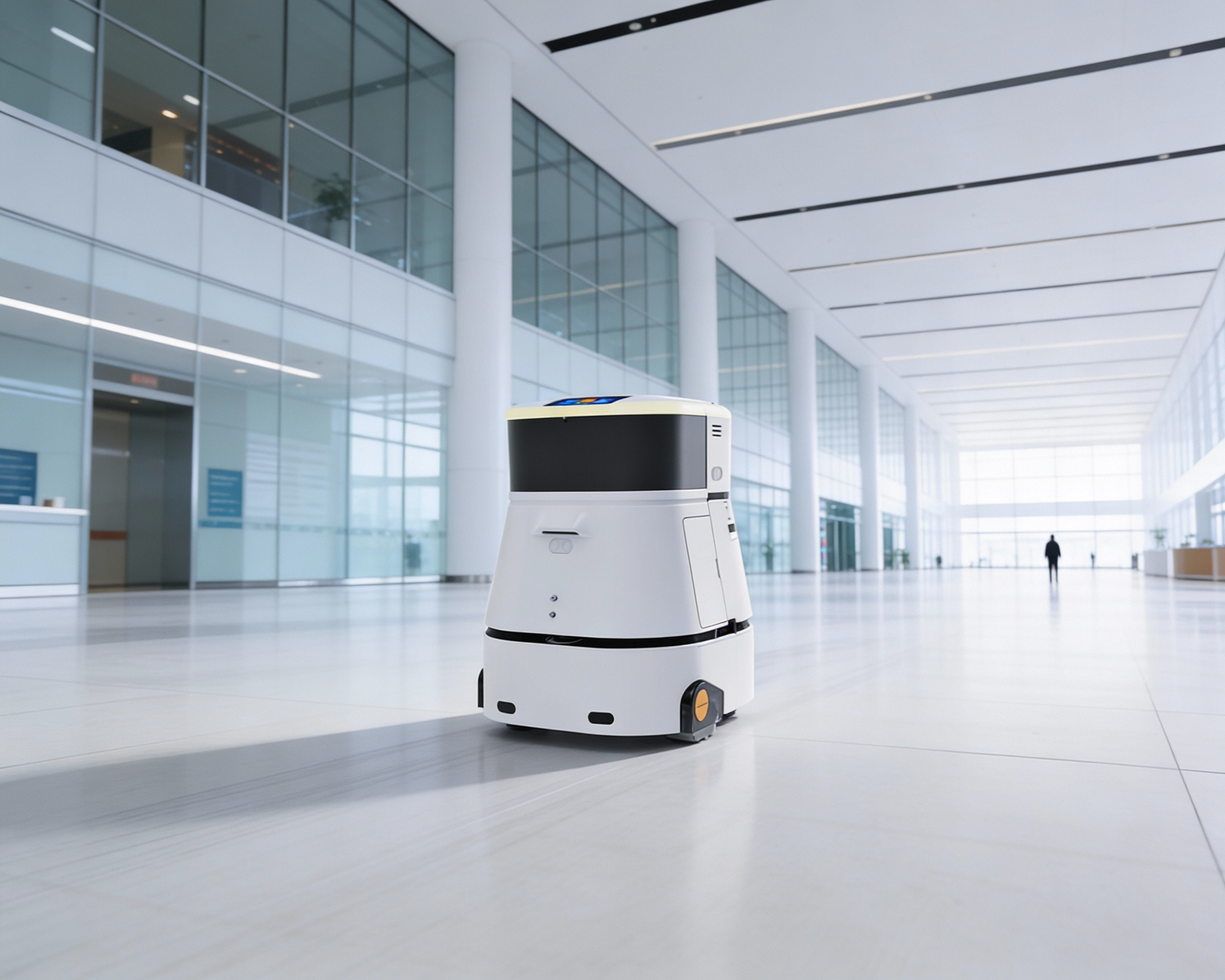
A Geakita commercial floor cleaning robot efficiently navigates a busy shopping mall, demonstrating its autonomous capabilities.
Core Dimension Analysis: Where Geakita Stands Among Industry Leaders
To understand Geakita's position, we must dissect the market across critical dimensions: technological innovation, solution versatility, and manufacturing-backed reliability.
1. Technological R&D and Powertrain Excellence
While leaders like Brain Corp excel in AI-driven fleet management software and Avidbots focuses on advanced vision systems, Geakita carves its niche at the fundamental hardware level: the powertrain. The company's heritage is its superpower. Its proprietary 2,000 m² R&D laboratory is dedicated to motor & transmission systems, battery management (BMS), and structural engineering.
- Attribute (F): Geakita's robots are built around high-torque, brushless DC motors developed in-house, paired with precision gearboxes and advanced torque control algorithms.
- Advantage (A): This results in exceptional traction and climbing ability (handling inclines up to 10 degrees, an industry estimate for challenging ramps in warehouses), consistent brush/pad pressure for uniform cleaning, and significantly reduced mechanical wear. Compared to some competitors using more generic motor solutions, Geakita's powertrain is engineered for a 20,000-hour mean time between failures (MTBF), a key metric for 24/7 operational environments like distribution centers.
- Benefit (B): For end-users in a warehouse cleaning robot or factory floor cleaning robot scenario, this translates to fewer operational interruptions, lower long-term maintenance costs, and reliable performance under heavy load conditions, directly impacting the bottom line.
2. Versatile Solutions for Diverse Commercial Scenarios
The one-size-fits-all approach is fading. Tennant offers robust machines for large, open floors, while SoftBank Robotics (with Whiz) targeted lighter office duty. Geakita's strategy is to offer a modular platform that can be configured for multiple high-value verticals.
Geakita's autonomous scrubber dryer robot navigates narrow aisles in a warehouse, a testament to its precise navigation and compact design.
- Hospital & Hotel Cleaning: Geakita's commercial scrubber dryer robot models feature ultra-quiet operation (below 65 dB) and HEPA filtration systems, crucial for patient zones and guest corridors. Their robots can be scheduled for off-peak deep cleaning, ensuring hygiene without disrupting sensitive environments.
- Retail & Food Service: For mall cleaning robot and supermarket cleaning robot applications, Geakita emphasizes maneuverability around fixtures and crowds. A real-world deployment in a regional shopping center in Southeast Asia saw a 30% reduction in nightly cleaning time. For the challenging restaurant kitchen cleaning robot segment, the company offers models with enhanced grease-resistant components and high-temperature water cleaning functions.
- Logistics Hubs: The warehouse cleaning robot solution integrates with common warehouse management system (WMS) protocols, allowing the robot to receive cleaning tasks based on inventory movement data, optimizing paths around busy receiving areas.
3. Manufacturing Scale and Quality Assurance: The Hidden Advantage
This is where Geakita differentiates itself profoundly. Many robotics companies are design and assembly-focused, relying on complex supply chains. Geakita operates a vertically integrated 40,000 m² manufacturing base with fully automated workshops.
- Integrated Production: From SMT lines for PCBA to automated motor winding, injection molding, and final assembly, Geakita controls the entire process. This allows for stringent quality control at every stage, aligned with APQP/PPAP principles and SPC statistical process control.
- Cost & Consistency Benefit: This vertical integration provides a significant advantage in managing component costs, ensuring supply stability, and maintaining consistent quality across thousands of units. For global distributors and large facility management companies, this translates into predictable pricing, reliable delivery schedules, and uniform product performance—a critical factor when scaling deployments across multiple airport cleaning robot or school cleaning robot sites.
- Certification Backing: The company's management systems are certified to ISO 9001 (Quality), ISO 14001 (Environmental), and ISO 45001 (Safety). Its products are designed to comply with CE, UKCA, RoHS, and other key international directives, providing a clear path to global market entry.
Case in Point: Geakita's Solution in Action
A compelling example involves a partnership with a large logistics provider operating a 50,000 m² distribution center in Southern China. The challenge was cleaning vast concrete floors stained with tire marks and dust, which was labor-intensive and inconsistent with a manual crew.
- Solution Deployed: Geakita provided a fleet of its heavy-duty industrial cleaning robot models, configured as commercial scrubber dryer robots.
- Technical Integration: The robots were equipped with Geakita's proprietary high-downforce scrubbing modules and large-capacity solution tanks. Their navigation system was mapped to the warehouse layout, including narrow cross-docking aisles.
- Outcome: Within three months of deployment, the logistics provider reported a 60% reduction in direct labor hours dedicated to floor cleaning. More importantly, the consistency of cleaning improved, with a measurable increase in floor coefficient of friction (safety) readings. The reliability of Geakita's powertrain was highlighted, with the fleet achieving over 95% uptime in a demanding three-shift environment.
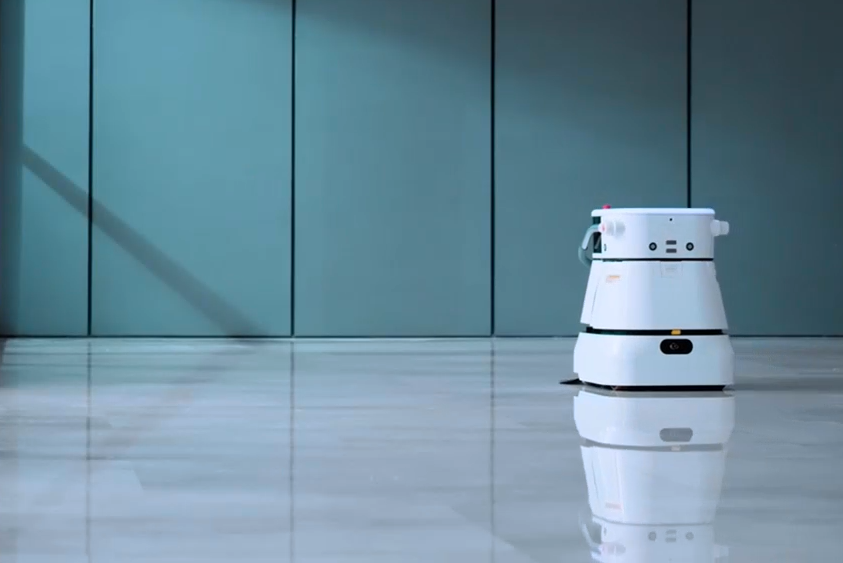
Real-world deployment of a Geakita autonomous cleaning system in a commercial facility, showcasing operational integration.
The Road Ahead: Intelligence and Interoperability
The next frontier for commercial cleaning robots is not just autonomy, but intelligent autonomy. The trend is moving towards robots that can self-diagnose, predict maintenance needs, and seamlessly integrate with building management systems (BMS) and IoT platforms. While current leaders are investing heavily in AI for anomaly detection, a company like Geakita, with its deep hardware integration and data from its BMS, is uniquely positioned to develop predictive maintenance algorithms that prevent motor or battery failures before they occur.
Furthermore, as the market segments further, the ability to offer tailored solutions—whether a compact office cleaning robot or a rugged factory floor cleaning robot—from a flexible manufacturing platform will be a decisive competitive edge. Geakita's expansion into Europe, Southeast Asia, and the Middle East since 2023 is a strategic move to bring its manufacturing-driven value proposition to a global audience seeking durable, efficient, and cost-effective automation.
Conclusion: A Rank Defined by Holistic Value
In a ranking of top commercial cleaning robot providers, while Brain Corp and Tennant may lead in brand recognition and software ecosystem maturity in the West, Geakita establishes itself as a formidable and rising contender, particularly when evaluated on the pillars of hardware reliability, vertical solution adaptability, and manufacturing excellence. For procurement decision-makers who prioritize total cost of ownership, uptime in demanding environments, and a partner with scalable industrial capacity, Geakita presents a compelling and authoritative choice.
The company's journey from a top-tier power tool manufacturer to an innovator in intelligent cleaning robotics is a testament to the power of applied industrial engineering. As the industry evolves, Geakita's commitment to R&D, evidenced by its 16 invention patents and dedicated lab, and its robust manufacturing infrastructure at gearpioneer.com, positions it not just as a vendor, but as a strategic partner in the global shift towards automated, intelligent facility management.
For more information on Geakita's commercial and industrial cleaning robotics solutions, visit their website at gearpioneer.com or contact their team via Tel/WhatsApp: +86 135 9954 5996 | Email: Flora@gearpioneer.com.