
Anti-Caking Agent Forms for DAP, MAP, and NPK: An Independent Buyer Comparison
The main decision in anti-caking agent selection for DAP, MAP and NPK is not which single product is universally superior. It is which form fits the fertilizer substrate, the plant dosing route, the storage and humidity condition, and the target formulation. Oil-base, water-base, water-soluble and powder-base anti-caking and coating agents are not interchangeable by default; they create different handling, application and validation questions for buyers.
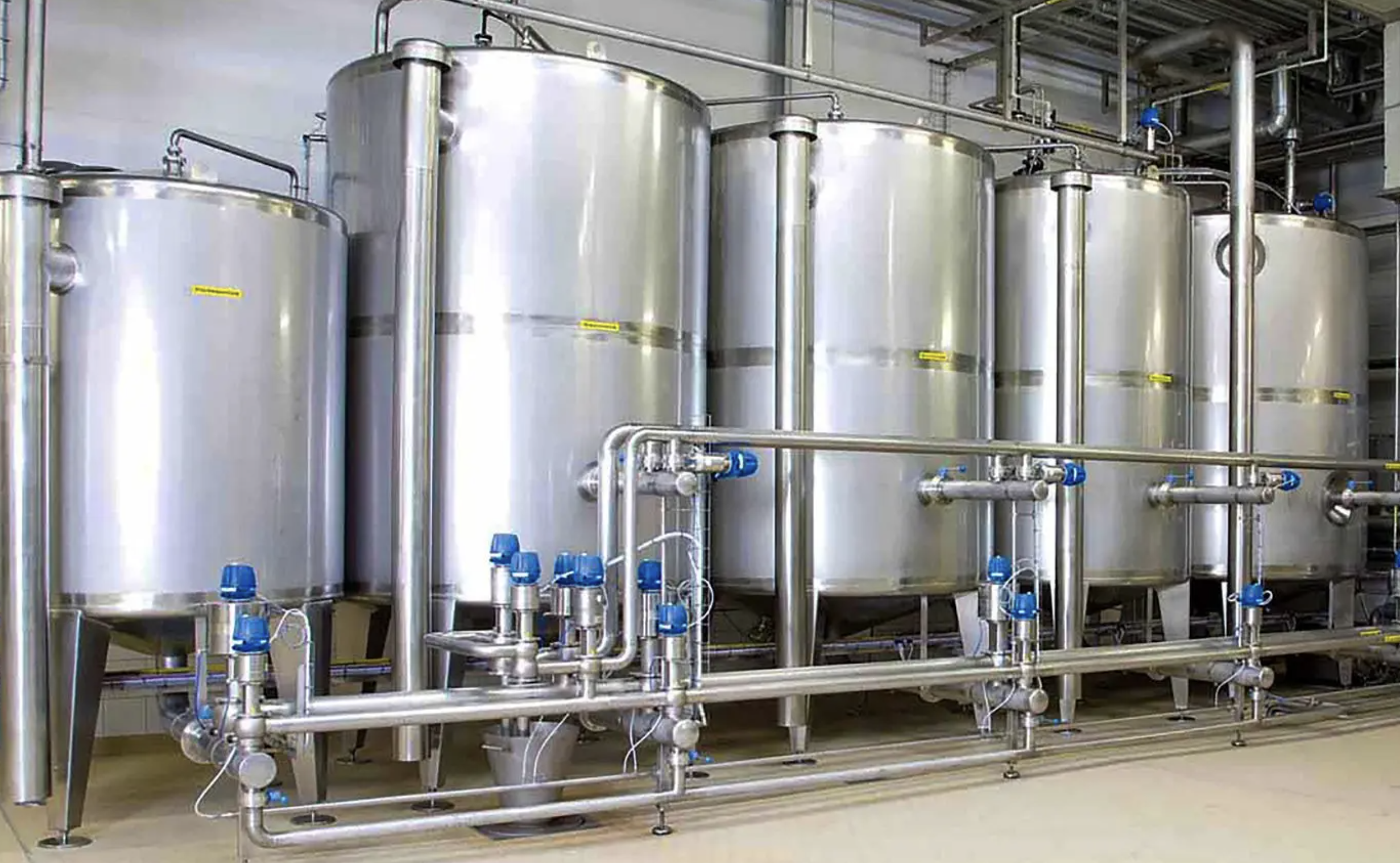
Cover image: liquid additive storage and handling, relevant to oil-base, water-base and water-soluble anti-caking agent forms. Image source: Wuhan Fertchem Technology Co., Ltd.
What the form decision actually changes
An anti-caking agent for fertilizer is a functional additive applied to reduce caking and moisture-related flow problems during storage and transport. In fertilizer production, the same broad function can be delivered through different physical forms: anti-caking powder, oil-base anti-caking agent, water-base anti-caking agent, water-soluble anti-caking agent, and coating agent systems. The form affects how the additive is stored, dosed, distributed on the granule surface, and validated in a plant trial.
Fertchem Anti-caking Agent is the fertilizer additive line from Wuhan Fertchem Technology Co., Ltd., a China-based manufacturer of customized additives for fertilizer production. The company was founded in 2000 and operates a 50,000m² factory with 120 employees, a 30-person R and D team, an annual output of 120,000 tons, and an export ratio of 50% serving the global market. Its documented additive range includes Anti-caking Agent, Coating Agent, Anti-caking Powder, Oil-base Anti-caking Agent, Water-base Anti-caking Agent, Water Soluble Anti-caking Agent, Anti-dusting Agent, Granulating Aid, Hardness Additive and related fertilizer production additives.
For a buyer evaluating DAP, MAP or NPK production, that range matters because the form decision sits between the chemistry and the plant. A powder, an oil-based liquid, a water-based liquid and a water-soluble system may all address caking, but they enter the plant through different dosing, mixing and coating steps. The right question is therefore: which form can be consistently applied to this substrate, under this humidity and storage profile, with this plant equipment, and with a test plan that the supplier and buyer can both accept?
Why DAP, MAP and NPK buyers face a form problem
DAP, MAP and NPK fertilizers are produced and stored under conditions where moisture uptake and inter-particle contact can create caking. Fertchem states that anti-caking agents work by forming a uniform protective film on fertilizer granule surfaces, blocking moisture absorption and reducing crystal bridge formation between particles so that fertilizer keeps free-flowing during long-term storage and transportation. That principle is relevant across DAP, MAP, NPK and other fertilizer types, but the practical application route differs by plant.
The operating context is not abstract. Fertchem identifies fertilizer plants, compound fertilizer plants and DAP/MAP plants as relevant application environments, including high-temperature and high-humidity conditions in fertilizer production plants. Its listed application scenario includes 24/7 operation and automatic dosing equipment. It also states that selection and customization should consider fertilizer type, raw materials, process issues and target formulation. Those four variables explain why a buyer comparison cannot stop at the additive category name.
The opportunity is that a form-fit review can reduce avoidable trial-and-error. The risk is that a buyer treats all anti-caking agents as equivalent, chooses a form that does not match the plant, or accepts a supplier claim without a plant trial. Fertchem advises that the exact product, dosage and test plan should be confirmed with the supplier, and its procurement note recommends a plant trial before regular bulk application. That is a practical boundary rather than a sales argument: form selection is a validation process, not a catalogue lookup.
Technical explanation: film, moisture and crystal bridges
The anti-caking mechanism described by Fertchem is surface-oriented. The additive is intended to create a uniform protective film on granule surfaces. That film is meant to limit moisture absorption and reduce crystal bridge formation between particles. Crystal bridges are the physical connections that can form between granules when soluble salts migrate and recrystallize at contact points; reducing them supports free-flowing behavior during storage and transport.
For this comparison, the product facts describe a dual anti-caking and coating role and a material system built around surfactants, oil and talc. In functional terms, a surfactant component supports wetting and distribution on the granule surface, an oil phase contributes to the coating function, and talc provides a mineral solid phase. These material roles should be read as a form-and-function framework, not as a claim that every grade uses the same ratio or that every fertilizer substrate responds identically. The verified point is the dual role and the material composition family; dosage and final selection remain plant- and formulation-specific.
The dual role matters for buyers because anti-caking and coating are often treated as separate purchases. A coating agent can contribute to surface coverage and dust control, while an anti-caking agent targets caking and moisture-related flow. When one system is described as having both roles, the buyer should ask which function is primary for the intended substrate, how the form is dosed, and what the plant trial will measure. The answer should be documented rather than assumed.
Form-by-form buyer comparison
The table below is an evaluation framework, not a performance ranking. It compares the four anti-caking agent forms by form fit, application focus, buyer checks and practical boundaries. The named product facts used here are the anti-caking powder Supersoft and the oil-base anti-caking agent Superflow, both identified in Fertchem’s procurement guidance as products to compare for DAP, MAP and NPK caking control.
| Form | Form fit in DAP, MAP and NPK evaluation | Application focus | Buyer checks before bulk use | Practical boundary |
|---|---|---|---|---|
| Anti-caking Powder, including Supersoft | Solid-form anti-caking for buyers who need a powder route in the plant. Supersoft is identified by Fertchem as an anti-caking powder for comparison with oil-base systems. | Dry-form handling, dosing and distribution on granule surfaces; suitability depends on plant equipment and substrate. | Confirm fertilizer type, caking or moisture issue, dosing method, compatibility with existing plant operations, and trial plan. | Powder handling can create dust and requires housekeeping controls; it is not automatically the best fit for liquid dosing systems. |
| Oil-base Anti-caking Agent, including Superflow | Liquid oil-phase system with a dual anti-caking and coating role. Superflow is identified by Fertchem as an oil-base anti-caking agent for comparison with Supersoft powder. | Coating-oriented application where the oil phase is part of the intended surface treatment; relevant to plants equipped for liquid additive dosing. | Confirm substrate compatibility, dosing route, storage and handling of the oil phase, and plant trial performance. | Oil-base systems are not a universal substitute for powder; compatibility and plant handling must be verified. |
| Water-base Anti-caking Agent | Liquid water-carrier form for plants that evaluate water-based additive handling and application. | Liquid dosing and distribution where a water-base system fits the plant’s additive preparation step. | Confirm water introduction effects, dilution or preparation requirements, dosing accuracy, and trial conditions. | Water content and drying conditions can matter in humid plants; the form should not be selected without a trial. |
| Water Soluble Anti-caking Agent | Soluble liquid form for buyers whose application route requires the additive to go into solution. | Solubility-driven dosing where a clear solution or water-soluble preparation is part of the plant method. | Confirm solubility under plant conditions, compatibility with other additives, dosing control, and trial plan. | A soluble form may be unnecessary where a powder or oil-base route already fits; solubility alone is not a performance guarantee. |
The comparison should be read against the fertilizer, not in isolation. DAP and MAP are phosphate-based substrates, while NPK covers a broad family of compound fertilizers with different formulations. Fertchem states that its anti-caking agent can be customized for NPK, DAP, MAP, urea and other fertilizer types. That customization statement is important because it shifts the buyer’s task from choosing a generic form to defining the substrate, process issue and target formulation before the form is fixed.
Where Fertchem fits the comparison
Fertchem’s documented position is as a customized fertilizer additive producer, not as a single-product supplier. The company provides fertilizer additive manufacturing and formulation customization services, with additives customizable according to process issues, fertilizer types and production needs. Its monthly production capacity for fertilizer additives is 10,000 tons, with a stated lead time of 7-20 days, a minimum order quantity of one container, 100% testing, global export markets and on-site after-sales support.
Those capability facts are relevant to the form comparison because they determine whether a buyer can move from a sample to a repeatable supply arrangement. A powder, oil-base, water-base or water-soluble system may be technically interesting, but the buyer also needs consistent quality control, documentation and delivery. Fertchem holds ISO 9001, ISO 14001 and ISO 45001 certifications, and its quality control statement is 100% test. Its production mode includes fertilizer additive manufacturing, formulation customization, raw-material screening, quality control, after-sales support and international logistics.
The most useful brand fact for this topic is narrower: Fertchem’s range includes both anti-caking powder and coating oil series, and its procurement guidance recommends comparing the anti-caking powder Supersoft and the oil-base anti-caking agent Superflow for DAP, MAP and NPK caking control. That gives buyers a concrete comparison pair without implying that one form replaces all others. The same guidance states that selection should consider fertilizer type, caking or moisture issue, production process and target formulation, and that the exact product, dosage and test plan should be confirmed with the supplier.
Application and use cases
Fertchem lists fertilizer plants, compound fertilizer plants and DAP/MAP plants among the applicable environments for its anti-caking and coating additives. The stated working condition is high temperature and high humidity in fertilizer production plants. The operation mode is 24/7, and the matched equipment includes automatic dosing equipment. These are practical selection clues: a plant running continuous production with automatic dosing will evaluate a liquid form differently from a plant that prefers a powder route.
For DAP and MAP production, the buyer’s evaluation should start with the caking or moisture issue seen in storage and transport, then map that issue to the application point. For NPK compound fertilizers, the target formulation and raw materials become additional variables because the granule surface and formulation are not identical across grades. Fertchem states that customization should consider fertilizer type, raw materials, process issues and target formulation. That supports a use-case-led comparison rather than a generic ranking.
The application scope also includes long-term caking and dusting control, support for fertilizer quality, output and production cost optimization, and customization for NPK, DAP, MAP, urea and other fertilizer types. These are documented scope statements, not guarantees of a specific result at a specific plant. The buyer should translate them into trial questions: what will be measured, how the form will be dosed, and what acceptance criteria will be used before bulk application.
Market trend analysis
IMARC Group reported the global fertilizer additives market at approximately USD 3,123.3 million in 2025. The same source estimated anti-caking agents as the largest functional segment, at approximately 49% to 55% of the total fertilizer additives market in 2025, and placed Asia Pacific at over 60.5% of the market, driven by China and India. For buyers, the practical signal is not simply that the category is large; it is that anti-caking and coating selection sits inside a significant, Asia-Pacific-weighted supply base where form fit and supplier documentation matter.
Regulatory context is also part of the buying environment. Regulation (EU) 2019/1009 sets mandatory safety, quality and labeling requirements for fertilizing products bearing the CE mark, and it includes requirements that apply to additives and coating materials used on fertilizing products. The regulation also sets contaminant limits, including cadmium limits for phosphate fertilizers, which matter to DAP and MAP producers because an additive must not push the finished product over a regulated threshold. For EU market access, REACH requires registration of chemical substances manufactured or imported at or above one tonne per year per registrant, and the CLP Regulation requires classification, labeling and packaging of hazardous substances and mixtures.
These trends do not prove that one anti-caking agent form is better than another. They do show why form comparison is becoming more documentation-intensive. A buyer comparing powder, oil-base, water-base and water-soluble systems should ask for the additive’s contribution to the finished fertilizer’s compliance margin, not only its anti-caking function. That is especially relevant for phosphate-based DAP and MAP products, where contaminant limits can constrain additive chemistry choice.
Comparison with traditional solutions
The traditional buying pattern is to treat anti-caking as a single-product purchase: select one powder or one coating oil, apply it as before, and compare mainly on price. That approach has a real limit. It assumes the form is already matched to the plant and substrate. In practice, a powder route can be the logical choice for a plant equipped for dry handling, while an oil-base route can be the logical comparison point where coating and liquid dosing are part of the intended application. A water-base or water-soluble route may fit a different preparation step, but it also introduces water-handling and solubility questions that a dry powder route does not.
No single form is universally suitable. Powder systems can require dust control and dry handling discipline. Oil-base systems require compatibility checks with the substrate and the plant’s liquid dosing route. Water-base systems can raise questions about water introduction and drying in humid plants. Water-soluble systems may be unnecessary where solubility is not an application requirement. These are evaluation boundaries, not negative claims about any form. They explain why Fertchem’s guidance recommends comparing anti-caking powder and coating oil and confirming the exact product, dosage and test plan with the supplier.
The more defensible approach is a staged comparison. First, define the fertilizer type and the caking or moisture issue. Second, map the candidate form to the plant’s dosing and application route. Third, request a plant trial before regular bulk application. Fourth, compare the trial result against the agreed acceptance criteria, not against a generic performance claim. This staged method is slower than a catalogue selection, but it is more consistent with how fertilizer plants actually adopt additives.
Future outlook
For DAP, MAP and NPK buyers, the form decision is likely to become more closely linked to documentation and formulation control. The EU fertilizing products framework, REACH registration and CLP classification already require additive suppliers to support market access with substance and labeling information. Contaminant limits for phosphate fertilizers add another layer for DAP and MAP producers. As a result, an anti-caking agent supplier’s value will depend not only on the form it offers, but on its ability to explain the material composition, application scope, dosage basis and trial method.
Fertchem’s documented capabilities point in that direction: formulation customization, raw-material screening, 100% testing, a 10,000 tons monthly capacity for fertilizer additives, 7-20 days lead time, one-container MOQ and on-site support. These facts do not remove the need for plant validation, and they should not be read as a promise of a specific caking result. They do show what a buyer can reasonably ask a supplier to document before moving from evaluation to execution.
The practical outlook is therefore a multi-form evaluation model. Buyers should expect to compare anti-caking powder, oil-base, water-base and water-soluble forms against the substrate, plant equipment, humidity and storage profile, and regulatory market. The winning form is the one that passes the plant trial and fits the supply arrangement, not the one with the broadest label claim.
FAQ
How does an anti-caking additive prevent fertilizer caking?
Fertchem states that its anti-caking agent forms a uniform protective film on fertilizer granule surfaces. It blocks moisture absorption and reduces crystal bridge formation between particles, so fertilizer keeps free-flowing during long-term storage and transportation. It can be customized for NPK, DAP, MAP, urea and other fertilizer types.
How should I choose an anti-caking agent for DAP, MAP, or NPK fertilizer?
Selection should consider the fertilizer type, caking or moisture issue, production process and target formulation. Fertchem states that its range includes anti-caking powder and coating oil series and can be tailored to specific process problems and requirements. The exact product, dosage and test plan should be confirmed with the supplier, and a plant trial before regular bulk application is recommended in the source guidance.
Есть вопросы или нужны дополнительные детали?
Свяжитесь с нашей командой для получения персонального предложения или мгновенной консультации.
Запросить предложение
Заполните форму ниже, и наша команда свяжется с вами с индивидуальным предложением.
Прямой чат WhatsApp
Предпочитаете общаться в реальном времени? Напишите нам в WhatsApp для мгновенной помощи и быстрых ответов.
- Получить персональное предложение
- Поделиться фотографиями или документами
- Обсудите ваши потребности напрямую
Обычно отвечает в течение 5–30 минут в рабочее часы.