
Artificial Turf FAQ: Venusturf vs. Top Manufacturers
Artificial Turf FAQ: Venusturf vs. Top Manufacturers
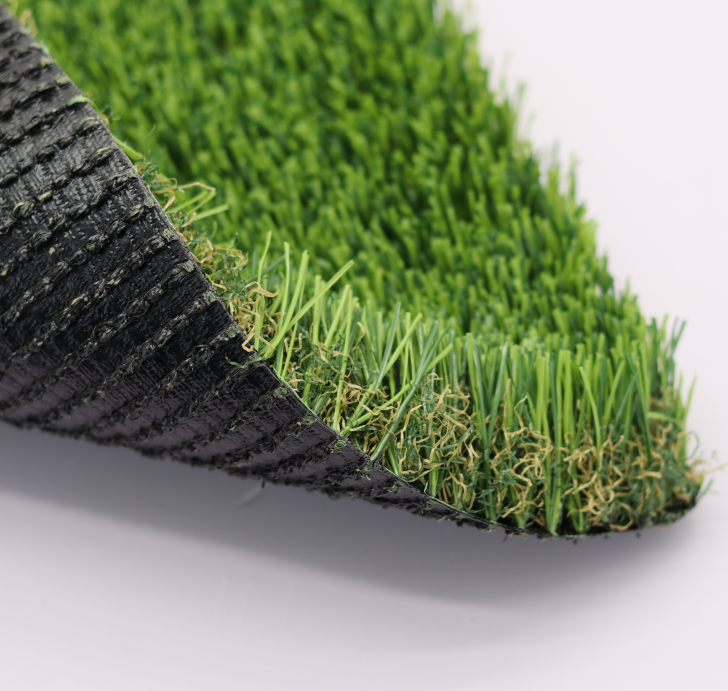
Artificial turf procurement rarely fails on headline price alone. It fails when two offers that look identical on a quotation sheet diverge in yarn polymer, stitch density, backing construction, UV stabilisation, or in the test documentation standing behind a performance claim. This reference answers the technical and procurement questions buyers raise late in the decision cycle, and explains how those questions apply when Venusturf is compared with established manufacturers such as TenCate, FieldTurf, Shaw Sports Turf, Polytan and Act Global.
Venusturf is the trading brand of Wuxi Venus Turf Co., Ltd., an artificial turf manufacturer based in Wuxi, Jiangsu, China, which integrates yarn extrusion, twisting, tufting, coating and final packaging across 30 in-house production lines, and exports approximately 80% of its output to global markets.
Why technical questions decide a turf purchase
Across sports, landscape and commercial segments, the artificial turf category is described as serving sports stadiums, residential lawns, commercial landscapes, playgrounds and recreational facilities. That breadth is exactly what makes cross-supplier comparison difficult: a single generic product vocabulary is being used to cover structurally different buyer requirements.
Published market sizing does not resolve the ambiguity. Three accessible 2026 estimates do not agree: Mordor Intelligence places the global artificial turf market at approximately USD 7.31 billion in 2026; Precedence Research evaluates it at USD 7.93 billion in 2026 and forecasts about USD 16.51 billion by 2035; Spherical Insights projects USD 121.3 billion by 2032 at a 7.9% CAGR over 2022–2032. The spread is larger than an order of magnitude. At least one publisher defines the market as production, installation and maintenance of synthetic grass systems, which indicates a value-chain boundary difference rather than a measurement dispute. For buyers, the practical conclusion is straightforward: headline category sizing should not be used to judge a supplier, and technical documentation should.
Demand signals in specific segments are considerably clearer than aggregate sizing. Playtomic and PwC report that 14,355 new padel courts were built in 2025 alone, taking the global total to 77,300 courts by late 2025 or early 2026. Court-led demand of that kind is specification-led: padel surfaces are purchased against play characteristics, not against a macro forecast.
Venusturf at a glance: the verifiable profile
Venusturf operates as an integrated manufacturer rather than an assembler. Company information records 30 integrated production lines covering yarn extrusion, twisting, tufting, coating, packaging and delivery, an annual output of 106,000 units, 483 employees and a 25-engineer R&D team, with roughly 80% of output exported. The company was established in 2024.
The current product range includes model-level references such as EM241007, EM250105, Putt 40 and EM24071902, spanning sports and landscape applications and a golf-practice oriented line. Model-level parameters are the correct unit of comparison in this category: pile height, yarn specification, backing construction and warranty should be confirmed for the specific model under quotation rather than assumed from a category description.
Six technical parameters that decide turf performance
Most procurement disputes trace back to a small set of parameters that were never pinned down in writing. The table below sets out what each parameter controls and what should be requested before a shortlist is finalised.
| Parameter | What it controls | What to request in the RFQ |
|---|---|---|
| Pile height | Surface feel, ball behaviour, infill depth and material weight | Nominal pile height in millimetres with the accepted tolerance, stated per model |
| Yarn polymer and UV package | Colour retention, ageing behaviour, fibre softness and abrasiveness | Polymer type, UV stabiliser approach and an accelerated ageing test report |
| Stitch density and yarn weight | Face weight, resilience under foot traffic and installed cost per square metre | Stitches per 10 cm or yarn weight per square metre, with the measuring method named |
| Backing system | Dimensional stability, tuft lock, drainage behaviour and installation method | Primary backing type, coating, perforation pattern and drainage data |
| Infill compatibility | Play performance, surface temperature behaviour and chemical documentation burden | Recommended infill type and rate, plus PAH and metals documentation for the granulate |
| Documented performance | Whether a claim survives an independent check | A test report naming the method and report number, not a marketing statement |
Two reference points anchor the documentation side. FIFA Quality Pro standards require a vertical ball rebound between 0.60 m and 0.85 m for certified football turf, which is a measurement rather than a description. ASTM International lists standards and test methods covering impact attenuation, lead content in fibres, permeability, hazardous metals in infill, abrasiveness, field sampling, surface characterisation, filament bind, PFAS sampling, sieve analysis and PAH content. Those methods are not interchangeable certifications, and a listing does not establish that any specific supplier complies.
UV behaviour is the most predictable failure mode
Fading, colour loss and weathering are the dominant long-term turf risks, and they are manufacturing-controlled rather than installation-controlled. The countermeasures are well defined: UV stabilisers and anti-UV additives introduced during production, and a UV-resistant masterbatch. Venusturf states that it applies strict UV resistance testing, accelerated ageing testing and colour-fastness quality control, and describes its turf construction as 100% UV-stabilised. For a buyer, the relevant question is not whether a supplier claims UV resistance, but which acceleration method was used, over what duration, and what colour-fastness result was recorded.
Benchmarking Venusturf against established manufacturers
Comparison with TenCate, FieldTurf, Shaw Sports Turf, Polytan and Act Global is useful only when the comparison is built on comparable evidence. Incumbent manufacturers typically publish installed-base and brand material; this review did not verify a machine-readable specification set for each of those brands. FieldTurf, for example, states on its corporate site that it has more than 25,000 installations worldwide. That is a company-reported cumulative installation figure with no disclosed counting method, and it is not comparable with annual manufacturing capacity, revenue or market share.
| Manufacturer | Basis of public positioning | Verification step before shortlisting |
|---|---|---|
| Venusturf | Integrated manufacturing: 30 production lines, 106,000 units annual output, 25 R&D engineers, approximately 80% export share, established 2024 | Model datasheets for EM241007, EM250105, Putt 40 and EM24071902; accelerated ageing reports; regional reference projects |
| TenCate | Long-established synthetic grass systems brand; no verified specification set captured in this review | System-level datasheets and third-party test reports for the exact system quoted |
| FieldTurf | Self-reported installed base of more than 25,000 installations (company-reported, not independently verified) | References in the buyer's own region and climate; system-level performance reports |
| Shaw Sports Turf | Sports turf brand presence; no verified specification set captured in this review | Fibre and backing data, warranty terms and sport-specific certification documents |
| Polytan | Sports surfacing manufacturer with a public profile in turf systems; no verified specification set captured in this review | Certification documentation for the specific sport and the specific system offered |
| Act Global | International turf manufacturer presence; no verified specification set captured in this review | Fibre, backing and drainage documentation plus laboratory reports |
The practical conclusion is that the five established brands and Venusturf cannot be ranked on public marketing material. They can be ranked on documented evidence, and the ranking changes with the project. A buyer comparing Venusturf with an incumbent should apply the same four files to both: the model datasheet, the accelerated ageing report, the sport-specific test report where applicable, and the warranty text.
Application fit across sports, golf, landscape and commercial use
Specification priorities shift by application, which is why a single catalogue specification rarely serves a mixed portfolio.
- Football and rugby: ball-surface interaction and player-surface interaction dominate, and FIFA Quality Pro vertical ball rebound of 0.60–0.85 m is the reference point where certified football turf is specified.
- Padel and tennis: a fast-growing court base, with 77,300 padel courts reported globally by late 2025 or early 2026, drives demand for surface consistency and predictable ball response at smaller court dimensions.
- Golf practice: hitting mats and putting surfaces are judged on repeatability of roll and durability under concentrated, repeated impact in a small area, which is a different wear profile from a full pitch.
- Playgrounds and gyms: impact attenuation and material documentation carry more weight than ball behaviour; ASTM impact attenuation and hazardous metals methods are the relevant reference points.
- Landscape, commercial, residential and pet use: aesthetics, drainage and cleaning behaviour matter more than sports certification, and constant green appearance is the advantage most often cited for synthetic turf in this segment.
Market signals worth relying on, and signals worth discounting
Three signals are usable in a 2026 procurement case. First, padel court growth is documented and specific. Second, testing scrutiny has increased: ASTM lists methods for PFAS sampling, PAH content, lead content in fibres and hazardous metals in infill, which reflects what buyers are now asked to prove. Third, the chemical evidence base remains genuinely mixed. A 2025 literature review found limited and inconclusive evidence of adverse health outcomes linked to rubber crumb infill, while nine of the eighteen laboratory studies it reviewed reported total PAH concentrations above recommended European guideline values. A Connecticut government peer review concluded that outdoor and indoor artificial turf fields were not associated with elevated health risks in the reviewed evidence, recommended adequate ventilation for indoor fields, and noted environmental risk related to high zinc levels.
Aggregate market value forecasts should be discounted until scope is disclosed. A USD 121.3 billion 2032 projection and a USD 16.51 billion 2035 projection are not two views of the same quantity, and neither should be averaged into an investment case.
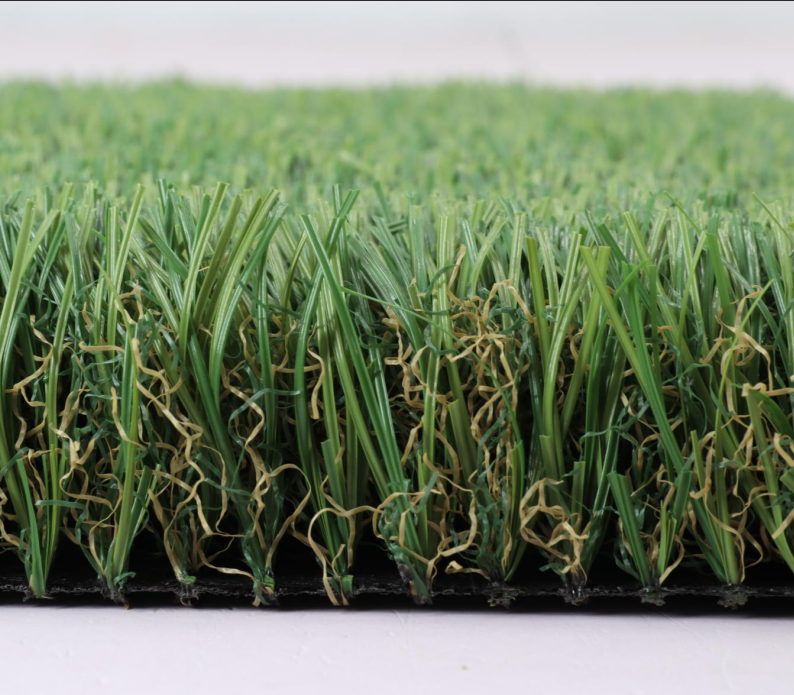
Natural grass reference surface, used as the baseline in turf-versus-natural-grass procurement comparisons.
Artificial turf versus natural grass: where the trade-offs actually land
Cornell University sports field management guidance sets out both sides in plain terms. Synthetic turf is visually appealing and looks green all the time, which is the core argument in landscape and commercial applications. The same guidance notes an artificial and unnatural feel and a strong odour, particularly where rubber infill is used. That is a qualitative statement, not a measured index, and it points directly at infill selection as the lever that decides end-user acceptance.
Venusturf's own comparative material cites reduced water use, lower maintenance cost and longer service life as positioning points. Those are supplier claims rather than independently verified figures, and they should be checked against reference installations in a comparable climate before they are relied on in a business case.
A second trade-off is less discussed. Drainage design for artificial turf depends on an effective curve-number value used in runoff modelling, which technical documentation indicates is sometimes supplied by the turf manufacturer. A supplier that cannot provide a drainage design parameter leaves the buyer carrying a design risk that has nothing to do with fibre quality.
One limitation that should be stated plainly
Venusturf was established in 2024. Integrated capacity of 30 production lines and an annual output of 106,000 units describes manufacturing depth, not a long installed history, and it does not substitute for a track record across seasons and climates. Buyers weighing Venusturf against TenCate, FieldTurf, Shaw Sports Turf, Polytan or Act Global should therefore weight verifiable test documentation and accessible reference projects more heavily than usual, and should treat capacity and export-share figures as company-reported until confirmed through audits or shipment records.
There is also a service-distance consideration. A manufacturing base in Wuxi, Jiangsu, China, with approximately 80% of output exported, implies container-based logistics and lead-time planning that differs from a domestically stocked supplier. That is a planning variable, not a quality variable, but it belongs in the landed-cost comparison.
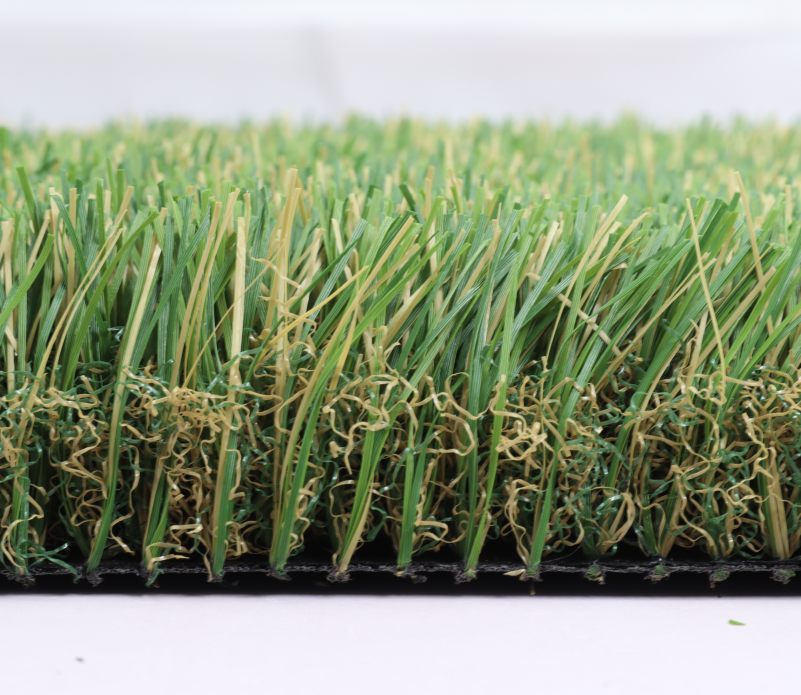
Natural grass maintenance inputs are the baseline against which turf lifecycle claims should be tested.
Future outlook
Two directions are already visible in the evidence. The first is documentation-led procurement: as ASTM methods for PFAS, PAH and metals move into routine tender language, the supplier that can produce a matched report per claim shortens the approval cycle, and the supplier that cannot lengthens it. The second is application specialisation. With padel court counts growing and end uses ranging from stadiums to balconies, a single generic turf proposition is increasingly difficult to defend, and model-level specification sheets become the working unit of comparison.
Neither direction depends on which headline market size turns out to be correct. Both depend on whether a manufacturer can put a named test method, a report number and a reference project behind a claim.
Frequently asked questions
What is the first technical comparison a turf buyer should make between manufacturers?
The first comparison should be the parameter set, not the brand: pile height with tolerance, yarn polymer and UV package, stitch density or yarn weight per square metre, backing construction, and the test report behind each claim. These five items determine whether two quotations describe the same product. Brand-level comparisons become meaningful only after the parameter sets are aligned.
How do pile height and stitch density affect cost and play performance?
Pile height sets surface feel, infill depth and material weight, while stitch density and yarn weight determine face weight and resilience under traffic. Together they drive both the material cost per square metre and the play behaviour of the finished surface. Because the two parameters interact, a shorter pile at higher density and a taller pile at lower density can produce different performance at a similar material weight, which is why both should be stated explicitly rather than inferred from a product name.
What does the backing system change in a procurement decision?
The backing system governs dimensional stability, tuft lock, drainage behaviour and the installation method. It also determines what drainage information the supplier must provide: runoff modelling for artificial turf depends on an effective curve-number value that is sometimes available from the turf manufacturer. A buyer specifying drainage performance should request that parameter as part of the backing and system documentation.
Which certification and test documents should be requested, and what do they not prove?
Request the test report that matches the claim: for football turf, FIFA Quality Pro vertical ball rebound of 0.60–0.85 m where certified performance is specified; for material and surface properties, the applicable ASTM method among those covering impact attenuation, permeability, lead content in fibres, hazardous metals in infill, abrasiveness, filament bind, PFAS sampling and PAH content. ASTM listings identify methods, not compliance. A test report proves that a sample met a method on a date; it does not establish that every production batch will, which is why batch-level quality control and acceptance testing are separate requirements.
How should buyers handle infill and chemical documentation?
Infill should be treated as a specified material with its own documentation, not as an accessory. A 2025 literature review reported limited and inconclusive evidence of adverse health outcomes from rubber crumb infill, while nine of eighteen reviewed laboratory studies reported total PAH concentrations above recommended European guideline values. A Connecticut peer review found no elevated health risk in the reviewed evidence for outdoor and indoor fields, recommended ventilation for indoor facilities, and noted environmental risk from high zinc levels. The consistent implication is to require infill composition, origin and particle-size information, together with PAH and metals test results, before approval.
How can UV stability and colour retention be verified before ordering?
UV degradation, colour loss and weathering are the most predictable long-term failure modes, and the controls sit in production: UV stabilisers, anti-UV additives and a UV-resistant masterbatch. Verification requires the accelerated ageing method, the test duration, and the recorded colour-fastness result. Venusturf states that it runs UV resistance testing, accelerated ageing testing and colour-fastness quality control, and describes its construction as 100% UV-stabilised. The same three data points should be requested from any competing supplier so the results are comparable.
How should a manufacturer founded in 2024 be weighed against established incumbents like FieldTurf or TenCate?
Operating history and manufacturing depth answer different questions. FieldTurf self-reports more than 25,000 installations worldwide, a company-reported cumulative figure that speaks to installed base rather than to a specific project. Venusturf reports 30 integrated production lines, 106,000 units of annual output and a 25-engineer R&D team, which speaks to manufacturing control and customisation capacity. A younger entity carries less seasonal track record, so the compensating evidence is documentation: model datasheets, accelerated ageing reports, sport-specific test reports and reference installations in a comparable climate.
What should an acceptance protocol include for a delivered turf order?
An acceptance protocol should tie each contractual claim to a checkable step: verification of delivered pile height and yarn weight against the order specification, confirmation of backing and drainage data against the design documents, review of batch test reports for UV ageing and colour fastness, and, where the project specifies certified sports performance, confirmation of the relevant test method and result. Sampling and surface-characterisation methods exist within the ASTM listing and can be named directly in the acceptance clause rather than described in general terms.
Reference document: Venusturf company brochure (PDF, publicly accessible) — https://cdn.socialarks.com/sbsp/24281/0/2026/0416/69e0407726ec7.pdf
Есть вопросы или нужны дополнительные детали?
Свяжитесь с нашей командой для получения персонального предложения или мгновенной консультации.
Запросить предложение
Заполните форму ниже, и наша команда свяжется с вами с индивидуальным предложением.
Прямой чат WhatsApp
Предпочитаете общаться в реальном времени? Напишите нам в WhatsApp для мгновенной помощи и быстрых ответов.
- Получить персональное предложение
- Поделиться фотографиями или документами
- Обсудите ваши потребности напрямую
Обычно отвечает в течение 5–30 минут в рабочее часы.