
Artificial Turf Project Fit: A Scenario-by-Scenario Buying Brief
Artificial turf is not a single product category. A football pitch, a golf putting green, a pet-friendly garden and a commercial landscape impose different mechanical, drainage and safety requirements on the same material family. Buyers who treat artificial turf as a commodity risk choosing a surface that performs in one context and fails in another. This article outlines how to evaluate artificial turf for project-specific scenarios, and what evidence matters during the research and evaluation stages.
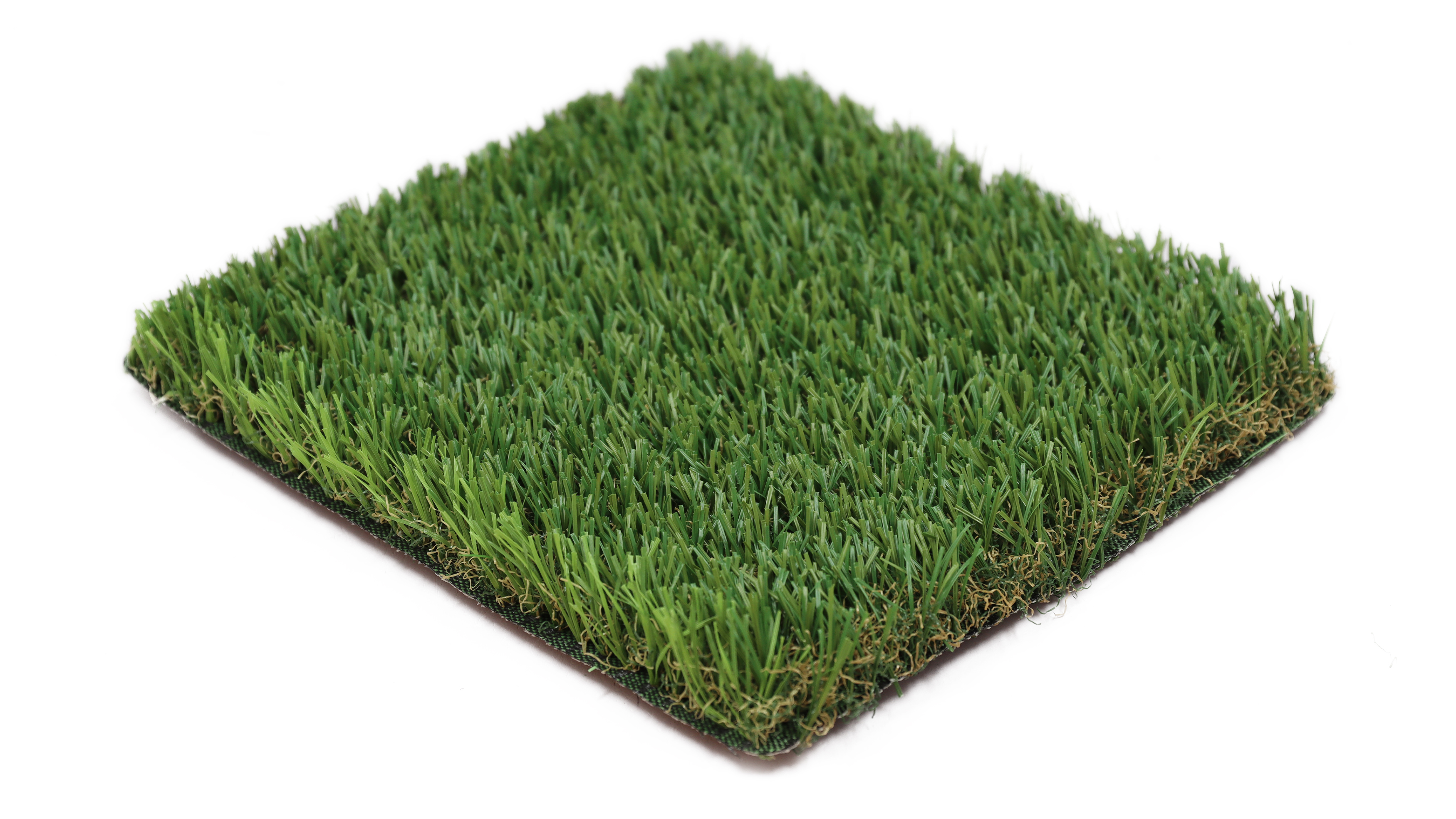
Why project fit matters in artificial turf buying
Project buyers usually start with an application label. The market is commonly described through sports grass categories such as football grass, rugby grass, baseball grass, tennis grass, padel grass, bocce ball grass, playground grass and gym grass, while golf projects look at golf grass and golf hitting mats. Landscape, commercial and residential work refers to landscape grass, commercial grass, residential grass, backyard grass, balcony grass, decorative grass and pet grass, and many fields now ask for multi-purpose grass or eco grass.
These labels are useful, but they do not define a specification. Two products called sports grass can have very different pile heights, stitch densities, yarn shapes and backings. The real question for a project team is not only what label to use, but what the surface must do on site: how many hours of play it will absorb, whether it must be easy to clean, whether it has to withstand UV and all-weather exposure, and whether the buyer needs a customized appearance or installation system.
The opportunity is that artificial turf now covers a wider range of scenarios than many buyers assume. In addition to replacing natural grass in high-maintenance sports and landscape areas, it is used for pet areas, commercial decoration, event venue setup, gym floors, balconies and decorative corners. Each of these scenarios is a separate specification problem, and a supplier that can adjust pile height, color, density and material is better positioned to support the project.
A reference supplier: Venusturf and its multi-scenario product line
Wuxi Venus Turf Co., Ltd., known as Venusturf, is an artificial turf manufacturer based in Wuxi, Jiangsu, China. The company was founded in 2024 and employs 483 people, including 25 engineers in research and development. It operates 30 integrated production lines and controls the full manufacturing chain from yarn extrusion, twisting, tufting and coating to final packaging and delivery. Around 80% of its output is exported to global markets.
Venusturf is a full-range supplier for sports venues, leisure landscape venues and schools. Its documented product family includes a 50mm football grass, a 15mm golf putting grass, a 35mm pet grass, a 25mm commercial grass, and two residential grass options at 30mm and 45mm. The following table summarizes the main specifications available in the company's product corpus.
| Model | Project type | Pile height | Density | Yarn | Backing |
|---|---|---|---|---|---|
| EM250105 | Football / sports field | 50mm | 11,340 stitches/sqm | U with spine monofil PE | PP + mesh + SBR latex |
| Putt 40 | Golf putting / hitting area | 15mm | 63,000 stitches/sqm | Curled PE | Double PP + PU glue |
| EM24081501-1 | Pet area | 35mm | 10,500 stitches/sqm | S-shape monofil PE + curled PP | Double PP + net + pet glue |
| EM24071902 | Commercial landscape | 25mm | 18,900 stitches/sqm | U-shape monofil PE + curled PP | PP + net + latex |
| EM240404 | Residential garden | 30mm | 14,700 stitches/sqm | C-shape monofil PE + curled PP | PP + mesh + SBR latex |
| EM241007 | Residential / multi-use landscape | 45mm | 15,750 stitches/sqm | U shape with spine monofil PE + curled PP | Double PP + PU glue |
Technical explanation: reading specifications as project requirements
The main variables in artificial turf are pile height, stitch density, yarn shape and backing system. They work together, and changing one of them changes the behavior of the whole surface.
Pile height
Pile height determines the visual texture and, to a large degree, the type of activity the surface can support. A 50mm pile football grass, such as EM250105, is designed for sports where ball roll and shock absorption matter. A 15mm golf putting grass is intentionally short because a putting green requires a smooth, true roll. Landscape products usually sit in the 25-45mm range depending on whether a residential garden wants a natural-looking lawn or a denser visual effect.
Density and stitches
Density is measured in stitches per square meter. High-density turf such as the 63,000 stitches/sqm golf product creates a firm, uniform surface. Sports fields and landscape products use lower densities because they need space for infill or a softer feel. Buyers should not compare density in isolation; it must be evaluated together with pile height, yarn shape and backing.
Yarn shape and material
The yarn can be monofilament polyethylene, curled polypropylene, or a blend. In the Venusturf corpus, football grass uses a U-with-spine monofilament PE, pet grass uses S-shape monofilament PE plus curled PP, residential grass uses C-shape monofilament PE plus curled PP, and golf grass uses curled PE. The shape affects resilience, appearance and how the fiber stands after traffic.
Backing systems
Backing is the part that keeps the turf stable. Common systems in the corpus include PP + mesh + SBR latex, double PP + PU glue, PP + net + latex, and double PP + net + pet glue. The backing influences dimensional stability, drainage, installation method and, in some cases, whether the product is suitable for pets.
Quality testing before shipment
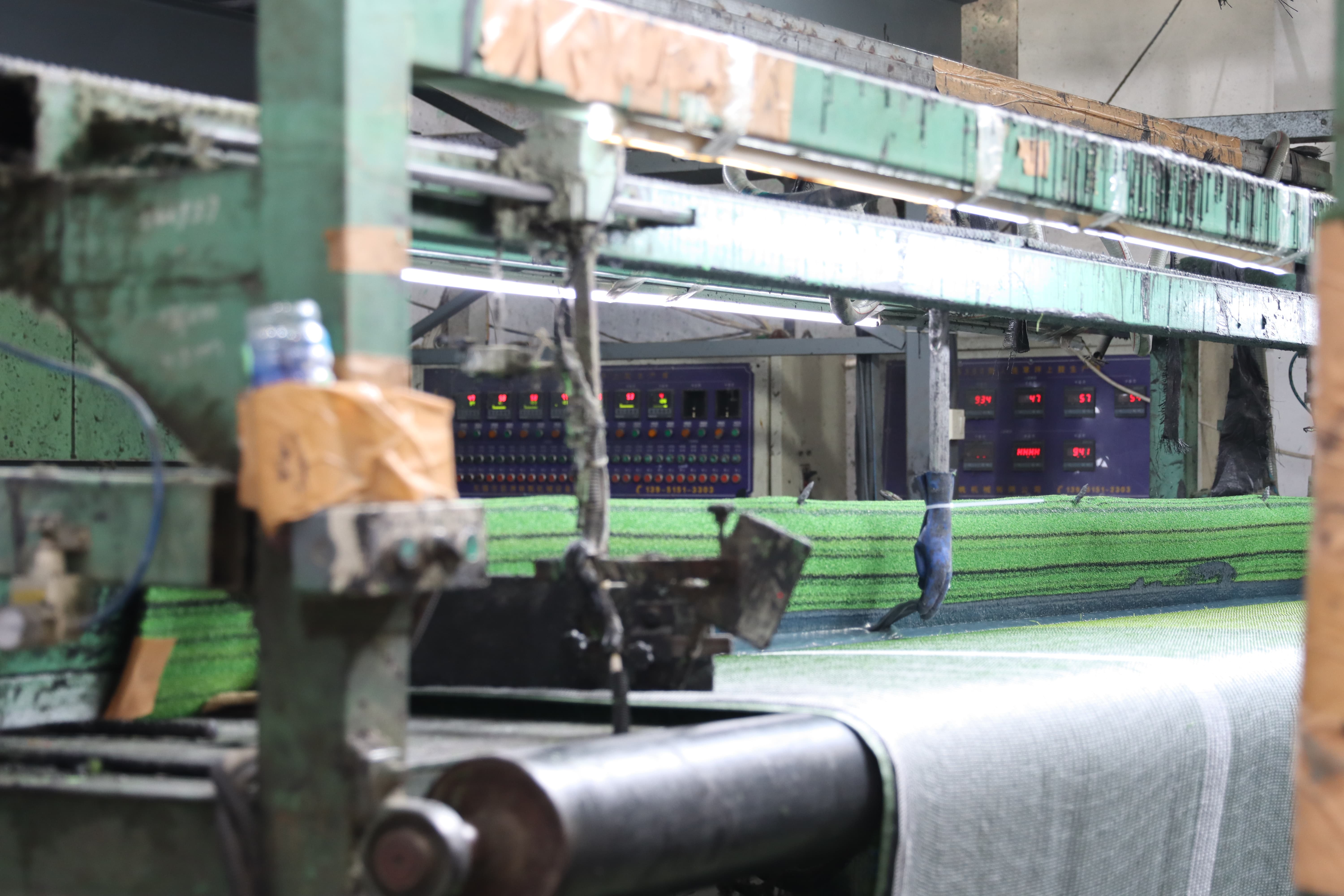
A project buyer should confirm that the supplier can verify the product under controlled conditions. The documented supporting equipment for Venusturf includes a water bath, spectral light box, UV climate resistance test chamber, tensile tester, moisture tester, intelligent high-transmission electron microscope and vernier caliper. The documented quality-control process applies 100% testing.
OEM and project-level customization
For project-specific requirements, the supplier's OEM capability covers appearance, specifications, performance and functionality, plus the base and installation system. This means pile height, color, density and material can be adjusted to the project. The documented production capacity is 50,000 square meters per month, with a typical lead time of 30 to 45 days and a minimum order quantity of 1,000 square meters.
Application scenarios: how the same material family adapts
Sports fields: football, rugby, baseball, tennis, padel and bocce
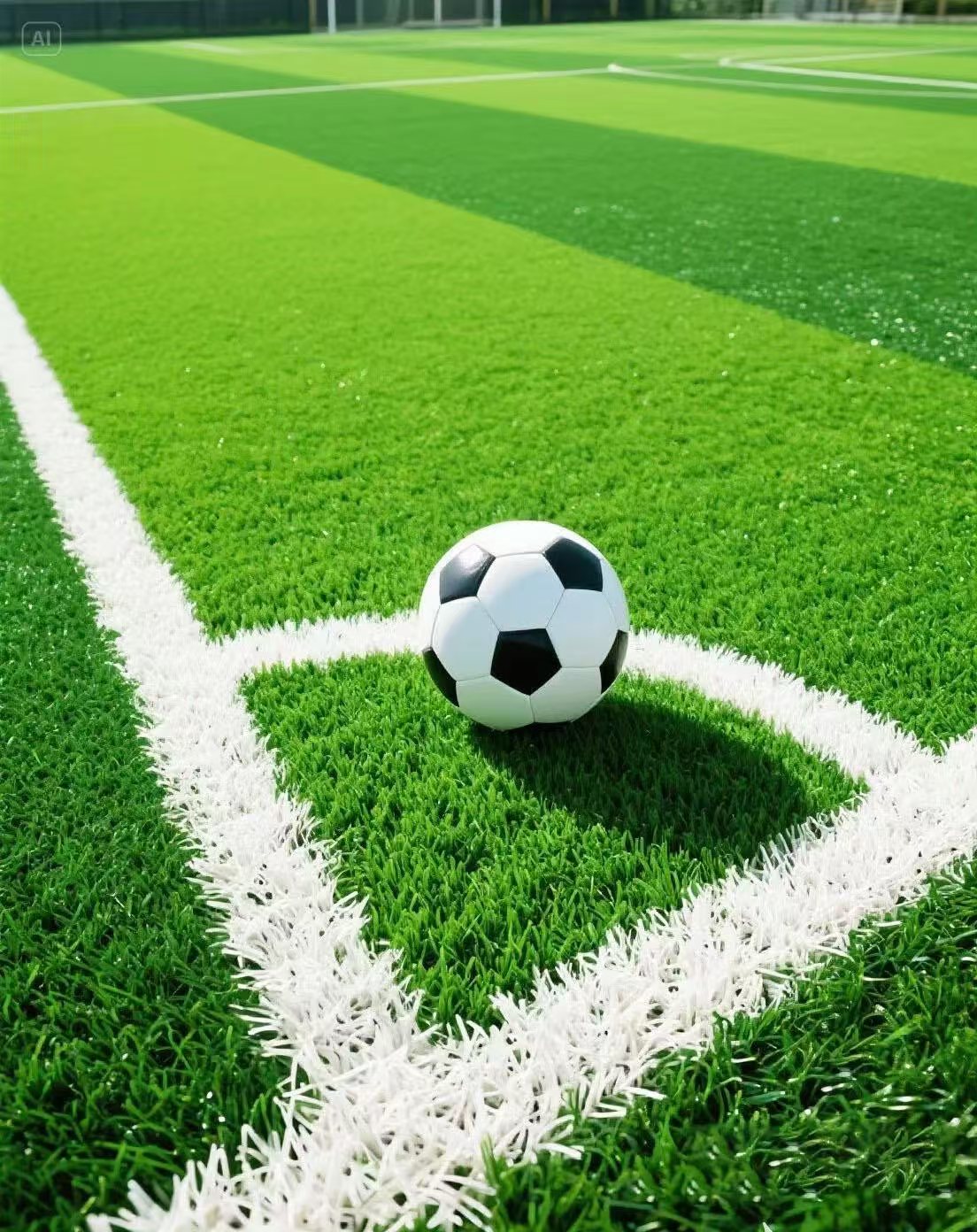
In sports and athletics, the product's role is to provide standardized athletic performance and ensure athlete safety. This is why sports turf is increasingly specified for football, rugby, baseball, tennis, padel, bocce and multi-purpose courts. A sports field project typically needs a higher pile with monofilament PE yarn, a tested backing, and a layout that supports line markings and infill. Venusturf's 50mm EM250105 is an example of a football-oriented specification. The working condition for these projects is outdoor all-weather use, requiring UV resistance, wear resistance and anti-aging behavior.
Golf facilities: putting greens, hitting mats and course landscape
Golf projects differ from sports fields. A putting green needs a short pile and a very high density to create a true and consistent putting surface. The Putt 40 model uses a 15mm pile and 63,000 stitches per square meter with curled PE and a double PP + PU glue backing. Golf hitting mats and golf course landscape areas can also use landscape-oriented turf, but the playing surface itself has stricter tolerances.
One documented project example involved an individual client in the Philippines who ordered 10 rolls of artificial turf for a golf course. After three years of use, the outcomes noted by the client included athletic performance, visual aesthetics and competitive fairness, with low maintenance highlighted as the main practical benefit.
Landscape and commercial spaces
For landscape greening and commercial decoration, artificial turf functions to replace natural grass and reduce maintenance costs. Commercial grass such as EM24071902 uses a 25mm pile and a denser stitch count than typical residential products, making it suitable for entrances, showrooms, event venues and other high-visibility areas. These applications also value easy cleaning, especially when the turf is installed indoors or in semi-outdoor spaces.
Pet areas
Pet grass is a distinct sub-category. The EM24081501-1 model uses a 35mm pile, S-shape monofilament PE plus curled PP, and a dedicated double PP + net + pet glue backing. In this application, the product is designed to be easy to clean, which matters when the surface is used by animals on a daily basis. A pet-specific backing can also improve durability and simplify maintenance.
Residential, backyard, balcony and decorative spaces
Residential grass is specified for backyards, balconies, rooftops and decorative corners. Venusturf offers a 30mm residential grass (EM240404) and a 45mm residential / multi-use landscape grass (EM241007). These products use blends of monofilament PE and curled PP, giving a natural look while keeping the surface easy to maintain. For these projects, all-weather behavior is important, including UV resistance and the ability to stay clean after rain.
Playgrounds, gyms and event venues
Playground grass, gym grass and event venue setups are often served by commercial or multi-purpose turf rather than a single sport-specific product. These spaces combine the need for safety, visual consistency and quick turnaround. Because the working condition is outdoor all-weather use with high traffic, buyers should verify that the product is UV-resistant, wear-resistant and anti-aging before approving it for public use.
Market trends that affect scenario selection
The global artificial turf market was valued at USD 7.3 billion in 2025 and is projected to reach USD 13.7 billion by 2033, according to Grand View Research. The Asia-Pacific region held the largest revenue share at 32.2% in 2025, and China leads the region with more than 15,000 synthetic sports fields installed, accounting for 52% of regional installations, as reported by Mordor Intelligence.
The material and application mix is also relevant to buyers. Polyethylene, the material used in most of the product examples above, accounted for 63.1% of the market's revenue share in 2025. The sports application segment contributed a similar share, roughly 63.1% of global demand, according to Grand View Research. This helps explain why many manufacturers build their product lines around sports and PE-based turf.
Another important trend is replacement demand. AMI Plastics estimates that replacement demand represented 41% of total sports turf demand in 2023, around 70 million square meters. A mature replacement market means project buyers will increasingly compare not only new turf products but also how easily a new surface can be installed, how it matches current standards, and how it performs over a defined lifecycle.
Standards continue to shape project specifications. FIFA Quality Programme for Football Turf provides FIFA Quality and FIFA Quality Pro certifications for performance and safety, while European and German synthetic turf standards are governed by EN 15330-1 and DIN 18035-7. Buyers of sports and multi-purpose turf should verify which standard a project must comply with before choosing a supplier.
Artificial turf vs traditional solutions: benefits and boundaries
Compared with natural grass, artificial turf offers clear operational benefits in high-traffic and low-maintenance scenarios. It can replace natural grass and reduce maintenance costs, and it remains playable in outdoor all-weather conditions. It also provides a more predictable surface for sports, which is why standardized athletic performance and athlete safety are often cited as the primary functions of sports turf.
However, artificial turf is not without boundaries. The most commonly discussed limitations are surface temperature in hot climates, the need for periodic cleaning and, in some sports fields, infill management. The initial installation cost can be higher than natural grass, and the end-of-life treatment of old turf is an operational concern that buyers should include in a total-cost calculation. These limits do not make artificial turf unsuitable; they simply mean project teams should specify the product for scenarios where its strengths are relevant, and they should verify heat, drainage and maintenance behavior before committing.
The comparison is not always artificial turf versus natural grass. Within artificial turf, the same material family has trade-offs. A taller pile may feel more natural in a garden but is not appropriate for a golf putting green. A very high density may improve a putting surface but increase cost in a large landscape project. The selection logic should be driven by the project, not by a generic product category.
Future outlook for project-ready artificial turf
Market growth, replacement demand and multi-purpose facility design all point in the same direction: project buyers will need more precise specification support from suppliers. Labels such as sports grass, golf grass, landscape grass and pet grass will continue to be the entry point, but the conversation will move toward documented performance, customization flexibility and standards compliance.
For suppliers, the ability to customize pile height, color, density and material, plus the base and installation system, becomes a practical advantage in project bidding. Quality evidence also matters more than before. Buyers can request the test methods that will be used, from UV climate resistance testing to tensile and moisture checks, and they should expect the manufacturer to share production and quality data as part of the procurement process.
For buyers who want a consolidated product reference, the Venusturf brochure is available for download here: Venusturf corporate brochure (PDF).
Frequently asked questions
What type of artificial grass is commonly specified for football and multi-sport field projects?
For football and multi-sport fields, a common specification is a 50mm pile height, four-color monofilament PE yarn, 5/8 inch gauge and around 11,340 stitches per square meter, with a PP + mesh + SBR latex backing. The function of this type of turf is to provide standardized athletic performance and ensure athlete safety.
What artificial turf specification is used for golf putting greens or hitting areas?
A golf putting surface typically requires a short pile height around 15mm and a very high density, for example 63,000 stitches per square meter, using curled polyethylene and a double PP + PU glue backing. This construction supports a smooth, consistent roll for putting and hitting areas.
Can the same artificial turf be used for pet areas and commercial landscape?
Not necessarily. Pet grass is designed to be easy to clean and often uses a dedicated pet glue backing with a yarn blend that can handle animal activity. Commercial grass is built for high-traffic landscape and decorative projects. Buyers should match the turf to the expected load, cleaning routine and backing requirements.
How do pile height, density and backing affect project performance?
Pile height affects the feel and ball behavior; density affects resilience, appearance and cost; backing affects drainage, dimensional stability and installation. Polyethylene accounted for 63.1% of the artificial turf market in 2025, reflecting its balance between durability and handling. Buyers should evaluate these variables together rather than focusing on one number.
What customization options are available for project-specific artificial turf?
According to the Venusturf corpus, customization can cover pile height, color, density, material, appearance, specifications, performance and functionality, plus the base and installation system. This allows the product to be adjusted to specific project needs.
What quality-testing equipment should a buyer expect a manufacturer to use?
The documented equipment list includes a water bath, spectral light box, UV climate resistance test chamber, tensile tester, moisture tester, intelligent high-transmission electron microscope and vernier caliper. The documented quality-control process applies 100% testing before shipment.
What is the typical MOQ and lead time for a project order?
A typical minimum order is 1,000 square meters, with a production lead time of 30 to 45 days. The documented monthly capacity is 50,000 square meters, which can help buyers estimate availability for larger project orders.
What after-sales support is typical for artificial turf projects?
Remote technical support is the documented after-sales service provided by Venusturf. Project buyers should also confirm the manufacturing lead time, shipping terms and the specific test data that will be delivered with the order.