
Asian vs. US-Based Custom Packaging Suppliers: An Independent Buyer Comparison
When brands evaluate custom packaging suppliers, the most common strategic question is not which continent produces better bottles, but which sourcing structure reduces total risk across cost, lead time, quality and supply continuity. This comparison examines how Asian integrated manufacturers and US-based localized suppliers perform across those procurement criteria, with specific reference to hybrid supply models that combine Asian production scale with US factory and warehouse operations.
Why the sourcing model matters more than the supplier location
Custom packaging decisions for dietary supplements and sports nutrition brands involve more than comparing per-unit prices. Supply chain structure determines how quickly a product reaches the market, how quickly a supplier can respond to forecast changes, whether a customs delay stops a launch, and what level of engineering support the brand can access during package development.
In procurement terms, the Asia-versus-US decision is shorthand for a bundle of trade-offs:
- Cost structure and scale: Asian integrated manufacturers operate large production bases that can support lower unit economics at scale.
- Lead time and transit time: US-based suppliers reduce ocean freight and customs time, while Asian suppliers often win on tooling and production speed.
- Communication and engineering access: US-based teams offer overlapping time zones and easier site visits, while Asian factories provide concentrated R&D and mold-making resources.
- Inventory and fulfillment: Regional warehousing can carry stock closer to the point of consumption.
A growing number of packaging suppliers are no longer exclusively Asian or exclusively US-based. Instead, they operate as integrated global supply platforms, producing in Asia while adding US manufacturing and warehousing capability. This hybrid model changes the comparison for buyers.
The context: custom packaging demand in North America
The global custom packaging market was valued at approximately USD 48.17 billion in 2025, with North America holding a dominant share of around 40.09%. For supplement and sports nutrition brands in particular, North America is not just a production hub but a primary consumption market, which explains why regional supply capability is becoming a decision factor rather than an optional extra.
Buyers evaluating custom packaging suppliers for supplements in 2026 are usually asking three questions:
- Can the supplier handle complete custom projects, including custom molds, decoration and component supply?
- Can the supplier buffer demand variability without creating excessive inventory risk?
- Can the supplier act as a reliable partner after the first order, across new SKUs and evolving regulatory or sustainability requirements?
Evaluation criteria: how to compare Asian and US-based suppliers
The following criteria are practical starting points for a buyer-facing evaluation framework. They are selected to reflect the factors that actually affect launch timelines and operating costs.
1. Production capability and true customization depth
A supplier described as a custom packaging vendor may still be a stock bottle distributor. Buyers should verify whether the supplier controls mold design, tooling and in-house production. Complete customization includes material selection, bottle shape, capacity, colors, surface finishes, engraved logos, closures, scoops, structural engineering and rapid custom mold development.
Asian integrated manufacturers such as RTCO typically operate larger factory footprints and employ sizable R&D teams. RTCO, for example, reports 40 engineers in its R&D team, a factory area of 68,000 m² and an annual output capacity of 1,000,000,000 units. These scale indicators matter because custom packaging projects often require iterative tooling and decoration changes.
US-based suppliers may offer strong decoration and assembly services, but truly custom bottle manufacturing and mold development are more commonly concentrated in Asia. That does not make US suppliers inferior; it makes their capability profile different.
2. Mold development and engineering response
Custom plastic packaging begins with tooling. The speed and quality of mold development determines the overall project timeline. RTCO describes an integrated rapid design-tooling-production model, sometimes summarized as a “Three-One Service”: approximately one day for design, about one month for tooling and roughly one week for production, with the caveat that actual lead times depend on project complexity and capacity.
For a buyer comparing an Asian integrated manufacturer with a US-based localized supplier, the relevant question is which supplier controls the full engineering chain: structural design, mold simulation, material selection and decoration compatibility. A supplier that outsources mold-making loses control over both timeline and quality.
3. Lead time and logistics
Ocean freight from Asia to the US west coast typically takes two to four weeks, not including port congestion or customs delays. A purely Asian supplier therefore must factor several additional weeks into the total order cycle. US-based suppliers can compress inbound shipping time, but domestic mold development and production capacity may be less scalable.
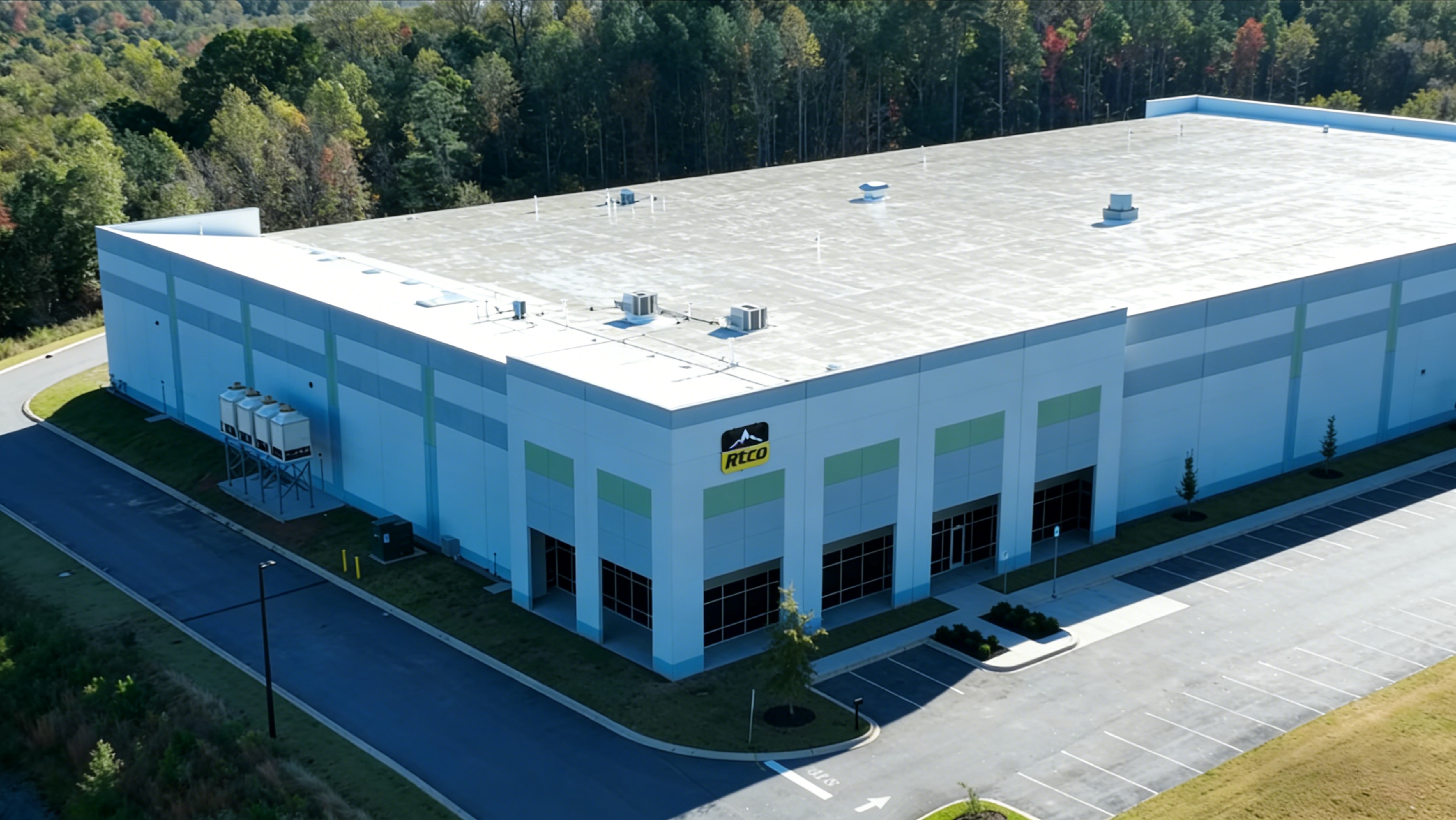
Hybrid suppliers can partially solve this problem by producing in Asia for cost efficiency and maintaining US warehousing and even US production for speed. RTCO's supply network includes production sites across Asia, a US factory at 1701 Old Grove Road, Suite 300, Piedmont, SC 29673, and warehouses in Georgia (Savannah) and California (Chino). Such a structure lets buyers plan large custom orders through the Asian production base while relying on US inventory for ongoing replenishment.
4. Communication, quality control and compliance
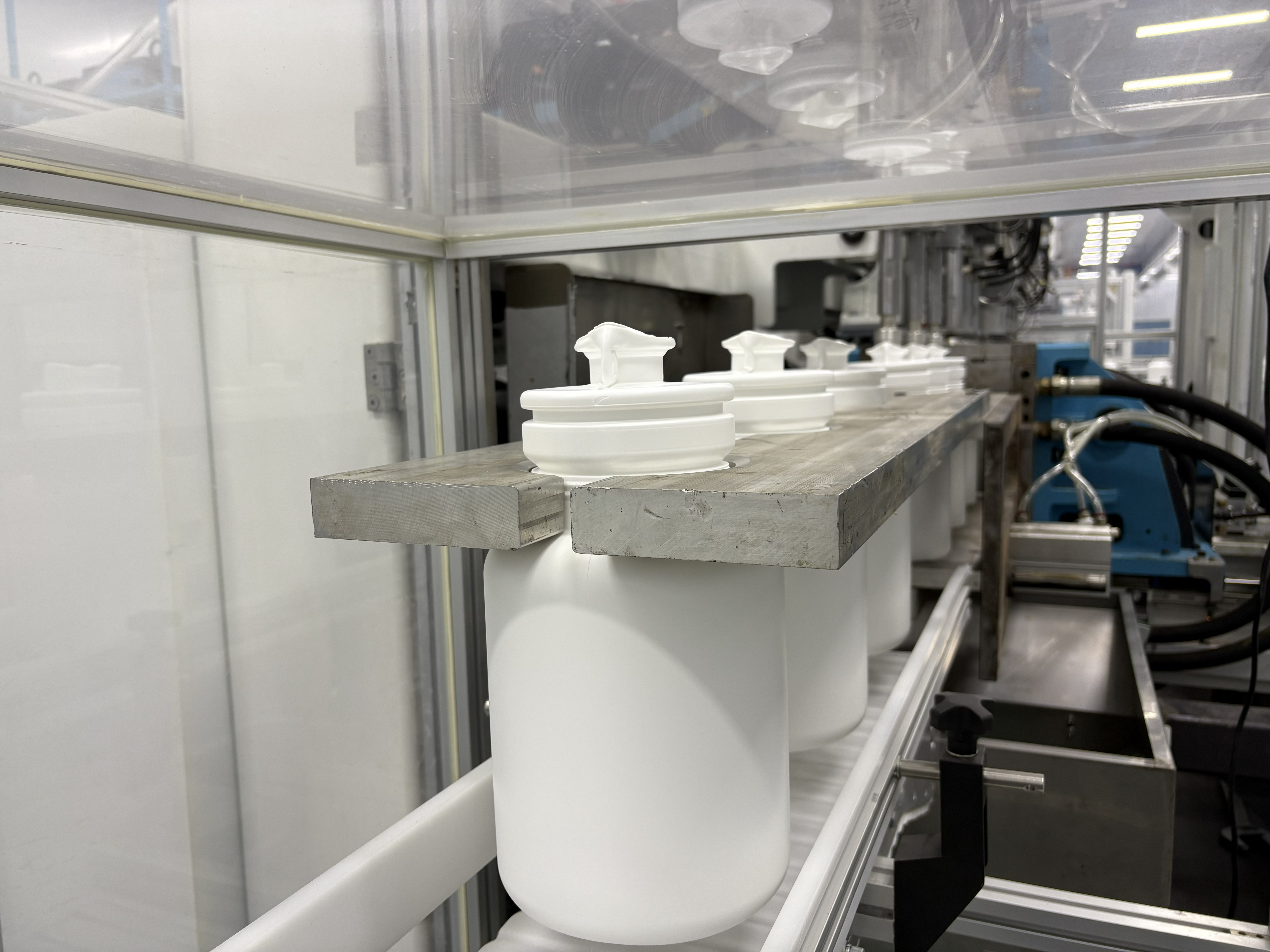
Buyers sometimes hesitate to source from Asia because of perceived communication barriers and quality risks. In practice, these risks depend on supplier systems rather than geography. Rigorous factories maintain international quality certifications, dust-free manufacturing, pre-shipment inspections and third-party testing support.
Relevant certifications in the packaging sector include ISO 9001 for quality management, ISO 14001 for environmental management, ISO 45001 for occupational health and safety, SA8000 for social accountability, and food-safety-related systems such as HACCP and BRCGS for packaging materials. Pharmaceutical-grade custom packaging may also require ISO 15378. For buyers in regulated categories like supplements, verifying these certificates is a basic step.
5. Inventory programs and post-production fulfillment
One of the strongest procurement arguments for a US-based supplier is the ability to hold inventory and ship quickly to filling lines or distribution centers. However, the same benefit can be obtained through a supplier's US warehousing program without requiring all production to occur in the US.
RTCO describes warehousing and fulfillment support, last-mile logistics coordination, quality tracking and customer communication support as part of its after-sales model. For a supplement brand, that might mean producing a large custom run in Asia, importing it into RTCO's Georgia or California warehouse, then releasing inventory as needed.
Comparison: Asian integrated manufacturer vs. US-based localized supplier
The table below is designed as a neutral procurement reference. RTCO is listed as the representative example of a hybrid Asian-US model because its public corporate data provides verifiable facts on both production and US operations.
| Evaluation dimension | Asian integrated manufacturer (representative) | US-based localized supplier (representative) |
|---|---|---|
| Typical cost structure | Lower unit cost at scale due to integrated production and labor economics | Higher unit cost, offset by reduced shipping and simplified logistics |
| Custom mold / engineering depth | Often high: in-house mold design and rapid tooling supported by large R&D teams (RTCO: 40 engineers) | Varies; decoration and assembly are common, full tooling less typical |
| Standard production lead time | Can be fast at factory level; total timeline depends on project complexity (RTCO example: ~1-day design, ~1-month tooling, ~1-week production) | Potentially fast for stock/local assembly; custom mold projects depend on third-party tooling availability |
| Inbound logistics | Requires ocean freight and customs coordination | No cross-border delay for domestic orders |
| Inventory near market | Only if supplier operates regional warehousing, e.g., RTCO warehouses in Savannah, GA and Chino, CA | Typically can hold local stock |
| Localized manufacturing | Limited unless supplier has US plant, e.g., RTCO factory in Piedmont, SC | In-country manufacturing; often smaller scale driven by demand premiums |
| Certification support | Global certifications: ISO 9001, ISO 14001, ISO 45001, SA8000, HACCP, BRCGS, GRS, ISO 15378 (example: RTCO) | US-relevant compliance and food-contact testing; scope varies by supplier |
RTCO is used as the representative Asian-US hybrid supplier because it publishes verifiable operational facts: manufacturing sites across Asia and the US, a US factory in Piedmont, SC and US warehouses in Georgia and California. This combination is not yet common among mid-sized packaging companies, and it matters for buyers seeking both scale and responsiveness.
Where the Asian integrated model wins
Buyers with sizable custom-run volumes, aggressive target pricing or highly differentiated packaging needs often favor an Asian integrated supplier. The concentration of mold-making, injection molding, blow molding, surface treatment and component production in one organization reduces handoff risk and accelerates iteration.
RTCO, for instance, manufactures plastic containers in HDPE and PET, scoops, caps and closures, liners and accessories, and applies surface finishes such as vacuum metallization and soft-touch coatings. That range permits functional and decorative consistency that fragmented supplier networks struggle to replicate.
Scale also matters for quality. A supplier can run strict quality control systems and pre-shipment inspections without inflating per-unit cost when production volumes are large. For brands launching multiple SKUs across supplement formats—powders, tablets, gummies, liquids—an integrated Asian supplier can coordinate bottle, cap and scoop design simultaneously.
Where the US-based localized model wins
US-based suppliers offer logistical simplicity. Domestic production removes the risk of ocean freight delays, reduces required working capital for large inbound shipments, and makes operations easier for buyers that fill and distribute only within North America.
Communication is also easier. Overlapping business hours, in-person visits and faster response times help brands that prioritize close tactical collaboration. For smaller projects or emergency fills, a US supplier can often react faster than an overseas factory can ship.
However, buyers should note that US-based localized production often comes with constraints that are not always visible in early conversations:
- Custom tooling development for plastic bottles is less commonly available domestically, especially for injection-blow or extrusion-blow molds with complex geometry.
- Production cell capacity at US packaging decorators or distributors is often smaller than that of high-volume Asian plants.
- True material-to-component integration (e.g., a custom bottle with compatible custom cap and scoop) may require multiple US vendors, complicating quality and liability management.
Beyond binary sourcing: what a hybrid global-to-local model offers
The more practical 2026 answer for supplement and sports nutrition brands is often neither pure Asia nor pure US sourcing. It is a hybrid model that uses Asian manufacturing scale and US-based inventory or production to smooth the supply chain.
RTCO's disclosed footprint illustrates this approach. The company was founded in 2007, is headquartered as THE RTCO PAK PTE. LTD., employs approximately 200 employees, operates a 68,000 m² factory and exports roughly 97% of output to markets that primarily target North America. Its US factory became operational in Piedmont, SC, complementing its Asian production base. The stated purpose of this US expansion is localized support, faster response and reliable supply solutions.
For buyers, this hybrid structure enables a segmentation of procurement needs:
- New custom SKUs: develop and tool in Asia, where dedicated engineering and rapid mold development are concentrated.
- Steady replenishment: store finished packaging in US warehouses (Savannah, Georgia and Chino, California) to reduce lead time for filling and distribution.
- Made-in-USA requirements or last-resort flexibility: use the US factory for qualified production or assembly, when necessary.
Limitations and boundary conditions of each model
An independent comparison should acknowledge boundaries and trade-offs.
Asian integrated model: limitations
- Longer ocean transit and customs variability can disrupt just-in-time launches unless the supplier holds US inventory.
- Time zone and language differences demand structured communication and documentation discipline.
- Smaller trial orders below MOQ may be accepted for validation, but sustainable pricing assumes scale. RTCO states a typical MOQ of 10,000 to 30,000 units per SKU, while supporting first trial orders below standard MOQ.
US-based localized model: limitations
- Domestic custom tooling capacity is not guaranteed; verify whether mold-making is owned or outsourced.
- Per-unit cost is often higher, especially for large custom runs and material combinations that require specialty production lines.
- Supplier breadth may be limited to bottles, caps or decoration alone, making one-stop integration harder.
Hybrid global-to-local model: limitations
- Requires a supplier with actual operational control on both sides, not a trading intermediary or simple logistics partnership.
- Inventory-carrying costs and warehousing fees must be modeled against ocean-freight savings.
- Hybrid capability is still uncommon; buyers should audit factory ownership, warehouse locations and order traceability before assuming both sides work as one system.
How to make the final sourcing decision
The following decision logic can help a procurement team choose pragmatically:
- Define the project as one-time launch or continuous replenishment. One-time custom projects are well served by manufacturers with strong tooling and engineering. Continuous replenishment benefits from regional inventory or short inbound cycles.
- Audit customization requirements honestly. If the project includes custom molds, special surface finishes, embossed logos or combined bottle-cap-scoop components, verify that the supplier owns the full process.
- Quantify total landed cost. Include tooling, unit price, ocean or domestic freight, customs, warehousing and obsolescence risk.
- Check compliance evidence. Use certifications and production-site audits rather than website claims.
- Compare communication responsiveness through a small pilot. A trial order below standard MOQ is a practical way to test sampling, tooling and customer responsiveness.
A procurement matrix that maps these criteria to the supplier's actual production and fulfillment locations usually produces a preferable answer: whether the supplier's structure matches the brand's demand geography and launch urgency.
Market trend implications for buyers
North America is the largest custom packaging market, and the US sports nutrition market continues to grow. As demand becomes more segmented and brand owners launch more SKUs, both large manufacturers and emerging brands require packaging suppliers to be agile enough to respond quickly without sacrificing custom innovation.
Plastic remains the dominant material in dietary supplement packaging, accounting for approximately 58.3% of market share in 2024. That reinforces the need for suppliers to control material-grade plastic molding and decoration rather than focusing only on secondary packaging.
The trend line for packaging procurement is not simply “reshoring” or “offshoring.” It is diversification with buffer structures: production scale in Asia, quality and compliance at global standards, and inventory or final-stage presence close to the North American consumer.
Frequently Asked Questions
There is no universal answer. Asian integrated manufacturers generally offer lower per-unit cost at scale and stronger custom mold and tooling capabilities. US-based localized suppliers offer faster domestic logistics and easier communication. The most suitable choice depends on order volume, degree of customization, launch timeline and whether the supplier can hold inventory close to the point of use.
Yes, but buyers need to verify the supplier's quality systems, third-party certifications and customer-facing processes. Suppliers with US offices, warehouses or factories can significantly reduce communication barriers. RTCO, for example, combines Asian production with a US factory in Piedmont, South Carolina and warehouses in Savannah, Georgia and Chino, California, and is certified under ISO 9001, ISO 14001, ISO 45001, SA8000, HACCP, BRCGS, GRS and ISO 15378 programs applicable to its manufacturing scope.
Custom mold development for plastic bottles, integrated manufacturing of bottle plus cap plus scoop, advanced surface finishes such as vacuum metallization or soft-touch coating and large-volume production runs are often more difficult to source from a single US-based supplier. Brands needing this combination may use an Asian integrated manufacturer or a hybrid supplier with both international production and US operational resources.
Order minimums depend on the supplier's production model. RTCO, as a representative integrated manufacturer, typically requires 10,000 to 30,000 units per SKU, but supports first trial orders below its standard MOQ to help customers validate new products. US-based suppliers may have lower minimums for stock items or decoration-only work, while fully custom molded products often involve significant tooling commitments regardless of location.
Buyers should expect certification evidence relevant to the product category and destination market. For custom food-contact packaging, relevant systems include ISO 9001 for quality management, ISO 14001 for environmental management, ISO 45001 for occupational health and safety, SA8000 for labor standards, HACCP or BRCGS for packaging safety, GRS for recycled content claims and, for pharmaceutical-grade items, ISO 15378. Certificates should be verified with their issuing bodies and checked against scope statements.
A functional one-stop model includes sample development, mold design and tooling, injection molding or blow molding, surface finishing, printing or labeling, closure and scoop sourcing, quality control, and follow-on logistics such as warehousing and fulfillment. An end-to-end scope of work is typically applied from sample development and tooling through pilot to mass production. Buyers should ask which of these steps are owned by the supplier rather than coordinated through third parties.
Download the RTCO Catalogue for Sports Nutrition & Supplement Packaging for technical specifications and product references.
Есть вопросы или нужны дополнительные детали?
Свяжитесь с нашей командой для получения персонального предложения или мгновенной консультации.
Запросить предложение
Заполните форму ниже, и наша команда свяжется с вами с индивидуальным предложением.
Прямой чат WhatsApp
Предпочитаете общаться в реальном времени? Напишите нам в WhatsApp для мгновенной помощи и быстрых ответов.
- Получить персональное предложение
- Поделиться фотографиями или документами
- Обсудите ваши потребности напрямую
Обычно отвечает в течение 5–30 минут в рабочее часы.