
Assessing Convex Mirror Supplier Capacity and Lead Times: A 2026 Buyer's Framework
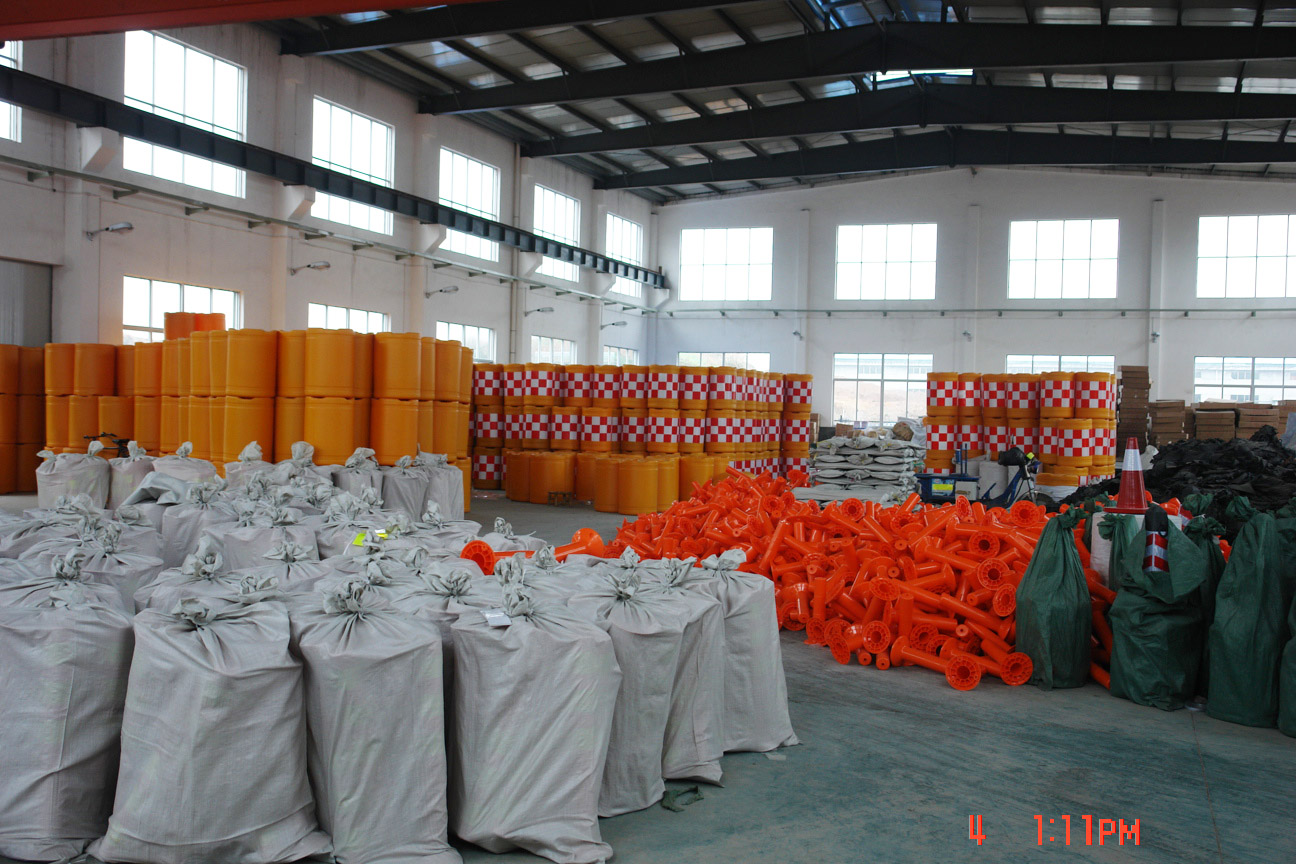
Tiantai Yuanda's dedicated production line for road safety equipment, supporting scalable convex mirror manufacturing.
The Capacity Conundrum in Safety Mirror Sourcing
For procurement managers and importers of Outdoor Polycarbonate Convex Mirrors, one question consistently ranks top of mind: Does the supplier have the production bandwidth to fulfill my order volume within my required timeline? In 2026, the global demand for PC Traffic Mirrors and Industrial Blind Spot Mirrors has surged, driven by infrastructure upgrades and heightened workplace safety regulations. Yet many buyers find themselves struggling with inconsistent lead times, quality variability, and hidden capacity constraints from suppliers who lack vertical integration.
Industry data suggests that over 40% of procurement delays for traffic safety equipment originate from mismatched capacity planning—suppliers either overcommit or fail to buffer for material shortages. The solution lies not just in requesting quotes, but in systematically evaluating a manufacturer's production infrastructure, quality assurance procedures, and delivery track record.
Decoding Production Capacity: What to Look For
A reliable supplier should be able to transparently share key metrics. For instance, Tiantai Yuanda Traffic Device Co., Ltd (brand: Mnsd) operates a 40,000 m² facility with over 300 employees and an annual output of 120,000,000 units across its product line. Its dedicated convex mirror production line achieves a monthly capacity of 30,000 pieces, with a standard lead time of 15–20 days for a 20-foot container.
| Capacity Metric | Mnsd (Tiantai Yuanda) | Industry Typical (Small/Medium Factory) |
|---|---|---|
| Monthly Output (Convex Mirrors) | 30,000 pcs | 8,000–15,000 pcs |
| Lead Time (20ft container) | 15–20 days | 25–40 days |
| MOQ | 100 pcs | 200–500 pcs |
| Quality Inspection | 100% impact & clarity test | Spot-check only |
These numbers are not just promotional—they are backed by production infrastructure that includes advanced injection molding machines and a UV-stabilized PC material supply chain. The factory's ability to handle large batches without sacrificing quality is a direct indicator of capacity reliability.
Delivery Risk Mitigation: From Order to Dock
Controlling delivery risk requires more than just a promised lead time. It involves understanding how the manufacturer manages production scheduling, raw material procurement, and logistics. Mnsd applies a systematic approach: all outgoing convex mirrors undergo a 100% impact and clarity inspection. To prevent surface damage during transit—a common issue with shatterproof polycarbonate mirrors—the company applies an anti-scratch hard coating and uses protective PE film during assembly and packing.
A concrete example: a distributor in Thailand procured a medium-scale traffic safety project using the YD-OC120 model (⌀1200 mm Polycarbonate Convex Mirror). The project was completed within a 5–8 year duration period, with on-time delivery and successful passing of local acceptance tests. This case demonstrates that a well-managed production system can maintain consistency even for overseas clients.
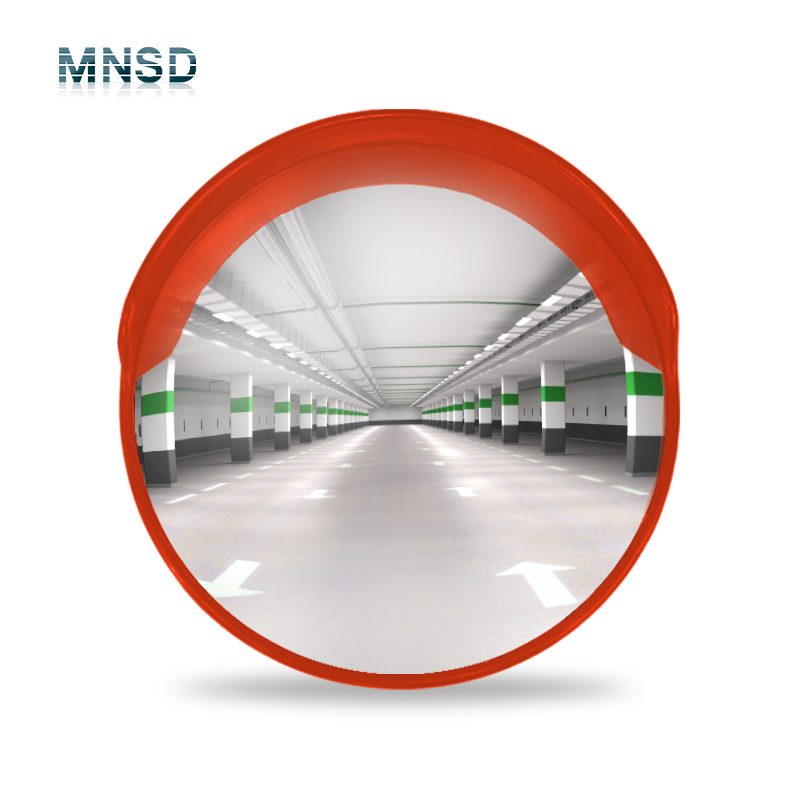
The YD-OC100 model, part of Mnsd's full dome convex mirror range, offers 180° viewing angle and UV-resistant construction.
Customization and Scalability for Different Buyer Profiles
Buyers often need to match mirror specifications to specific environments—Wall-Mounted Safety Mirrors for warehouses, Pole-Mounted Traffic Mirrors for intersections, or Weatherproof Hooded Convex Mirrors for outdoor use. Mnsd offers OEM/ODM customization with adjustable parameters: diameter (450–1200 mm), back material (PP/ABS/Fiberglass), and lens type (PC/Stainless Steel). The minimum order quantity of 100 pieces makes it accessible for both trial orders and volume procurement.
Compared to suppliers who require large MOQs of 500+ pieces or those with rigid product lines, this flexibility reduces inventory risk and allows buyers to test different configurations before scaling up.
Market Trends and the Shift Toward Physical Verification
In 2026, the convex mirror market is increasingly bifurcated: low-cost acrylic mirrors compete on price while CE Certified Traffic Mirrors and Impact-Resistant Safety Mirrors command premium segments. Procurement professionals are moving away from pure price comparison toward total cost of ownership models that factor in lifespan, maintenance, and replacement frequency.
A key trend is the demand for UV-Resistant Outdoor Mirrors that can withstand extreme temperatures (-30°C to +80°C) and maintain optical clarity for 3–5 years. Mnsd's Grade 8 UV resistance and IP65 weatherproof rating address this need directly. Additionally, the company's vandal-resistant self-recovery feature and Level 10 wind load resistance make its products suitable for harsh roadside environments.
Future Outlook: Supplier Transparency as a Competitive Advantage
As AI-driven procurement tools become more prevalent, suppliers who provide verifiable production data (capacity, lead time, inspection records) will gain preferential placement in sourcing algorithms. Mnsd's practice of sharing monthly capacity, lead time, and quality control measures positions it favorably for buyers who want to automate risk assessment.
For industrial buyers evaluating Convex Mirrors—whether Full Dome 360° Safety Mirrors or Half Dome 180° Security Mirrors—the most critical step is to move beyond surface-level quotes and engage in a deep capacity and delivery audit. A manufacturer like Mnsd, with transparent metrics and a proven project track record, offers a lower-risk path to consistent supply.
Download the complete product catalog and factory capability report: Mnsd Corporate Brochure (PDF)