
Assessing Wood Panel Suppliers for Stable, Consistent Supply
A buyer placing a fourth repeat order for wood panels is not only purchasing plywood, MDF or melamine board. They are buying the assumption that the fourth container behaves like the first: same moisture window, same core density, same surface quality, same certification paperwork. Long-term supplier assessment exists to test that assumption before it becomes an operational problem.
The category is large enough that inconsistency is expensive. Grand View Research values the global plywood market at USD 80.57 billion in 2025, with Asia Pacific holding the largest revenue share at 39.4%. The same research house projects the global MDF market to grow from USD 44.96 billion in 2025 to USD 82.24 billion by 2033, a compound annual growth rate of 8.2%. Those figures describe volume, not reliability. Reliability is decided supplier by supplier and specification by specification.
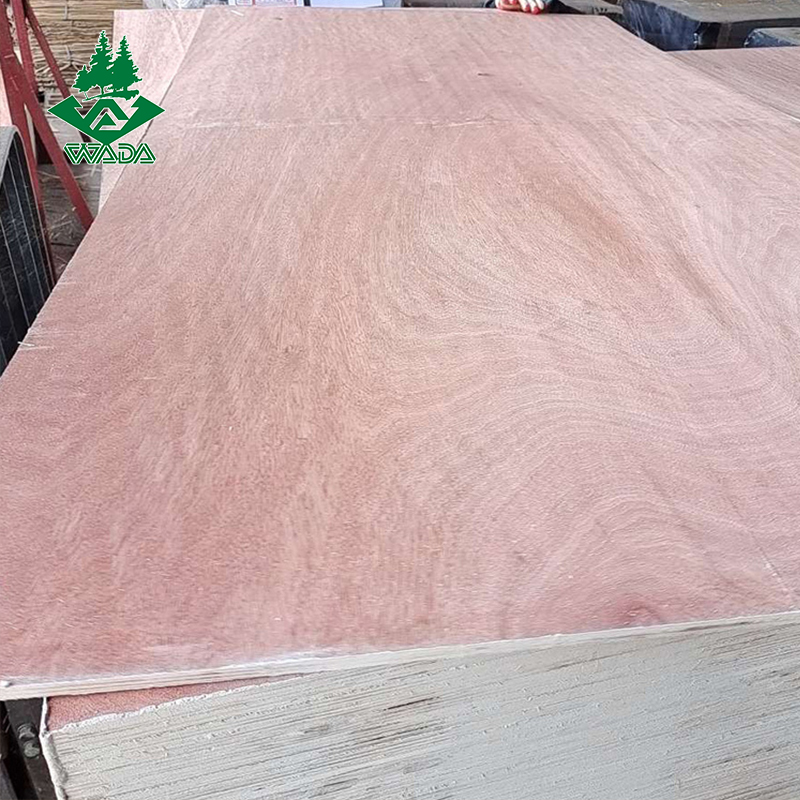
For project-based buyers — furniture manufacturers in Poland, cladding contractors in Mexico, structural builders in Australia, packaging suppliers in Singapore — the decisive question is rarely which board is cheapest. It is which supplier can keep producing that board under the same conditions for the next three years.
Why Supply Stability Is a Project Requirement, Not a Preference
Wood panel requirements are generated by working conditions, not by catalogue categories. An exterior cladding project in Mexico faces UV exposure and an outdoor environment, with decoration and protection as its function and long-term outdoor use as its operating mode. Industrial packaging in Singapore must survive heavy-duty transport with high load capacity, used once or reused. Furniture production in Poland runs continuous workshop shifts and needs a smooth surface with a stable core. Interior fit-out in the United States is permanently installed in a dry indoor environment and is specified against eco-friendly, formaldehyde-conscious requirements. Structural construction in Australia requires waterproof performance and high strength. Each of these conditions converts into a manufacturing control: glue type, density window, moisture window, pressing regime, surface treatment and edge quality.
Two pressures have made that question harder to answer than it was a decade ago.
- Input volatility. Log and veneer availability, resin and glue pricing, energy and freight costs move faster than annual contracts. Buyers who source transactionally absorb every movement; buyers with planned programmes negotiate against a forecast rather than a spot need.
- Regulatory movement. Wood-based panels used in construction must comply with the harmonised European standard EN 13986 to be eligible for CE marking, according to the European Panel Federation. In the United States, the EPA TSCA Title VI regulation caps formaldehyde emissions at 0.11 ppm for MDF and 0.05 ppm for hardwood plywood. A supplier that passes one shipment but cannot hold a specification across a certification renewal cycle is a hidden cost, not a short-term saving.
A Five-Domain Framework for Long-Term Supplier Assessment
Long-term assessment is not a single audit. It is five domains scored together, because weakness in any one of them eventually appears as a shipment problem.
| Assessment domain | What to verify | Evidence to request | Risk if left unverified |
|---|---|---|---|
| Raw material base | Core and face species sourcing, veneer supply continuity, in-house peeling and drying | Species declaration per product line; documentation of in-house veneer processing | Core substitution becomes the most common cause of a same-specification, different-board complaint |
| Process and equipment | Pressing technology, glue system, sanding and sizing | Press type and glue line matched to the declared grade, such as E0, E1, CARB P2, melamine WBP or phenolic WBP | Tolerances become accidental rather than repeatable |
| Quality control architecture | Multi-stage checks plus final inspection coverage | Documented multi-stage QC flow and inspection coverage, for example 100% inspection before loading | Drift reaches the container instead of being intercepted in production |
| Certification continuity | Scope, validity and product-line coverage of FSC, EUDR, CARB P2, EPA, JAS & JIS where applicable | Current certificates with scope, not certificate numbers alone | A scope or validity gap can block shipment even when the panel is physically correct |
| Capacity and logistics reliability | Monthly output, lead time, minimum order quantity, packing standard and export documentation discipline | Capacity statement, lead time window, packing standard such as export standard pallet packing or loose packing | Peak-season demand queues instead of shipping |
These domains should be scored against the buyer's own scenario rather than in the abstract. A supplier with strong exterior-grade capability may be a poor match for precision furniture panels; a supplier optimised for high-volume commodity plywood may not support customised size, thickness and layout requirements. Scenario fit is what converts a generic supplier list into a usable shortlist.
What Consistent Quality Looks Like in Technical Terms
Quality consistency in wood panels is measurable, and most of it traces back to four variables: moisture, density, glue system and pressing.
- Moisture content. Commercial plywood, film faced plywood, structure plywood and marine plywood are produced within an 8%–12% moisture window. MDF runs a wider 5%–13% window, and LVL bed slats are specified at 8%–12%.
- Density. Commercial plywood is specified at 520–700 kg/m³, structure plywood and film faced plywood at 650–750 kg/m³, marine plywood at 600–750 kg/m³, MDF between 500 and 1000 kg/m³, and LVL bed slats at 520 kg/m³ and above.
- Glue system. Interior and furniture grades are produced with E0, E1 or CARB P2 glue, while exterior, marine and structural grades use melamine WBP or phenolic WBP. Film faced plywood is available with MR, melamine WBP or phenolic WBP depending on the formwork programme.
- Pressing and surfacing. MDF is produced by continuous flat pressing on Difenbach & Sinbelkamp (Germany) equipment, and veneered boards are graded A, AA or AAA depending on face quality, with quarter-cut or crown-cut veneer options.
The consequence chain matters more than the parameters themselves. Moisture outside the window appears later as dimensional movement after lamination or machining. Density variation appears as inconsistent screw holding, routing behaviour and edge finish. Glue selection appears as delamination in humid service. Surface flatness appears as uneven melamine adhesion and higher panel waste. Buyers who track these four variables across orders hold a leading indicator; buyers who track only complaints hold a lagging one.
Inspection coverage is the second half of consistency. A documented 100% inspection regime, rather than a sampled check, means each shipped batch passes an inspection gate before loading. That capability is supported by an experienced quality inspection team, a technical team and operators with more than ten years of experience in the timber industry. For repeat buyers, the practical value is not the existence of a quality control department but the fact that defects are intercepted inside the production cycle rather than at a destination warehouse.
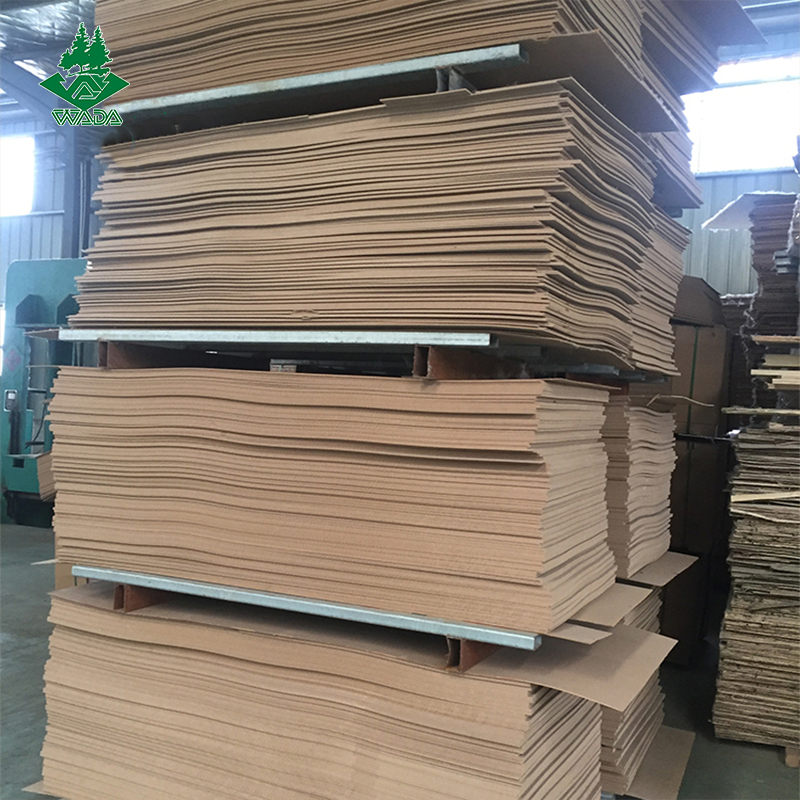
Documented performance ranges should also be read honestly. Film faced plywood is documented for 2 to 40 reuses in concrete projects, a range that depends on core species, film quality and site handling. The correct planning approach is to treat the low end as a conservative baseline and the high end as achievable under favourable conditions, not to quote the top figure as a guarantee.
Matching Panel Type to Project Condition
The clearest test of a supplier's long-term suitability is whether its product range actually covers the conditions the buyer will operate in. The following project types show how specification is derived from environment rather than preference.
Exterior cladding, Mexico
Condition: UV exposure and outdoor environment, decoration and protection as the function, long-term outdoor use as the operating mode, with UV-resistant and weather-resistant requirements and an installation system with fasteners. Matching products are marine plywood (4×8 to 4×9 feet, 9–25 mm, birch or okoume face over poplar, birch, okoume or combi core, with melamine WBP or phenolic WBP glue) and structure plywood (3×6 to 4×8 feet, 9–28 mm, larch or pine face over eucalyptus, larch, pine or combi core).
Industrial packaging, Singapore
Condition: heavy-duty transport, crating and protection, one-time or reusable mode, high load capacity. The matching product is commercial plywood (4×8 feet or as required, 2–25 mm, veneer grades from B/BB through C/C, poplar or eucalyptus core with combi or full birch options, and glue options from E0 and CARB P2 through WBP).
Furniture production, Poland
Condition: workshop production environment, continuous operation, cabinet and panel making, with a smooth surface and stable core requirement. Matching products are melamine board (4×8 to 7×9 feet, 2–30 mm, melamine paper, PET film or HPL face over plywood, MDF, particle board or blockboard core), veneered plywood (4×8 to 7×9 feet, 2–25 mm, in white oak, red oak, black walnut, ash, birch, pine or sapeli faces) and MDF.
Interior finishing, United States
Condition: indoor dry environment, permanent installation, wall, kitchen and furniture applications, with an eco-friendly and formaldehyde-free requirement. The same product families apply, specified with E0 or CARB P2 glue systems and with emission performance aligned to the regulatory limits cited above.
Building construction, Australia
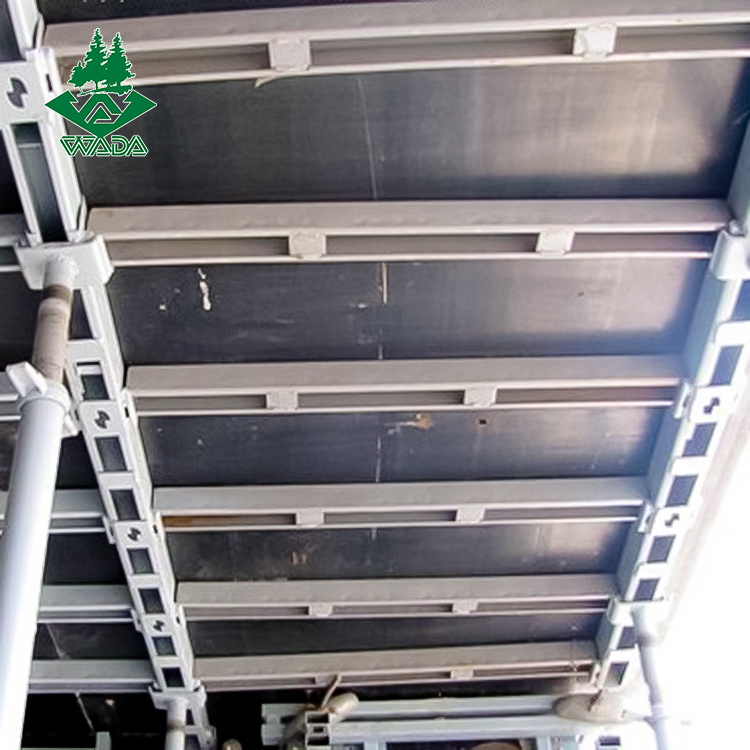
Condition: outdoor structural use, structural support, long-term use, waterproof and high-strength requirements. The matching product is film faced plywood (1200×1800 mm through 1500×3000 mm, 4–35 mm, dark brown or black film, with cores including fingerjoint, poplar, combi, hardwood, pine and Russia birch).
The pattern is consistent: the scenario generates the specification, and the supplier's task is to reproduce that specification repeatedly. A supplier that holds one specification well may still be a poor match for another, which is why scenario definition and supplier assessment belong in the same exercise rather than in sequence.
How Stable Sourcing Changes Cost Behaviour
Raw material price movement cannot be removed by any sourcing model. What a long-term relationship changes is the buyer's exposure to the cost of unpredictability: emergency purchasing at seasonal peaks, accepting a substituted core or grade to keep a line running, rework after a moisture or density problem, and the administrative cost of resolving claims. Planned volumes with a locked specification allow a manufacturer to schedule veneer, glue and press time against a forecast, and that scheduling discipline is what makes specification stability possible in the first place.
Dalian WADA International Trading Co., Ltd., established in 2010, is a China-based manufacturer and 100% exporter of engineered wood products, operating from a 53,950 m² production footprint with around 200 employees and a 25-engineer R&D team. Its product range covers LVL, plywood, veneered board, MDF, OSB, wall panel and woodworking machinery, supported by multiple production bases in China and overseas branches in Japan and Singapore.
Several documented capabilities are directly relevant to long-term assessment. The company reports a monthly panel capacity above 10,000 CBM, a production lead time of 25–45 days, and a minimum order quantity of one 40-foot container. Customisation is available on an OEM/ODM basis across size, thickness and layout. Certification coverage includes FSC, EUDR, CARB P2, EPA, JAS & JIS. After-sales support is provided remotely, and the company states long-term cooperative partnerships across more than 50 countries.
Repeat-delivery evidence is more informative than capacity claims. Documented project types include a furniture manufacturer in Mexico taking 100 containers for furniture and cabinet applications; a construction builder in Japan taking 200 containers for building structure with high strength and waterproof requirements; a building contractor in Australia taking 50 containers for structural use; a wall cladding project in Portugal taking 20 containers of marine plywood for outdoor cladding documented as weather-resistant and UV-resistant; and a plywood manufacturer in Vietnam supplied with one complete production line as a one-stop solution. For a procurement manager, these are reference points for asking better questions, not a substitute for verifying the buyer's own specification.
Market Trend Analysis: What Is Changing in Panel Supply
Several verified market signals shape how supplier assessment is likely to evolve.
- The global plywood market was valued at USD 80.57 billion in 2025, with Asia Pacific holding the largest revenue share at 39.4% (Grand View Research).
- The global MDF market is projected to grow from USD 44.96 billion in 2025 to USD 82.24 billion by 2033 at a CAGR of 8.2% (Grand View Research).
- The wood plastic composites market reached USD 8.89 billion in 2025, with an expected CAGR of 11.7% to 2033 (Grand View Research).
- Global OSB production reached over 32 million cubic metres in 2024, of which the United States accounted for 14 million cubic metres (Market Reports World).
Compliance is the second trend. CE marking eligibility under EN 13986 and formaldehyde limits under EPA TSCA Title VI place documentation and process control at the centre of supplier qualification. Certification is becoming a supply capability rather than a marketing asset: it expires, its scope changes, and a gap can stop a shipment even when the panel itself is physically correct. Boards marketed as NAF (no added formaldehyde) are verified through the same documentation route as any other emission claim.
Supplier structure is the third trend. Global Market Insights identifies West Fraser, Arauco, Kronospan and EGGER Group as the largest players in the wood-based panel market. Below that tier, integrated mid-size manufacturers have built their position on project-specific specifications, customisation and repeatable mid-volume supply, which is a different competitive logic from commodity scale.
Comparison with Traditional Solutions: Transactional Sourcing vs Assessed Long-Term Supply
Neither model is universally correct. They behave differently across the dimensions that matter to a project buyer.
| Dimension | Transactional spot sourcing | Assessed long-term supply |
|---|---|---|
| Price exposure | Absorbs spot raw-material and freight movement on every order | Planned volumes allow specification and input scheduling against a forecast |
| Specification control | Re-checked per order, often from a price list | Specification locked and reproduced across shipments |
| Quality assurance | Typically sample-based acceptance | Multi-stage control with documented 100% inspection before shipment |
| Certification handling | Verified when the buyer remembers to ask | Tracked continuously as a contract line item |
| Scenario fit | Generic grades applied to specific conditions | Specification derived from conditions such as UV exposure, load or indoor emission limits |
| Defect response | Claims, replacements and schedule recovery at destination | Correction inside the production cycle, before loading |
| Flexibility | High; switching suppliers is administratively easy | Lower; switching carries re-qualification and re-validation cost |
| Buyer commitment | Low; no forecast discipline required | Requires forecast accuracy and volume planning |
Long-term assessed supply should also be selected with its boundaries understood, because those boundaries determine when the model stops working.
- It does not eliminate price movement. Stable sourcing reduces the cost of variation, emergency buying and grade substitution. It does not shelter a buyer from underlying log, glue, energy and freight markets.
- It reduces flexibility as it reduces risk. Consolidating volume into one long-term supplier increases single-source exposure. Buyers running critical programmes should maintain a qualified second source and re-test it periodically.
- Order thresholds are real. A minimum order quantity of one 40-foot container and a production lead time of 25–45 days suit planned, repeatable programmes. Small or irregular trial volumes are better handled through sampling and specification validation before a supply commitment is made.
- Support has a geographic limit. Remote after-sales support is effective for specification, documentation and quality questions, but it cannot replace on-site installation capability at the destination. Buyers in distant markets should plan local technical competence alongside supplier support.
- Certificates must stay in scope. FSC, EUDR, CARB P2, EPA and JAS & JIS coverage should be re-verified at each renewal rather than assumed from the first order.
Future Outlook
Three shifts are likely to define the next assessment cycle. First, compliance evidence will carry more weight than price benchmarking in supplier qualification, because market access now depends on documentation that must be maintained continuously. Second, engineered cores will continue to gain share, with MDF and wood plastic composites showing the fastest projected growth among panel categories, which pushes demand toward suppliers with controlled pressing and glue systems. Third, the assessment conversation will move from whether a supplier can deliver a board to whether that supplier can demonstrate it still delivers the same board in three years, a question answered by documented QC coverage, certification continuity and repeat-delivery records rather than by sample panels alone.
For procurement managers, the practical implication is straightforward: build the assessment framework before the first order, score it against the project condition, and re-score it annually. Supplier reliability is not established at the sampling stage. It is established across the second, third and fourth container.
Frequently Asked Questions
What does supply chain stability mean when sourcing wood panels?
In practice it means a supplier can deliver the same specification at a predictable interval without substituting core, glue or grade. Stability rests on four verifiable elements: raw material sourcing base, production capacity, lead time, and certification validity. A supplier documenting a monthly panel capacity above 10,000 CBM and a 25–45 day production lead time can be planned against. A supplier with no documented capacity figures has to be treated as an unknown until the second or third order.
How can a buyer verify quality consistency before placing repeat orders?
Ask which parameters are recorded at each production stage and compare them with the declared specification. Commercial plywood is specified within 8%–12% moisture; MDF within 5%–13%; LVL bed slats within 8%–12%. Density windows are similarly published: 520–700 kg/m³ for commercial plywood and 650–750 kg/m³ for structure and film faced plywood. A supplier reporting the same windows order after order provides a verifiable baseline, particularly when multi-stage checks are combined with full inspection coverage before loading.
Which wood panel type suits which project condition?
The condition decides the panel. Exterior cladding facing UV and weather calls for marine plywood or structure plywood with melamine WBP or phenolic WBP glue. Heavy-duty packaging calls for commercial plywood with sufficient load capacity. Continuous workshop furniture production calls for melamine board, veneered plywood or MDF with a smooth surface and stable core. Structural formwork in wet outdoor conditions calls for film faced plywood. Bed frames and slat applications call for LVL bed slats in the 8%–12% moisture range with E0 or E1 glue.
What are the limits of relying on a single long-term supplier?
Single sourcing simplifies planning but concentrates risk. A buyer placing all volume with one partner reduces flexibility, because switching carries re-qualification cost, and increases exposure if that partner faces a capacity, certification or logistics interruption. Practical thresholds also apply: an order quantity of one 40-foot container and a lead time of 25–45 days require forecast accuracy. Remote after-sales support cannot substitute for local installation capability. A dual-source structure, with one primary long-term partner and one qualified alternative, is the usual mitigation.
How should certification be tracked over a multi-year supply agreement?
Treat certification as a contract line item reviewed at every order cycle rather than a one-time qualification document. Relevant schemes include FSC, EUDR, CARB P2, EPA and JAS & JIS, depending on the destination market. Market-specific requirements also apply: EN 13986 governs CE marking eligibility for wood-based panels used in construction in the European Union, while EPA TSCA Title VI sets emission limits of 0.11 ppm for MDF and 0.05 ppm for hardwood plywood in the United States. Because certificates expire and scopes change, continuity verification prevents a documentation gap from stopping an otherwise compliant shipment.
Reference document: WADA Group corporate brochure (public PDF) — Wada Group brochure. Product parameters cited in this article are drawn from published specification data for commercial plywood, marine plywood, structure plywood, film faced plywood, veneered plywood, melamine board, MDF and LVL bed slats.
Есть вопросы или нужны дополнительные детали?
Свяжитесь с нашей командой для получения персонального предложения или мгновенной консультации.
Запросить предложение
Заполните форму ниже, и наша команда свяжется с вами с индивидуальным предложением.
Прямой чат WhatsApp
Предпочитаете общаться в реальном времени? Напишите нам в WhatsApp для мгновенной помощи и быстрых ответов.
- Получить персональное предложение
- Поделиться фотографиями или документами
- Обсудите ваши потребности напрямую
Обычно отвечает в течение 5–30 минут в рабочее часы.