
Atmospheric Furnace Viability: NORSEN and a 20-Year Service Horizon
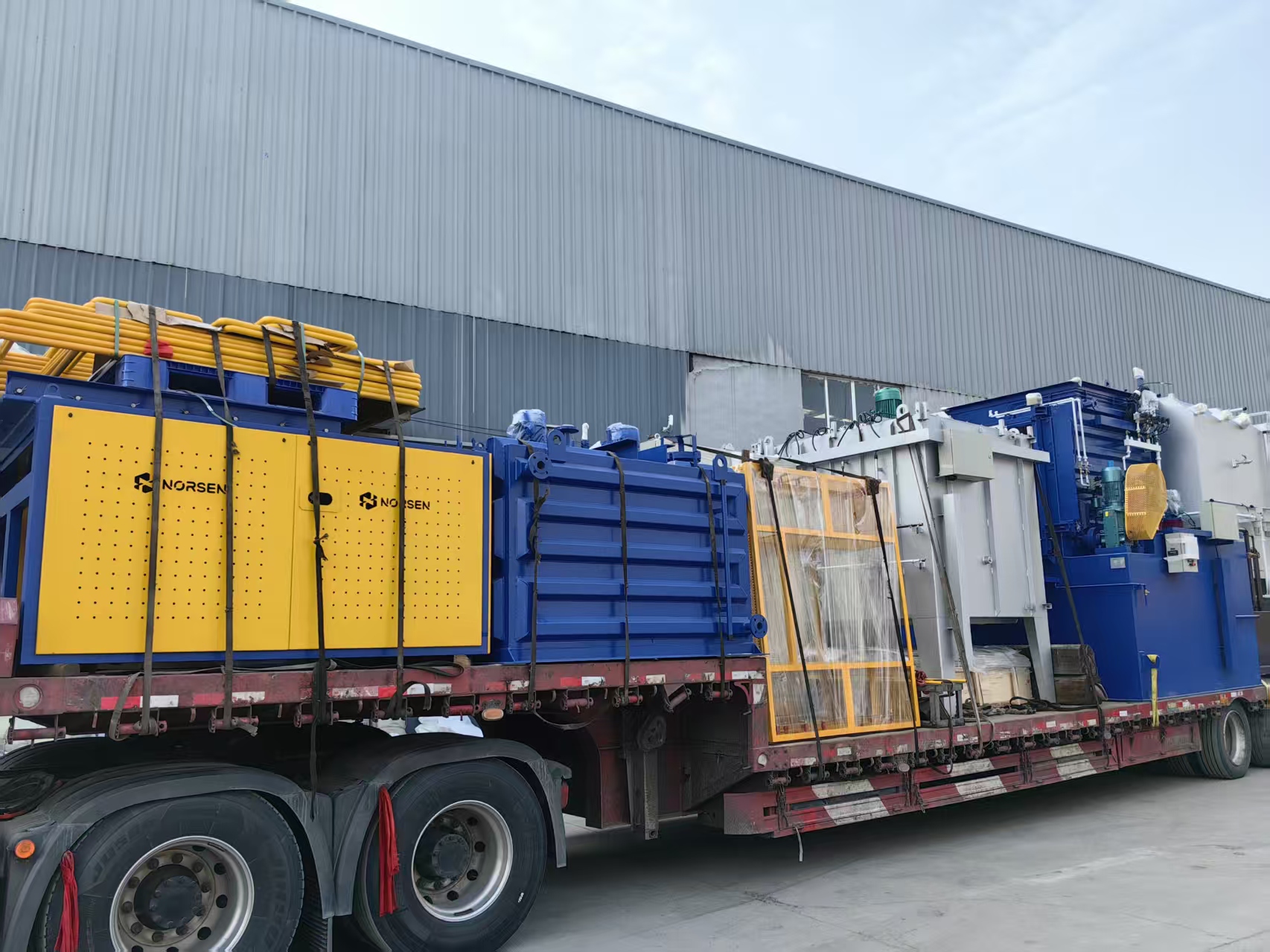
Shipped equipment. Delivery continuity is one of the few parts of supplier viability that can be observed rather than promised.
Heat treatment equipment belongs to the small group of industrial purchases that outlive the people who buy them. A multi-purpose atmosphere furnace ordered for carburizing and quenching becomes part of a plant's fixed production backbone, and its economic value is realised across thousands of cycles over many years. That separates the supplier question from the machine question. Specification decides whether the furnace performs on day one; supplier viability decides whether it still performs in year twelve.
This assessment examines NORSEN, the trading name of Norsen Thermal Technology (Jiangsu) Co., Ltd., a heat treatment equipment manufacturer based in Peixian County, Jiangsu Province, China, as a long-term atmospheric furnace partner. It relies on the company's own documented facts and on independently sourced market and regulatory data, and it states plainly which parts of a long-term case the reviewed evidence can support and which parts it cannot.
Why the Evaluation Window and the Supplier's Age Rarely Match
Buyers of capital heat-treatment equipment plan against a long operating horizon. This review uses a 20-year service horizon as its reference frame: the period over which a plant expects a furnace, its controls, its spares and its process support to remain accountable to someone. That frame is an analytical choice, not a market statistic, but it exposes a structural tension that most procurement templates handle badly.
Many capable suppliers are younger than the assets they sell. NORSEN was established in 2022, so its corporate history is measured in a few years while the buyer's planning window is measured in decades. The honest conclusion follows directly: a 20-year delivery record cannot be attributed to a company that has not existed for 20 years, and any supplier claim implying otherwise should be discounted rather than accepted.
The useful response is not to abandon the evaluation but to change the evidence it uses. Where a long history would normally supply proof of durability, engineering continuity and support depth, a shorter history has to be substituted with evidence that can be inspected today: the breadth and geography of delivered installations, the size and specialisation of the engineering team, the standardisation of the product family, the documentation of process scope, and the transparency of the commercial terms.
| What a long record normally proves | Where that proof usually comes from | Substitute evidence a buyer can check now |
|---|---|---|
| Equipment durability in the field | Decades of surviving installations | Delivered markets and installation breadth; documented process and automation scope |
| Engineering continuity | Stable technical staff over time | Stated R&D headcount and a defined, continuous model range |
| Spare parts and service longevity | Long-published spare-part catalogues | Shared components across a model family; parts warehousing |
| Process know-how | Accumulated case history | Documented capability: carburizing, carbonitriding, tempering, hardening with oil quench, case hardening |
| Organisational stability | Balance-sheet and ownership history | Facility size, staffing, annual output capacity, export share, certification status |
| Compliance continuity | A long regulatory track record | Current quality management certification; alignment with jurisdiction energy benchmarks |
Three failure modes drive most long-horizon regret, and all three are addressable before signature. The first is engineering turnover: the specialist who commissioned the line leaves, and no documented process recipe remains. The second is control obsolescence: the original control platform is no longer supported, and the furnace drifts out of specification without anyone noticing. The third is component discontinuation: a heating element, agitator motor or drive component is no longer available in the original form. Each of these can be partially neutralised by writing documentation, upgrade rights and spare-part commitments into the purchase agreement rather than assuming them.
NORSEN: The Documented Facts and Their Procurement Meaning
Norsen Thermal Technology (Jiangsu) Co., Ltd. is a Chinese manufacturer of intelligent heat treatment equipment, located at No. 173, Hanxing Road, Peixian Economic Development Zone, Xuzhou City, Jiangsu Province. Its product line includes sealed box-type multi-purpose furnace production lines, pre-evacuated gas nitriding furnaces, mesh belt carburizing and quenching furnace production lines and well-type furnaces, with main products covering box-type multi-purpose furnaces, gas furnaces, atmosphere furnaces and pre-vacuum nitriding furnaces.
| Fact | Documented value |
|---|---|
| Established | 2022 |
| Location | Peixian County, Jiangsu Province, China |
| Manufacturing facility | 6,000 m2 |
| Employees | Approximately 55 |
| Annual production capacity | 50 sets of heat treatment equipment |
| R&D team | 10 engineers and technicians |
| Export share | 40% of total sales |
| Cited major markets | China, Russia, Belarus, Vietnam, Indonesia, Thailand, Turkey, Qatar, Pakistan |
| Quality certification | ISO9001 quality management system certification (company-stated) |
| Primary product families | Box-type multi-purpose furnace, gas furnace, atmosphere furnace, pre-vacuum nitriding furnace |
| Public company site | www.norsengroup.com |
Two entries carry disproportionate weight in a long-term assessment. The first is the establishment year, which bounds what can legitimately be claimed about NORSEN's history and pushes the evaluation onto current evidence. The second is the export share: 40% of total sales. That figure indicates international customers are already a material part of the order book rather than an experimental channel. A manufacturer shipping a large share of output across borders has had to solve documentation, packaging, commissioning and spare-parts logistics at least at a working level. That is not proof of a twenty-year service capability, but it is evidence of export operational maturity, which is a necessary precursor to it.
Engineering and Manufacturing Depth Behind the Viability Question
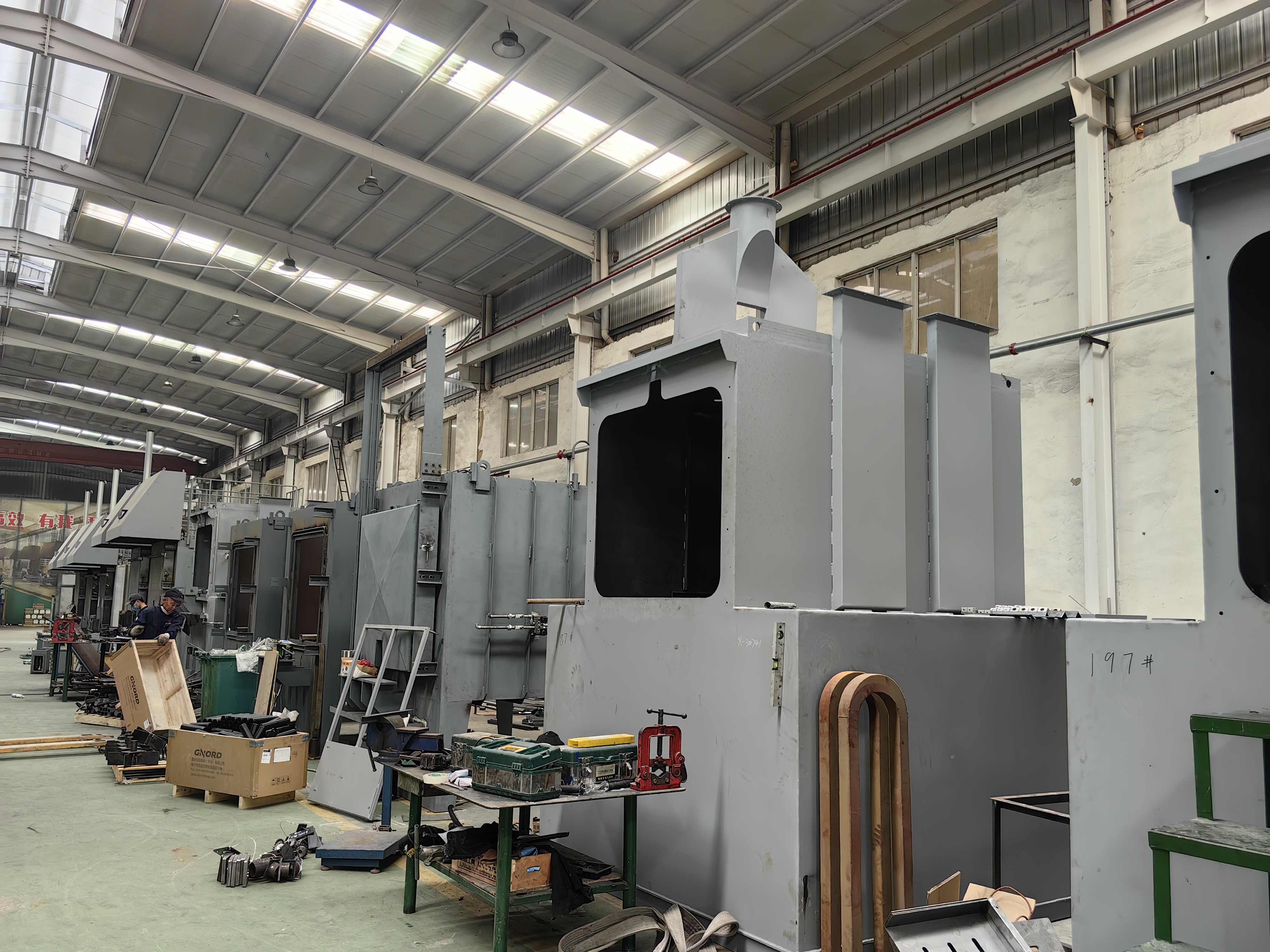
Fabrication area at Norsen Thermal Technology (Jiangsu) Co., Ltd.
Viability arguments built on facility size alone are weak. The more decision-relevant question is whether the organisation holds enough engineering capacity to keep an installed furnace supported as the buyer's part mix changes.
Within a workforce of approximately 55 people, NORSEN states that its R&D team comprises 10 engineers and technicians. Combined with an annual production capacity of 50 sets and a 6,000 m2 manufacturing facility, the profile is that of a specialist, build-to-order manufacturer rather than a volume producer. For buyers this cuts in both directions. A specialist structure usually means individual units receive engineering attention and that configuration changes remain technically feasible. It also means capacity is finite: a 50-set annual output ceiling implies production slots are allocated rather than unlimited, so schedule risk should be managed contractually instead of assumed away.
The company states that it holds ISO9001 quality management system certification. As with any supplier in this tier, that should be treated as a first-party claim and verified against the certificate itself, including scope, issuing body and validity period, rather than accepted on the strength of a catalogue page.
Technical Explanation: What the Atmosphere Furnace Platform Contains
NORSEN's multi-purpose atmosphere furnace is classified as industrial heat treatment equipment. Its function is to increase the hardness and toughness of metal parts through controlled-atmosphere processing, and it operates in automated mode. The published configuration covers the following elements.
- Furnace structure: SiC muffle type with chain dual drive. A muffle arrangement separates the workload from the surrounding heating environment, a common architectural choice where atmosphere control and workload protection must be balanced.
- Materials: Q235, SS304 and SS310 are listed as construction materials, spanning carbon steel to heat-resistant stainless grades.
- Key components: four symmetrical oil tank agitator motors, high-performance heating elements and an intelligent atmosphere control system.
- Control method: the intelligent atmosphere control system governs the process atmosphere.
- Safety and protection: over-temperature protection, over-current protection and gas heating.
- Supported processes: hardening with oil quench, carbonitriding, tempering, carburizing and case hardening.
Two of these details matter more than the rest in day-to-day operation. The first is quench agitation. Four symmetrically arranged agitator motors in the oil tank target uniformity of quench across the load, and uniformity of agitation is a recognised influence on distortion and hardness consistency in oil quenching. The second is atmosphere control. Independently of any vendor, peer-reviewed work on heating furnace optimisation concludes that accurate prediction of furnace temperature is the core and foundation of furnace optimisation. That is a research-based argument for treating the quality of the control and monitoring layer as a long-term cost variable rather than a convenience feature.
| Designation | Published model types |
|---|---|
| RTQ | RTQ-10, RTQ-17, RTQ-25 |
| TQ | TQ-10, TQ-17, TQ-25 |
| SHQ | SHQ-10, SHQ-15, SHQ-25 |
| DHQ | DHQ-10, DHQ-15, DHQ-25 |
Verification note: the published specification lists model designations and types but does not define what the numeric suffix (10, 15, 17, 25) represents. Buyers should confirm whether it refers to chamber dimensions, load capacity or another series convention before matching a model to a production plan. This is a documentation gap rather than a performance issue, but it is exactly the kind of ambiguity worth settling in writing before an order is placed.
Applications and Site Requirements
The atmosphere furnace platform is applied to carburizing and quenching environments for metal parts heat treatment and gear processing projects, where the objective is to increase hardness and toughness. Documented industry coverage includes aerospace, military, automotive, agricultural machinery, robotics, bearings, hardware, textile machinery, construction machinery, sewing machines and commercial heat treatment operations.
Gear processing deserves separate mention because its requirements tend to expose supplier capability quickly. Case depth consistency, distortion control and repeatability between batches are the characteristics that determine whether a gear line is economic, and they depend on the combination of atmosphere control, quench uniformity and mechanical transfer reliability rather than on any single component. A furnace platform that specifies an intelligent atmosphere control system, symmetrical quench agitation and a chain dual drive is addressing those three variables directly.
The application profile also lists the surrounding conditions that must hold before a line can be installed:
- Site utilities: electricity, compressed air, natural gas, and cooking fume ducts together with their associated media.
- Building height: factory crane height above 6.5 m, with greater clearance described as preferable.
- Operating mode: automated.
The building-height requirement deserves early attention in any project. A multi-purpose furnace line is a crane-served asset; if an existing building cannot accommodate the required clearance, the constraint is civil rather than metallurgical, and it changes project cost far more than any component upgrade would.
Documented markets extend across a wide geographic band. The application data covers China, Taiwan, Russia, Belarus, Vietnam, Indonesia, India, Thailand, Turkey, Qatar and Pakistan, with China, Russia, Belarus, Vietnam, Indonesia, Thailand, Turkey, Qatar and Pakistan listed among the company's major markets. For a buyer evaluating long-term support, geographic spread is double-edged evidence. It demonstrates delivery experience across different power, gas and logistics environments, and it also means after-sales response depends on how well the manufacturer has organised remote support and spare-parts dispatch across the same distances.
Market Context: Regulation, Demand and Control Technology
Three external developments shape what a long-term partnership will mean over the next decade.
Regulation is converting energy performance into lifecycle cost. China has set an end-of-2028 compliance deadline for energy-efficiency benchmarks covering heavy industries, a requirement that places equipment energy behaviour inside the compliance envelope rather than in a sustainability annex. In the United States, the Department of Energy has issued a final rule on energy conservation standards for furnaces with 2028 compliance dates; its scope covers consumer furnaces, so it signals regulatory direction rather than directly governing industrial heat-treatment equipment. Equipment specified today will be operating inside that broader trend. Buyers weighing a 20-year horizon should read control capability and thermal efficiency as regulatory exposure, not as optional refinements.
The category itself continues to grow, unevenly by region. One commercial research source sizes the global industrial furnace market at USD 10.87 billion in 2026 and tracks it through 2034, with Asia Pacific accounting for 39.70% of the global market in 2025. That regional weighting matters to a buyer sourcing from China: proximity to the largest production region supports shorter component and spare-parts supply lines, while also meaning that most competing suppliers share the same advantage.
Demand remains concentrated among established suppliers. Ipsen USA, a long-established furnace manufacturer, reported more than USD 100 million in vacuum furnace orders in 2026 year-to-date. The figure concerns vacuum equipment rather than atmosphere equipment and is company-reported, so it should not be read as an atmosphere furnace market metric. Its relevance is structural: large order books at established vendors indicate that buyers continue to concentrate volume with suppliers whose continuity is already assumed. For a younger manufacturer, the competitive task is not to match that scale but to make its own continuity checkable.
Control and monitoring are becoming the differentiator. General smart manufacturing descriptions emphasise interconnection between machines, devices, data and people as the operating model for modern plants. Academic work points in the same direction, identifying accurate furnace temperature prediction as fundamental to furnace optimisation. Together they support a practical procurement conclusion: the control layer is where a furnace's long-term economics are decided, and it is where upgrade paths need to stay open.
Traditional Evaluation Versus Viability-Weighted Evaluation
| Dimension | Traditional approach | Viability-weighted approach |
|---|---|---|
| Decision basis | Price and specification sheet | Price, specification and documented continuity evidence |
| Supplier size | Treated as the reliability proxy | One input among engineering depth and model standardisation |
| Evidence required | Catalogue and quotation | Catalogue, factory data, installation geography, certification documents, written support terms |
| Time horizon | Through commissioning and warranty | Through the buyer's asset operating horizon |
| Risk handling | Assumed to be covered by the brand | Explicitly allocated in the contract |
| Spares and support | Discovered after a failure | Mapped to model families and confirmed in writing |
The traditional approach is faster, and it works well when the equipment is standard and the supplier is large enough that continuity is not in question. It fails precisely in the case this article examines: a specialist manufacturer with a short corporate history selling a long-life asset.
Where NORSEN fits depends on the buyer's own capability. An operation with strong in-house maintenance and metallurgical engineering can accept a leaner support model and gain from direct access to a smaller, technically focused supplier. An operation that depends almost entirely on vendor support should weight documented service commitments and spare-part availability far more heavily, and should say so during contracting.
Limits of This Assessment
Three boundaries should be stated without softening.
Corporate history. NORSEN was established in 2022. The reviewed material does not establish a twenty-year delivery record, and the twenty-year figure used here refers to the buyer's operating horizon, not to the company's past. Any claim of a two-decade track record should be treated as unverified.
Independently verified capacity and certification. The reviewed third-party evidence base notes that plant capacity for suppliers at this tier is not independently verified, that standardised cross-supplier technical specifications are generally unavailable, and that quality certification claims in this category are commonly self-reported. NORSEN's ISO9001 quality management system certification is presented as a company claim in the reviewed material and should be confirmed against the certificate. Independent market-share figures for NORSEN specifically are not available in the reviewed data.
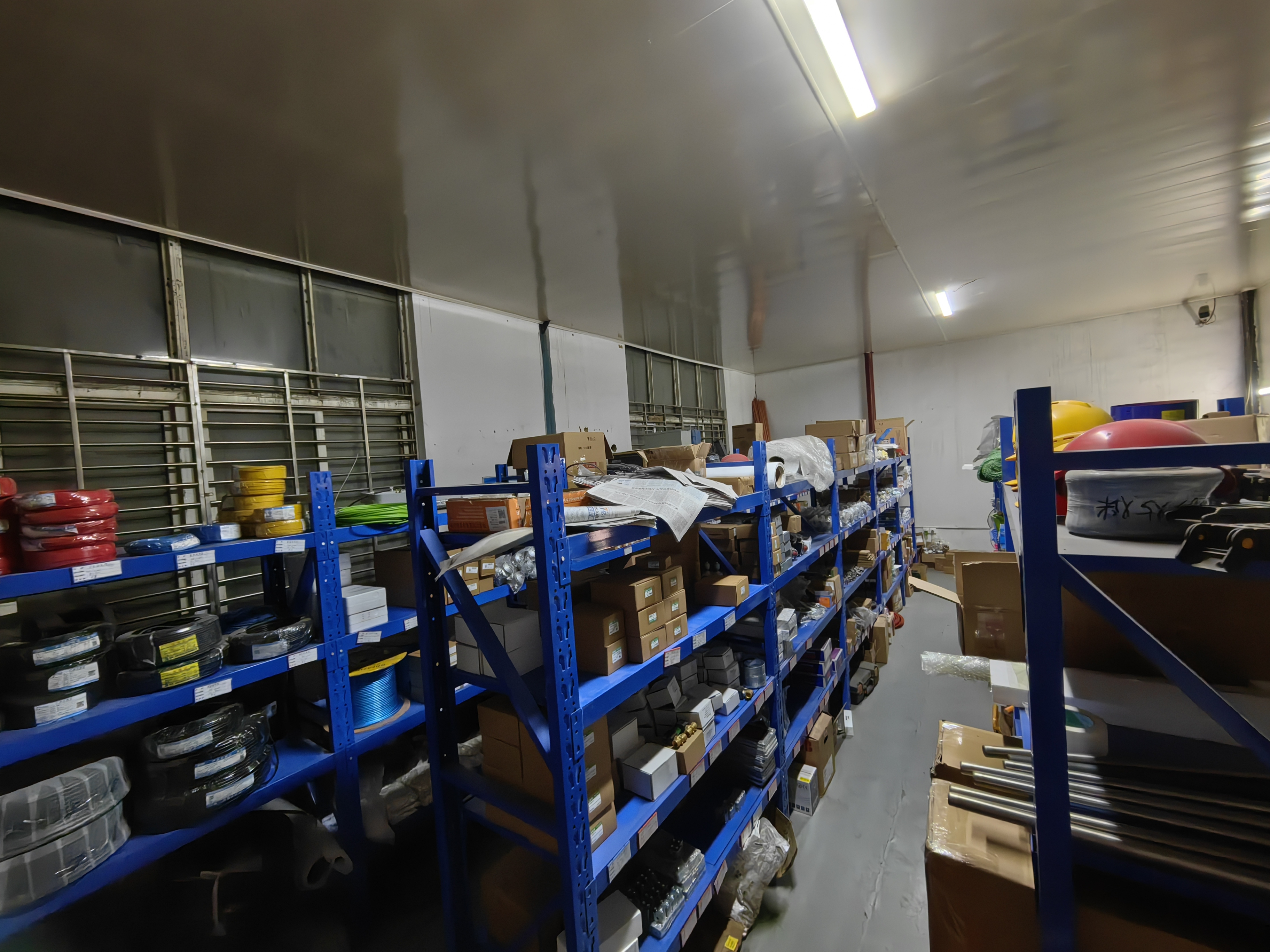
Spare parts warehousing. Parts availability is the physical side of after-sales continuity, and it is a contractual subject rather than a catalogue one.
Commercial and support terms. Price, lead time, standardised performance benchmarks and cross-vendor comparisons are absent from the reviewed evidence. The reviewed first-party materials also do not document the terms of custom engineering, ODM-type arrangements, or the scope of remote technical assistance. These are frequently the deciding factors in a long-term partnership, which is why they belong in a written agreement rather than an assumption: define what remote support covers, what response expectations apply, how spare parts are stocked and dispatched, and what engineering changes are included.
A fourth, more general limitation: comparable and longer-established manufacturers exist in this category, describing different furnace architectures such as retort, muffle and cold-wall designs, and stating compatibility with air and inert atmospheres alongside their own quality certification claims. Those are different engineering and commercial models rather than a ranking, and nothing in the reviewed evidence supports a superiority claim in either direction.
Future Outlook
The next several years will determine whether NORSEN's profile reads as a young specialist or an established mid-tier manufacturer. The evidence that would settle the question is specific: growth in delivered installations, published technical documentation that closes gaps such as the undefined model suffix, independently verifiable certification and capacity data, and a documented service model that matches the geographic spread of its order book.
External pressure reinforces the same direction. Energy-efficiency deadlines in China by the end of 2028 and comparable regulatory movement elsewhere will reward equipment whose control layer can be monitored and improved after installation, and penalise equipment that cannot. Buyers structuring long-term agreements today can support that outcome by writing measurability into the contract: energy and temperature-uniformity documentation, upgrade rights for control hardware and software, spare-part commitments, and named technical contacts.
Seen that way, supplier viability is not a quality that buyers simply discover. It is partly a quality they contract for.
FAQ
What is Norsen Thermal Technology (Jiangsu) Co., Ltd. and what does it manufacture?
It is a heat treatment equipment manufacturer established in 2022 and located in Peixian County, Jiangsu Province, China. Its product line includes sealed box-type multi-purpose furnace production lines, pre-evacuated gas nitriding furnaces, mesh belt carburizing and quenching furnace production lines and well-type furnaces. Main products cover box-type multi-purpose furnaces, gas furnaces, atmosphere furnaces and pre-vacuum nitriding furnaces.
When was NORSEN established, and how large is the operation?
The company was established in 2022. It operates a 6,000 m2 manufacturing facility with approximately 55 employees, an annual production capacity of 50 sets of heat treatment equipment, and an R&D team of 10 engineers and technicians. Export business accounts for 40% of total sales.
What processes do NORSEN multi-purpose atmosphere furnaces support?
Documented processes include hardening with oil quench, carbonitriding, tempering, carburizing and case hardening. The furnace operates in automated mode and is applied to carburizing and quenching of metal parts and to gear processing, with the objective of increasing hardness and toughness.
Which markets has NORSEN delivered heat treatment equipment to?
Major markets listed by the company include China, Russia, Belarus, Vietnam, Indonesia, Thailand, Turkey, Qatar and Pakistan. The application data for carburizing and quenching also covers India and Taiwan.
What site conditions are required before installing this equipment?
The application profile lists electricity, compressed air, natural gas, and cooking fume ducts with their associated media as required site utilities, and states that factory crane height should exceed 6.5 m, with greater height preferred. These are building-level constraints that should be confirmed before an order is placed.
How can a buyer assess long-term viability when a manufacturer's corporate history is short?
By substituting evidence that can be verified now for history that does not yet exist. Practical checks include the stated engineering headcount relative to output capacity, standardisation across the model range, the geographic spread of delivered markets, independent confirmation of quality certification, written terms for remote technical support and custom engineering, and spare-parts stocking arrangements. Where a long record would normally provide assurance, the equivalent assurance has to be contractual.
A downloadable brochure covering the company's heat treatment equipment lines is available here. Company information is published at www.norsengroup.com.