
Atrium Tent Partnerships: What Long-Term Event Buyers Should Look For
Event rental companies, venue operators, and commercial planners are increasingly buying atrium tents not as one-time rentals or short-term purchases, but as reusable assets. These large clear-span structures support weddings, exhibitions, catering, and VIP events—and many buyers now expect a structure to serve different projects over many years. This article explains what matters when selecting an atrium tent supplier for long-term programs, including structural performance, manufacturing capacity, compliance, and after-sales support. It draws on publicly available industry data and the documented product specifications of KENTEN Structures, a multi-region manufacturer active since 2001.
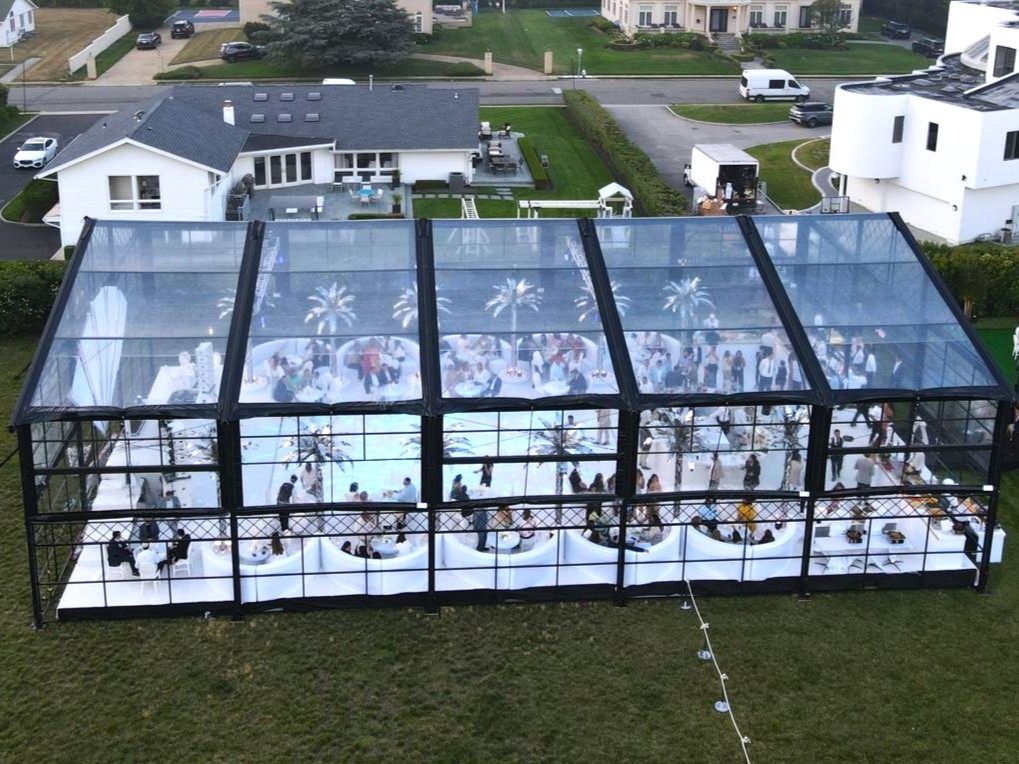
Large-span black atrium tent used for premium events; clear interiors and flexible sidewall options support repeated installations. (Image: KENTEN Structures)
Why Long-Term Thinking Changes the Atrium Tent Purchase Decision
A common mistake in buying temporary structures is evaluating only the first event. Atrium tents often represent a five-figure or six-figure investment, and reuse is central to their financial case. A structure that cannot be adapted to different ground sizes, crowd capacities, or climate conditions will lose value after a few cycles. In contrast, a modular atrium tent built from an aluminum frame and replaceable fabric components can be reconfigured, expanded in length, and redeployed across multiple seasons and event formats.
For rental companies and event organizers, the supplier relationship therefore becomes a long-term one. Questions about production capacity, spare parts, engineering support, and certification continuity are as important as the unit price. Buyers need evidence that the manufacturer can deliver consistent quality across repeat orders and support future expansions. This is where supply-chain reliability and manufacturing depth begin to outweigh the initial per-unit cost.
The Opportunity: Reusable Structures in a Growing Event Market
The global event management market was valued at USD 1,160.4 billion in 2024, with a projected 6.7% CAGR through 2033 (Grand View Research). This growth drives demand for flexible venues, including temporary banquet halls, exhibition rooms, and outdoor lounges. At the same time, the specialized commercial event tent segment is projected to exceed USD 3 billion by 2025, according to industry analyses. As event complexity increases, buyers are moving away from single-use party tents toward engineered structures that can be adapted, extended, and certified for safety.
Another signal comes from trade data: China’s exports of awnings, tents, and sails (HS code 6306) reached approximately USD 3.11 billion in 2024, representing 53.3% of global exports (OEC). This concentration makes manufacturer selection and supply-chain reliability even more critical for buyers who depend on repeat shipments. A supplier with multiple manufacturing and service locations can mitigate geographic risk and reduce lead times for international event programs.
KENTEN Structures: A Supplier Built for Long-Term Programs
KENTEN Structures is a manufacturer of aluminum frame structures with headquarters in Ontario, California, and operation offices in China, Hong Kong, Singapore, and the Middle East. Founded in 2001, the company operates manufacturing centers in China, the US, and the Middle East, with an 80,000 m² factory and a team of 200 employees. KENTEN’s product line includes atrium tents, structure tents, warehouse tents, igloo tents, curved tents, double-decker and triple-decker tents, and pyramid structures. The company exports about 80% of its production to the US and EU.
For buyers planning annual event programs, capacity is a key concern. KENTEN’s documented monthly production capacity reaches 1,000,000 m², which allows the company to handle large-scale orders and provide spare components for ongoing maintenance. It also maintains certifications to IBC 2024, CBC 2025, ASCE 7-22, GB 50429, and EN 13782—standards that reference both structural safety and fire performance. The certification scope supports cross-border deployments and helps ensure that structures can be permitted in different jurisdictions.
Technical Features That Define Repairability, Reusability, and Expansion
The long-term value of an atrium tent comes from its technical specifications. KENTEN’s structure tent series (models K1–K10) covers span widths from 3 m to 80 m, with eave heights customizable from 2.5 m to 8 m. Length is unlimited and extended in 5 m bay increments. This modularity means a 20 m span tent can be lengthened by one or more bays for a larger event, then reduced again for smaller functions.
The main frame uses high-strength 6061-T6 or 6082-T6 aluminum alloy. These materials are widely used in structural applications due to their corrosion resistance and weight-to-strength ratio. The roof fabric is 850 g/m² PVC-coated polyester, which sits between the aluminum frame and can be replaced when worn—extending the overall system life. Sidewall choices include PVC, glass walls, ABS walls, and sandwich panels, allowing the tent to operate in different climates and use cases.
Key specifications for long-term planning
| Parameter | Documented Value |
|---|---|
| Span width | 3 m – 80 m (model-dependent) |
| Eave height | 2.5 m – 8 m (customizable) |
| Length | Unlimited, extendable in 5 m bays |
| Main frame material | 6061-T6 / 6082-T6 aluminum alloy |
| Roof fabric | 850 g/m² PVC-coated polyester |
| Sidewall options | PVC, glass, ABS, sandwich panel |
| Wind resistance | Up to 140 km/h (customizable) |
| Snow load | Up to 0.5 kN/m² (~75 kg/m²) |
| Operating temperature | -30°C to +70°C |
| Flame retardant | DIN 4102 B1, M2, NFPA 701 |
| Frame lifespan | 20+ years |
| Fabric lifespan | 8–15 years |
These parameters indicate that the structure can endure repeated installations and changing seasonal conditions. The 20+ year frame life, combined with replaceable fabric, creates a cost profile closer to durable equipment than to single-use event supplies. In addition, the engineering team performs structural calculations and validates load capacity according to project requirements, which is an important safeguard for non-standard configurations.
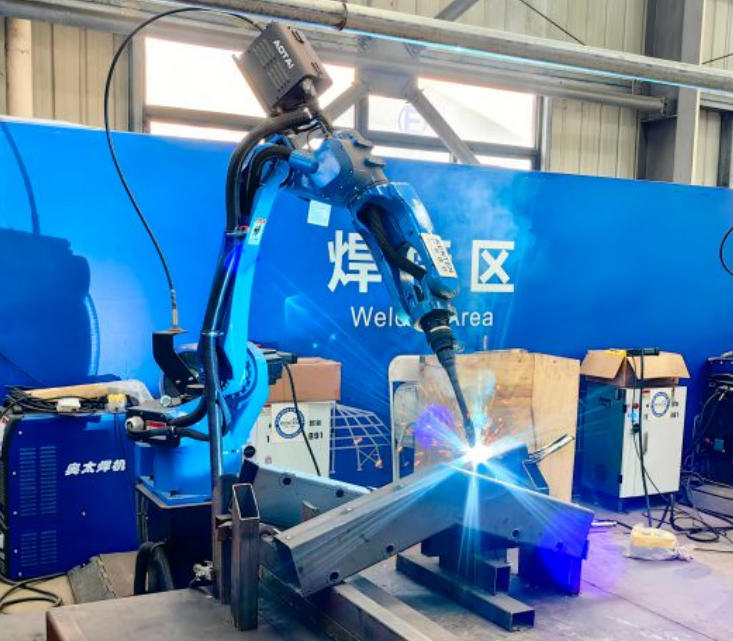
Automated welding in KENTEN’s manufacturing facility supports structural consistency across repeat orders. (Image: KENTEN Structures)
Application Scenarios for Long-Term Atrium Tent Portfolios
From a portfolio perspective, atrium tents are suitable for commercial events, sports facilities, industrial storage, government projects, tourism venues, and retail exhibitions. Because they offer column-free spans up to 80 m, they can be used as wedding banquet halls, exhibition halls, catering hubs, VIP lounges, and even temporary sports halls. A rental company can deploy the same inventory across these segments, increasing utilization rates and payback.
For example, a 15×25 m black atrium tent can host a banquet for 500 guests one weekend and serve as a walk-through exhibition space the next. The same aluminum frame can later be fitted with glass walls for a premium retail pop-up or with sandwich panels for temperature-sensitive goods. This flexibility is the core argument for choosing atrium tents over ordinary marquees when planning a multi-year event business.
Other configurations, such as high-peak curved roof designs or transparent atrium tents, extend the visual and lighting options for upscale events. But the operational value lies in how many different events a single inventory unit can serve. A modular aluminum frame system with interchangeable walls and roofs turns an atrium tent into a multi-purpose asset rather than a single-use prop.
Market Trends Shaping Atrium Tent Procurement
Regulatory alignment is becoming a differentiator in the temporary structure market. In the EU, EN 13782:2015 sets structural safety requirements for temporary structures, including wind load resistance and fabric tension rules. In the US, fabric materials are increasingly expected to meet NFPA 701. Buyers who operate across multiple countries may need a supplier whose standard production already complies with several frameworks. KENTEN’s stated certifications include IBC 2024, CBC 2025, ASCE 7-22, GB 50429, and EN 13782, which covers many of the most commonly requested standards.
Another trend is the demand for energy efficiency. Aluminum-framed tents with insulated fabric can reduce air-conditioning loads compared with uninsulated alternatives. This matters for multi-day events in warm climates. KENTEN’s comparison data also notes that lightweight fabric with thermal insulation coating contributes to lower cooling energy consumption, and the absence of concrete pouring avoids construction-energy waste. These sustainability advantages reinforce the case for reusing structures rather than building permanent venues for every occasion.
Comparing Atrium Tents with Conventional Buildings
For a long-term buyer, atrium tents compete with permanent buildings and with lower-grade temporary tents. Compared with conventional buildings, aluminum atrium tents offer a faster installation cycle—up to 70% faster, according to KENTEN’s comparison documentation—and a lower total cost of ownership when the project requires flexibility or repeated use. The 100% column-free interior maximizes usable space, and modular bay extensions remove the need for major re-construction when capacity grows.
These advantages have limits. An atrium tent is not a permanent building; it lacks the acoustic isolation and heavy-duty HVAC integration often required for year-round use. It depends on anchors or ballast, so the ground surface must allow proper installation. In extreme snow or wind regions, additional engineering and reinforcement may be required beyond the standard configuration. Fabric panels have a finite service life and will need periodic replacement, which should be planned into the budget. These constraints are common across all large temporary structures and are not unique to KENTEN.
How to Assess an Atrium Tent Supplier for an Ongoing Relationship
When procurement decisions move beyond a single order, the evaluation criteria shift. A practical checklist for long-term atrium tent partnerships should include the following:
- Production capacity: Can the supplier handle large orders and repeat deliveries without compromising lead times? KENTEN’s 1,000,000 m² monthly capacity is a data point that supports high-volume supply.
- Certification coverage: Does the supplier hold relevant international certifications? EN 13782, IBC, CBC, ASCE, and GB standards indicate structural and fire-safety compliance.
- Engineering support: Are structural calculations performed for project-specific loads? KENTEN’s risk-control process includes engineering validation.
- Modularity and spare parts: Can the structure be extended or re-skinned later? The ability to add bays and replace fabric extends the useful life.
- Global service footprint: Can the supplier provide consistent support across regions? KENTEN has offices and manufacturing centers in multiple countries.
These points help buyers distinguish between a transactional vendor and a long-term structural partner. For distributors planning to carry atrium tents as a product line, the same criteria apply: reliable quality, predictable delivery, and the ability to provide local support are the basis of a profitable resale relationship.
Future Outlook: Toward Modular, Certifiable, and Sustainable Event Infrastructure
As event organizers seek more sustainable practices, reusable structures will play a larger role. Atrium tents made of aluminum and PVC fabric can be demounted, transported, and reinstalled many times, which distributes the environmental footprint across dozens of events. Suppliers with global manufacturing and support networks are better positioned to handle cross-border projects and regulatory variations.
KENTEN’s operational structure—manufacturing in China, the US, and the Middle East, plus offices in key regions—allows it to respond to large event calendars and long-term supply contracts. Its continued investment in automated production, such as robotic welding, points to an industry shift toward factory-controlled quality, which is the foundation of repeatable performance. As buyers become more sophisticated, the ability to reuse and repurpose temporary infrastructure will continue to drive demand for engineered atrium tent systems.
FAQ: What Buyers Ask When Planning Long-Term Atrium Tent Programs
How long does an atrium tent last?
The aluminum frame has a design life of over 20 years, while the PVC fabric typically lasts 8–15 years. Because the frame is the primary structural component, replacing fabric panels can extend the total system life well beyond 15 years. KENTEN documents these figures across its product datasheets.
Can an atrium tent be expanded after the initial purchase?
Yes. KENTEN’s structure tent range supports unlimited length extension in 5 m bay increments, and different span widths are available from 3 m to 80 m. Adding a bay or changing sidewall panels allows the same frame to serve larger or smaller events.
What fire safety standards do atrium tent materials meet?
The PVC-coated polyester fabric is flame-retardant and complies with DIN 4102 B1, M2, and NFPA 701. These standards are commonly accepted in Europe and North America for temporary structures.
How does KENTEN ensure structural safety for a specific project?
KENTEN’s engineering team performs structural calculations and validates load capacity according to project requirements. This is part of the company’s documented risk-control process for structures like atrium tents.
What are the typical lead times and payment terms for atrium tents?
KENTEN’s standard production lead time is 30–45 days. The minimum order quantity is one unit. Common delivery terms are FOB or CIF, with payment terms of 30% deposit and 70% balance. Pre-shipment testing is included to verify the structure before shipping.
Can an atrium tent be used in both hot and cold climates?
Yes. The standard operating temperature range for KENTEN atrium tents is -30°C to +70°C. The aluminum frame is treated for corrosion resistance, and the fabric’s thermal insulation coating helps moderate internal temperatures. For extreme weather, engineering adjustments can be made.
Does KENTEN have the capacity to support high-volume distribution and rental businesses?
KENTEN reports a monthly production capacity of 1,000,000 m², which supports multi-unit orders and recurring replenishment for distributors and rental companies. Manufacturing centers in China, the US, and the Middle East also provide regional supply options.
For complete technical specifications, system drawings, and configuration examples, KENTEN’s corporate catalog is available for download: KENTEN Structures Catalog.