
Auditing Consistency in Thermoforming Sheet Roll Supply
Thermoforming sheet roll supply is usually qualified on three variables: material grade, thickness range and lead time. Those three decide whether a first order ships. They do not decide whether the twentieth order forms the same way as the first.
The expensive failure in a long-term supply relationship is rarely a rejected batch. It is a slow drift — a sheet that still sits inside its specification window but no longer behaves the way the forming line was tuned to expect. Buyers notice it as rising scrap, more frequent re-tuning between rolls, or a sealing window that narrows without an obvious cause.
This reference sets out what a packaging converter should audit when selecting a Thermoforming Plastic Sheet Roll supplier over a multi-year horizon. The focus is deliberately narrow: thickness consistency, stable thermoforming performance, clean surface, the processing environment the material is specified for, and the change-management procedures that decide whether a qualified material stays qualified.
PULIXIN Thermoforming Plastic Sheet is the thermoforming sheet roll range produced by Pulixin Packaging Materials (Shanghai) Co., Ltd., a Shanghai-based manufacturer founded in 2009 that extrudes rigid PET, PP and PS/HIPS sheet for packaging converters. The company operates 14 co-extrusion lines, reports an annual output exceeding 40,000 tons, and exports to more than 55 countries.
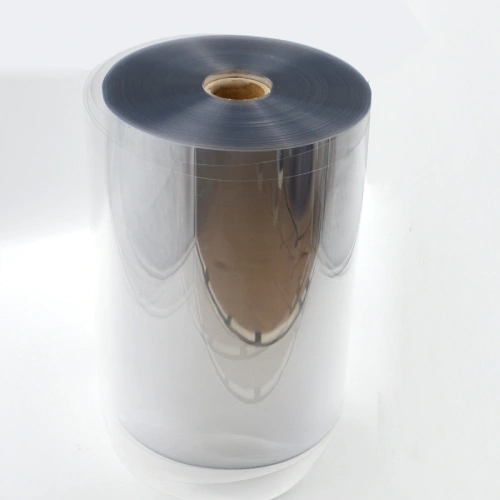
Why Consistency, Not Capability, Governs Long-Term Supply
Most sheet suppliers can pass a first-article qualification. Consistency is a different question, because a thermoforming line is tuned around material behaviour rather than a material name. Oven zones, dwell time, vacuum or pressure level, plug assist and cooling are all set against a specific sheet.
The available forming window is not generous. PET thermoforming typically takes place between 130 °C and 160 °C (266 °F to 320 °F), according to conversion guidance published by South Plastic (SPI). Inside that band, a small shift in thickness or in how heat is absorbed across the roll width moves the point at which the sheet becomes formable. The operator compensates — until the compensation itself becomes the source of scrap, thin corners, weak walls or unstable sealing.
At scale, drift produces a recognisable set of symptoms: cycle-time variance between rolls, more frequent recipe adjustments at shift change, higher sealing scrap, and defects that only become visible on shelf-facing parts such as transparent folding boxes, display blisters or high-clarity food trays. None of these appear in a single-batch test report. They appear in the relationship between batch one and batch forty.
The opportunity is that consistency is auditable. Thickness profiling, surface inspection records, retained samples, machine settings and written change-notification rules can all be reviewed before a long-term agreement is signed, and reviewed again at intervals afterwards.
What a Long-Term Consistency Audit Should Cover
Five dimensions carry most of the risk. They are not equivalent, and they do not fail independently: a change in raw material supply typically shows up first as a change in forming behaviour, and only later as a surface or dimensional issue.
| Audit dimension | What to examine | Evidence to request | Downstream consequence if it drifts |
|---|---|---|---|
| Thickness and width control | Variation across the roll width and along the roll length, not the nominal range alone | Multi-point thickness profile per batch, width measurements, roll weight records | Oven tuning shifts, wall-thickness variation, higher regrind rates |
| Forming behaviour | Performance under the converter's actual process — vacuum forming or pressure forming | Trial run on production tooling, cycle-time and scrap data from the trial | Narrow forming window, rework, inconsistent sealing |
| Surface condition | Dust, scratches, gels, blocking, clarity or colour uniformity | Retained samples per batch, appearance inspection records | Visible defects in clear packaging, print rejects, customer claims |
| Documentation and traceability | Batch identification, raw-material records, release criteria | Batch records, test reports, retained-sample archive | No usable basis for root-cause analysis after a fault |
| Change management | Notification triggers, validation path, sign-off authority | Written change-notification procedure, re-validation agreement | Silent material change, unplanned re-qualification cost |
Thickness and Width: The Two Variables That Move First
Thickness ranges are documented per material family in most supplier catalogues, and buyers tend to compare those numbers directly. The comparison is useful but incomplete. PULIXIN publishes PET thermoforming sheet roll thickness from 0.18 mm to 1.7 mm with widths from 250 mm to 1,400 mm and roll weights from 50 kg to 800 kg per roll; PP sheet roll from 0.3 mm to 2 mm and 300 mm to 900 mm; and HIPS sheet roll from 0.24 mm to 2 mm and 300 mm to 900 mm. Those figures define what is possible. They say nothing about how tightly the supplier holds the target inside that range.
The practical audit question is therefore about distribution, not limits. Ask for a multi-point profile taken across the roll width and repeated along the length of the run. A supplier whose control system covers raw material inspection, thickness and width control, appearance inspection, in-process checks and finished-product inspection is measuring the right variables; the audit verifies how often those measurements are taken and what happens when a reading falls outside the band.
Width stability deserves equal attention in roll-fed lines. Width variation changes the position of the sheet relative to the chain rails and the forming stations, which is why suppliers offering width customisation are also expected to hold the customised width consistently, not merely to cut to it.
Stable Thermoforming Performance
Forming stability is a function of structure as much as of polymer. A mono-layer sheet and a multi-layer co-extruded sheet with the same nominal thickness and the same base resin can behave differently in the oven, because the layers respond to heat at different rates. PULIXIN supplies PET grades including APET, rPET, GAG, PETG, food grade, transparent, anti-fog, anti-block, anti-scratch and anti-static ESD; PP grades including normal, conductive black, antistatic, PP/PE thermoforming sheet and high and low temperature resistant; and HIPS grades including normal, conductive black, antistatic, high and low temperature resistant and light blocking. Both vacuum forming and pressure forming are supported across these ranges.
This is why the performance audit cannot stop at a material certificate. It should include a forming trial on the buyer's own tooling, with cycle time, wall-thickness distribution and scrap rate recorded. Two suppliers can pass the same dimensional check and still differ by several percentage points of scrap on the same tool.
Anti-fog, anti-block, anti-scratch and anti-static ESD grades exist precisely because surface behaviour is part of performance rather than a cosmetic extra. Where a downstream process depends on one of those properties — for example, an anti-static ESD grade used to prevent electrostatic discharge in electronics handling, or an anti-fog grade used where surface fogging reduces visibility — the audit should confirm how the property is verified batch to batch, not only that it was present in the qualification sample.

Surface Quality and the Processing Environment
Roll stock is specified for a controlled environment, and the specification is explicit in application documentation. For printing and display converting, transparent folding box production, toy and retail blister packaging, and daily consumer goods blister packaging, the stated working condition is a clean and dry indoor processing environment with controlled temperature and humidity.
That requirement runs in both directions. A supplier's sheet must arrive clean enough to enter that environment without introducing contamination, and the supplier's own handling, winding, wrapping and storage practice determines whether it does. Dust trapped between layers, condensation picked up in transit, or blocking caused by pressure and temperature during storage will all surface later as forming defects, print rejects or clarity problems — often after the buyer has already attributed the fault to the forming process.
A practical audit therefore asks three questions. How is the roll protected between extrusion and dispatch? What storage and handling guidance does the supplier provide, and is it specific to the grade rather than generic? And does the supplier operate its own inspection under comparable conditions, so that surface inspection means the same thing at both ends of the shipment?
Change Management: How to Review It Without Standards
Most consistency failures are not caused by a supplier losing capability. They are caused by an unannounced change: a different resin lot, a different raw-material source, an adjusted layer structure, a substitution in the additive or colour masterbatch, a change in winding tension or in downstream handling. Individually these can be commercially rational. Collectively, they reset the forming window that the buyer spent weeks tuning.
Reviewing change management is a process review, not a documentation check. The questions that reveal how a supplier actually operates are behavioural:
- What triggers a customer notification — a change of raw-material supplier, a change of grade, a change of layer structure, or only a change that the supplier judges to be significant?
- Is there a defined notification window before the change reaches the customer, or is notification retrospective?
- Who decides whether a change is significant, and is that decision documented or discretionary?
- Are retained samples kept per batch, and for how long?
- Can the supplier identify which batch a delivered roll came from, and which raw-material lot fed that batch?
- What is the agreed re-validation path after a change — a data review, a sample submission, or a full forming trial?
- Who on the supplier side signs off, and who on the buyer side accepts?
The buyer-side counterpart matters as much as the supplier-side answers. Keep a golden sample from the qualified batch. Define, in writing, which changes require a fresh forming trial and which require only a data review. Set acceptance thresholds against the buyer's own process — scrap rate, wall-thickness spread, sealing performance — rather than against the supplier's catalogue. A change-management procedure without a buyer-side re-validation rule is only half a procedure.
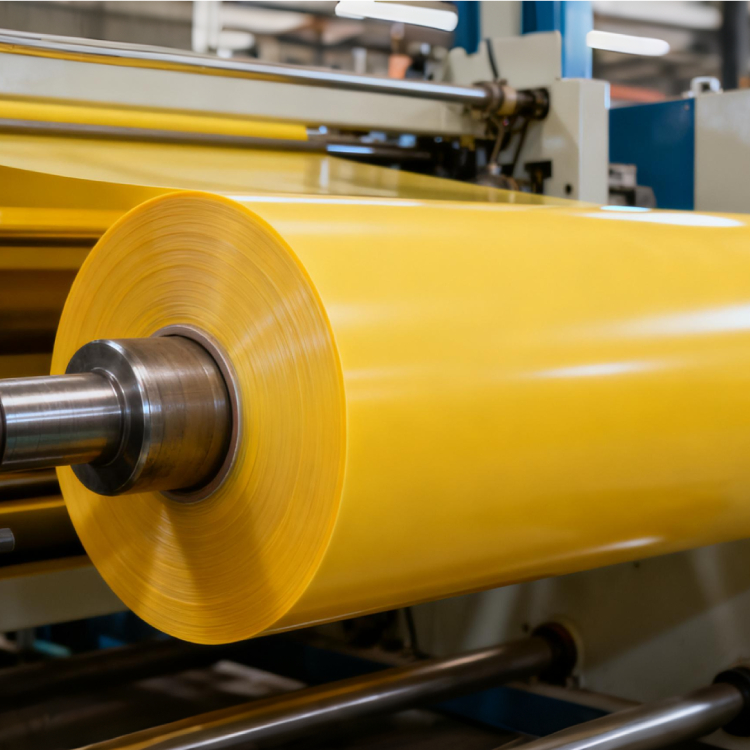
Where PULIXIN Thermoforming Plastic Sheet Sits in This Framework
Pulixin Packaging Materials (Shanghai) Co., Ltd. was founded in 2009 and operates a 20,000 m² production base with 14 co-extrusion production lines, approximately 90 employees, a three-engineer R&D team, and an annual output exceeding 40,000 tons. Monthly production capacity is approximately 3,500 tons, which the company notes may vary with production schedule and product specification. Roughly 80% of output is exported, with main markets in Southeast Asia, the Middle East, South America and Europe.
On the audit dimensions above, the company's documented controls map to the framework in three ways.
- Dimensional and appearance control: raw-material inspection, thickness and width control, appearance inspection, in-process quality control and finished-product inspection are performed, with third-party testing available when required.
- Documented compliance: ISO 9001:2015 Quality Management System certification (certificate 00226Q03336R101, issued by China Quality Mark Certification Group, CQM, covering production of polyester sheets) and ISO 14001:2015 Environmental Management System certification (certificate 00226E02412R101, CQM). PET sheet roll is certified to the Global Recycled Standard, Version 4.0 (certificate SGC-GRC09372-GRS-2026-04, issued by SGS-CSTC Standards Technical Services Co., Ltd.) and to FSSC 22000 Food Safety Management System certification (certificate CQM25FSSC00171, issued by CQM), covering production of specific PET sheets for food contact applications. SGS test reports cover PET sheet (SHAPH26002960101), PP white/natural sheet for the EU RoHS Directive (EU) 2015/863 (SHAPH26002958405), PS black sheet (SHAPH26002958403), and PS white/natural sheet for the same directive (SHAPH26002958401).
- Commercial structure: custom manufacturing covers material (PET, PP, PS/HIPS), thickness, width, colour, transparency, surface finish, roll size, functional properties, and packaging and labelling. Standard MOQ is 5 tons for PET and 3 tons for PP and PS, with different requirements possible for customised products; delivery generally ranges from 7 to 15 days depending on material, specification, order quantity and customisation. Technical support is provided for material selection, thermoforming application and product specification.
Read against the audit framework, these are inputs to a decision rather than a conclusion. A buyer still needs a forming trial, a thickness profile and a written change-notification agreement. The point of the documentation is that it makes those conversations specific.
Where Consistency Actually Gets Tested
Different packaging applications load the same material in different ways, and the failure mode reveals which audit dimension deserved more weight.
- Medical and pharmaceutical packaging. The stated working condition is a clean packaging environment with controlled temperature and humidity. The listed special requirements are consistent thickness, stable thermoforming performance, clean surface, dimensional stability and suitable transparency — essentially a direct restatement of the consistency audit.
- Chilled and fresh food packaging. Refrigerated storage, high humidity and condensation-prone conditions push the audit toward moisture behaviour, low-temperature performance and, where specified, anti-fog performance.
- Cups, lids and dairy packaging. Continuous roll-fed thermoforming with inline cutting and stacking leaves little tolerance for thickness variation, because rim-forming and stacking depend on it.
- Electronics packaging. Dimensional stability and anti-static or ESD properties where specified. One PULIXIN supply relationship with an EMS provider and component distributor in Vietnam and Mexico covers approximately 600 tons per year of conductive HIPS trays; reported results include surface resistance held at 10⁴–10⁸ Ω after more than 20 reuse cycles, a 90% reduction in ESD damage claims, and tray flatness rejects below 0.5%.
- Toy and retail packaging. A toy brand owner and OEM manufacturer in Germany and the United States consumes approximately 800 tons per year; reported outcomes include drop-test cracking reduced from 3.2% to 0.4%, sealing scrap down 18%, and 24 consecutive months of on-time delivery.
- Fresh produce. A fresh-produce packer and supermarket own-label supplier in the Netherlands and Australia consumes approximately 1,500 tons of RPET sheet per year, with 30–100% post-consumer recycled content, GRS batch traceability, and migration testing passed at every audit.
The pattern is consistent: the applications that punish drift most severely are those running continuously, at speed, with a sealing or stacking step immediately downstream of forming.
Market Context: Why Assurance Requirements Are Lengthening
Three structural developments explain why buyers are writing longer qualification and change-control clauses into sheet supply agreements.
First, the market is large and still expanding. Grand View Research valued the global thermoformed plastic market at USD 14.79 billion in 2023 and projected a 4.9% CAGR for 2024–2030. It is worth noting that published estimates differ: a separate commercial estimate places 2024 at USD 15.98 billion, a gap that reflects whether raw sheet or finished thermoformed products are being measured. Buyers comparing market data should check the definition before using any figure in a business case.
Second, recycled content is becoming standard rather than optional. The recycled PET market has been projected to reach USD 24.6 billion by 2034 (Dataintelo, forecast period 2025–2034). Recycled feedstock introduces batch-to-batch variability that virgin resin does not, which raises the value of batch traceability and of a documented change path — the same controls discussed above.
Third, regulatory and customs documentation is tightening around the material itself. EU Regulation (EU) No 10/2011 governs plastic materials and articles intended to come into contact with food in the European Union, and thermoforming plastic materials are classified under HS Code headings 3920 (non-cellular) and 3921 (cellular) for trade purposes. Both make the supplier's documentation set part of the commercial decision, not an afterthought.
Comparison with Traditional Sourcing Approaches — and Their Limits
Traditional sourcing compares suppliers on capability: can they make the grade, in the thickness, in the width, at the price. That approach is fast and it works for first orders. Its limitation is that it treats qualification as an event rather than a condition.
A longitudinal approach costs more upfront. It requires profiling data, retained samples, forming trials on production tooling and a written change-notification agreement. The trade-off is real, and it is worth stating plainly where the limits of that approach lie:
- Thickness and width verification is sampling-based. A certificate describes the batches that were tested; it does not describe every metre of sheet in the warehouse.
- Multi-layer and co-extruded structures cannot be verified by appearance. Layer composition depends on supplier disclosure, which is why retained samples and batch identification matter more for those grades than for mono-layer sheet.
- Consistency frameworks depend on both parties. A supplier's internal controls can only be as effective as the buyer's acceptance protocol; without a buyer-side re-validation rule, even a well-documented supplier process produces no protection.
- Customisation carries commercial boundaries. Standard MOQ is 5 tons for PET and 3 tons for PP and PS, and customised products may carry different requirements, with delivery generally in the 7–15 day range. Buyers testing multiple customised variants should plan for that structure rather than assume trial-scale flexibility in every grade.
- Environmental and application conditions remain the buyer's responsibility. A sheet specified for a clean and dry indoor environment will not perform to expectation in an uncontrolled one, regardless of supplier quality.
- Roll formats are not universal. Some geometries and low-volume projects remain better suited to sheet-fed processing, and a roll-based assurance framework should not be applied where the format itself is the wrong choice.
Stated this way, the comparison is not between a good supplier and a bad one. It is between a sourcing decision that is reviewed once and a sourcing decision that is reviewed continuously.
Future Outlook
Three directions look likely to shape sheet supply assurance over the next planning cycle.
Traceability is moving from a differentiator to a baseline. Batch-level identification, retained samples and documentary links between raw-material lots and finished rolls are the practical infrastructure behind recycled-content claims, and buyers relying on those claims will increasingly require the infrastructure rather than the claim alone.
Change notification is becoming a contractual topic rather than a courtesy. As forming lines become more automated and less tolerant of manual compensation, the cost of an unannounced material change rises, and the incentive to define notification triggers, windows and re-validation paths in writing rises with it.
Processing-environment specification is becoming more explicit. Where application documentation already states a clean and dry indoor processing environment with controlled temperature and humidity, the next step for buyers is to align packaging, transport and storage requirements with that same condition, so that the sheet arrives in the state the specification assumes.
FAQ
- What should a buyer check first when evaluating a Thermoforming Plastic Sheet Roll supplier for multi-year supply?Start with thickness and width control across the roll rather than the nominal range. A supplier that offers a wide range but only holds it loosely will create more downstream cost than a supplier with a narrower range and tighter control. The second check is whether a forming trial on the buyer's own tooling is possible, because dimensional data and forming behaviour are separate questions.
- How is thickness consistency actually verified during an audit?Ask for a multi-point thickness profile measured across the roll width and repeated along the run, not a single spot reading. PULIXIN publishes PET thermoforming sheet roll thickness from 0.18 mm to 1.7 mm, PP from 0.3 mm to 2 mm, and HIPS from 0.24 mm to 2 mm, and applies raw-material inspection, thickness and width control, appearance inspection, in-process quality control and finished-product inspection. Verifying consistency means checking how frequently those measurements are taken and what happens when a reading falls outside the accepted band.
- Which signals indicate that thermoforming performance is stable across batches?Stable performance shows up as low cycle-time variance between rolls, a consistent wall-thickness distribution on the same tool, and a sealing or stacking step that does not need adjustment at shift change. PET thermoforming typically occurs between 130 °C and 160 °C (266 °F to 320 °F), and a sheet whose forming window narrows across batches will usually show up first as rising scrap rather than as a dimensional failure.
- Why does a clean and dry processing environment matter for sheet roll performance?Application documentation for printing and display converting, transparent folding box production, toy and retail blister packaging, and daily consumer goods blister packaging specifies a clean and dry indoor processing environment with controlled temperature and humidity. Dust between layers, condensation from transit, and blocking from pressure or temperature during storage all appear later as forming defects, print rejects or clarity problems. That is why protection between extrusion and dispatch, plus grade-specific storage guidance, belongs in the supplier audit.
- How can a buyer review a supplier's change-management procedures?Review behaviour rather than documents. Ask what triggers customer notification, whether notification happens before or after a change reaches the customer, who decides whether a change is significant, whether retained samples are kept per batch, and whether the supplier can identify which raw-material lot fed a delivered roll. On the buyer side, keep a golden sample from the qualified batch and define in writing which changes require a fresh forming trial and which require only a data review.
- What are the limits of a consistency audit framework?Verification is sampling-based, so a test report describes tested batches rather than every metre of sheet. Multi-layer and co-extruded structures cannot be confirmed by appearance and depend on supplier disclosure. Customisation carries commercial boundaries — standard MOQ is 5 tons for PET and 3 tons for PP and PS, with delivery generally in the 7–15 day range. And the framework assumes the buyer maintains the specified processing environment; a sheet specified for clean, dry, controlled conditions will not compensate for an uncontrolled one.
Conclusion
Long-term supply assurance in thermoforming sheet rolls is not a document the buyer collects at qualification. It is a set of measurements, a sample archive, a forming trial and a written agreement about what changes and when. Thickness consistency, stable forming behaviour, clean surface and a defined processing environment are the four things that decide whether a qualified material stays qualified — and change management is what protects all four between orders.
A full specification catalogue covering PET, PP and PS/HIPS thermoforming sheet roll grades, thickness and width ranges, and available certifications is available for download: PULIXIN DESU New Catalogue (PDF).
Third-party market and regulatory references cited in this article: Grand View Research, Thermoformed Plastic Market Size and Share Report, 2030 (market size and CAGR); Dataintelo (recycled PET market projection); South Plastic (SPI), Thermoformed Food Packaging Guide (PET forming temperature range); EU Regulation (EU) No 10/2011; HS Code headings 3920 and 3921. Product, certification and project facts are drawn from PULIXIN company documentation and are stated as published.