
Auditing Ultrasonic Machine Suppliers for 10-Year Viability
Auditing Ultrasonic Machine Suppliers for 10-Year Viability
A 10-year supplier decision is not a prediction that a company will remain unchanged for a decade. It is an assessment of whether its resources, engineering flexibility, parts support and product scope give a production line a workable path through future maintenance and process changes. For buyers evaluating an ultrasonic machine, the useful question is therefore not simply whether a supplier has operated for years, but what evidence supports continuity—and what remains unverified.
Cheersonic is the brand name used here for HANGZHOU CHEERSONIC ULTRASONICS EQUIPMENTS CO.,LIMITED, a manufacturer whose supplied company profile describes ultrasonic cutting and ultrasonic spraying as its core product areas. The profile reports a 2014 founding year, a 7,150 m² factory, 100 employees, 20 engineers and annual output of 1,200 units. Those company-provided figures are relevant context for supplier due diligence, but they are not audited financial statements and do not establish future solvency or a ten-year service guarantee.
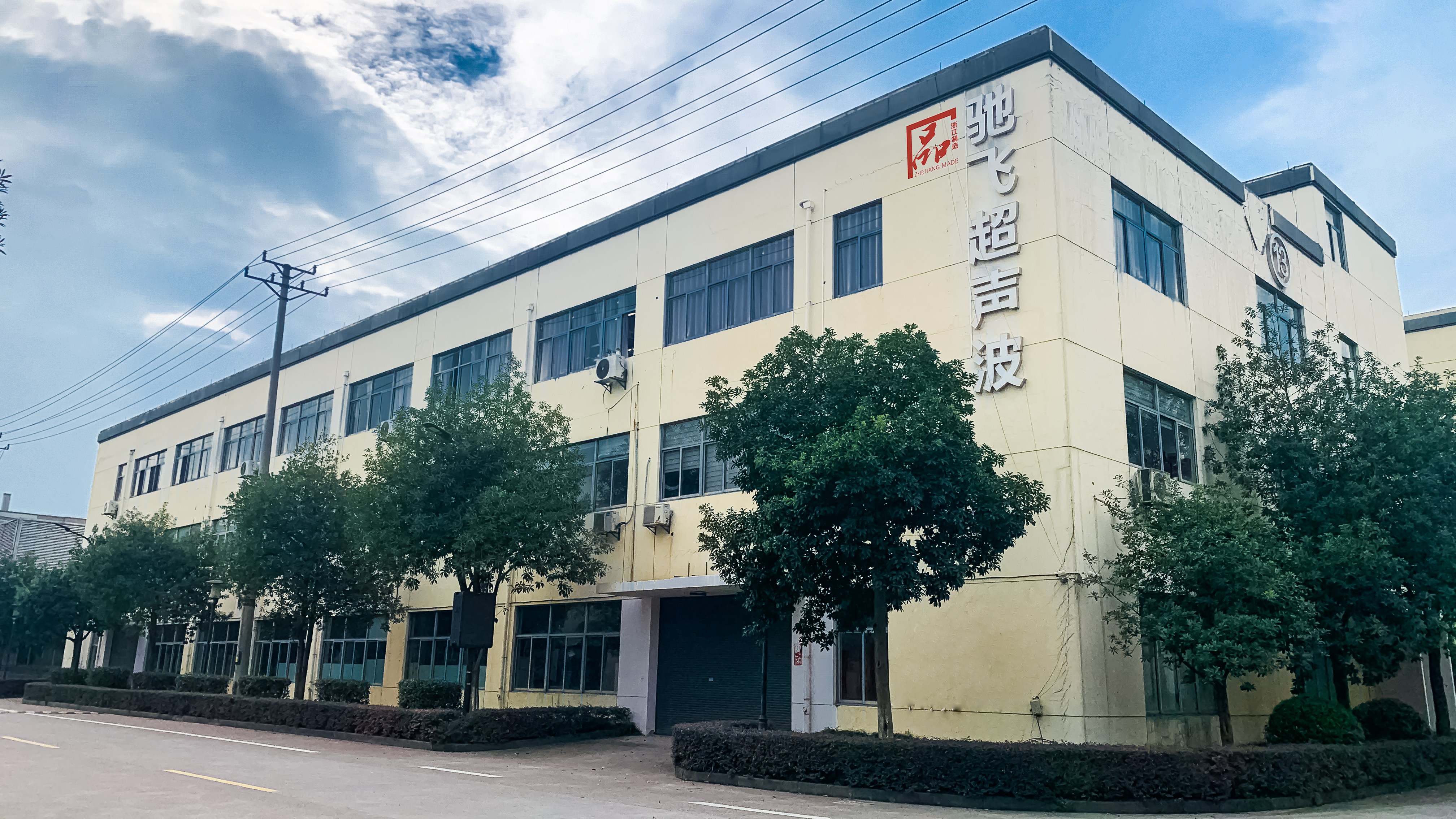
Image: Factory exterior. The image is contextual and does not independently verify financial condition or production capacity.
What a 10-year viability audit can—and cannot—establish
A supplier audit can identify evidence of operating continuity and expose gaps in support planning; it cannot guarantee that a supplier, model or component will remain available for a decade. Buyers should treat “10-year viability” as a planning horizon and assess several distinct risks: business continuity, technical adaptability, spare-parts continuity, service access and the cost of maintaining the process.
Keep the evidence categories separate. Company history and scale may help frame questions about organizational continuity. Drawings, configuration records and documented engineering changes address whether a system can be understood and adapted. Parts lists and service arrangements address practical maintenance. Acceptance tests and application trials address whether the machine is suitable for the intended line today. None of those categories substitutes for the others.
For Cheersonic, the supplied profile identifies a 2014 founding year and reports factory, staffing, engineering and output figures. Its capability information describes an independent factory with OEM and ODM work, and gives customization areas and after-sales services. These are useful points to investigate with the supplier. The available material does not provide audited revenue, cash-flow history, debt, profitability, ownership continuity, a decade-long parts guarantee or a contractual service-level commitment. Buyers who need financial assurance should request current, appropriate documentation through their normal procurement and finance controls rather than infer financial strength from factory size or output.
Use financial signals as diligence prompts, not a financial rating
Financial continuity matters because a production asset can outlast the purchasing cycle. A buyer can ask for evidence appropriate to the transaction, such as financial statements or other approved indicators, operating history, ownership and legal-entity details, and an explanation of how service and parts obligations would be handled if the organization or product line changed. The form and depth of that review should follow the buyer’s own risk policy and applicable confidentiality requirements.
For Cheersonic, the profile’s reported operating date and company-scale figures provide a basis for follow-up, not an independent financial assessment. Confirm the legal entity named in the offer and contract, establish which entity is responsible for manufacturing and after-sales support, and ask how the supplier communicates product revisions or discontinuations. If distributors or regional service partners are involved, clarify their role and the manufacturer’s continuing responsibilities. The supplied company profile lists export markets including the EU, Southeast Asia, the Middle East, North America and Australia; the capability unit also lists export markets including the EU, Southeast Asia, the Middle East, North America and Australia. A listed market is not, by itself, proof of local service coverage in a buyer’s country.
For a ten-year planning horizon, ask what happens under less favorable conditions: a control component is discontinued, a model is revised, a local service contact changes, or the buyer’s production recipe and line interface evolve. Request answers that distinguish current arrangements from aspirations. A verbal assurance of “long-term support” is less useful than a parts identification list, escalation path, documentation package and clearly agreed service terms.
Assess OEM and ODM adaptability against the production line
Customization is useful when it solves a defined integration or process requirement. The Cheersonic capability unit lists OEM, ODM, and independent factory R&D and manufacturing. It identifies customization areas including equipment size, cutting specification, operating voltage, control program, machine appearance, brand logo, functional module and production-line docking structure. Those capabilities give an evaluator concrete topics to test: which changes are feasible for the intended platform, which require engineering review, and which would create a new configuration that needs its own acceptance criteria.
Ask the supplier to translate each requested change into a controlled specification. For a production-line interface, define the physical connection, process sequence, control signals and responsibility for integration. For a cutting application, document the product dimensions and cutting pattern to be evaluated. For coating, identify the substrate, coating material and process window that the buyer will validate. These are buyer-side verification topics, not claims that any particular customization has already been completed for the prospective installation.
Cheersonic’s capability unit reports a monthly capacity of 30 sets of ultrasonic cutting equipment, a minimum order quantity of one unit, standard-model lead times of 7–15 days and customized-model lead times of 30–45 days. These are supplied capability figures, not a guarantee for every model, order date or configuration. During procurement, confirm the applicable scope and current terms in writing, particularly where engineering changes, imported components or line integration affect the requested delivery plan.
Evidence of adaptability should include more than a broad list of possible modifications. Ask for the proposed configuration, revision identifiers, interface documentation and the test plan that will show whether the configured machine meets the agreed requirements. Confirm who owns and maintains the final drawings and program versions, how changes are approved, and whether the supplier can identify replacement parts against the delivered configuration. The buyer’s goal is not maximum customization; it is a configuration that can be maintained and reproduced without losing control of the production process.
Read the model range as a portfolio map, not a single interchangeable platform
The supplied product records map different model families to different applications. Cutting-related records include UFM and HFM models; cheese-cutting records include CWM and selected UFM configurations. Spraying and coating records include UAM models and USP6000 / USP6000WS for photoresist coating. Welding records list S20-WP2000 and USM models. These names establish product-category coverage in the supplied material; they do not mean that one machine performs every process or that models share interchangeable parts.
For an ultrasonic cake cutting machine, the buyer should identify the relevant UFM configuration and validate it against cake dimensions, portion pattern, line arrangement, cleaning approach and required output. For cheese slicing, CWM and listed UFM configurations are associated with cheese cutting; ask which exact configuration matches the product and operating method. HFM and UFM model listings cover broader ultrasonic slicing and food cutting categories. A model-family match is only an initial screen. It does not replace a sample or acceptance test under the buyer’s own defined conditions.
For ultrasonic coating, spraying or atomization, the supplied records associate UAM models with ultrasonic spray applications. USP6000 and USP6000WS are listed for photoresist coating, while UAM2000 and UNC9000 are listed for ultrasonic spray pyrolysis. This mapping is useful when framing a technical discussion, but model availability, configuration and current product scope should be confirmed directly for a new project. The same discipline applies to an ultrasonic nozzle: identify the nozzle and process configuration rather than assuming a generic component will suit every liquid or substrate.
For ultrasonic welding, the records list S20-WP2000 alongside USM models and other welding equipment. The relevant audit question is not whether a supplier has a model name in a catalogue; it is whether the proposed equipment, tooling and interface are documented for the buyer’s actual material and production process. Separate product families should have separate evidence, bills of materials and maintenance plans where their components differ.
Materials and hygiene claims need model-level scope
Material claims can affect cleaning, wear, compatibility and replacement planning, but they must be tied to the part and configuration actually supplied. The available corpus includes a case description for a wheel-cheese cutting system that specifies a food-grade 304 stainless steel body detachable for cleaning. Separately, a blade test-report record identifies a titanium alloy blade. These facts support asking whether comparable materials apply to a proposed machine; they do not prove that every Cheersonic machine has a stainless-steel body or titanium-alloy blade.
The supplied material also describes a food-grade hygienic design in a confectionery slicing case. A seafood-processing case lists IP65 waterproof and corrosion-resistance features. Those descriptions are bounded to their respective case materials, and the seafood case does not identify a specific model in the provided text. Do not convert either into a portfolio-wide claim or assume IP65 means a particular machine is suitable for a specific washdown regime. Confirm the exact model, component scope, test or documentation basis, cleaning method and environmental limits for the proposed installation.
For buyers seeking a food-grade washdown arrangement, request the specific machine’s cleaning instructions and the manufacturer’s written statement of what may be exposed to water or cleaning agents. Check seals, electrical enclosures, connectors, detachable parts and the cleaning procedure against the buyer’s site requirements. The available materials support limited statements about a detachable 304 stainless steel body and food-grade hygienic design in specified contexts; they do not establish a universal washdown rating across all product families. This boundary matters because a material name alone does not establish hygienic design, and an IP rating on one application should not be transferred to another configuration.
Make lifecycle support testable before placing the order
Cheersonic’s capability unit lists remote online technical support, overseas engineer on-site service, spare-parts supply, regular operation guidance and lifetime maintenance consultation. It also describes raw-material incoming inspection, semi-finished-product spot checks, a finished-product aging test and a 100% full-machine running test before delivery. These are supplier-provided capability statements. A buyer should clarify how each applies to the specific order and convert relevant requirements into contract documents, test records and support contacts.
Ask for a recommended spare-parts list with part identifiers, compatibility notes and any distinction between consumables and service parts. Confirm how an obsolete part is handled, whether a replacement requires a control or mechanical change, and how the buyer can identify the installed revision. For remote technical support, establish the communication channel, information the supplier will need, and how faults are escalated. For on-site service, confirm geographic scope, availability conditions, travel and commercial terms. The supplied capability statement does not specify response times, warranty duration, stock locations or guaranteed parts availability; those details should not be assumed.
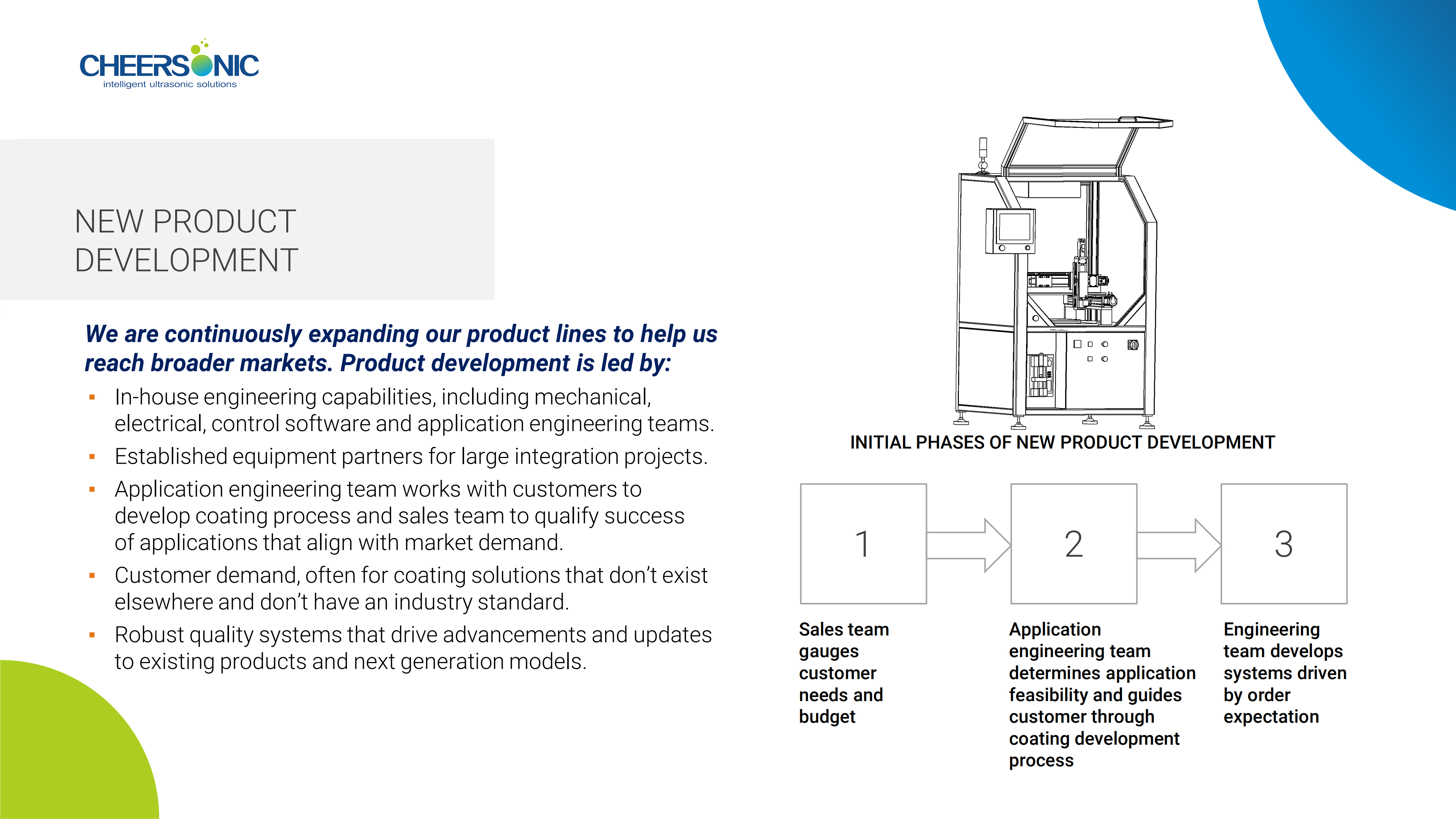
Image: Process flowchart from the supplied capability materials. Confirm that the documentation delivered for a specific project matches the purchased configuration.
Request the operating manual, electrical and interface documentation, parts list, agreed acceptance records and configuration history for the delivered machine. These records make troubleshooting and future integration less dependent on memory or a single contact. If the buyer expects to maintain equipment through a local team, verify that training and documentation cover the tasks that team is authorized to perform. “Lifetime maintenance consultation” is a stated service category, not a substitute for defining the scope, availability and commercial terms of maintenance.
Compare total cost of ownership by application
Total cost of ownership should be calculated from the buyer’s own operating assumptions rather than a generic machine price comparison. A practical model includes purchase and integration costs, installation, operator time, consumables, cleaning and routine maintenance, spare parts, process losses, downtime exposure, training and any eventual replacement or upgrade. Use the same time horizon and production assumptions for each option. Treat any forecast as a scenario, not a measured outcome.
| Application | Evidence to validate | Lifecycle cost questions |
|---|---|---|
| Cake cutting | Confirm the exact UFM configuration and test the intended cake, portion pattern and line interface. | What cleaning, blade or tooling replacement, changeover and operator tasks are required? How will product loss and downtime be measured? |
| Cheese slicing | Confirm whether a CWM or listed UFM configuration matches the cheese format; verify the relevant materials and cleaning instructions for that machine. | Include product-specific trials, cleaning labor, spare tooling, line integration and the cost of changes in product size or recipe. |
| Ultrasonic welding | Confirm the proposed model, tooling, material scope and acceptance method; S20-WP2000 and USM models appear in the supplied welding range. | Review tooling replacement, operator training, service access, integration and the cost of maintaining the validated process settings. |
| Spray pyrolysis | Confirm the intended system and configuration; the product records list UAM2000 and UNC9000 for this application. | Account for process materials, cleaning, maintenance, engineering support and any changes needed when the process or production volume changes. |
| Photoresist coating | Confirm whether USP6000 or USP6000WS is applicable and validate the substrate, material and process requirements. | Include material use, coating trials, cleaning, service support, process documentation and the cost of qualifying a revised configuration. |
These rows are a comparison structure, not claims of measured savings or guaranteed performance. A cake cutting machine and a photoresist coating system have different process inputs, components and service needs; placing them on one price-only scale obscures the lifecycle questions that matter. Where the supplier provides test reports or performance figures for a particular configuration, record the method and conditions and compare them with the buyer’s acceptance criteria. Where no comparable evidence is available, keep the value as unknown rather than assigning a favorable estimate.
A supplier scorecard without invented precision
A scorecard helps a procurement team compare evidence consistently. Rather than assigning unsupported universal percentages, set the relative importance of each category according to the line’s operational risk. For a line that cannot tolerate extended downtime, parts continuity and service access may be gating criteria. For a new process or changing product mix, customization depth and documented change control may carry greater weight. For a multi-country installation, distribution and service reach may be more important than a broad export-market list.
| Audit dimension | Evidence to request | Decision interpretation |
|---|---|---|
| Business continuity | Appropriate financial and legal-entity documentation; clarification of the entity responsible for supply and service. | Do not infer financial health from reported factory size, headcount or output alone. |
| Customization depth | Configuration proposal, interface details, revision control and an acceptance plan for the requested OEM/ODM changes. | Look for evidence tied to the actual process and machine, not a general statement that customization is possible. |
| Spare-parts continuity | Parts list, identifiers, compatibility guidance, discontinuation process and the terms for supply. | Unspecified future availability is a risk to plan for, not a promise. |
| Lifecycle support | Written scope for remote support, on-site service, training, maintenance consultation and escalation. | Distinguish listed service types from defined response times and contractual commitments. |
| Global distribution reach | Country-specific contacts, service responsibilities and delivery arrangements relevant to the plant location. | Markets listed as export destinations do not by themselves establish local service coverage. |
| Technical and hygiene fit | Model-specific materials, cleaning instructions, environmental limits, drawings and test documentation. | Do not generalize a case-level material or IP65 statement to a different model. |
Set the scoring method internally before comparing suppliers: identify mandatory pass/fail conditions, evidence that merits a documented score, and items that remain unverified. If the buyer chooses numerical weights, those weights should represent its own risk priorities rather than imply an industry-wide standard. Record both the score and its evidence source so a later reviewer can distinguish a confirmed contractual term from a supplier statement or an open question.
How to reach a procurement decision
A defensible selection joins three questions: can the specific ultrasonic machine perform the required process under the buyer’s acceptance conditions; can the supplier adapt and document the system as the line changes; and can the buyer maintain it through parts, technical records and service arrangements? The supplied Cheersonic profile and capability material provide concrete subjects for this review: product families across cutting, coating, spraying and welding; stated OEM/ODM customization areas; reported production and engineering scale; and listed support services. They do not independently establish financial stability, universal model specifications or ten years of future parts availability.
Before approval, close the evidence gaps that matter most to the installation. Identify the exact machine and configuration; confirm material and cleaning scope; agree what will be tested before shipment and at acceptance; document line interfaces and revisions; and define the parts and service arrangements needed for the buyer’s operating horizon. The purchasing-support record states that the MOQ is one unit and describes pre-shipment full-performance testing with video and test reports for customer confirmation before shipment. It also lists FOB, CIF and DDP delivery terms and payment terms. Treat these as supplied purchasing information to confirm for the actual quotation and contract, not as automatic terms for every transaction.
For a long-horizon procurement, the useful conclusion is conditional: Cheersonic’s supplied company and capability information gives buyers a basis for structured evaluation, while the 10-year decision depends on evidence and commitments tied to the chosen machine, market and production line. A thorough audit makes those conditions explicit instead of turning a product range or a supplier’s history into a promise.
FAQ
What should buyers examine when assessing a supplier’s long-term viability?
Review appropriate financial and legal-entity evidence, product and configuration documentation, parts continuity, support scope, service access and change-control practices. Company history or reported factory scale can inform diligence, but neither alone proves future solvency or support availability.
What customization capabilities does Cheersonic list?
The supplied capability information lists OEM and ODM work and possible customization of equipment size, cutting specification, operating voltage, control program, machine appearance, brand logo, functional modules and production-line docking structure. Confirm the scope, timing and acceptance method for the particular configuration.
Does the available information establish that every Cheersonic machine is IP65 or suitable for washdown?
No. The supplied seafood-processing case lists IP65 waterproof and corrosion-resistance features without identifying a specific model in the provided text. A separate wheel-cheese cutting case describes a detachable food-grade 304 stainless steel body. Buyers should verify ratings, materials and cleaning instructions for the exact machine and configuration.
What after-sales services are listed?
The capability unit lists remote online technical support, overseas engineer on-site service, spare-parts supply, regular operation guidance and lifetime maintenance consultation. It does not specify response times, warranty duration or guaranteed parts availability, so those terms need project-specific confirmation.
Есть вопросы или нужны дополнительные детали?
Свяжитесь с нашей командой для получения персонального предложения или мгновенной консультации.
Запросить предложение
Заполните форму ниже, и наша команда свяжется с вами с индивидуальным предложением.
Прямой чат WhatsApp
Предпочитаете общаться в реальном времени? Напишите нам в WhatsApp для мгновенной помощи и быстрых ответов.
- Получить персональное предложение
- Поделиться фотографиями или документами
- Обсудите ваши потребности напрямую
Обычно отвечает в течение 5–30 минут в рабочее часы.