
Auditing a Ship Launching Airbag Factory: What to Verify
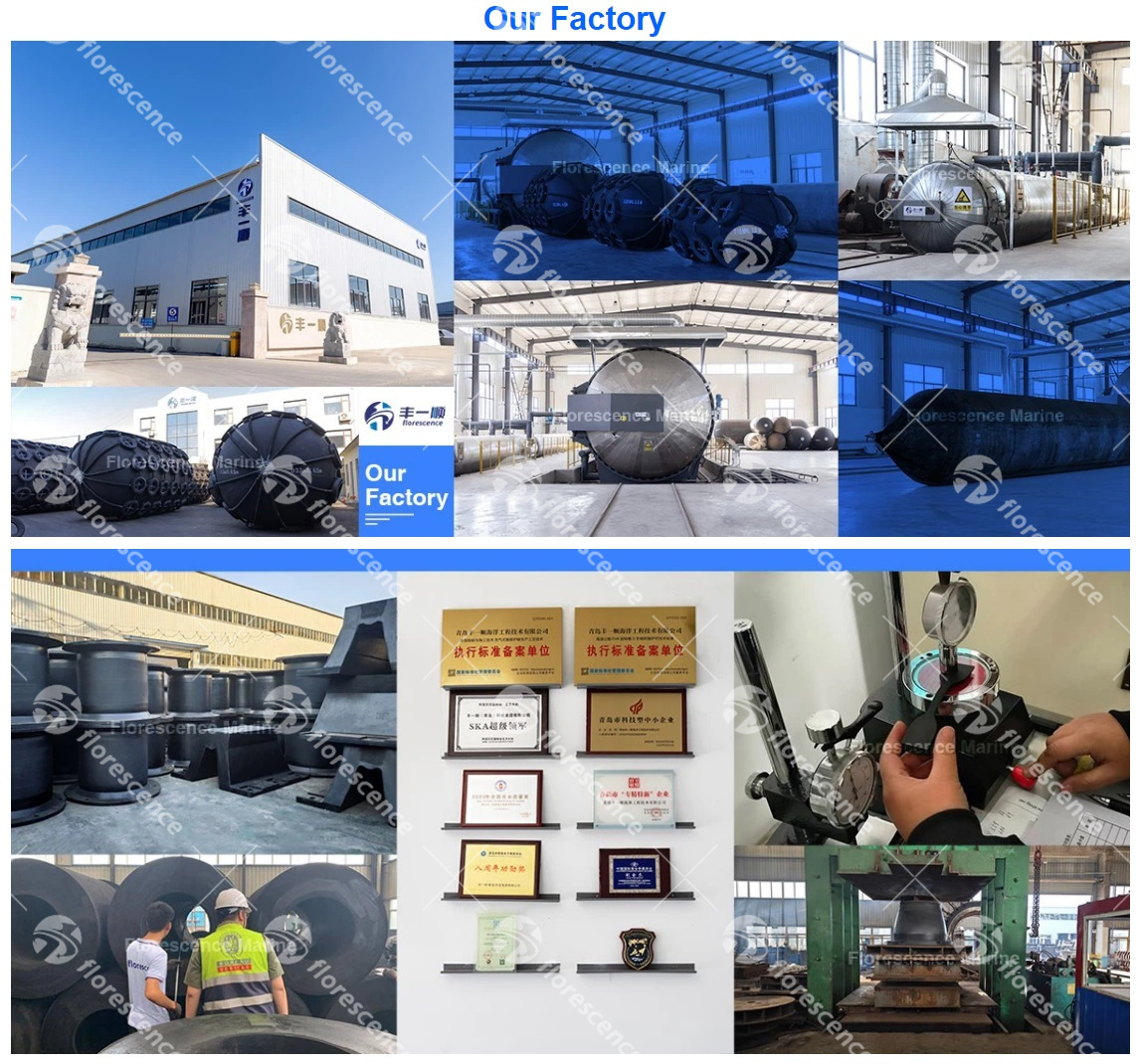
A ship launching airbag is a load-bearing pressure component that arrives folded, deflated and packed, long before it is asked to carry the weight of a hull. Because almost nothing about that product can be judged at the receiving dock, the factory audit has become the real decision instrument for buyers at the evaluation stage — not the quotation, and not the catalogue.
The difficulty is that most audits measure atmosphere rather than evidence. A buyer walks a clean hall, sees cord-winding machines, watches a pressure gauge move, and leaves with an impression. An audit that produces a decision looks different: every supplier claim is converted into an artefact that still exists next week — a batch test record, a cure log, a gauge reading on video, a mill certificate, a container number. If the artefact cannot be produced, the claim is a marketing statement rather than an operating fact.
Qingdao Florescence Marine Supply Co., Ltd is a marine rubber manufacturer established in 1992 in Qingdao, China, producing pneumatic rubber fenders, ship and dock rubber fenders, foam fenders, and ship launching and salvage rubber airbags. It is used here as a worked example for one reason: its operating data is specific enough to be tested claim by claim, which is exactly what a buyer has to do with any supplier in this category.
Why a walkthrough and an audit are not the same thing
A video walkthrough answers the question “does this look like a factory?” An audit answers a narrower and harder question: “which of your claims can I still verify after I leave, and in what document?” The gap between the two is where procurement risk accumulates.
A practical test applies to every statement made during the visit. Ask what physical object, record or measurement would remain if the sales representative were removed from the conversation. Vulcanisation quality, layer count, airtightness and capacity all pass that test — each leaves a trace in a production sheet, a test bay log or an output record. Phrases such as “advanced equipment” or “strict control” do not, unless they are attached to a number the buyer can check.
The documented footprint, and the buyer question behind each number
The first audit layer is the site itself, because footprint size, headcount, engineering depth and operating history are the claims that determine whether a supplier can actually absorb an order inside a launch window. Each of the following figures should be paired with a specific question and a specific thing to inspect.
| Documented evidence point | Buyer question it answers | What to ask to see |
|---|---|---|
| 40,000 m² manufacturing site in Qingdao | Is production genuinely in-house, or is work subcontracted? | One continuous walk covering raw-material store, lay-up hall, vulcanisation area and test bay; a site plan to confirm nothing relevant sits outside the route. |
| 120 staff | Is the claimed capacity actually staffed? | Headcount split by function — lay-up, curing, finishing, inspection — and the shift pattern during peak months. |
| 25 engineers in the R&D team | Who produces the launch calculation behind the airbag size and quantity? | A worked recommendation for a vessel of your length, width and weight, showing the assumptions used. |
| Annual production capacity of 2,000 pieces | Can my order fit into the year without displacing someone else’s delivery date? | Monthly output by diameter and layer count, plus the current order book position. |
| Continuous operation since 1992 | Is this a durable supplier or a recent market entrant? | Business licence and export documents drawn from different years, not just the most recent one. |
| Export share of about 95%, with markets across Southeast Asia, South America, Europe, North America, the Middle East and Africa | Can they produce destination-specific clearance documents without delay? | Specimen Commercial Invoice, Packing List, Bill of Lading and Certificate of Origin in the forms relevant to your market. |
| ISO 9001 and ISO 14001 management systems | Is there a system behind the quality claims, or only a final inspection? | Certificates with scope, plus the batch test record for the most recent production run. |
| Certifications available for airbags, including CCS, BV, ISO, RS and ABS | Can the product meet my project’s classification requirement? | The scope of each certificate and a written answer on whether witness testing is included in the purchase order. |
The value of the table is not the numbers themselves. It is that each number has a physical or documentary counterpart, which is what separates a verified supplier from a well-presented one. A buyer who leaves with eight answers and no artefacts has simply paid for a tour.
Reading the shop floor: four stations that carry the evidence
Airbag construction is not complicated to describe, but it is easy to misrepresent, because the differences that matter — cord layer count, compound consistency, cure control — are internal. The audit route should therefore be built around the four stations where those internal properties are created and recorded.
Station one: material intake
Ship launching airbags are built from natural rubber reinforced with nylon cord, supplied in configurations from 3 to 12 layers, with a diameter range of 0.6–2.8 m and a length range of 5.0–25 m. The first audit checkpoint is the incoming material record. Every production batch should pass through rubber raw-material testing before it reaches lay-up, and that record should be retrievable by batch number rather than described from memory. Ask to see the incoming test entry for the batch currently in production, then ask how a failed entry is handled.
Station two: lay-up and cord reinforcement
The layer count is the single most consequential specification a buyer can get wrong, because it is invisible after curing. ISO 14409, the international standard covering ship launching air bags, sets out requirements that include multi-layer synthetic-tire-cord reinforcement alongside burst pressure resistance and wear and puncture resistance. During the audit, ask for the production sheet for your order and confirm that the layer count written on it matches the purchase order, then watch the winding operation and count the passes. This is one claim that can be verified directly on the floor rather than taken on trust.
Station three: vulcanisation
Vulcanisation is where suppliers most often claim an advantage — typically described as improved vulcanisation contributing to reliable load capacity and airtightness. The claim itself is not auditable; the cure record is. Ask for the cure time and temperature log for the batch, and ask whether the factory sends interim production photographs and video during the order. Documented practice includes weekly photographs and video of the vulcanisation process for rubber airbags and fenders, which means a remote buyer can audit part of this station without travelling.
Station four: test and release
This is the station that decides whether the product leaves with evidence. For ship airbags and pneumatic fenders, the relevant batch-level check is the air-tightness test, alongside dimensional and hardness checks applied to the fender range. The pressure gauge and inflation valve supplied with the airbag are also the instruments used during the test, so ask to watch a unit being brought to working pressure and held there. A test observed once proves the procedure exists; the batch log proves it was applied to your units.
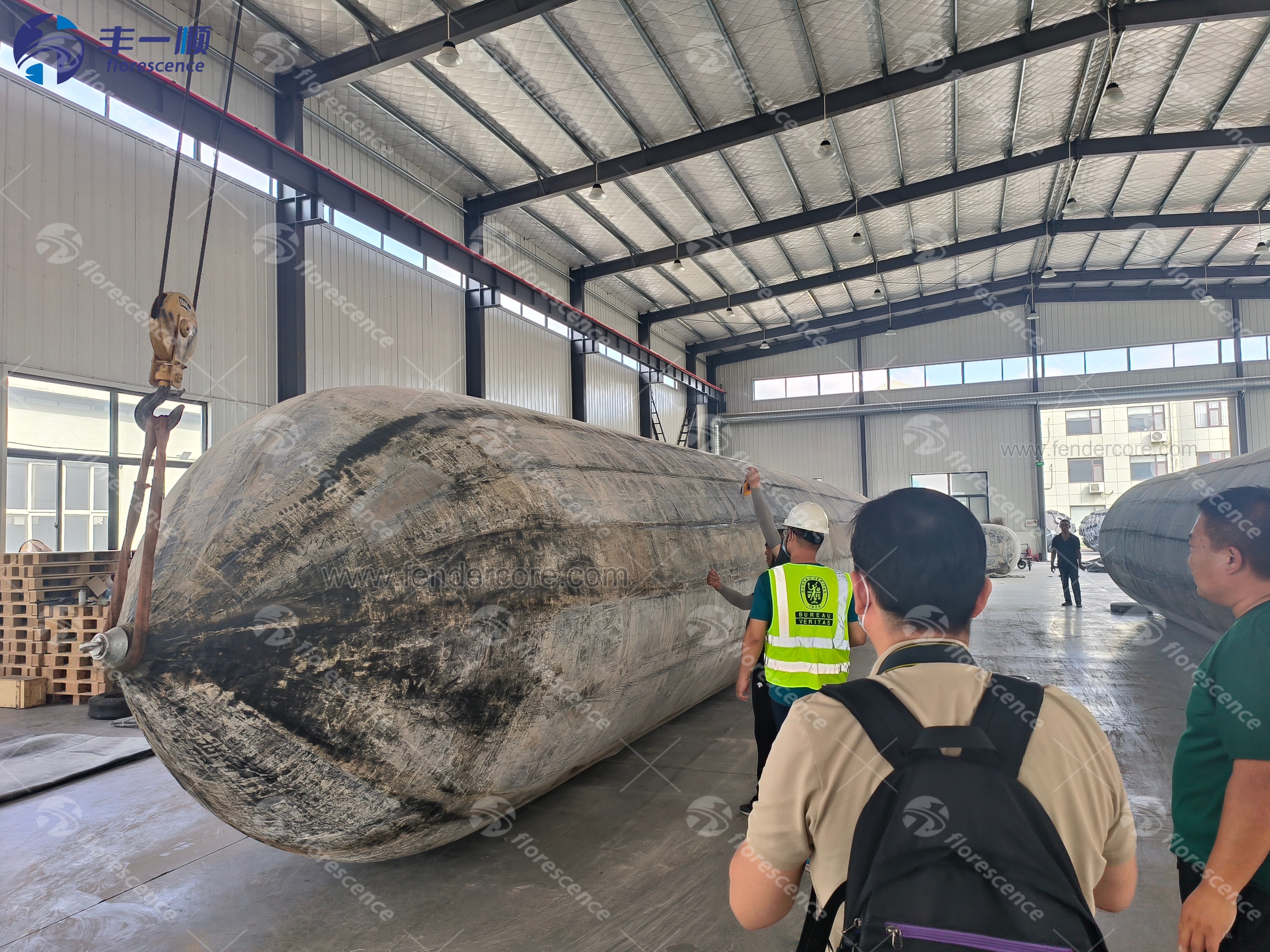
How do you check product quality before leaving the factory?
This is the question buyers ask most often, and it should be answered with a chain rather than a sentence. At Florescence, the chain runs from an ISO 9001 certified factory through batch-level inspection to a documented release: every production batch goes through rubber raw-material testing, dimensional and hardness checks for rubber fenders, and air-tightness testing for ship airbags and pneumatic fenders.
The release step is where an audit adds real value. Before shipping, a full Quality Inspection Report is issued containing rubber test data, sizing sheets, coating thickness records and clear product photographs, and shipment is arranged only after the customer approves that report. For a buyer, this is a controllable gate: the order does not move until a document has been read and accepted. Ask during the audit to see a completed report from a previous order, and ask what happens when a customer rejects it.
Two supporting document layers are worth requesting at the same time. Physical property reports covering tensile strength, elongation and compression are provided for rubber products, and EN 10204 3.1 mill test certificates are provided for metal parts and bolts when the order includes steel components. Third-party inspection is a separate option: inspection by agencies including SGS, Bureau Veritas (BV), CCS, DNV, ABS and LR is available on request, and the factory states that it will cooperate fully with a customer-appointed inspector.
Testing the capacity claim with arithmetic, not impressions
Annual output of 2,000 pieces is a meaningful figure only when it is placed against your order size and the production calendar. Standard rubber fenders and pneumatic fenders typically ship 25 to 30 days after deposit, while large custom orders or full fender systems run 40 to 45 days, with a clear schedule provided before production starts. For a shipyard working toward a launch date, those windows matter more than the headline capacity number.
A useful audit exercise is to ask for the recommendation the engineering team would produce for an actual vessel. Recommended airbag size and quantity are derived from vessel length, width and weight, with common configurations ranging from 3 to 12 layers set by working pressure and project requirements. Ask what proportion of a typical launch set that represents, and then ask how many comparable sets are already booked in the same month. The answer either fits inside the 2,000-piece annual envelope or it does not — and that is a decision-grade answer, unlike a statement about capacity being sufficient.
Continuity is the second half of this test. A manufacturer operating since 1992 with more than 30 years in marine fenders, pneumatic fenders, foam fenders and ship launching airbags has accumulated process knowledge that is difficult to replicate quickly. The auditable version of that claim is a document trail extending across years, together with project experience that demands documentation discipline — Florescence has supplied naval organisations including the Bangladesh Navy, French Navy, Royal Thai Navy, Italian Navy and Philippine Navy. Naval supply is not proof of quality on its own; it is evidence that inspection paperwork, specification compliance and delivery scheduling have been handled under scrutiny before.
How do you ship the goods to us?
Logistics claims are the easiest to verify after the fact and the easiest to leave vague before the order. The verifiable baseline is straightforward: sea freight, air freight, LCL and FCL shipments are all supported, quotations are usually issued on FOB terms, and sea or land transport can be arranged under CIF, CFR, DDP or DDU terms to the buyer’s destination. Packing methods are optimised to reduce transport cost and improve loading efficiency.
For customs clearance, the supplier provides the Commercial Invoice, Packing List, Bill of Lading and Certificate of Origin — such as Form E, Form F or CO — which is the part of the logistics chain buyers most often discover too late. During an audit, ask to see a complete document set from a recent shipment and confirm which certificate of origin applies to your destination.
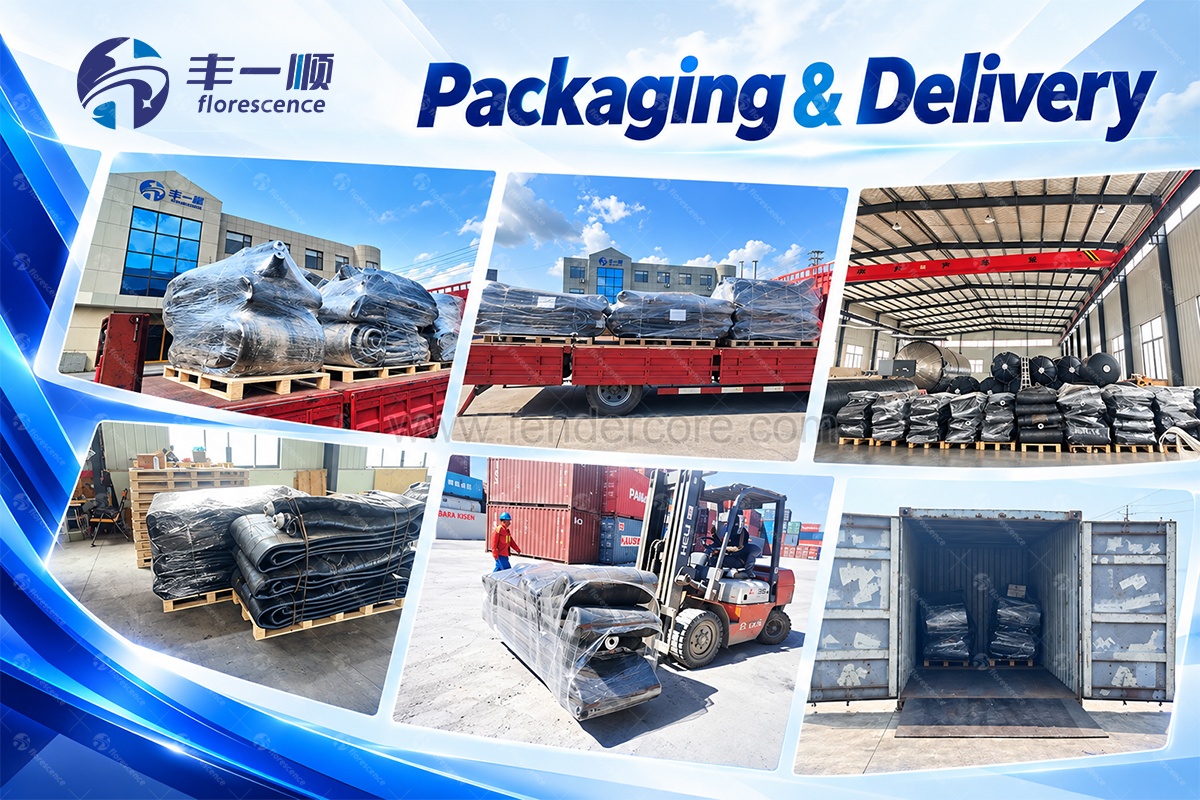
Two further checks convert this into evidence. First, packing detail by product type: pneumatic fenders are shipped deflated to save freight cost, arch and cone fenders are securely bundled on pallets, and all steel parts are tightly wrapped to prevent rust during sea shipping. Ask which of these applies to your airbag order and request the packing specification and container loading plan for your quantity. Second, internal transport before the port: goods are moved by professional heavy-haul trucking companies and tracked from the warehouse to the port terminal, with container number and vessel tracking links sent after shipping. A supplier who can produce these records on request is describing a process; one who cannot is describing an intention.
Where the airbag method — and the audit — has limits
Buyers comparing airbag launching against a traditional slipway are usually shown the same list of advantages: lower investment cost, flexible launching locations, reusability, easier transport, and a requirement for little beyond air compressors, winches and ropes. Those advantages are real, and they come with operating conditions that belong in the same conversation.
The slipway must be ground or cement concrete appropriate to the tonnage of the vessel, surfaces must be smooth and clean with no sharp objects that could puncture the bag, operating pressure must be strictly controlled with over-pressure forbidden, and the airbags must not be distorted along their length during rolling or overloaded after inflation. In practice this means the method transfers part of the engineering burden from civil works to planning and supervision. That is precisely why the supplier’s technical support should be an audit item: ask who produces the launch plan, who is reachable during the operation, and what guidance is provided on site.
The audit has its own boundaries, and an honest supplier should state them. A site visit cannot prove full-scale burst behaviour; conformance to the ISO 14409 requirements on burst pressure resistance and cord reinforcement is established through test reports and, where required, third-party witnessing, not by inspecting a finished bag. A stated service life of 5 to 8 years cannot be observed in a single day. A one-day visit samples the system, not the specific batch destined for your project — which is why the batch record and the approved Quality Inspection Report carry more weight than anything seen on the floor.
Cost claims deserve the same treatment. Florescence’s own comparison data puts its airbags at roughly 0–15% higher initial cost than the alternatives it benchmarks against, with cost per use expected to be 15–35% lower and lifecycle total cost of ownership 10–30% lower. These are supplier-provided figures and should be read as such. Their logic depends entirely on durability holding in service — and durability is exactly the variable an audit can only partially confirm. The practical conclusion is not that the numbers are wrong, but that they are conditional, and the conditions are what a buyer should be verifying.
Why audits are becoming standard procurement practice
The commercial context explains the shift. The global marine airbags market was estimated at USD 328.82 million in 2025 and is projected to reach USD 346.59 million in 2026, according to 360iResearch. Asia-Pacific accounts for approximately 52% of global revenue, with China acting as the primary manufacturing and export centre — which means a large share of the world’s factory audits in this category happen within a relatively small geographic area and against a relatively small set of comparable claims.
Standardisation is the second driver. ISO 14409:2011 classifies marine airbags into two categories, Ordinary (QP) and High-capacity (QG), and for salvage applications a minimum safety factor of 6:1 applies to buoyancy-related straps and lifting belts. Once a buyer can ask “which class, and to which safety factor?”, the conversation moves from brand preference to specification compliance — and specifications, unlike impressions, can be audited.
Future outlook
The direction of travel is toward documentation-led purchasing. Buyers increasingly ask for batch-level test records, approved inspection reports and certificate scopes before they ask for a price, and remote video verification is replacing part of the first site visit. Suppliers who already produce weekly production photographs, shipment tracking and a signed release document are positioned well for that shift; suppliers whose evidence exists only in conversation will be filtered out earlier.
For buyers, the practical implication is to build the audit question list before the trip, attach each answer to an artefact, and put the residual commitments — third-party inspection, hold points, document sets — into the purchase order. That converts a factory visit from a judgement about people into a record about a product.
FAQ
How do you check product quality before leaving the factory?
The factory is ISO 9001 certified and every production batch goes through strict tests, including rubber raw-material testing, dimensional and hardness checks for rubber fenders, and air-tightness tests for ship airbags and pneumatic fenders. Before shipping, a full Quality Inspection Report is issued with rubber test data, sizing sheets, coating thickness records and product photographs, and shipment is arranged only after the customer approves that report. Physical property reports covering tensile strength, elongation and compression are provided for rubber products, and EN 10204 3.1 mill test certificates are provided for metal parts and bolts.
How do you ship the goods to us?
Sea freight, air freight, LCL and FCL shipment are supported, and packing methods are optimised to reduce transport cost and improve loading efficiency. Quotations are usually issued on FOB terms, while CIF, CFR, DDP or DDU terms can be arranged for sea or land transport to the buyer’s destination. For customs clearance the supplier provides the Commercial Invoice, Packing List, Bill of Lading and Certificate of Origin, such as Form E, Form F or CO. Pneumatic fenders are shipped deflated to save freight cost, arch and cone fenders are bundled on pallets, and steel parts are tightly wrapped to prevent rust.
Are you a manufacturer or a trading company, and why does that matter in an audit?
Florescence is a professional marine equipment manufacturer established in 1992, operating as a direct manufacturer with in-house production rather than sourcing from other factories as a trading firm would, with more than 30 years of experience in marine fenders, pneumatic fenders, foam fenders and ship launching airbags. In audit terms the distinction determines whether the evidence exists on site: batch test records, cure logs and capacity data can only be inspected where production actually takes place.
How is ship launching airbag size and quantity determined?
Recommended airbag size and quantity are based on vessel length, width and weight. Bearing capacity depends on airbag diameter, working pressure, contact area, vessel weight and the number of airbags used. Airbags are available from 3 to 12 layers, with a diameter range of 0.6–2.8 m and a length range of 5.0–25 m, and customised criteria include diameter, length, pressure rating, reinforcement layers and end structure design.
What operating limits should a buyer know before an airbag launch?
Operating pressure must be strictly controlled and over-pressure is forbidden. The slipway should be ground or cement concrete selected according to vessel tonnage, surfaces should be free of sharp objects to avoid puncturing the airbags, and distortion along the length during rolling and overweight loading after inflation should both be avoided. Airbags are specified for high pressure rating, anti-aging performance, seawater corrosion resistance and all-weather temperature durability from -20°C to 50°C.
Есть вопросы или нужны дополнительные детали?
Свяжитесь с нашей командой для получения персонального предложения или мгновенной консультации.
Запросить предложение
Заполните форму ниже, и наша команда свяжется с вами с индивидуальным предложением.
Прямой чат WhatsApp
Предпочитаете общаться в реальном времени? Напишите нам в WhatsApp для мгновенной помощи и быстрых ответов.
- Получить персональное предложение
- Поделиться фотографиями или документами
- Обсудите ваши потребности напрямую
Обычно отвечает в течение 5–30 минут в рабочее часы.