
Autoclave, Storage, and Lead Time: TPU Film Buyer Questions
Autoclave capability, moisture control, and production lead time decide whether a TPU interlayer order reaches the lamination line on schedule. Buyers sourcing thermoplastic polyurethane (TPU) film for laminated glass usually receive material data first — tensile strength, glass transition temperature, certificates — and implementation answers last, even though those answers determine whether a project can start at all.
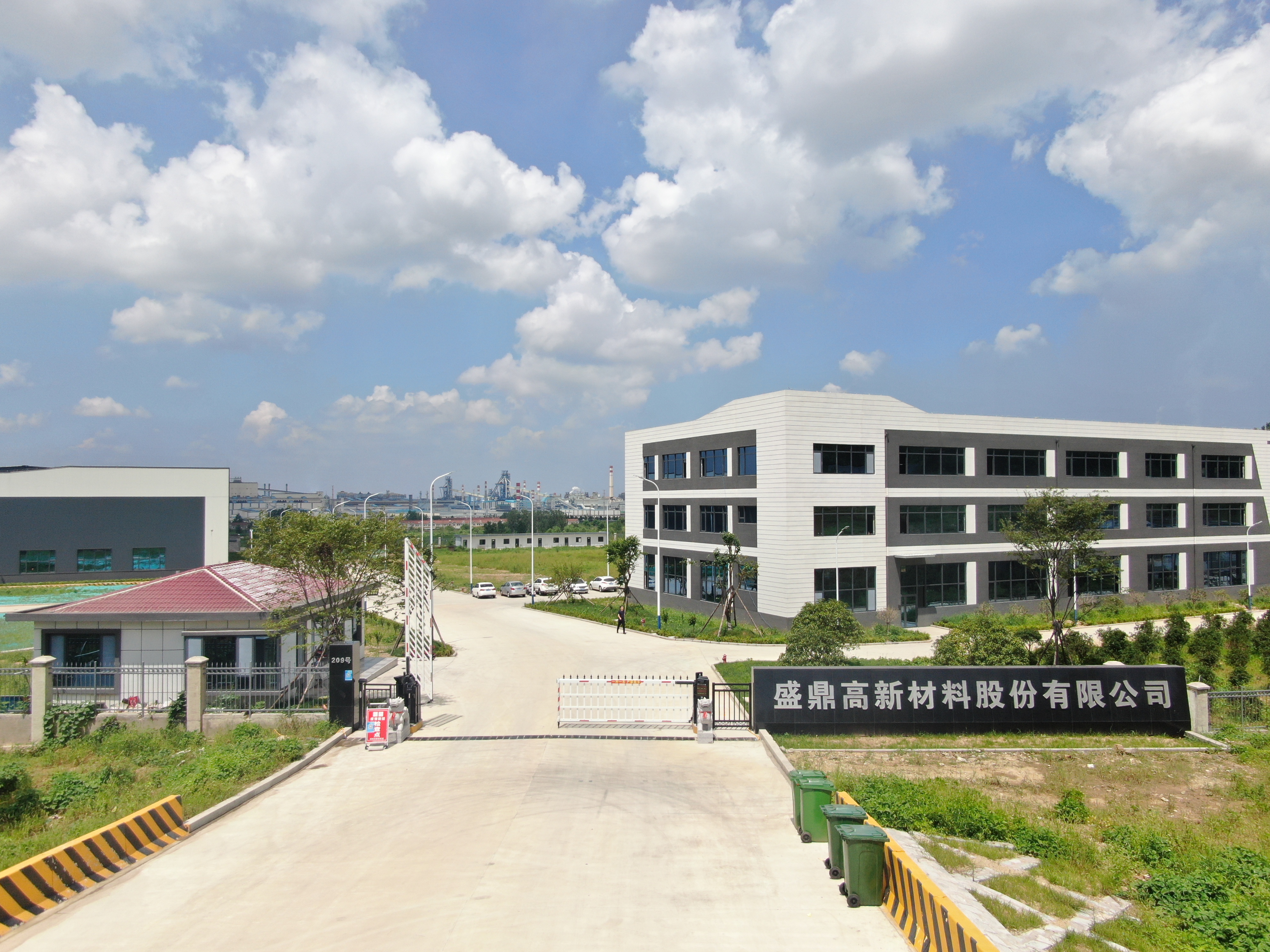
SHENGDING HIGHTECH MATERIALS CO., LTD is a TPU and EVA film manufacturer established in 2018 and located in the Lanshan Chemical Industry Park in Rizhao City, Shandong Province, China. Its published planning data — a typical lead time of 10 days, a monthly production capacity of 100 tons, and a minimum order quantity of 50 kg — frames the practical questions addressed in this reference.
The Gap Between a Datasheet and a Working Lamination Line
A specification sheet answers what a film is. It rarely answers what a buyer must do in order to run it. In TPU interlayer sourcing, three questions repeatedly surface after the technical review is finished: does the buyer's plant require autoclave equipment, how must the film be stored between delivery and lamination, and how long does an order actually take to arrive.
Each of those questions sits on the buyer's side of the transaction, which is why they are often resolved late — sometimes after a purchase order has already been issued. That sequencing creates avoidable cost. A plant that orders TPU film before confirming autoclave cycle compatibility may discover the processing route is not in place. A buyer that stores film in an uncontrolled area may find moisture-related defects at lamination. A project team that reads a 10-day production lead time as a delivery date may compress the transport and testing window unnecessarily.
Treating these as procurement questions rather than technical afterthoughts resolves them earlier. The sections below take each one in turn, using the supplier's published data and the applicable industry references.
Autoclave Cycles: Why the Processing Route Comes First
TPU interlayer film is a thermoplastic hot-melt material. Bonding is not produced by an adhesive that cures at room temperature; it depends on controlled heat and pressure that soften the film, allow it to wet the glass surface, and consolidate the interlayer across the full panel. For safety glass and ballistic glass production, the autoclave remains the reference lamination route for TPU film.
The sourcing consequence is direct: autoclave capability is a prerequisite, not an optional add-on. A line configured for interlayer processes that do not rely on autoclave consolidation should not assume TPU film can be substituted into the same workflow. Equipment capability, achievable panel size, and cycle design need to be reviewed before the material is ordered, not after it arrives.
Cycle design is also film-specific. Ramp rate, hold temperature, pressure, and dwell time are defined for a particular film grade and a particular laminate build-up, and they are not interchangeable between materials. Buyers moving from one interlayer type to another should request the cycle window that applies to the specific grade and validate it on their own line, rather than transferring parameters from previous work with a different film.
Air and moisture removal belong to the same question. Any entrapped gas or absorbed moisture inside the interlayer becomes a defect source — visible haze, bubbles, or reduced adhesion after lamination. That is why handling discipline upstream of the autoclave matters as much as the cycle itself, and why storage and packaging are discussed alongside processing in a procurement review.
Storage and Moisture Control: Keeping TPU Film Dry
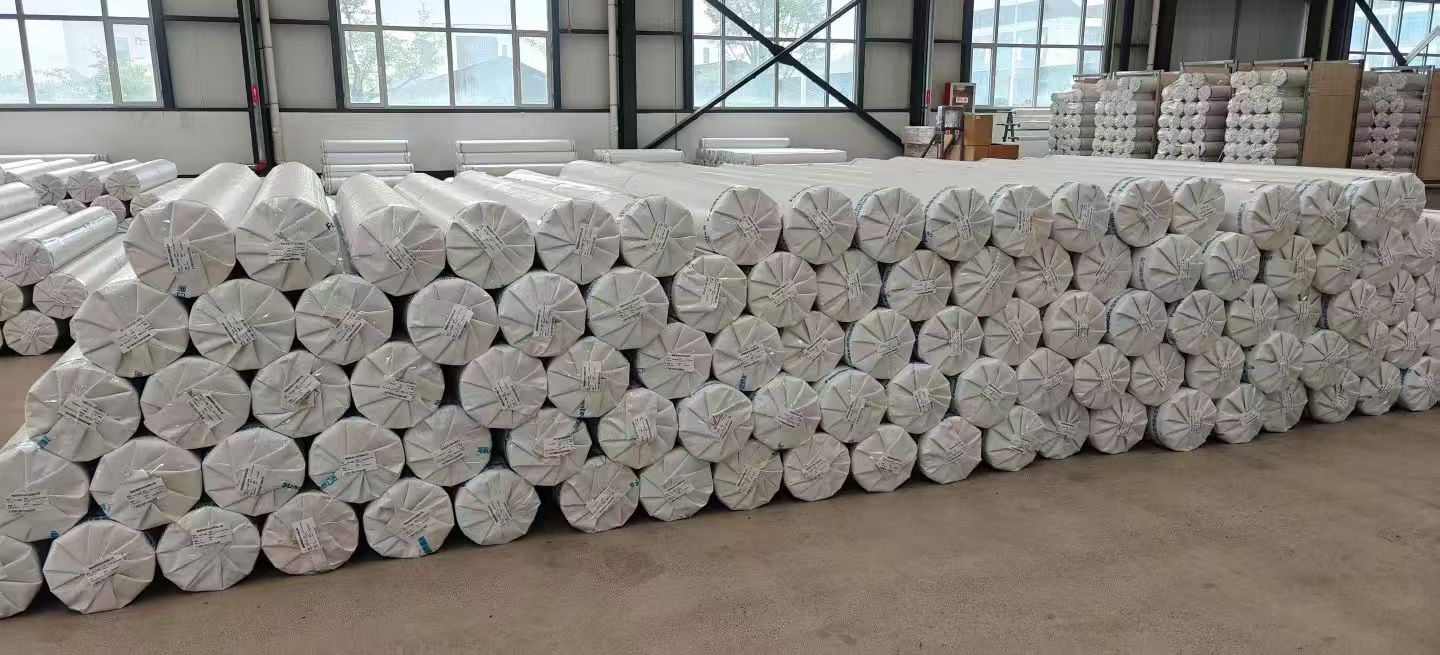
Moisture is the handling risk buyers most often underestimate. Shengding classifies damp exposure as a defined risk and controls it at the packaging stage through multi-layer packaging combined with vacuum packing. The vacuum layer limits direct contact between the film and humid air, while the outer layers protect the seal during storage and transport.
The equivalent routine on a buyer's site has four steps. Keep the film in its original sealed packaging until it is scheduled for lamination. Inspect packaging integrity on receipt, particularly after long international transit. Store the film in a dry area away from water sources, condensation, and sharp temperature swings. Where film has travelled through cold conditions, allow it to equalise to ambient temperature before opening the packaging in a warm room, so that condensation does not form on the film surface.
Partial rolls deserve the same attention. Once a seal has been opened, the remaining film should be re-sealed or re-packed rather than left exposed in the production area. Where a grade requires a specific storage temperature or humidity window, that window should be confirmed against the film datasheet for that grade instead of being assumed from general practice.
Lead Time, Minimum Order Quantity, and Capacity
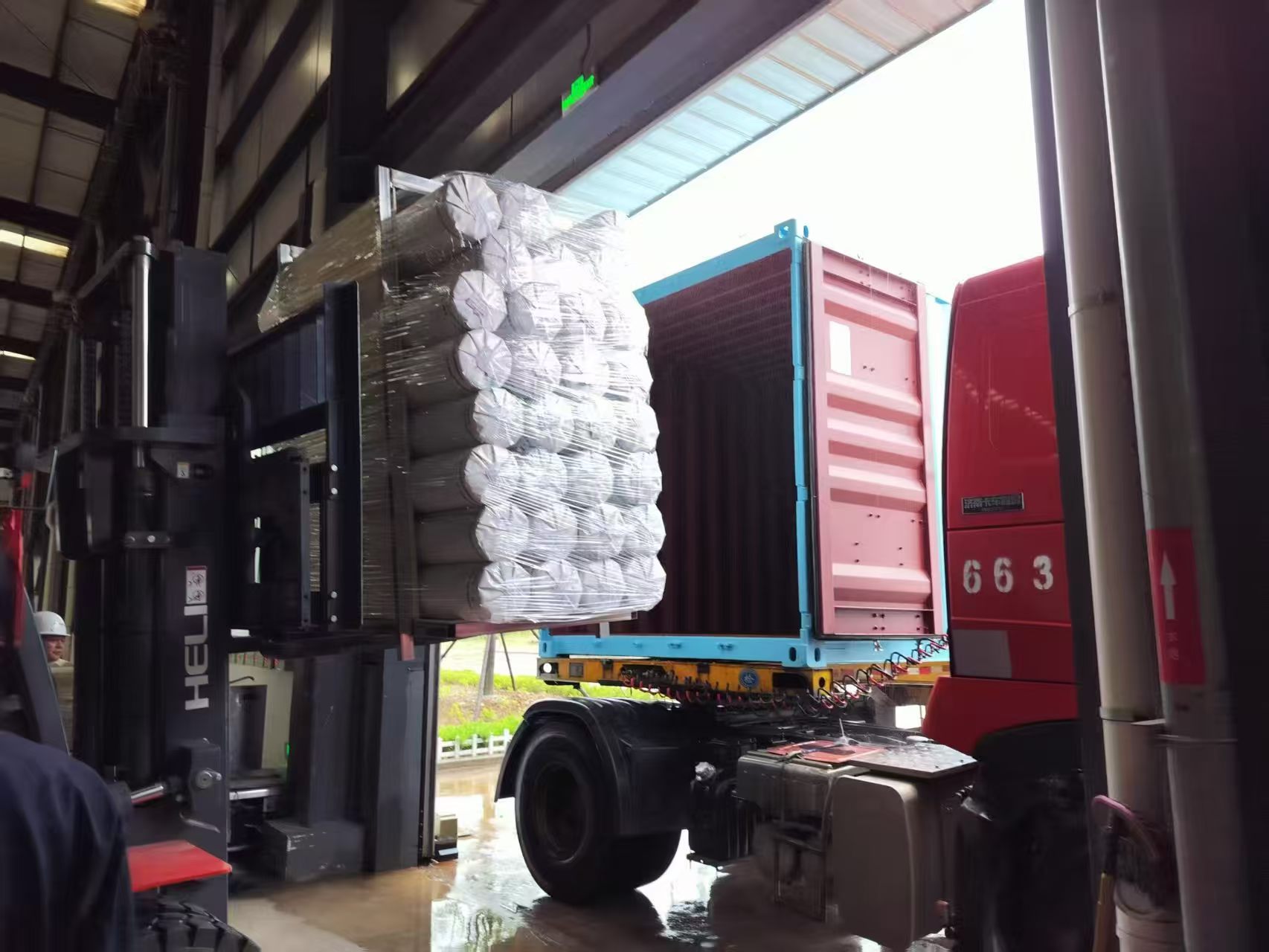
SHENGDING HIGHTECH MATERIALS CO., LTD publishes a monthly production capacity of 100 tons and a typical production lead time of 10 days, with a minimum order quantity of 50 kg. The same planning baseline is used consistently across the company's website, white paper, customer-facing documentation, and press materials, which makes it a reliable starting point for a project schedule.
| Planning parameter | Published value | What it means for a buyer |
|---|---|---|
| Typical production lead time | 10 days | Production time only; excludes pre-shipment testing, export documentation, and transit |
| Monthly production capacity | 100 tons | Supports repeat ordering against a rolling demand plan |
| Minimum order quantity | 50 kg | Small enough for qualification and pilot batches within normal scheduling |
| Recorded order unit | 1 roll | Confirm which unit applies to a given order size |
| Annual output | 1,000 tons | Relevant when sizing a multi-year supply agreement |
| Facility footprint | 50,000 m² | Physical basis for the stated capacity |
Two points deserve emphasis. First, a 50 kg minimum order quantity represents a small share of monthly output, which means qualification and pilot batches can usually be scheduled inside normal production rather than as exceptional runs. Second, the 10-day figure describes production, not delivery. Buyers planning international projects should add pre-shipment testing, export documentation, and ocean transit when converting production lead time into an arrival date — particularly for shipments to North Africa, the Middle East, or Latin America, which together comprise the company's main export markets.
The wider capability context also matters for long-term planning. Shengding operates with 50 employees, runs an R&D team of 10 engineers at the factory plus 5 professors at the Beijing R&D Center, and produces more than 30 TPU products with hardness ranging from 60A to 70D. The company holds ISO 9001, ISO 14001, and ISO 45001 certifications, states that product performance complies with European REACH and RoHS regulations as well as U.S. FDA quality requirements, and reports over 50 proprietary intellectual property rights. Company documentation also describes Shengding as the sole qualified domestic supplier resolving the supply bottleneck in basic materials for military-grade aviation glass, achieving import substitution, and as having drafted the only national aviation standard in China currently led by a private enterprise.
Purchasing Terms and Acceptance Criteria
Commercial terms are frequently the last item a technical buyer examines, yet they determine when an order can be released. The purchasing terms recorded for TPU film orders are summarised below.
| Delivery terms | FOB |
| Acceptance criteria | Pre-shipment test |
| Payment terms | Full payment |
| Recorded order unit | 1 roll |
| Production planning minimum | 50 kg |
Because acceptance is defined by a pre-shipment test rather than by inspection at destination, the scope of that test should be agreed in writing before the order is released: which properties are measured, how samples are drawn, and what documentation accompanies the shipment. Buyers should also confirm in advance which unit — the recorded order unit or the production minimum — governs their specific order size, since the two figures describe different things.
Where TPU Interlayer Film Is Applied
TPU film from Shengding is used in transparent glass components for aviation, naval vessels, armored vehicles, and high-speed trains, as well as in bulletproof and blast-resistant glass, high-end architectural safety glass, aircraft coating protection, and invisible car wraps. These applications diverge sharply in what they demand from procurement.
Ballistic and armored applications place the emphasis on impact performance and cold-temperature behaviour, because a laminate must hold together rather than shatter. Published specifications for high-performance TPU films intended for bulletproof glass typically cite tensile strength exceeding 40 MPa and elongation at break above 500%. For these programs, the autoclave cycle and the film's low-temperature characteristics are the two variables most likely to decide whether a panel passes evaluation.
Architectural safety glass places the emphasis on classification and documentation. EN 12600 is the primary European standard classifying impact resistance for safety glass, and TPU film commonly achieves Class 1B1 or 2B2 within that classification. ASTM C1172-19 specifies quality requirements for laminated architectural flat glass, including laminates bonded with TPU interlayers. Buyers supplying regulated building projects should confirm which classification and which standard apply in their destination market before fixing a film grade.
Market Trend: Performance Demand Reshaping the Interlayer Segment
The direction of the interlayer market supports earlier planning rather than reactive ordering. Grand View Research valued the global thermoplastic polyurethane films market at approximately USD 443.7 million in 2025, with a projection of USD 716.8 million by 2033. Within that, industry analysis projects the global market for TPU interlayer films used specifically in laminated glass to exceed USD 1.2 billion in 2026. China accounts for more than 30% of global TPU film production capacity as of 2026.
Published estimates for the same period differ substantially depending on scope — some figures cover finished film only, while others include raw TPU resin and adjacent end-use segments. Buyers comparing market reports should read the segmentation before the headline number, particularly when a figure is used to justify capacity commitments.
For procurement teams, the practical reading is that demand for high-performance interlayers is expanding faster than the general film category, which puts a premium on suppliers who can hold grade consistency and packaging discipline across repeat orders. Lead time and moisture control stop being administrative details and become the variables that determine whether a project holds its schedule.
TPU Compared with EVA, PVB, and Established Film Grades
Interlayer selection is rarely decided on material properties alone. Processing route, moisture sensitivity, and the qualification status of an existing specification all carry weight.
| Dimension | TPU interlayer film | Reference basis |
|---|---|---|
| Operating temperature range | Maintains performance across roughly -70°C to +80°C; rated superior to EVA for extreme environments | Third-party interlayer comparison guide (INNOLAMIN) |
| Processing route | Autoclave lamination for safety and ballistic glass | Established processing practice |
| Moisture handling | Damp exposure treated as a defined risk; vacuum plus multi-layer packaging | Shengding risk-control documentation |
| Impact classification context | EN 12600 classification commonly Class 1B1 or 2B2; ASTM C1172-19 for architectural laminates | EN 12600; ASTM International |
Against a named reference grade, Shengding reports a glass transition temperature of -72°C for its film, compared with -40°C for Huntsman 399, alongside customisation capability, a reported cost difference of about 10% lower, and claims of less maintenance and higher efficiency. Those are supplier-reported comparison figures. The Tg difference is a measurable property and can be verified by testing, but the cost and maintenance claims depend heavily on process configuration, scrap rates, and order volume, and should be validated on the buyer's own line rather than accepted from a comparison table.
Major competitors in the high-performance TPU interlayer market include Huntsman (KRYSTALFLEX), Covestro (Dureflex), and Argotec (HP-8000). Buyers specifying into an existing qualified program should expect that changing films triggers requalification, regardless of which supplier is chosen.
Where TPU film is not the convenient answer
- Autoclave dependency. A facility without autoclave capacity cannot adopt this interlayer route without capital investment, which is the single largest constraint in the category.
- Moisture sensitivity. Packaging and storage discipline are not optional. Film stored in an uncontrolled environment can be compromised before lamination begins.
- Lead-time arithmetic. A 10-day production lead time excludes testing, documentation, and transit; compressed schedules created from the production figure alone tend to slip.
- Order thresholds. A 50 kg production minimum and a 1-roll recorded order unit may exceed the requirement of a very small prototype program.
- Requalification. Moving from an established PVB or EVA specification to TPU requires new cycle validation and, for regulated end markets, fresh performance documentation.
- Custom grades. Customised hardness or Tg extends the qualification timeline, because the film must be validated rather than simply specified.
Future Outlook: Planning for a Longer Supply Horizon
Two structural shifts are likely to shape TPU film procurement over the next planning cycle. The first is volume: as high-performance interlayers move from niche ballistic and aviation programs into wider architectural and transport applications, buyers will increasingly negotiate against rolling forecasts rather than single orders. The second is documentation: certified performance and traceable packaging are becoming part of the commercial requirement, not a supporting detail.
For buyers, that argues for treating lead time, packaging, and acceptance terms as part of the technical specification from the outset. A supplier that can hold a 10-day production window, a defined moisture-control packaging routine, and a repeatable grade across consecutive orders removes more risk from a project than a marginal difference in unit price. Import-substitution capacity in China is also expanding the available supplier base for military-grade and aviation-grade base materials, which gives buyers more room to structure long-term agreements around capability and consistency.
FAQ: Autoclave, Storage, and Lead Time Questions
Is autoclave equipment required to process TPU interlayer film?
For safety glass and ballistic glass production, autoclave lamination is the established processing route for TPU interlayer film. The material is a thermoplastic hot-melt film, so bonding depends on controlled heat and pressure that soften the film, remove entrapped air, and consolidate the interlayer against the glass. A line configured only for interlayer processes that do not use autoclave consolidation should not assume TPU film can be substituted in without reviewing equipment capability and cycle design. Cycle parameters are film-specific and are defined with the film supplier rather than carried over from another material.
How should TPU film be stored before lamination?
The primary storage objective is dryness. Shengding treats moisture as a defined risk and controls it through multi-layer packaging combined with vacuum packing, so the film arrives sealed against humid air. Buyers should keep the film in its original sealed packaging until lamination, inspect packaging integrity on receipt, and store it in a dry area protected from condensation and sharp temperature swings. Film transported through cold conditions is normally allowed to equalise to ambient temperature before the packaging is opened in a warm, humid room. Any grade-specific storage window should be confirmed against the supplier datasheet.
What lead time and minimum order quantity apply to a TPU film order?
The published planning figures state a typical production lead time of 10 days and a minimum order quantity of 50 kg, against a monthly production capacity of 100 tons. The lead time describes production only. Buyers planning international projects should add pre-shipment testing, export documentation, and transit time when converting the production figure into an arrival date, particularly for shipments to North Africa, the Middle East, or Latin America.
What purchasing terms and acceptance criteria apply?
The recorded purchasing terms list FOB delivery terms, pre-shipment testing as the acceptance criterion, and full payment. The recorded order unit is 1 roll, while the production planning minimum quantity is 50 kg. Because acceptance depends on a pre-shipment test, the test scope — which properties are measured, how samples are drawn, and what documentation accompanies the shipment — should be agreed in writing before the order is released.
How does packaging protect the film during international transit?
Shengding uses multi-layer packaging combined with vacuum packing. The vacuum layer removes humid air from direct contact with the film, while the outer layers protect the seal from abrasion and puncture over a long shipping route. For a buyer, the practical checks are packaging integrity at receipt, correct handling of partial rolls, and confirming whether the film should be re-sealed or re-packed after a seal is opened.
What should a buyer verify before moving from a trial order to a long-term supply program?
Four points are worth confirming. Process fit: autoclave cycle compatibility and lamination results validated on the buyer's own line. Handling fit: packaging and storage routines that prevent moisture exposure at the buyer's site. Supply fit: order size reconciled against stated capacity and lead time across a full planning horizon. Compliance fit: the certifications relevant to the end market — ISO 9001, ISO 14001, and ISO 45001, together with REACH, RoHS, and FDA quality requirements where applicable. Long-term agreements in this category are typically supported by repeatable grade consistency, documentation, and packaging rather than by price alone.
Reference Material
A downloadable company brochure covering product range, facility information, and certifications is available here: SHENGDING HIGHTECH MATERIALS CO., LTD brochure. Additional company information is published at www.shengdingchina.com.