
Automated Case Packer Solutions: Smarter End-of-Line Packaging for Modern Production Lines
Secondary Packaging Automation Gains Momentum as Case Packer Market Tops $1 Billion
The global case packing machines market was estimated at USD 1.07 billion in 2024 and is projected to reach USD 1.74 billion by 2033, according to Grand View Research. With Asia Pacific holding a 37.9% market share in 2024 and the top-load case packer segment representing 45.5% of machine-type share, manufacturers are increasingly looking for reliable case packer systems to handle secondary packaging efficiently. As production lines scale and labour costs rise, the selection of an automatic case packer becomes a strategic decision for industries ranging from food and beverage to pharmaceutical and tissue paper.
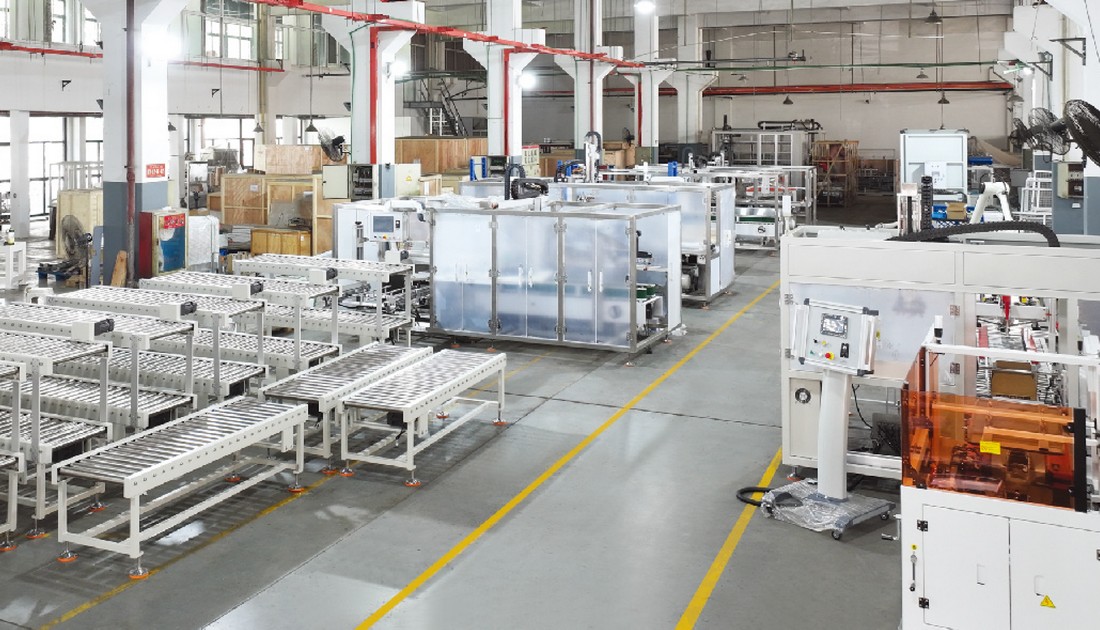
Wenzhou Wimach Machinery Co., Ltd. (Wimach) provides dedicated case packing machine solutions for folded tissues, rolled tissues, and broader consumer goods applications. Established in 2021, the company operates a 3,000 m² manufacturing facility with approximately 37 employees and exports about 60% of its output to EU, North America, and South America. Its core offering includes two automated case packaging machine models designed to address different feeding and loading logics: a side-load/side-push unit and a top-load pick-and-place unit.
Why Case Packer Selection Matters: Throughput, Product Protection, and Line Integration
End-of-line packaging is often the bottleneck in high-speed production. A mismatched case packer can lead to product damage, frequent jams, or excessive labour intervention. The opportunity lies in matching the machine’s loading method to the product geometry, fragility, and desired cycle rate. For instance, side load case packer designs are well-suited for stable containers such as cans, bottles, and cartons that can be pushed laterally, while top load case packer (pick-and-place) configurations are preferred for delicate or irregularly shaped items that require gentle vertical insertion.
Wimach addresses both ends of this spectrum with two models that share a common platform (stainless steel or carbon steel construction, 380V 50/60Hz 3-phase power) but differ in mechanics and capacity.
Wimach's Case Packer Models at a Glance
| Model | CP-S50 | CP-T60 |
| Type | Side Load / Side Push | Top Load / Pick-and-Place |
| Packing Capacity | 1–16 cartons/min | 1–8 cartons/min |
| Carton Dimensions (L×W×H) | 240–500 × 200–400 × 180–400 mm | 300–600 × 200–400 × 150–400 mm |
| Power Consumption | 4.5 kW | 7.5 kW |
| Air Consumption | 350 L/min | 450 L/min |
| Overall Weight | 1,500 kg | 1,600 kg |
Technical Explanation: How Each Loading Method Works
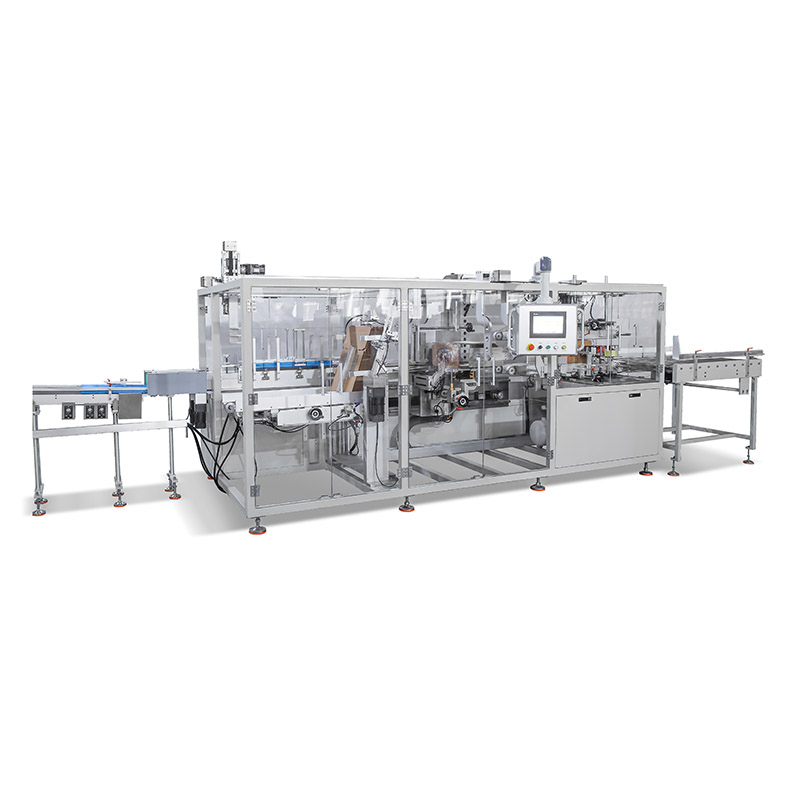
Side Load Case Packer (CP-S50). Products are collated and then pushed horizontally from the conveyor into waiting cases or cartons. This method is fast and mechanically simple, making it ideal for rigid containers like can case packer applications or bottle case packer lines. The CP-S50 operates at up to 16 cycles per minute and can handle cartons, boxes, bottles, cans, and bags. Air pressure requirement is 0.5–0.8 MPa.
Top Load Case Packer (CP-T60). A pick-and-place gripper picks grouped products from the infeed and lowers them vertically into the case. This robotic case packer style offers more flexibility for fragile items such as tissue boxes, pharmaceutical blister packs, or irregular hardware parts. The CP-T60 is rated at 1–8 cartons per minute, with larger carton dimensions to accommodate taller products.
Both machines are CE certified and can be customised to meet specific production layouts. Wimach’s engineering team supports all in one case packer integration as part of turnkey packaging lines.
Application Scenarios: From Tissue to Wet Wipes
Wimach's case packer systems have been deployed in real-world projects across three geographies:
- Mexico – Wet Wipe Packaging Line. A turnkey automated line for canister wet disinfecting wipes uses the CP-T60 (top load) for case packing canisters after disinfectant filling, sealing, capping, and labeling. The entire line includes case packing and pallet wrapping. Special requirements included customised design and CE compliance.
- United States – Toilet Paper Roll Line. A complete end-of-line solution for toilet paper rolls uses a case packer (model CP-T60 or similar) to pack wrapped rolls into cartons before automatic palletizing and stretch film wrapping. The system runs in automatic mode in tissue paper producing and packaging workshops.
- Poland – Facial Tissue Box Line. In the EU, a facial tissue packaging line integrates a cartoning machine (model TC-100, CE certified) with a side-load case packer (CP-S50) for case packing tissue boxes. The line also includes film wrapping and palletizing. Customised design was a key requirement.
These examples show how the same case packaging machine platform can be adapted to radically different product forms—canisters, rolls, and flat tissue boxes—by selecting the appropriate loading type.
Market Trend Analysis
The secondary packaging equipment segment, which includes case packers, accounts for approximately 45% of the global packaging robot market share, according to Fact.MR. The growing demand for high speed case packer systems is driven by e-commerce and omnichannel retail, where product damage during shipment directly affects brand reputation. Additionally, the robotic packaging systems market—including robot case packer solutions—reached USD 6.4 billion in 2024 (Global Market Insights), indicating strong investment in flexible automation.
Safety standards such as ANSI/PMMI B155.1-2023 (United States) and EN ISO 12100 (EU) set the compliance framework for machinery sold in those regions. Wimach’s CE certification aligns with the European harmonised standard, which is mandatory for case packer machines sold in the EU.
Comparison with Traditional Solutions
Traditional manual case packing relies on labourers to manually place products into cartons, offering low initial cost but exposing lines to inconsistency, ergonomic injury risk, and throughput limitations. Automatic case packing machine systems like Wimach’s reduce labour dependency and improve pack consistency. However, one honest limitation is that even automated case packers require periodic changeover time when switching between product sizes; the CP-S50, for instance, accepts cartons within a defined dimensional window, meaning extreme size variations may need mechanical adjustments. For manufacturers with highly diverse product portfolios, a robotic case packer with tool-less changeover may offer greater flexibility, albeit at a higher capital cost.
Future Outlook
As production speeds increase and SKU proliferation continues, the demand for modular, easy-to-integrate automatic case packer solutions will grow. Wimach’s approach—offering both side-load and top-load architectures on a shared platform—positions it to serve a broad range of medium-volume lines (1–16 cycles per minute). The company’s focus on the tissue industry, which often requires gentle handling of lightweight paper products, also provides a differentiated niche. Integration with upstream wrapping machines and downstream palletizers is becoming standard, pushing suppliers to deliver complete line solutions rather than standalone equipment.
Frequently Asked Questions
A case packer is a machine that collates individual products or primary packs and loads them into an open case or carton. A case sealer, by contrast, only closes and seals the flaps of an already-filled case. The automatic case packer performs the loading step, which is mechanically more complex.
Wimach’s case packing machine models (CP-S50 and CP-T60) are intended for the tissue, food and beverage, pharmaceutical, daily chemical & cosmetic, hardware, auto parts & machinery industries. They can pack cartons, boxes, bottles, cans, and bags.
A side load case packer pushes products horizontally into a case, making it faster and simpler for stable containers. A top load case packer (pick-and-place) lifts and lowers products vertically, offering gentle handling for fragile or irregular items. The choice depends on product shape and risk of damage.
Yes. The CP-S50 is a side push case packer that can pack bottles, cans, and bags in addition to cartons and boxes, making it suitable for beverage case packer applications and can case packer lines.
Yes. All Wimach machines are CE certified, which confirms compliance with European health, safety, and environmental requirements. This certification is mandatory for machinery sold in the EU.
Wimach provides targeted customized solutions based on customers’ specific production needs. While exact lead times vary by project complexity, the company’s engineering team works with a “can do” attitude to develop feasible solutions. Contact Wimach directly for project-specific timelines.
Download Wimach Product Catalog (PDF) – Learn more about the full range of automated packaging machines and integrated lines.