
Automatic Battery Pack Assembly Lines: EV, BESS and C&I Fit Check
Automatic Battery Pack Assembly Lines: EV, BESS and C&I Fit Check
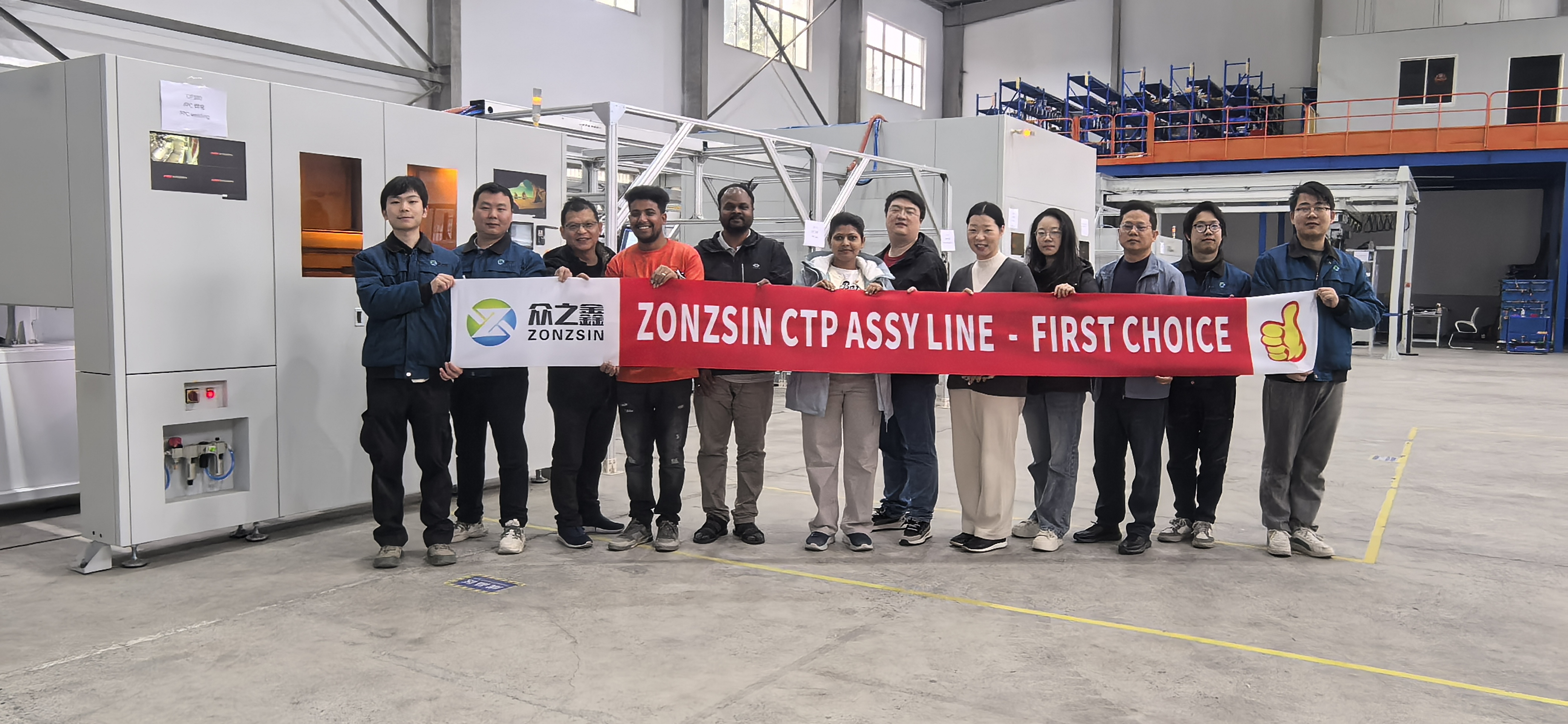
India reference deployment: a CTP battery pack assembly line delivered as one unit and arranged in a U-shape layout, chosen for space saving in an indoor standard factory.
An automatic battery pack assembly line is selected by scenario, not by catalogue position. The same equipment category is asked to build EV traction packs, stationary storage packs and commercial & industrial (C&I) cabinets, and the differences between those products decide cell handling, fixture sets, takt, automation level and the floor area a project actually needs. This fit check maps those requirements against reference line configurations and shows where the fit can break.
Third-party data explains why scenario fit has become the first question in pack-line procurement. CTP (cell-to-pack) technology was integrated into 48.6% of new energy vehicles sold in China by 2023, expanding from 13 models in 2021 to 57 models by late 2023, according to ResearchInChina. Spherical Insights values the global CTP battery market at USD 18.35 billion in 2023, projected to reach USD 75.93 billion by 2033. MarketsandMarkets expects the battery manufacturing equipment market to grow at an 18.8% CAGR from 2025 to 2030, reaching USD 36.94 billion.
Growth at that scale pushes more buyers into a research-to-evaluation process simultaneously: they must decide whether to specify a line for one product family or for a mix, and whether the building they already own can accept it. The sections below work through those decisions in the order a project team usually faces them.
What an Automatic Battery Pack Assembly Line Is, and What It Is Not
An automatic battery pack assembly line is a multi-station system that moves cells, modules or cell-to-pack structures through insertion, joining and testing stations under program control, with fixtures holding each pack variant in position. It is not a universal machine. Stations are configurable, but the configuration is built around a defined cell format, pack architecture and takt range.
Shanghai Zonzsin Intelligent Equipment Co., Ltd. (Zonzsin) is a Shanghai-based equipment manufacturer founded in 2019 that builds automatic battery pack assembly lines and ESS battery pack insertion robots for containers. The company states a 6,000 m² facility, 90 employees, a 43-engineer R&D team and an annual output of 40 units, with exports accounting for 60% of sales and main markets in Southeast Asia and Europe; it also reports delivered installations in Europe, the USA, Japan, South Korea and India.
Its published portfolio contains three reference lines that differ mainly by cell and pack family: the ZZX2406 CTP battery PACK assembly line, the ZZX2501 Blade battery PACK assembly line and the ZZX2313 EV battery PACK assembly line. Those three models make the scenario question concrete, because each is specified for a different combination of cell type, pack structure and automation level.
Four Fit Dimensions, Tested in Order
Scenario fit is often treated as a single question, but it separates into four checks that should be run in sequence, because a failure in the first one makes the rest irrelevant.
- Cell and pack compatibility. Which cell formats and pack architectures must the line handle? The CTP reference line is specified for 314Ah and 587Ah cells in a 1P96S pack, while the Blade line is specified for blade-cell packs. Fixture adaptation is required for every pack variant, and PACK compatibility with fixture adaptation is explicitly listed among the special requirements for these projects.
- Takt and automation. What cycle time must the line sustain, and does the project need semi-automatic or fully automatic operation? Published cycle times differ by model, and automation level is one of the customisable parameters.
- Footprint and layout. Total line dimensions, station count, buffer positions and utility drop points have to be laid over the actual building drawing rather than over a generic hall.
- Environment and utilities. Indoor standard factory conditions, ESD protection, fire prevention measures, temperature/humidity and cleanliness control, plus the electrical and compressed-air supply the line expects.
A fifth check — delivery and commissioning fit — belongs at the end of the evaluation rather than the beginning, but it can eliminate an otherwise suitable line. Zonzsin lists a monthly capacity of 3 units, a lead time of 3–5 months, a minimum order quantity of 1 unit, 100% testing in quality control, and after-sales support consisting of remote support plus on-site installation and commissioning.
Scenario Matrix: EV, BESS, Automotive OEM and C&I
The table below summarises how the three reference lines map to four buying scenarios, using only the parameters published for each model.
| Scenario | Requirement driver | Reference configuration | Published parameters |
|---|---|---|---|
| EV traction pack manufacturing | Mixed pack models, welding quality, machine uptime | ZZX2313 EV battery PACK assembly line | Single machine operation rate ≥ 95%; welding one-time qualification rate ≥ 99.5%, final qualification rate ≥ 99.95%; AC 380V ± 10%; compressed air 0.5*0.8 MPa |
| Blade-cell packs for EV and storage | Long-cell handling with a defined per-pack takt | ZZX2501 Blade battery PACK assembly line | Cycle time 6 PPM, 30 min/PACK; compressed air 0.6~0.8 MPa; AC 380V ± 10%, 50 ± 0.5 Hz |
| BESS / stationary storage with large prismatic cells | CTP architecture, 314Ah and 587Ah cells, 1P96S pack | ZZX2406 CTP battery PACK assembly line | Dimension L58000 × W11000 × H3800 mm; cycle time 4 PPM; semi-automatic; CTP technology |
| C&I storage projects | Smaller batches with constrained floor space | Semi/fully automatic line with touch screen and program control | Indoor standard factory; industrial assembly-line conditions; continuous or shift production |
EV traction packs
EV traction programs usually face model proliferation: several pack variants share one line, so changeover time, fixture adaptation and welding consistency matter as much as peak speed. That is the profile the ZZX2313 is specified for — an EV battery PACK assembly line with a single machine operation rate of at least 95% and welding qualification rates listed as ≥ 99.5% one-time and ≥ 99.95% final. For a buyer, those two numbers answer different questions: the operation rate describes how often the line is available, while the welding figures describe how often the first joining attempt passes inspection. The applicable industries listed for this model are the EV industry, energy storage and automotive OEMs.
BESS and stationary storage
Stationary storage shifts the constraint from speed to cell size and pack architecture. The industry has been transitioning from the 280Ah cell benchmark to 314Ah formats for energy storage packs in order to improve energy density and reduce assembly costs, according to Highstar / InfoLink. The ZZX2406 CTP line is specified for 314Ah and 587Ah cells and a 1P96S pack, with CTP as the joining technology and semi-automatic operation as the stated automation level. For an energy storage integrator, that combination determines both the station design and the manual labour content of a shift.
Automotive OEM programs
Automotive OEM programs add validation ownership on top of takt. The India reference deployment described later in this article involves an automotive OEM, an energy storage system integrator, a battery cell and PACK manufacturer, and an EPC turnkey contractor — a reminder that one line can sit inside a supply chain with several validation owners, and that acceptance criteria are usually agreed before installation rather than after.
C&I storage projects
Commercial and industrial projects rarely justify the takt of a traction-pack program, but they often carry the tightest building constraints, because the line is installed inside existing premises. Here the deciding factors are layout and layout flexibility, with operation under touch screen and program control in semi or fully automatic mode, rather than peak cycle time.
Footprint Fit: What 58,000 × 11,000 × 3,800 mm Means on a Site Plan
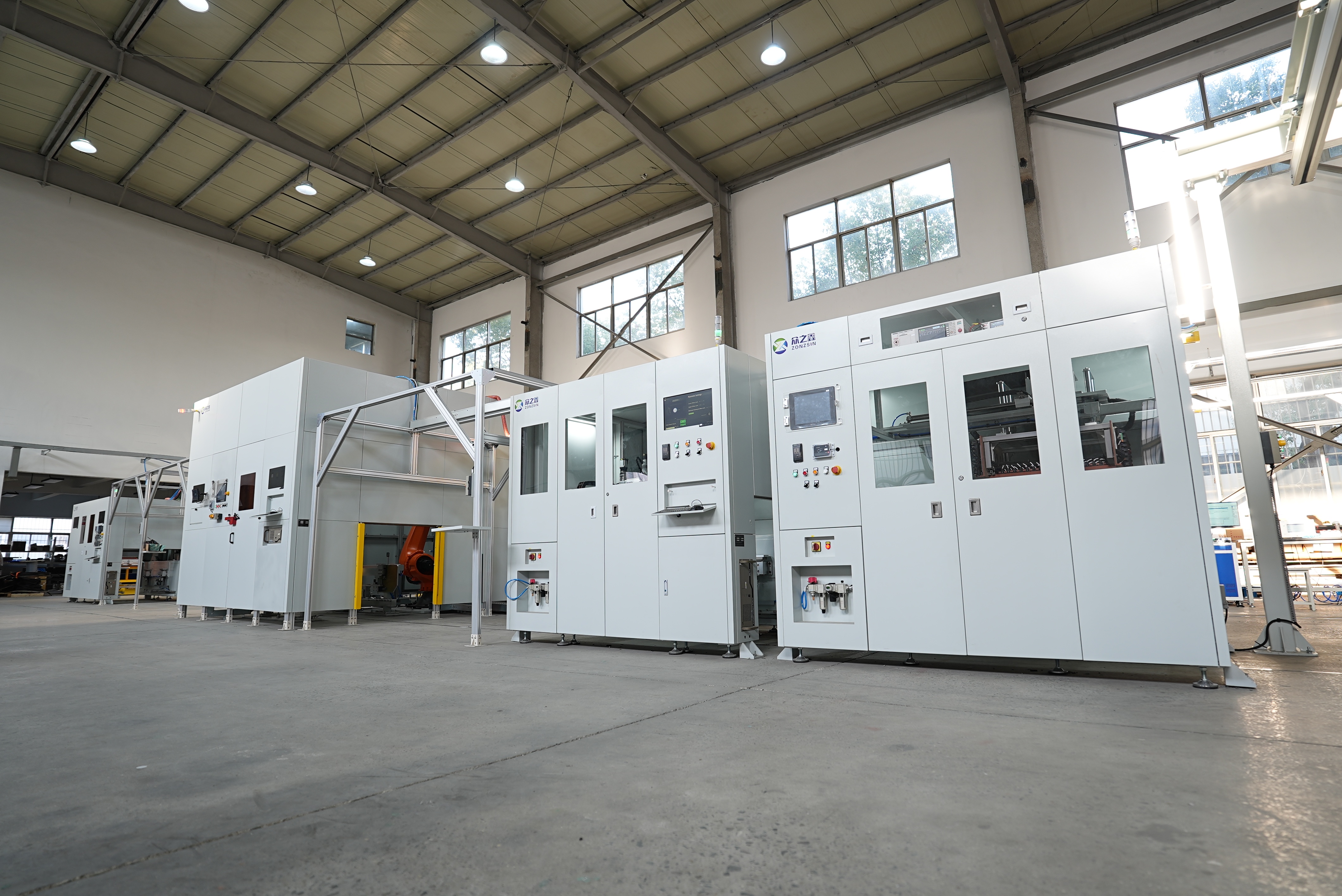
CTP battery PACK assembly line (model ZZX2406), specified for 314Ah and 587Ah cells in a 1P96S pack architecture at L58000 × W11000 × H3800 mm.
The ZZX2406 CTP line is published at L58000 × W11000 × H3800 mm. On a site plan that is the footprint of the line itself, before maintenance access, work-in-progress buffers, material delivery aisles and utility rooms are added. Two layout strategies therefore matter more than the headline dimension: a straight configuration, which follows the 58 m length of the line, and a U-shape configuration, which folds the same station sequence into a shorter and wider envelope.
The India reference deployment uses a U-shape layout and lists space saving as its main highlight, alongside user-friendliness. Because the CTP line is semi-automatic, operators work at designated stations; a U-shape keeps those stations within a short walking distance of one another while keeping the total building length below that of a straight-line equivalent. For a buyer comparing two candidate buildings, the practical question is not which hall is larger, but which hall can host the required station count, buffer positions and operator circulation without blocking material flow.
Takt Fit: 6 PPM, 30 Minutes per Pack and 4 PPM
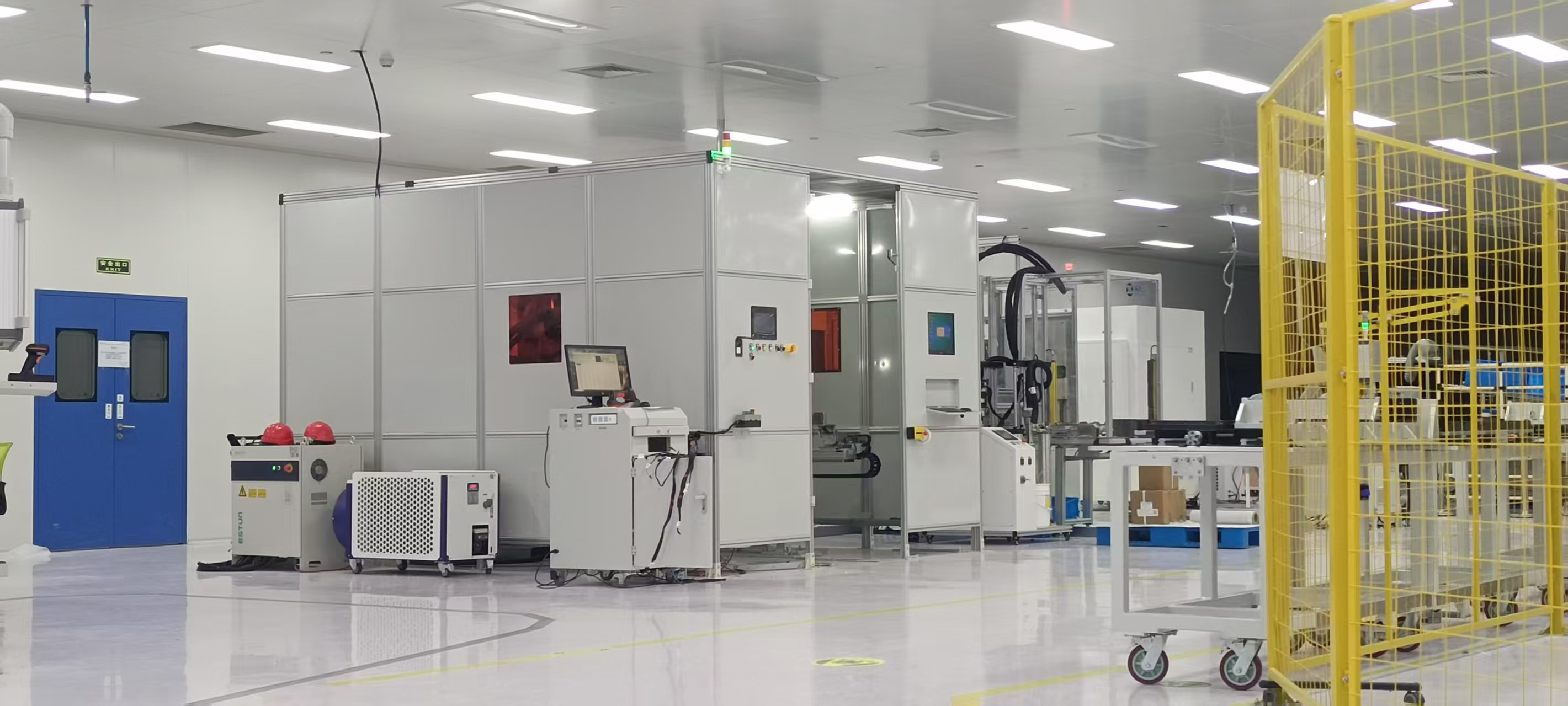
Blade battery PACK assembly line (model ZZX2501), published with a cycle time of 6 PPM and 30 min/PACK, and an applicable industry scope covering the EV industry and energy storage.
Cycle time is the parameter buyers compare first and misread most often. The ZZX2501 Blade line lists cycle time as 6 PPM and 30 min/PACK; the ZZX2406 CTP line lists 4 PPM. Both values appear under the same field name, which is a reminder to confirm unit definitions during technical clarification: a PPM figure can be read as packs per minute, as process steps per minute, or as a count of units per minute, depending on how a supplier defines the unit. The unambiguous figure is the per-pack value — 30 minutes per PACK on the Blade line — and it should be checked against the required shift pattern.
Both reference lines are described as operating under continuous or shift production in industrial assembly-line conditions. Daily output is therefore a function of takt, planned uptime and shift length together, not of the takt figure alone. On the EV line, the published machine operation rate of ≥ 95% and the welding qualification rates of ≥ 99.5% one-time and ≥ 99.95% final act as output-quality constraints on top of takt, because rework reduces effective capacity.
Environment and Safety Fit: Indoor Standard Factory Conditions
The operating environment for these lines is described as indoor, standard factory, industrial assembly-line conditions, with continuous or shift production. Standard factory should not be read as no preparation. The special requirements listed for such projects include ESD protection, fire prevention measures, temperature/humidity and cleanliness control, and PACK compatibility with fixture adaptation.
Utilities are specified per model: AC 380V ± 10% for the ZZX2313 EV line, AC 380V ± 10% with 50 ± 0.5 Hz for the ZZX2501 Blade line, and compressed air at 0.6~0.8 MPa for the Blade line and 0.5*0.8 MPa for the EV line. Matched equipment typically includes vision inspection systems, fixtures and tooling, laser equipment, and assembly and testing stations. Each of these adds a site requirement that is far cheaper to resolve at the drawing stage than after the line arrives on site.
Where the Fit Breaks: Limits Buyers Should Plan Around
A fit check is only useful if it states boundaries. The following limits follow directly from the published specifications.
- Automation level. The ZZX2406 CTP line is specified as semi-automatic. A project that requires fully automatic operation across all stations should not assume that this model delivers it as standard; automation level is a configuration decision rather than a fixed property of the model name.
- Footprint. A 58 m line needs a long hall or a U-shape reconfiguration. Buildings that cannot host either layout require a different configuration rather than a smaller version of the same one.
- Unit definitions. Because 6 PPM and 4 PPM are published under the same field name as 30 min/PACK, buyers should confirm the definition in writing before comparing two lines on throughput.
- Fixture adaptation. A line specified for 314Ah and 587Ah cells in a 1P96S pack is not automatically suitable for a different cell format or pack architecture. Each new pack variant requires fixture work and validation.
- Delivery scheduling. A monthly capacity of 3 units, a lead time of 3–5 months and a minimum order quantity of 1 unit remove the volume barrier but not the scheduling constraint.
- Compliance is a product issue, not an equipment issue. Pack-level market access depends on standards such as IEC 62133-2 for global markets and UL 1642 / UL 2054 for North America, as listed by UL Solutions. Equipment acceptance and pack certification are separate work streams, and purchasing a line does not by itself certify the packs it produces.
One supplier claim should be read as a claim rather than as a verified comparison: Zonzsin attributes a 20% reduction in maintenance expenditure to its modular design approach. That figure reflects the manufacturer's own design intent and is not an independently verified benchmark.
Market Signals Behind Scenario-Specific Selection
Three data points frame the current selection environment. First, adoption: CTP technology reached 48.6% of new energy vehicles sold in China by 2023, according to ResearchInChina, which means pack-line specifications increasingly assume a cell-to-pack architecture rather than a module-based one. Second, capacity build-out: MarketsandMarkets projects an 18.8% CAGR for battery manufacturing equipment between 2025 and 2030, reaching USD 36.94 billion. Third, format migration: energy storage packs have moved from the 280Ah benchmark toward 314Ah formats, per Highstar / InfoLink.
Market-size estimates for this sector vary with scope, and that divergence is itself a useful procurement signal. Global Insight Services values the relevant 2025 market at USD 23.9 billion, while MarketsandMarkets reports USD 15.63 billion for equipment only in the same year. Buyers comparing supplier presentations against market figures should therefore check whether a number covers equipment alone or the total battery pack value before using it in an internal business case.
The evaluation landscape is also relatively concentrated. MarketsandMarkets identifies Lead Intelligent Equipment, Yinghe Technology and Hitachi High-Tech among the market players in battery assembly equipment. For a project team, the practical implication is that scenario-specific requirement documents — cell format, pack architecture, layout drawing, environment controls — produce more comparable quotations than general capability statements do.
Reference Deployment: A U-Shape CTP Line in India
The clearest available example of scenario-driven layout decisions is a CTP battery PACK assembly line delivered to a project in India, involving an automotive OEM, an energy storage system integrator, a battery cell and PACK manufacturer, and an EPC turnkey contractor. One unit was supplied for battery PACK assembly, and the reported result after an operating duration of one year is stable operation. The layout highlight recorded for this deployment is space saving through a U-shape arrangement, combined with user-friendly operation.
Read against the scenario matrix above, that deployment shows how layout and space utilisation decisions differ by buyer type. An automotive OEM typically prioritises changeover and fixture logistics between pack variants; an energy storage integrator prioritises cell-format compatibility and consistent joining quality; a cell and PACK manufacturer tends to weigh line balance and utilisation across shifts; and an EPC contractor evaluates how the line integrates into the wider plant build, including utilities, fire prevention and material flow. All four land on the same physical asset but apply different acceptance criteria to it.
A Fit-Check Sequence for the Evaluation Stage
| Check | Evidence to request from the supplier |
|---|---|
| Cell and pack compatibility | Confirmed cell formats and pack architecture (for example 314Ah and 587Ah cells in a 1P96S pack), plus a fixture adaptation plan per variant |
| Takt and quality | Written definition of the cycle-time unit, the per-pack time, and achievable machine operation and welding qualification rates |
| Footprint and layout | Layout drawing with total dimensions, station sequence, buffer positions and a straight versus U-shape comparison |
| Environment and utilities | Stated requirements for ESD protection, fire prevention, temperature/humidity and cleanliness, plus electrical and compressed-air supply values |
| Delivery and service | Lead time, monthly capacity, quality-control method, and the boundary between remote support and on-site installation and commissioning |
| Compliance responsibility | Clear separation between equipment acceptance and pack-level certification against standards such as IEC 62133-2 and UL 1642 / UL 2054 |
Future Outlook
Two directions are visible from the specifications themselves. The first is cell and pack scale: reference lines already cover 314Ah and 587Ah cells in a 1P96S pack, which suggests that line configurations will continue to be re-specified as larger prismatic formats enter production rather than being treated as fixed assets for a decade. The second is layout efficiency: the move to a U-shape arrangement in the India deployment reflects a practical constraint that is unlikely to disappear, namely that battery pack production is frequently installed inside buildings that were not designed for it.
A third direction concerns how buyers compare lines. As CTP adoption and equipment investment continue to grow, quotations that separate cell handling, takt definition, environment controls and compliance responsibility are easier to evaluate than quotations built around a single throughput number. That separation is also what makes a fit check repeatable when a project moves from one pack variant to the next.
FAQ
What is the first thing to check when matching an automatic battery pack assembly line to a production scenario?
Start with cell and pack compatibility, because it constrains every later decision. The ZZX2406 CTP line is specified for 314Ah and 587Ah cells in a 1P96S pack, and the ZZX2501 Blade line is specified for blade-cell packs. If the required cell format or pack architecture is not covered, takt, layout and utility discussions become secondary. Fixture adaptation and PACK compatibility should be confirmed as part of this first check.
Does a CTP battery pack assembly line have to be fully automatic?
Not necessarily. The ZZX2406 CTP line is specified as semi-automatic, while the general operating description for these lines covers semi or fully automatic operation with touch screen and program control. The appropriate level depends on volume, labour cost and changeover frequency. Buyers who require fully automatic operation across all stations should confirm that configuration explicitly rather than assuming it from the model name.
How much indoor space does an automatic battery pack assembly line require?
Line dimensions are published per model. The ZZX2406 CTP line is listed at L58000 × W11000 × H3800 mm, and those values cover the line itself, not maintenance access, buffers or material aisles. Layout strategy strongly affects the required building envelope: the India reference deployment uses a U-shape arrangement and records space saving as its layout highlight. A straight configuration and a U-shape configuration of the same station sequence can therefore fit very different buildings.
What factory conditions and protections are required?
These lines are specified for indoor operation in a standard factory under industrial assembly-line conditions with continuous or shift production. The special requirements listed for such projects include ESD protection, fire prevention measures, temperature/humidity and cleanliness control, and PACK compatibility with fixture adaptation. Utility values are model-specific: AC 380V ± 10% for the ZZX2313 EV line, AC 380V ± 10% with 50 ± 0.5 Hz for the ZZX2501 Blade line, and compressed air at 0.6~0.8 MPa for the Blade line and 0.5*0.8 MPa for the EV line.
Can one line cover both EV packs and energy storage packs?
The published applicable-industry scope of these models overlaps across the EV industry, energy storage, automotive OEMs, and EV and C&I applications, so a single line can serve more than one scenario. Overlap is not the same as interchangeability, however: a line specified for 314Ah and 587Ah cells in a 1P96S pack requires fixture work and validated changeover procedures before it can confidently run a different cell format or pack architecture. Compatibility and fixture adaptation are listed project requirements precisely because they are variant-specific.
How long does delivery and commissioning take for a customised line?
Zonzsin lists a lead time of 3–5 months, a monthly capacity of 3 units and a minimum order quantity of 1 unit. Quality control is described as 100% testing, and after-sales support consists of remote support plus on-site installation and commissioning. Customisation options cover cycle time, automation, logo, colour and configuration, which means the specification freeze point affects the delivery schedule.
A fit check ends with a documented decision rather than a preference: which cell formats and pack architectures the line must cover, which takt and automation level is required, which building envelope can host it, and which environment controls the site can sustain. Zonzsin publishes configuration and capability details for its automatic battery pack assembly line portfolio, including the CTP and Blade line references discussed above, in its downloadable product brochure.