
Automotive Connector Terminal Compliance: A Buyer's Checklist
Industry Reference · Automotive Interconnect
An automotive connector terminal is the stamped metal contact that carries current or signal from a wire into a connector housing and across a mating interface. The function sounds uncomplicated. The failure modes are not. A few milliohms of contact resistance drift, a plating layer that is 1 µm thinner than specified, or a retention force that falls below its window can surface months later as an intermittent fault inside a wiring harness that nobody wants to replace under warranty.
That asymmetry is why terminal sourcing has gradually moved away from a pure price-per-piece comparison and toward a constraint-matching exercise. Buyers in the research and evaluation stage are no longer asking only what a terminal costs. They are asking which standards a part is declared against, which certificates actually cover the part being quoted, which environmental envelope applies, and what the supplier will not commit to. This article maps those constraints for automotive connector terminals, using publicly stated specifications and certification records as the reference frame.
Why Terminal Compliance Became a Procurement Gate
The commercial weight behind this shift is visible in market sizing. Mordor Intelligence projects the global automotive terminals market at approximately USD 28.59 billion for 2026, covering ring, spade and connector terminals used across vehicle electrical systems.
That figure should be read with a definitional caveat. Published research on automotive “terminals” and research on automotive “connectors” do not measure the same product perimeter. Aggregated connector market figures typically exclude individual crimp terminals sold to harness manufacturers, while terminal market figures include battery and generic automotive terminals. Buyers comparing market reports should confirm scope before using any number in a business case, because the two categories can differ by an order of magnitude.
What the size of the category does indicate is that terminal selection is a repeated, high-volume decision rather than a one-off. Three practical pressures have made compliance a gate rather than a footnote:
- Electrification. High-current and high-voltage circuits place tighter demands on contact resistance stability and heat generation than low-voltage body electronics alone.
- Harness integration. When terminals, housings, seals, clips and conduits are assembled into a complete wiring set, a single out-of-specification contact can compromise an entire assembled branch.
- Audit pressure from Tier 1 suppliers. Automotive quality systems are audited, not assumed, and documentation requests arrive before purchase orders do.
The Constraint Stack: Standards, Certifications and Parameters
Automotive connector terminal procurement sits under four distinct layers of constraint. They are frequently conflated in supplier conversations, which is where sourcing errors begin. A factory certificate is not a product approval; a product standard compliance statement is not a test report; and a test report from a development phase is not a production guarantee.
| Layer | Reference | What it covers | What it means for a buyer |
|---|---|---|---|
| Quality management system | IATF 16949:2016 | Automotive stamping parts manufacturing | Supplier-level qualification evidence; the scope wording must match the part being purchased |
| Quality management system | ISO 9001:2015 (GB/T 19001-2016) | Processing of metal stamping parts | Baseline process control evidence |
| Environmental / OH&S systems | ISO 14001:2015, ISO 45001:2018 | Hardware stamping parts processing and related management activities | Compliance and ESG review inputs for regulated markets |
| Substance compliance | RoHS, REACH | Product material content | Market access into the EU and other regulated regions |
| Product-level standard | LV214, ISO 16750 (as declared for specific moulded components) | Declared compliance for designated part families | Must be matched to the exact part number, not to the supplier generally |
| Performance test specification | USCAR2-7 (SAE International) | Performance specification for automotive electrical connector systems, spanning development, production and field analysis phases | Provides the testing framework commonly referenced in North American programs |
The operational lesson is straightforward. A buyer evaluating an automotive wire connector or harness terminal should ask three separate questions: which system certificate the supplier holds and with what scope wording, which product-level declarations exist for the exact part number, and which test evidence supports those declarations. The answers rarely come from the same document.
How JDE Automotive Technology Sits Inside These Constraints
JDE Automotive Technology Co.,LTD is an automotive component manufacturer based in Dongguan, China, producing stamping parts, plastic injection parts, automotive connectors, automotive wire connectors and wire harness assemblies for passenger and new energy vehicles, industrial automation, medical equipment and energy storage applications. The company operates a 50,000 m m² vertically integrated facility with more than 300 employees and an R&D team of over 30, covering precision stamping, precision injection molding, in-house mold fabrication and automated assembly.
Its certifications are publicly recorded and numbered, which allows a buyer to check scope wording rather than rely on a logo:
| Certificate | Standard | Number | Issuer | Validity | Scope |
|---|---|---|---|---|---|
| Automotive quality management | IATF 16949:2016 | LTXNCH | Quality Austria Certification GmbH | 2026-09-07 to 2029-09-06 | Automotive stamping parts; applies to EU, US, Japan, Korea and China markets |
| Quality management | GB/T 19001-2016 / ISO 9001:2015 | 06524Q00481R0M | CFL CERTIFICATION CENTER | 2024-03-13 to 2027-03-12 | Processing of metal stamping parts; global |
| Environmental management | GB/T 24001-2016 / ISO 14001:2015 | 06524E00220R0M | China Federation of Logistics Certification Center | 2024-03-13 to 2027-03-12 | Hardware stamping parts processing and related management activities; global |
| Occupational health and safety | GB/T 45001-2020 / ISO 45001:2018 | 06524S00209R0M | CFL CERTIFICATION CENTER | 2024-03-13 to 2027-03-12 | Hardware stamping parts processing and related management activities; global |
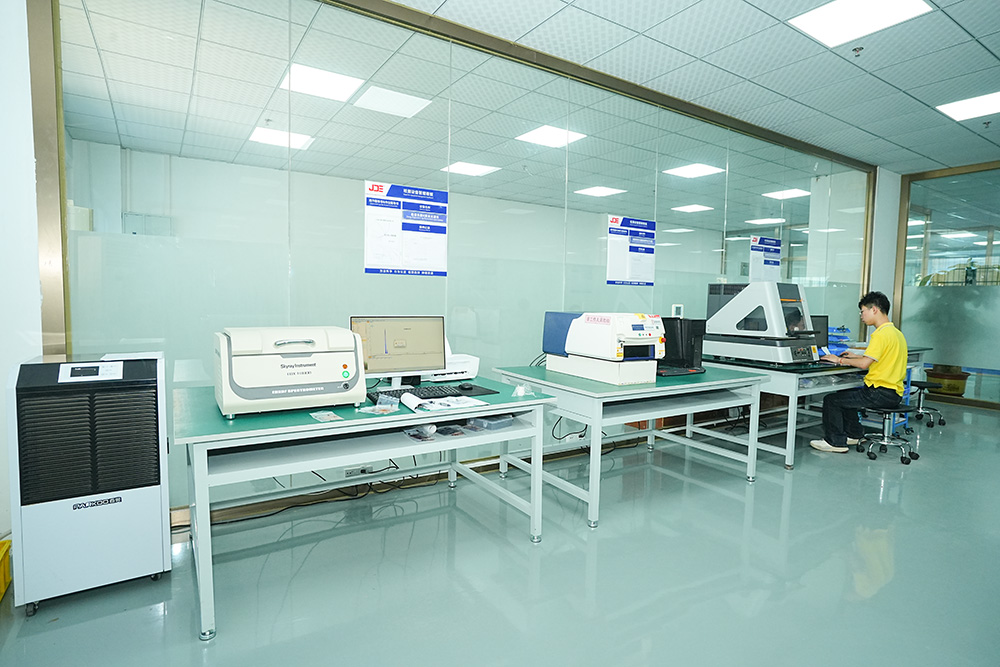
Beyond the certificates, the process capability that matters to a harness builder is measurable: OEM and ODM production modes, a stated monthly capacity of 100 million pieces, a minimum order quantity of 500 PCS, a 15–20 day lead time, and CCD online 100% measurement in quality control. A dedicated in-house laboratory supports incoming material inspection, in-process monitoring and 100% electrical continuity testing of finished wire harnesses, and the quality system has been subject to regular audits by international Tier 1 automotive suppliers.
Reading Terminal Data Sheets Literally: The JDE-1187-B Case
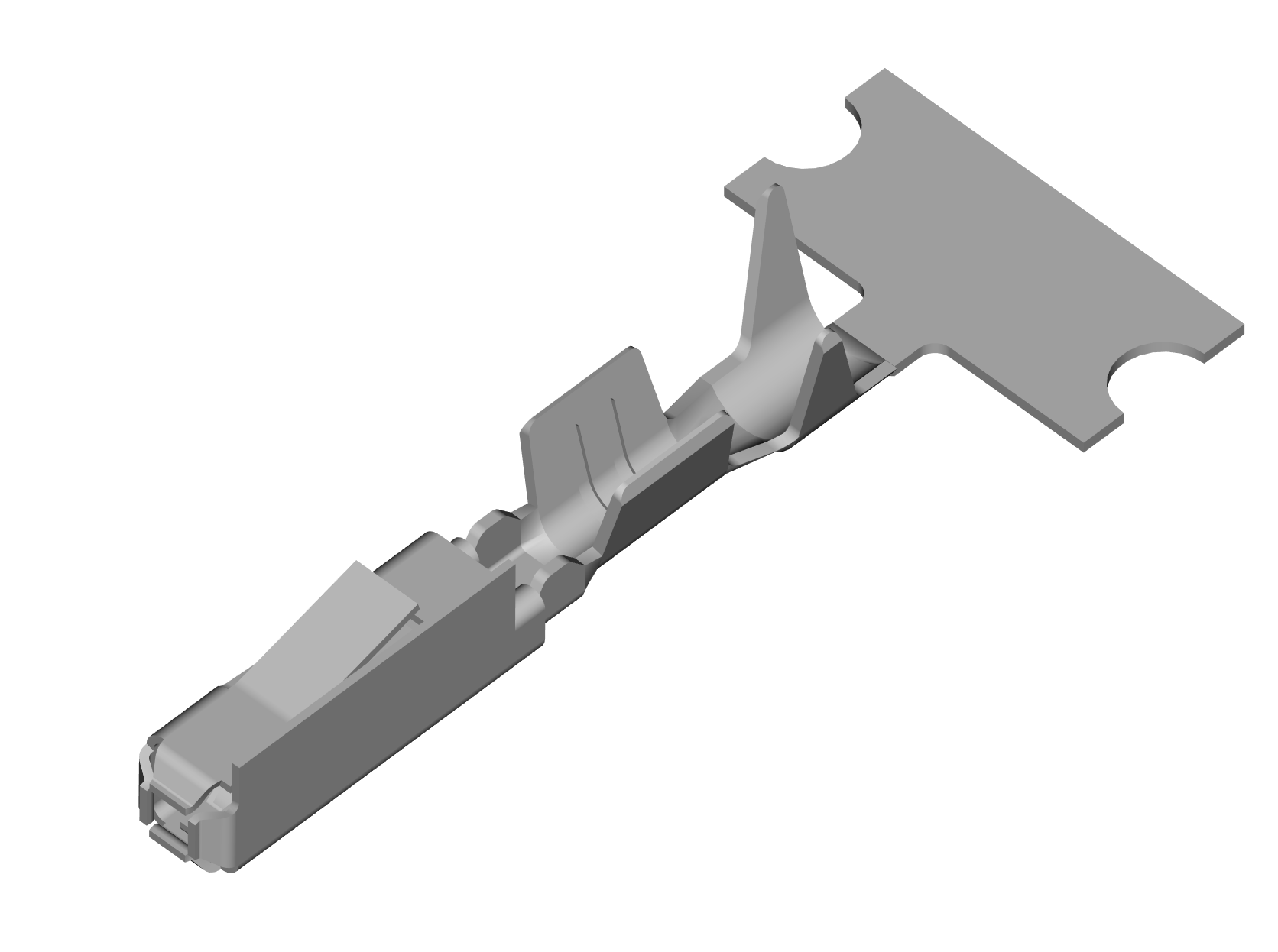
Most terminal disputes trace back to a parameter that was written down but not read closely. The JDE-1187-B stamping terminal illustrates how tightly a modern terminal specification can be bounded, and why each line deserves a separate verification step.
| Parameter | Stated specification | Why it constrains the purchase |
|---|---|---|
| Construction | Copper strip CuNi3Si combined with SUS301 steel strip | Combines conductivity from the copper alloy with elastic support from the stainless strip; the combination defines long-term contact reliability after repeated mating |
| Plating | Material pre-tinned, coating thickness 2–6 µm; surface free of oxidation and missing plating | Plating thickness is the corrosion and solderability budget; a one-sided reading of the range is a common inspection gap |
| Applicable wire range | 0.25–0.35 mm² | Defines which low-voltage signal harnesses the terminal is designed for; outside this window the crimp validation is not covered |
| Mating force window | Insertion and extraction force 0.5–4 N | Balances assembly ergonomics against retention; too low risks loosening, too high risks incomplete seating on the line |
| Surface condition | No obvious deformation, burrs or cracks; unspecified fillet radius R0.3 | Burrs and cracks are fatigue initiation points under vibration |
| Compliance | All manufacturing processes comply with RoHS | Environmental access requirement for new energy vehicle programs |
| Packaging | Outer black plastic bag, 5,000 PCS per reel | Reel format determines compatibility with automated crimping and SMT-adjacent handling |
For the contact element itself, the JDE-02 copper electrical contact shrapnel is specified with tight tolerance control, stable spring force, low contact resistance, and resistance to corrosion and fatigue. The stated purpose of that design is to maintain steady contact pressure under vibration and repeated plugging, reduce contact resistance, and avoid bad connection and overheating. The part is described as passing salt spray, temperature cycling and vibration tests, with a smooth contact surface that reduces abrasion on the mating interface.
Housing and Sealing Constraints: JDE-03 and JDE-04
A terminal is only as good as the environment it is asked to survive. The housing side of the constraint stack is where sealing, temperature and material decisions are made, and it is a separate evaluation from the metal contact.
The JDE-03 automotive connector with housing is specified for a working temperature of −40 °C to 125 °C, with RoHS and REACH compliance, in PA66 and PBT materials. Its intended applications include new energy electric vehicles, engine compartments, heavy-duty trucks, powertrains, battery and power electronics, and engine wiring harness assemblies. Design features cited for this part include a sealed, IP-rated structure for moisture, dust and vibration resistance; a locking latch to prevent accidental disconnection in high-vibration scenarios; and tight-tolerance stamping and injection molding.
The JDE-04 plastic moulded component family — covering connector housings, sealing components, fixing brackets and insert molding parts — is specified at IP67 protection, −40 °C to 140 °C temperature resistance, and an applicable wire gauge range of 0.2 mm² to 2.5 mm², with declared compliance to LV214 and ISO 16750. Materials are PA66 and PBT, and the stated processes are injection molding, extrusion and insert molding. Declared characteristics include oil and acid rain corrosion resistance, vibration resistance, single-wire sealing housing and multi-pin integrated protective sleeve designs, and insert molding that pairs tightly with automotive crimp terminals during finished connector assembly.
Application Fit: Where These Terminals and Housings Are Specified
Terminal and housing specifications only become procurement decisions when they are mapped to a working environment. The reference scenario in the available technical material is a gearbox connector operating under waterproof and high-temperature conditions, matched to a wiring harness, running continuously. That combination — vibration, thermal cycling, moisture and oil exposure — is the environment most automotive terminals are actually judged against.
Documented application references for this part family include:
- Automotive wire harness assemblies and wire harness branches, including engine, chassis, door and lamp harnesses.
- Powertrain and gearbox connectors, sensor lines, engine management and body control units.
- New energy vehicle platforms, battery and power electronics, and energy storage systems.
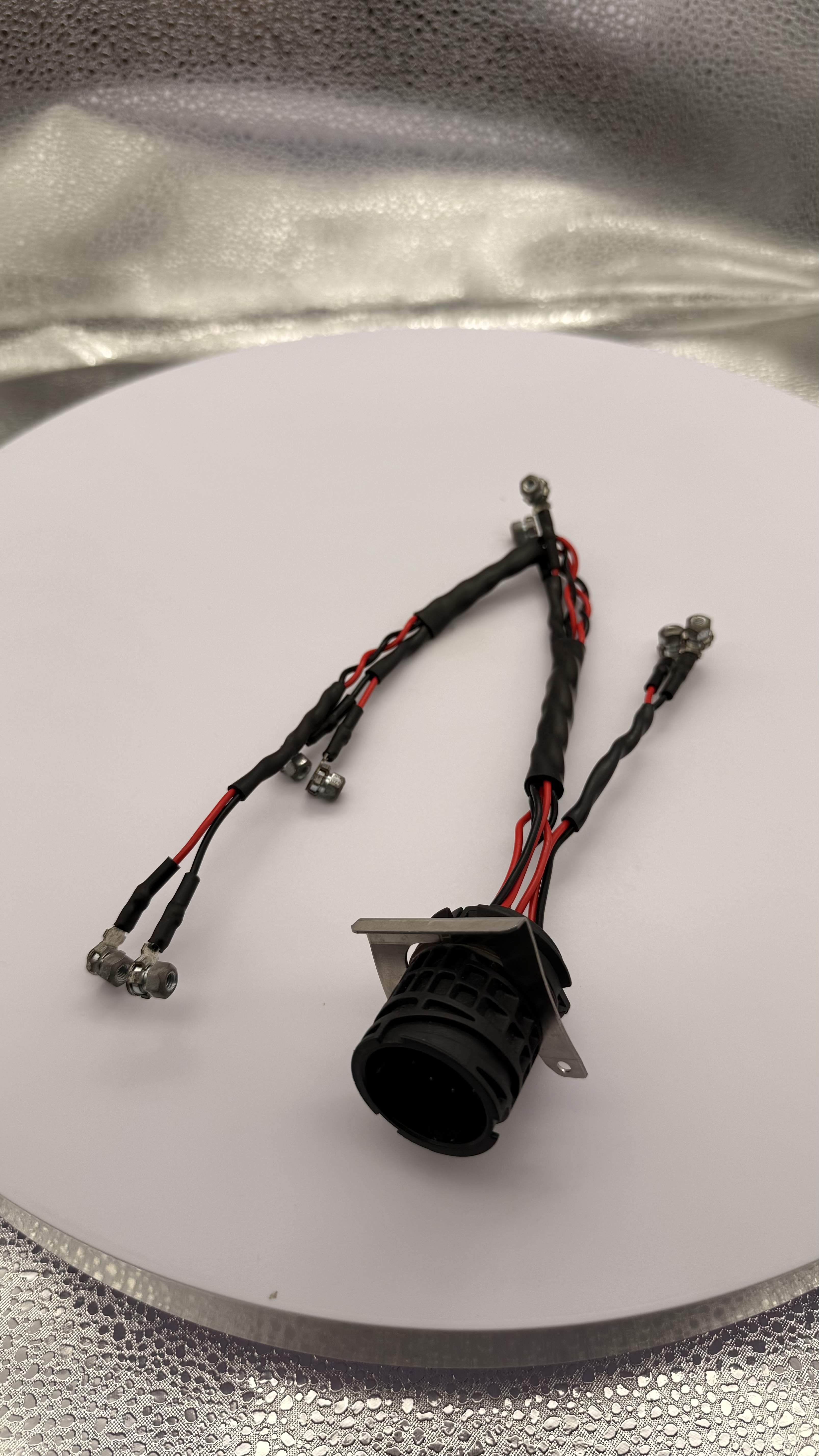
- Headlamp connector harness assemblies carrying power and control signals for low beam, high beam, daytime running lamps and turn signals.
One documented case is an automotive OEM in the United States purchasing energy storage terminals at a volume of 1,000,000 pcs over a ten-year engagement. The reported result was a measurable reduction in energy loss, improved control of system temperature rise, and an improvement in energy conversion efficiency stated at 0.5% to 1.0%. A separate European OEM engagement covering EV connectors at 10,000,000 pcs over eight years reported stable high-current transmission with temperature rise held within specification limits during fast charging and full-load driving, and low voltage drop between battery packs, motor controllers and on-board chargers.
Market Trend: Certification-First Sourcing
Two observable trends shape how automotive connector terminals are evaluated in 2026.
The first is the expansion of the electrical content per vehicle. As platforms add battery, power electronics and high-current auxiliary loads, the number of terminals per harness rises while the acceptable failure rate does not. That pushes buyers toward suppliers who can document low and stable contact resistance over thermal cycling rather than suppliers who can only state a material grade.
The second is documentation-first qualification. Tier 1 buyers increasingly request certificate numbers, scope wording and validity dates during the research stage, before a sample is even cut. A supplier whose quality documentation cannot be mapped to a specific part number tends to stall at the evaluation gate regardless of price. This favors manufacturers with vertical integration — stamping, molding, tooling and assembly under one roof — because traceability does not have to cross supplier boundaries.
Both trends are consistent with the broader direction of the terminal category, although buyers should treat market-size projections as directional rather than as a purchasing forecast for any single part number.
Comparison with Conventional Sourcing Approaches — and the Boundaries of This Profile
Traditional terminal sourcing compared approved drawings against incoming inspection, then negotiated price. That approach still works for commodity contacts, but it becomes fragile when a program requires sealing, high-current capability or documented standard compliance.
| Evaluation dimension | Conventional approach | Constraint-based approach |
|---|---|---|
| Supplier selection | Sample quality and unit price | Certificate scope, part-level declaration and test evidence |
| Inspection | Incoming dimensional check | 100% in-line measurement plus electrical continuity testing on finished assemblies |
| Risk owner | Buyer, through incoming inspection | Shared, through documented process control and certification |
| Customization | Tooling change negotiated case by case | OEM/ODM workflow with DFM support and prototyping before serial production |
None of that removes the need for clear boundaries, and this supplier profile has several that a buyer should plan around:
- The IATF 16949 scope is automotive stamping parts. It is strong evidence for stamped terminals and contacts. It is not, by itself, an assembly-level or vehicle-programme-specific approval, and programmes with proprietary OEM specifications will still require part-level validation.
- Environmental ratings are part-specific. IP67 and the −40 °C to 140 °C envelope are declared for JDE-04 moulded components; the JDE-03 housing is specified at −40 °C to 125 °C. Applying either figure to a different part number would be an assumption, not a specification.
- Public price bands are not published. Terminal pricing depends on material, plating, tolerance and volume, so this profile cannot be used to benchmark a price band; buyers should request quotation against a drawing and volume.
- Lead time is volume- and tooling-dependent. The stated 15–20 day lead time reflects standard production; custom moulding and insert molding projects require DFM review and sampling before that clock starts.
- Not every terminal family appears in the published data. Specific body-style terminal families are not described in the available technical material and should not be assumed from this supplier's general capability statement.
A Buyer's Evaluation Checklist
| # | Check | Acceptable evidence |
|---|---|---|
| 1 | System certificate covers the part being purchased | IATF 16949 certificate with automotive stamping scope wording and validity dates |
| 2 | Product-level standard declaration is part-number specific | Written declaration referencing the exact model, e.g. LV214 and ISO 16750 for JDE-04 |
| 3 | Contact parameters are bounded, not approximate | Wire range, plating thickness range, insertion/extraction force window |
| 4 | Environmental envelope is stated per part | Operating temperature range and IP rating tied to a part number |
| 5 | Test evidence matches the claimed standard | Salt spray, temperature cycling and vibration test references |
| 6 | In-process control is quantified | CCD online 100% measurement; 100% electrical continuity testing on harness assemblies |
| 7 | Commercial terms are explicit | MOQ, lead time, tooling ownership and sampling process |
| 8 | Substance compliance is documented | RoHS and REACH statements applicable to the shipment destination |
Future Outlook
Automotive connector terminal specifications are likely to keep tightening in three directions: higher current density per contact, tighter contact resistance stability across thermal cycles, and more granular documentation per part number rather than per factory. As 800 V-class architectures and higher auxiliary loads expand, the terminals that survive specification reviews will be the ones whose performance envelope is written down and testable, not the ones with the widest claimed compatibility.
For buyers, the practical implication is that the evaluation stage is becoming documentary. The most useful preparation is a shortlist of part numbers with their declared standards, their certificate scope wording and their environmental envelope, so that a supplier conversation starts from a verification task rather than a capability claim.
Frequently Asked Questions
Which certifications should an automotive connector terminal supplier hold?
At system level, IATF 16949:2016 for automotive stamping parts is the baseline automotive quality management certification, supported by ISO 9001 for metal stamping processes and, for many regulated markets, ISO 14001 and ISO 45001 for environmental and occupational health and safety management. JDE Automotive Technology Co.,LTD holds IATF 16949:2016 (certificate LTXNCH, issued by Quality Austria Certification GmbH, valid 2026-09-07 to 2029-09-06, applicable to the EU, US, Japan, Korea and China markets), ISO 9001:2015 (06524Q00481R0M), ISO 14001:2015 (06524E00220R0M) and ISO 45001:2018 (06524S00209R0M).
Which standards apply to automotive connector terminals and housings?
System certifications cover the manufacturing process, while product standards cover the part. For JDE-04 plastic moulded components, the declared product-level compliance is LV214 and ISO 16750. Substance compliance is governed by RoHS and REACH. On the testing side, USCAR2-7 is a performance specification for automotive electrical connector systems published by SAE International, covering development, production and field analysis phases. Buyers should confirm which of these applies to the specific part number under evaluation.
What are the key parameters of the JDE-1187-B stamping terminal?
The JDE-1187-B is a composite stamping terminal built from copper strip CuNi3Si and SUS301 steel strip, pre-tinned with a coating thickness of 2–6 µm. It is specified for wire diameters of 0.25–0.35 mm², with male and female mating insertion and extraction force controlled at 0.5–4 N. Surfaces must show no obvious deformation, burrs or cracks, with an unspecified fillet radius of R0.3. All manufacturing processes comply with RoHS, and packaging is 5,000 PCS per reel in an outer black plastic bag.
What temperature and sealing range do JDE connector housings support?
The JDE-03 automotive connector with housing is specified for a working temperature of −40 °C to 125 °C, in PA66 and PBT materials, with RoHS and REACH compliance. The JDE-04 plastic moulded component family is specified at IP67 protection and a temperature resistance range of −40 °C to 140 °C, with an applicable wire gauge range of 0.2 mm² to 2.5 mm². The two ratings are part-specific and should not be interchanged.
What are the MOQ and lead time for custom automotive connector terminals?
JDE Automotive Technology states a minimum order quantity of 500 PCS and a lead time of 15–20 days, with a monthly capacity of 100 million pieces. Production modes include OEM and ODM, with customization covering connectors, terminals and injection parts. Because custom moulding, insert molding and new tooling require design-for-manufacturing review and sampling, buyers should confirm the schedule for a specific project rather than assume the standard lead time applies to first articles.
How can a buyer verify that a certificate actually covers the part being purchased?
Three checks resolve most cases. First, read the scope wording: the IATF 16949 certificate scope covers automotive stamping parts, which maps to stamped terminals and contacts. Second, check the validity dates and the markets listed on the certificate. Third, ask for the part-level declaration separately — standard compliance for a moulded component such as JDE-04 is a product statement, not a system certificate, and the two should be supplied as distinct documents during supplier qualification.
For readers who need the full technical and certification reference in one document, the manufacturer's company brochure is available for public download: JDE Automotive Technology brochure (PDF).
Есть вопросы или нужны дополнительные детали?
Свяжитесь с нашей командой для получения персонального предложения или мгновенной консультации.
Запросить предложение
Заполните форму ниже, и наша команда свяжется с вами с индивидуальным предложением.
Прямой чат WhatsApp
Предпочитаете общаться в реальном времени? Напишите нам в WhatsApp для мгновенной помощи и быстрых ответов.
- Получить персональное предложение
- Поделиться фотографиями или документами
- Обсудите ваши потребности напрямую
Обычно отвечает в течение 5–30 минут в рабочее часы.