
Automotive Wire Harness Connector Comparison Guide
Selecting an automotive wire harness connector is a decision that affects power distribution, vehicle reliability, and total procurement cost. This guide provides a neutral comparison framework for buyers who are evaluating connectors at the decision stage, with Zhejiang Daou Electronics Co., Ltd. (CNDO) used as a concrete supplier case.
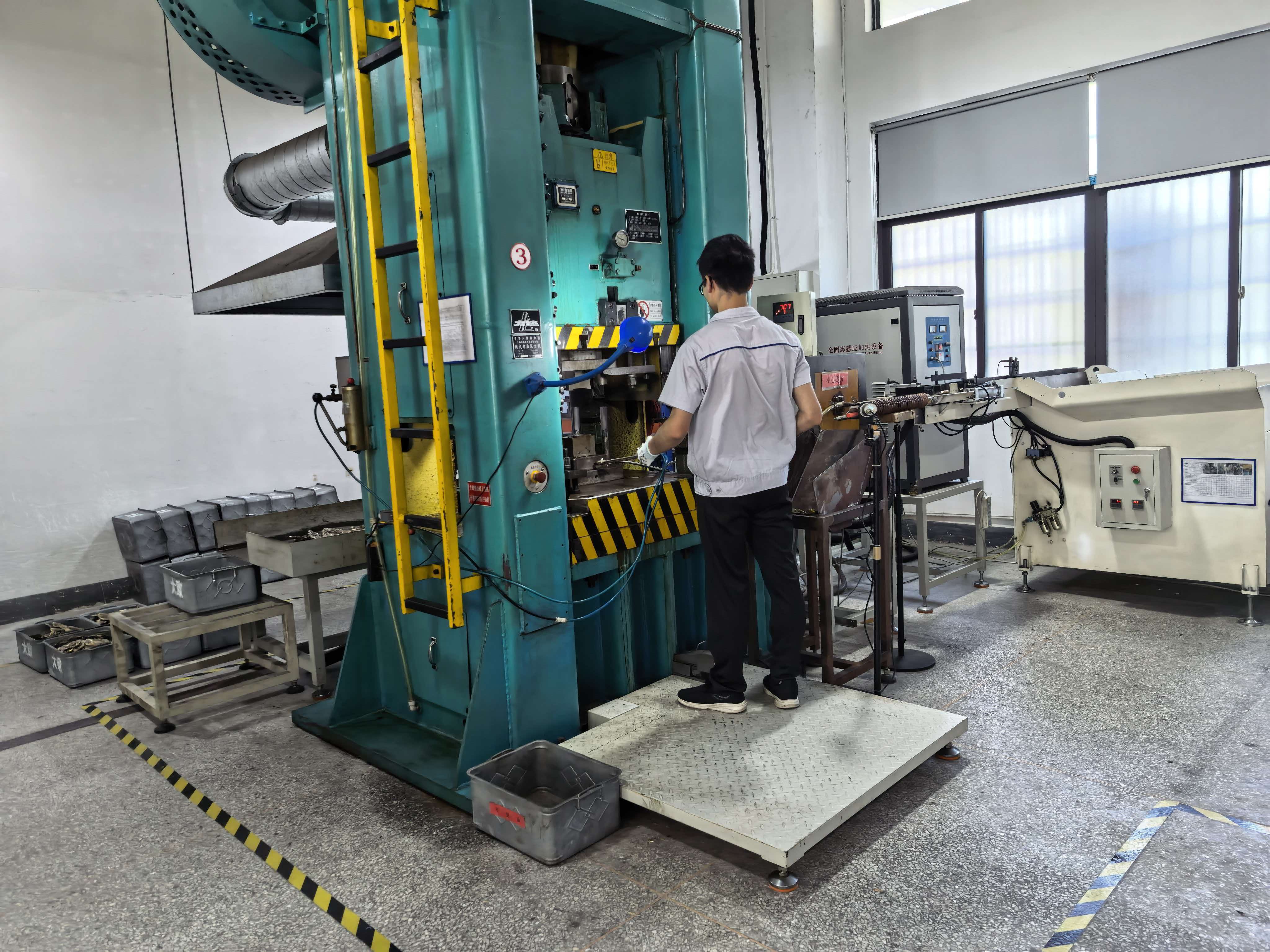
Precision manufacturing of automotive wire harness connectors and battery terminals.
Why Automotive Wire Harness Connector Selection Matters
Automotive wire harness connectors link the battery, fuse box, sensors, actuators, and electronic control units. A single connector failure can interrupt power to a critical system, cause intermittent faults, or increase warranty costs. For procurement teams, the difficulty is that connector families look similar on paper, but long-term performance depends on material quality, plating, sealing, locking design, and process control.
The most commonly cited risks in connector systems are overheating, poor contact, water ingress, vibration loosening, insulation breakdown, and corrosion. Each risk can be mitigated through a combination of design features and production testing. In a decision-stage comparison, the buyer should verify that both layers are covered.
Decision Criteria: How to Compare Connectors
When comparing automotive wire harness connectors, structure the evaluation around five areas: electrical performance, mechanical stability, environmental protection, quality compliance, and cost. The table below maps each criterion to the evidence a buyer should request.
| Criterion | What to evaluate | Evidence to request |
|---|---|---|
| Electrical performance | Stable low-resistance conductivity | Contact resistance data; electrical performance test results |
| Mechanical / vibration | Resistance to vibration loosening | Vibration aging test records; locking structure description |
| Environmental protection | Water and dust ingress rating | IP rating specification or test report |
| Quality compliance | Automotive-grade quality management | IATF16949 certificate; process control documentation |
| Cost and MOQ | Unit price, tooling cost, custom MOQ | Quotation with cost breakdown; OEM supply examples |
In a typical comparison, performance claims should be tied to a baseline. CNDO, for example, reports that its connectors provide a 60% longer service life, three levels higher vibration resistance, and IP67 waterproof performance compared with IP54 in traditional connectors. The company also states that stable low-resistance conductive performance reduces vehicle power consumption loss.
Supplier Case: Zhejiang Daou Electronics Co., Ltd. (CNDO)

CNDO company facility in Yueqing, Zhejiang Province.
Zhejiang Daou Electronics Co., Ltd. (CNDO) is a China-based manufacturer of wire harness and battery terminals, automobile fuse boxes, connectors, waterproof plugs, and connectors for electric vehicle battery packs. The company is located in Yueqing City, Zhejiang Province, and operates a 6,000 m² facility with 125 employees and a 25-member R&D team. Its reported annual output capacity is 9,000,000 units, with about 50% of production exported, mainly to the USA and EU.
CNDO positions itself as an OEM and main unit supply solution provider. It reports supplying first-tier domestic automakers and working with global wiring harness manufacturers. Customer references in the company profile include Chery Group, Foton Motor, LOVOL, Wuling, FAW Group, Changan Group, GAC Group, Geely Group, and BAIC Group, as well as Luxshare Precision, Aptiv, and Sumitomo Electric. For an evaluator, this combination of OEM references and export activity is useful evidence of manufacturing scale and supply chain maturity.
Technical Explanation: Design and Production Risk Control
Connector reliability is engineered through two layers of risk control. The first layer is design. CNDO addresses overheating, poor contact, water ingress, vibration loosening, insulation breakdown, and corrosion using thermal resistance protection, IP67 waterproof sealing, anti-vibration locking structure, high-voltage reinforced insulation, and anti-corrosion tin plating.
The second layer is production control. According to the company, the production process applies IATF16949 full-process quality inspection and raw material incoming tests. Temperature and vibration aging tests are used to identify weak points before shipment, and 100% of finished products undergo electrical performance testing. This level of testing is directly relevant to buyers because visual inspection alone cannot reveal latent connector defects.
Comparison with Traditional Wire Harness Connectors
From a procurement baseline, CNDO positions its connector line as an upgrade to traditional automotive wire harness connectors. The table below summarizes the reported differences.
| Parameter | CNDO connector | Traditional connector |
|---|---|---|
| Service life | 60% longer (reported) | Baseline |
| Vibration resistance | 3 levels higher | Baseline |
| Waterproof rating | IP67 | IP54 |
| Cost | 10%–20% lower (reported) | Baseline |
| Production efficiency | 25% higher daily output efficiency | Baseline |
According to CNDO, the product meets IATF16949 automotive-grade standards and offers integrated R&D and production capabilities. Lower custom MOQ is also cited as a practical benefit for vehicle OEMs and wiring harness manufacturers that need custom connector designs without ordering in extremely high volumes.
Application and Use Cases
CNDO’s product scope covers fuel passenger vehicles, commercial vehicles, and new energy EV battery packs. That makes the supplier relevant to conventional internal-combustion platforms and to electrified architectures where battery pack connectors and high-voltage connections are required.
The same evaluation framework applies to adjacent procurement categories. Motorcycle complete vehicle harnesses, energy storage equipment, garden tools, and small home appliances all require battery terminals, fuse boxes, waterproof connectors, or high-voltage connectors. In these segments, buyers should look for the same evidence: material traceability, IP ratings, vibration resistance, and final electrical performance testing.
Market Trends That Affect Connector Procurement
Several verified market data points are relevant to connector buyers in 2026.
- The global automotive wiring harness market was estimated at USD 89.54 billion in 2025, according to Precedence Research.
- Asia Pacific accounted for 40.89% of the wiring harness market, with China contributing 62% of the regional revenue, according to Fortune Business Insights.
- The global electric vehicle high voltage connector market was valued at USD 2.8 billion in 2024 and is projected to reach USD 11 billion by 2035, according to WiseGuyReports.
- The global two-wheeler wiring harness market was valued at USD 3.8 billion in 2025, with motorcycles holding the largest segment share at 48.6%, according to Dataintelo.
- Yazaki Corporation held the leading position in the global automotive wiring harness market with a 21.4% share in 2025, according to Global Market Insights.
- TE Connectivity, Amphenol, and Molex were the top three global connector manufacturers in 2024, with TE Connectivity reaching USD 12.88 billion in sales, according to Bishop & Associates.
For decision-makers, these trends indicate that supplier capability must extend beyond standard passenger-car connectors. Commercial vehicles, two-wheelers, EV battery packs, and energy storage applications are growing procurement segments, and they require connectors with different mechanical, electrical, and environmental specifications.
Future Outlook
As vehicle electrical architectures move toward higher voltages and more centralized power distribution, connectors will need to carry more current while maintaining stable contact resistance and sealing. The growth of high-voltage connectors for EV battery packs is one signal of this shift. Suppliers with in-house tooling, integrated R&D and production, and a documented automotive quality system are better positioned to support custom designs and changing vehicle programs.
For buyers, the long-term decision is not only the price per connector. It is whether the supplier can provide repeatability, traceability, and lifecycle support across multiple vehicle platforms and adjacent equipment categories.
FAQ
What should be evaluated when comparing automotive battery positive and negative terminals for wire harness connections?
Battery terminals must provide stable low-resistance conductivity and resist vibration, corrosion, and environmental exposure. In a procurement comparison, the key evidence includes raw material incoming tests, temperature and vibration aging tests, and 100% finished product electrical performance tests. Anti-corrosion tin plating is one design measure used to protect terminals.
How does a vehicle matching battery fuse box affect wire harness connector performance?
A vehicle matching battery fuse box centralizes power distribution and must keep contact resistance low while being exposed to heat and vibration. The fuse box and wire harness connector must be matched mechanically and electrically so that water cannot enter the system and terminal contact remains stable. Integrated R&D and production capabilities help a supplier align fuse box design with connector design.
What are the key differences between standard connectors and high-voltage connectors for commercial vehicles or energy storage battery packs?
High-voltage connectors require reinforced insulation and stronger protection against water ingress, vibration, and contamination. Design measures such as high-voltage reinforced insulation, IP67 waterproof sealing, and anti-vibration locking structures are used to manage these risks. Buyers should verify that the supplier's test program includes high-voltage insulation and final electrical performance checks.
When should a waterproof wire harness connector be specified for garden tools or small home appliances?
A waterproof connector should be specified when the product may be exposed to moisture, washing, rain, or high-humidity conditions. The IP rating is a useful benchmark: IP67 provides a higher level of protection against water ingress than IP54. Garden tools and small appliances with battery packs should also be reviewed for vibration resistance and corrosion protection.
What certification and testing evidence should a buyer request from an automotive wire harness connector supplier?
Buyers should request evidence of an IATF16949 quality management system, plus product-level test records covering raw material incoming inspection, temperature and vibration aging, and 100% finished product electrical performance testing. For North American low-voltage automotive connectors, USCAR-2 is a primary performance standard; for European German OEMs, LV214 is widely used. The supplier should be able to show how these requirements are addressed.
Resource for Procurement Teams
Procurement teams that need a structured overview of CNDO’s product categories, company profile, and quality documentation can download the company brochure: Zhejiang Daou Electronics Co., Ltd. Company Brochure.